
From Lesieur and Huilor to Taous and El Kef, the Casablanca-based group has built a consumer goods business spanning generations. Under CEO Karim Manssour-Dahbi, its next chapter centres on industrial efficiency, innovation and profitable growth.
CASABLANCA — From cooking oils to household soaps,Lesieur Cristal has built a MAD 5.38 billion consumer goods business around products familiar to Moroccan households across generations.
The Casablanca-listed group combines some of the country’s established food and personal care brands with an industrial network spanning Morocco and other African markets.
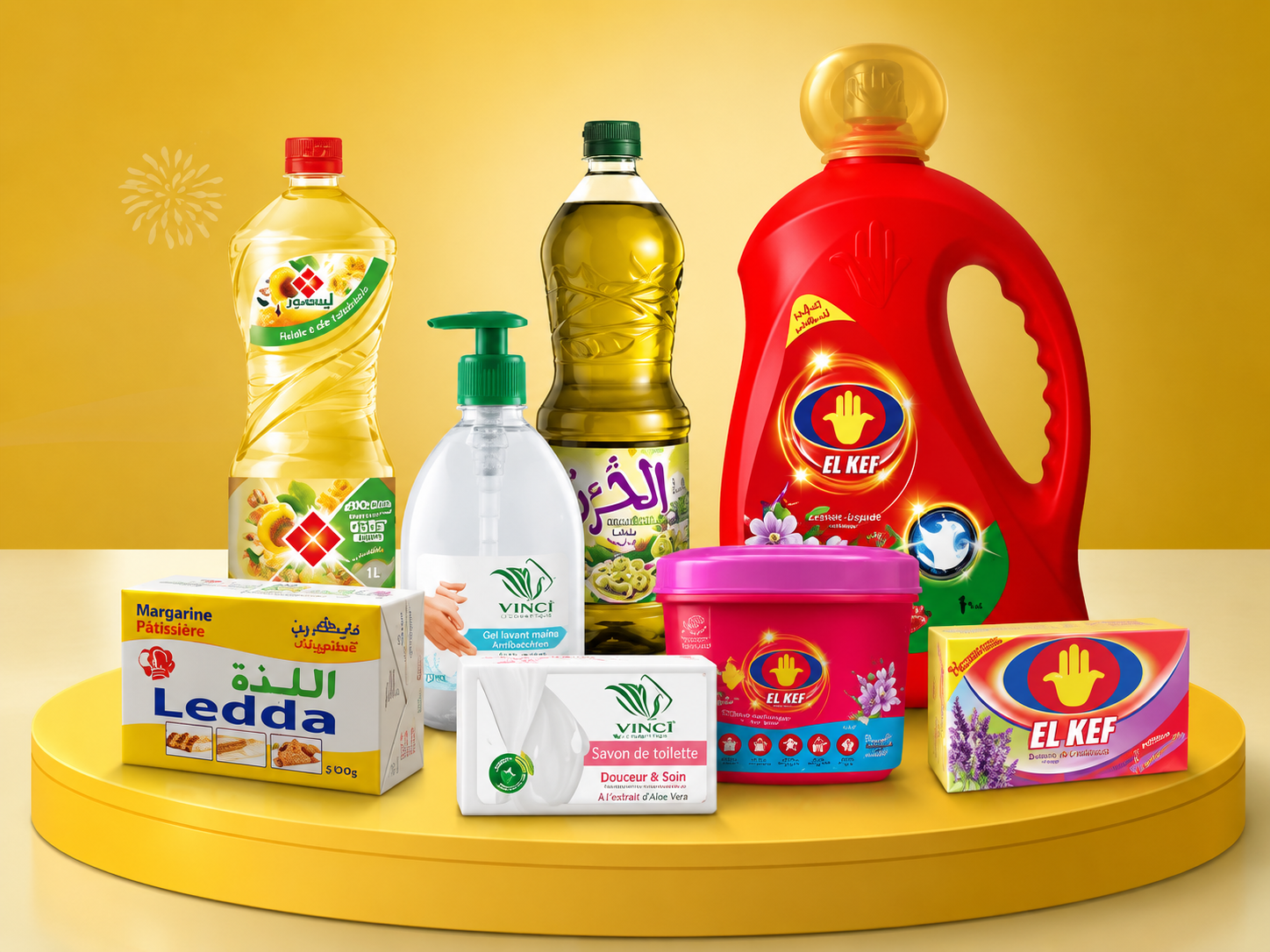
Its portfolio includes Lesieur, Cristal and Huilor cooking oils, Al Horra olive oil, Taous personal care products and El Kef household cleaning products.
Now led by Karim Manssour-Dahbi, who became chief executive officer on 25 March 2026, Lesieur Cristal is entering a new phase focused on strengthening industrial competitiveness, developing its brands and expanding its international business.
The appointment brings more than 35 years of professional experience to a company whose history reflects the development of Morocco’s modern consumer goods industry.
From Household Names to a MAD 5.38 Billion Business
Lesieur Cristal’s commercial strength lies in a portfolio that reaches consumers across several essential product categories.
Its edible oils serve everyday cooking needs, while Taous and El Kef extend the business into personal hygiene and household care. Olive oil, margarine and condiments provide additional product lines.
This combination gives the company a diversified position in Morocco’s fast-moving consumer goods market, connecting established brand recognition with recurring household demand.
The group generated MAD 5.38 billion in consolidated revenue in 2025, a decline of 1% from the previous year.
Sales volumes nevertheless increased by 7%, according to its annual financial results, as the company operated in an environment marked by pricing pressure and strong competition.
The divergence between revenue and volume growth highlights the importance of pricing, product mix and operating efficiency in a sector where affordability remains central to purchasing decisions.
Alongside its established portfolio, the group has continued developing new products and extending existing ranges.
Its Taous brand introduced additional fragrances across personal care products in 2025, while the company pursued innovation in edible oils and other consumer categories.
The strategy reflects a practical commercial advantage: established brands can enter adjacent product categories without having to build consumer recognition entirely from the beginning.
For Lesieur Cristal, the challenge is to translate that recognition into competitive products and sustainable margins.
Industrial Investment Behind the Brands
Beyond its consumer products, Lesieur Cristal operates an integrated agro-industrial business with three production facilities in Morocco and industrial operations in Tunisia and Senegal.
The company is also part of the wider international development strategy of French agricultural and food group Avril.
Its industrial infrastructure supports the production and distribution of edible oils, olive oil and soaps, while providing a foundation for exports and regional expansion.
Energy efficiency has become an important part of that industrial strategy.
Lesieur Cristal developed a two-megawatt-peak photovoltaic project at its Aïn Harrouda site in partnership with Nareva Services, designed to reduce the facility’s dependence on conventional energy sources.
The group has also invested in biomass technology as part of a broader programme to improve the energy profile of its operations.
These projects have commercial significance beyond their environmental objectives.
Energy consumption is an important manufacturing cost, and reducing exposure to conventional fuels can support more predictable industrial operations over time.
The company has identified operational efficiency, improved production yields and disciplined sourcing as priorities for strengthening its competitiveness.
Its international activities provide another avenue for growth. Through its operations in Tunisia and Senegal, the group has developed an industrial and commercial presence beyond Morocco.
The challenge is to combine those regional capabilities with brands and products suited to different markets.
Karim Manssour-Dahbi and the Next Growth Chapter
Manssour-Dahbi succeeded Peter Tagge in March 2026, bringing executive experience across consumer goods and automotive businesses in North Africa and the Middle East.
An engineering graduate of École Centrale de Paris, he has held management responsibilities for more than 25 years.
His appointment comes as Lesieur Cristal seeks to strengthen its financial performance while continuing to invest in industrial development and product innovation.
The group’s first-half 2026 results illustrate both the progress and pressures facing the business.
Consolidated revenue reached MAD 2.60 billion, down approximately 8% year on year, while EBITDA increased to MAD 140 million from MAD 130 million.
The group reported a MAD 47 million net loss attributable to shareholders, with results affected by provisions linked to its Senegalese subsidiary.
Those figures underline the importance of improving profitability alongside sales and operational performance.
Manssour-Dahbi’s arrival does not mark the beginning of Lesieur Cristal’s industrial transformation. Rather, he inherits an established portfolio of brands, production capabilities and international operations on which the company intends to build.
For Morocco’s wider consumer goods industry, Lesieur Cristal demonstrates how manufacturing expertise and decades of consumer recognition can support the development of a diversified branded business.
For Lesieur Cristal, the next chapter is not about introducing its brands to Moroccan consumers. It is about turning decades of recognition, industrial expertise and distribution strength into renewed profitable growth.