
Morocco’s consumer economy is expanding in a quieter way than its industrial story.
Factories attract headlines.
Ports attract headlines.
Gigafactories attract headlines.
But household spending is also moving.
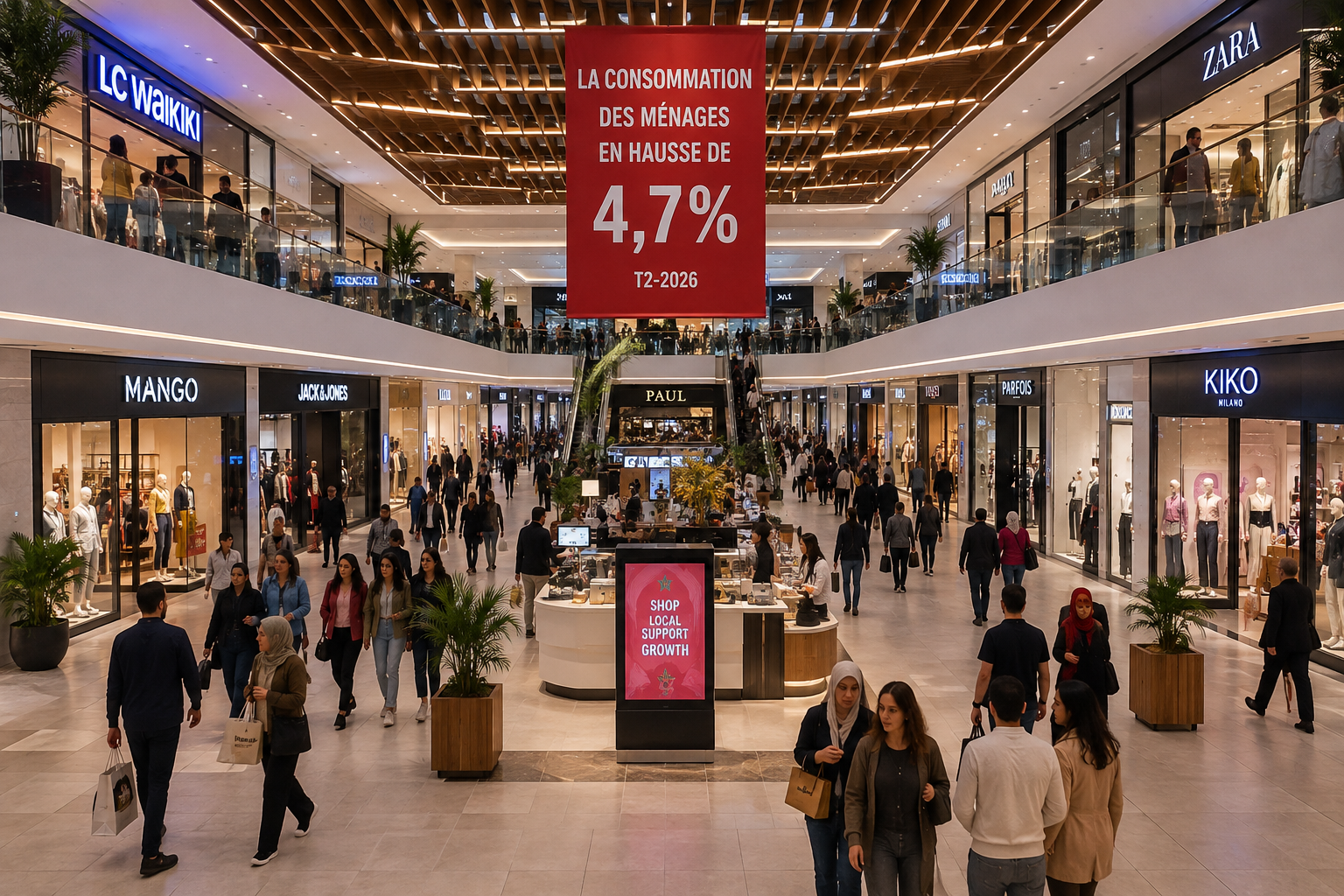
During the second quarter of 2026, household consumption is estimated to have increased by around 4.7%, supported by stronger activity, improving incomes and continued access to household credit.
That number may look modest compared with the double-digit growth seen in some industrial sectors.
It is not.
Consumer spending is the economic base underneath retail.
Restaurants.
Home improvement.
Fashion.
Mobility.
Personal care.
Telecommunications.
Entertainment.
Financial services.
When household spending rises consistently, businesses begin competing for a larger wallet.
That is exactly what is happening in Morocco.
4.7% Is A Broad Economic Signal
Households do not spend through one sector.
They spend everywhere.
Food.
Housing.
Transport.
Clothing.
Education.
Telecoms.
Restaurants.
Home products.
Services.
A rise in household consumption therefore spreads across large parts of the economy.
This matters because consumer growth creates a different kind of resilience from exports.
An automotive factory depends heavily on foreign demand.
A supermarket depends largely on domestic households.
Morocco benefits when both engines work at the same time.
Exports bring foreign currency.
Domestic consumption gives businesses a larger home market.
Retail Expansion Is Following The Consumer
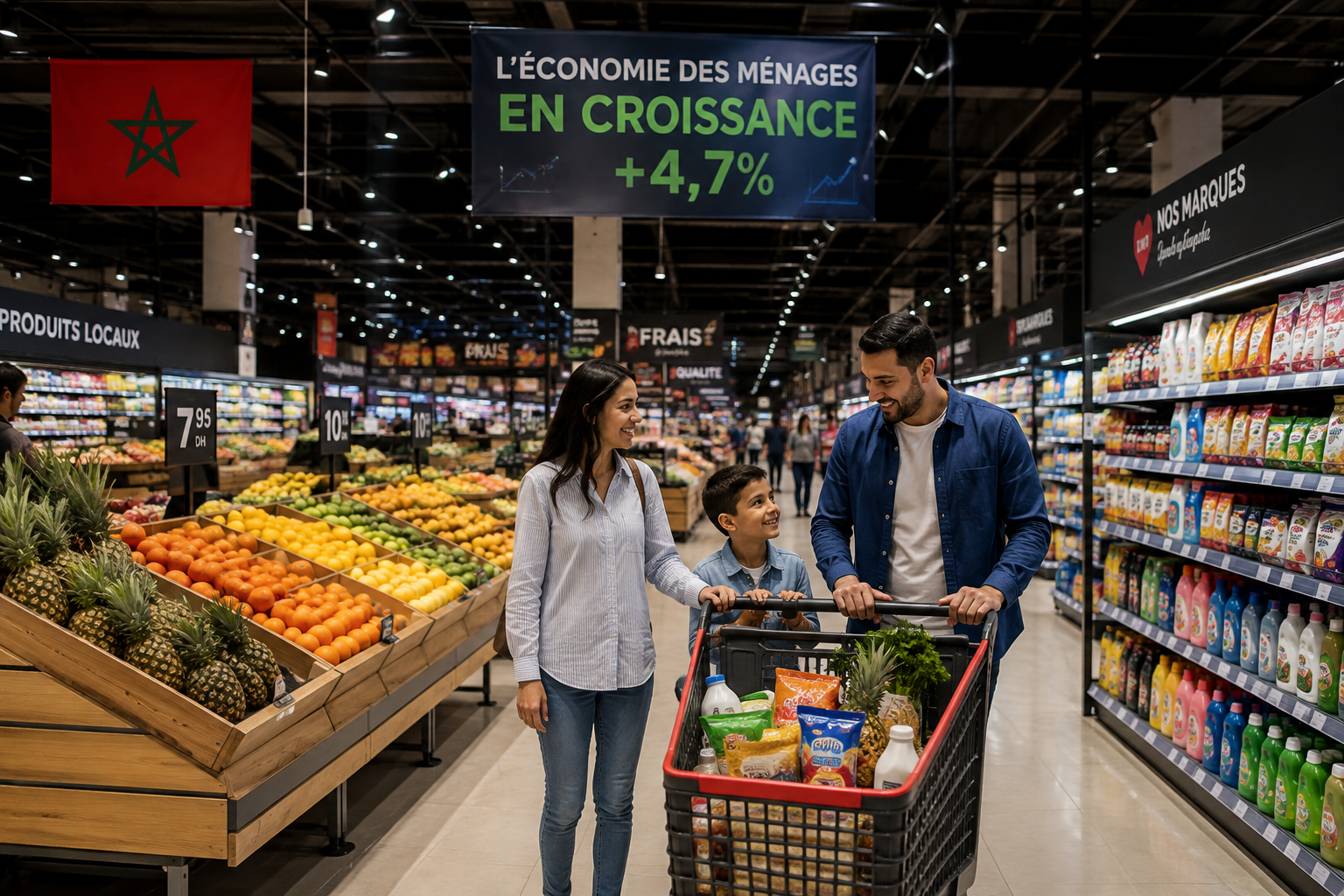
Morocco’s organised retail sector is already expanding aggressively.
Large groups are opening more supermarkets, convenience formats and lifestyle stores.
International brands continue entering the market.
DIY networks are expanding.
Shopping centres are becoming more diversified.
These investments are not happening in isolation.
They reflect expectations that Moroccan households will continue buying more through formal retail channels.
Population matters.
Urbanisation matters.
But spending power ultimately determines whether new stores are viable.
A growing consumer economy gives retailers the confidence to invest ahead of demand.
Morocco Is Moving From Necessity To Choice
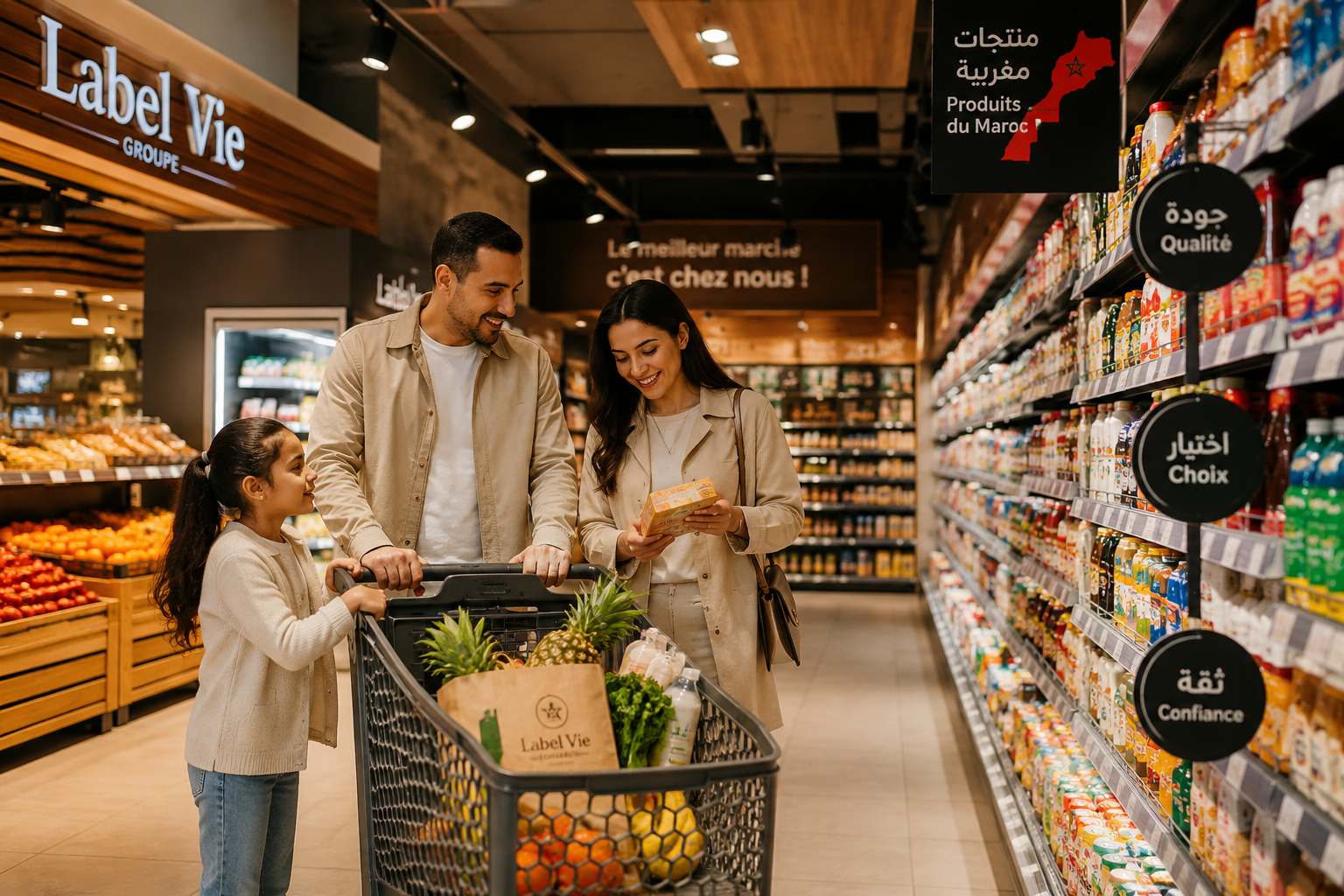
The most important consumer transition happens when households gain enough financial flexibility to choose rather than simply purchase essentials.
Two bottles of olive oil instead of one.
A better phone.
Restaurant dinner.
Home decoration.
Gym membership.
Premium coffee.
Beauty products.
Children’s entertainment.
Home renovation.
This is where entire consumer categories emerge.
The economy moves gradually from necessity-led spending toward discretionary spending.
That does not happen equally across all households.
But even partial movement can create large markets when multiplied across millions of consumers.
Convenience Is Becoming More Valuable
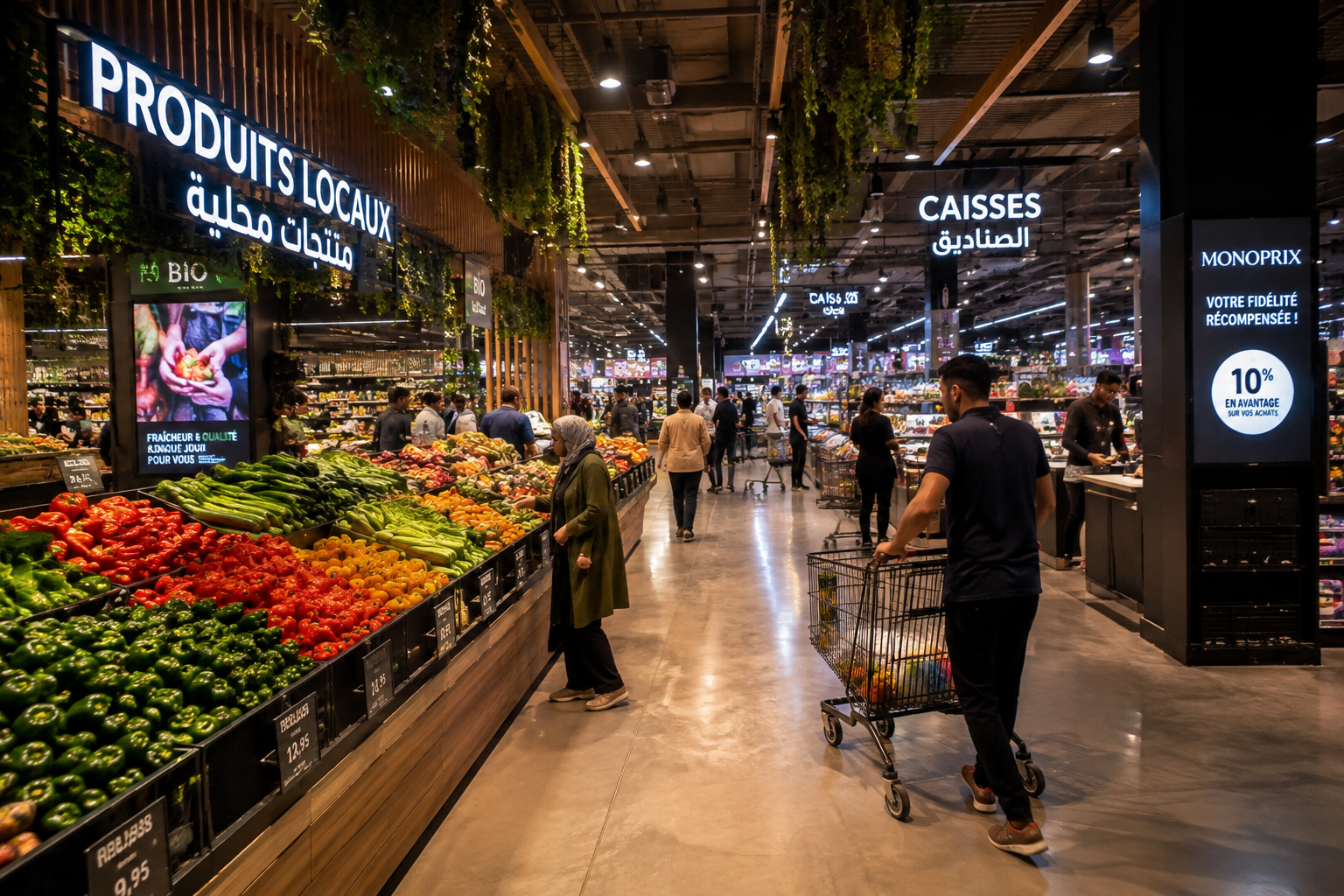
As urban lifestyles become busier, consumers increasingly pay for time.
Delivery.
Nearby stores.
Ready meals.
Digital payments.
Online booking.
Drive-through.
Smaller retail formats.
Convenience is not always the cheapest option.
Consumers accept a premium when it reduces friction.
That explains part of the growth in neighbourhood retail formats.
The economics are simple.
A store five minutes away can compete effectively with a hypermarket twenty-five minutes away even when some products cost slightly more.
Time becomes part of price.
Home Improvement Is A Good Example
Morocco’s expanding DIY retail market illustrates how household spending changes after basic housing needs are met.
The first financial objective is acquiring or renting the home.
Then comes improvement.
Paint.
Lighting.
Storage.
Furniture.
Bathrooms.
Gardens.
Decoration.
A home becomes a recurring consumer asset.
People do not buy it once and stop spending.
They maintain it.
Personalise it.
Upgrade it.
This creates an entire secondary economy around existing housing stock.
A 4.7% increase in household consumption supports precisely these kinds of categories.
Restaurants Benefit From Lifestyle Spending
Eating outside the home is another useful indicator.
Restaurants compete partly with household kitchens.
That means the category becomes stronger when consumers have enough income to purchase convenience, experience and social activity.
Casablanca, Marrakech, Tangier and Rabat increasingly support more sophisticated restaurant markets.
International concepts.
Local premium brands.
Coffee chains.
Fast casual.
Delivery.
The consumer is not simply purchasing calories.
They are purchasing time, atmosphere and experience.
That is a more advanced consumption pattern.
Coffee Is Becoming A Consumer Category Of Its Own
Morocco has always had café culture.
The business model is becoming more segmented.
Traditional cafés remain strong.
Modern specialty coffee is growing.
International chains compete with domestic concepts.
Premium beverages create higher ticket values.
Work-friendly cafés serve another customer mission.
The result is category expansion rather than simple replacement.
The same consumer may visit a traditional café one day and a premium coffee shop the next.
Modern consumer markets often grow this way.
More occasions.
More formats.
More spending opportunities.
Beauty And Personal Care Can Grow Faster Than Income
Some consumer categories grow disproportionately as disposable income rises.
Beauty is a classic example.
Skin care.
Hair care.
Fragrances.
Salon services.
Premium cosmetics.
Consumers can move rapidly from basic products toward more specialised routines.
This attracts international brands.
It also creates opportunities for Moroccan companies.
Local formulations.
Natural ingredients.
Argan-based products.
Beauty retail.
E-commerce.
The stronger household consumption becomes, the larger the addressable market for these businesses.
Children Create Another Large Consumer Economy
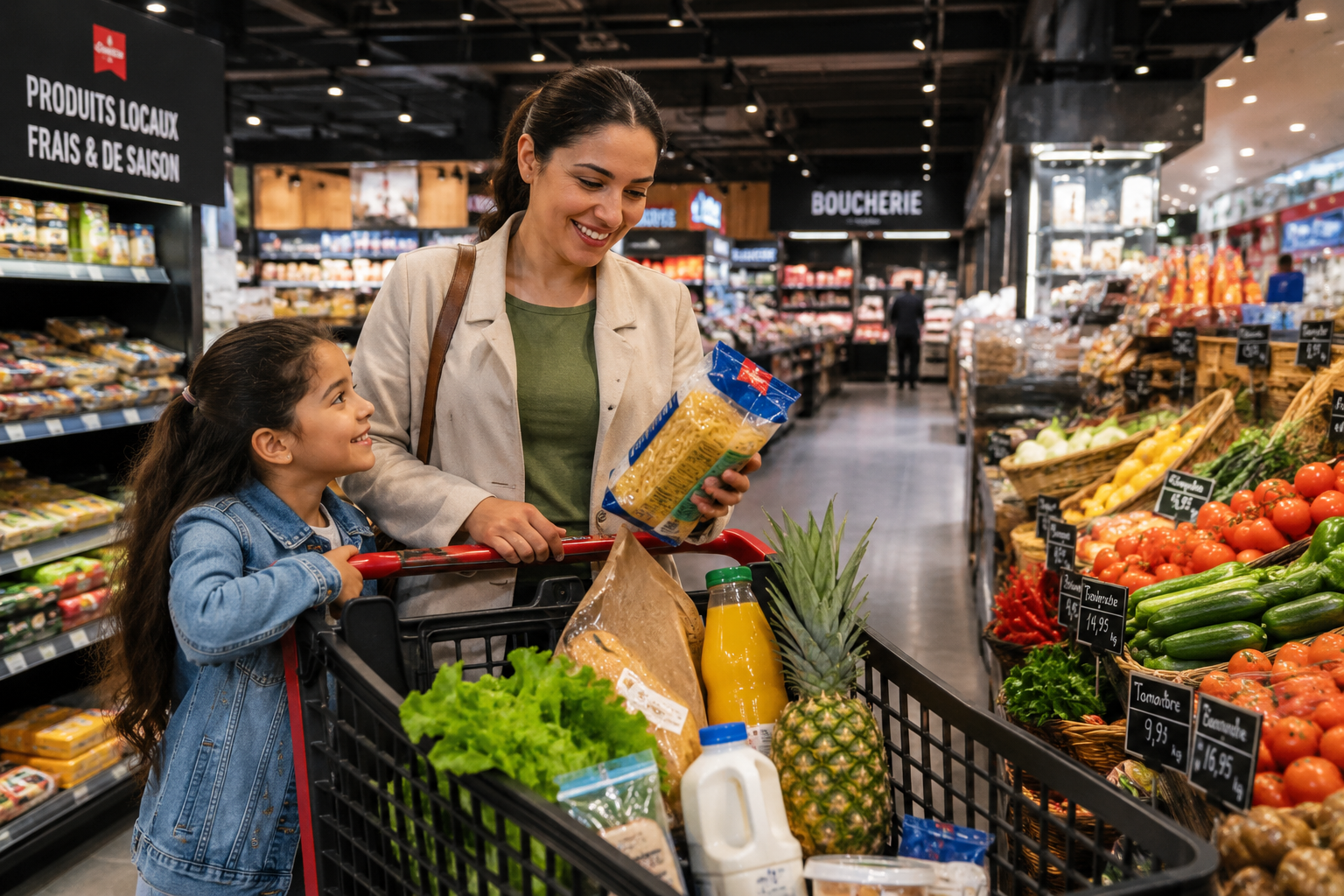
Morocco’s young population creates demand around children.
Education.
Clothing.
Toys.
Entertainment.
Food.
Activities.
Family restaurants.
Sports.
Parents often prioritise spending on children even when they reduce discretionary purchases elsewhere.
That makes family-oriented businesses potentially resilient.
Shopping centres increasingly understand this.
Children’s play zones bring families.
Families stay longer.
Longer visits create more spending across food and retail.
Entertainment becomes traffic infrastructure.
Shopping Centres Are Selling Time
Modern malls are evolving because product retail alone is no longer enough.
Consumers can buy many products online.
A physical destination needs more reasons to visit.
Restaurants.
Cinema.
Gyms.
Children’s entertainment.
Beauty.
Events.
Services.
The mall becomes a place to spend several hours rather than simply complete one purchase.
That changes property economics.
Retailers benefit from footfall created by entertainment.
Restaurants benefit from shoppers.
Entertainment benefits from families already present.
The categories reinforce one another.
Digital Payments Can Increase Consumer Frictionlessness
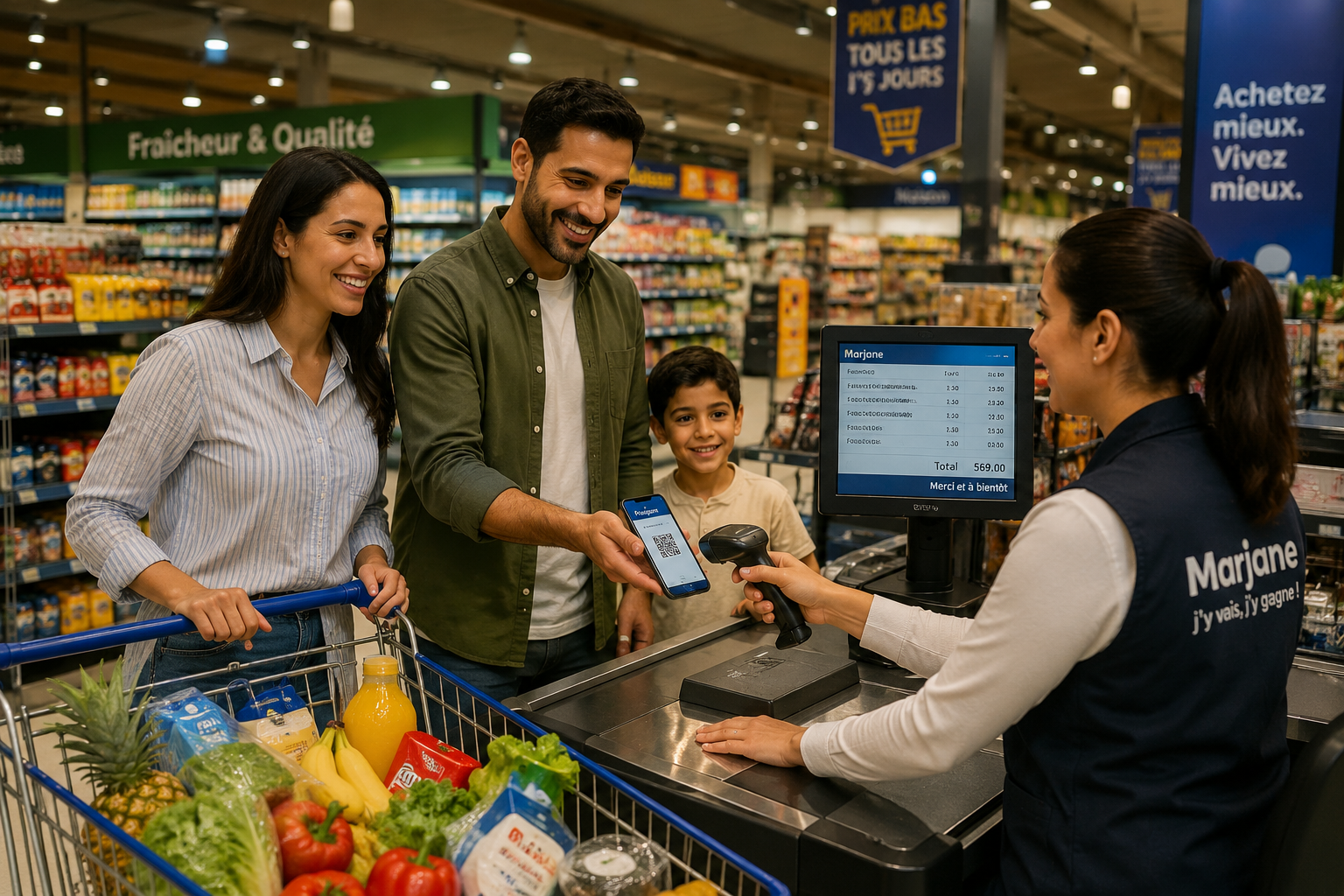
Payment methods influence spending behaviour.
Cash remains fundamental in Morocco.
Digital payments are expanding.
Cards.
Mobile wallets.
Online checkout.
Buy-now-pay-later models where appropriate.
The easier payment becomes, the easier commerce becomes.
This does not mean consumers necessarily spend irresponsibly.
It means businesses can reduce transaction friction.
A customer can order online.
Pay instantly.
Receive delivery.
Convenience increases conversion.
For retailers, payment infrastructure becomes part of customer experience.
Credit Can Support Consumption — But Needs Discipline
Household credit can support demand.
Mortgages.
Vehicle finance.
Consumer loans.
Cards.
Used appropriately, credit helps households spread the cost of major purchases.
The risk appears when spending grows faster than income.
Consumer expansion built primarily on excessive debt is fragile.
Morocco’s household-consumption story therefore needs to remain linked to employment and income growth.
The strongest consumer markets grow because people earn more, not simply because they borrow more.
Credit should accelerate purchasing power.
It should not substitute for it permanently.
Cars Remain A Major Consumer Aspiration
Mobility is another large spending category.
Vehicle purchases.
Fuel.
Insurance.
Maintenance.
Finance.
Ride-hailing.
Public transport.
As incomes rise, mobility options expand.
A household may move from shared transport toward one car.
Then perhaps two.
Others may use ride-hailing more frequently instead of ownership.
Consumer growth therefore does not support only vehicle manufacturers.
It supports an entire mobility economy.
Banks.
Insurers.
Dealerships.
Maintenance networks.
Technology platforms.
Fashion Becomes More Competitive
Moroccan fashion consumers increasingly compare local retail with what they see abroad.
International travel.
Instagram.
TikTok.
Global e-commerce.
Price transparency.
This forces retailers to improve.
Better assortments.
Faster collection cycles.
Stronger stores.
Online integration.
More reliable stock.
Fashion becomes a demanding market once consumers know exactly what is available elsewhere.
International brands can benefit.
Moroccan brands can too if they combine local manufacturing, faster response and stronger identity.
E-Commerce Expands The Addressable Market
A physical store depends on location.
E-commerce changes geography.
A Casablanca company can sell to Tangier.
A Tangier brand can sell to Marrakech.
A specialist product can reach consumers in cities too small to support dedicated shops.
This makes niche consumer businesses more viable.
Home products.
Beauty.
Fashion.
Speciality foods.
Children’s products.
The customer base becomes national.
Delivery quality and digital trust therefore become increasingly important parts of Morocco’s consumer infrastructure.
Last-Mile Logistics Is A Consumer Industry
The growth of e-commerce creates demand for:
Warehouses.
Delivery fleets.
Pickup points.
Returns.
Address management.
Customer support.
Logistics becomes invisible retail infrastructure.
A beautiful website cannot compensate for unreliable delivery.
Consumers increasingly judge the brand and the delivery company as one experience.
That creates opportunities for Moroccan logistics startups and established transport groups.
The consumer economy therefore produces technology and infrastructure businesses around it.
Housing Costs Still Limit Disposable Income
Consumer optimism should remain balanced.
Housing is one of the largest household expenses.
Rent.
Mortgages.
Utilities.
Maintenance.
When housing costs rise faster than incomes, discretionary spending suffers.
That can create a strange economy where consumers appear wealthier through property values but have less free cash every month.
Retail companies need to understand this.
Population growth alone does not guarantee purchasing power.
Disposable income determines how much of the household budget remains after essentials.
Inflation Changes What 4.7% Feels Like
Nominal spending and real purchasing power are not identical.
If prices rise, households can spend more money while purchasing fewer goods.
That is why consumer businesses need to look beyond topline sales.
Volume matters.
Basket size.
Customer frequency.
Product mix.
A retailer growing revenue because prices increased is in a different position from one growing because more customers are buying more products.
The strongest consumer growth is real growth.
More activity.
Not simply higher prices.
Value Retail Will Remain Powerful
Morocco’s consumer market is not becoming exclusively premium.
The opposite.
As markets mature, several price levels develop simultaneously.
Premium consumers trade up.
Middle-income households seek value.
Price-sensitive consumers remain important.
This creates room for several successful models.
Discount retail.
Mainstream.
Premium.
Luxury.
The mistake is trying to serve everyone with one proposition.
Successful consumer companies know exactly which wallet they are targeting.
Private Labels Can Win In A Value-Conscious Market
Retailer-owned brands become especially attractive in this environment.
Consumers want quality.
They also want price.
Private labels can offer both when executed well.
Food.
Household cleaning.
Personal care.
Home products.
Retail groups can use their purchasing scale to create alternatives to international brands.
This can improve margins while giving customers lower-priced choices.
It also creates manufacturing opportunities for Moroccan suppliers.
Consumer growth therefore can strengthen domestic production indirectly.
Moroccan Brands Have A Home-Market Advantage
International companies bring capital and global recognition.
Moroccan brands possess something else.
Local understanding.
Taste.
Language.
Price sensitivity.
Distribution relationships.
Culture.
A strong domestic market gives Moroccan companies a place to build scale before expanding internationally.
This is important.
Regional champions often begin with dominant home positions.
Morocco’s growing consumer economy can therefore function as an incubator for future African brands.
Data Will Determine Which Retailers Win
More spending creates more competition.
Competition increases the value of customer data.
Which products sell together?
Which stores perform best?
What time do customers visit?
Which promotions work?
Which customers return?
Modern retailers increasingly use this information to reduce waste and improve assortment.
The company with the best store is not automatically the winner.
The company understanding customers best can allocate inventory and marketing more effectively.
Retail becomes a data business behind the scenes.
Loyalty Programmes Will Become More Valuable
A loyalty programme connects anonymous transactions over time.
That gives businesses deeper understanding.
Frequency.
Basket.
Preferences.
Response to promotions.
A strong programme can also increase switching costs.
Customers accumulate benefits.
Retailers can personalise offers.
But data use must remain responsible.
Trust matters.
Consumers should not feel monitored simply because they bought groceries.
The strongest loyalty systems provide visible value in exchange for data.
Consumer Growth Creates More Advertising Value
As household spending rises, brands become more willing to pay to influence purchasing decisions.
Retail media.
Digital advertising.
Influencers.
In-store displays.
Loyalty apps.
This creates another industry around consumption.
Morocco’s hanouts themselves are beginning to become digital advertising locations.
Supermarkets can monetise their customer data and shelf visibility.
Consumer growth therefore does not only benefit manufacturers and retailers.
It benefits the businesses helping them compete for attention.
Secondary Cities Could Produce The Next Growth Wave
Casablanca naturally captures a large share of consumer spending.
But organised retail is increasingly moving into smaller cities.
Kenitra.
Tetouan.
Oujda.
El Jadida.
Beni Mellal.
Other growing urban markets.
Retail groups can now support national networks through central logistics and technology.
A city does not need Casablanca-sized demand to justify modern formats.
As incomes and formal employment rise regionally, secondary markets become more attractive.
That spreads the consumer economy geographically.
Rural Consumption Matters Too
Agricultural recovery in 2026 can strengthen rural incomes.
That means the household-consumption story is not entirely urban.
A strong agricultural year can support spending on:
Vehicles.
Phones.
Home improvement.
Retail goods.
Education.
Farm equipment.
Rural consumer demand is often overlooked because it is more geographically dispersed.
But collectively it can be significant.
Retailers able to serve smaller cities and regional centres can capture part of that spending.
Consumer Services Could Outgrow Goods
As incomes rise, households increasingly purchase services.
Fitness.
Education.
Childcare.
Beauty.
Travel.
Food delivery.
Entertainment.
Financial services.
The economy gradually becomes more service-heavy.
This is important because services create different types of jobs.
Trainers.
Teachers.
Beauticians.
Drivers.
Software operators.
Hospitality employees.
The consumer boom therefore changes employment as well as retail.
Experience Spending Can Become More Important
Younger consumers often value experiences strongly.
Restaurants.
Travel.
Festivals.
Fitness.
Events.
Entertainment.
This can change the traditional relationship between income and material goods.
A household may postpone buying furniture but spend on a weekend trip.
A young professional may spend less on car ownership and more on delivery, travel and entertainment.
Consumer markets therefore need to understand lifestyle shifts, not simply income levels.
Morocco’s Tourism Economy Reinforces Domestic Consumption
Tourists and residents often consume through the same businesses.
Restaurants.
Malls.
Retail.
Transport.
Entertainment.
This creates useful overlap.
A restaurant supported by local customers during the week can benefit from tourists on weekends.
A fashion retailer serves Moroccans and international visitors.
A shopping centre captures domestic and tourism spending.
The larger both markets become, the stronger the economics of consumer infrastructure.
Businesses Need To Avoid Overestimating The Boom
Growth stories attract overexpansion.
Too many stores.
Too many restaurants.
Too much commercial property.
Too much inventory.
Household spending growing 4.7% does not mean every consumer concept will work.
Location still matters.
Pricing still matters.
Execution still matters.
Businesses should not confuse national growth with guaranteed local demand.
The strongest operators will expand selectively.
4.7% Is Really About Confidence
Households spend more when they feel secure enough to do so.
Employment.
Income.
Economic expectations.
Access to finance.
Consumer confidence is therefore partly psychological.
A family expecting difficult times saves more.
A family confident about future income may renovate the home, buy a car or travel.
That makes household consumption a useful signal about how economic growth reaches ordinary behaviour.
It connects macroeconomics with daily life.
Morocco’s Consumer Economy Is Becoming More Valuable
A 4.7% increase in household spending may not create the same headlines as a multibillion-dirham factory.
But consumer spending determines whether thousands of businesses have customers tomorrow.
Retailers.
Restaurants.
Beauty companies.
DIY stores.
Fashion brands.
Banks.
Telecom operators.
Entertainment businesses.
Digital platforms.
The entire consumer economy depends on the household wallet.
Morocco is gradually becoming a larger market not only for companies that want to manufacture here, but for companies that want to sell here.
That distinction matters.
An economy becomes more attractive when it offers both production capacity and consumer demand.
Morocco increasingly has both.
The next phase will be decided by the companies that understand that 4.7% household spending growth is not one statistic.
It is millions of individual decisions about where Moroccan families choose to spend the next dirham.
 Jamal Mahdad, Founder & Editor-in-Chief