

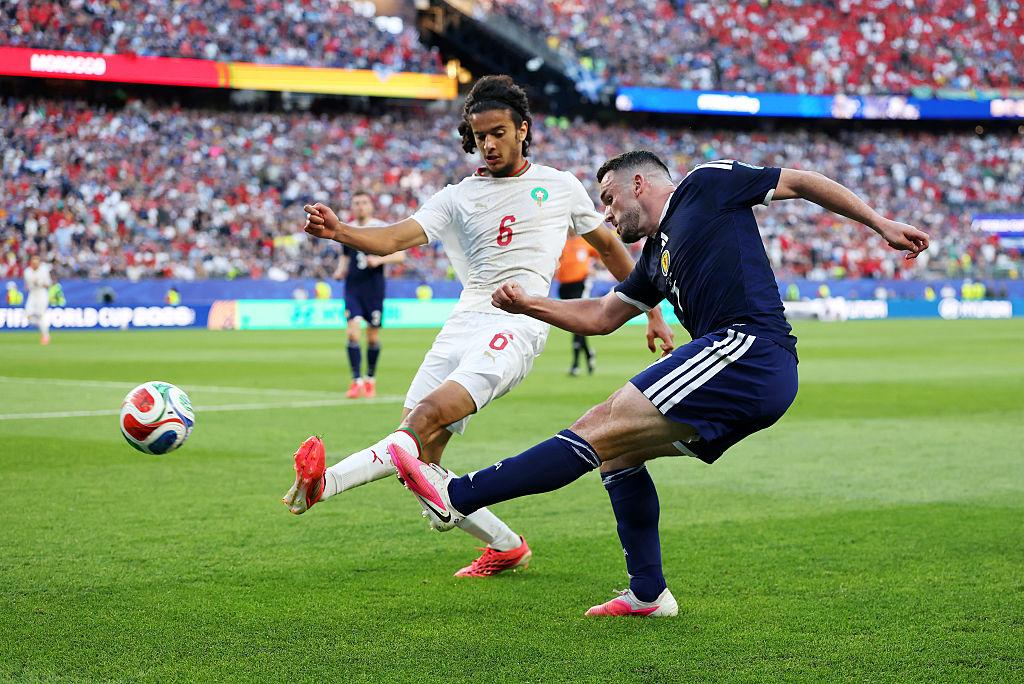
Morocco are no longer only the World Cup team of passion, flags and heroic defending.
They are becoming the team of control.
The Atlas Lions made history against Scotland by completing 601 passes, the most ever recorded by an African team in a FIFA World Cup match since records began in 1966.
That number changes the conversation.
Morocco are not just fighting.
They are playing.
A Record That Says Something Bigger
A passing record is not as emotional as a last-minute goal.
It does not make fans jump out of their seats in the same way.
But it can say something deeper about a team.
601 completed passes means control.
It means patience.
It means confidence.
It means players trusted each other under pressure.
For Morocco, that matters because the world has often seen African teams through the wrong lens: energy, speed, emotion and physical power.
Now Morocco are showing something else.
Technical authority.
The Scotland Win Was More Than 1-0
The scoreline against Scotland was narrow.
1-0.
One early goal from Ismael Saibari after just 71 seconds.
But the performance told a bigger story.
Morocco did not simply defend a lead and survive.
They dominated possession, moved the ball, controlled long phases and forced Scotland to chase.
That is why the passing record matters.
It proves the win was not only about one fast moment.
It was about a team that could manage the game.
The Atlas Lions Are Evolving
Morocco’s 2022 World Cup run was built on courage, defensive organisation and unforgettable emotion.
The team beat giants, shocked the world and became the first African and Arab side to reach a World Cup semi-final.
That image will never disappear.
But 2026 is showing a different layer.
Morocco still have passion.
Morocco still have discipline.
Morocco still have the red-wall energy of their supporters.
But now they are adding controlled possession and tactical maturity.
That is evolution.
601 Passes Changes The Image
For years, many people expected African teams to play fast, direct and emotional football.
That stereotype is becoming outdated.
Morocco’s 601-pass record shows an African team can control a World Cup match with the ball, not only without it.
That is powerful.
It gives the Atlas Lions a more modern image.
Not only brave.
Not only intense.
Not only difficult to beat.
But calm, technical and intelligent.
This is the kind of football that earns respect in every continent.
From Underdogs To Game Managers
The biggest change is psychological.
Morocco are no longer just the underdogs trying to survive against famous football nations.
They are becoming a team that can manage matches on their own terms.
Against Brazil, Morocco showed they could compete with a world giant.
Against Scotland, they showed they could control a game they were expected to win.
Those are different tests.
A serious team must handle both.
Morocco are learning how.
Saibari Gave The Spark

The passing record should not hide the player who opened the door.
Ismael Saibari scored after 71 seconds, giving Morocco the perfect start.
That early goal changed the match.
It forced Scotland to react.
It gave Morocco confidence.
It allowed the Atlas Lions to dictate rhythm.
Saibari’s rise has been one of Morocco’s biggest stories of the tournament, but the Scotland match also showed that the team is bigger than one player.
The goal was the spark.
The passing was the control.
Ouahbi’s Team Looks Composed

Coach Mohamed Ouahbi deserves credit for the shape of the team.
Morocco looked organised, aggressive and calm.
That combination is not easy.
A team can press without control.
A team can keep the ball without danger.
A team can defend without ambition.
Morocco found a better balance.
They were not perfect.
They could have scored more.
But they looked like a side with a clear plan.
That is what serious tournament teams need.
Why Passing Matters In A World Cup
In a World Cup, possession can be dangerous if it is slow and empty.
But useful possession can protect a team.
It can reduce pressure.
It can frustrate opponents.
It can save energy.
It can control the emotional temperature of a match.
When Morocco kept the ball against Scotland, they were doing more than passing sideways.
They were telling Scotland: you must chase us.
That can break a team mentally.
A New Standard For African Football
The record also matters beyond Morocco.
An African team completing 601 passes in a World Cup match is a statement for the continent.
It shows that African football is not one style.
It can be physical.
It can be technical.
It can be tactical.
It can be direct.
It can be patient.
Morocco’s performance adds another example of African football’s evolution on the global stage.
That is why the record is bigger than statistics.
It is about perception.
Fans Have A Different Kind Of Pride
Moroccan fans love drama.
They love goals.
They love emotion.
But there is another kind of pride in watching your team control a World Cup match.
It feels mature.
It feels confident.
It feels like Morocco belong at this level.
Supporters are no longer only celebrating survival.
They are celebrating authority.
That is a new feeling.
And it is a good one.
The Haiti Match Becomes The Next Test
Morocco now move toward their final group match against Haiti with confidence.
But confidence must be handled carefully.
A passing record does not win the next game.
A strong performance does not guarantee qualification.
Tournament football can change quickly.
Morocco will need the same focus, the same discipline and the same hunger.
If they bring that again, they will believe they can take another step.
The Bigger 2030 Message

This also fits Morocco’s larger football story.
The country will co-host the 2030 FIFA World Cup with Spain and Portugal.
That means Morocco is not only trying to compete in world football.
It is preparing to help host it.
A national team that plays with technical confidence strengthens that image.
It tells the world that Moroccan football is not only about stadiums and fans.
It is also about quality on the pitch.
The Final Whistle
Morocco’s 601-pass record against Scotland is more than a statistic.
It is a sign that the Atlas Lions are changing how the world sees them.
After the emotion of 2022, Morocco are now showing control, maturity and technical authority at the 2026 World Cup.
The 1-0 win over Scotland gave Morocco three points.
But the passing record gave them something else.
A new image.
The Atlas Lions are not only brave.
They are becoming pass masters.