

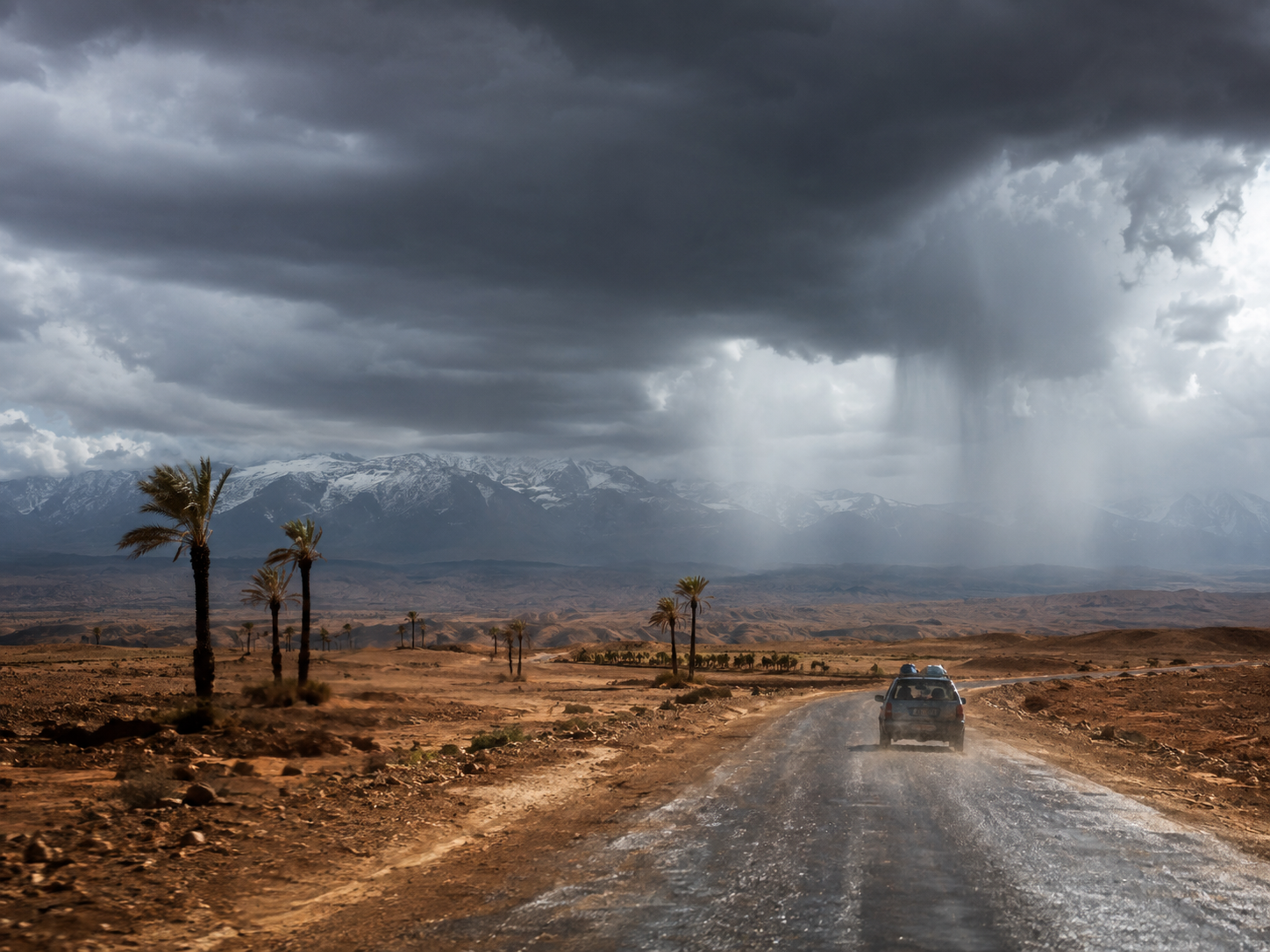
Morocco is facing two very different sides of summer at the same time, with temperatures climbing as high as 45°C in the south while thunderstorms, hail and strong winds hit northern and mountain regions.
Morocco’s summer weather has taken a dramatic turn.
On Wednesday, August 19, parts of the country were baking under extreme heat while other regions were preparing for thunderstorms, hail and sudden wind gusts.
The contrast was unusually sharp.
In Aousserd, temperatures were forecast to reach 45°C.
At the same time, Morocco’s General Directorate of Meteorology warned of locally strong thunderstorms across the High and Middle Atlas, the Rif and parts of the northern Oriental region.
45°C IN THE SOUTH
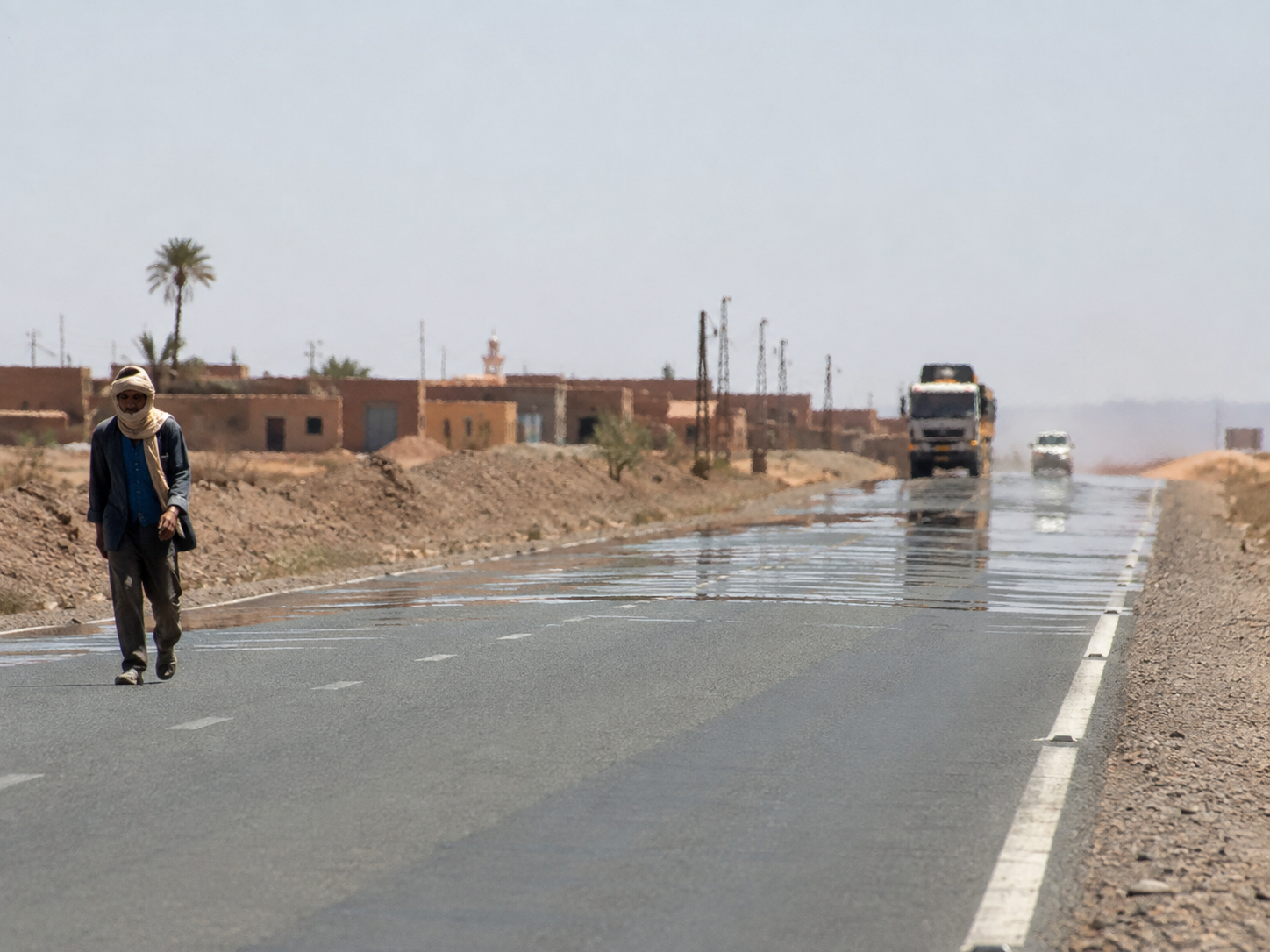
The hottest conditions were concentrated in Morocco’s southern regions.
Aousserd was expected to reach 45°C, making it the hottest location among the temperatures published for August 19.
Other inland cities were also dealing with significant heat.
Bouarfa and Taounate were forecast around 38°C, while Fès and Oujda were expected to reach approximately 36°C.
The Atlantic coast was far cooler.
Casablanca was forecast at around 25°C, Tangier at 28°C and Agadir at just 23°C.
That difference shows just how dramatically Morocco’s geography can change the weather over relatively short distances.
A traveller leaving the Atlantic coast can encounter temperatures more than 20 degrees higher farther south.
THEN CAME THE STORMS
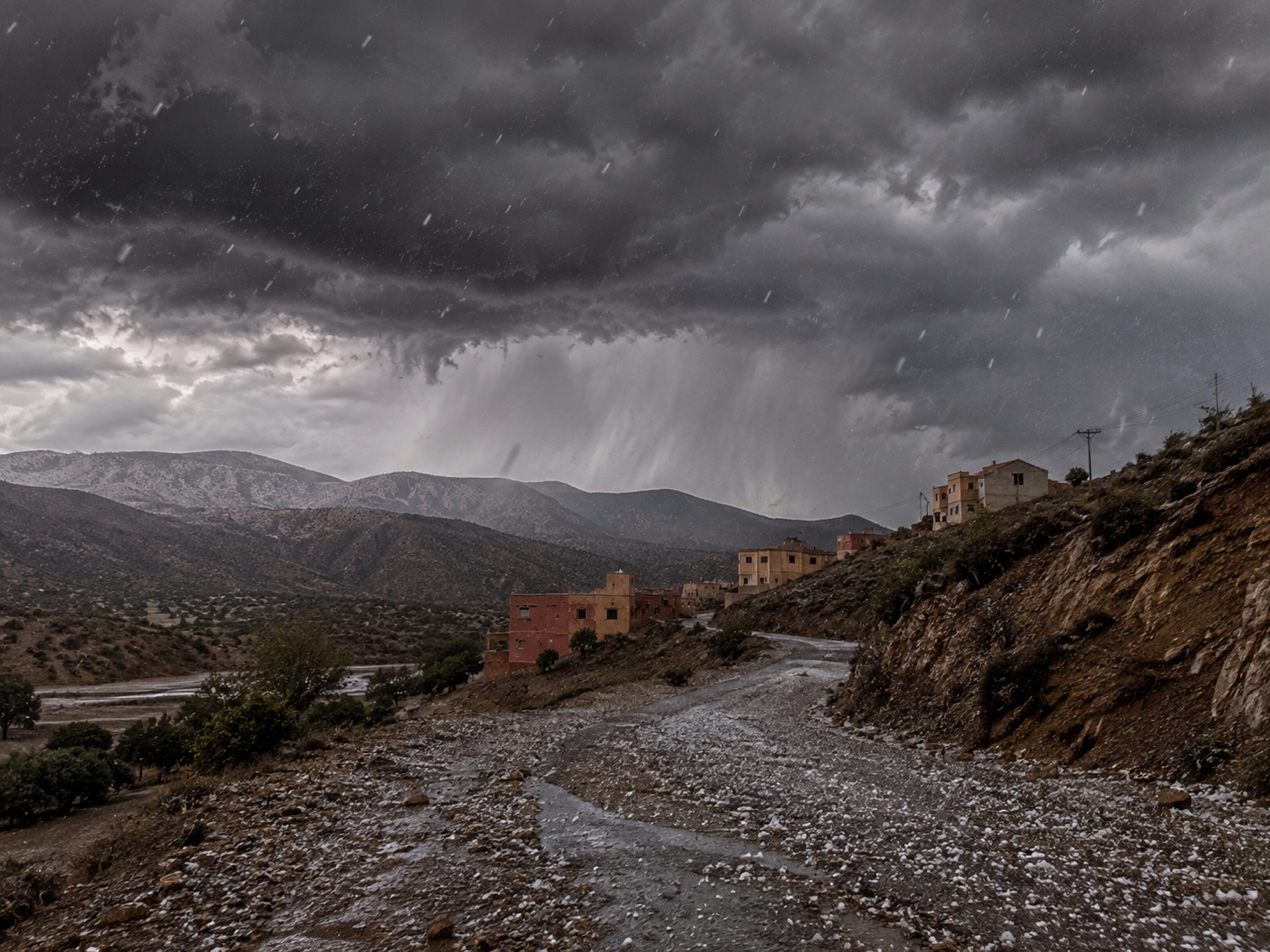
While southern Morocco dealt with heat, parts of the north and mountain regions were facing a very different threat.
The weather authority forecast locally strong thunderstorms, with the possibility of hail and gusty winds across the High Atlas, Middle Atlas, Rif and northern Oriental region.
Later on Wednesday, another forecast warned of thunderstorms accompanied by hail and wind gusts in several northeastern provinces.
Summer thunderstorms can develop quickly.
A clear afternoon can turn into heavy rain, lightning and strong wind within a short period.
For drivers, hikers and people travelling through mountain areas, that can create difficult conditions with little warning.
HAIL ADDS ANOTHER RISK
Rain is often welcomed in a country that has spent years dealing with water stress.
Hail is different.
Heavy hail can damage crops, vehicles and exposed property in minutes.
Strong thunderstorms can also produce sudden runoff in valleys and dry riverbeds, especially when rain falls intensely over a small area.
That is why the combination of heat, storms and hail can be more disruptive than a normal summer shower.
The danger is not necessarily how long the storm lasts.
It is how quickly conditions change.
COASTAL MOROCCO ESCAPES THE WORST OF THE HEAT
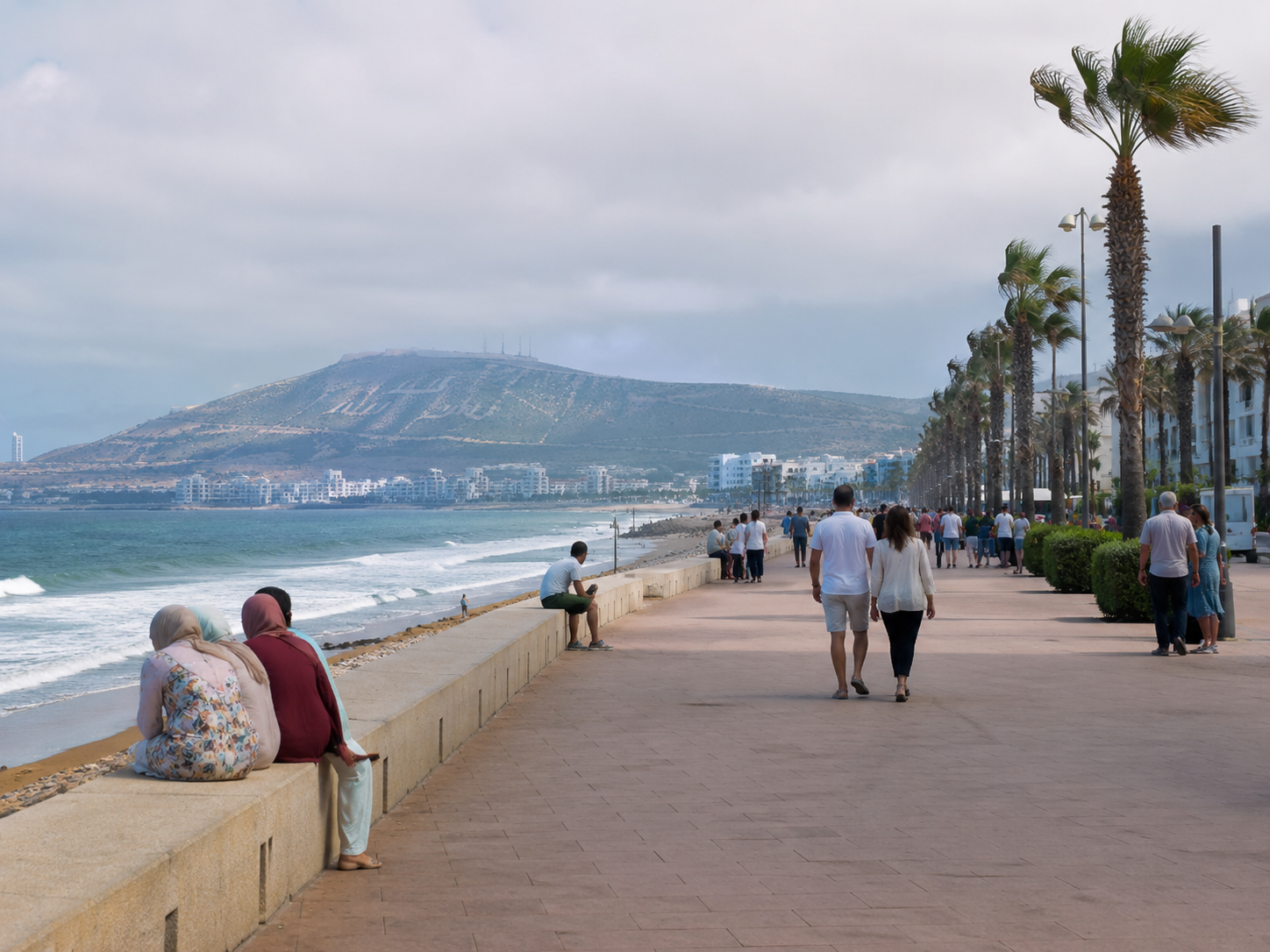
The temperature gap between Morocco’s coast and interior was especially noticeable.
Agadir, at around 23°C, was expected to remain far cooler than Aousserd at 45°C.
Casablanca and Rabat were also forecast in the mid-to-high 20s.
That cooler Atlantic influence is one reason Morocco’s coastal cities can feel completely different from inland destinations during August.
For tourists, that can make planning surprisingly complicated.
A beach holiday may feel mild.
A road trip inland can feel completely different.
And a mountain excursion can suddenly bring storms.
MOROCCO HAS ALREADY SEEN EXTREME WEATHER THIS MONTH
The August 19 conditions were not an isolated event.
Earlier in August, Moroccan authorities issued several orange-level alerts combining severe thunderstorms with temperatures of up to 48°C in some provinces.
On August 14, for example, forecasters warned of thunderstorms producing 20 to 35mm of rain in several provinces while temperatures between 45°C and 48°C were expected in southern areas including Aousserd, Oued Ed-Dahab, Boujdour and Tata.
The pattern is becoming familiar.
Intense heat builds.
Then pockets of unstable air trigger sudden storms.
The result can be two completely different weather stories unfolding in the same country on the same day.
A SUMMER OF EXTREMES
Morocco’s geography makes these contrasts possible.
The Atlantic and Mediterranean coasts moderate temperatures.
The Atlas mountains create their own weather systems.
The interior and southern desert regions can experience extreme heat.
That means “the weather in Morocco” can be a misleading phrase.
There is rarely just one version of it.
On August 19, someone in Agadir could have been enjoying temperatures in the low 20s.
Hundreds of kilometres away, someone in Aousserd could have been dealing with 45°C heat.
And in the mountains, thunderstorms and hail were developing.
TRAVELLERS SHOULD WATCH LOCAL FORECASTS
For people moving around the country, the lesson is simple.
Checking only the temperature is not enough.
Thunderstorm warnings matter.
Wind warnings matter.
And mountain conditions can change fast.
Drivers should be especially cautious where heavy rain can reduce visibility or create sudden surface water.
Hikers and campers should avoid exposed areas when thunderstorms are forecast.
And in southern regions, heat precautions remain essential during the hottest part of the day.
Morocco’s summer is still delivering sunshine.
But this week, it is also delivering something much more unpredictable.
45°C heat in the south.
Hail in the mountains.
Thunderstorms in the north.
All in the same country.
 Jamal Mahdad, Founder & Editor-in-Chief