

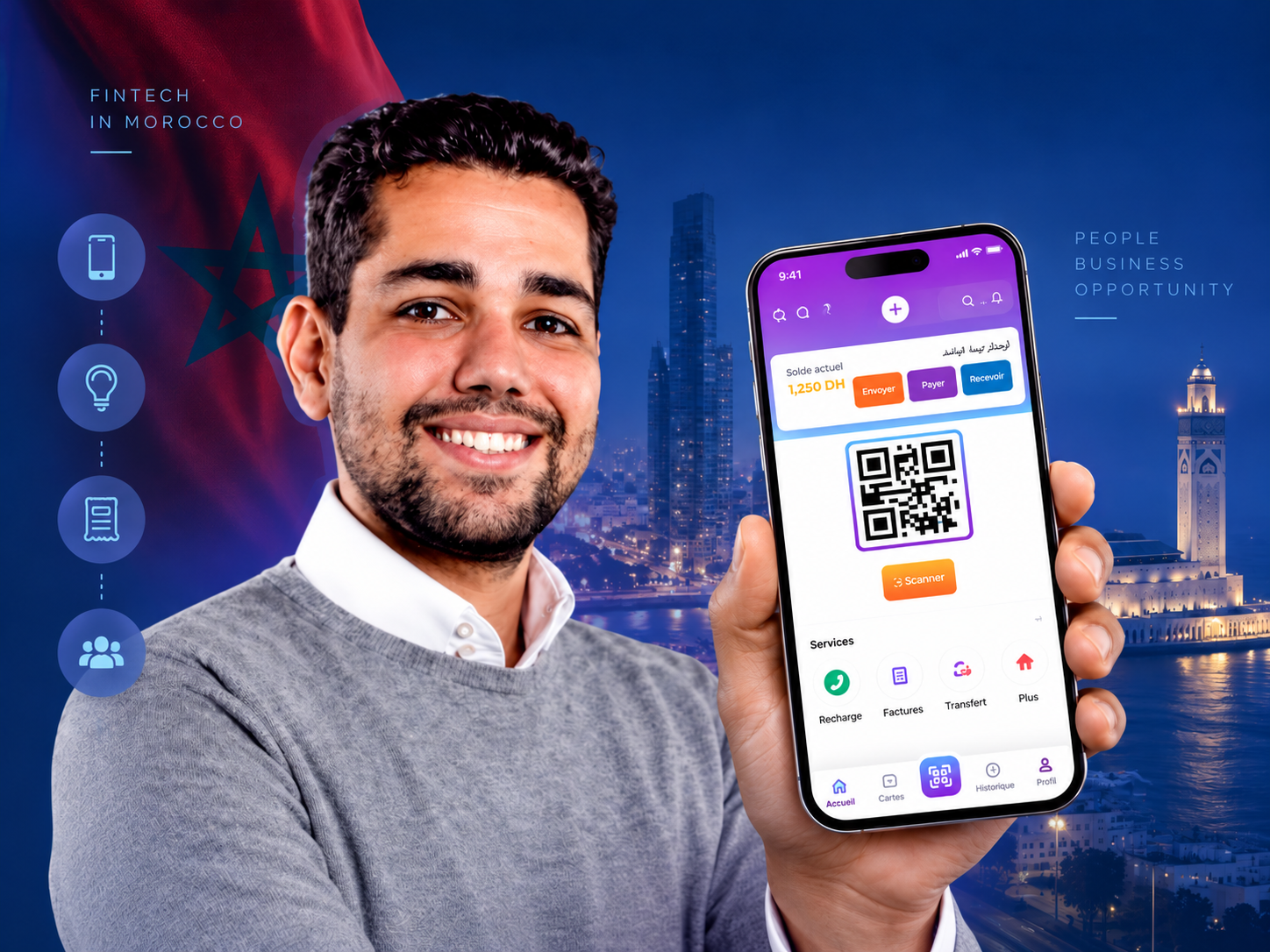
A Moroccan fintech says it is processing 250,000 transactions a day through a network of 20,000 neighbourhood merchants — turning the country's traditional corner shops into a growing channel for digital financial services.
The company is Waly Cash, formerly known as WafR, a Casablanca-based startup founded in 2021 by Ismail Bargach and Reda Sellak.
Its business is built around one of Morocco's most familiar commercial institutions: the hanout, the small neighbourhood shop that serves millions of consumers.
Rather than replacing these retailers with an entirely digital model, Waly Cash provides technology that allows them to offer services beyond traditional grocery sales.
The company reported nearly 20,000 active merchants earlier in 2026. Cofounder Reda Sellak has since disclosed that the platform handles approximately 250,000 transactions daily.
The figures are company-reported and have not been independently audited by Morocco Times Daily.
For Morocco's fintech industry, they point to an increasingly important opportunity: building digital financial services around the retail networks that already exist.
Turning Corner Shops Into Financial Access Points
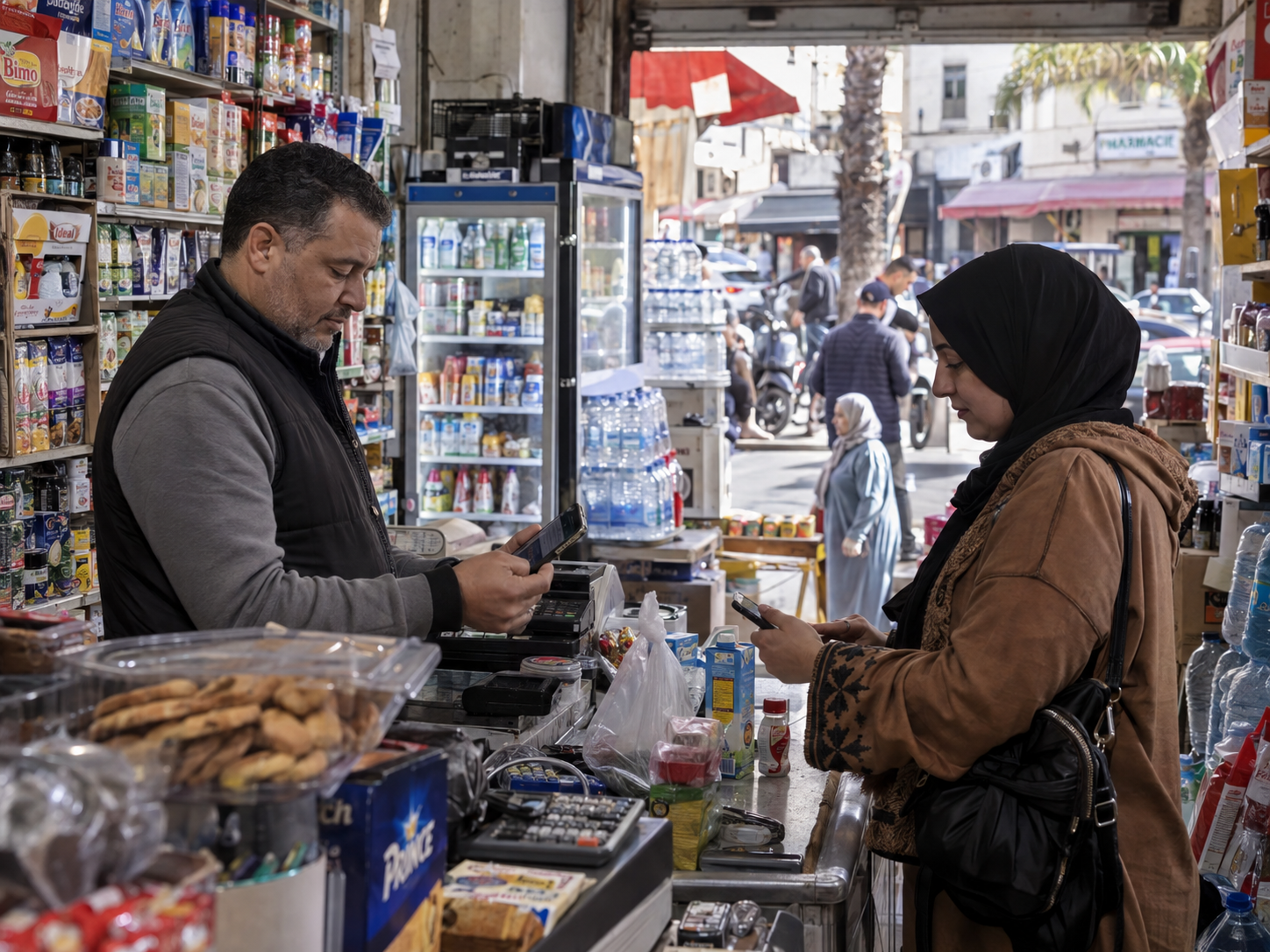
Waly Cash's model starts with distribution.
Morocco's neighbourhood grocery stores are deeply embedded in local communities, particularly in residential areas where consumers rely on nearby merchants for everyday purchases.
The company uses that existing infrastructure to distribute digital services.
Participating shopkeepers can offer mobile-phone top-ups, bill payments and other electronic transactions alongside their regular business.
For merchants, these services can create an additional source of income.
For customers, they provide access to financial and digital services through familiar local businesses.
For Waly Cash, the approach offers a way to expand without building a conventional branch network.
The strategy is particularly relevant in a market where cash remains widely used and smaller retailers continue to play an important role in everyday commerce.
From WafR to Waly Cash
The company adopted the Waly Cash name in July 2026, reflecting its ambition to develop a broader financial-services business.
The rebranding followed a significant funding round earlier in the year.
In February, the company announced an oversubscribed $4 million seed investment, co-led by LoftyInc Capital, Attijariwafa Ventures and Al Mada Ventures.
Existing investors UM6P Ventures and First Circle Capital also participated.
The funding was intended to support expansion of the merchant network and development of additional financial products.
The involvement of investors with interests in financial technology and African venture capital highlights the commercial appeal of using traditional retail networks to distribute digital services.
But the investment is only one part of the company's development.
Its ability to turn those resources into sustainable revenue will ultimately matter more than the amount raised.
250,000 Transactions a Day
Waly Cash's reported transaction volume provides a clearer indication of how frequently its technology is being used.
Cofounder Reda Sellak disclosed that the platform processes approximately 250,000 transactions a day.
He also reported traffic peaks of 60 transactions per second, with response times below 200 milliseconds.
These are operational figures supplied by the company, rather than independently verified performance measurements.
Nevertheless, they illustrate the technical demands of operating a platform used repeatedly by thousands of small businesses.
As transaction volumes increase, the challenge shifts from acquiring merchants to maintaining reliable infrastructure.
Payment-related services require systems that can process requests accurately, remain available during periods of high demand and protect transaction information.
For Waly Cash, that reliability will be central to retaining merchants as the network develops.
The Next Opportunity Is Beyond Bill Payments
The company's ambitions extend beyond mobile top-ups and bill payments.
Waly Cash has outlined plans to introduce peer-to-peer money transfers and domestic remittance services through its merchant network.
Those products could broaden the role of participating shops.
A retailer that currently handles mobile recharges could eventually offer customers access to a wider range of financial transactions.
But moving into more complex financial services also introduces additional challenges.
Regulatory requirements, security, liquidity management and customer protection become increasingly important.
The opportunity is substantial, but expanding the range of services will require more than adding new features to an application.
It will require a reliable operating model that works for merchants, customers and financial partners.
From Rapid Expansion to Sustainable Scale
Waly Cash illustrates an important shift in Moroccan financial technology.
Many digital businesses have focused on attracting customers directly through smartphone applications.
Waly Cash starts with the merchant.
The shop already exists.
The customer relationship is already established.
The opportunity comes from making that relationship more useful through technology.
Its model also raises a broader commercial question.
Can a fintech turn a large network of relatively small transactions into a profitable and sustainable business?
The answer will depend on transaction economics, merchant retention, operational costs and the successful introduction of additional services.
Having thousands of merchants on a platform is an important achievement.
Keeping those merchants active while generating sustainable revenue is the harder test.
Morocco's Next Financial Network
Waly Cash's development reflects a wider opportunity for Moroccan technology companies.
Innovation does not always require replacing traditional businesses.
It can also mean connecting them to new services and making existing commercial networks more productive.
For Bargach and Sellak, the ambition is to develop a financial-services platform using the everyday reach of Morocco's neighbourhood retailers.
The network already has scale, according to the company's reported figures.
The next challenge is translating that scale into lasting commercial performance.
Morocco's next financial infrastructure may not be built around more bank branches.
Some of it could be built around the neighbourhood shops that were already there.