

MTD Investigates | The Alps Murders — Part I
Four people were dead.
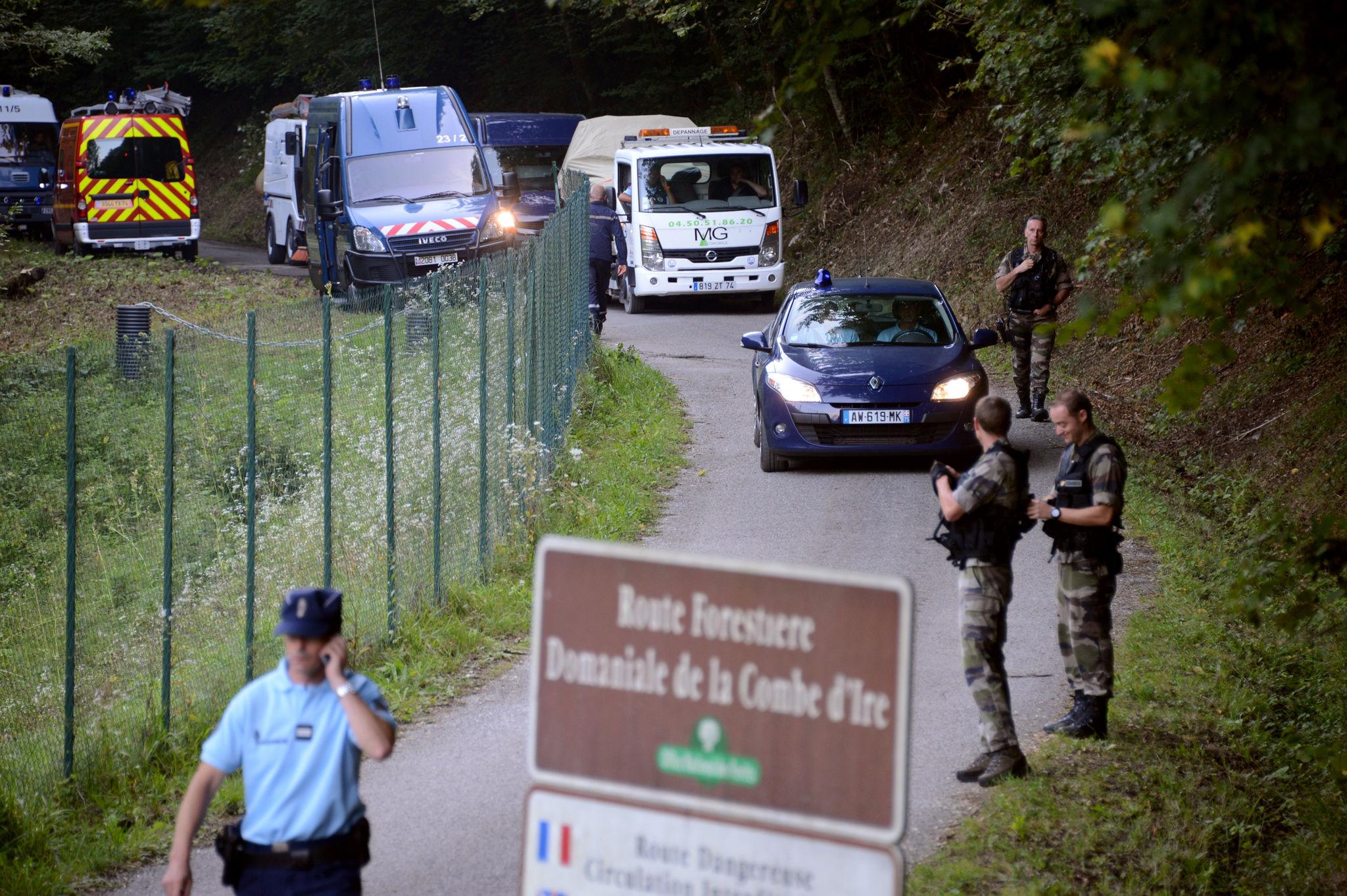
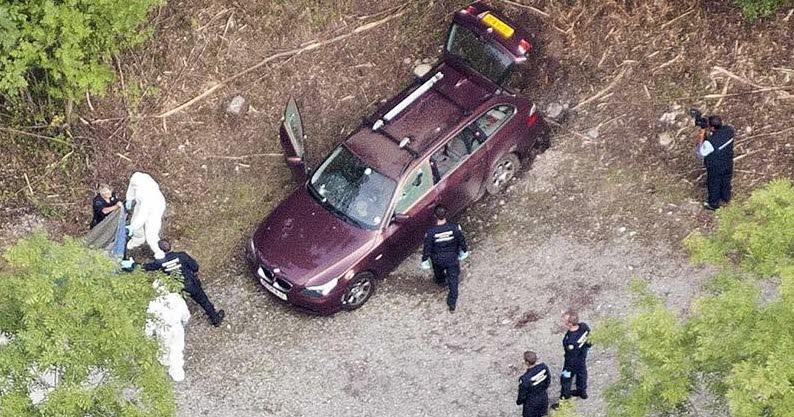
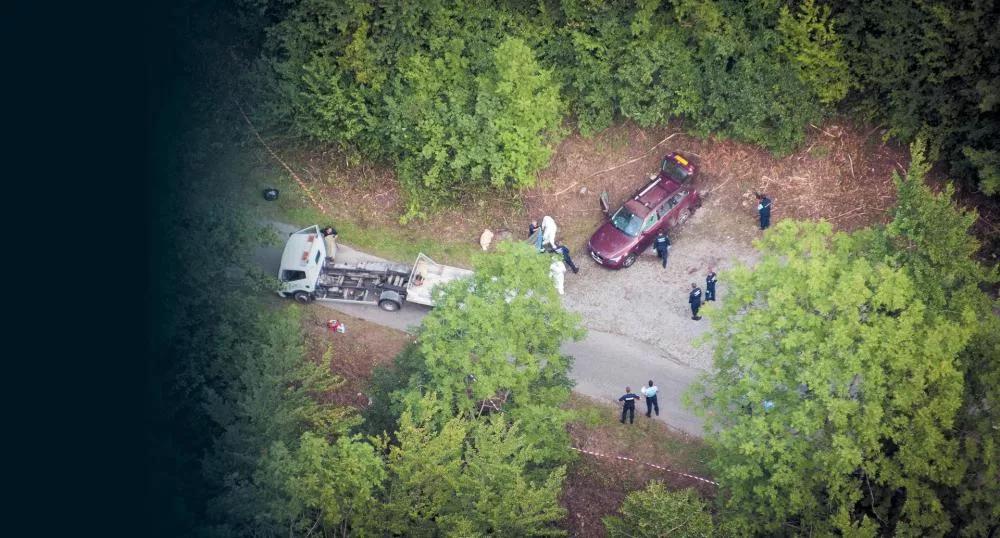
Three sat inside a bullet-riddled British-registered BMW on an isolated forest road in the French Alps.
A French cyclist lay beside the vehicle.
A seven-year-old girl had been shot and violently struck in the head. Somehow, she was still alive.
Her four-year-old sister remained hidden inside the rear footwell, beneath the legs and clothing of her dead mother.
The engine was still running.
The BMW remained in reverse.
Its rear wheels were spinning helplessly in the loose ground.
The person responsible had already disappeared.
Almost fourteen years later, nobody has been convicted.
No publicly established motive explains why an Iraqi-born British engineer, three generations of his family and a local French cyclist came together at the same remote location on 5 September 2012.
No public evidence identifies the intended target.
And no accepted reconstruction explains every part of what happened.
Was this a chance encounter that suddenly became a massacre?
Was one victim selected while the others were simply in the wrong place?
Or was the meeting in the mountains arranged—and were two men expected to die?
This is not another summary of the Alps murders.
This is the opening of the MTD investigation.
A Holiday That Ended in a Killing Ground
Saad al-Hilli, 50, had travelled from Britain to the French Alps with his wife, Iqbal, 47, their two young daughters and Iqbal’s mother, Suhaila al-Allaf, 74.
The family were staying near Lake Annecy, surrounded by some of France’s most spectacular scenery.
They had arrived in their burgundy BMW estate, carrying the ordinary belongings of a family holiday.
Nothing about their presence in the region should have appeared unusual.
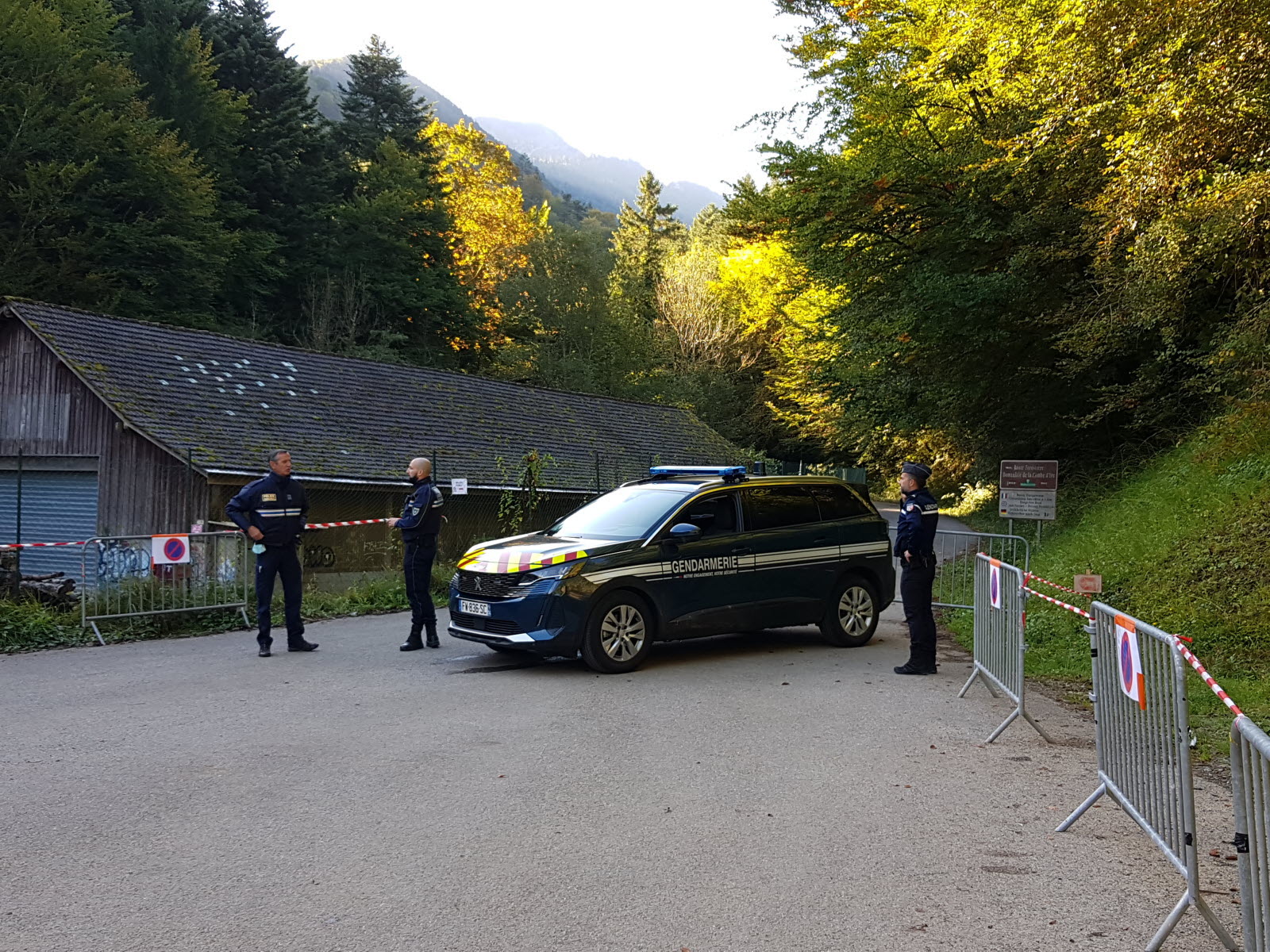
But on the afternoon of 5 September, the BMW travelled beyond the familiar lakeside roads, passed the small village of Chevaline and continued towards the Combe d’Ire.
The route became narrower.
The houses disappeared.
The forest closed around the road.
Eventually, the family reached a secluded parking area beneath the mountains.
There was no major tourist attraction there.
No hotel.
No restaurant.
No destination that obviously explained why a visiting family would drive so far into an isolated forest.
Yet this was where their journey ended.
Saad, Iqbal and Suhaila were shot dead inside the BMW.
Outside the vehicle lay Sylvain Mollier, a 45-year-old local cyclist and father who had been riding in the area.
Four adults had entered or approached the parking area.
None would leave alive.
Two Journeys Converged
The established narrative begins with two apparently unrelated journeys.
One involved a British family exploring the French Alps.
The other involved a local man cycling through terrain he knew.
On paper, the two men occupied different worlds.
Saad was an engineer with experience in satellite technology and connections extending beyond Britain.
Mollier worked in the French industrial sector at a facility associated with the nuclear group then known as Areva.
There is no publicly established evidence that the two men knew each other.
No confirmed telephone call connects them.
No disclosed email shows that they had arranged to meet.
No witness has publicly described them together before that afternoon.
That absence is important.
But it does not settle the question.
Investigators and journalists have repeatedly approached the case by asking which man was the real target.
Was Saad selected, with Mollier killed because he arrived during the attack?
Or was Mollier selected, with the al-Hilli family becoming unexpected witnesses?
MTD Investigates believes a third possibility deserves much closer examination:
What if both men were expected at the parking area?
What if their presence was not a coincidence?
And what if the person behind the attack did not arrive to kill one man and improvise the rest—but came knowing that more than one intended victim would be there?
This is a working hypothesis, not a conclusion.
There is presently no public proof that Saad and Mollier had arranged a meeting.
But after almost fourteen years without a prosecution, the possibility should not be rejected merely because investigators failed to uncover a conventional communication between them.
The BMW Was Trying to Move
The scene was discovered by Brett Martin, a British former Royal Air Force pilot who lived locally and was cycling through the area.
Martin had not heard the gunfire.
As he approached the parking area, he encountered something that initially seemed difficult to understand.
A young girl was moving unsteadily near the BMW.
She collapsed.
The vehicle was positioned awkwardly at the edge of the parking area. Its engine was still running. It remained in reverse, and its rear wheels were reportedly spinning in the loose surface.
The car was not simply parked beside the bodies.
It appeared to have been engaged in a desperate final manoeuvre.
Saad may have attempted to reverse away from the gunman.
He may have tried to turn the vehicle around.
He may have attempted to use the BMW against the attacker.
Or he may have pressed the accelerator while disoriented, wounded or panicking under fire.
The physical evidence does not prove which explanation is correct.
But the spinning wheels suggest movement, resistance and urgency.
Saad apparently understood that the people around the car were in mortal danger.
He tried to move.
The BMW became trapped.
The gunman continued.
A Seven-Year-Old Was Left for Dead
Near the vehicle, Martin found the family’s seven-year-old daughter gravely injured.
She had been shot and struck in the head.
She survived, but the violence used against her is one of the most disturbing elements of the entire case.
A person who fires at an adult may be acting through anger, fear, revenge, criminal purpose or a perceived mission.
A person who deliberately attacks a child crosses another boundary.
The older daughter may have seen the shooter.
She may have been able to describe him.
She may have recognised something about his clothing, voice, vehicle or movements.
Or the attacker may simply have decided that nobody old enough to become a witness could be allowed to survive.
MTD cannot determine the killer’s state of mind from the injuries alone.
But the attack on the child makes a purely accidental escalation harder to accept.
This was not a person who fired one shot, panicked and fled.
The killer remained at the scene.
He continued attacking.
He used extreme violence against a child and apparently left her believing she would die.
That behaviour suggests either extraordinary panic or extraordinary emotional detachment.
It may also reveal the central objective of the attack:
control the scene and leave no useful witness behind.
The Four-Year-Old Nobody Saw
Inside the BMW was another child.
The family’s four-year-old daughter remained concealed in the rear footwell beneath the legs and clothing of her dead mother.
From outside, she could not be seen.
She remained quiet for hours as police secured the scene.
Officers had to consider the possibility that an armed killer was still hiding in the surrounding forest. They also wanted to preserve the vehicle as a crime scene.
Only when specialist investigators entered the BMW was the child discovered alive.
Her survival was extraordinary.
It may also reveal something important about the shooter.
The younger girl was not spared after a conscious act of mercy—at least, there is no public evidence of that.
The simpler explanation is that the gunman did not see her.
Perhaps he did not know she was inside.
Perhaps the adult bodies concealed her.
Perhaps he believed every occupant had already been killed.
Or perhaps something forced him to leave before he could check the vehicle properly.
If the killer intended to eliminate all witnesses, the four-year-old survived not because his objective changed, but because she remained invisible.
That distinction matters when attempting to understand the person behind the gun.
An Attack That Required Control
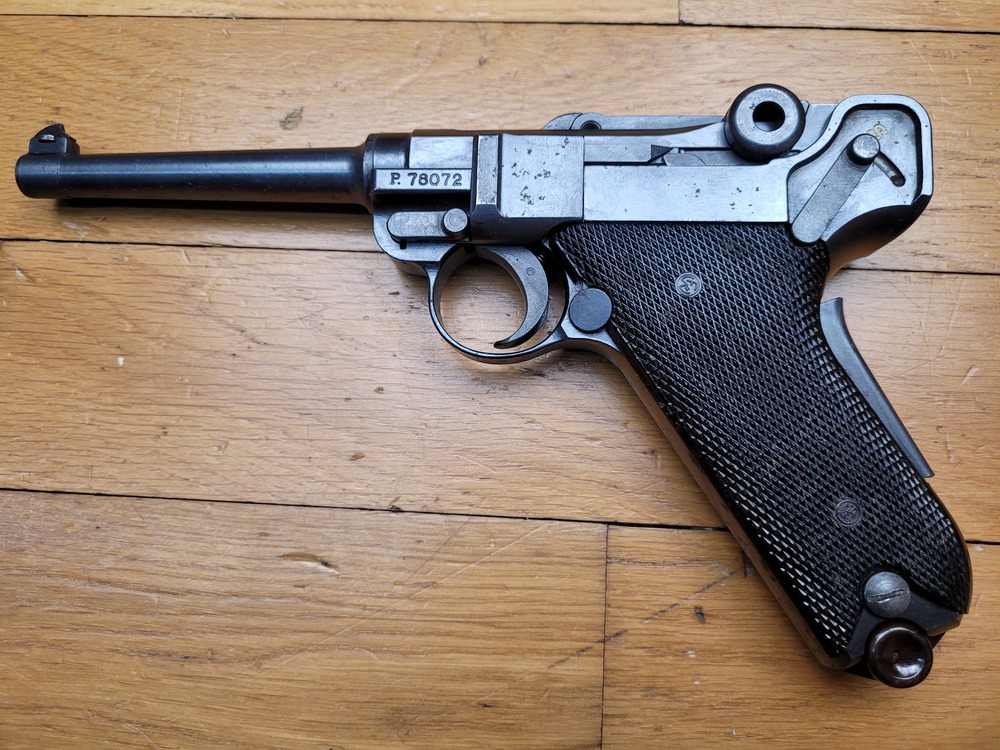
Investigators established that the shooter fired repeatedly from an old Swiss semiautomatic pistol.
Later cold-case work narrowed the weapon type to a 7.65mm Luger P06/29, manufactured in Switzerland during the 1930s.
Twenty-one shots were reported as having been fired.
Seventeen reportedly struck their targets.
The attacker therefore had to manage the weapon, continue firing at multiple people and reload during an extremely compressed and violent sequence.
Several victims were shot in the head.
Mollier was reportedly struck numerous times.
The older child was shot and beaten.
The BMW attempted to move.
Yet the gunman maintained enough control to complete the attack and escape before the first known witness arrived.
That does not automatically prove the shooter was a professional assassin.
An experienced recreational shooter, former soldier or highly practised gun owner may also have been capable of operating the weapon.
But this did not resemble the uncontrolled behaviour of someone unfamiliar with firearms.
The killer appears to have remained functional under pressure.
He continued after the situation changed.
He adapted when the car moved.
He confronted multiple victims.
He reloaded.
Then he disappeared.
Professional—But Not in the Obvious Way
The attack contains an important contradiction.
Its execution appears organised.
The weapon does not.
A modern professional killer might be expected to use a common, reliable firearm that could be easily discarded and would be difficult to trace.
Instead, the Chevaline attacker used an old and comparatively uncommon Swiss pistol.
That choice has led some investigators to doubt the theory of a conventional contract killing.
But an unusual weapon does not necessarily mean an unprofessional killer.
The shooter may have chosen a gun he already knew well.
The weapon may have come from a private or inherited collection.
It may have been selected because its history was difficult to connect to a modern criminal network.
Or the person carrying it may have had military or firearms experience without being a professional hitman in the traditional sense.
MTD’s preliminary assessment is that the attack may have been professionally prepared without necessarily being committed by a commercial assassin.
The distinction is critical.
A person can receive training, operational support and precise instructions without belonging to an organised-crime hit squad.
A single mission can be planned by several people and executed by one.
The visible gunman may have represented only the final stage of a larger operation.
Did the Shooter Work Alone?
One person may have fired every shot.
That does not mean one person organised everything.
A prepared operation could have involved someone who:
monitored the family before the attack;
confirmed that Saad had left the campsite;
watched the road into the Combe d’Ire;
verified Mollier’s movements;
waited in a separate escape vehicle;
acted as a lookout;
or arranged the meeting without ever appearing at the crime scene.
The shooter may have been alone in the parking area while remaining part of a larger team.
This possibility becomes especially important if Saad and Mollier were both expected.
For two separate men to arrive at one secluded place within the same narrow period, somebody would need to understand their movements.
If the meeting had been pre-arranged, the organiser could have controlled the location and approximate timing.
If the family was followed, an observer could have reported its progress.
If Mollier was monitored separately, another person may have confirmed that he was approaching.
No public evidence proves such a coordinated operation occurred.
But the killer’s escape, the remote location and the lack of a clear motive make a support structure a legitimate line of inquiry.
Why Would Saad Bring His Family?
The pre-arranged meeting hypothesis faces an immediate and serious objection.
Why would Saad bring his wife, mother-in-law and two young daughters to a sensitive appointment?
He almost certainly would not have taken them knowingly into danger.
Their presence therefore suggests one of two things.
Either there was no appointment at all—or Saad believed the meeting was harmless.
A brief conversation could have been fitted into an ordinary family drive.
The location may have been presented as a viewpoint, walking area or convenient stop.
The presence of relatives could have made the journey appear less unusual.
Saad may not have known the true purpose of the meeting or the identity of everyone who would attend.
It is also possible that he was not meeting the killer.
He may have been expecting Mollier.
Both men may have believed they were attending a legitimate exchange.
If so, the families’ presence would not disprove a meeting. It could demonstrate how safe Saad believed it to be.
The question then changes.
Not: why would a man bring his children to a dangerous appointment?
But:
Who could persuade him that the appointment was safe enough to include them?
Did the Killer Know the Family Was Coming?
The attacker carried enough ammunition to kill multiple people.
That fact alone does not prove he knew how many people would arrive.
Someone anticipating one or two targets might still carry spare magazines.
But the killer did not abandon the operation after seeing a car filled with relatives.
He proceeded despite the presence of women and children.
That leaves two broad possibilities.
The family was expected and had been incorporated into the plan.
Or the family was unexpected, but the shooter decided they had become witnesses who could not be left alive.
The second scenario would mean the attack changed dramatically after the BMW arrived.
The first would mean the operation was even colder than previously understood.
It would suggest that the organiser knew innocent relatives would be present and accepted their deaths as part of the mission.
At this stage, public evidence does not allow MTD to choose confidently between those possibilities.
But the assault on the older child shows that the shooter’s willingness to kill extended beyond any obvious adult target.
Saad al-Hilli’s Sensitive Professional World

Saad was an engineer with experience involving satellite systems.
That does not, by itself, make him an intelligence figure.
Thousands of engineers work in aerospace, communications and defence-adjacent industries without becoming involved in espionage.
But after his murder, British and French authorities treated his professional background seriously enough to examine it.
Police conducted an intensive search of the family home in Claygate, Surrey.
Concerns about items found at the property led to a bomb-disposal unit being called, neighbouring homes being evacuated and roads being closed.
The objects examined were later described as non-hazardous.
Authorities did not publicly confirm that classified satellite documents or secret intelligence had been recovered.
Reports also emerged that Saad had recently changed locks at the property and that an illegal Taser was found.
None of those details proves that he expected to be killed.
None proves that his work caused the attack.
But together, they justify deeper questions.
What exactly did Saad work on?
Which companies and institutions did he encounter?
What information could he access?
Why had he increased security at the property?
Was the locked space simply the workshop of a technically minded and security-conscious engineer?
Or did Saad believe that something in his possession required protection?
The public record has never provided complete answers.
Iraq, Family Wealth and Money
Saad’s background created another set of investigative paths.
He was born in Iraq and later built his life in Britain.
His family possessed assets, and investigators examined a financial dispute involving his brother.
The brother was arrested during the investigation but later released without charge. No case sufficient for prosecution was established against him.
The family-conflict theory attracted intense attention because it offered a familiar motive: money, inheritance and resentment.
But a motive is not the same as evidence of murder.
A disagreement between relatives cannot explain the operational details of the attack unless it can also be connected to the gunman, weapon, location and timing.
After years of investigation, that connection was not established publicly.
MTD Investigates will examine the family wealth, reported bank accounts, inheritance dispute and claims surrounding the al-Hilli family’s Iraqi history.
But it will also ask whether investigators spent too long attempting to make the murders fit a family narrative while the French victim’s world received less scrutiny.
The Mollier Problem
Sylvain Mollier has often been described as the unlucky cyclist.
A local man on an ordinary ride who arrived at exactly the wrong moment.
That may be true.
But it remains an interpretation, not a demonstrated fact.
Mollier did not suffer one accidental bullet as he passed the scene.
He was repeatedly shot.
He died beside the BMW at the centre of the attack.
His arrival, movements and relationship to the sequence are essential to understanding the crime.
Mollier worked as a welder within a facility associated with France’s nuclear industry.
Public reporting has indicated that he was not believed to hold a senior role or have access to nuclear secrets.
That is important and must not be exaggerated.
A person does not become an intelligence target merely because his employer operates in a strategic industry.
But job title alone cannot tell investigators everything a person saw, heard, transported, repaired or encountered.
A welder or technician may have little access to strategic information.
He may also work physically near equipment, projects and colleagues whose importance is not obvious from an organisational chart.
The responsible question is therefore not whether Mollier possessed “nuclear secrets.”
It is whether investigators fully established:
his exact duties;
the areas in which he worked;
the projects around him;
his professional contacts;
his recent concerns;
his private relationships;
his communications;
and the full reason for his route that day.
The fact that no public link to Saad was found does not make those questions disappear.
What if Both Men Knew Each Other?
MTD’s central working hypothesis begins here.
Saad al-Hilli and Sylvain Mollier may both have been intended targets.
They may have known each other.
Their connection, if one existed, could have involved engineering, strategic technology, defence-adjacent industry, financial matters or an intermediary known to both.
They may have arranged a direct meeting.
Or they may have been drawn to the same location through someone they independently trusted.
This hypothesis currently lacks the evidence required to state it as fact.
No public document proves a relationship.
No confirmed message establishes an appointment.
No publicly identified witness places the two men together earlier.
Those are serious weaknesses.
MTD will not hide them.
But the hypothesis also addresses several unresolved features of the case:
Two professionally connected men from strategic technical environments converged at an isolated place.
Both were killed with extreme force.
The shooter appeared prepared for sustained violence.
The attack ended without a robbery, public claim or obvious spontaneous motive.
The gunman then disappeared without carrying out another publicly linked attack of the same kind.
The accepted alternatives also contain major weaknesses.
If Saad alone was the target, why was Mollier struck so repeatedly?
If Mollier alone was the target, why did a visiting family arrive at such an isolated location at exactly the fatal moment?
If the attack was random, why did it display such persistence and control?
The two-target hypothesis does not solve those questions.
But it brings them into one frame.
A Single Assignment
No clearly comparable later attack has been conclusively attributed to the Chevaline killer.
That does not prove the person never killed again.
He may have committed crimes that were never connected.
He may have operated in another country.
He may have died.
Or he may have returned to an ordinary life.
But the absence of a recognised pattern raises an important possibility:
Was this a one-time assignment?
A serial offender usually develops patterns, preferences or repeated behaviour.
A person acting through a personal obsession may also strike again.
But an operative completing one defined mission may have no reason to reproduce the crime.
The weapon, location and method could have been selected specifically for that afternoon.
The shooter may have entered France for the operation and left.
He may have been protected, transported or assisted.
Or he may have lived nearby and returned immediately to a life that gave investigators no reason to suspect him.
The attack’s uniqueness may be part of why it has remained so difficult to solve.
Investigators may have searched for a criminal pattern that did not exist.
Was the Investigation Framed Incorrectly?
Thousands of pages were produced.
Homes were searched.
Suspects were questioned and detained.
Family finances were examined.
Vehicles and motorcyclists were pursued.
Weapons were traced.
Investigators explored inheritance, industrial espionage, professional connections, local disputes and random violence.
France and Britain worked together.
Yet the identity of the killer remained unknown.
The case was later transferred into France’s specialist cold-case system, where new forensic examinations were ordered.
Clothing, cigarette ends and weapon-related material were among the evidence selected for renewed DNA analysis.
The investigation is not closed.
But its failure to produce a prosecution raises a difficult question:
Was the case framed incorrectly from the beginning?
The earliest investigative choice may have been too narrow.
Saad or Mollier.
Britain or France.
Family wealth or local motive.
Professional hit or random gunman.
What if the correct explanation crossed those divisions?
What if a connection between the men was indirect, deliberately concealed or never recorded through their known devices?
What if the shooting involved one visible gunman but several organisers?
What if the evidence was divided between two countries, two victims and two separate professional worlds that were never fully examined as one?
There is no public proof that the investigation was deliberately obstructed by a higher authority.
MTD will not claim otherwise without evidence.
But we will examine whether sensitive professional, industrial or intelligence-related lines were limited, deprioritised or hidden from public scrutiny.
A lack of transparency is not proof of interference.
It is, however, a reason to keep asking questions.
The Profile Behind the Gun
Later in this series, MTD Investigates will construct a behavioural profile of the attacker.
Not a fictional personality.
Not a sensational diagnosis.
A profile based on observable choices.
The killer selected or exploited an isolated location.
He carried a loaded semiautomatic weapon and additional ammunition.
He attacked several adults.
He continued when the BMW moved.
He reloaded.
He used violence against a child.
He escaped before help arrived.
He left no public message and claimed no responsibility.
No suspect has been convicted.
Those actions suggest someone capable of intense focus during an event of extraordinary violence.
The attack may reflect military or specialised firearms experience.
It may also reveal prior knowledge of the terrain, the victims or the likely response time.
The attacker’s willingness to harm a child suggests that witness elimination may have mattered more than any remaining moral boundary.
But another contradiction remains.
A person capable of planning such an attack used an old and unusual firearm and failed to ensure that every occupant of the BMW was dead.
Was that a mistake?
Was he interrupted?
Was he under unexpected time pressure?
Did he believe the older child was dead and fail to see the younger one?
Or was the shooter highly trained but still operating inside a plan that had begun to collapse?
Professional does not mean perfect.
The surviving children prove that this operation, whatever its purpose, did not unfold entirely as intended.
What MTD Investigates Will Do
This series will not begin with a predetermined verdict.
It begins with a working hypothesis and a promise to test it honestly.
MTD Investigates will reconstruct:
the al-Hilli family’s final day;
the route from Lake Annecy to Chevaline;
the purpose of the forest journey;
the parking area and possible sightlines;
the BMW’s final movements;
the likely sequence of shots;
the weapon and ammunition;
the first witness at the scene;
the attack on the older child;
the survival of the younger child;
Sylvain Mollier’s route, work and private world;
Saad al-Hilli’s engineering career;
the secured areas of his home;
his Iraqi background and family finances;
the inheritance investigation;
telephone and digital evidence;
vehicles and witnesses in the area;
possible escape routes;
investigative failures and lost time;
the possibility of a pre-arranged meeting;
the possibility of a support team;
and the possibility that both adult men were selected to die.
We will identify what is confirmed.
We will disclose what is disputed.
We will distinguish evidence from interpretation.
We will challenge our own hypothesis whenever the facts weaken it.
And we will not protect an old assumption simply because it has been repeated for fourteen years.
A Personal Note From the Editor
“I have followed this case for years, repeatedly returning to one question: was the cyclist really an accidental witness?” — Jamal Mahdad, Founder and Editor-in-Chief
That question is not an accusation.
It is the starting point of this investigation.
Why was Mollier there?
Why did Saad take his family so far into the forest?
Did either man expect to meet the other?
Was somebody monitoring their movements?
Why did the gunman carry enough ammunition for sustained killing?
Why did he attack a child?
How did he escape?
Why has no comparable attack been publicly linked to him?
And why, after one of Europe’s most extensive cross-border murder investigations, does the motive remain unknown?
The official investigation produced thousands of pages, numerous suspects and no killer.
MTD Investigates will return to the evidence and ask whether the case was framed incorrectly from the beginning.
Four people were murdered.
Two children survived.
One gunman vanished.
Somewhere between the family’s route, the cyclist’s arrival, the spinning wheels and the killer’s escape lies the reason they were all brought together.
This series will follow every available path.
Including the one that may have been overlooked.
Next in MTD Investigates
Part II — The Road to Chevaline
Why did an ordinary family holiday lead Saad al-Hilli beyond Lake Annecy and into an isolated forest road with nowhere else to go?
Reader Information
MTD Investigates respects the privacy of the surviving victims. Their current locations, private lives and personal information will not be pursued or published.
Readers with first-hand, verifiable knowledge relevant to the case may contact MTD confidentially. Unsupported accusations, rumours and identifying information about the surviving daughters will not be published.
Any information that may constitute new criminal evidence should also be provided to the competent French or British authorities.
Sources and Methodology
This opening article was reconstructed from contemporaneous witness accounts, statements attributed to French and British investigators, archival reporting from the original investigation, public information concerning the victims and subsequent reporting on the renewed French cold-case inquiry.
MTD reviewed established reporting concerning the discovery of the BMW, its running engine and spinning rear wheels; the survival of the two children; the ballistic findings; the identification of the suspected weapon type; searches conducted at Saad al-Hilli’s British home; the professional backgrounds of Saad al-Hilli and Sylvain Mollier; the Franco-British investigation; and renewed DNA testing ordered within the French cold-case process.
Where public accounts differ or remain incomplete—including the precise sequence of shots, the intended target, the nature of Saad’s professional information and whether the victims had arranged to meet—MTD identifies the uncertainty and does not present a hypothesis as an established fact.