

There is no confession.
No suicide note.
No cockpit voice recorder.
No flight data recorder.
No witness who can tell us what happened behind the cockpit door of Malaysia Airlines Flight MH370.
That absence creates the central problem of the case.
We know a great deal about what the aircraft did.
We know far less about who made it do those things.
That difference matters.
Because almost any theory can be made to fit MH370 if enough invisible events are added to it.
A fire.
A decompression.
A hijacker.
A confrontation inside the cockpit.
A pilot acting alone.
The harder question is not whether any one of those scenarios is possible.
It is this:
Which explanation fits the known sequence while requiring the fewest unsupported events?
That is not proof.
It is a method for comparing hypotheses.
And it is the test MTD applies in Part III.
What We Already Know
Parts I and II established two findings.
First, the known sequence after IGARI is substantially more consistent with deliberate human intervention than with an ordinary aircraft or systems failure.
Second, the satellite evidence strongly supports a prolonged flight into the southern Indian Ocean, while leaving substantial uncertainty about the precise route and final impact point.
The question now moves from aircraft behaviour to human responsibility.
If MH370 was deliberately diverted, who had the access, knowledge and opportunity to do it?
MTD tests five principal scenarios:
a technical emergency,
decompression followed by a ghost flight,
a third-party hijacker,
First Officer Fariq Abdul Hamid,
and Captain Zaharie Ahmad Shah.
We begin with the least personal explanation.
The aircraft itself.
Could the Aircraft Have Created the Mystery?
Commercial aircraft suffer fires.
Electrical systems fail.
Smoke can incapacitate crews.
Decompression can leave an aircraft flying after everyone aboard loses consciousness.
These are real failure modes.
And in the first minutes after MH370 disappeared from civilian radar, an emergency remained entirely plausible.
A crew dealing with smoke might turn back.
Electrical problems could disrupt communications.
A serious systems failure could force pilots to prioritise flying over transmitting.
But MH370 presents a sequencing problem.
Its normal communications disappeared.
Its transponder identity vanished near the transfer from Kuala Lumpur to Ho Chi Minh air traffic control.
The aircraft departed its filed route.
The Malaysian investigation's simulator work found the initial turnback likely to have been flown manually rather than by autopilot.
MH370 then crossed Malaysia and continued west.
The investigators also concluded that the subsequent route changes were difficult to attribute to anomalous aircraft systems alone.
That leaves a technical-emergency theory with several questions.
What failure explains the loss of normal communications?
What failure also explains the manually controlled turnback?
Why did no successful distress transmission emerge?
Why did the aircraft continue navigating away from its scheduled destination?
And how did the same event leave a Boeing 777 capable of remaining airborne for hours?
No publicly established technical failure sequence answers all of those questions cleanly.
That does not make such a sequence impossible.
It means it has not been demonstrated.
The Ghost Flight
The decompression or hypoxia scenario is stronger.
If cabin pressure was lost, passengers, cabin crew and pilots could eventually become incapacitated.
The aircraft could then continue under autopilot until fuel exhaustion.
That offers a plausible explanation for several features of the later flight.
The silence.
The unanswered satellite telephone calls.
The lack of meaningful communication during the long journey south.
A Boeing 777 continuing with nobody capable of responding.
But the same problem returns.
Before a hypothetical ghost flight could explain the later hours, MH370 had already changed its behaviour.
The aircraft had left its route.
The initial turnback was likely manually controlled.
The transponder had disappeared.
MH370 had crossed the Malay Peninsula.
So hypoxia may explain part of the later flight.
It does not easily explain the beginning.
Ghost flight explains the silence better than it explains the diversion.
For it to account for the entire disappearance, another event must first place the aircraft on its new route.
That additional event remains unknown.
Third-Party Hijacking
A deliberate hijacking by somebody other than the pilots remains compatible with much of the known evidence.
A hijacker could wait until an operationally advantageous moment.
Cockpit access might be obtained through deception, coercion, a voluntarily opened door or some other means.
The pilots could be incapacitated or forced to cooperate.
A technically capable intruder could then redirect the aircraft.
The official Malaysian investigation explicitly stated that third-party intervention could not be excluded.
That deserves more than a passing mention.
There is no recovered cockpit recording proving that only the pilots were present.
No physical evidence from the cockpit is available.
No reliable public account establishes exactly who was where when the diversion began.
So third-party hijacking remains a serious possibility.
But the public record does not establish several things that the scenario requires.
It does not establish cockpit entry by an intruder.
It does not establish incapacitation of the pilots.
It does not identify a third party with the aviation capability necessary to control the aircraft.
It does not establish how that individual would have gained sustained control without a successful distress transmission.
That does not make hijacking unlikely by definition.
It means the scenario depends on events that remain entirely unobserved.
Fariq Abdul Hamid
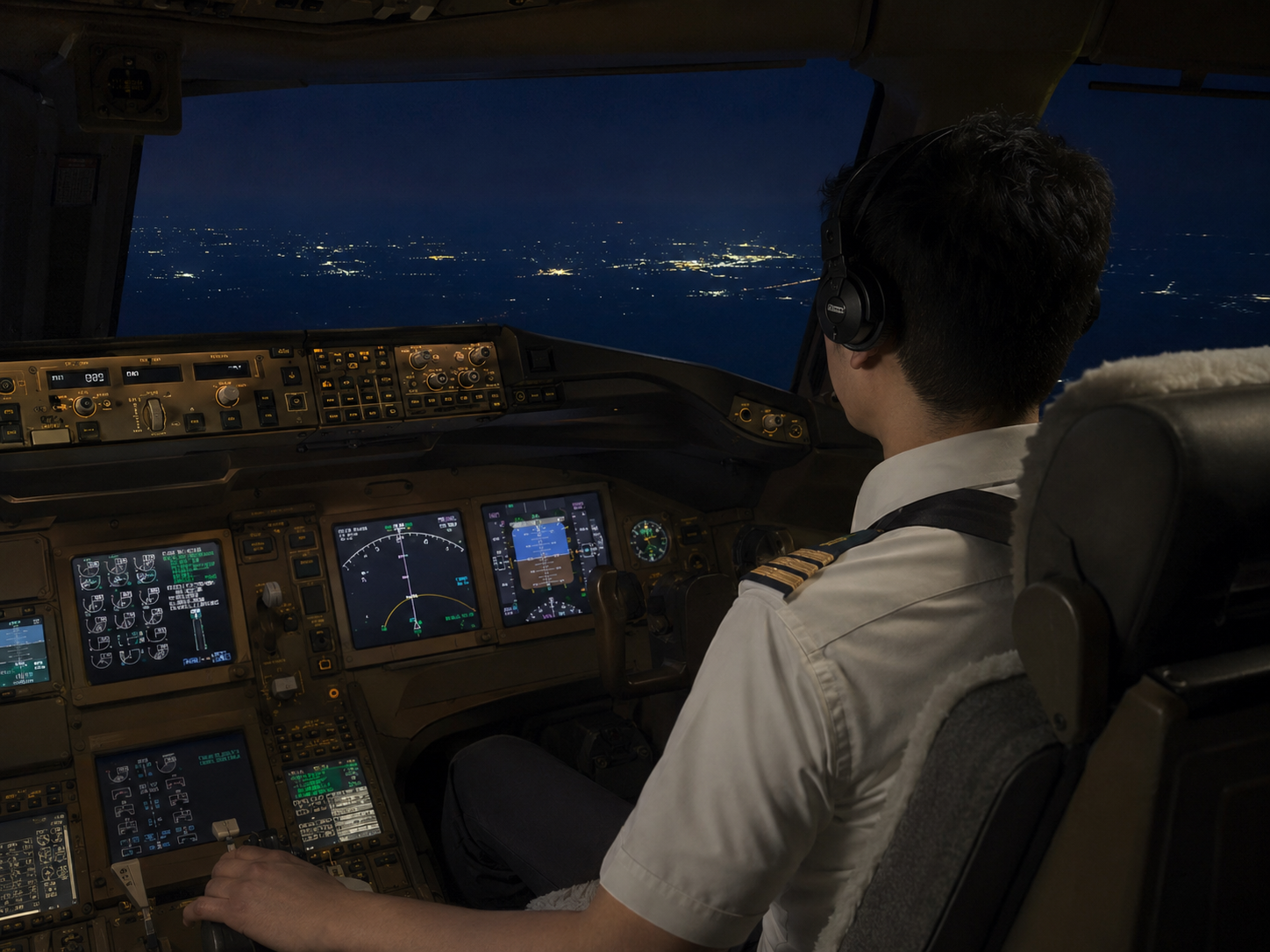
The first officer deserves a separate assessment because he does not require an unexplained route into the cockpit.
Fariq Abdul Hamid was already there.
He was a professional pilot.
He had more than 2,800 total flying hours.
He was transitioning to the Boeing 777 and had approximately 39 hours on type.
That distinction matters.
Thirty-nine hours on a 777 does not mean Fariq could not fly the aircraft.
He had completed type training and was conducting supervised line operations.
He was not a beginner learning the fundamentals of aviation.
He was an experienced pilot adapting to a new aircraft type.
There is therefore no basis for dismissing him on capability alone.
At the same time, the public record contains little that points specifically toward him as the person responsible for MH370's diversion.
The Malaysian investigation did not establish a motive.
No unusual preparation linked directly to Fariq has entered the public record.
None of this proves innocence.
It means only that Fariq's presence in the cockpit makes him operationally possible, while the available public evidence does not independently elevate him above that possibility.
Captain Zaharie Ahmad Shah
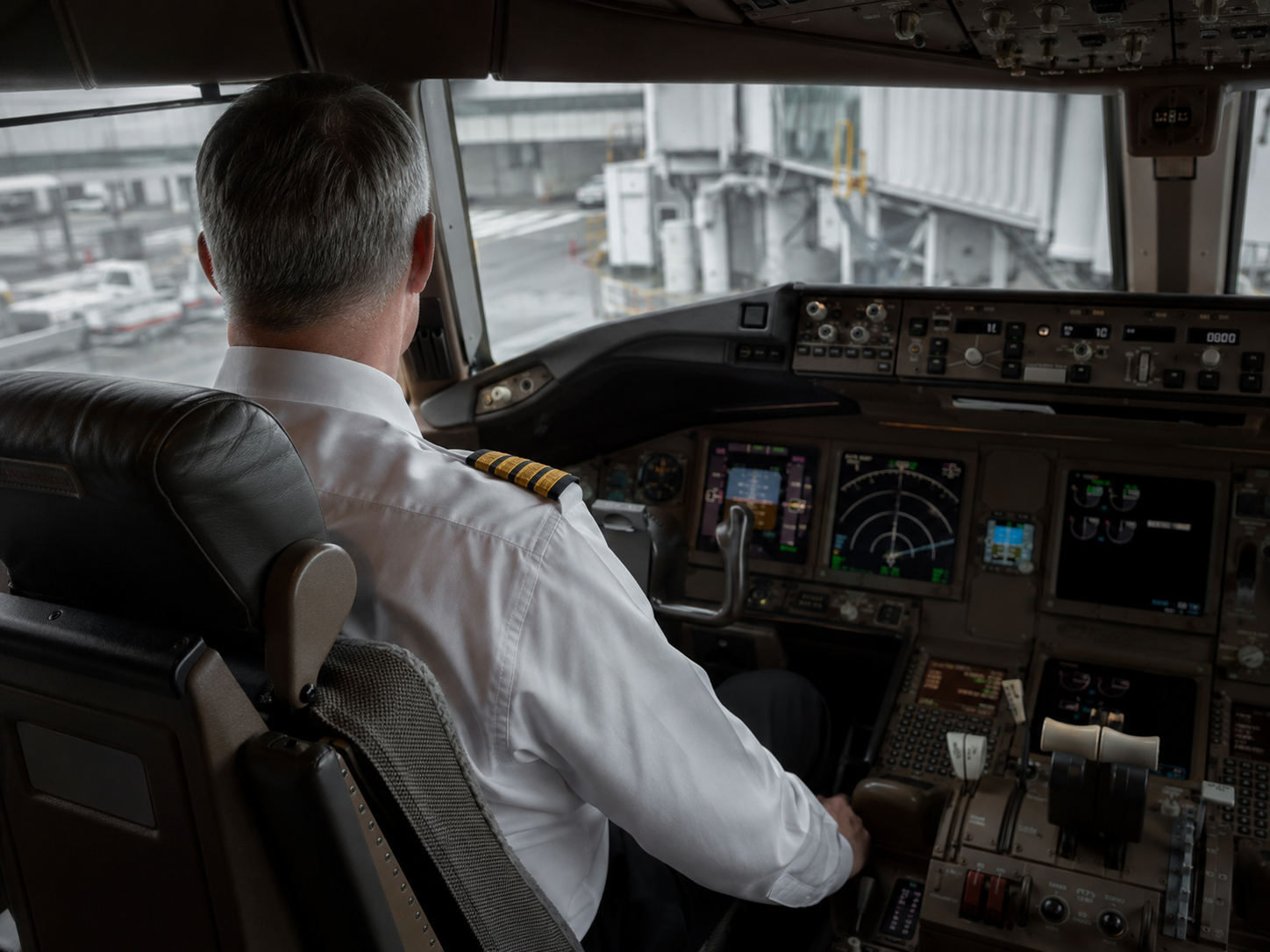
The Zaharie scenario must be handled with equal caution.
He was the captain.
He had legitimate cockpit access.
He had command authority.
He had more than 18,000 hours of flying experience, including extensive time on the Boeing 777.
He was an instructor and authorised examiner.
Those facts establish capability.
They do not establish intent.
The public record contains no direct evidence that Zaharie acted, only operational relevance and circumstantial context.
That distinction is essential.
Zaharie did not need to gain access to the cockpit.
He was already there.
He did not need to learn how the Boeing 777 worked.
He already knew.
He did not need to understand airline procedures from the outside.
He lived inside them professionally.
Those facts make him operationally relevant to any deliberate-intervention scenario.
But they do not tell us what he did on 8 March 2014.
For that, investigators turned to one of the most discussed pieces of evidence in the case.
His home simulator.
The Simulator
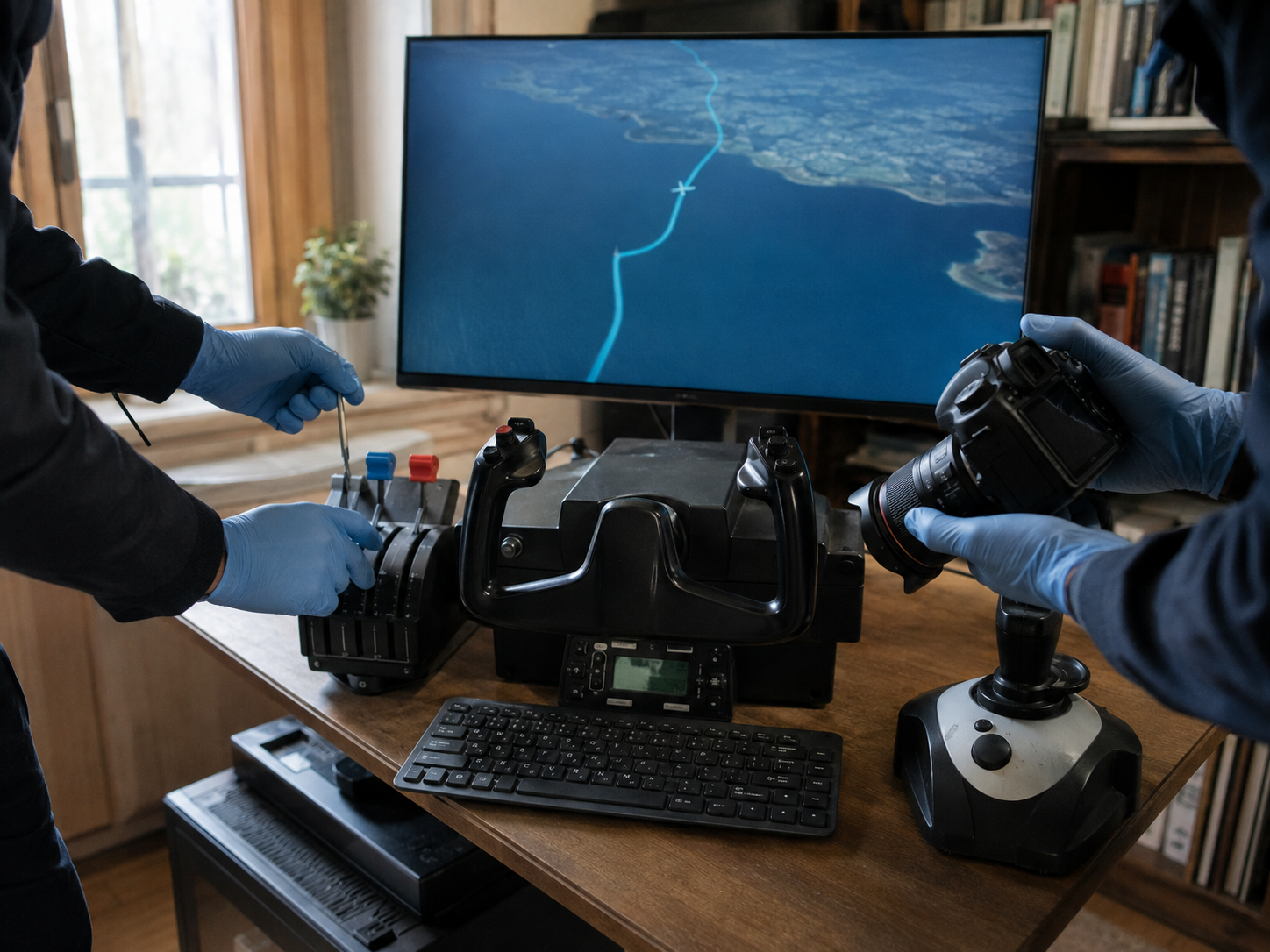
Few elements of MH370 have been more distorted by repetition.
The popular version is simple:
Zaharie rehearsed the disappearance on his home simulator.
The evidence does not establish that.
Investigators recovered thousands of simulator coordinates from Zaharie's home system.
Among them were seven manually entered points that attracted attention.
Some followed a route that was initially similar to a portion of MH370's later trajectory.
But the qualifications are substantial.
Investigators could not confirm whether all seven points came from one continuous simulated flight or from multiple files.
The first points were consistent with a route toward Jeddah, a destination Zaharie was rostered to fly professionally.
ATSB analysis found that the reconstructed simulated route extended approximately 4,200 nautical miles, farther than MH370's fuel load could have supported.
Its later track was also inconsistent with the principal trajectories derived from MH370's satellite data.
Malaysian investigators reported no unusual simulator activity beyond game-related flight simulation.
The simulator therefore cannot responsibly be described as a rehearsal.
It is not a digital confession.
It does not reproduce the known MH370 route.
And it does not establish intent.
That said, the material did attract legitimate investigative interest because parts of the route bore some similarity to elements of MH370's later reconstructed journey.
The correct conclusion is therefore limited:
The simulator is unusual context, not direct evidence of preparation.
Its significance depends heavily on what else one already believes about the flight.
That is precisely why it must not be allowed to carry more weight than the official evidence supports.
Penang
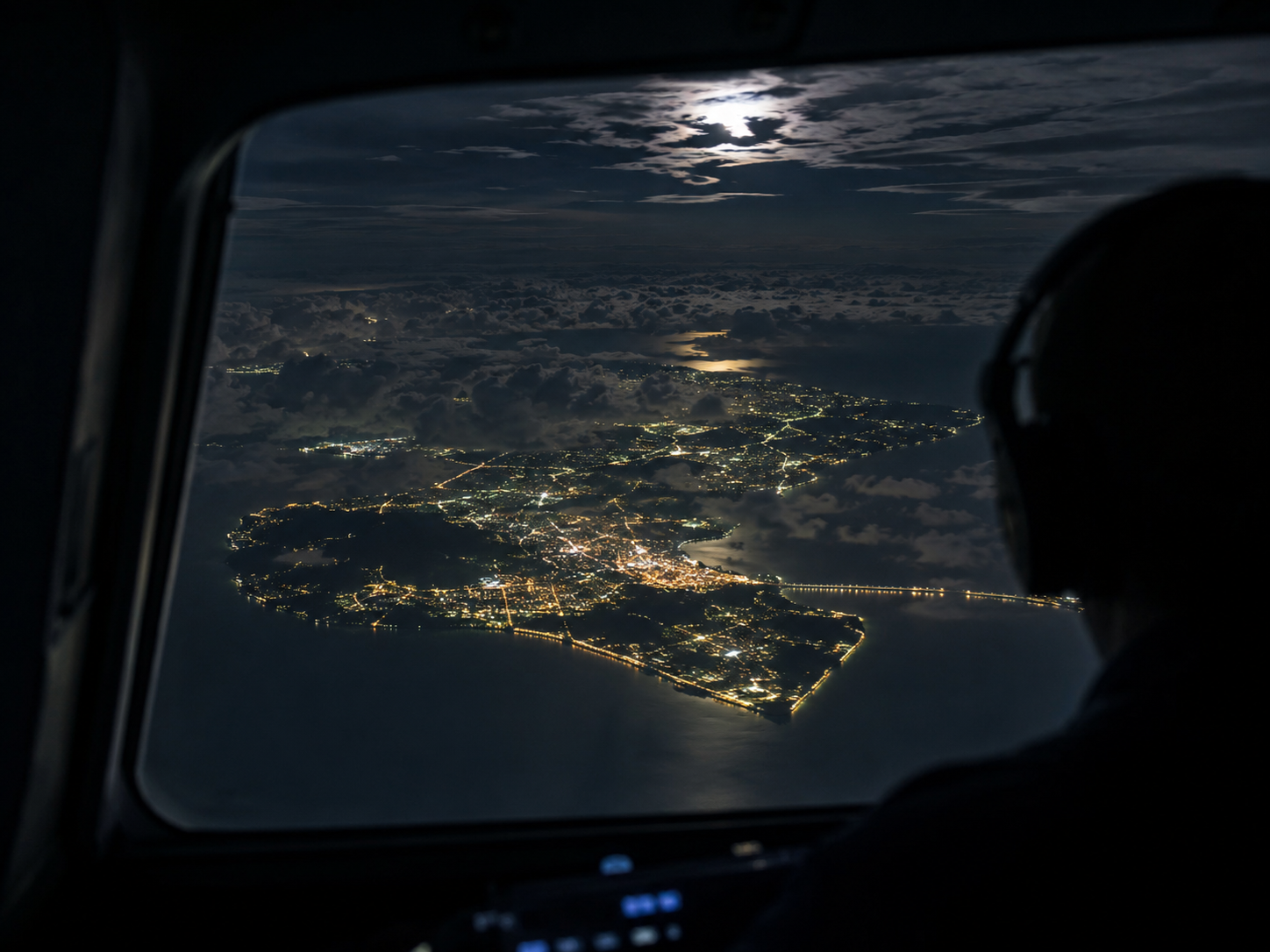
MH370's reconstructed route passed south of Penang before continuing northwest.
Zaharie was born in Penang and attended school there.
That fact has inspired one of the most emotionally powerful theories in the case.
That the captain deliberately brought the aircraft past his home region for a final look.
There is no evidence establishing that.
Radar cannot tell us whether anybody looked toward the island.
It cannot tell us what anyone in the cockpit was thinking.
And the relevant manoeuvre near Penang cannot be reliably transformed into a psychological statement.
So MTD treats the issue narrowly:
Geography is fact. Farewell is interpretation.
Penang has become part of the public discussion around Zaharie.
But it cannot carry evidentiary weight.
The Missing Motive
This is the most important weakness in any case against Zaharie.
Investigators examined his finances, career, behaviour, relationships and medical information.
They did not establish a clear motive.
There was no documented psychiatric diagnosis explaining the disappearance.
No major financial collapse was identified.
No public evidence established a planned suicide.
No manifesto emerged.
No farewell message.
No confession.
The official investigation did not conclude that Zaharie deliberately destroyed the aircraft.
And the available evidence does not establish that he was alone in the cockpit when the diversion began.
These are not minor qualifications.
They are fundamental.
A theory accusing a deceased captain of deliberately killing 238 other people cannot be rescued by saying that perhaps he concealed everything perfectly.
That would make the theory impossible to falsify.
So the evidentiary boundary must remain firm:
Capability can be demonstrated. Access can be demonstrated. Experience can be demonstrated. Motive cannot.
Unknown motive means unknown motive.
Nothing more.
The Digital Record
The same caution applies to Zaharie's digital life.
His home simulator attracted intense scrutiny.
So did other electronic devices.
Investigators searched for evidence of preparation, planning or intent.
No publicly established digital material has emerged that amounts to a confession, operational plan or direct indication that Zaharie intended to destroy MH370.
That matters because digital evidence often becomes disproportionately powerful in retrospective narratives.
A strange search.
A deleted file.
An unusual simulation.
Any one of them can be made to look sinister after a catastrophe.
But context matters.
The simulator itself contained large volumes of ordinary game-related activity.
The absence of incriminating digital material does not prove innocence.
It does mean the digital record failed to provide the direct bridge from capability to intent that investigators would have needed.
The Last Normal Voice
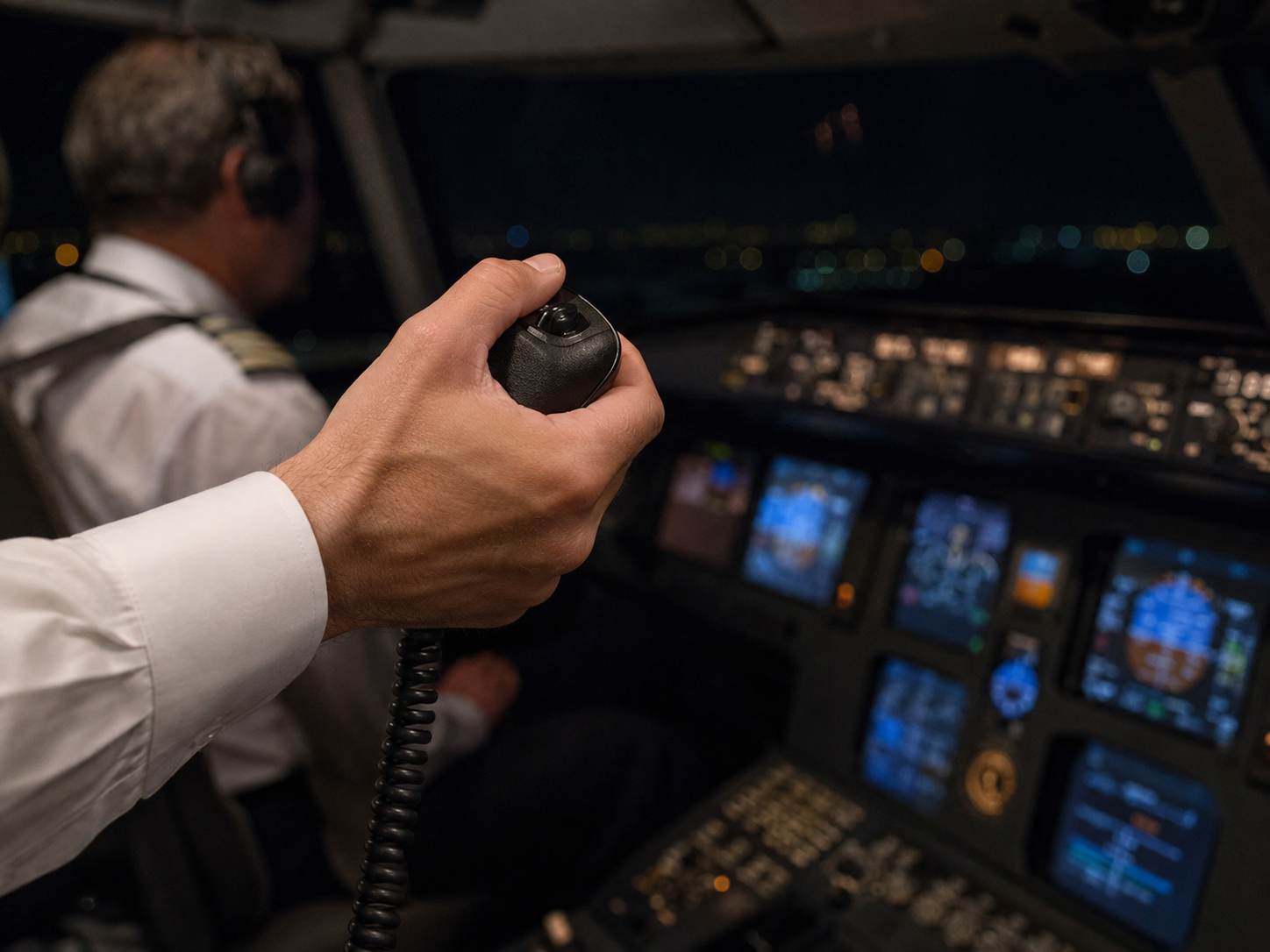
At 01:19:30 Malaysian time, the final recorded transmission from MH370 was made.
The Malaysian investigation identified Zaharie as the speaker.
No stress or unusual anxiety was identified in the recorded radio communications.
The words were routine:
“Good night Malaysian Three Seven Zero.”
Then normality ended.
If Zaharie was responsible, that calmness would be striking.
If he was innocent, the same fact is equally important.
It would suggest that whatever transformed MH370 happened after a perfectly ordinary radio exchange.
The audio therefore identifies no perpetrator.
It establishes only this:
Normality immediately preceded abnormality.
And that narrow transition is why the cockpit remains central to the mystery.
Assume Zaharie Was Innocent
Now reverse the entire argument.
Assume Captain Zaharie Ahmad Shah had nothing to do with the disappearance.
What evidence supports that position?
First, there is no established motive.
Investigators did not identify the psychological, financial or behavioural collapse that would make a murder-suicide narrative straightforward.
Second, there is no direct evidence of deliberate action by Zaharie.
No cockpit recorder captures him acting.
No flight-data recorder shows which pilot made which input.
No witness saw him take control.
Third, the simulator does not reproduce MH370's known route.
Its reconstructed path exceeded the aircraft's available endurance and diverged from satellite-derived candidate trajectories.
Fourth, the official investigation did not accuse him.
That is significant.
Investigators had access to substantially more material than the public does.
They still did not reach a finding of pilot culpability.
Fifth, third-party intervention remained officially unexcluded.
The absence of proof of cockpit entry is not proof that no such entry occurred.
Sixth, Fariq was also a trained pilot with legitimate cockpit access.
The evidence does not establish which pilot, if either, controlled the aircraft after IGARI.
Seventh, technical events remain incompletely excluded because the main wreckage and recorders have never been recovered.
The final Malaysian report itself was constrained by the absence of physical evidence from the aircraft.
Taken together, these points create a substantial defence of Zaharie.
There is no smoking gun against him.
There is not even a proven motive.
That is why describing the case as solved by the captain theory would be irresponsible.
Why Zaharie Still Matters to the Analysis
Innocence and evidentiary relevance are not opposites.
Zaharie remains one of the principal scenarios because he combined three things that matter in any deliberate-control hypothesis:
access, capability and authority.
He was already inside the cockpit.
He possessed extensive Boeing 777 knowledge.
He had command of the aircraft.
Those facts require no speculation.
But everything beyond them does.
Whether he acted.
Whether he was alone.
Whether the simulator meant anything.
Whether Penang meant anything.
Whether he had a concealed motive.
None of those propositions has been proven.
The evidence around Zaharie is therefore circumstantial and contextual, not direct.
That difference prevents operational relevance from becoming a criminal accusation.
Explanatory Economy Is Not Evidence
This is where MTD's method needs a boundary of its own.
Comparing hypotheses by the number of unsupported events they require is useful.
It is not a substitute for evidence.
A scenario with fewer assumptions is not proven.
It is merely less complicated.
Reality is not obligated to be simple.
A technical emergency may involve a rare chain of failures.
A hijacker may have entered the cockpit without leaving a surviving trace.
Fariq may have acted for reasons investigators never discovered.
Zaharie may have acted for a motive nobody around him understood.
Or none of those reconstructions may be correct.
Explanatory economy therefore tells us something limited:
which hypothesis fits the known evidence with the least additional machinery.
It does not tell us which hypothesis is true.
Comparing the Scenarios
A technical emergency can explain communications disruption and may explain an initial return toward land.
Its weakness is the absence of a demonstrated failure sequence explaining the full combination of communications loss, likely manual turnback, later navigation and prolonged flight.
A ghost flight can explain the long silent phase particularly well.
Its weakness is the need for an earlier event to explain how MH370 first reached its altered route.
A third-party hijacking can explain deliberate human control.
Its weakness is that cockpit access, pilot neutralisation and the identity and aviation capability of the intruder remain unestablished.
A Fariq scenario removes the cockpit-access problem and retains trained-pilot capability.
Its weakness is the absence of independent evidence pointing specifically toward him.
A Zaharie scenario also removes the cockpit-access problem and adds far greater Boeing 777 experience and command authority.
Its weakness is profound:
there is no direct evidence that he acted, no established motive and no proof that he was alone in the cockpit.
Every scenario therefore contains a hole.
The holes are simply in different places.
MTD's Assessment
MTD Investigates reaches a more restrained conclusion than the captain theory often presented in popular accounts.
The publicly available evidence supports deliberate and technically competent human intervention more strongly than it identifies the person responsible.
That is the central finding.
The turnback was likely manually controlled.
The aircraft departed its route.
The later flight was structured rather than random.
A purely conventional technical failure struggles to explain the complete sequence.
But attribution remains unresolved.
We can say considerably more about what someone appears to have done to MH370 than about who that person was.
Among the known people aboard the aircraft, Captain Zaharie Ahmad Shah warrants particular scrutiny because of his cockpit access, command authority and extraordinary Boeing 777 experience.
The simulator adds unusual but inconclusive context.
Penang adds interpretation, not evidence.
Fariq remains operationally possible.
A third-party hijacker remains officially unexcluded.
And the absence of the aircraft itself prevents the most important questions from being answered.
That is not a satisfying conclusion.
But it is the one the evidence supports.
MH370 appears to have been deliberately diverted by someone with sufficient aviation capability.
The public record does not establish who that person was.
And unless the aircraft is found, that may remain the dividing line between reconstruction and proof.
Which leaves the final part of this series with perhaps the most important physical question of all:
If investigators were broadly right about the southern Indian Ocean, why has the aircraft still not been found?
Next in MTD Investigates
Part IV , The Search That Found Nothing: Is MH370 Outside the Accepted Flight Path?
The southern Indian Ocean has already been subjected to one of the most complex underwater searches in aviation history.
MH370 was not found.
In the final part of this MTD Investigates series, we examine the seventh arc, recovered debris, ocean-drift modelling, previous underwater searches and the assumptions that determined where investigators looked.
The question is no longer simply whether the ocean is too vast.
It is more precise:
Has MH370 remained hidden because the search environment is extraordinarily difficult, or because the aircraft ended outside the areas investigators considered most likely?
Sources & Methodology
MTD Investigates based the principal factual findings in Part III on the Malaysian Safety Investigation Report MH370 (9M-MRO) and official Australian Transport Safety Bureau material concerning the operational search and recovered simulator data.
The Malaysian investigation documented Captain Zaharie Ahmad Shah's extensive flying experience and his roles as a Boeing 777 instructor and examiner.
First Officer Fariq Abdul Hamid had more than 2,800 total flight hours and was completing the final stage of his Boeing 777 line training, with approximately 39 hours on type.
Official simulator reconstruction found the initial turnback after IGARI likely to have been performed manually rather than by autopilot.
Investigators could not establish who executed the manoeuvre and explicitly stated that third-party intervention could not be excluded.
Forensic examination of Zaharie's home simulator recovered thousands of coordinate records, including seven manually entered points that attracted investigative attention.
Investigators could not confirm whether those points all came from one continuous simulator session.
ATSB analysis found that the reconstructed simulator route extended approximately 4,200 nautical miles, farther than MH370's estimated fuel endurance would have allowed, and that its later track was inconsistent with the principal satellite-derived candidate trajectories.
The Malaysian investigation found no unusual simulator activity beyond game-related flight simulation.
The official human-factors investigation did not establish a psychiatric diagnosis, major financial crisis or other confirmed motive explaining deliberate destruction of the aircraft.
Nor did the investigation conclude that Zaharie was responsible.
MTD Investigates distinguishes throughout between:
established evidence;
official investigative findings;
operational possibilities;
interpretive clues;
and comparative analysis of competing hypotheses.
No individual's criminal responsibility is presented as established fact.
The principal conclusion of Part III is deliberately narrower:
The available evidence supports deliberate and technically competent human intervention more strongly than it identifies the person responsible.
That conclusion may change if the aircraft, cockpit voice recorder, flight data recorder or new primary evidence is recovered.
Until then, attribution remains unresolved.