
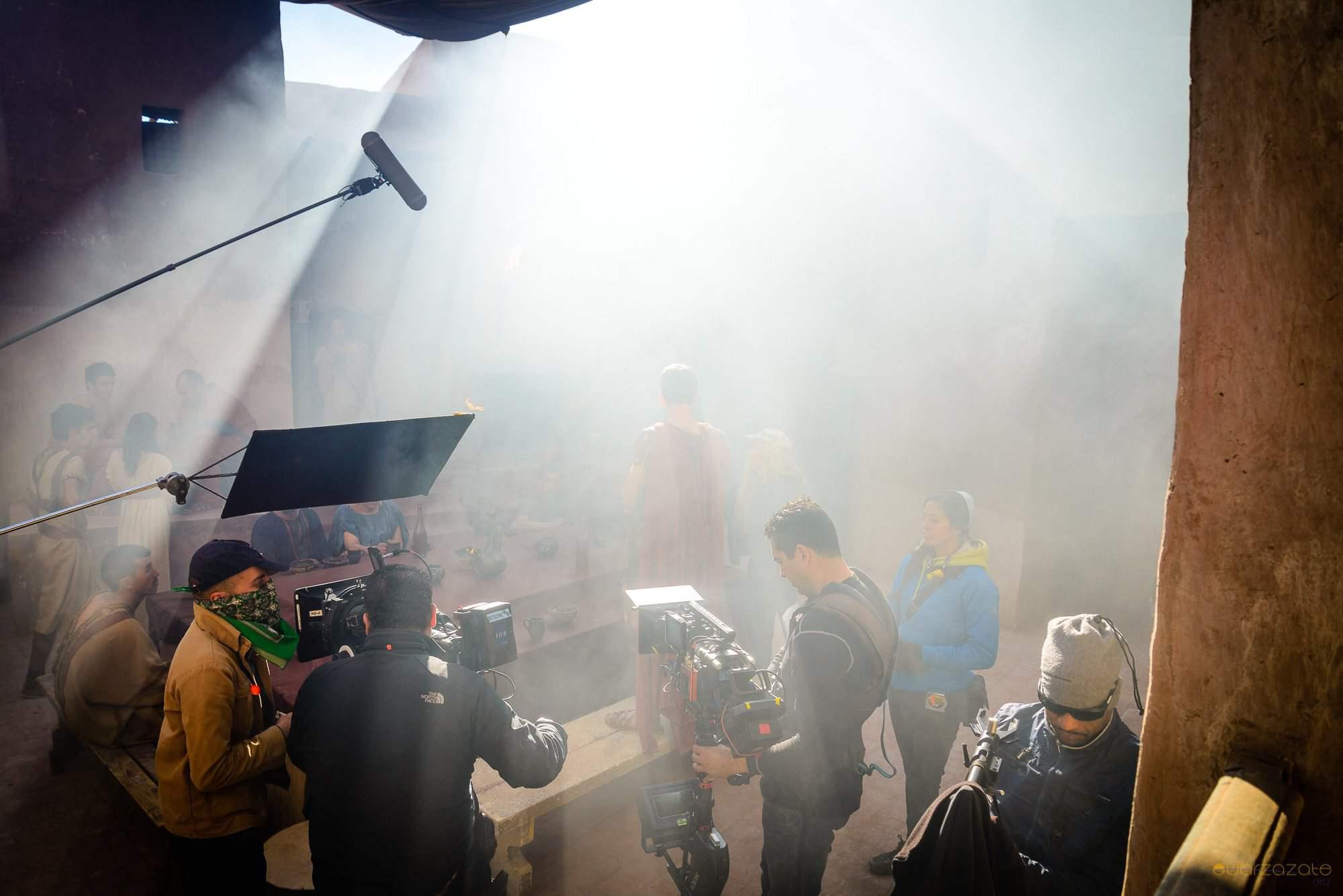
Morocco has always known how to look cinematic.
The world is finally paying for the view.
From Ouarzazate to Aït Benhaddou, from desert roads to Atlantic coastlines, from kasbah walls to mountain villages, Morocco has become one of the film industry’s most recognisable visual shortcuts for history, scale, mystery and epic storytelling.
But the next phase cannot be only about beautiful locations.
Morocco now wants more.
More studios.
More postproduction.
More training.
More local jobs.
More technical value.
More reasons for global productions to stay longer and spend deeper.
That is the real meaning of Film Set Morocco.
The Kingdom does not want to remain only a background.
It wants to become part of the production machine.
Film Set Morocco Becomes A Global Screen
Film Set Morocco matters because cinema is soft power with invoices.
A blockbuster shot in Morocco can make the country visible to millions of viewers. But behind the glamour is a practical economy: permits, hotels, transport, extras, carpenters, drivers, security, catering, costumes, technicians, guides, equipment rentals and local services.
The Moroccan Ministry of Youth, Culture and Communication says the new International Cinema City in Ouarzazate includes a production hub with a 3,000 m² studio, technical spaces, postproduction and preservation facilities, training, creative-technology areas and a cinema-tourism component.
That structure matters.
It shows that Morocco is no longer thinking only about attracting shoots.
It is thinking about capturing the full chain.
A location earns one type of money.
A production ecosystem earns much more.
Ouarzazate Wants To Move Up The Chain
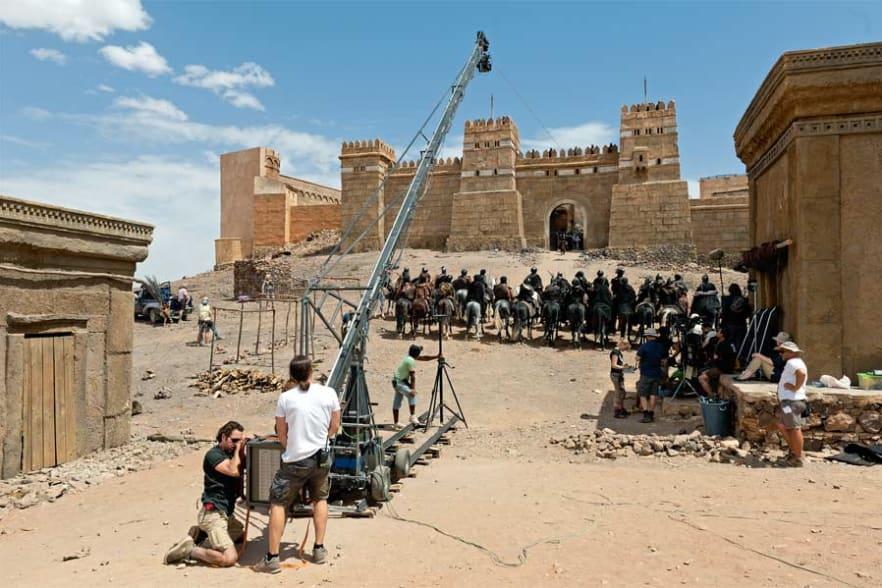
Ouarzazate has long carried the nickname “Hollywood of Africa.”
The problem is that nicknames do not automatically create industrial depth.
Many international productions have used Ouarzazate for scenery, sets and field shooting, then moved elsewhere for editing, visual effects, sound, colour grading, final delivery and global distribution work.
That means Morocco gets part of the value, but not enough of the value.
The new cinema city is designed to reduce that leakage.
If Morocco can offer production, postproduction, training and technical services in one place, it becomes more than a filming destination. It becomes a production platform.
That is the difference between hosting Hollywood and building a Moroccan screen industry.
Nolan’s Odyssey Gives Morocco A Premium Signal
Christopher Nolan’s The Odyssey gives Morocco a powerful global signal.
The Wall Street Journal reports that Nolan used Moroccan environments, including the beaches of Essaouira and the mountain village of Aït Benhaddou, where Troy was constructed for the film.
That matters because Nolan is not a minor filmmaker.
His name carries prestige, scale and technical seriousness. When a director of that level chooses Moroccan locations for a major production, it reinforces the country’s credibility for high-budget, international cinema.
For Morocco, the benefit is not only screen time.
It is reputation.
A successful global film can make location scouts, studios and producers look again at Morocco’s capacity to deliver.
The Desert Is An Asset, But Also A Trap
Morocco’s desert and historic landscapes are among its greatest visual assets.
They can stand in for ancient worlds, biblical settings, military routes, fantasy cities, Roman frontiers, Middle Eastern landscapes, North African stories and fictional empires.
That flexibility is valuable.
But it also creates a trap.
If Morocco is used only as desert, dust and ancient backdrop, the country’s screen identity remains narrow. The Kingdom becomes a place where others come to recreate the past, not a place where modern stories are told.
Morocco must expand the visual imagination.
Casablanca can be contemporary.
Tangier can be cinematic.
Rabat can be institutional.
Marrakech can be luxury and contradiction.
Dakhla can be wind, ocean and sport.
Nador can be Mediterranean frontier.
Morocco is more than sand.
The film industry must be invited to see that.
Cinema Tourism Can Become A Serious Product
A film location can become a travel destination.
Aït Benhaddou already benefits from global recognition. Ouarzazate studios attract visitors who want to see where major productions were made. International audiences often travel because cinema makes a place emotionally familiar before they ever arrive.
This is where Morocco can build a stronger cinema-tourism offer.
Tours.
Museums.
Set visits.
Film routes.
Behind-the-scenes experiences.
Festivals.
Local guide training.
Merchandise.
Photography points.
Premium travel packages.
The ministry’s cinema-city project includes a tourism component, which is important because the screen economy does not stop when filming ends.
A movie can generate value long after the crew leaves.
Local Talent Must Not Stay Invisible
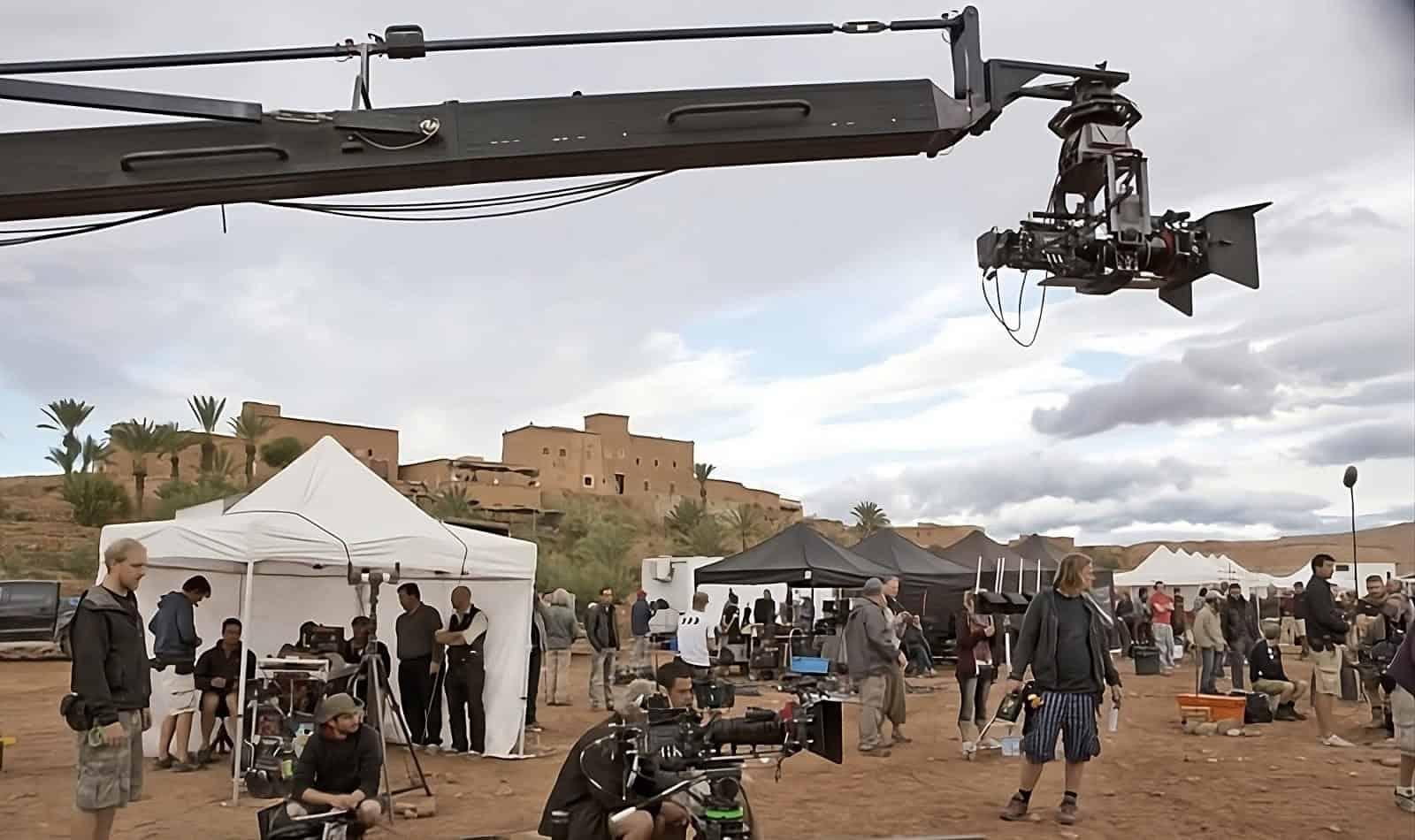
One of the most important questions is whether Moroccan workers rise with the industry.
International shoots create jobs, but not all jobs are equal.
Extras and drivers matter.
But Morocco also needs more cinematographers, editors, production designers, stunt coordinators, visual-effects artists, sound engineers, costume designers, location managers, assistant directors, line producers and postproduction specialists.
That is why training is central.
A country that only provides scenery remains replaceable.
A country that provides talent becomes harder to replace.
If the new Ouarzazate project successfully develops skills, Morocco can move from location economy to creative economy.
That is the strategic leap.
Postproduction Is Where Value Escapes
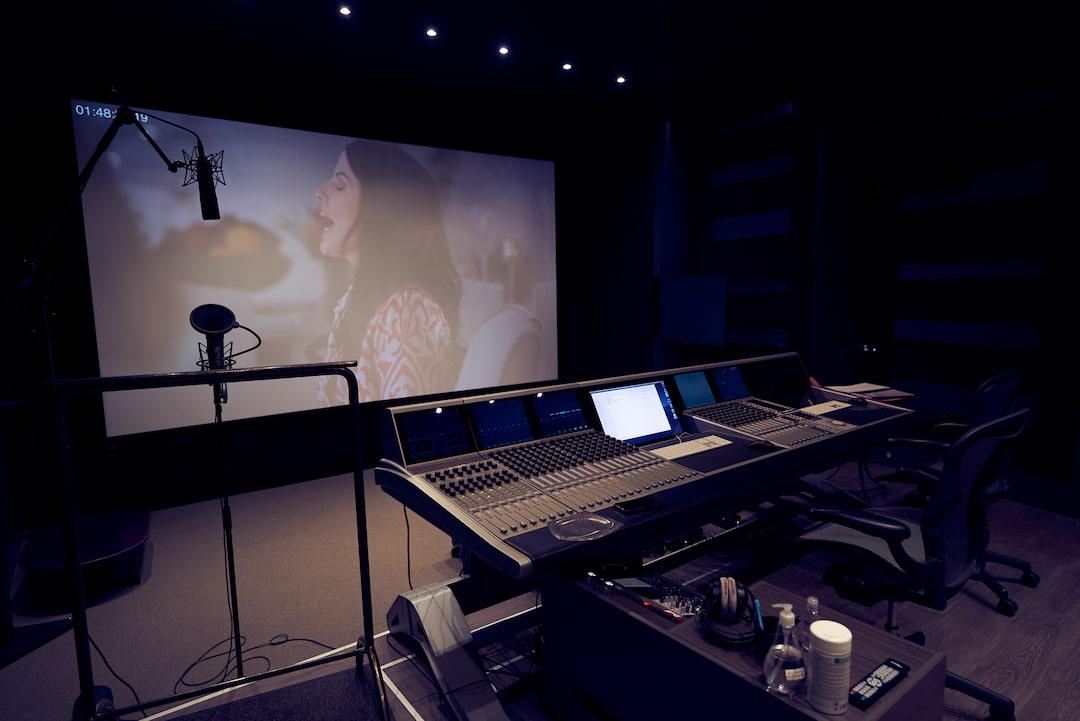
Postproduction is one of the biggest missed opportunities.
A film may shoot in Morocco, then edit in London, Los Angeles, Paris or another production hub. That means the high-skilled, high-margin work often leaves the country.
Ouarzazate’s new project directly addresses that gap by including postproduction and preservation facilities.
That is essential.
Editing, sound, colour, digital effects, archiving and final mastering create jobs and technical knowledge. They also build a professional ecosystem that can serve Moroccan filmmakers, African producers and international clients.
If Morocco wants to become more than a beautiful location, it must win postproduction.
The future of film is not only shot on location.
It is finished in the studio.
Hollywood Chooses Reliability
Global productions do not choose locations only because they are beautiful.
They choose reliability.
Can permits be secured?
Can equipment enter smoothly?
Are roads usable?
Are hotels available?
Can large crews be housed?
Are local teams experienced?
Can security be managed?
Can weather risk be handled?
Are costs predictable?
Can authorities coordinate?
This is where Morocco has an advantage.
The country has decades of filming experience and a reputation for handling large productions. Atlas Studios lists more than 200 films and television productions linked to its sets, including major titles such as Gladiator, Kingdom of Heaven, The Mummy and Game of Thrones.
That history matters because film producers hate uncertainty.
A reliable country wins repeat business.
The Industry Needs A Moroccan Voice
There is one weakness in the international-production model.
Foreign films can use Moroccan landscapes without telling Moroccan stories.
That is commercially useful, but culturally limited.
The next stage should not only be about attracting Hollywood. It should also be about strengthening Moroccan cinema, Moroccan screenwriters, Moroccan directors and Moroccan producers.
If the infrastructure improves only for foreign crews, Morocco becomes a service provider.
If the infrastructure also supports local creation, Morocco becomes a cultural producer.
That difference is important.
A country gains soft power when it hosts global stories.
It gains deeper soft power when it tells its own.
Africa Is A Bigger Opportunity
Morocco should not think only about Hollywood and Europe.
Africa’s film and streaming markets are growing. Nigerian, Egyptian, South African, Senegalese, Kenyan and other African creative sectors are increasingly visible. Platforms are looking for regional content. Audiences want stories with local identity and professional production values.
Morocco can position Ouarzazate as a production and postproduction hub for African filmmakers too.
That would fit the country’s wider Africa strategy.
It would also reduce dependence on Western productions.
A strong film hub needs diversified demand.
Hollywood brings prestige.
Africa can bring volume, relationships and long-term cultural positioning.
Streaming Changes The Location Economy
Streaming has changed global production.
Platforms need constant content, international settings, cheaper shooting options and visually distinct locations. That creates opportunity for countries that can offer scenery and production reliability.
But streaming also changes competition.
Many countries now offer tax incentives, fast permits, trained crews and studio space. Morocco is not competing only with Spain or Tunisia. It is competing with Jordan, Malta, Turkey, South Africa, Romania, Hungary, the UAE and other filming destinations.
That means Morocco must keep improving.
Beautiful landscapes are not enough.
The full package must be strong.
Incentives Must Be Smart
Film incentives can attract production, but they must be managed carefully.
If incentives are too weak, productions go elsewhere.
If incentives are too generous, the country may subsidise foreign studios without capturing enough local value.
The best incentive systems reward spending that creates jobs, transfers skills, uses local services and leaves infrastructure behind.
Morocco’s challenge is to design incentives that support the industry without becoming a discount location.
The goal is not to be the cheapest.
The goal is to be the most valuable.
A premium production destination can charge for reliability, scenery, talent and speed.
Cinema Is Also Regional Development
Ouarzazate is not Casablanca.
That matters.
Film infrastructure can support regional development by bringing investment, jobs, tourism and training to areas outside Morocco’s biggest economic centres. A strong cinema city can create opportunities for youth, artisans, technicians, hospitality businesses and creative entrepreneurs in the region.
This is important because Morocco’s economic story is often concentrated in Casablanca, Rabat, Tangier and Marrakech.
Ouarzazate gives another region a distinctive global role.
Cinema can become part of territorial development.
A desert city can become a creative economy node.
The Craft Economy Benefits Too
Film production uses many local crafts.
Carpentry.
Metalwork.
Textiles.
Leather.
Ceramics.
Set painting.
Costume making.
Props.
Animal handling.
Traditional architecture knowledge.
These skills are part of Morocco’s cultural economy. A major production can provide work to artisans and workshops that might otherwise depend only on tourism or local demand.
That is one of the hidden benefits of film.
It turns craft into export service.
A Moroccan artisan may never leave Ouarzazate, but his work can appear on screens around the world.
That is soft power through labour.
The Environmental Question Will Grow
Film production also has environmental costs.
Large crews, set construction, transport, water use, waste, generators and location pressure can affect sensitive landscapes. As sustainability becomes more important in global production, Morocco must prepare for greener filming standards.
This includes waste management, renewable power on sets, reduced plastic, water discipline, local sourcing and restoration of filming locations after production.
If Morocco wants to be a modern filming destination, environmental standards should be part of the offer.
The landscapes are the asset.
They must not be damaged by the industry that uses them.
Morocco’s Brand Can Gain From Screen Visibility
Screen visibility is powerful because it reaches people emotionally.
A viewer may see Morocco before knowing it is Morocco.
A landscape becomes memorable.
A city becomes desirable.
A location becomes part of global imagination.
That can support tourism, investment curiosity, cultural interest and national reputation.
But the branding must be smart.
Morocco should not rely only on foreign films to define it. The country must connect screen visibility to its own narrative: creativity, craft, reliability, landscapes, talent, modern infrastructure and cultural depth.
A film can show Morocco.
Strategy must explain Morocco.
The Risk Is Being A Background Forever
The biggest risk is simple.
Morocco could remain the place where others come to shoot their stories.
That is useful, but incomplete.
A mature film industry should host foreign productions, train local crews, build local studios, support Moroccan filmmakers, attract African partners, develop postproduction and convert location fame into tourism and cultural exports.
That is the complete model.
If Morocco captures only the location fee, it leaves too much value on the table.
If it captures the ecosystem, the industry becomes strategic.
The new Ouarzazate project suggests Morocco understands this.
Now execution must prove it.
The Bottom Line
Film Set Morocco is entering a new phase.
The Kingdom has launched the 240 million dirham International Cinema City in Ouarzazate, including a 3,000 m² filming studio, technical spaces, postproduction, training, innovation and cinema-tourism facilities. At the same time, major productions such as Christopher Nolan’s The Odyssey continue to use Moroccan locations like Essaouira and Aït Benhaddou for global storytelling.
That is the opportunity.
Morocco is not only a backdrop.
It can become a production platform.
If the country captures more technical value, trains more local talent and connects filming with tourism and cultural exports, the screen economy can become a serious pillar of soft power.
Hollywood may come for the desert.
Morocco should make it stay for the industry.