

Morocco’s gaming ambition has reached a number large enough to change the conversation.
The Kingdom is targeting between 0.5% and 1% of the global gaming market by 2030–2032, which officials estimate could represent between $1.5 billion and $3 billion in annual revenue for the Moroccan economy.
That is no longer a niche creative-industry target.
At the upper end, $3 billion would place gaming alongside some of Morocco’s most serious export-oriented sectors.
And unlike cars, food or aerospace components, the product can be shipped globally without a container.
A game developed in Rabat can be sold instantly in Paris, Riyadh, Lagos or Seoul.
That is what makes the target interesting.
Morocco is not simply trying to create more gamers.
It is trying to create an industry capable of exporting intellectual property.
$3 Billion Requires Companies, Not Events

Morocco Gaming Expo has become an important showcase for the ecosystem.
Its third edition was held in Rabat in May 2026, bringing together developers, startups, investors, publishers and international gaming companies. The government has explicitly positioned the event as part of its effort to build Morocco into an African gaming-industry hub.
Events can create visibility.
They cannot create $3 billion in annual revenue by themselves.
That requires companies.
Studios.
Publishers.
Technology providers.
Esports operators.
Animation businesses.
Localization specialists.
Game-testing companies.
Cloud infrastructure.
Payment providers.
Creator networks.
If Morocco wants to capture 1% of the global gaming economy, it needs commercial organisations capable of producing and selling continuously.
The target is therefore less about gamers than entrepreneurship.
Morocco Is Starting From A Small Base
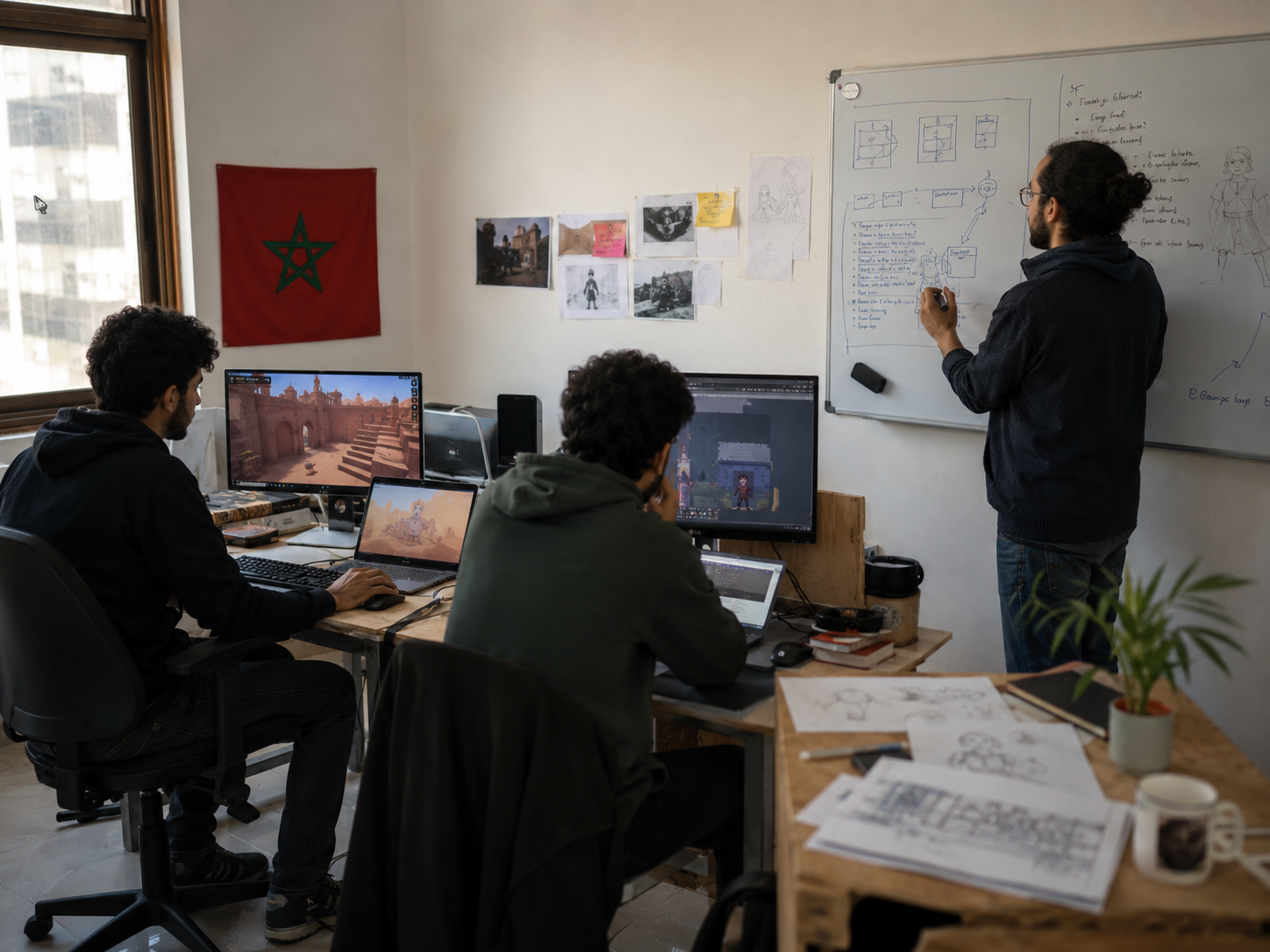
This is important because the $3 billion ambition sounds enormous compared with the sector’s current size.
Morocco’s gaming industry was still relatively undeveloped only a few years ago.
The government itself has described the ecosystem as moving from a primarily entertainment-focused market toward a locally developed industry.
That means the country does not have decades to mature gradually.
Studios need to scale quickly.
Training needs to accelerate.
Investors need to understand the industry.
International companies need reasons to establish operations locally.
Infrastructure has to appear almost simultaneously.
The challenge is difficult.
It is also what makes the opportunity interesting.
Morocco is trying to build the sector while the global market is still expanding.
Gaming Is Bigger Than Most People Realise
Moroccan policymakers estimate the global gaming industry at more than $300 billion.
That makes gaming larger than many traditional entertainment sectors.
The economic activity extends far beyond selling games.
Advertising.
Subscriptions.
Esports.
Streaming.
Merchandise.
Cloud gaming.
In-game purchases.
Licensing.
Publishing.
Technology.
Data.
A successful game can therefore become an economic platform.
One intellectual property asset can generate several revenue streams over many years.
That is one reason governments increasingly treat gaming as an industrial sector rather than simply youth entertainment.
Ownership Is The Real Prize
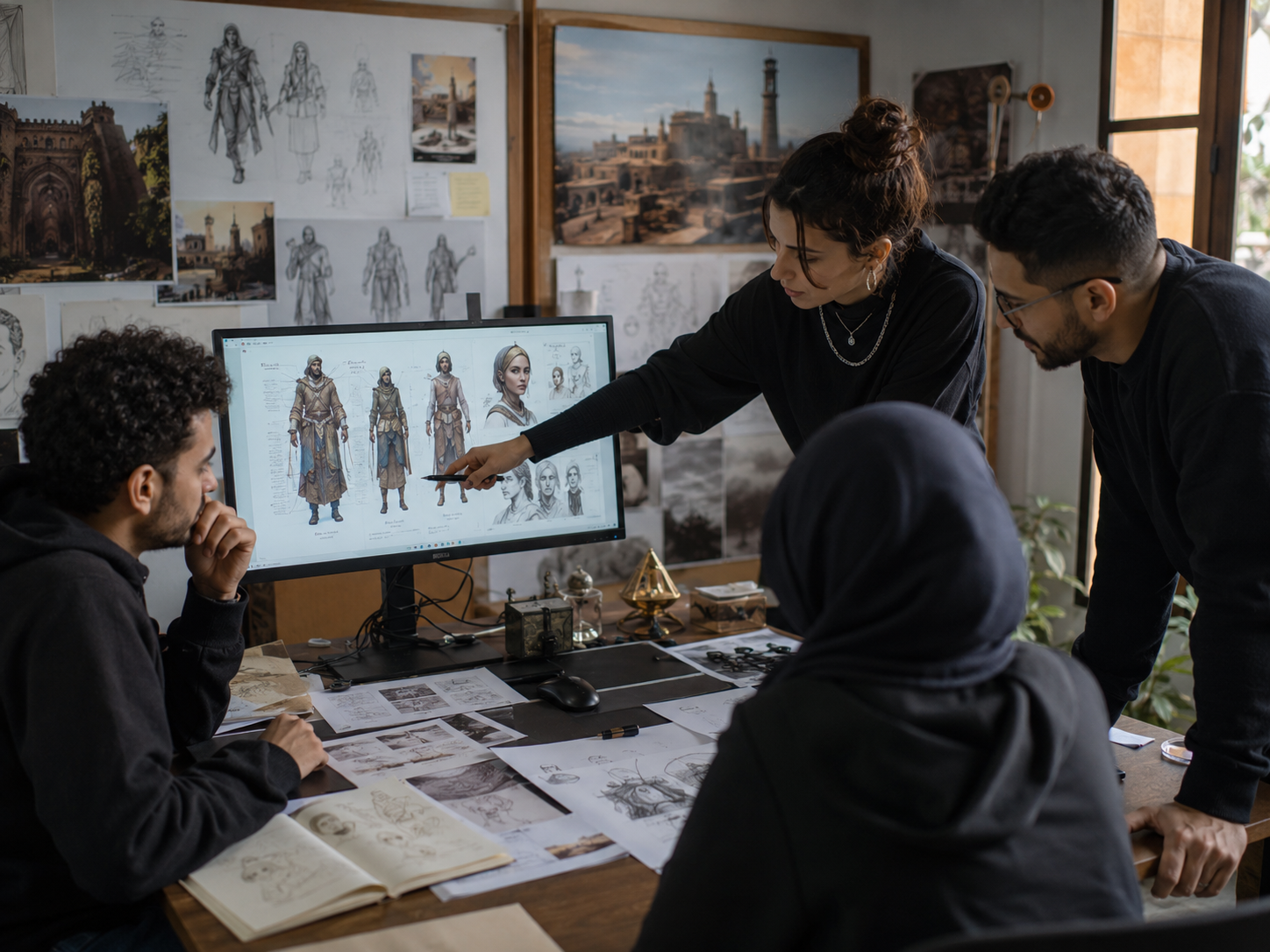
There are two very different ways Morocco can participate.
The first is providing labour.
Moroccan developers work for foreign studios.
Artists create assets.
Testing teams perform quality assurance.
Localization companies translate content.
This produces jobs and export revenue.
It is valuable.
The second model is much more powerful.
A Moroccan studio owns the game.
The characters.
The story.
The code.
The brand.
The sequel rights.
The licensing.
That company captures far more of the upside if the product succeeds.
Morocco needs both models.
Service exports can build skills and cash flow.
Owned intellectual property creates long-term corporate value.
One Successful Game Can Change A Company
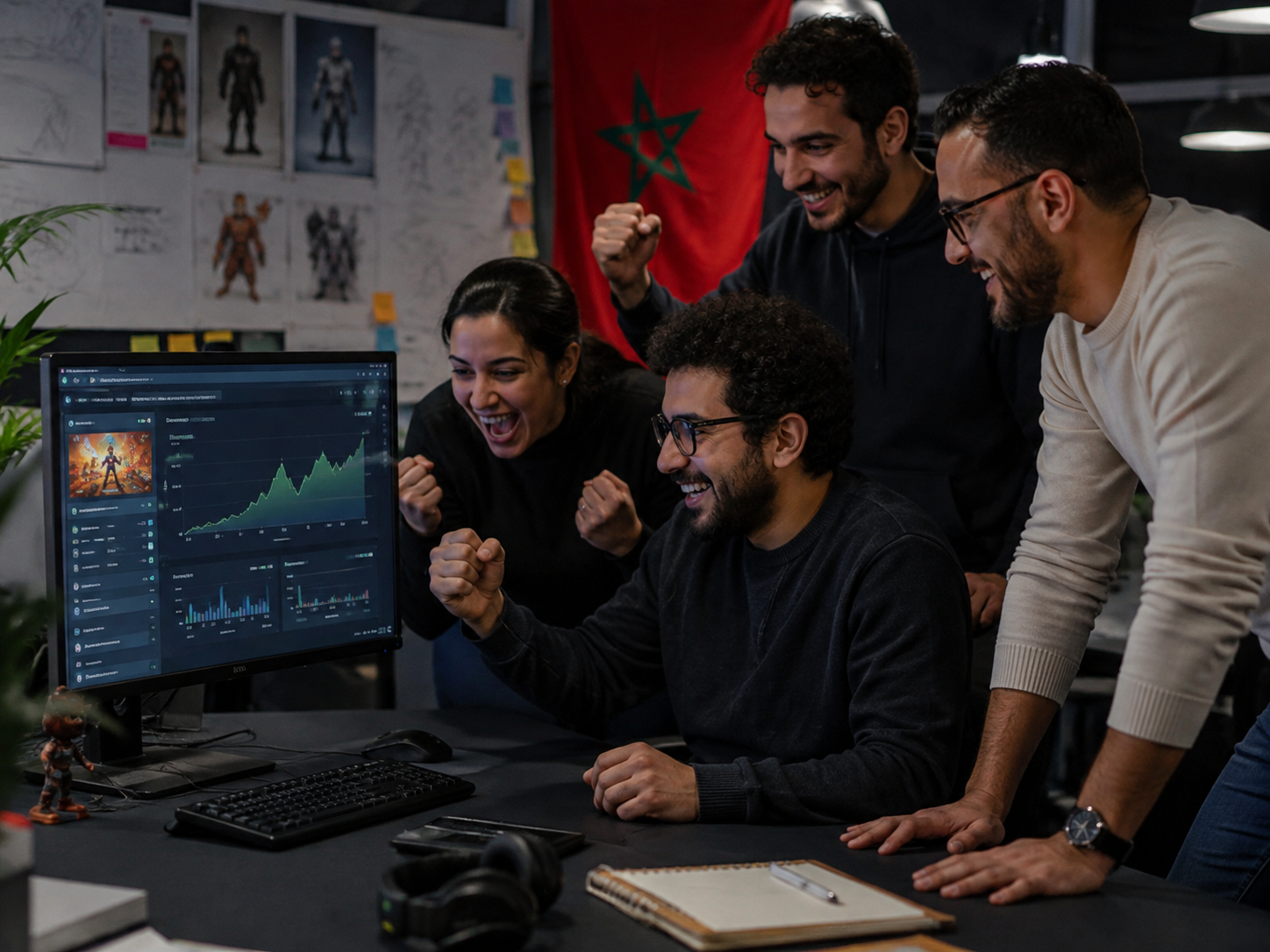
Gaming economics are unusual.
A studio may work for several years before generating meaningful revenue.
Then one successful title can change the company dramatically.
The software has already been built.
An additional million downloads do not require manufacturing another million physical products.
That scalability is extremely attractive.
But it creates high risk.
Most games do not become global hits.
Some disappear almost immediately after launch.
Morocco therefore needs financing models that understand portfolio risk.
Investors cannot expect every studio to produce predictable revenue from day one.
Gaming investment behaves more like entertainment and venture capital than traditional manufacturing finance.
Moroccan Investors Need To Learn New Metrics
A game studio cannot always be evaluated using the same metrics as a factory.
Investors need to understand:
Daily active users.
Retention.
Average revenue per user.
Customer acquisition cost.
Wishlist growth.
Engagement.
Community size.
Development pipeline.
Publishing rights.
Lifetime value.
These are the numbers that determine whether a gaming company is building something commercially meaningful.
The more Moroccan investors understand these metrics, the easier it becomes for local studios to raise money without leaving the country.
Capital literacy matters on both sides.
Developers need to understand finance.
Investors need to understand games.
Public Support Can Reduce Early Risk
Morocco has already introduced targeted support for gaming through its 2026–2028 innovation programmes.
The government’s industrial innovation framework includes financial support covering 30% of eligible gaming industrialisation projects, capped at 3 million dirhams per project during the pilot phase.
That can help at the stage where young companies struggle most.
Prototype development.
Testing.
Tooling.
Early industrialisation.
Hiring.
But public support should remain catalytic.
A game studio ultimately needs customers.
No subsidy can replace a commercially successful product.
The best public funding helps companies reach the point where private investors and customers are willing to finance what comes next.
Rabat Gaming City Has To Become A Business Cluster
Rabat Gaming City forms part of Morocco’s wider sector strategy and has been highlighted as one of the pillars expected to accelerate the ecosystem.
The physical location matters less than what happens inside it.
Studios need to meet.
Talent needs to move between companies.
Publishers need access to developers.
Investors need deal flow.
Training institutions need close relationships with employers.
Events need permanent commercial follow-up.
This is how clusters become powerful.
Silicon Valley was never valuable because of office buildings.
Its advantage came from concentration.
Talent.
Capital.
Companies.
Customers.
Knowledge.
Morocco needs the same network effect at a smaller scale.
Europe Can Become A Major Partner
One important development arrived during Morocco Gaming Expo 2026.
Morocco and the European Union signed support for the country’s gaming-industry development strategy, including stronger links between Moroccan and European gaming ecosystems and planned B2B exchanges between professionals.
That could become commercially significant.
Europe has mature gaming markets.
Publishers.
Studios.
Investors.
Training institutions.
Technology companies.
Moroccan firms can benefit from access to that ecosystem.
The goal should not simply be European companies outsourcing work to Morocco.
Moroccan studios should also gain publishing, investment and distribution relationships that allow them to reach international audiences.
Partnership should create market access.
Outsourcing Can Be The First Step
Gaming outsourcing is a realistic entry point.
International studios need:
3D art.
Animation.
Quality assurance.
Localization.
Testing.
Sound.
Support.
Porting.
Technical services.
Morocco can compete for some of that activity based on cost, language and proximity to Europe.
This creates jobs quickly compared with building globally successful original games from scratch.
It also trains people on international production standards.
The strategic mistake would be stopping there.
Outsourcing should become a learning platform.
Teams gain experience.
Managers learn production systems.
Companies accumulate cash.
Eventually some of them should begin building their own intellectual property.
Arabic Gaming Is Still An Opportunity
One of Morocco’s strongest strategic advantages is language.
Arabic-speaking gaming audiences are large.
Yet many global titles still provide incomplete Arabic localization or limited culturally adapted content.
Moroccan studios can participate here.
Translation.
Voice acting.
Community management.
Regional customer support.
Arabic-first games.
Culturally relevant storytelling.
The opportunity extends across North Africa and the Gulf.
Morocco is well positioned because it can combine Arabic with French and English skills.
One company can serve multiple markets from the same base.
Francophone Africa Adds Another Market
French creates another advantage.
Morocco already has strong commercial relationships across Francophone Africa.
Gaming companies can use the same geographic networks.
Senegal.
Côte d’Ivoire.
Cameroon.
Other Francophone markets.
Mobile gaming is particularly interesting because smartphones provide a lower-cost entry point than consoles or expensive gaming PCs.
Moroccan developers can design around African realities.
Connectivity.
Payment methods.
Local pricing.
Device limitations.
Language.
A product built around those conditions may compete differently from one designed first for wealthy Western markets.
Mobile Gaming Could Be Morocco’s Fastest Route
Morocco does not need to begin by competing directly with the biggest AAA studios.
Those projects can cost hundreds of millions of dollars.
Mobile gaming requires less capital.
Teams can be smaller.
Distribution is global.
African and Middle Eastern markets are heavily mobile-first.
That makes mobile a logical starting point.
The difficulty is competition.
Thousands of games launch constantly.
Customer acquisition can become expensive.
Retention is brutal.
The product must be excellent.
But the capital barrier is lower.
For an emerging ecosystem, that matters.
Esports Can Build Audience Before Local Games Scale
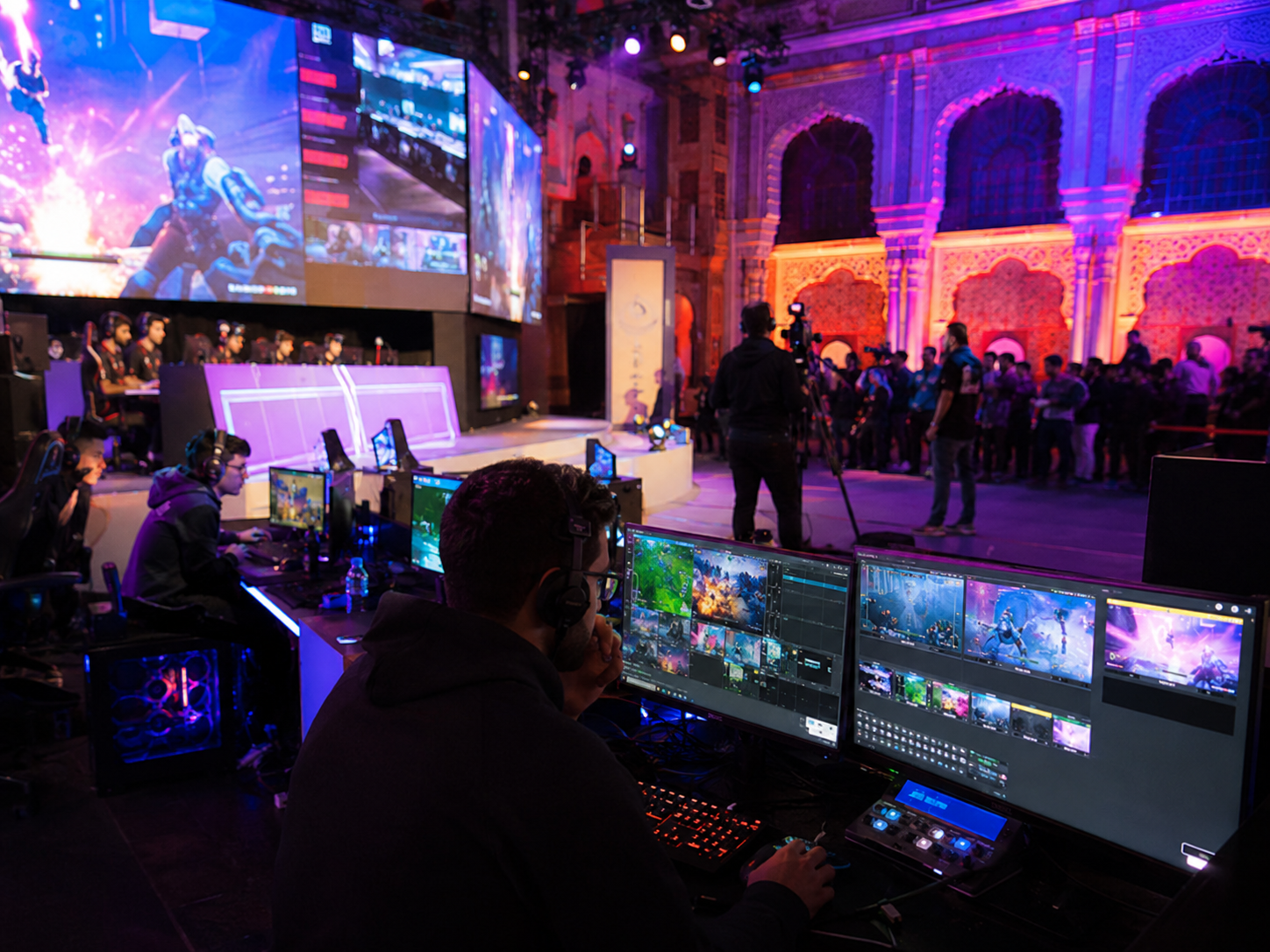
Morocco already possesses an active esports community.
The Morocco Gaming Expo includes competitive gaming and esports as an important part of its structure.
Esports can generate economic value even while most games themselves remain foreign-owned.
Tournament organisers.
Professional players.
Broadcast teams.
Sponsors.
Venues.
Content creators.
Coaches.
Event technology.
This gives Morocco a second pathway into gaming.
The long-term opportunity becomes larger when local studios eventually create games capable of supporting their own competitive communities.
Then Morocco owns both the game and part of the media economy around it.
Creators Are Distribution Infrastructure
A game can be technically brilliant and commercially invisible.
That is one of the industry’s hardest problems.
Creators solve part of it.
YouTube.
TikTok.
Twitch.
Instagram.
Discord communities.
A streamer showing a new game can generate thousands of downloads immediately.
Moroccan studios therefore need creator strategies from the beginning.
Do not finish the game and then ask how to market it.
Build the community during development.
Show prototypes.
Collect feedback.
Create anticipation.
The modern gaming customer increasingly participates before launch.
Audience building becomes part of product development.
Training Needs To Produce Complete Teams
Morocco does not simply need more coders.
A professional game studio requires different specialisations.
Programmers.
Game designers.
Technical artists.
3D artists.
Animators.
Writers.
Sound designers.
Producers.
Quality-assurance specialists.
Marketing professionals.
Community managers.
Monetisation experts.
One exceptional developer cannot build a global company alone.
Training programmes therefore need to create complete production ecosystems.
The Morocco Gaming Expo’s 2026 programme reflected this broader view, including sessions around game design, animation, digital arts and development.
The next step is aligning those skills directly with employer demand.
Women Could Expand The Talent Pool
Morocco’s gaming development is also beginning to address participation by young women.
A partnership involving UNICEF and the ministry has already created opportunities for approximately 200 young women in game design, according to statements during the 2026 gaming programme.
This matters economically.
A new industry cannot afford to ignore half the potential talent pool.
Gaming needs designers.
Artists.
Writers.
Programmers.
Managers.
Creators.
Greater female participation increases the number of people capable of building companies and products.
It also broadens the perspectives inside games themselves.
Gaming Can Connect With Morocco’s Film Industry
The boundaries between film and gaming are disappearing.
Modern games use:
Motion capture.
Cinematic storytelling.
Voice actors.
Music.
Visual effects.
3D environments.
Animation.
Morocco is simultaneously developing film-production capacity.
That creates potential overlap.
A visual-effects studio serving films can work on games.
A motion-capture facility can support both industries.
Actors can provide voices and performance capture.
Composers can work across formats.
The more creative industries share infrastructure, the stronger the economics become.
Gaming should not be built as an isolated ecosystem.
Tourism Can Become Game Content
Morocco itself offers extraordinary creative material.
Tangier.
Fez.
Marrakech.
The Sahara.
Atlas landscapes.
Historical architecture.
Amazigh culture.
Music.
Folklore.
The objective should not be producing simplistic tourism games.
But Moroccan environments and stories can inspire original intellectual property.
Games create cultural exposure at enormous scale.
A player can spend fifty hours inside a fictional world influenced by Morocco.
That can create emotional familiarity far stronger than a conventional advertisement.
Japan and South Korea demonstrate how entertainment can make national culture globally desirable.
Morocco has its own material to work with.
$3 Billion Would Require Exports
The Moroccan domestic market alone cannot realistically deliver the upper target.
If the country wants billions of dollars in annual gaming revenue, companies need international customers.
That means export thinking from day one.
English-language distribution.
Arabic markets.
French-speaking markets.
Europe.
Africa.
The Gulf.
North America.
Asia where appropriate.
A Moroccan studio cannot think of itself as a local company that may export later.
The addressable market needs to be global from the start.
That changes design, pricing, marketing and financing decisions.
Publishing Is Still A Missing Layer
Developers build games.
Publishers turn many of them into commercial products.
They provide financing.
Marketing.
Distribution.
Platform relationships.
Localization.
Community support.
Customer acquisition.
Morocco needs access to this capability.
It may initially come through international publishers.
Over time, domestic publishing platforms could emerge.
Without publishing expertise, studios risk becoming excellent technical teams whose products never reach enough customers.
The commercial layer matters just as much as the creative one.
Morocco Needs Its First Major Gaming Exit
Young ecosystems change dramatically when one company succeeds visibly.
A major acquisition.
A global hit.
A large foreign investment.
An international publisher buying a Moroccan studio.
One successful exit creates several effects.
Founders become angel investors.
Employees gain experience and capital.
International investors start paying attention.
Students see viable careers.
New companies form.
That is how ecosystems accelerate.
Morocco does not need fifty unicorns immediately.
It needs a few undeniable commercial successes capable of proving the model.
Intellectual Property Protection Matters
If Morocco wants gaming companies to own valuable IP, legal protection becomes important.
Copyright.
Licensing.
Character ownership.
Music rights.
Software.
Contracts with developers.
International distribution agreements.
Morocco is already updating its copyright framework to respond better to digital-economy developments.
That matters to gaming directly.
A game studio’s most valuable assets may exist almost entirely as intellectual property.
If ownership is unclear, investment becomes harder.
Professional legal structures therefore need to develop alongside creative talent.
Gaming Could Create High-Value Youth Employment
One of the strongest arguments for the sector is employment quality.
Software development.
Digital art.
Animation.
Production.
Data.
Marketing.
These can become globally tradable skills.
A Moroccan developer working for a foreign customer can generate export revenue without leaving Morocco.
A successful domestic studio can employ dozens or hundreds of highly skilled workers.
This supports another national objective.
Creating more career paths for young graduates inside the digital economy.
The challenge is ensuring salaries and progression become attractive enough to keep the strongest talent in the ecosystem.
Brain Drain Could Become A Serious Constraint
Gaming talent is globally mobile.
A strong Moroccan developer can work remotely for a European or American studio.
That creates opportunity.
It also creates competition for local employers.
Moroccan studios need to offer more than entry-level jobs.
Career progression.
Interesting projects.
Equity.
Creative ownership.
International exposure.
Strong workplace culture.
If the best developers leave immediately after training, public investment in skills produces value elsewhere.
The sector needs companies capable of retaining talent because the work itself is competitive internationally.
$3 Billion Needs Scale In Capital Too
Reaching $3 billion in annual revenue cannot happen through small grants alone.
Successful studios will eventually need tens or hundreds of millions of dirhams in growth capital.
Acquisitions.
International marketing.
Large development teams.
Publishing.
Infrastructure.
That requires venture capital, private equity and strategic investors.
Morocco’s gaming strategy therefore intersects directly with capital-market development.
The sector can only grow as quickly as companies can finance ambition.
A $3 billion industry requires a financing ecosystem capable of thinking in similarly large terms.
Government Should Measure Companies, Not Only Participation
Gaming events naturally produce attractive attendance numbers.
The more important metrics are harder.
How many Moroccan studios survive three years?
How many export?
How many games launch internationally?
How much revenue comes from foreign customers?
How many IP assets are Moroccan-owned?
How much private investment enters?
How many high-value jobs exist?
How many companies move beyond ten, fifty or one hundred employees?
These numbers will determine whether Morocco is building an industry or merely an active community.
Both are valuable.
Only one can produce $3 billion.
1% Of The World Market Is An Enormous Target
Morocco’s official ambition is to reach up to 1% of a global gaming market estimated above $300 billion, potentially generating as much as $3 billion annually by 2030–2032.
That target should not be dismissed because it is ambitious.
It should be used to clarify what needs to happen.
Morocco would need much larger studios.
More investment.
More exports.
More international publishers.
More talent.
More owned intellectual property.
More commercial success.
More companies capable of operating globally.
That is the real test.
Morocco already has gamers.
It is developing training.
It has an annual industry event.
Rabat Gaming City is emerging.
European cooperation is increasing.
Public innovation support exists.
The infrastructure around the sector is beginning to appear.
Now the country needs the hardest part.
Products people around the world are willing to pay for.
If Morocco can create those products repeatedly, gaming could become one of the country’s most unusual export industries: one built primarily from talent, creativity and intellectual property rather than factories and freight.
And if the sector ever reaches $3 billion in annual revenue, the biggest change will not be that Morocco became a larger gaming market.
It will be that Morocco became a country capable of creating global entertainment companies of its own.
 Martino Oosterveer, Contributing Editor