
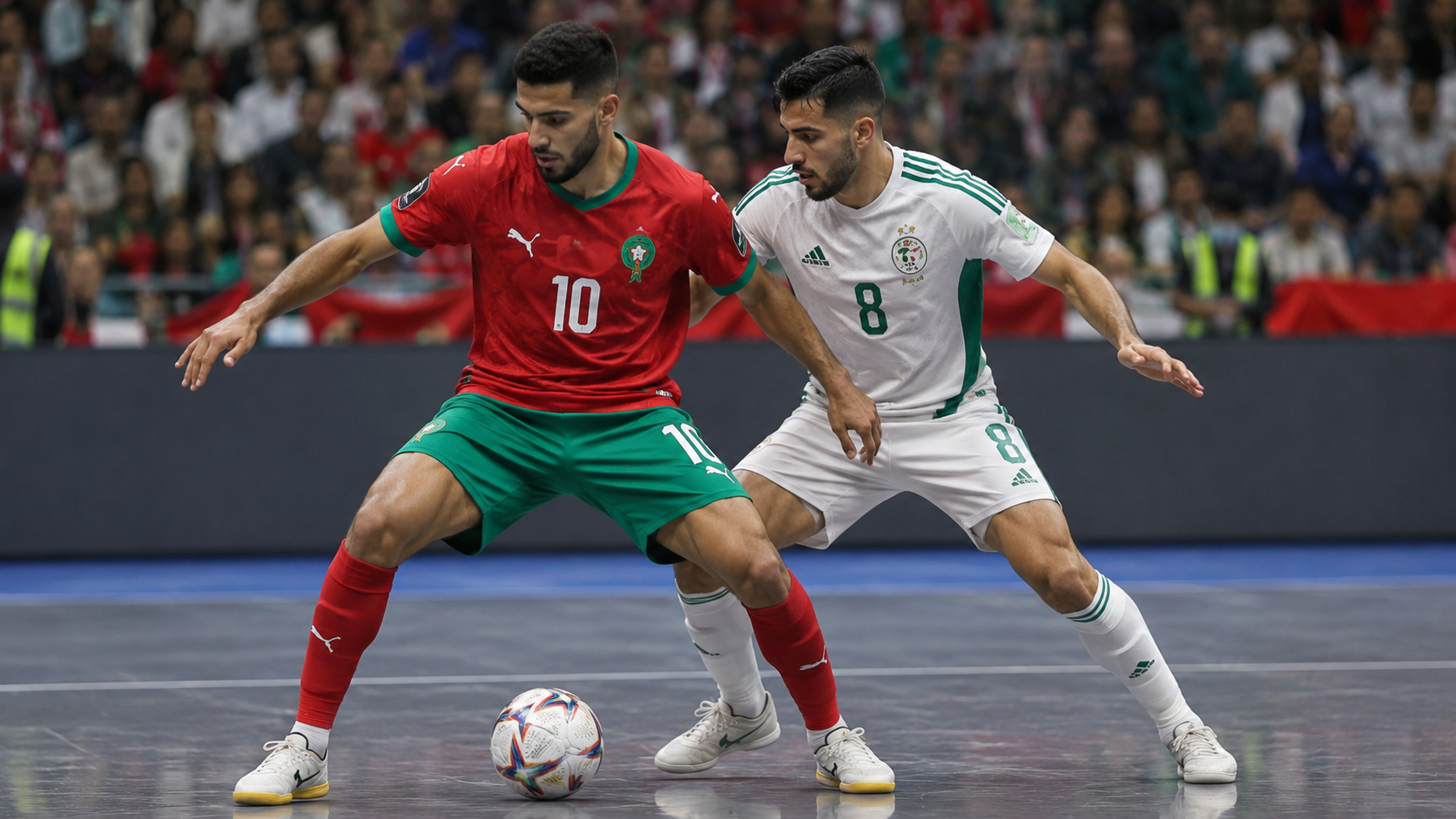
Morocco will defend home soil against Algeria, Libya and Zambia when Africa’s best futsal nations arrive in October — while Mozambique is already warning that it intends to be more than just another name on the fixture list.
The stage is set for another Morocco–Algeria sporting showdown.
When the 2026 Futsal Africa Cup of Nations kicks off in Morocco this October, the hosts will find one of their biggest regional rivals waiting in the same group.
Morocco has been drawn in Group A alongside Algeria, Libya and Zambia, creating an immediate headline fixture before a ball has even been kicked.
Eight teams will compete for the continental title from October 12 to October 21, with Egypt, Angola, Mozambique and Tanzania forming Group B.
And while much of the early attention will naturally fall on Morocco and Algeria, Mozambique is arriving with confidence of its own.
MOROCCO AND ALGERIA WILL MEET AGAIN
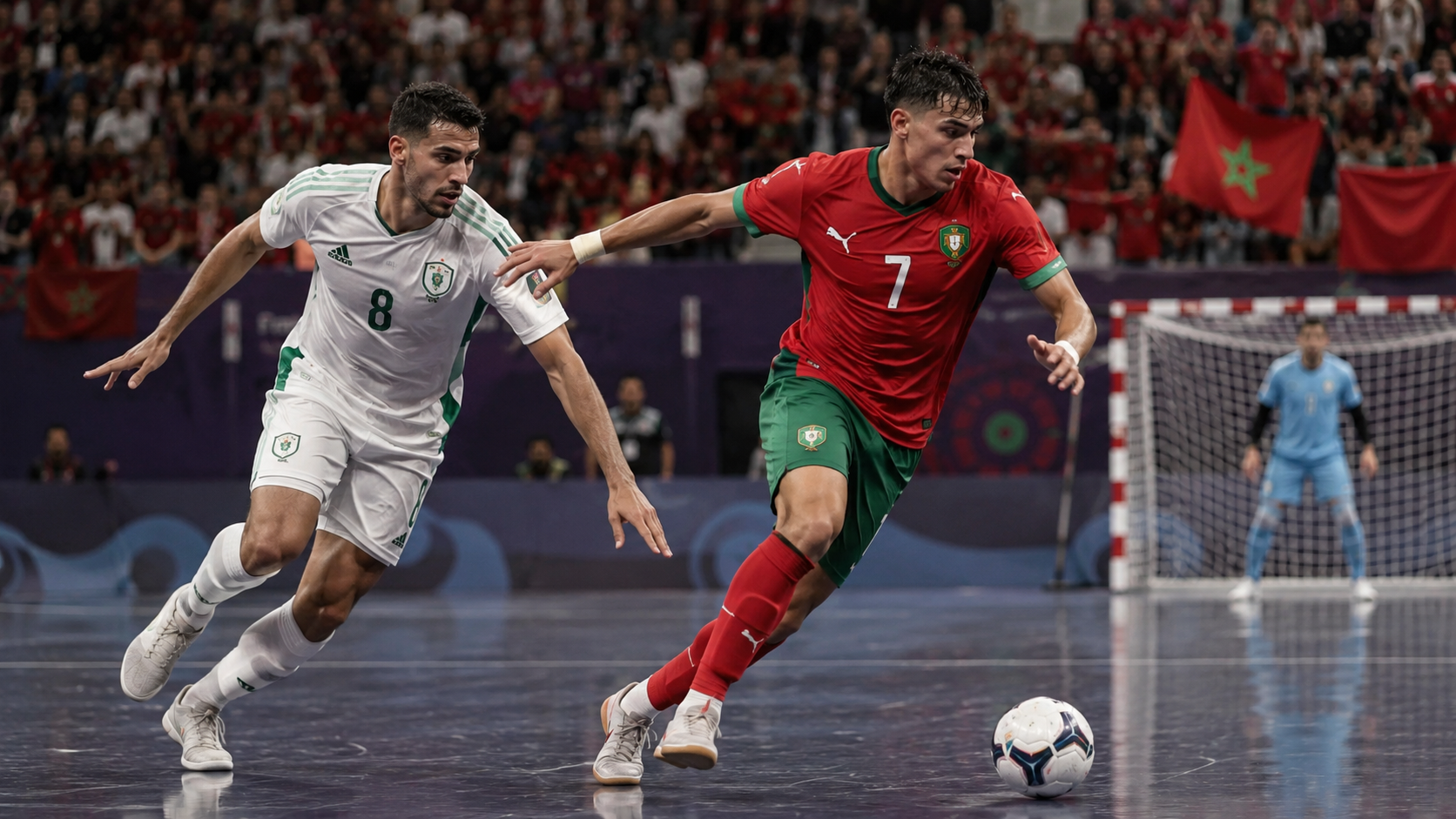
Few African sporting matchups carry the same instant tension.
Morocco and Algeria share one of the continent’s most closely watched football rivalries, and futsal is no exception.
This time Morocco has the added pressure — and advantage — of playing at home.
The hosts will know that progressing from Group A is expected.
But the presence of Algeria means there is little room for complacency.
Libya and Zambia complete a group that may look straightforward on paper for the hosts, but tournament football rarely follows the easiest script.
One bad evening can change everything.
And against Algeria, form often becomes secondary to rivalry.
MOROCCO WILL HAVE EXPECTATIONS TO CARRY
Hosting a major African tournament comes with benefits.
Home support.
Familiar surroundings.
No travel between countries.
But it also brings pressure.
Every Moroccan performance will be examined more closely because the team is not simply participating.
It is hosting.
That changes the expectation from “compete” to “contend”.
The CAF draw makes that challenge clear from the beginning.
Morocco does not get several matches to quietly settle into the tournament.
It gets a group containing Algeria.
That alone raises the temperature.
MOZAMBIQUE ISN’T COMING TO MAKE UP THE NUMBERS
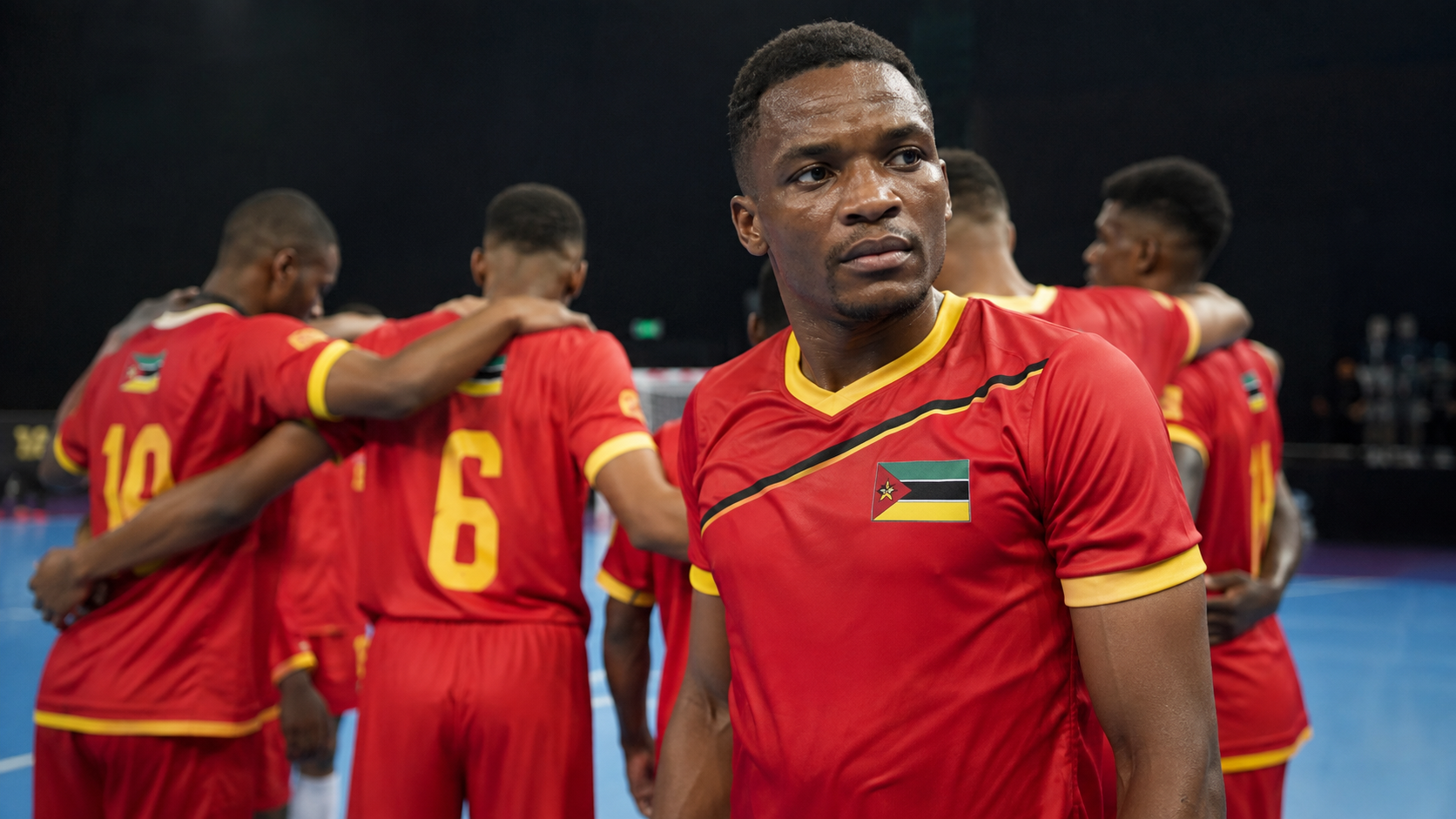
Meanwhile, Mozambique is talking with the confidence of a team that believes African futsal is changing.
International defender Fernando Chamboco says the sport’s development inside Mozambique has given the national team reason to believe it can compete with the continent’s strongest sides.
His confidence is rooted in what he sees as genuine progress rather than simple pre-tournament optimism.
Mozambique has invested in the sport, improved results and developed players with stronger technical foundations.
Chamboco himself began playing futsal informally when he was younger before later moving to Morocco, giving him a direct connection to the country where the tournament will now be staged.
He believes those early experiences helped shape his understanding of the game.
Now he wants Mozambique to show that progress on the biggest African stage.
GROUP B COULD BE LESS PREDICTABLE THAN IT LOOKS
Mozambique has been drawn in Group B with Egypt, Angola and Tanzania.
Egypt will immediately attract attention because of its history and reputation.
But Angola has its own futsal pedigree, while Mozambique clearly believes it can challenge.
That creates a group where the obvious favourite may still have to work for every point.
Chamboco’s message is essentially that Mozambique no longer wants to be judged by old assumptions.
The country wants to be treated as a serious futsal nation.
The tournament will show whether that confidence is justified.
FUTSAL IS GROWING ACROSS AFRICA
The wider story behind Morocco 2026 is the growth of futsal itself.
Across Africa, more players are being introduced to the game at younger ages.
For many, it begins informally.
Small-sided matches.
Tight spaces.
Limited time on the ball.
Those conditions naturally reward fast decision-making and close control.
Chamboco described his own introduction to futsal in similar terms: not through a professional academy, but through informal football with friends.
That experience is familiar across the continent.
And it helps explain why more African federations are now taking futsal seriously as both a competition and a development pathway.
MOROCCO HAS MORE THAN A TROPHY AT STAKE
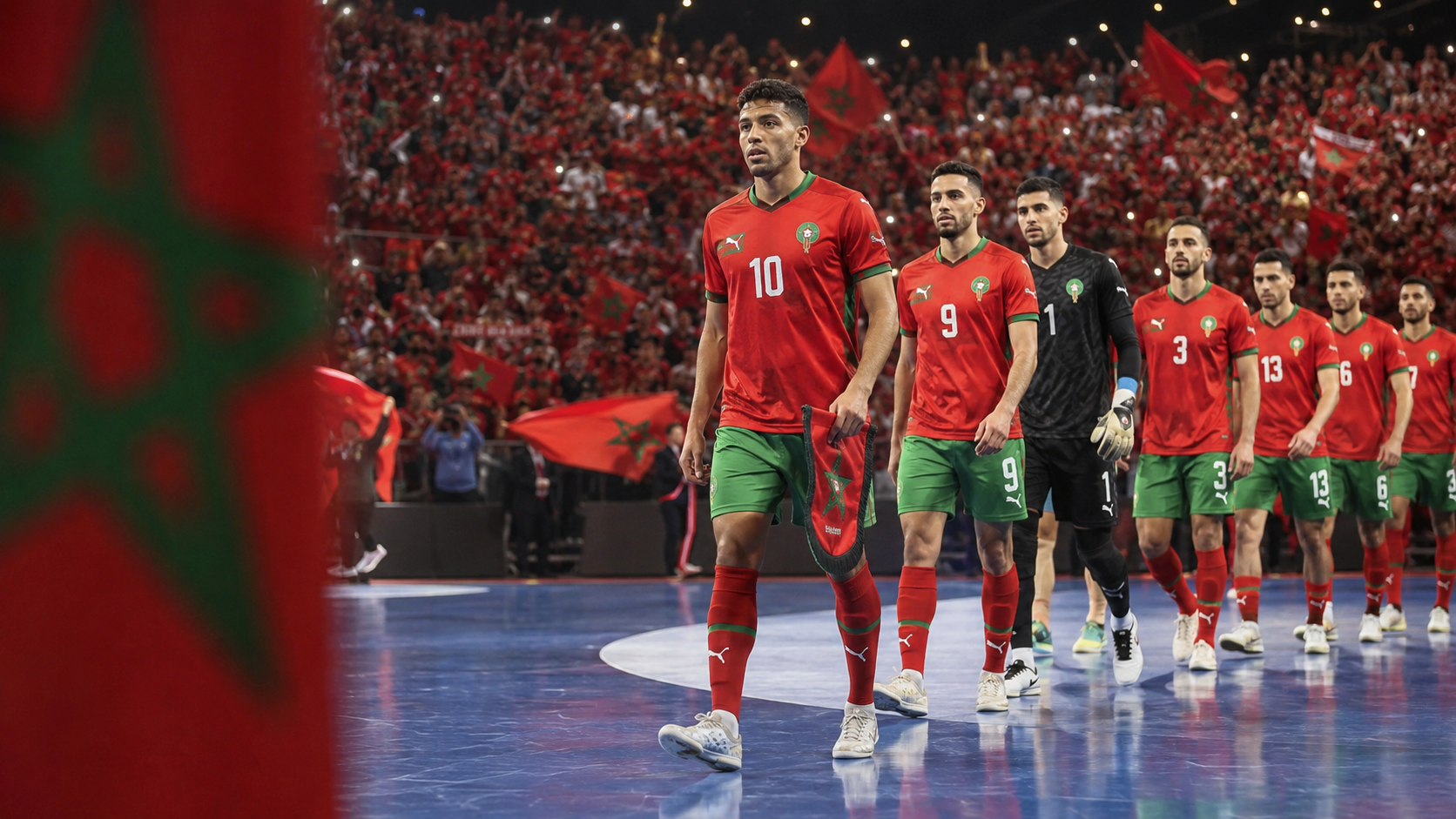
For Morocco, hosting another continental competition also fits into a much broader sporting strategy.
The country has increasingly positioned itself as a destination for major African and international events.
Successful organisation matters.
So does performance.
A strong tournament off the court but an early Moroccan exit would leave a very different impression from a deep run by the hosts.
That makes Group A important for reasons beyond qualification.
Morocco will want to establish control early.
Algeria will want to disrupt that.
Libya and Zambia will see opportunities of their own.
And every one of those matches will be played under the attention that follows a host nation.
THE MATCH EVERYONE WILL CIRCLE
Whatever happens elsewhere in the group, one fixture already stands above the rest.
Morocco vs Algeria.
The tournament has not started.
The dates of individual fixtures may still be something supporters are planning around.
But the rivalry needs little introduction.
Two neighbouring countries.
A continental title at stake.
Morocco playing at home.
And a place in the knockout stages on the line.
That is enough to make it one of the games most likely to define the opening phase of Futsal AFCON 2026.
OCTOBER WILL PROVIDE THE ANSWERS
For now, everyone can talk.
Mozambique can speak about progress.
Morocco can embrace the advantage of playing at home.
Algeria can prepare for another high-pressure encounter with its neighbour.
But once the tournament begins on October 12, reputation stops mattering.
Eight teams will enter.
Only one will leave as African champion.
And before the knockout rounds even begin, Morocco already knows exactly which group-stage opponent will command the most attention.
Algeria is coming to town.