
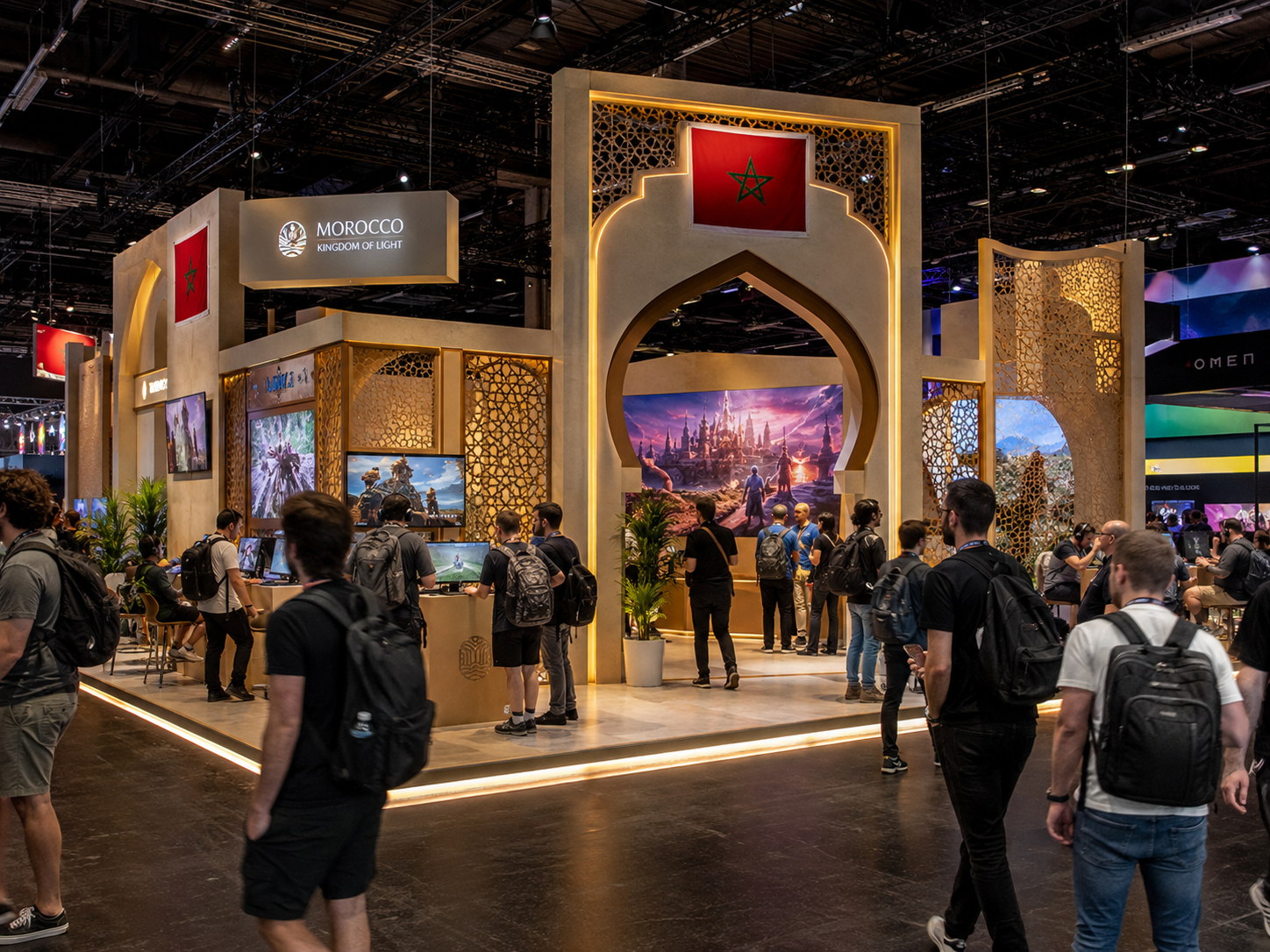
For the first time, Morocco has opened an official national pavilion at one of the world’s largest video game events, giving eleven homegrown gaming startups, studios and creative companies an international stage.
Morocco at Gamescom 2026 has entered gaming’s biggest international arena, and it has brought far more than a flag.
Inside the country’s first official national pavilion, Moroccan creators are showing a futuristic Casablanca, a fantasy battlefield, zellige-inspired puzzles and a mysterious walled city built for players to explore.
Eleven Moroccan gaming startups, studios and creative companies are included in the final delegation in Cologne. Their projects reveal something young Moroccan gamers rarely see at this scale: digital worlds created at home and presented directly to the international gaming industry.
MOROCCO AT GAMESCOM 2026: AT A GLANCE
Event: Gamescom 2026
Dates: August 26 to 30, 2026
City: Cologne, Germany
Venue: Koelnmesse
Moroccan participants: 11
Pavilion size: 102 square metres
Milestone: Morocco’s first official national participation
Location: Hall 3.2, B050-C051
Confirmed projects: RENOVATUM, Mathpunk Chronicles, Futurocco 2121, Za-id, Discharged, LetterLand, CNAFA, GemmaX, Kasbah, Cazafonia: Between Cities, Rivaldom and Rogue Fantasy: Ever-Shifting Worlds
Public access: The Morocco Pavilion is in Gamescom’s business area. Access depends on the visitor’s ticket or professional accreditation.
Official updates: Gamescom and Morocco Gaming Industry
MOROCCO HAS ENTERED THE GAMESCOM ARENA
Gamescom describes itself as the world’s biggest event for computer and video games.
The 2026 edition opened at Koelnmesse on Wednesday, August 26, following Gamescom Opening Night Live the previous evening. Wednesday was primarily the trade visitor and media day, while the main public programme began on Thursday and continues until Sunday.
Morocco is participating officially with a national pavilion for the first time.
The 102-square-metre space is supported by the Ministry of Youth, Culture and Communication and the Moroccan Investment and Export Development Agency, AMDIE. It is designed to connect Moroccan creators with publishers, studios, investors, distributors and other gaming professionals.
An official announcement in May initially referred to ten companies. Morocco Gaming Industry’s final delegation list, published on August 6 and repeated by the official delegation coordinator before the event, contains eleven participants.
Their presence does not mean that every project is finished or commercially available. Several of the games remain in development, and no verified international release date has been announced for the delegation’s principal titles.
That makes Gamescom less a victory lap than a first major test.
MEET THE 11 MOROCCAN PARTICIPANTS
Not every participant is formally a conventional game studio.
The delegation includes independent development teams, an education-focused creative company and an agency producing original gaming intellectual property.
The accurate collective description is therefore eleven Moroccan gaming startups, studios and creative companies.
THE 11 MOROCCAN NAMES TO KNOW
June Studio: Game-development studio presenting RENOVATUM, a solo and cooperative survival roguelite.
Kiddo Education: Education-focused creative company presenting the puzzle adventure Mathpunk Chronicles.
BJR Pixels Agency: Creative agency and gaming IP producer behind Futurocco 2121.
Ard Games: Development team presenting the playable zellige-inspired puzzle game Za-id.
AtlaStudio: Game studio bringing the pixel-art action title Discharged and puzzle platformer LetterLand.
Even Games: Gaming company presenting the roguelike dungeon crawler CNAFA.
Kelbox Studio: Casablanca-based independent game-development team presenting GemmaX.
Ribat Studios: Rabat-based independent studio developing the atmospheric exploration game Kasbah.
Dizzy Gaming: Gaming venture presenting Cazafonia: Between Cities, co-developed with AJB Games Studio.
QasbahLabs: Franco-Moroccan game studio presenting the competitive strategy game Rivaldom.
Ivalice Studio: Development team presenting the fantasy roguelite Rogue Fantasy: Ever-Shifting Worlds.
THE GAMES BRINGING MOROCCAN CREATIVITY TO COLOGNE
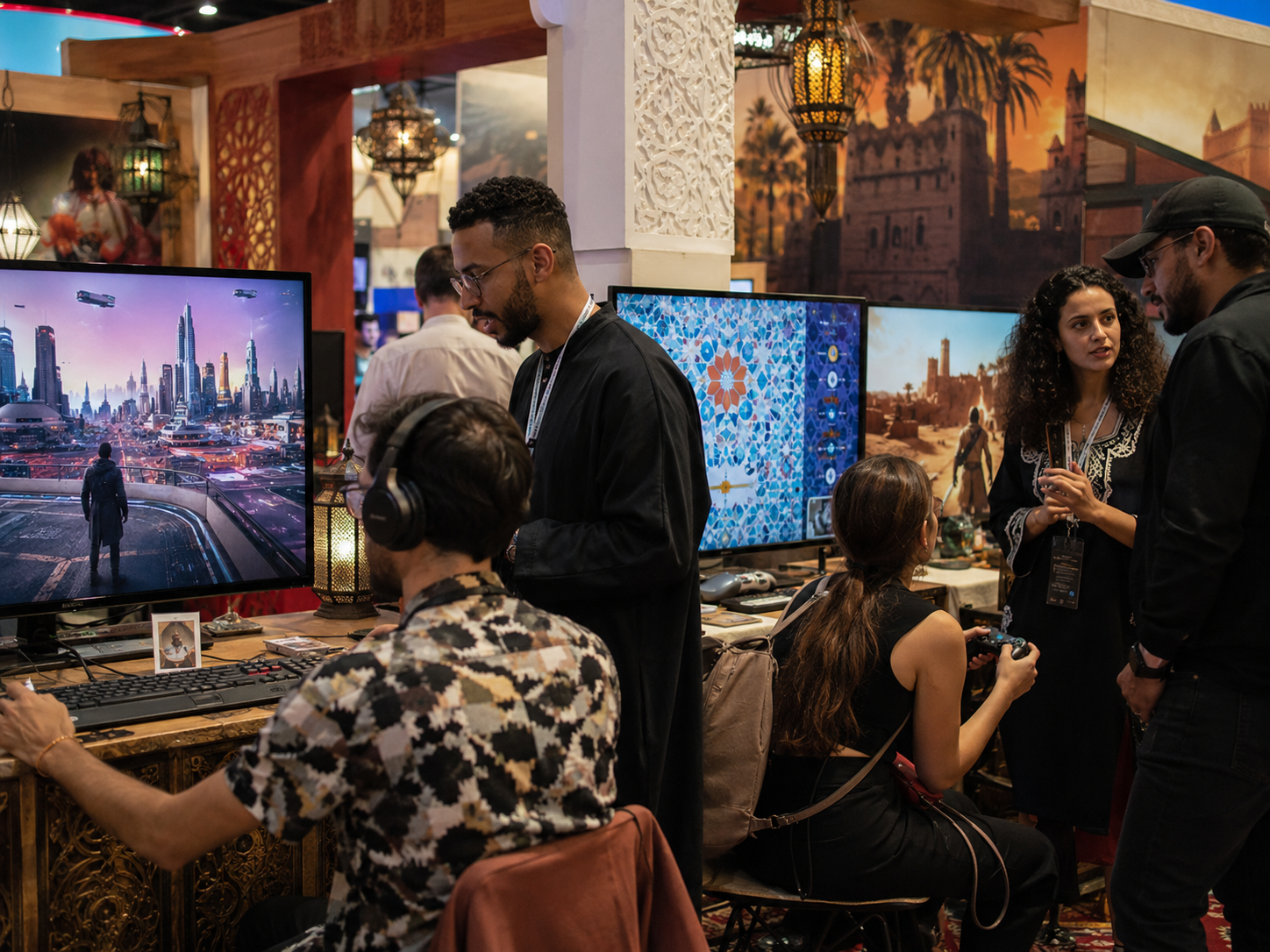
The delegation’s most memorable projects do not all look or play alike.
Futurocco 2121, created and produced by BJR Pixels Agency, transforms Casablanca into a dystopian science-fiction city.
Its official trailer presents an action thriller built around survival, stealth and tactical play, wrapped in what its creators describe as a Moroccan-punk aesthetic.
Cazafonia: Between Cities takes a more contemporary cultural route.
The narrative project comes from Dizzy Gaming, associated with Moroccan artist Dizzy DROS, and was co-developed with AJB Games Studio. Official Morocco Gaming Industry material describes it as a Moroccan intellectual property inspired by Casablanca, Moroccan music and urban culture.
Ard Games has turned traditional geometry into a gameplay idea.
Za-id is a puzzle and tile-placement game inspired by Moroccan zellige. Ard Games confirmed during Gamescom week that its debut project is playable at the Morocco Pavilion.
Ribat Studios is building Kasbah, a first-person exploration game set inside a fictional Moroccan walled city.
The small Rabat team says Moroccan architecture, landscapes and visual language shape the project, which is being developed in Unreal Engine 5 for PC.
Knowledge is part of the way forward, encouraging the player to observe and understand the environment rather than simply race through it.
FANTASY, PUZZLES AND AN ARMY THAT WILL NOT STOP
Some of the Moroccan projects leave recognisable cities behind and enter complete fantasy worlds.
June Studio is showing RENOVATUM at Gamescom on its largest stage so far.
The studio describes it as a solo and cooperative horde-survival roguelite built in Unreal Engine 5. Players face an escalating army while combining card-based powers and destroying parts of the environment in real time.
“Gamescom will be our chance to connect with publishers, players, and fellow indie devs,” June Studio said before travelling to Cologne.
That short statement captures what the event means for a small team. The game is important, but so are the people who may help it reach its next stage.
Ivalice Studio’s Rogue Fantasy: Ever-Shifting Worlds combines Japanese-style role-playing influences, roguelike progression and automatic battles inside a changing fantasy universe.
Even Games’ CNAFA is a dungeon-crawling roguelike with a clever reversal: enemies defeated during the adventure can gradually join the player’s own ranks.
Kelbox Studio is presenting GemmaX, a competitive puzzle game mixing tactical choices, combat and roguelite elements.
The Casablanca indie team has previously shown smaller runners, platformers and puzzle-game prototypes on its official website.
LETTERLAND REPLACES THE EARLIER VEXO NAME
AtlaStudio’s Gamescom line-up required an important factual update.
Earlier reporting identified the studio’s letter-based puzzle platformer as VEXO. Current official posts from AtlaStudio and the Moroccan delegation instead call the project LetterLand.
AtlaStudio confirmed immediately before Gamescom that LetterLand would be showcased in Cologne and released an official gameplay trailer under that name.
The player uses letters and words to influence the surrounding environment, turning language into part of the puzzle.
AtlaStudio is also associated with Discharged, a pixel-art action game built around a risky central mechanic: energy serves as both health and ammunition.
Attacking therefore reduces the same resource the player needs to survive.
Kiddo Education is bringing another form of problem-solving with Mathpunk Chronicles. The project combines adventure, exploration and mathematical puzzles inside a two-dimensional solarpunk world.
It is a useful reminder that gaming does not have to sit in a separate box from education. A game can ask players to think without feeling like a digital worksheet.
WHY GAMESCOM MATTERS TO A SMALL STUDIO
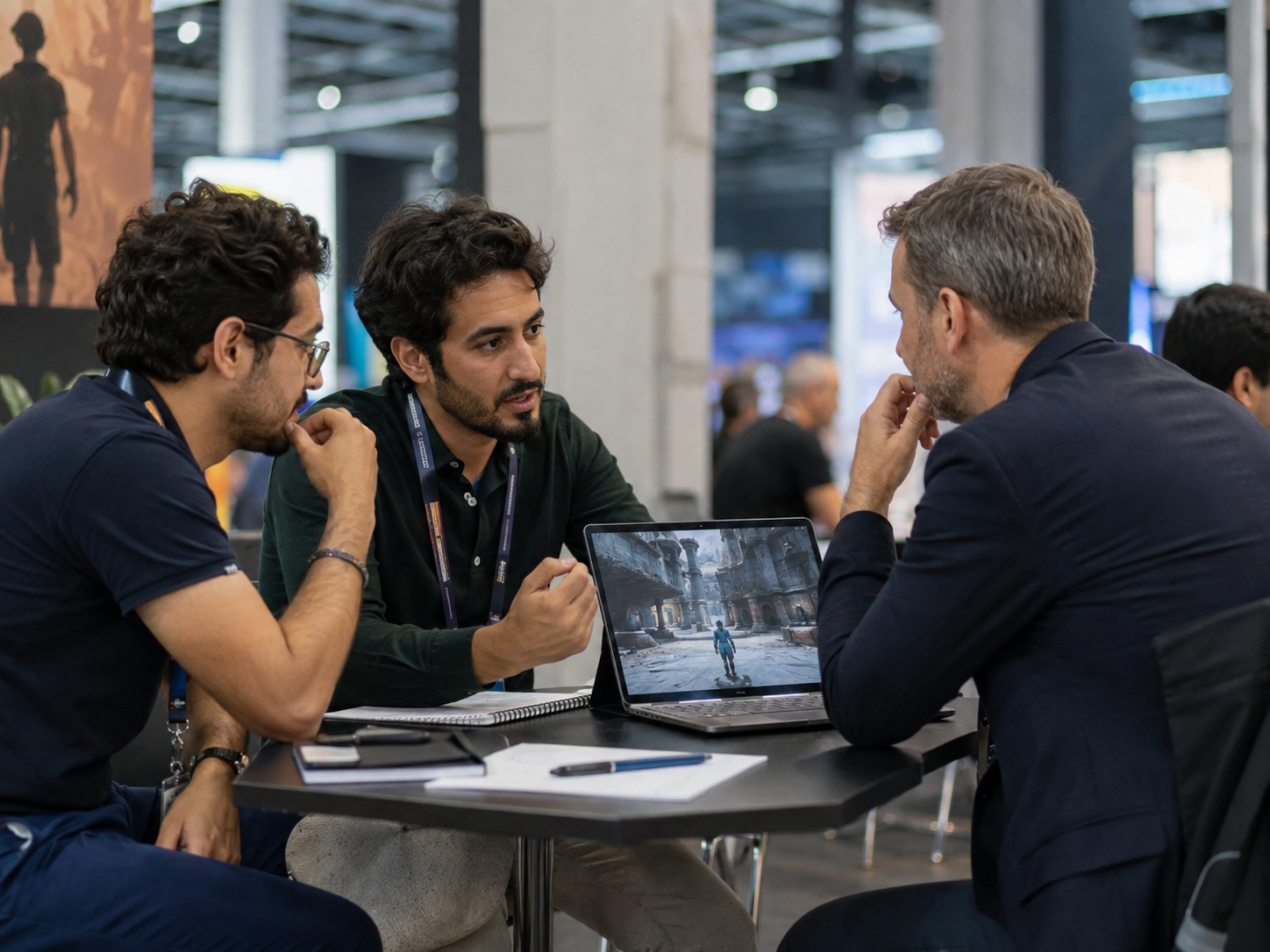
A small developer does not travel to Cologne only to put a trailer on a screen.
Gamescom offers something difficult to reproduce online: immediate reactions.
Can a new player understand the game without its creator explaining everything? Is the central idea visible within seconds? Does the artwork make someone stop? Does the demo remain enjoyable after the first surprise?
Publishers ask different questions.
Who is the audience? How much development remains? What will production cost? Which platforms make commercial sense? Can this small team actually finish what it has begun?
A publisher can potentially provide financing, marketing, distribution or production support. Meetings with other developers may produce co-development relationships, specialist help or knowledge that saves months of work.
But Gamescom guarantees none of those outcomes.
Being selected for a national pavilion does not mean a studio has secured investment, a publishing agreement or international distribution. Even a promising demo still has to become a finished, tested and discoverable game.
Nissrine Souissi, Morocco’s Director of Gaming Industry Development and Information Systems, said the objective was to raise the sector’s international profile and help Moroccan companies reach international markets.
That is the official ambition. What each team achieves will depend on the quality of its project and what happens after the introductions in Cologne.
MOROCCAN GAMERS ARE BECOMING CREATORS
The eleven participants make another point visible: games are built by far more than programmers.
Artists design characters and environments. Animators make them move. Writers create stories and dialogue. Sound designers build atmosphere. Game designers decide what the player can do and why doing it remains enjoyable.
Technical artists connect visual ambition with what a computer can run. Producers keep the team moving towards a playable result. Testers find the problems the creators have stopped noticing.
For young Moroccans, those are potential careers rather than distant job titles appearing at the end of a foreign game.
The delegation also shows that Moroccan creators do not need to follow one cultural formula.
A team can transform zellige into a puzzle. Another can rebuild Casablanca as science fiction. Others can create mathematical adventures, pixel-art battles or fantasy worlds that are not required to function as tourism advertisements.
Moroccan creativity becomes more convincing when its creators are free to be different from one another.
WHAT VISITORS CAN ACTUALLY DISCOVER
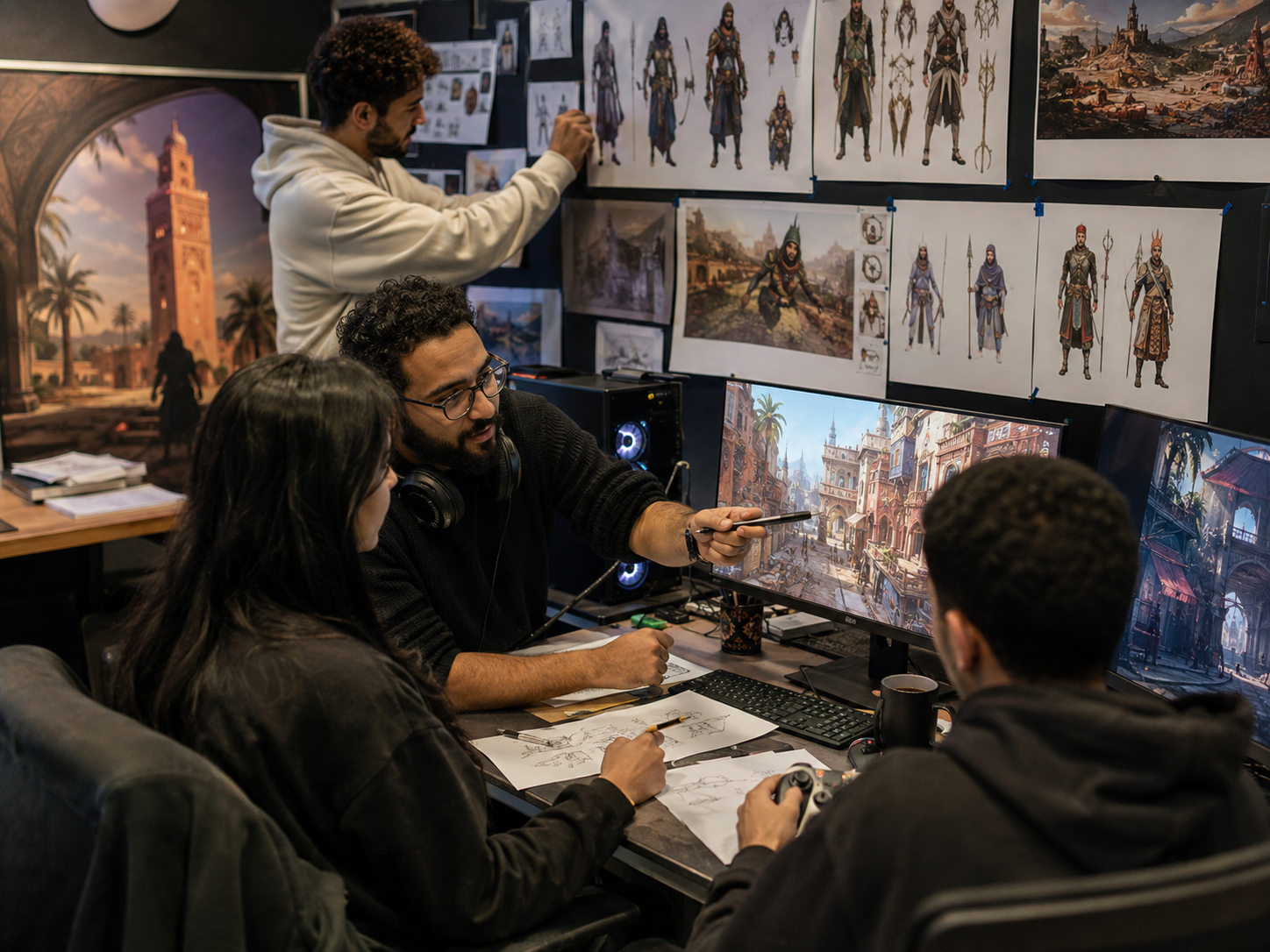
The Morocco Pavilion is located in Hall 3.2 at B050-C051.
This is inside Gamescom’s business area, not one of the main consumer entertainment halls. A normal public ticket should therefore not be treated as automatic access to the pavilion.
Visitors should check the access attached to their ticket or accreditation before travelling to Hall 3.2.
The delegation is presenting games, intellectual property and creative expertise to an international professional audience. Project demonstrations and business meetings were included in the announced programme.
Za-id has been explicitly confirmed as playable at Gamescom.
Publicly available information does not establish that every Moroccan project is offered as an unrestricted hands-on demo, so visitors should not assume that all eleven can be played.
Those outside Cologne can still discover official trailers and development footage through the studios’ own channels.
AtlaStudio has released a LetterLand gameplay trailer, while BJR Pixels Agency has published the official Futurocco 2121 trailer.
WHAT HAPPENS AFTER GAMESCOM
On Sunday evening, the screens will go dark and the Morocco Pavilion will eventually be dismantled.
The more important work begins afterwards.
The eleven participants can return with difficult feedback, stronger presentations, new contacts and a clearer understanding of how games are demonstrated and sold internationally.
Some conversations may end quickly. Others could continue for months.
A useful contact made in Cologne may lead to advice, technical support, co-development or a publishing discussion, but none should be presented as a deal until one is formally announced.
Morocco’s first official appearance does not prove that the country has already become an international gaming powerhouse.
It proves something smaller, but real.
Moroccan creators now have projects they can place in front of the global industry under their own names.
The lasting result will not be measured by the pavilion’s 102 square metres.
It will be measured by what the teams bring home from Cologne: sharper games, honest feedback, international relationships and a clearer route from building a game in Morocco to finding players around the world.