

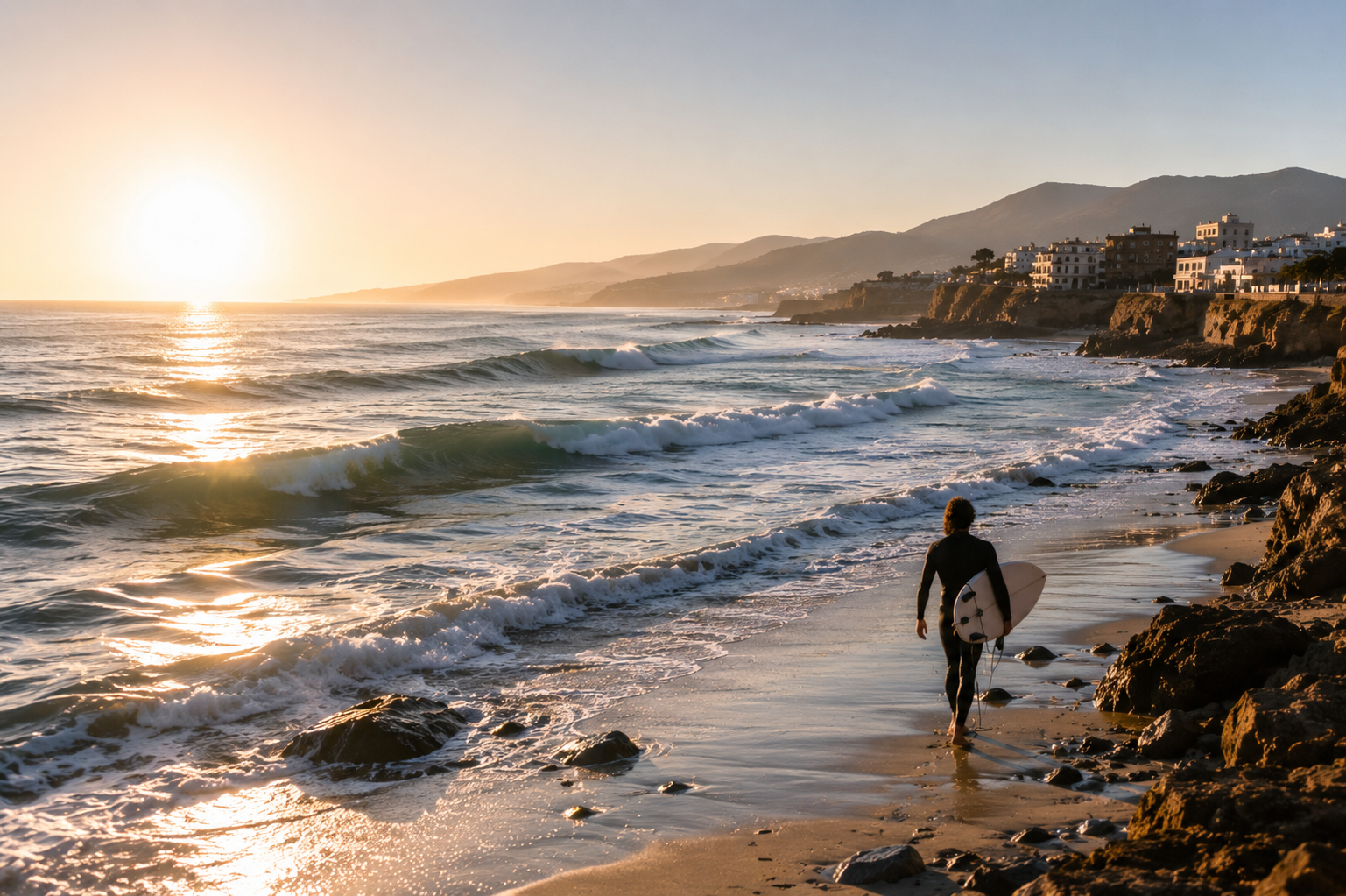
With Morocco’s main Atlantic surf season approaching, Taghazout, Tamraght and other coastal destinations are preparing for another winter of international visitors.
Across Europe, surfboards are about to disappear into garages as summer fades.
On Morocco’s Atlantic coast, a different season is preparing to begin.
Autumn and winter usually bring more consistent North Atlantic swell to the country’s best-known surfing regions. Around Taghazout, Tamraght and Agadir, powerful point breaks can return to life, while carefully selected beaches may offer more forgiving conditions when qualified instructors judge them suitable.
For European surfers planning a cold-season escape, the appeal is compelling: an established surf culture, direct flights from several European cities, Atlantic waves and a journey that can be considerably shorter than travelling to Southeast Asia.
Bali can wait.
It is a playful invitation, not a claim that Morocco is better. Bali is in Indonesia. Morocco is in North Africa. They have different oceans, climates, surf seasons, cultures, waves and travel experiences.
Morocco is not a copy of Bali, and its strongest appeal may be that it does not try to be.
MOROCCO SURF SEASON AT A GLANCE
Main Atlantic surf season: Generally October to March, although timing and quality vary by region, swell, wind, tide and individual break.
September: A transitional month. Smaller summer conditions may continue, but early Atlantic swell can appear.
October and November: The season normally gathers momentum, opening more opportunities for experienced surfers as a wider range of breaks begins to work.
Winter: Usually the most consistent period for North Atlantic swell, but exposed spots can become substantially more powerful and technical.
Typical summer conditions: Often smaller around Agadir and Taghazout, which can favour lessons and longboarding at suitable beaches. Essaouira and Dakhla are particularly associated with windsurfing and kitesurfing.
Principal surf regions: Agadir and the Taghazout-Tamraght coast, Imsouane, Essaouira and Sidi Kaouki. Dakhla offers a distinct watersports experience built strongly around wind and its lagoon.
Closest practical airports: Agadir Al Massira for Agadir, Taghazout and Tamraght; Essaouira-Mogador for Essaouira and Sidi Kaouki; Dakhla Airport for Dakhla. Imsouane requires an onward road journey.
European access: Agadir has direct services from several British and continental European cities. Essaouira’s international schedule is more limited and can be seasonal. Routes, baggage rules and operating dates must be checked directly with airlines.
Typical Atlantic water temperatures near Agadir: Broadly around 20°C to 21°C in late summer and early autumn, falling towards approximately 17°C in winter. Actual temperatures vary.
Wetsuit considerations: Many surfers use a lighter suit in warmer months and a warmer full suit in winter. The right thickness depends on location, month, session length and personal tolerance.
Forecasts: Consult Morocco’s Direction Générale de la Météorologie for official weather information and an established professional marine service for swell, wind and tides. Confirm conditions locally on the day.
Main safety reminder: Never judge a spot by wave height alone. Tide, current, seabed, wind and entry or exit points can transform the level of risk.
Information checked: 30 August 2026. This is general seasonal guidance, not a live surf forecast.
WHEN EUROPE’S SUMMER ENDS, MOROCCO’S SURF SEASON BEGINS
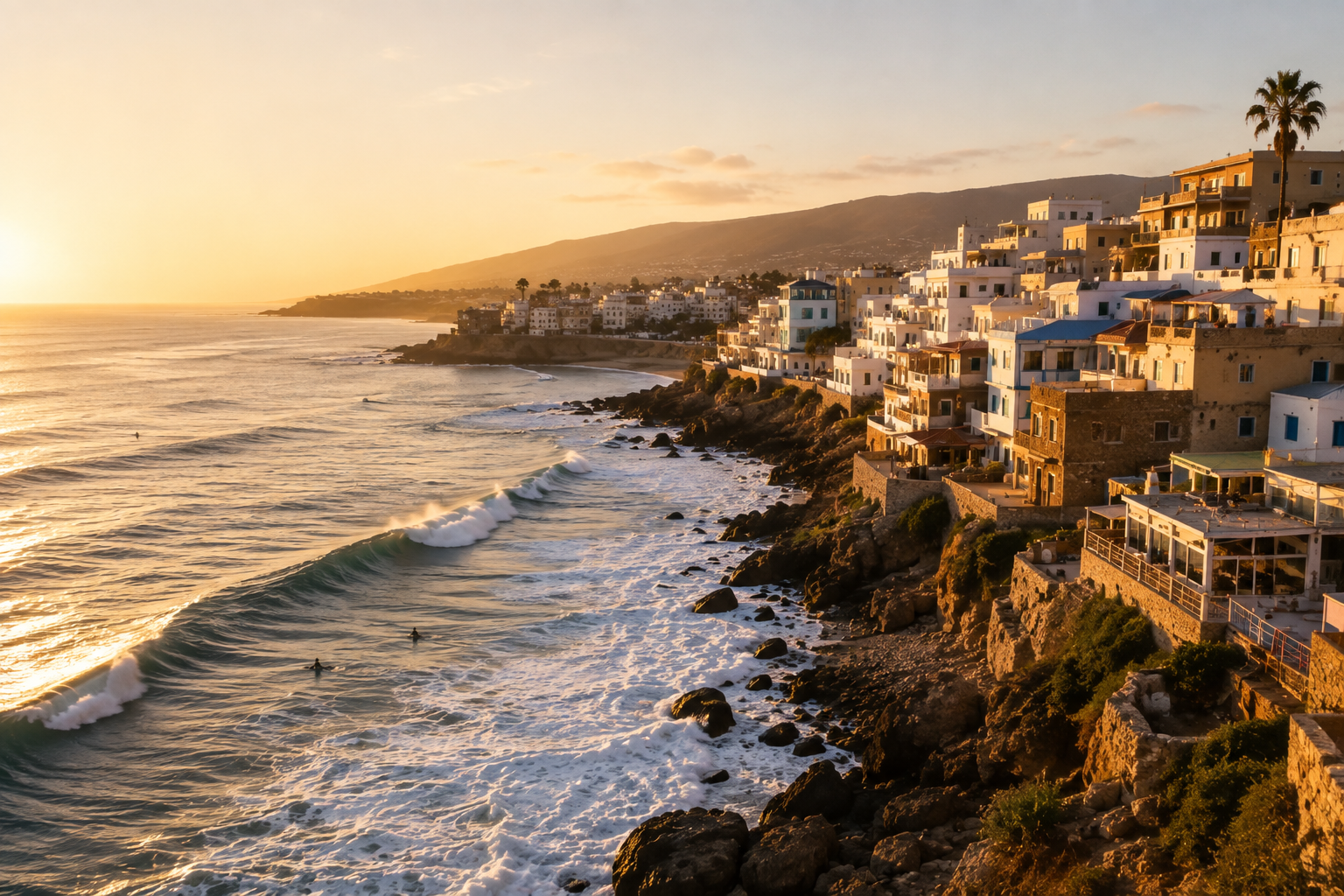
Surfers do not organise their year by air temperature alone. They watch distant storms, swell direction, wind and the underwater shape of individual breaks.
During autumn and winter, weather systems across the North Atlantic generally send stronger and more frequent swell towards Morocco’s Atlantic coast. When those lines arrive from a favourable direction, points and reefs that remained quiet during summer can begin working again.
September is the bridge between seasons. Smaller conditions may continue at some locations, which can suit learners and longboarders when local professionals consider the water safe. Early autumn pulses are also possible, but they should never be promised in advance.
October usually brings a more dependable transition. November through winter tends to deliver the greater consistency sought by experienced surfers.
More consistency does not mean guaranteed surf.
A famous point can be flat, wind-affected or dangerously powerful. Two nearby beaches can react very differently to the same swell, and a tide change can alter a session within hours.
The best time to surf Morocco therefore depends on ability, ambition and location. Beginners may benefit from smaller conditions. Experienced surfers often wait for winter energy, while remaining prepared to change plans or stay ashore.
MOROCCO IS NOT BALI, AND THAT IS THE POINT
The phrase “Europe’s answer to Bali” has appeared in international surf coverage, including a March 2026 feature by Wavelength.
It captures Morocco’s growing popularity among surfers, active travellers and remote workers. It is not an official destination title, and it should not be taken literally.
Bali faces the Indian Ocean and offers tropical water, a different swell cycle and its own deeply rooted culture. Morocco’s internationally recognised surf regions face the Atlantic. The water is cooler, the architecture and food are North African, and the country’s surf identity has been shaped by Moroccan athletes, coastal communities and generations of visiting surfers.
For many Europeans, Morocco’s practical advantage is proximity. Airlines were advertising direct autumn 2026 services to Agadir from London, Manchester, Dublin, Brussels, Marseille and other European markets when this guide was checked.
But the complete calculation depends on the traveller. Flight time, ticket cost, connections and surfboard charges vary by city, airline and date. A cheap headline fare can become less cheap once baggage, transfers and equipment are added.
Morocco offers many Europeans a geographically accessible winter surf trip. Bali offers an entirely different intercontinental adventure.
Neither needs to replace the other.
TAGHAZOUT REMAINS THE NAME SURFERS KNOW
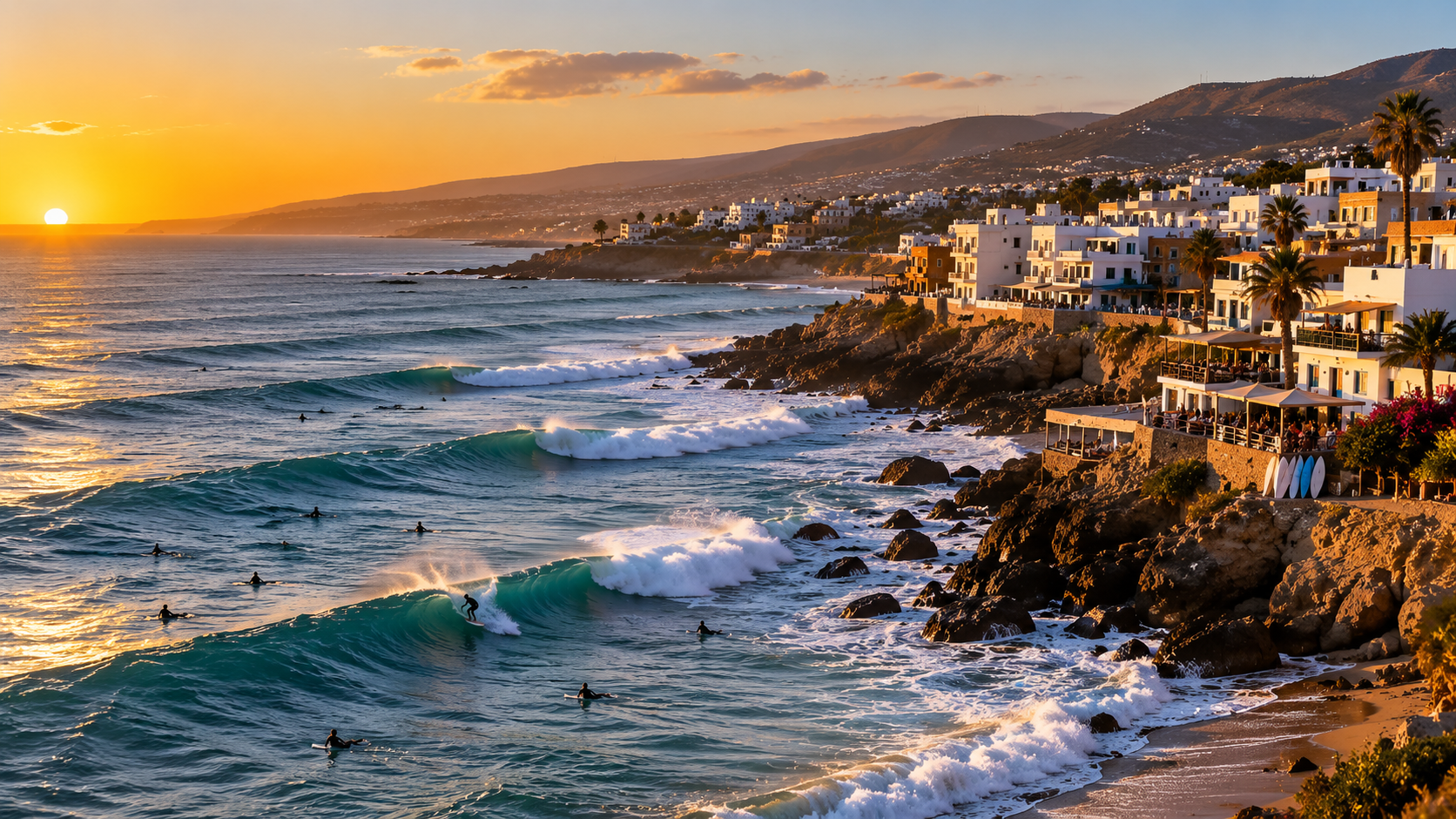
North of Agadir, Taghazout has evolved from an Amazigh fishing village into Morocco’s most internationally recognised surf destination.
Moroccan surfers have been central to that transformation, building local knowledge, coaching new generations and creating businesses around lessons, guiding, board rental, equipment repair and accommodation.
The surrounding coastline contains beach, reef and point breaks that respond differently to swell and tide.
Anchor Point is the celebrated name: a right-hand point break capable of producing long, powerful rides when the elements align.
Its reputation demands respect. Anchor Point can be fast, technical and crowded, with rocks, strong water movement and demanding access. It is not a beginner attraction, and watching experienced surfers from shore does not make someone ready to enter it.
Taghazout’s popularity has also brought pressure. More visitors can mean busier line-ups, additional waste, heavier demands on water and infrastructure, and rising competition for coastal space.
The answer is not less ambition for Moroccan tourism. It is better-managed growth that allows residents and Moroccan-owned businesses to share meaningfully in the value created by the coast.
TAMRAGHT, IMSOUANE AND THE COAST BEYOND
There is no single Morocco surf trip.
Agadir provides the region’s largest urban base, with an international airport, extensive accommodation, restaurants and onward access to the coast. It can suit families and travellers who want city facilities alongside surfing.
Tamraght places visitors close to several established surf areas. It attracts learners, improving surfers and longer-stay guests. Certain nearby beaches can work for lessons under suitable conditions, but no beach is permanently safe or permanently beginner-friendly.
Imsouane is renowned for long rides when swell, wind and tide cooperate. It appeals strongly to longboarders and surfers who value distance over raw power. Its fame can also concentrate crowds. Parts of the village underwent significant redevelopment-related change in 2024, making it essential to verify current access, accommodation and road arrangements instead of relying on older travel guides.
Essaouira combines a UNESCO-listed medina and working port with a coastline known for wind. Wave surfing is part of its identity, but the area is particularly relevant to windsurfers and kitesurfers. These are different sports requiring different equipment, techniques and safety decisions.
Sidi Kaouki, south of Essaouira, offers a more dispersed coastal environment. Its exposure to wind and Atlantic swell makes up-to-date local advice particularly important.
Dakhla is a destination in its own right, not a southern version of Taghazout. Its lagoon and wind have built a major international reputation for kitesurfing and windsurfing. Ocean surfing is available in the wider region, but visitors should choose an operator specialising in the activity they genuinely intend to practise.
BEGINNERS NEED MORE THAN A SMALL WAVE
A waist-high wave can still hide a rip current, a rocky seabed, a sudden drop or a difficult exit.
That is why a proper lesson offers far more than a board.
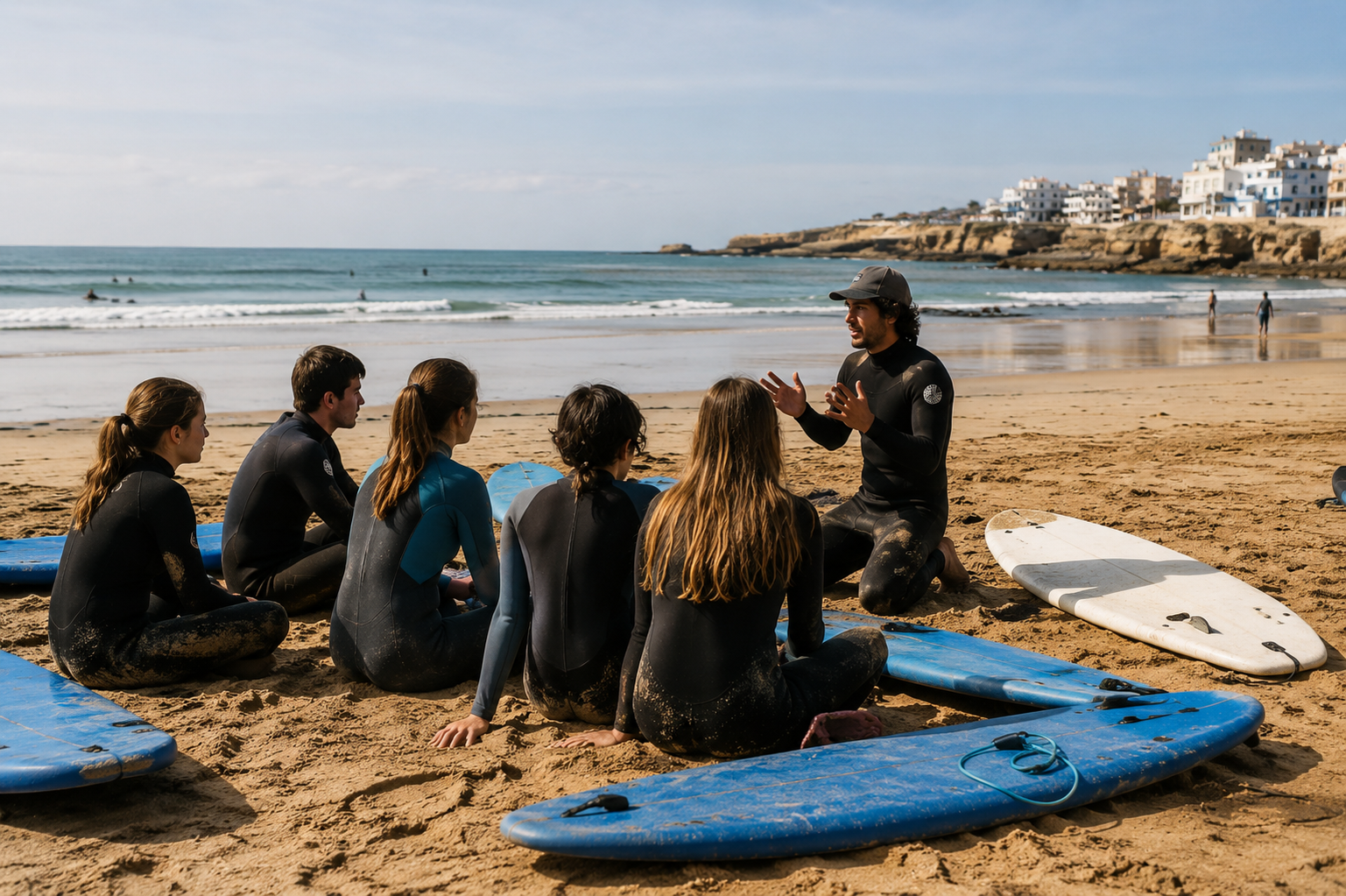
A qualified instructor should assess swimming ability, explain falling safely, introduce surf etiquette and teach students what to do if separated from their equipment. The teaching beach should be chosen for that day’s conditions, not guaranteed months before arrival because it is convenient for the operator.
Ask who will supervise the group, what coaching and water-safety qualifications they hold, and how many students are assigned to each instructor. Confirm whether the operator has emergency communications, rescue procedures and appropriate insurance.
Parents should ask specifically about child supervision and safeguarding.
Board rental is not the same as a lesson. A hired board provides equipment. It does not provide judgement, local knowledge or rescue support.
A responsible school may relocate, postpone or cancel a session when the ocean is unsuitable. That is evidence of professionalism, not a ruined day.
EXPERIENCED SURFERS STILL NEED LOCAL KNOWLEDGE
Experience in Portugal, France or Bali does not automatically provide knowledge of a Moroccan reef.
Rocks can emerge as the tide falls. Currents can shift around headlands. An entry route that looks straightforward from above may become hazardous in larger swell. Sea urchins, damaged equipment and a poorly chosen exit can turn a manageable mistake into an emergency.
Experienced visitors should check the tide, watch several sets, identify an exit and speak to reputable local surfers or guides before entering an unfamiliar break.
They should also read the line-up.
Do not paddle directly to the main take-off point and expect immediate priority. Do not drop in, snake or repeatedly take every available wave. Give beginner groups enough space, keep control of the board and stay clear of fishing boats, lines and working areas.
Heavy waves do not need to be romanticised. The strongest decision a surfer makes all trip may be the decision not to paddle out.
WHAT TO CHECK BEFORE BOOKING A SURF CAMP
A glossy website can show bedrooms, breakfasts and sunsets. It may reveal little about the quality of instruction.
Request the exact room type, maximum group size, instructor credentials and insurance arrangements. Confirm the condition of the boards and wetsuits, and whether equipment is available throughout the stay or only during supervised lessons.
Ask how daily transport works. An operator may need to move between beaches as conditions change. Check whether airport transfers cover arrival and departure, and whether your board bag can be accommodated.
Establish which meals, photographs, yoga sessions and excursions are included. Read the cancellation policy carefully and ask what replaces surfing when the ocean is unsafe.
Finally, compare recent reviews across several independent platforms. Look for repeated comments about safety, cleanliness, food, transport, instruction and the way problems were handled.
FIVE QUESTIONS TO ASK BEFORE BOOKING A SURF CAMP
Who is teaching the lesson?
Request the instructor’s qualifications, water-safety training and expected student-to-instructor ratio.
Is equipment and insurance included?
Confirm boards, wetsuits, transport and insurance arrangements in writing.
Where will the group surf?
The final location should reflect ability and daily conditions, not convenience alone.
What happens if conditions are unsafe?
Ask about relocation, postponement, replacement activities and refunds.
What is the complete price and cancellation policy?
Check accommodation, meals, transfers, lessons, photographs, yoga, excursions, taxes and additional fees.
SURF TOURISM MUST PROTECT THE COAST THAT SELLS IT
Morocco’s surf economy ultimately depends on healthy beaches and communities that receive a fair return from tourism.
Visitors can help by choosing responsible Moroccan-owned businesses, using water carefully, avoiding unnecessary single-use plastics and leaving nothing on the beach.
Respect for the coast also means staying clear of fishing equipment and working boats. Surf spots are shared environments, not unlimited commercial space for camps, photographers or visiting groups.
Amazigh culture is a living local identity, not decorative branding. Buying from local makers, eating in independent restaurants and respecting residents’ privacy can spread the value of a trip beyond accommodation alone.
The rewards continue after the wetsuit comes off.
Agadir offers markets, seafood and an urban beachfront. Essaouira combines its Atlantic setting with ramparts, galleries and a historic medina. The surrounding region adds argan landscapes, fishing communities and a cuisine shaped by fresh produce, spices and slow cooking.
Readers seeking specific guidance about women travelling alone can consult MTD’s separate feature, “Solo Morocco Shift: Women Travellers Turn Safety, Surf and Sisterhood Into a New Travel Story”.
THE WINTER WAVE EUROPE CAN REACH
The Morocco surf season 2026 will not begin with a ceremonial first wave.
It will arrive unevenly, through shifting winds, cooler water and the gradual return of Atlantic energy.
That uncertainty is part of surfing. The smart traveller does not book a promise of perfection. They choose a responsible operator, check conditions close to departure, listen to qualified local professionals and remain flexible after arrival.
Morocco does not need to become another Bali.
Its Atlantic coastline, Moroccan surf heritage, hospitality, food and proximity to Europe already give it an identity powerful enough to stand alone.
The coming season is another chance to discover it responsibly.
And when the first winter lines reach the coast, Europe may suddenly feel much farther away.