
African football has a new billion-dollar question.
Recent reporting indicates that the Confederation of African Football may have sacrificed more than $1 billion in potential commercial-rights income over eight years when it decided to move the Africa Cup of Nations from a two-year to a four-year cycle.
The change fundamentally alters the inventory available to broadcasters and sponsors.
Following the 2027 tournament in Kenya, Tanzania and Uganda, AFCON editions are scheduled for 2028, 2032 and 2036.
Fewer tournaments mean fewer premium football events to sell.
That creates a challenge for CAF.
For Morocco, however, it also exposes something bigger.
African football has enormous audiences, but the continent still captures only part of the commercial value those audiences can generate.
Morocco is becoming one of Africa’s most important football centres.
The next opportunity is to become equally important in the business surrounding the game.
One Billion Dollars Shows What The Audience Is Worth
The headline number matters because it changes how African football should be discussed.
Football is not only a sporting activity financed through sponsorship.
It is intellectual property.
Matches create exclusive media inventory.
Broadcasters pay for access.
Sponsors pay for association.
Digital platforms pay for attention.
Hospitality customers pay for scarcity.
Brands pay to reach supporters.
When enough people care about a competition, that attention becomes an asset.
AFCON already generates enormous global reach.
CAF says its flagship tournament has attracted audiences measured in billions across television and digital platforms.
That audience has commercial value.
The challenge is converting enough of it into sustainable African football revenue.
Morocco Has Already Built The Attention
Moroccan football enters this discussion from a powerful position.
The national team has developed a global profile.
Moroccan clubs remain visible in African competitions.
The country has invested heavily in stadiums, academies and training infrastructure.
AFCON 2025 placed Morocco at the centre of African football attention.
The 2030 World Cup will do so again on a much larger global scale.
Attention is therefore no longer the principal problem.
The economic challenge is what Morocco builds around it.
Sports media.
Production.
Sponsorship agencies.
Hospitality.
Ticketing.
Merchandising.
Data.
Technology.
Creator content.
Football tourism.
A country can host major football and still allow much of the commercial value surrounding it to be captured elsewhere.
Morocco should avoid that outcome.
Media Rights Are The Most Valuable Invisible Asset
A stadium is visible.
Media rights are not.
Yet rights can eventually become more valuable than the physical venue.
One football match can be watched simultaneously in Casablanca, Lagos, Paris, Amsterdam, Dubai and New York.
The stadium may hold tens of thousands of people.
Broadcasting can reach millions.
That scalability explains why sports-rights businesses attract such large valuations.
Morocco should develop more expertise around this market before 2030.
Rights negotiation.
International distribution.
Production standards.
Digital licensing.
Anti-piracy technology.
Subscription models.
Advertising sales.
These are specialised commercial skills.
The country already knows how to organise football events.
It now needs more companies capable of monetising football audiences professionally.
Moroccan Production Companies Can Capture More
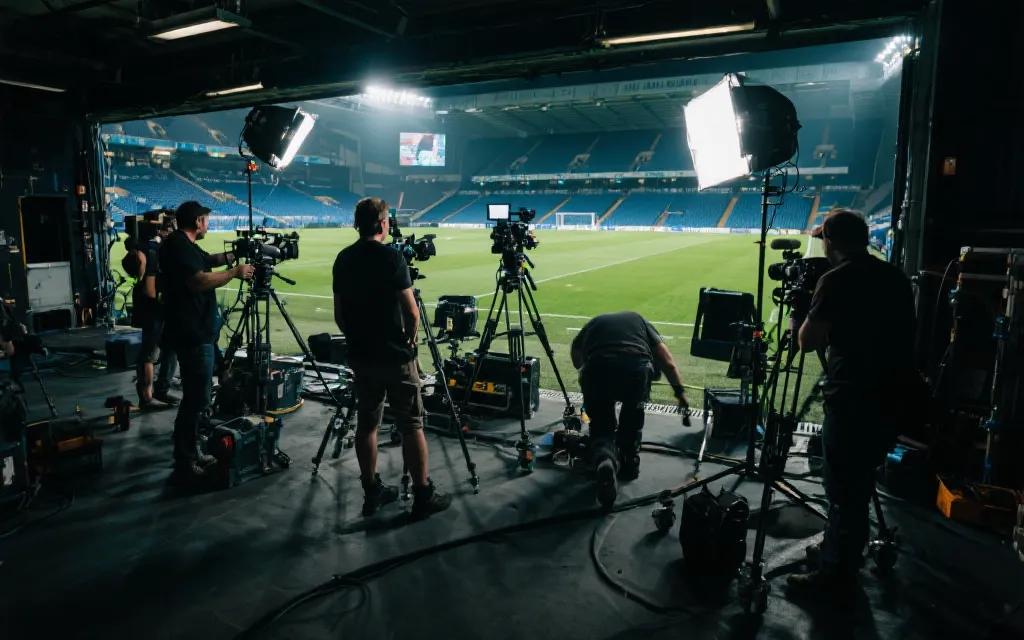
Every major competition requires substantial production.
Cameras.
Audio.
Graphics.
Replays.
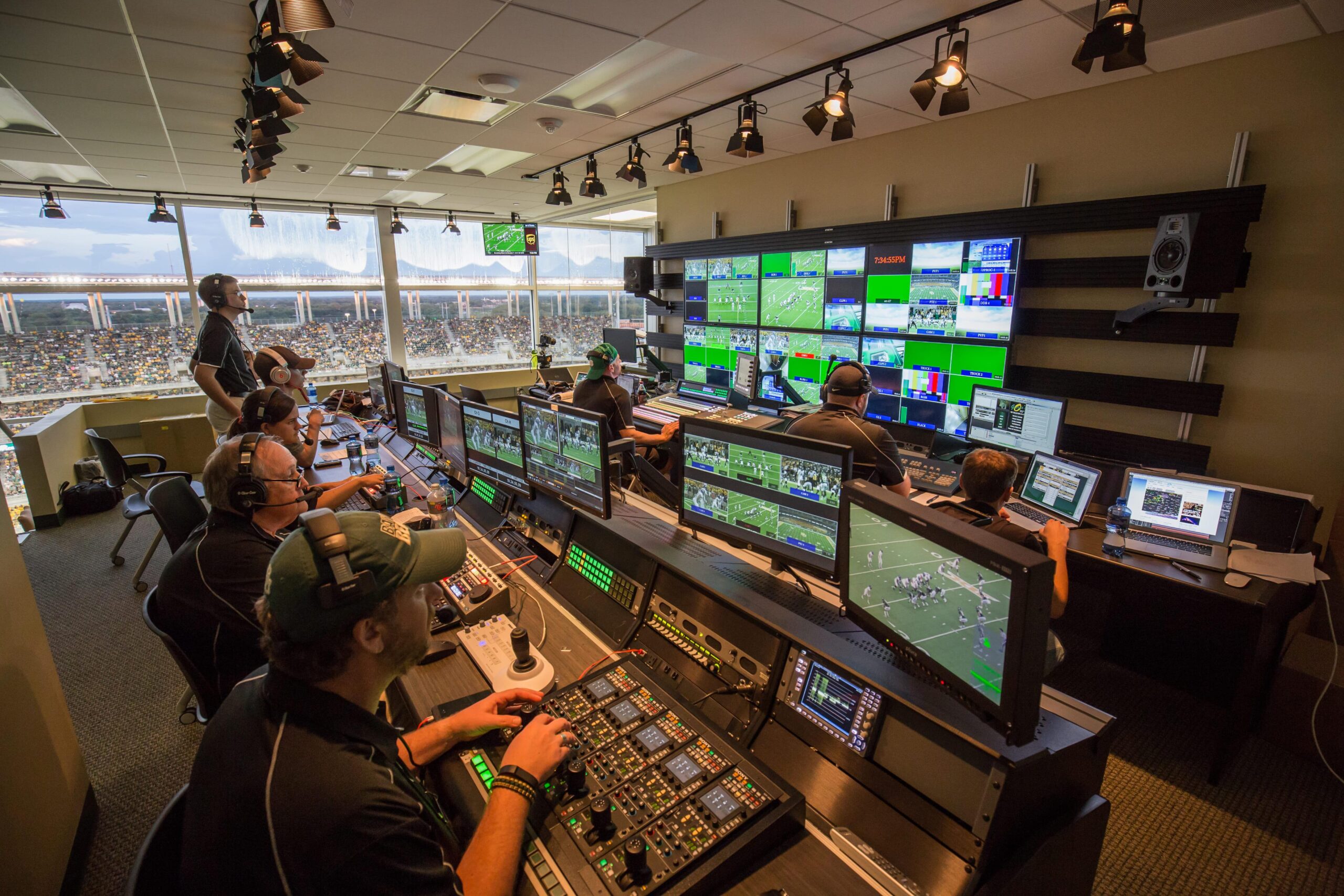
Studios.
Commentary.
Editing.
Digital clips.
Statistics.
Remote production.
Thousands of hours of content can emerge from one tournament.
International specialists will remain important.
But Morocco should progressively provide more of this capability domestically.
A production company that develops world-class football expertise before 2030 can continue selling that expertise afterwards.
CAF competitions.
Botola matches.
African club football.
International tournaments.
Concerts.
Other sporting events.
The World Cup should become a training ground for an industry, not simply a temporary contract opportunity.
Clubs Need Their Own Media Businesses
The commercial lesson also applies below national-team level.
Moroccan clubs possess passionate audiences.
But many still capture relatively limited revenue from those supporters outside traditional matchday activity.
Every leading club now has the potential to operate partly as a media company.
Daily training content.
Player interviews.
Academy stories.
Historical archives.
Documentaries.
Podcasts.
Behind-the-scenes programmes.
Short-form videos.
English-language and French-language content for international audiences.
A supporter does not need to purchase a match ticket to create value for the club.
Someone following Wydad or Raja from Belgium can still buy merchandise, watch sponsored content or participate in a digital membership.
Media expands the commercial geography of the supporter base.
Sponsorship Must Become Measurable
Football sponsorship once relied heavily on visibility.
Put the logo on the shirt.
Place advertising beside the pitch.
Count television exposure.
Digital media allows much more precise commercial activation.
A sponsor can run supporter competitions.
Create branded video.
Offer hospitality.
Connect products with ticketing.
Target diaspora audiences.
Measure interactions.
Track conversions.
Moroccan clubs and federations can therefore sell increasingly sophisticated commercial packages.
That can raise sponsorship value without simply adding more logos.
Brands will pay more when they understand what they receive.
The future sponsorship conversation will be less about space and more about measurable access to audiences.
Morocco’s Diaspora Expands The Market
Moroccan football has an audience far beyond the Kingdom.
France.
Belgium.
The Netherlands.
Spain.
Germany.
Canada.
The Gulf.
This matters commercially.
The diaspora often combines emotional attachment with higher purchasing power and strong digital consumption.
Official merchandise should reach these supporters easily.
Digital content should be produced for them.
International ticket packages can serve fans returning for important matches.
Sponsors interested in European Moroccan communities can become additional commercial partners.
Morocco’s football economy should therefore be calculated against its global audience, not only its domestic population.
Arabic, French And English Create A Media Advantage
Morocco also possesses a valuable linguistic position.
Arabic connects with North Africa and the Middle East.
French provides access to large audiences across Africa and Europe.
English opens the broader global sports market.
One Moroccan media operation can therefore create several commercial versions of the same football story.
This can make Morocco a useful production and distribution base for African football.
A CAF competition could be produced technically in Morocco, packaged in several languages and distributed to different markets.
That is a much more sophisticated role than simply hosting matches.
Ticketing Must Become Customer Infrastructure
Football economics does not end with media.
Digital ticketing gives clubs and organisers direct relationships with supporters.
Who attends?
How often?
Which matches create the strongest demand?
Which seats sell first?
How many supporters return?
This information can improve pricing, security and commercial planning.
The ticket can also connect with merchandise, transport and hospitality.
A supporter purchasing a major match package could receive stadium transport and official merchandise in one transaction.
That creates additional value without needing to increase the basic ticket price dramatically.
The customer journey becomes part of the football business.
Hospitality Can Become A Larger Industry
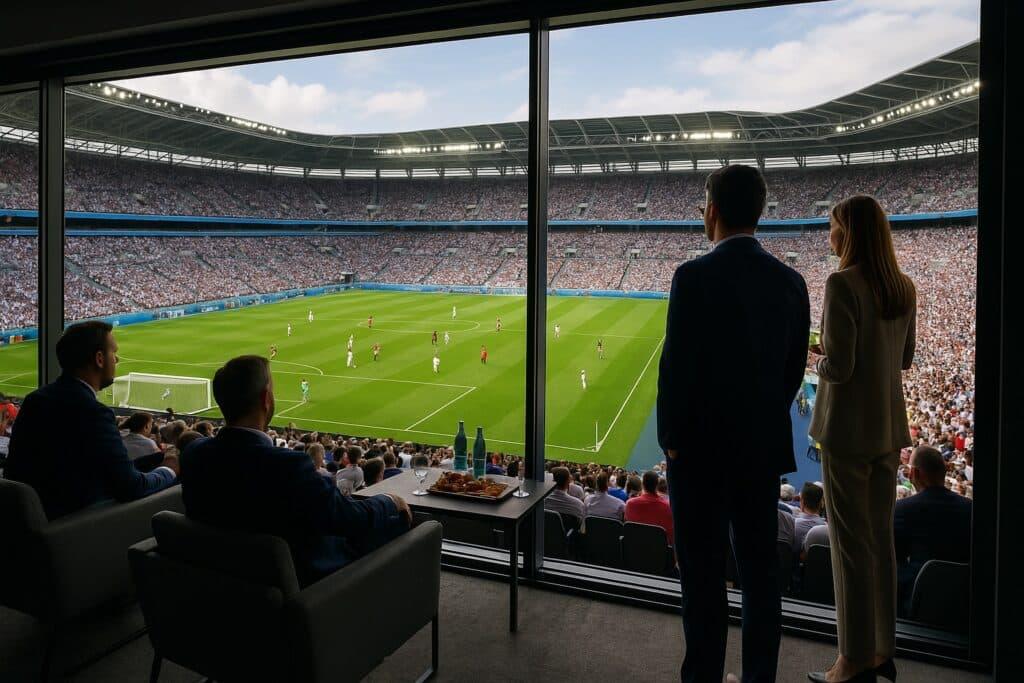
Major international football events create substantial corporate demand.
Premium seating.
Lounges.
Hotels.
Restaurants.
Private transport.
Business events.
Sponsor receptions.
Morocco’s expanding stadium infrastructure can support a much stronger hospitality economy.
This is especially important approaching 2030.
Corporate customers do not simply purchase seats.
They purchase complete experiences.
Moroccan event companies, caterers, hotels and professional-service firms can participate in delivering them.
Football therefore creates revenue far beyond clubs and federations.
The match is the economic anchor.
Hospitality spreads the value across the city.
African Football Needs Better Commercial Continuity
Moving AFCON to a four-year cycle creates an obvious commercial challenge.
A flagship competition appearing less frequently provides fewer moments around which sponsors and broadcasters can build campaigns.
CAF intends to develop other senior national-team competition inventory between AFCON editions.
That will need strong commercial execution.
Audiences must understand the new competitions.
Broadcasters must value them.
Sponsors need predictable calendars.
Fans need emotional attachment.
Creating another tournament is relatively easy administratively.
Creating another valuable sports property is much harder.
The lesson for Morocco is relevant.
Football revenue grows when competitions become dependable products rather than isolated events.
Sports Data Is Another Business Waiting To Grow

Football audiences increasingly consume statistics alongside matches.
Player movement.
Passing networks.
Expected goals.
Heat maps.
Speed.
Historical comparisons.
These products create opportunities for Moroccan technology companies.
Sports analytics can serve clubs.
Broadcasters.
Media companies.
Sponsors.
Academies.
Supporter applications.
Artificial intelligence will make this market even larger by automating highlights, translation and performance analysis.
Morocco’s football investment should therefore connect with its technology ecosystem.
The companies benefiting from 2030 do not all need to operate inside stadiums.
Some may be software businesses working from offices in Casablanca or Rabat.
Piracy Is A Revenue Problem
Sports rights become valuable only when exclusivity can be protected.
Illegal streaming weakens subscription economics and reduces what broadcasters are willing to pay.
This is a challenge across global sport.
African football needs legal access that is convenient enough to compete.
Affordable digital subscriptions.
Mobile payment.
Reliable streaming.
Flexible packages.
Strong enforcement still matters.
But consumer behaviour also changes when legitimate services become easier to use.
Rights protection and distribution innovation therefore need to develop together.
Morocco Should Build For Africa, Not Only 2030
The World Cup creates urgency.
Africa creates the long-term market.
Morocco can build production studios, sports-data companies, digital agencies and rights expertise for 2030.
Those companies should already be thinking about what happens afterwards.
CAF competitions.
African leagues.
Clubs.
National federations.
Sports tourism.
Commercial consulting.
Morocco’s position between Africa, Europe and the Arab world gives these businesses several potential markets.
The strongest 2030 legacy will be companies whose revenue continues growing after the tournament leaves.
AFCON’S $1 Billion Rights Gap
The reported billion-dollar gap surrounding AFCON’s commercial-rights restructuring is a warning about the economics of African football.
But it is also evidence of opportunity.
African football commands enormous attention.
Attention creates commercial value.
Morocco is now building some of the continent’s strongest football infrastructure and will stand at the centre of world football in 2030.
The next stage should be less visible but equally ambitious.
More Moroccan sports-media companies.
More sophisticated sponsorship.
Better merchandising.
Professional hospitality.
Sports technology.
Rights expertise.
Multilingual production.
Stronger digital distribution.
Morocco has already invested heavily in the places where football is played.
The billion-dollar lesson is that the businesses around the pitch may eventually be just as valuable as what happens on it.