

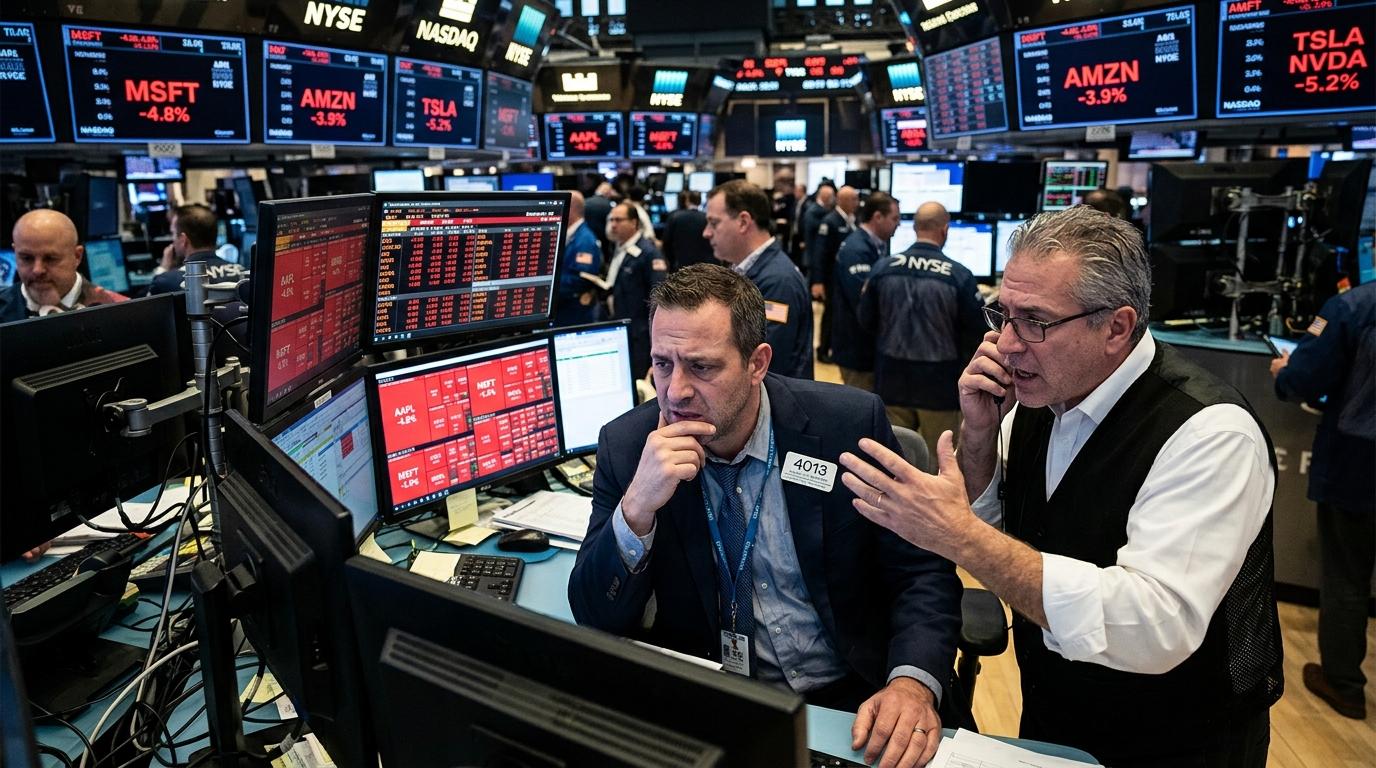
The AI Stock Fatigue trade has arrived.
For months, investors treated artificial intelligence as the easiest story in global markets. Buy the chipmakers. Buy the data-centre winners. Buy the cloud platforms. Buy the companies selling the infrastructure behind the next computing cycle.
But markets are now asking a harder question.
Not whether AI matters.
It does.
The question is whether investors have paid too much, too quickly, for a future that still has to prove its returns.
AI Stock Fatigue Hits The Leaders First
The AI Stock Fatigue story matters because the selling has not started with weak companies.
It has started with winners.
Reuters reported that a rotation out of the biggest winners of the recent rally gathered momentum, sending chip stocks toward their steepest weekly decline in more than a year and raising concerns about whether the AI-driven surge has gone too far.
That is important.
When weak stocks fall, markets often ignore it.
When leaders fall, investors pay attention.
The AI rally was built around confidence that the biggest infrastructure names could keep growing into enormous expectations. Now the market is testing that confidence.
Valuation Is Becoming The Problem
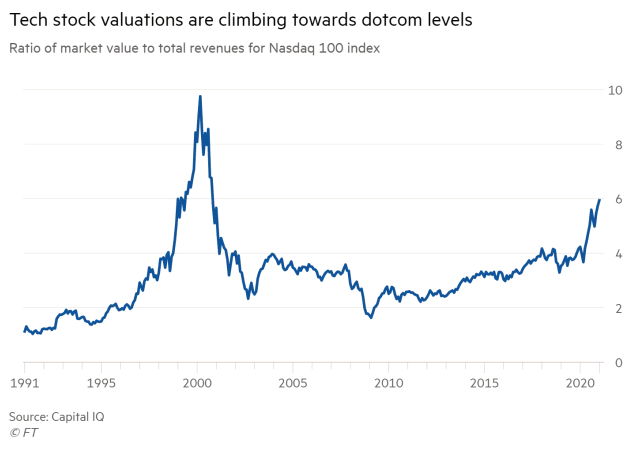
Artificial intelligence remains one of the most important investment themes in the world.
That does not mean every AI-linked stock deserves any price.
This is where the market is becoming more disciplined. Investors are no longer asking only whether a company is connected to AI. They are asking how much revenue AI can generate, when margins arrive, whether customers can keep spending, and whether valuations already assume a perfect future.
That shift is healthy.
But it can be painful.
A stock can represent a great company and still fall if expectations move from extreme optimism to normal scrutiny.
That is what AI stock fatigue looks like.
Momentum Can Reverse Quickly
Momentum works beautifully until it stops working.
Reuters reported that after outperforming the broader market by more than two-to-one this year, the S&P 500 Momentum Index has pulled back about 10% in July, while the broader market has fallen far less.
That shows how concentrated the pressure has become.
The stocks that carried the rally are now carrying the anxiety.
When the same names dominate index gains, portfolios begin to look less diversified than investors realise. If those names reverse, the market can feel weaker even when many ordinary companies are not collapsing.
This is the hidden risk of a narrow rally.
Everyone feels rich on the way up.
Everyone discovers concentration on the way down.
Chipmakers Are The First Stress Test
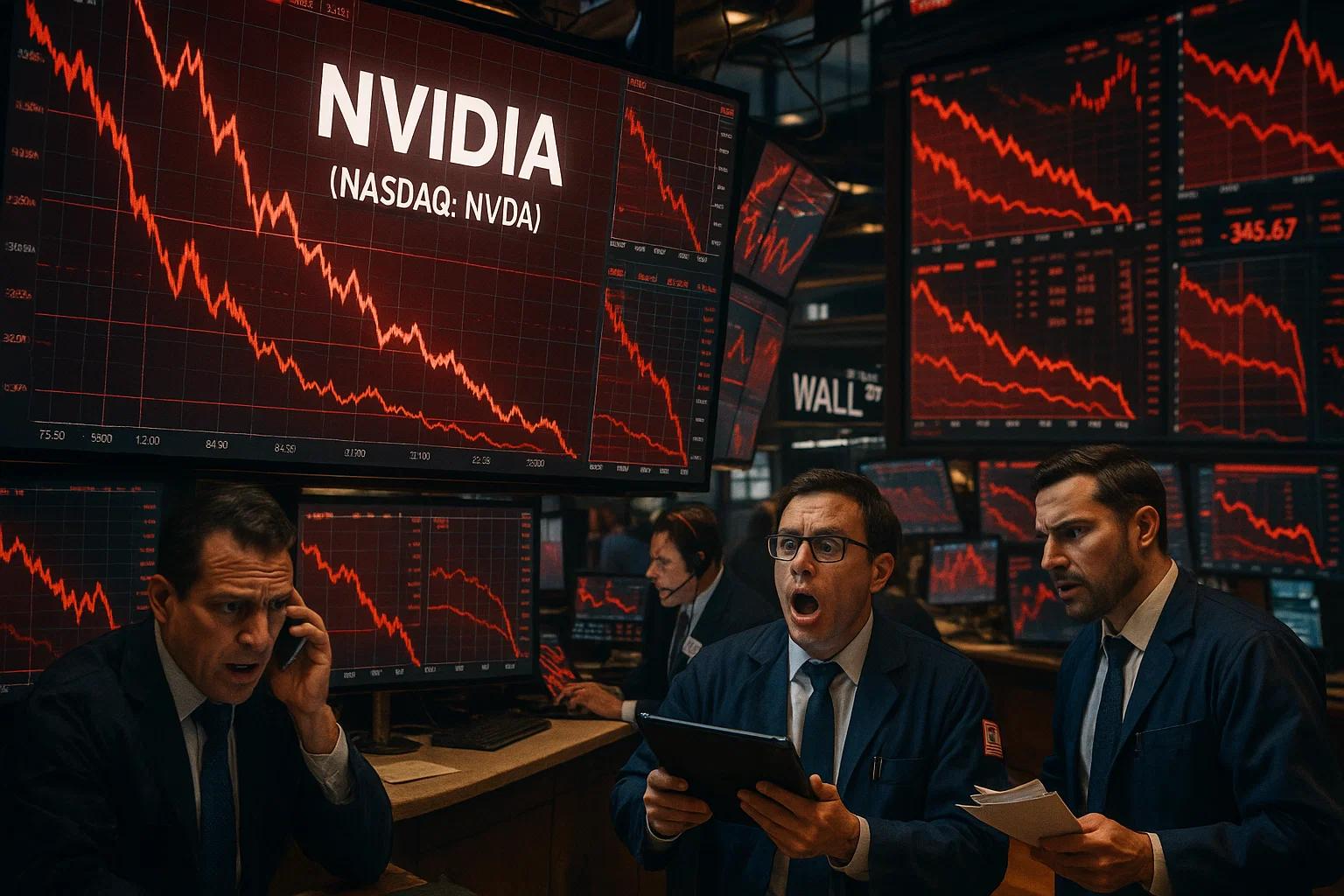
Chipmakers are the most visible part of the AI economy.
They provide the hardware that powers model training, inference, servers, memory, networking and data-centre expansion. Without chips, the AI boom cannot scale.
But that central role has also made them expensive.
Reuters reported earlier this month that the Nasdaq fell sharply as losses in Micron and other chipmakers reflected doubts about the sustainability of Wall Street’s AI-driven rally.
That does not mean chip demand is fake.
It means investors are asking whether the market has priced in too much good news.
AI chips can remain strategically essential while chip stocks become vulnerable.
Both can be true.
The Capex Question Is Getting Louder

The biggest question now is capital spending.
AI requires huge investment in data centres, chips, power, cooling, cloud infrastructure and software integration. The first stage of the boom rewarded companies that supplied that buildout. But investors now want to know whether customers will keep spending at the same pace.
At some point, buyers must show returns.
Cloud companies must justify spending.
Enterprise customers must convert AI pilots into productivity.
Consumers must use AI tools often enough to support revenue.
If the spending remains massive but the payoff looks delayed, markets will become more impatient.
The AI buildout can be real and still face a valuation reset.
Open Models Add Pressure
Another pressure point is competition.
Reuters reported that China’s Moonshot unveiled Kimi K3, a 2.8 trillion-parameter open-weight model, renewing investor scrutiny over the pace of returns from heavy AI investments by U.S. technology companies.
That matters because open models can change the economics of AI.
If more capable models become cheaper, more available or easier to deploy, the market may question whether the biggest spenders can maintain high returns. AI infrastructure demand may still grow, but pricing power and competitive advantage become more complicated.
The market loves scarcity.
Open models introduce abundance.
That can unsettle investors.
The AI Story Is Moving From Hype To Proof
Every major technology cycle has a proof phase.
The internet had one.
Cloud computing had one.
Electric vehicles had one.
Streaming had one.
Artificial intelligence is entering its own.
The hype phase asks what could happen.
The proof phase asks what is happening now.
Where is the revenue?
Where are the profits?
Who pays?
Who saves money?
Which jobs change?
Which companies gain pricing power?
Which products become unavoidable?
That is the stage investors are entering. The AI story is not over. It is becoming more demanding.
The Market Is Not Rejecting AI
It would be wrong to say the market is abandoning artificial intelligence.
The smarter reading is that the market is separating AI belief from AI pricing.
Investors can still believe AI will transform technology, business and productivity while questioning whether every AI-linked stock deserves a premium valuation today.
That distinction matters.
A theme can be real and overbought.
A company can be strategic and overpriced.
A sector can grow and still correct.
This is not the death of the AI trade.
It is the first serious test of its discipline.
Broad Markets May Benefit From Rotation
A rotation out of AI leaders is not automatically bad for the whole market.
If money moves from crowded chip and mega-cap technology trades into financials, industrials, healthcare, consumer companies, energy, utilities or smaller stocks, the market may become healthier.
MarketWatch reported that some strategists see a pullback in AI leaders as potentially positive for non-tech holdings, because it could broaden participation beyond the same narrow group of winners.
That is the optimistic version.
The rally becomes less dependent on one theme.
The pessimistic version is different.
If AI leaders fall and everything else fails to absorb the pressure, the broader market can weaken.
The next few weeks will show which version is stronger.
Earnings Season Becomes Critical
The next earnings reports will matter more than usual.
Investors will look for several signals:
Are cloud companies increasing AI capex?
Are chip orders still strong?
Are margins holding?
Are enterprise customers buying AI tools at scale?
Are software companies converting AI features into higher pricing?
Are data-centre costs rising faster than expected?
Are electricity and supply constraints hurting expansion?
The market does not need perfection.
It needs evidence.
If earnings support the AI story, the pullback may look like a reset. If earnings disappoint, AI stock fatigue could become a deeper correction.
The Nvidia Problem Is Symbolic
Nvidia remains the central symbol of the AI boom.
When Nvidia rises, investors often treat it as proof that the AI buildout is intact. When Nvidia weakens, anxiety spreads quickly across the entire AI complex.
That is the problem with a market leader becoming too important.
One stock starts to carry the psychology of a whole theme.
Apple recently overtaking Nvidia in market value also changed the narrative. It suggested investors are looking beyond pure AI infrastructure toward companies with consumer distribution, durable ecosystems and less obviously crowded exposure.
That does not weaken Nvidia’s importance.
It broadens the AI winner debate.
AI Needs Revenue, Not Only Attention
The first stage of AI rewarded attention.
Companies mentioned AI and investors listened.
Products added AI features and valuations expanded.
Executives promised productivity and the market gave them credit.
Now attention is not enough.
AI must show revenue.
A chatbot must become a paid product.
A productivity tool must become a margin improvement.
A data-centre investment must become a profitable service.
A model must become a business.
This is where many companies will be tested. The firms that can turn AI into cash flow will keep market confidence. The firms that only turn AI into presentations may lose it.
Interest Rates Still Matter
AI enthusiasm sometimes made investors act as though valuation gravity had disappeared.
It has not.
Interest rates still matter. Inflation still matters. Currency pressure still matters. Oil shocks still matter. Central banks still matter.
When rates are higher or inflation is sticky, future earnings become less valuable today. That affects long-duration growth stocks, including many AI-linked names whose valuations depend heavily on future profits.
The AI story does not exist outside macroeconomics.
It lives inside it.
That is why even strong technology themes can fall when the discount rate, currency environment or investor risk appetite changes.
The Bubble Question Will Grow Louder
Every AI correction brings the same question.
Is this a bubble?
The answer is not simple.
There is real technology. Real demand. Real capital expenditure. Real infrastructure. Real productivity potential. Real corporate adoption.
But there is also speculative excess. Crowded positioning. Valuation stretch. Marketing hype. Fear of missing out. Investor pressure to own the theme at any price.
Both sides exist.
The useful question is not whether AI is real.
The useful question is which parts of the AI trade are priced for reality and which are priced for perfection.
Markets are beginning to ask that question more aggressively.
Investors Are Learning The Difference Between AI Users And AI Winners
Almost every company will use AI.
That does not mean every company will win from AI.
This distinction will become more important. A retailer using AI to manage inventory may improve efficiency. A bank using AI for customer service may lower costs. A factory using AI for maintenance may reduce downtime.
But the investment benefit depends on scale, execution and whether savings flow to shareholders.
AI usage is not the same as AI profit.
Markets may begin rewarding companies that quietly improve productivity, not only those selling the most exciting AI story.
That could change the next phase of the rally.
The Next AI Trade May Be Less Obvious
The first AI trade was obvious.
Chips.
Mega-cap tech.
Cloud.
Data centres.
The next trade may be more selective.
Power providers.
Cooling systems.
Cybersecurity.
Enterprise software with real pricing power.
Industrial automation.
Healthcare tools.
Companies using AI to cut costs.
Consumer platforms that turn AI into daily habit.
This is where the market may move after the fatigue phase. Investors may still want AI exposure, but they may seek it through less crowded and more defensible routes.
The AI trade is not disappearing.
It is becoming more complicated.
The Bottom Line
The AI Stock Fatigue story is a warning, not a funeral.
Artificial intelligence remains one of the most important forces in global markets, but investors are beginning to question whether the rally ran too far, too fast. Reuters reports that chip stocks and other high-flying AI names have come under pressure as rotation out of the biggest winners accelerates and concerns grow about the sustainability of the AI-driven surge.
That is the key lesson.
AI can be transformative and overvalued at the same time.
The market is no longer rewarding every AI story automatically.
It wants proof, cash flow, pricing power and realistic returns on enormous investment.
The easy AI rally may be over.
The serious AI test has begun.