


The Earnings Week Test has arrived at the worst possible time for Big Tech.
Oil is rising.
Bond yields are moving.
The Gulf is adding geopolitical pressure.
And investors are no longer willing to treat every artificial intelligence story as automatically good news.
That makes this week different.
Big Tech is not only reporting numbers.
It is defending the market narrative.
For months, artificial intelligence has carried stocks, lifted valuations and convinced investors that the next productivity cycle is already being built. Now companies have to prove the story with revenue, margins, guidance and capital spending that make sense.
The AI rally has had the excitement.
This week, it needs evidence.
Earnings Week Test Hits Big Tech
The Earnings Week Test matters because investors have become more demanding.
Reuters reports that shares slipped on Monday as rising oil prices revived inflation fears, while a packed week of major tech earnings prepared to test investor confidence in the AI trade.
That is the core tension.
Markets still believe AI matters.
But belief is no longer enough.
Investors want to see whether companies can turn AI spending into earnings power. They want to know whether cloud growth is accelerating, whether data-centre investment is disciplined, whether margins can survive heavy capital expenditure and whether customers are paying for AI tools at scale.
The market is not asking whether AI is real.
It is asking who is making money from it now.
Alphabet, Intel And Tesla Become Market Signals
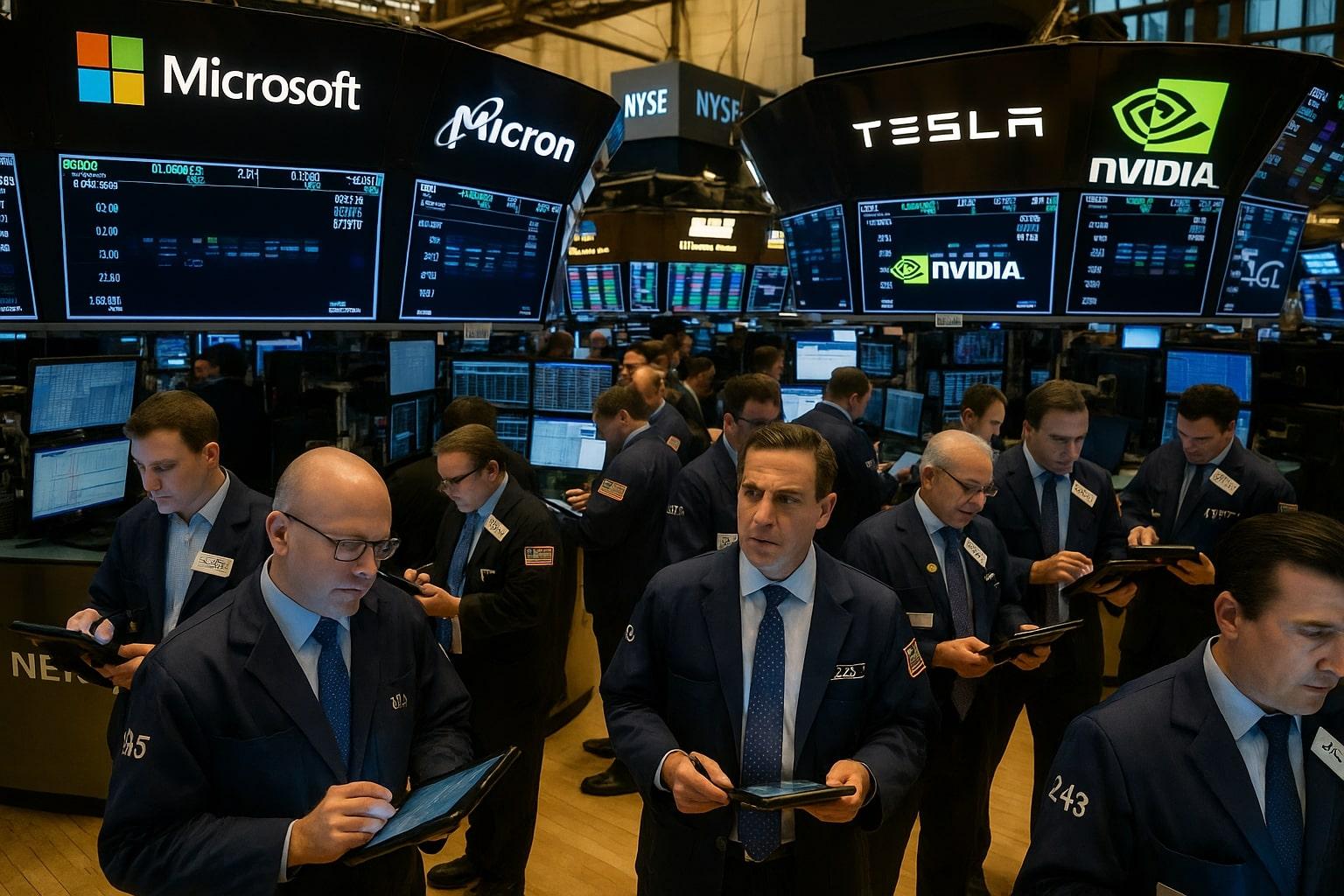
This week’s earnings calendar has several names that matter far beyond their own share prices.
Reuters notes that Alphabet, Intel and Tesla are among the companies expected to report, with expectations for tech profits described as sky high.
That gives each report symbolic weight.
Alphabet is a test of AI inside search, cloud and advertising.
Intel is a test of chip strategy, manufacturing credibility and whether the old semiconductor guard can still matter in the AI era.
Tesla is a test of whether investors still want to value the company as a technology platform rather than only an electric-vehicle manufacturer.
Each company carries a different AI question.
Together, they will tell the market whether the trade still has breadth.
The Bar Is Higher Than Usual
Big Tech has a problem that weak companies would love to have.
Expectations are high.
That means ordinary strength may not be enough.
A company can beat earnings and still fall if guidance disappoints. It can show revenue growth and still get punished if AI spending looks too heavy. It can promise future products and still lose investor trust if the market wants current monetisation.
Reuters’ market commentary warned that results may need to be “truly exceptional” to avoid punishment because profit expectations for technology are so elevated.
That is the danger of a powerful rally.
The better the story, the harder it becomes to impress.
AI Capex Is The Central Question
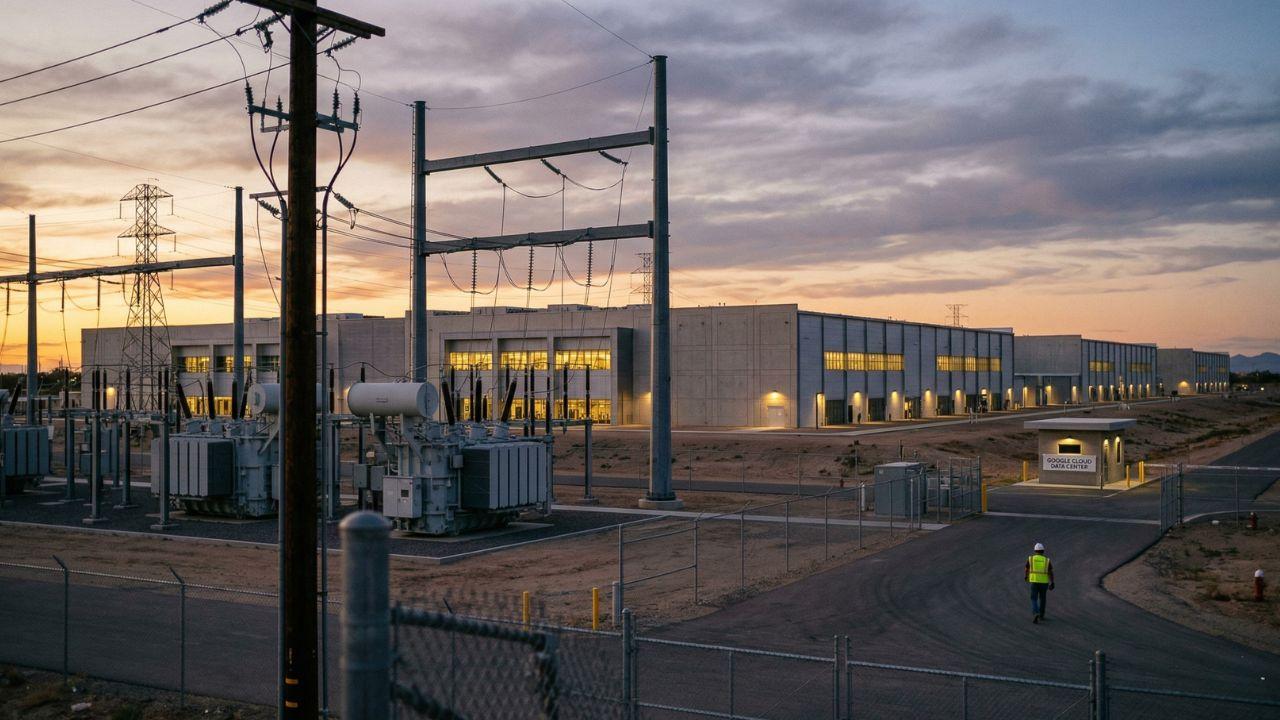
The most important line in this earnings season may not be revenue.
It may be capital expenditure.
AI requires enormous spending on data centres, chips, servers, networking equipment, energy capacity, cooling systems and engineering talent. Investors were happy to reward that spending when the AI story was fresh. Now they want to know whether the bills are producing returns.
That is the AI capex question.
Are companies spending because demand is real?
Or are they spending because nobody wants to fall behind?
There is a big difference.
Strategic investment creates future profit.
Fear-based spending can destroy margins.
This week, investors will listen carefully for the difference.
The Oil Shock Makes Everything Harder
The earnings test is happening while oil prices are moving higher.
Reuters reports that escalating conflict in the Gulf lifted oil prices and revived inflation worries, complicating the market backdrop just as tech earnings begin.
That matters because Big Tech valuations are sensitive to the macro environment.
If oil keeps rising, inflation fears can return. If inflation fears return, bond yields can rise. If yields rise, expensive growth stocks become harder to justify.
AI companies may still deliver strong results.
But the market may be less forgiving if the macro backdrop turns hostile.
In a low-stress environment, investors pay for future growth.
In a high-stress environment, they ask for proof sooner.
The AI Trade Is No Longer One-Way
The first phase of the AI rally was simple.
Buy the winners.
Buy the chips.
Buy the cloud.
Buy the platforms.
Buy anything connected to artificial intelligence.
That phase is fading.
Investors are now separating AI users from AI winners. Almost every company can add AI to a presentation. Fewer companies can turn it into durable revenue, higher margins or stronger customer retention.
That is why this earnings week is important.
Companies must show that AI is more than a branding exercise. They must show product adoption, pricing power, cloud usage, enterprise contracts or cost savings that matter.
The AI label is not enough anymore.
The market wants financial transmission.
Alphabet Must Defend Search And Cloud
Alphabet faces one of the most important tests because AI touches both its threat and opportunity.
The threat is obvious.
If AI answer engines change how people search, Google’s advertising machine could face pressure. The opportunity is also obvious. Alphabet has huge AI talent, infrastructure, products and cloud services that could benefit from enterprise adoption.
Investors will therefore watch several things.
Search advertising resilience.
Cloud growth.
AI product adoption.
Capital spending.
Margins.
Management confidence.
Alphabet does not only need to show that it is part of the AI race. It needs to show that AI strengthens its core business rather than weakening it.
That is a much harder question.
Intel Must Prove It Still Belongs

Intel’s test is different.
The company is not the symbol of the AI boom in the way Nvidia has been. But that is exactly why its results matter. Investors want to know whether the broader chip ecosystem can benefit from AI demand or whether the gains remain concentrated among a few dominant players.
Intel must prove relevance.
Manufacturing execution.
Data-centre positioning.
AI chip credibility.
Margin discipline.
Capital spending control.
A strong report could suggest that the AI hardware opportunity is widening. A weak one could reinforce the view that the chip market is becoming more divided between leaders and laggards.
Intel is not just reporting earnings.
It is asking the market to believe in its place in the next cycle.
Tesla Must Reopen The Tech Premium Debate
Tesla is always more than an earnings report.
It is a valuation argument.
Is Tesla an automaker?
An AI company?
A robotics company?
An energy company?
A software platform?
A mobility network?
Investors have often valued Tesla on future possibilities more than current auto margins. That makes this earnings week sensitive. If vehicle demand, margins or guidance disappoint, the market may question how much AI and autonomy premium the stock deserves.
Tesla’s challenge is to connect ambition with execution.
Robotaxis, autonomous systems, software and AI-driven products can excite investors.
But numbers still matter.
The market may listen to the vision.
It will trade the evidence.
The Semiconductor Selloff Is A Warning
Recent pressure in chip-heavy markets is a warning that investor confidence has become more fragile.
Reuters reported that South Korea’s chip-heavy market lost more ground after a sharp fall the previous week, as retail investors were squeezed out of leveraged positions.
That matters because AI enthusiasm has often travelled through semiconductor exposure.
When chip markets wobble, investors begin to question whether the AI trade has become crowded. Leveraged positions can unwind quickly. Retail enthusiasm can become forced selling. A sector that looked unstoppable can suddenly look vulnerable.
This does not mean AI demand has disappeared.
It means positioning matters.
When everyone owns the same story, small doubts can become large moves.
Investors Want Guidance More Than History
Earnings are about the past.
Markets trade the future.
That is why guidance will matter more than headline results. Investors already know AI spending has been large. They want to know what happens next.
Will companies spend more?
Will cloud demand accelerate?
Will margins hold?
Will AI features lift pricing?
Will customers renew contracts?
Will data-centre constraints limit growth?
Will management sound confident or cautious?
A company can deliver a strong quarter and still disappoint if the forward commentary is weak. In this environment, guidance is the real earnings number.
The Market Needs A Broader Rally
Another issue is market breadth.
If the rally depends too heavily on a narrow group of AI-linked companies, the market becomes fragile. A few missed earnings reports can create pressure far beyond the companies reporting.
That is why investors want evidence that AI benefits are spreading.
Enterprise software.
Cybersecurity.
Cloud infrastructure.
Power equipment.
Cooling systems.
Industrial automation.
Consumer devices.
Productivity tools.
If earnings show broader transmission, the AI rally can become healthier. If earnings show concentration in only a few names, the market may worry that the theme is too narrow.
A strong market needs more than a handful of heroes.
Margins Are The Hidden Test
AI revenue is exciting.
AI margins are more important.
If AI products require huge computing costs, expensive talent and constant infrastructure investment, then revenue growth may not translate cleanly into profit. That is the margin question investors will watch closely.
Can companies charge enough for AI tools?
Can they reduce inference costs?
Can they bundle AI into existing subscriptions without destroying profitability?
Can they manage data-centre expenses?
Can AI improve internal productivity enough to offset spending?
The market has already priced in transformation.
Now it wants operating leverage.
The Consumer AI Question Remains Open
Much of the AI story has been enterprise-led.
But consumer adoption still matters.
People use AI tools, but the business model is not always clear. Free products can attract attention without generating profit. Paid subscriptions can grow, but not every consumer wants another monthly bill. Device-based AI may take time to influence upgrade cycles.
This affects Big Tech.
Consumer platforms need to prove that AI improves engagement, retention, advertising, subscriptions or hardware demand.
A flashy feature is not enough.
It must change behaviour.
That is why earnings calls may focus not only on product launches, but on usage metrics and monetisation.
The Market Is Becoming Less Patient
In the early phase of a technology boom, investors often tolerate uncertainty.
They pay for potential.
Later, they demand milestones.
That is where the AI rally now stands. The market has heard the vision. It has seen the spending. It has rewarded the obvious winners.
Now patience is thinning.
Investors want to know when AI investment becomes profit. They want to know which companies have genuine competitive moats and which are simply buying expensive infrastructure because competitors are doing the same.
This does not kill the AI trade.
It matures it.
Earnings Can Reset The Mood Quickly
The good news for Big Tech is that earnings can change sentiment fast.
A strong Alphabet report could calm fears about search and cloud. Strong Intel commentary could support chip confidence. Strong Tesla guidance could revive the broader risk appetite around technology and autonomy.
Markets can move from doubt to enthusiasm quickly when results confirm the story.
But the opposite is also true.
One major disappointment can feed the view that valuations moved ahead of fundamentals. In a market already dealing with oil, inflation risk and geopolitical tension, disappointment can travel faster than usual.
This is why the week feels important.
Not because one quarter defines AI.
Because one quarter can reset confidence.
The Bottom Line
The Earnings Week Test is a reality check for the AI rally.
Reuters reports that markets opened the week under pressure as oil climbed and inflation concerns returned, while major technology earnings from companies including Alphabet, Intel and Tesla are set to test investor faith in artificial intelligence.
The question is no longer whether AI is exciting.
It is whether AI is profitable enough, soon enough, to justify the valuations already built into the market.
Big Tech has sold investors the future.
This week, it must show the receipts.