
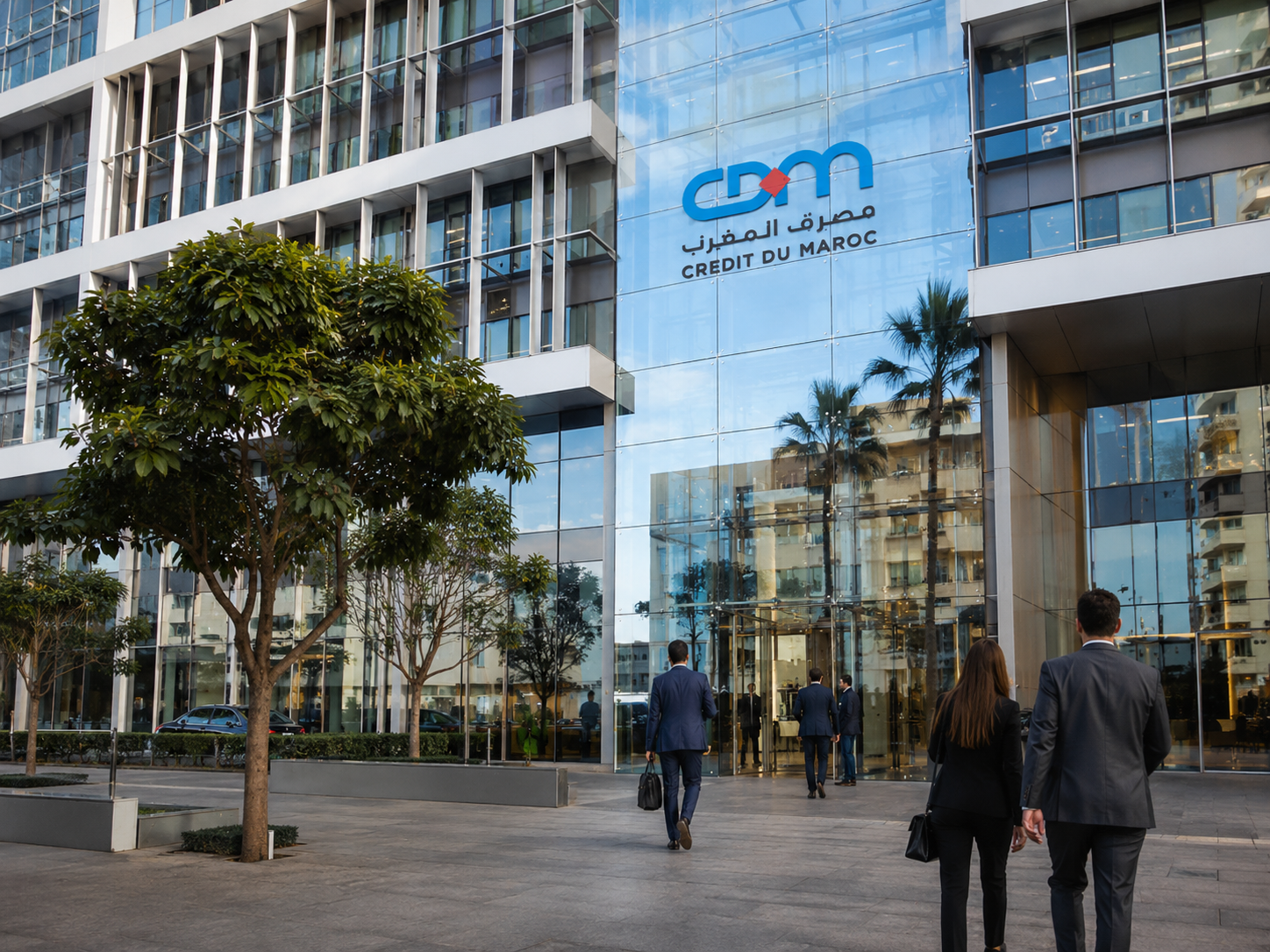
Crédit du Maroc has just received something every ambitious mid-sized bank needs.
More capital.
The bank completed a 699.1 million dirham cash capital increase in July 2026, issuing 745,285 new shares at 938 dirhams each.
The operation was fully subscribed after the subscription period ran from 26 June to 16 July. It increased Crédit du Maroc’s share count from approximately 10.88 million to 11.63 million and lifted its share capital above 1.16 billion dirhams.
That might sound like a technical stock-market transaction.
It is much more interesting than that.
Banks grow by lending.
Lending consumes capital.
And a bank that wants to expand faster eventually needs a stronger equity base underneath its balance sheet.
Crédit du Maroc has now added almost 700 million dirhams of exactly that.
The question is what it does with it.
Capital Is The Fuel Behind Bank Growth

Banks operate differently from ordinary companies.
A retailer can open another store.
A manufacturer can build another production line.
A bank creates much of its business by putting its balance sheet to work.
Mortgages.
Business loans.
Consumer finance.
Investment lending.
Trade finance.
Every additional loan creates opportunity.
It also creates risk.
Regulators therefore require banks to maintain sufficient capital relative to the risks they carry.
That means growth cannot continue indefinitely without strengthening the financial base supporting it.
Crédit du Maroc’s capital increase was explicitly designed to reinforce its equity and support its development ambitions.
The 699 million dirhams therefore gives the bank greater strategic flexibility.
Crédit Du Maroc Is No Longer In Transition

The bank has changed significantly since Moroccan group Holmarcom took control from Crédit Agricole.
The early story was ownership transition.
The next story is competition.
Crédit du Maroc is now operating under a Moroccan shareholder with a clear ambition to grow the franchise and has been preparing its CDM Boost 2028 strategic programme.
That changes management’s priorities.
The bank no longer needs merely to prove that the ownership change worked.
It needs to demonstrate that the new structure can produce faster growth.
Almost 700 million dirhams of additional equity gives it more capacity to attempt that.
Morocco’s Banking Market Is Difficult To Disrupt
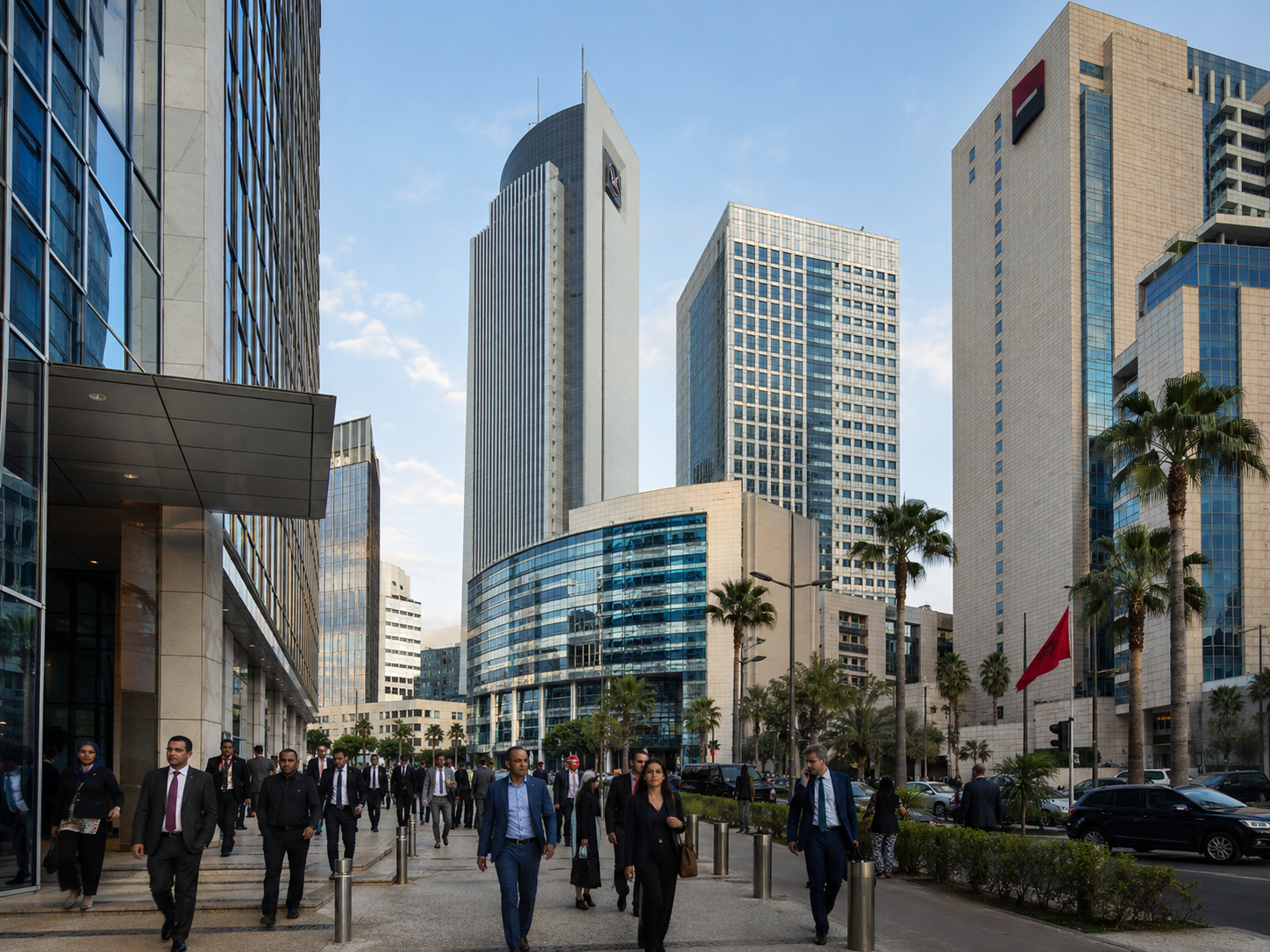
Crédit du Maroc operates in one of Morocco’s strongest corporate sectors.
Attijariwafa bank.
Banque Centrale Populaire.
Bank of Africa.
These groups possess enormous advantages.
Large customer bases.
Extensive branch networks.
Corporate relationships.
African operations.
Digital platforms.
Deposits accumulated over decades.
Competing with them does not mean becoming identical to them.
A smaller bank needs a sharper strategy.
Speed.
Customer service.
Specialisation.
Digital execution.
SME financing.
Specific industry expertise.
Crédit du Maroc’s opportunity is not necessarily to become Morocco’s largest bank.
It is to become significantly more relevant to customers who currently default to the largest three.
SMEs Could Be The Most Important Battleground

Moroccan small and medium-sized businesses remain one of the largest opportunities in banking.
They need working capital.
Equipment finance.
Trade services.
Payment solutions.
Foreign exchange.
Vehicle finance.
Investment loans.
Many entrepreneurs also want something harder to quantify.
Faster decisions.
A business owner does not necessarily choose the bank offering the cheapest theoretical loan.
They may choose the institution capable of understanding the company and responding quickly.
This is where a mid-sized bank can compete.
Crédit du Maroc does not need to process every SME exactly like a giant universal bank.
It can use technology and sector expertise to become more responsive.
If part of the new capital is converted into SME lending capacity, the bank could deepen its position substantially.
699 Million Dirhams Can Support Much More Than 699 Million Of Loans

Bank equity has a multiplier effect.
The new capital does not simply allow Crédit du Maroc to lend another 699 million dirhams and stop.
Subject to capital requirements, asset quality and regulatory constraints, equity supports a much larger balance sheet.
That is what makes the transaction strategically important.
New capital strengthens the denominator behind future lending growth.
But leverage makes discipline equally important.
Bad lending multiplied through a larger balance sheet creates larger problems.
The objective is therefore not simply expanding credit faster.
It is expanding good credit faster.
Digital Banking Can Improve The Economics
Traditional banking expansion was expensive.
Open branches.
Hire staff.
Build physical infrastructure.
Digital channels change that.
A customer can increasingly perform everyday transactions through a phone.
Transfers.
Payments.
Account management.
Card services.
Loan applications.
Customer support.
This allows banks to grow without increasing physical infrastructure at the same rate.
For Crédit du Maroc, that can make the 699 million dirham capital injection more productive.
Capital can support lending while technology reduces the cost of serving each additional customer.
The winners in Moroccan banking will increasingly be those capable of combining a strong balance sheet with low-friction digital service.
Branches Still Matter
Digitalisation does not mean branches disappear.
Complex financial decisions still benefit from human interaction.
Mortgages.
Business financing.
Investment advice.
Corporate banking.
Many customers also value physical access when something goes wrong.
The branch therefore needs to evolve.
Less transaction processing.
More advice.
More sales.
More relationship management.
A bank competing with much larger networks should not necessarily ask how many branches it can open.
It should ask how productive each location can become.
Digital banking handles routine activity.
Employees handle higher-value conversations.
Housing Finance Remains A Major Opportunity
Morocco continues to urbanise and develop residential property.
Housing finance therefore remains structurally important.
Mortgages create long relationships between customers and banks.
A borrower may remain with one institution for twenty years.
That gives the bank opportunities to sell additional services.
Salary accounts.
Insurance.
Cards.
Savings.
Investment products.
Consumer credit.
Winning the mortgage relationship can therefore mean winning much more than one loan.
Additional capital gives Crédit du Maroc greater room to compete for these customers.
But pricing discipline matters.
Banks can destroy value by competing too aggressively for volume.
Growth needs margins.
Corporate Banking Can Become More Competitive
Morocco’s investment cycle is generating enormous financing needs.
Factories.
Hotels.
Renewable energy.
Logistics.
Healthcare.
Retail.
Infrastructure suppliers.
Companies expanding across Africa.
The largest banks naturally dominate many of these relationships.
But corporate finance is rarely winner-takes-all.
Large companies often use several banks.
That gives Crédit du Maroc an opening.
Participate in syndicated loans.
Finance suppliers.
Offer cash-management services.
Provide trade finance.
Support mid-cap businesses before they become giants.
A bank does not need to finance the entire factory to build a valuable corporate relationship.
Trade Finance Fits Morocco’s Economic Direction
Morocco is becoming more deeply integrated into international supply chains.
Automotive exports.
Aerospace.
Agri-food.
Textiles.
Mining.
African expansion.
These companies require banking products beyond ordinary loans.
Letters of credit.
Foreign exchange.
Import financing.
Export financing.
Guarantees.
Cash management.
Trade finance generates fee income and embeds the bank inside the customer’s daily operations.
That makes the relationship harder to replace.
Crédit du Maroc’s stronger capital position can support this type of growth as Morocco’s export economy expands.
Deposits Will Matter As Much As Capital
Fresh equity solves only one side of banking growth.
Banks also need funding.
Customer deposits remain one of the most important sources.
A bank that grows loans much faster than deposits can become more dependent on expensive wholesale funding.
Crédit du Maroc therefore needs to grow liabilities alongside assets.
Salary accounts.
SME deposits.
Corporate cash.
Savings products.
Digital current accounts.
The strongest banking model attracts customers who both borrow and keep money with the institution.
Capital enables growth.
Deposits make that growth economically sustainable.
Customer Experience Could Be The Real Differentiator
Bank products are often similar.
One mortgage resembles another.
One current account can resemble another.
Service therefore becomes important.
How long does account opening take?
How quickly is a business loan answered?
Can the customer reach someone?
Does the mobile application work?
How quickly is a card replaced?
How transparent are fees?
These small experiences create loyalty.
A mid-sized bank can sometimes improve them faster because the organisation is less complex.
Crédit du Maroc should use its growth phase to make responsiveness part of its identity.
Competing against giants through size alone would be difficult.
Competing through service can be much more realistic.
Full Subscription Sends A Market Signal
The capital increase was fully completed, and reporting around the operation indicated demand equivalent to roughly 1.27 times the shares available.
That matters.
Shareholders were asked to provide fresh money.
They did.
Investors therefore accepted the proposition that additional capital could create value.
That does not guarantee future performance.
It creates an expectation.
Management now has to demonstrate that the new equity generates profitable growth rather than merely enlarging the balance sheet.
The next few years will determine whether the transaction was defensive capital or growth capital.
The stated objective suggests the latter.
More Capital Raises The Return Question
Shareholders ultimately care about returns.
Issuing new shares increases equity.
That can initially reduce return on equity if profits do not grow quickly enough.
This creates pressure on management.
The bank needs to deploy the new capital productively.
Higher lending.
More fee income.
More customers.
Better operating efficiency.
If profits rise faster than the equity base over time, shareholders benefit.
If the capital remains underused, returns can weaken.
A successful capital increase therefore has two stages.
Raise the money.
Earn an attractive return on it.
Crédit du Maroc has completed stage one.
Holmarcom’s Reputation Is Part Of The Bet
The ownership structure gives the strategy another dimension.
Holmarcom is an established Moroccan business group with interests across several sectors.
Its control of Crédit du Maroc gives the bank access to a shareholder with local market knowledge and long-term strategic interests.
But related business ecosystems need careful governance.
Banking decisions must remain based on credit quality and commercial economics.
The strongest value from an industrial shareholder comes through strategic patience, networks and investment capacity — not preferential risk.
Good governance protects both depositors and shareholders.
Competition Benefits Moroccan Customers
A stronger Crédit du Maroc is positive beyond the bank itself.
Banking markets improve when credible competitors challenge leaders.
Businesses can compare financing.
Consumers can compare mortgages.
Digital services improve.
Fees face pressure.
Customer experience becomes more important.
The biggest banks remain formidable.
That does not mean Morocco benefits from them facing weak competition.
A stronger second tier of banks can make the complete system more dynamic.
Crédit du Maroc has the opportunity to become one of the most important players in that group.
699 Million Dirhams Buys Strategic Time
Capital is valuable partly because it gives management room to execute.
A bank constantly constrained by equity cannot pursue every attractive growth opportunity.
A stronger capital position provides breathing space.
Launch products.
Expand credit.
Invest in technology.
Recruit.
Compete.
But capital does not create strategy.
It amplifies one.
If the strategy is strong, more equity can accelerate it.
If execution is weak, the capital merely delays the consequences.
That is why the next phase matters more than the transaction itself.
Morocco’s Banking Hierarchy Is Not Frozen
Attijariwafa bank, BCP and Bank of Africa remain the giants.
Their scale will not disappear.
But banking markets evolve.
Digitalisation lowers some barriers.
Customers become less loyal to branches.
SMEs demand faster service.
New industries create new financing needs.
Capital markets deepen.
Fintech changes expectations.
This gives smaller institutions opportunities to gain relevance without first matching the largest banks in absolute size.
Crédit du Maroc can choose where it wants to become unusually strong.
That strategic focus may matter more than chasing every segment.
699 Million Dirhams Creates A Clear Test
The numbers are now confirmed.
699.1 million dirhams of fresh capital.
745,285 new shares.
938 dirhams per share.
More than 1.16 billion dirhams of share capital after completion.
The bank has strengthened the financial foundation underneath its next growth cycle.
Now comes the harder part.
Convert capital into profitable loans.
Convert technology into better service.
Convert SME demand into long-term relationships.
Convert Morocco’s investment boom into corporate banking revenue.
Convert customer deposits into sustainable funding.
And convert Holmarcom’s ownership into a genuine competitive reset.
Crédit du Maroc does not need to overtake Morocco’s three banking giants tomorrow.
It needs to become increasingly difficult for them to ignore.
Nearly 700 million dirhams of fresh equity gives it more room than ever to try.