
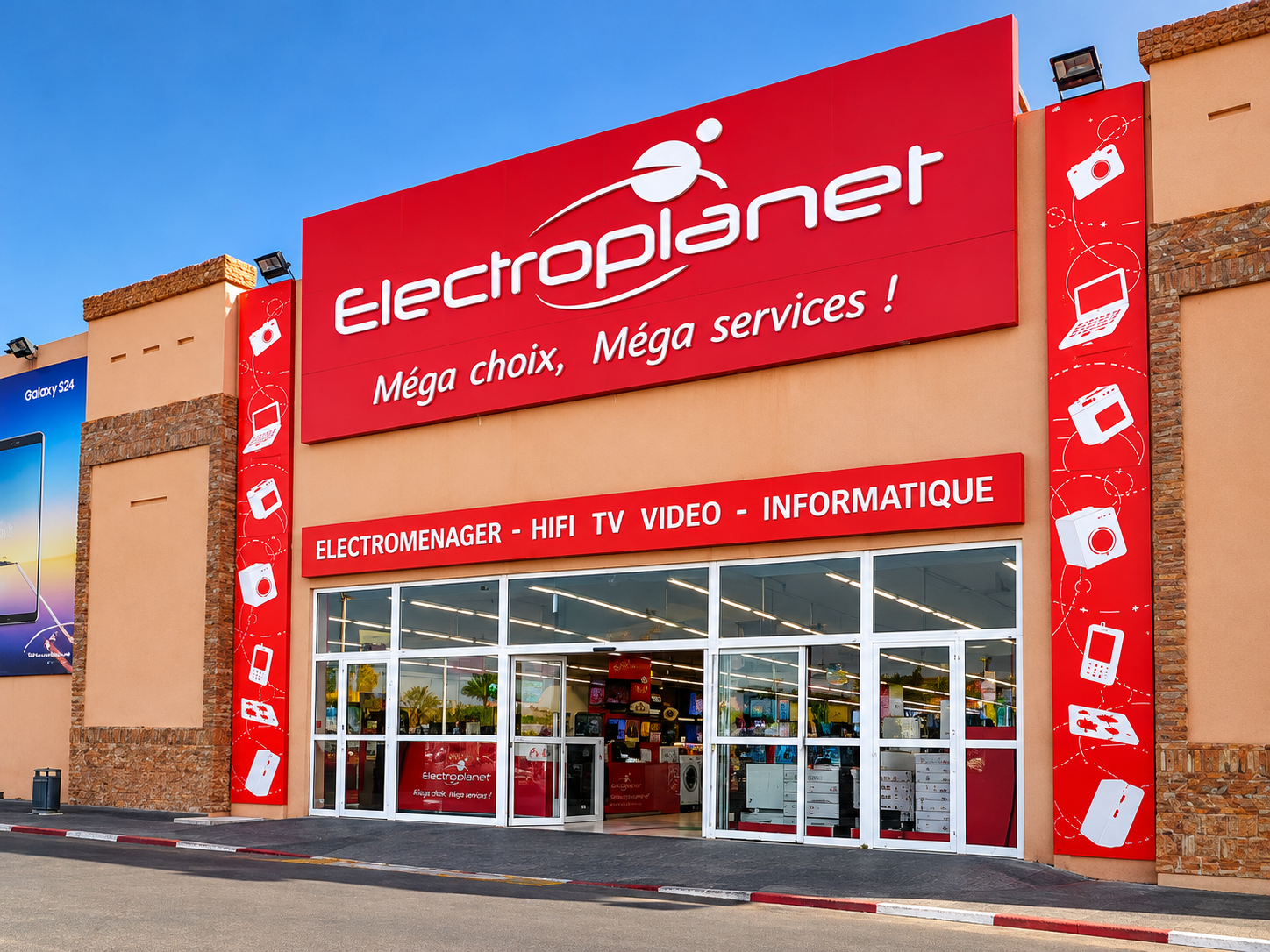
CASABLANCA —Moroccan electronics retailer Electroplanetis pursuing plans to expand its network to 100 stores by 2030, seeking to strengthen its position in the country's consumer electronics and household appliances market through new locations and a more service-oriented retail model.
Part of Marjane Group, the company reported more than 60 stores across 24 Moroccan cities in July 2026, following the opening of a showroom in Bouskoura, south of Casablanca.
The expansion, which also included new locations in Rabat's Hay Riad district and near Tangier airport, reflects a strategy of moving closer to residential and commercial areas beyond traditional shopping destinations.
Hakim Mataich, Electroplanet's deputy managing director, is among the executives overseeing a business increasingly focused on combining physical stores, digital distribution and specialist customer services.
The company's target represents a substantial increase in its national footprint. It also raises an important commercial question: whether a larger network can deliver sustainable growth in a market where consumers can increasingly compare products and prices online.
A National Network Built Around Growing Urban Areas
Electroplanet opened its first store in Marrakech in 2008 and has since developed into one of Morocco's established specialist electronics retailers.
Its latest expansion reflects changes in the country's urban geography, with new residential developments creating demand for accessible shopping facilities and services.
The Bouskoura showroom, inaugurated in July at the Mercato shopping centre in Green Town, illustrates that approach.
Covering 850 square metres, the store offers approximately 1,500 product references from more than 50 brands, including household appliances, televisions, smartphones, computers and gaming equipment.
Around 30 employees provide customer assistance and product guidance.
The location follows openings in Hay Riad and Tangier, extending Electroplanet's coverage of areas with growing residential and commercial activity.
The company has not disclosed the investment required for its 2030 expansion programme or a detailed timetable for reaching 100 locations.
The network figure reported in July nevertheless provides a measurable starting point for assessing its ambition.
Hakim Mataich and the Changing Role of Physical Stores
Electroplanet's expansion is accompanied by an effort to make its stores more than conventional product showrooms.
The Bouskoura location includes dedicated spaces for testing household appliances, immersive audio and video demonstration rooms, and a fully equipped kitchen where customers can examine products in conditions resembling everyday use.
The commercial logic is straightforward: customers can research specifications and compare prices online, but certain purchases still benefit from practical demonstrations and specialist advice.
This is particularly relevant to large household appliances and higher-value electronics, where customers may also consider installation, warranties and after-sales support.
Electroplanet has operated an e-commerce platform since 2018, adding digital purchasing to its physical distribution network.
The combination allows the retailer to serve customers through different channels while maintaining stores as locations for product discovery, technical guidance and customer assistance.
For Mataich and the company's management, the operational challenge is to maintain consistent service standards as the network grows.
Additional outlets require trained employees, reliable inventory management and the ability to coordinate product availability across physical and digital channels.
The company has not disclosed whether its newer showroom formats generate higher sales or margins than traditional locations.
Their commercial value will ultimately depend on whether improved customer experiences translate into purchases, repeat business and efficient operations.
The Commercial Challenge Behind the 2030 Target
Electroplanet's ambition to reach 100 stores comes with significant execution challenges.
Electronics retail is characterised by rapid product development, intense price competition and inventory that can lose value as newer models enter the market.
Expanding into additional cities may increase customer accessibility, but it also creates costs associated with premises, employees, logistics and stock.
The retailer must balance those expenses against demand while competing with online platforms and other established distributors.
Its relationship with Marjane Group provides an established corporate retail structure, although the financial contribution of Electroplanet's individual operations is not detailed in the publicly available announcements accompanying the expansion.
The company has not disclosed recent standalone revenue, operating profit or comparable-store sales figures that would allow an independent assessment of its commercial performance.
That distinction matters. A larger store network demonstrates geographic expansion, but store numbers alone do not establish whether sales or profitability are improving.
Electroplanet's strategy nevertheless reflects an important evolution in Morocco's organised retail industry: combining broader geographic coverage with customer experience, digital services and specialist expertise.
Its Bouskoura showroom demonstrates how that approach is being implemented, while its 2030 target provides a clear measure of the company's ambitions.
Electroplanet's next challenge is not simply to open more stores. It is to make a larger retail network more productive, accessible and commercially sustainable.