

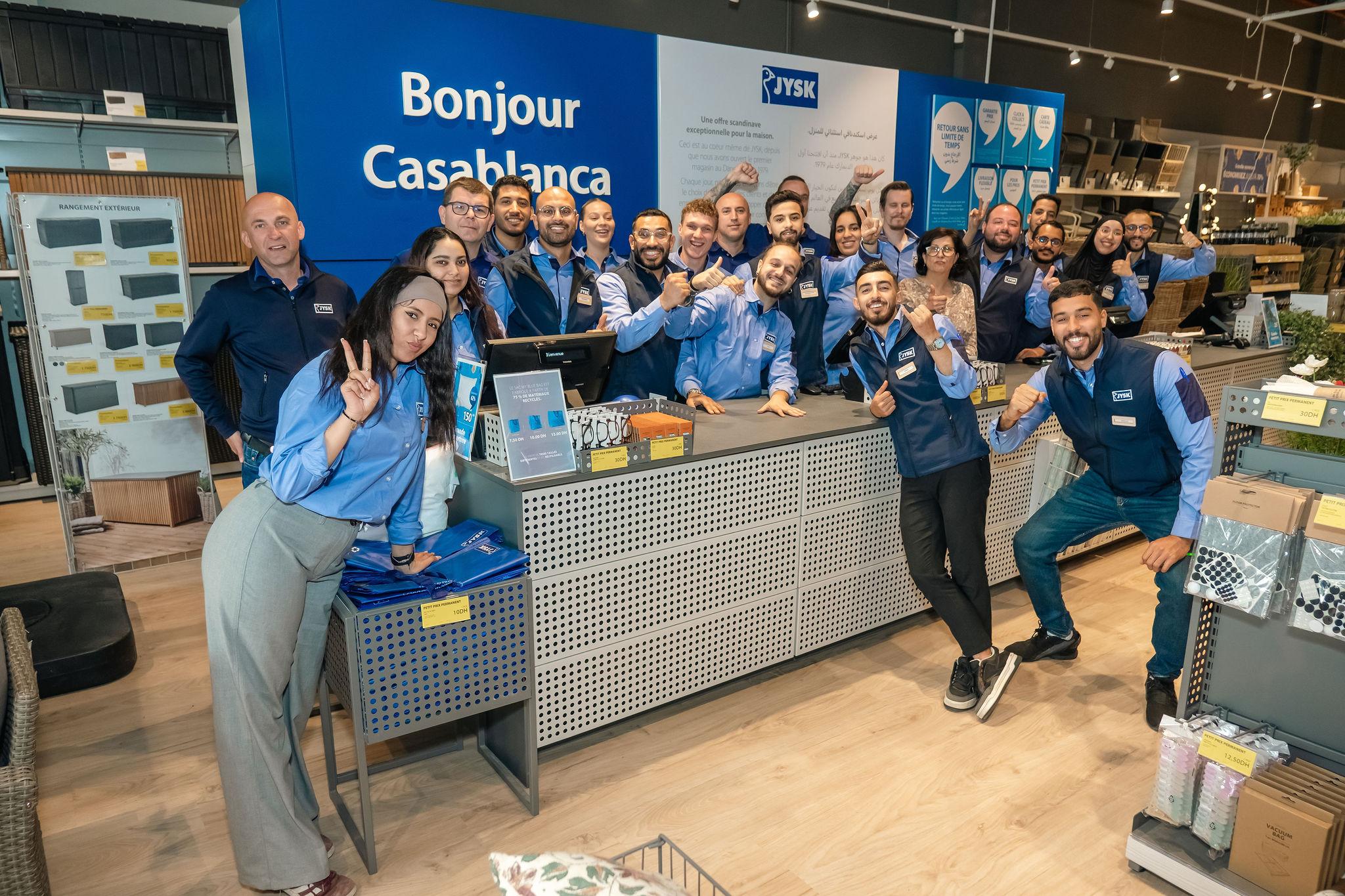
JYSK entered Morocco in April 2025 with two stores in Casablanca.
One year later, the Danish home-furnishing retailer was already preparing new openings in Tangier and Rabat while identifying potential locations in Fez, Kenitra, El Jadida, Dar Bouazza and Marrakech.
The company believes Morocco could eventually support as many as 70 stores within five years.
That ambition would make the Kingdom far more than another export market.
Morocco is JYSK’s first African country and could become the platform through which the group learns how to operate across a younger, faster-growing and culturally different consumer market.
But opening stores will be the easy part.
The real test is whether JYSK can adapt its Scandinavian retail model to Moroccan homes, incomes and shopping habits without losing the efficiency that made the concept successful internationally.
Morocco Is Not A Copy Of Europe
JYSK operates through a highly standardised model.
Recognisable store layouts.
Large product volumes.
Frequent promotions.
A strong focus on sleeping and living.
Centralised purchasing.
Simple Scandinavian design.
Standardisation creates efficiency, but Morocco cannot be treated as an identical extension of Europe.
Homes are used differently.
Families may be larger.
Hospitality plays a stronger role in domestic life.
Room dimensions vary.
Climate conditions differ between Tangier, Casablanca, Marrakech and Agadir.
Some households furnish gradually rather than purchasing an entire room at once.
JYSK must therefore preserve its operating system while adjusting the product offer to local reality.
The company does not need to become Moroccan in every detail.
It needs to understand how Moroccan customers actually live.
Seventy Stores Require More Than Demand
Early customer interest appears strong.
But the potential for 70 stores should not be confused with a guaranteed expansion plan.
Each location must generate sufficient sales while carrying rent, inventory, staffing and logistics costs.
A store performing well in Casablanca does not automatically prove that the same format will succeed in every regional city.
Expansion should follow evidence.
Population.
Household formation.
Income levels.
Housing construction.
Accessibility.
Competitive intensity.
Online demand.
JYSK’s ambition to identify eight to ten additional locations within twelve months will test whether the company can move quickly without selecting sites too aggressively.
Retail growth becomes expensive when location decisions need to be corrected later.
Sleep Can Become The Strongest Category

JYSK’s international identity is closely connected with mattresses, duvets, pillows and bedroom products.
This category offers strong potential in Morocco because customers increasingly understand the relationship between sleep, comfort and health.
But mattresses remain difficult products to purchase.
Customers cannot assess quality through photographs alone.
They need to compare firmness, materials, dimensions and price.
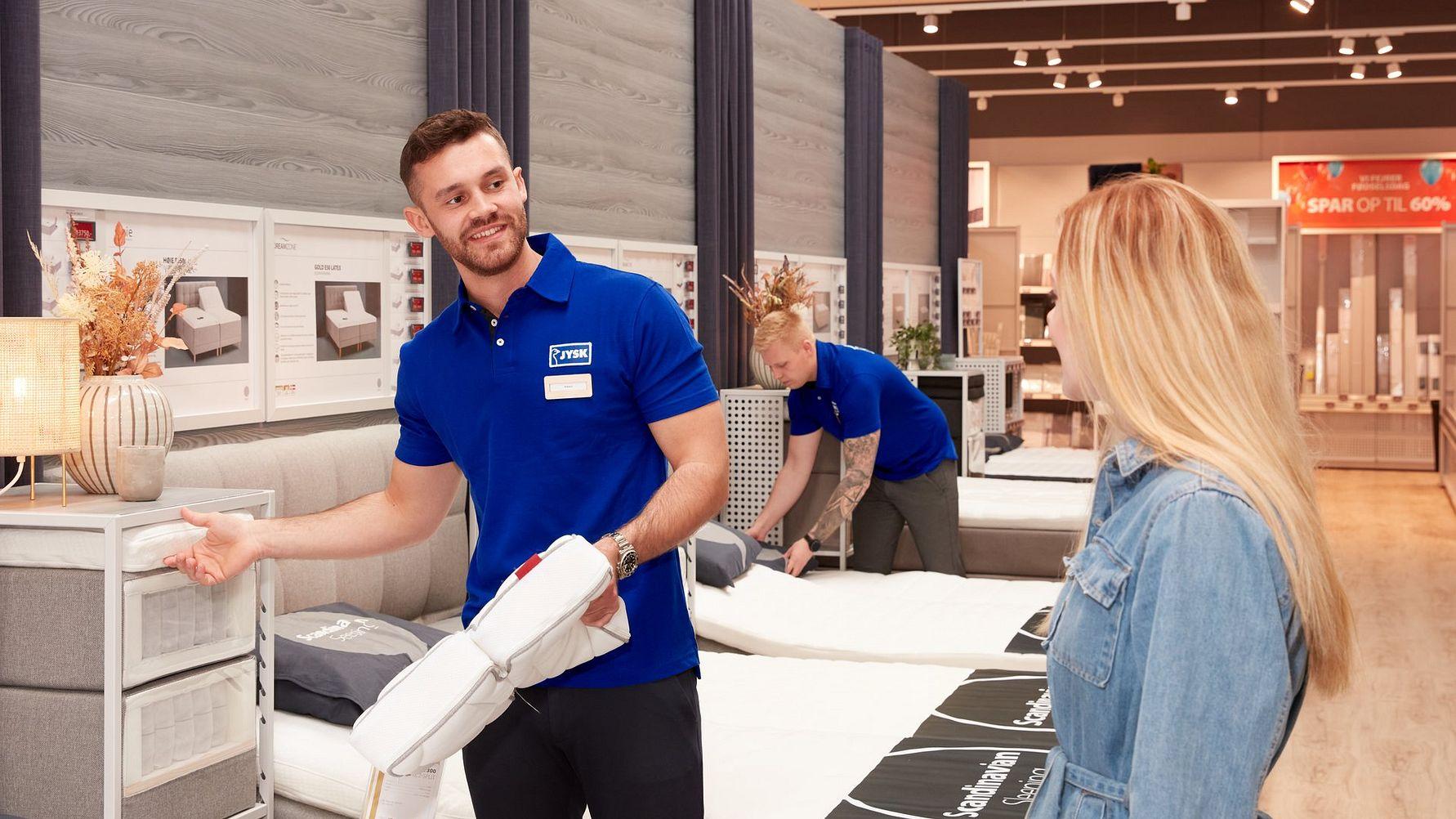
Store employees must therefore provide useful guidance without turning the experience into pressure selling.
Clear guarantees and return conditions will also matter.
A retailer can build long-term trust when customers believe the advice is based on their needs rather than only on the product carrying the highest margin.
Sleep products may bring customers into the store less frequently than decorations.
They can create a much deeper relationship when the purchase performs well for years.
Moroccan Homes Need Relevant Dimensions
International product ranges are often designed around common European room sizes and furniture standards.
Moroccan housing varies widely.
A new apartment in Casablanca may require compact storage.
A villa outside Tangier may have larger rooms.
Traditional salons may use proportions different from Scandinavian living rooms.
Balconies and terraces become important in coastal and warmer cities.
JYSK needs to study which dimensions sell rather than assuming that the international catalogue will fit every home.
Compact furniture, modular storage and adaptable pieces can serve urban apartments.
Outdoor furniture may perform strongly where climate and space allow.
The company should also consider household habits such as frequent family visits and the need for flexible sleeping arrangements.
Adaptation does not require abandoning Scandinavian design.
It requires making that design useful.
Price Architecture Will Determine Scale
Morocco offers a large consumer market, but purchasing power remains uneven.
JYSK’s positioning around affordable Scandinavian living can attract households seeking modern design without premium prices.
The promise must remain credible across the complete product range.
A few heavily promoted items may attract traffic, but customers will judge affordability through the total cost of furnishing a room.
The company needs several price levels.
Entry products for households with limited budgets.
Mid-range items offering stronger materials or durability.
Selected premium products for customers willing to pay more.
Discounting should remain disciplined.
Constant promotions can train customers to delay purchases and weaken confidence in the normal price.
The strongest value proposition combines affordability with products that remain functional after repeated use.
Local Sourcing Could Reduce Cost And Risk
JYSK’s international scale gives it purchasing power and access to established suppliers.
Importing the complete assortment, however, exposes the Moroccan operation to transport costs, currency movements and longer replenishment times.
Morocco already possesses capabilities in textiles, bedding, woodwork, metal products, ceramics and household goods.
Over time, selected local sourcing could reduce lead times and create products better adapted to Moroccan demand.
Local production should not be adopted only to create a positive narrative.
Suppliers must meet quality, volume and delivery requirements.
JYSK can support this process by explaining standards clearly and helping qualified Moroccan manufacturers improve.
The strongest outcome would be local suppliers serving both Moroccan stores and parts of JYSK’s wider international network.
That would transform retail expansion into industrial opportunity.
Logistics Will Decide Whether Shelves Remain Full
A store network of 70 locations would require a sophisticated supply chain.
Products must enter Morocco, move through warehouses and reach stores across long distances.
Furniture and mattresses occupy substantial space.
Transporting them inefficiently can quickly erode margin.
The company must decide when the Moroccan network becomes large enough to justify additional distribution capacity.
Central warehouses can improve inventory control but create longer journeys to distant cities.
Regional facilities may shorten delivery but increase fixed costs.
Digital forecasting will be essential.
Which items sell fastest in each city?
Which products are seasonal?
Which stores are holding excess inventory?
Growth becomes difficult when popular items remain unavailable while slow products consume warehouse space.
Online And Physical Retail Must Work Together
Furniture and home products often begin with online research.
Customers compare dimensions, prices and styles before visiting a store.
Others prefer to order digitally after seeing the product physically.
JYSK should therefore treat its website and stores as one system.
Stock availability must be accurate.
Measurements and materials should be explained clearly.
Customers should be able to order products not currently available at the nearest location.
Collection and delivery options must remain reliable.
Returns should not become complicated because the purchase began through a different channel.
The physical store provides confidence and product experience.
Digital retail provides range and convenience.
Moroccan customers should not experience them as two separate companies.
Delivery And Assembly Shape The Final Impression
The customer relationship does not end at checkout.
Large products must reach the home safely.
Some require assembly.
Apartment access, narrow staircases and delivery scheduling can create complications.
A well-designed product can still generate a negative experience when it arrives damaged or late.
JYSK must establish clear responsibility between stores, delivery partners and assembly teams.
Customers should know what is included, how long delivery will take and what happens when a product does not fit or arrives with a defect.
The retailer controls its reputation even when another company performs the final kilometre.
Employees Will Carry The Brand
JYSK reported strong motivation among its first Moroccan employees, while job advertisements for new stores attracted hundreds of applicants.
This gives the company a favourable recruitment position.
Maintaining that engagement during rapid expansion will be more difficult.
New managers must be developed.
Employees need product knowledge.
Store standards must remain consistent.
Performance pressure should not weaken service or workplace culture.
The company should create visible career routes from sales and warehouse positions towards supervision and management.
A foreign retailer builds long-term legitimacy when Moroccan employees see the organisation as a place to develop, not only a temporary job.
Sustainability Must Produce Practical Savings
Furniture retail creates environmental questions involving materials, packaging, transport and product durability.
JYSK has been testing energy-saving store technology capable of reducing consumption significantly.
Applying similar systems in Morocco could lower operating costs, especially where cooling and lighting demand is high.
The company should also reduce unnecessary packaging and improve recycling where infrastructure permits.
But the largest environmental contribution may come from product durability.
An inexpensive item replaced repeatedly can create more waste than a slightly more expensive product lasting for years.
Customers need transparent information about materials, care and expected use.
Sustainability becomes credible when it improves both the product and the economics.
The 70-Store Test
JYSK’s first year suggests that Moroccan consumers are responding positively to the Scandinavian home-living concept.
Casablanca provided the entry point.
Tangier and Rabat extend the network.
Fez, Kenitra, El Jadida, Dar Bouazza and Marrakech could follow.
The long-term potential of 70 stores is significant.
But scale should not become the only objective.
JYSK must adapt products to Moroccan homes, maintain accessible pricing and build a reliable national supply chain.
It must integrate stores with digital sales.
Delivery and assembly must remain dependable.
Employees need real development opportunities.
Local suppliers should gain a route into the value chain where they can meet the required standards.
Morocco can become one of JYSK’s largest growth markets.
The greater opportunity is to make the country the place where the company proves that its Scandinavian model can travel successfully into Africa without ignoring the households it intends to serve.
 Jamal Mahdad, Founder & Editor-in-Chief