


The national strategy promises more hospitals, thousands of additional beds and mental-health services closer to home, but its real test will be whether families can reach qualified care when they need it.
For a family seeking mental-health support, recognising that help may be needed is only the beginning. The harder question is often where qualified care can be found.
Morocco now wants to bring that care closer to home.
The Morocco Mental Health Plan 2030, officially launched in Rabat on Thursday, 3 September, comes with announced funding of nearly MAD 4 billion. It promises more hospitals, more beds, hundreds of additional psychologists in the public system and a wider network of local services.
The need is substantial. Ministry figures presented at the launch estimate that 6.5 million people in Morocco live with a mental-health disorder, including two million children and young people. According to the same presentation, 85 per cent of those affected do not receive the care they need.
But a bed on a government spreadsheet cannot treat anyone. Morocco’s real test is whether families can reach a qualified professional, receive appropriate care and continue getting support after the first appointment.
MOROCCO MENTAL HEALTH PLAN 2030 AT A GLANCE
| Measure | Officially reported information |
|---|---|
| Launch | 3 September 2026 in Rabat |
| Implementation horizon | Up to 2030 |
| Announced funding | Nearly MAD 4 billion |
| Estimated population affected | 6.5 million people |
| Children and young people affected | Two million |
| Reported treatment gap | 85 per cent do not receive the care they need |
| Mental-health beds | 2,466 reported starting capacity |
| 2030 bed target | Approximately 4,728 |
| Psychiatric hospitals | 10 reported starting capacity |
| 2030 hospital target | 17 |
| Intermediate structures | Four reported currently, 24 planned by 2030 |
| Psychologists in the public sector | Increase from 32 to 786 planned |
| Plan structure | Three strategic pillars, four framework conditions and 86 actions and measures |
| Government participation | 13 government departments |
| WHO involvement | Ministry-derived launch accounts say WHO supported the plan’s preparation |
| Information last checked | 4 September 2026 |
“Current” means the starting position presented at the launch. It is not necessarily a live count of every service operating on 4 September. Every 2030 figure is a target, not a facility, bed or job already delivered.
The public launch accounts reviewed by MTD did not identify the underlying study, reference year, conditions included or detailed methodology for the 6.5 million estimate. They also did not define the age range covered by “children and young people” or provide the technical source and measurement period for the reported 85 per cent treatment gap.
These figures should therefore be treated as ministry estimates presented at the launch, not as a register of 6.5 million individually diagnosed patients.
MOROCCO IS PUTTING MENTAL HEALTH CLOSER TO HOME
Health Minister Amine Tehraoui presented the plan as part of Morocco’s wider healthcare reform, with a stronger focus on prevention, early identification, treatment, rehabilitation and social reintegration.
For families, the most important change may be the move beyond a system centred largely on specialist psychiatric hospitals.
Primary healthcare centres and intermediate services are expected to take a greater role, supported by stronger connections with hospital and specialist care. In practice, that could give people more local entry points instead of requiring every concern to begin at a psychiatric institution.
This shift could be particularly important for families outside the largest cities and for Moroccans living abroad who help relatives navigate care at home. Distance, transport costs and uncertainty about where to begin can all delay access.
The announced MAD 4 billion is intended to support implementation. It is not money that has already been fully allocated or spent.
THE NUMBERS REVEAL THE SCALE OF THE TASK
The estimate of 6.5 million people makes mental healthcare in Morocco a major public concern. But the number needs context.
The launch material describes people estimated to be living with a mental-health disorder. It does not establish that every person included has undergone a clinical assessment, received a formal diagnosis or appears in an administrative patient database.
The same caution applies to the two million children and young people and the reported 85 per cent treatment gap. Without the underlying methodology, MTD cannot determine which conditions, ages, reference periods or types of care were counted.
That does not make the need less important. It makes publication of the technical baselines more important.
Morocco will need consistent definitions to measure whether access actually improves by 2030. A treatment gap cannot be shown to have narrowed unless it is measured against a transparent and comparable starting point.
WHAT MAD 4 BILLION IS EXPECTED TO BUILD
If delivered, the targets would significantly expand Morocco mental health services.
| Measure | Reported starting capacity | 2030 target | Status |
|---|---|---|---|
| Beds dedicated to mental health | 2,466 | About 4,728 | Target |
| Psychiatric hospitals | 10 | 17 | Target |
| Intermediate structures | 4 | 24 | Target |
| Psychologists in the public sector | 32 | 786 | Target |
The psychologist figures refer specifically to the public-sector category cited in accounts of the launch. They do not mean that Morocco has only 32 psychologists nationwide across public services, private practices, universities, charities and other settings.
The plan also aims to raise annual training capacity for psychiatrists from 36 to 124 and for specialised mental-health nurses from 490 to 750. These are training-capacity figures, not totals of professionals already employed.
Existing facilities are also due to be rehabilitated and humanised, while psychiatric services are to be developed within general hospitals. Intermediate structures are expected to follow models such as the regional reception and psychosocial rehabilitation complex in Médiouna.
WHY BUILDINGS ALONE WILL NOT BE ENOUGH
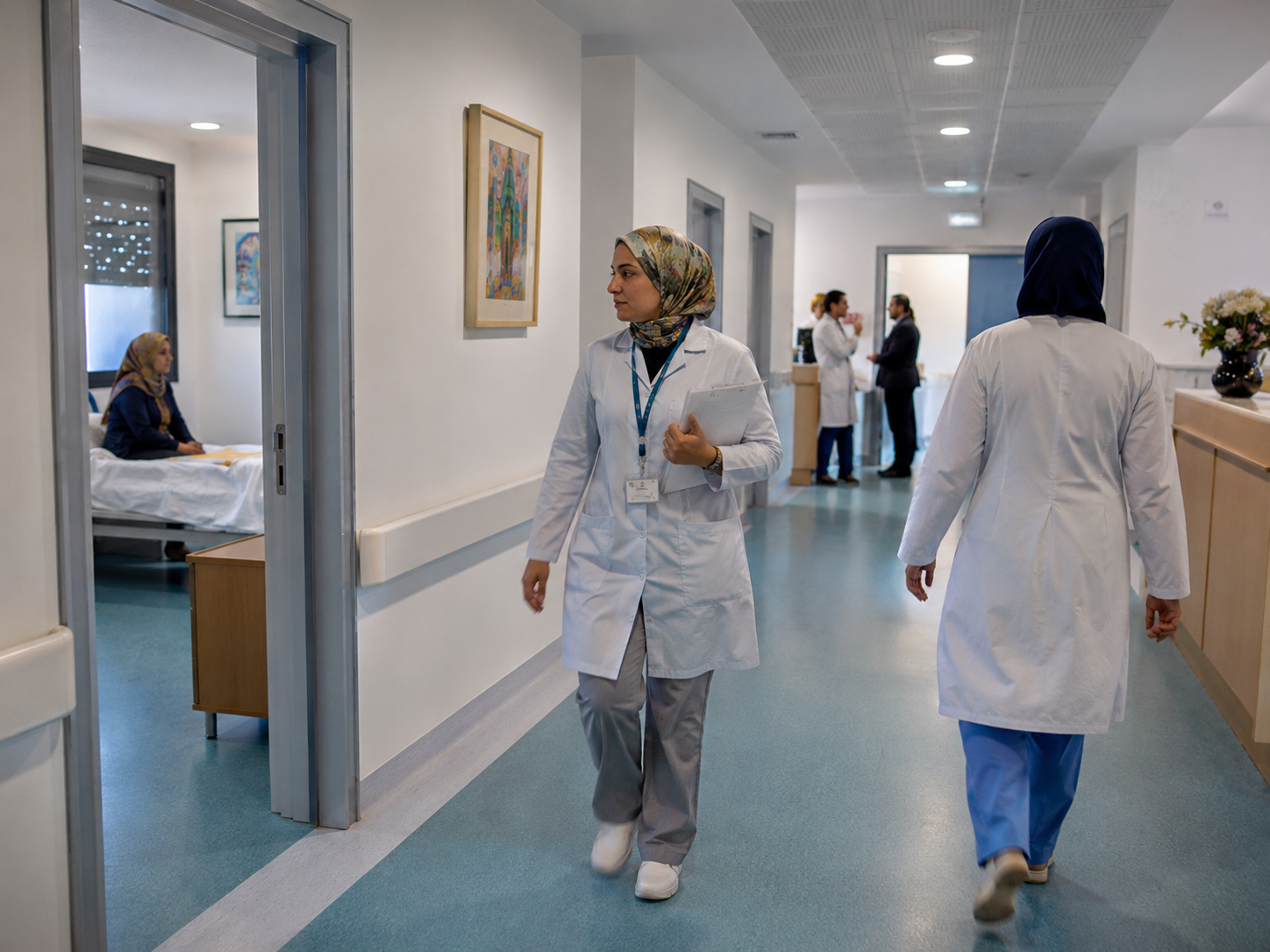
New walls and beds create capacity. Qualified people turn that capacity into care.
Implementation will require psychiatrists, psychologists, psychiatric nurses, social workers and specialists trained to work with children and adolescents. General practitioners and primary-care teams must also know when further assessment or referral may be appropriate.
The connections between services are equally important. Someone may need to move from a local consultation to specialist care, receive hospital treatment and then continue with follow-up or rehabilitation closer to home.
Medication availability, affordable treatment, clear referral routes, confidentiality and public trust will all influence whether people seek and remain in care.
The planned legal framework for the psychology profession could help families identify properly qualified providers. Its final rules, oversight and enforcement will determine how useful that protection becomes.
CHILDREN AND YOUNG PEOPLE ARE CENTRAL TO THE PLAN
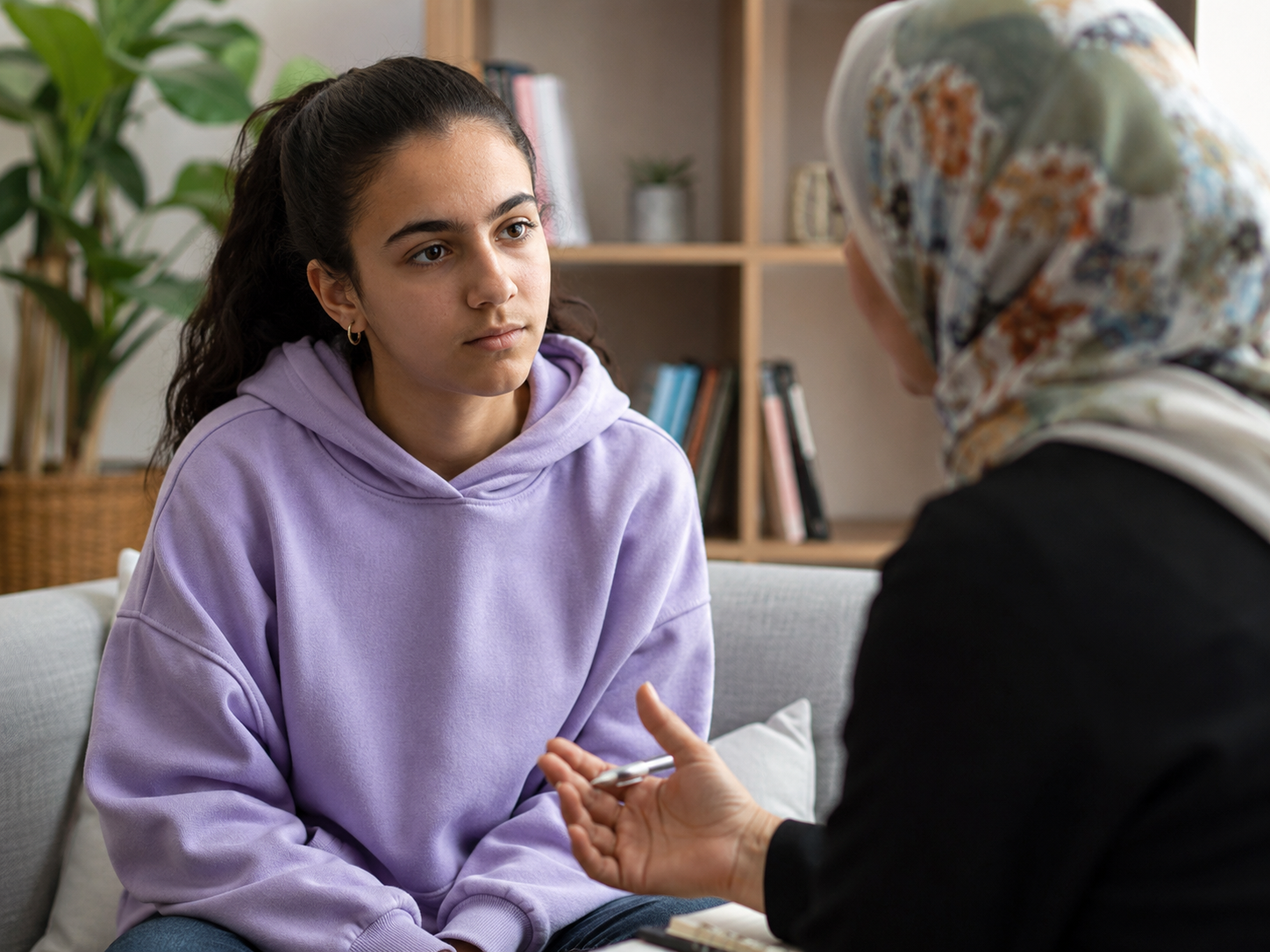
The reported estimate of two million affected children and young people puts younger Moroccans at the centre of the strategy, even though the published launch material did not define the age range or methodology behind that figure.
Timely, appropriate support can help protect school attendance, family relationships, social development and long-term wellbeing. It may also help prevent some difficulties from escalating and improve responses to substance-use risks or an emerging emergency.
But sadness, examination pressure, family stress or difficult behaviour does not automatically mean a child has a psychiatric disorder.
Parents should not be expected to diagnose their children. Schools, families and primary healthcare services can notice concerns and help a young person reach professional assessment. Only a qualified healthcare professional can evaluate an individual and determine what support, if any, may be appropriate.
WHAT CARE CLOSER TO HOME COULD MEAN
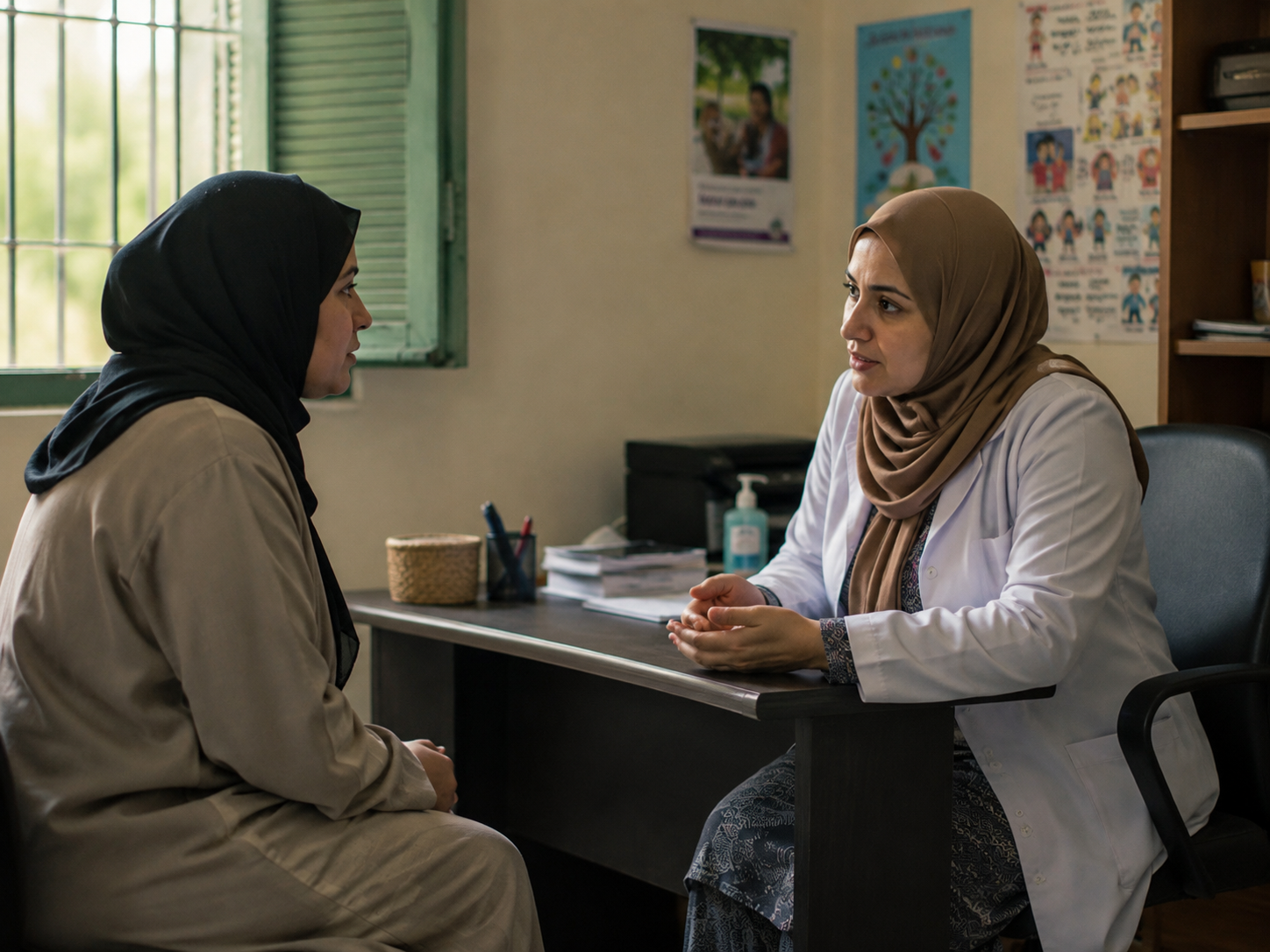
Community-based care means creating more ways to obtain support outside a dedicated psychiatric hospital.
The plan proposes a stronger role for primary healthcare, better links with hospitals and specialists, and expanded outpatient, community and psychosocial rehabilitation services.
Intermediate structures are intended to help bridge the space between local healthcare and hospital-based psychiatry. Depending on how the plan is implemented, they could support assessment, rehabilitation, continued care after hospital treatment and services that do not require full admission.
This could reduce unnecessary travel, missed work and disruption for families. It could also make follow-up more realistic for people who live far from Rabat, Casablanca or another large urban centre.
A national increase in capacity, however, does not guarantee equal access. A service matters only when it is open, appropriately equipped, properly staffed and connected to a functioning referral system.
HOW FAMILIES CAN SEEK HELP SAFELY
Families seeking mental health support in Morocco should begin with a qualified healthcare professional or an official healthcare centre. They can ask where the nearest recognised mental-health service is located and whether a referral is required.
The credentials of any psychiatrist, psychologist or other provider should be checked, particularly when services are promoted online.
Social media may encourage useful conversations, but it cannot safely replace an individual assessment. Online content should not be treated as a diagnosis or a source of personalised medication advice.
Prescribed medication should not be shared. A person should not stop or change prescribed treatment without consulting an appropriately qualified professional.
Anyone facing an immediate risk of harm should use Morocco’s officially designated emergency services or go to the nearest appropriate emergency department. MTD is not publishing a dedicated mental-health hotline because no nationwide service could be independently confirmed as officially designated and operational at the time of checking.
This article provides general information and does not replace advice from a qualified healthcare professional. Anyone facing an immediate risk of harm should contact the officially designated emergency services.
FIVE THINGS FAMILIES SHOULD KNOW
The plan sets targets for 2030.
Most planned facilities are not available yet.
A diagnosis requires a qualified professional.
Use official emergency services when there is immediate danger.
Check the credentials of every care provider.
HOW MOROCCO CAN PROVE PROGRESS BY 2030
The plan is a major commitment. Clear annual reporting can show whether it is becoming real care.
Is the announced funding being allocated and spent? How many facilities have opened? Where are the additional beds? How many qualified professionals have been recruited and retained?
Morocco can also report whether waiting times are falling, whether more children and young people receive appropriate care and whether community services are functioning outside major cities.
Treatment continuity, patient privacy, medicine availability and public confidence should be measured alongside construction and recruitment.
Transparent regional figures would not undermine the reform. They would strengthen it by allowing families, healthcare professionals and policymakers to see where implementation is succeeding and where more work is required.
A PLAN THAT MUST BE FELT BEYOND RABAT
Morocco’s Mental Health Plan 2030 makes an important national commitment: mental health should become an accessible and ordinary part of healthcare, not a subject families must navigate alone.
Nearly MAD 4 billion, more hospitals, additional beds and a much larger public psychology workforce could transform the system’s capacity.
But the plan’s defining achievement will not be found in an announcement, a budget line or a national total.
It will come when someone asks for help and finds a qualified professional within reach, a clear route into appropriate care and support that continues for as long as it is needed.
 Jamal Mahdad, Founder & Editor-in-Chief