
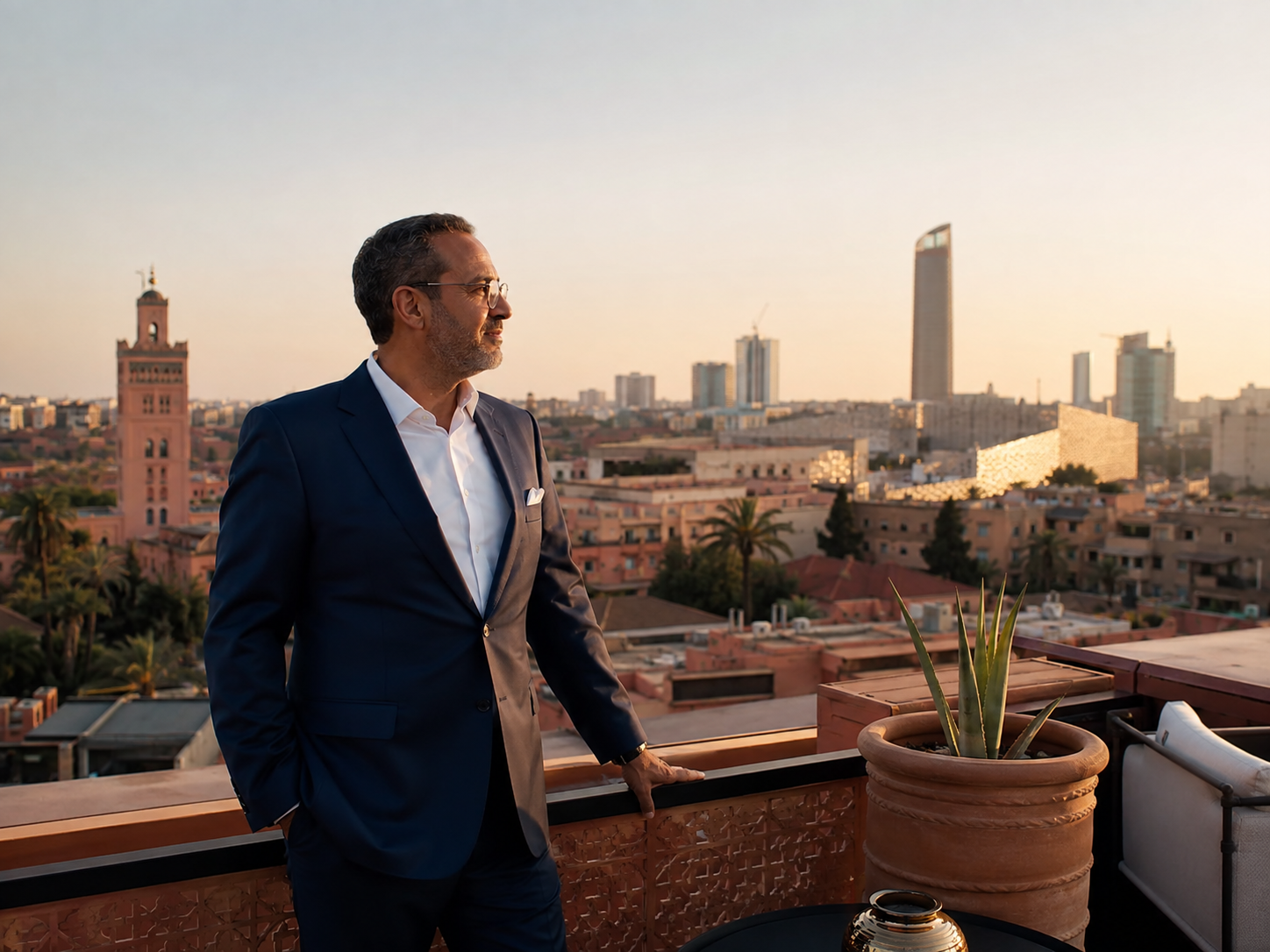
Morocco now ranks third in Africa for resident millionaires, but the report excludes homes, family businesses, private equity and other assets that cannot be sold quickly.
Morocco is now home to an estimated 8,300 resident millionaires.
That places the country third in Africa, ahead of Nigeria and behind only South Africa and Egypt, according to the newly published Africa Wealth Report 2026.
But “millionaire” does not mean someone with a million-dollar home. Nor does it mean 8,300 people have at least USD 1 million sitting in ordinary bank accounts.
The calculation excludes property, family businesses and private-equity holdings. To understand what Morocco’s new ranking really reveals, you first need to understand what this report calls wealth.
MOROCCO’S MILLIONAIRE COUNT AT A GLANCE
Estimated resident millionaires: 8,300
Africa ranking: Third
Reporting date: 30 June 2026
Wealth threshold: At least USD 1 million in liquid wealth
Included assets: Equities, ETFs, cash, bonds, gold and cryptocurrency holdings
Excluded assets: Property, family businesses and private equity
Rounding method: Nearest 100
Report publisher: New World Wealth
Publication format: Online report with data tables, highlights and methodology
Data status: Modelled estimate, not an official census
Last verified: 4 September 2026
MOROCCO NOW RANKS THIRD IN AFRICA
New World Wealth estimates that Morocco had 8,300 high-net-worth individuals in residence on 30 June 2026.
The report’s five largest African wealth markets are:
| Africa ranking | Country | Estimated resident millionaires |
|---|---|---|
| 1 | South Africa | 48,200 |
| 2 | Egypt | 15,100 |
| 3 | Morocco | 8,300 |
| 4 | Nigeria | 8,100 |
| 5 | Kenya | 6,500 |
All five figures come from the same 2026 reporting cycle. They use the same USD 1 million liquid-wealth threshold, refer to residents and are rounded to the nearest 100.
Morocco’s third position is therefore significant, but specific. It is not a ranking of GDP, average salaries, national wealth or general living standards.
The previous Africa Wealth Report estimated 7,500 resident millionaires in Morocco in 2025. Although both editions use residence, liquid investable wealth and a US-dollar threshold, the difference must not be treated as proof that exactly 800 people became millionaires.
The reports provide two rounded model estimates, not a roll call showing which individuals entered or left the group.
A MILLION-DOLLAR HOME DOES NOT PUT YOU ON THIS LIST
For this report, a millionaire is a person with at least USD 1 million in liquid wealth.
Liquid wealth means financial assets that can be converted into money relatively quickly. It is broader than cash but narrower than total net worth.
A person could cross the threshold through a combination of listed shares, exchange-traded funds, cash, bonds, gold and cryptocurrency holdings. Nobody needs to keep the entire amount in a bank account.
Homes and other property are excluded. So are family businesses and private-equity holdings.
Imagine a resident who owns a home worth USD 1.2 million and a valuable family company but holds only USD 300,000 in qualifying liquid assets. That person could be wealthy by an everyday measure while remaining outside this particular millionaire count.
Another resident might rent a home but own more than USD 1 million across listed shares, bonds, cash and gold. That person could qualify.
These are hypothetical examples, but they show why the report’s headline number can be easily misunderstood.
WHAT COUNTS TOWARDS USD 1 MILLION?
| COUNTS AS LIQUID WEALTH | DOES NOT COUNT IN THIS REPORT |
|---|---|
| Cash | Homes |
| Listed equities | Commercial and other property |
| Exchange-traded funds | Family businesses |
| Bonds | Private-equity holdings |
| Gold | Other illiquid property assets |
| Cryptocurrency holdings |
RESIDENT DOES NOT NECESSARILY MEAN MOROCCAN
The most important word in the estimate may be “resident”.
New World Wealth is estimating how many qualifying wealthy individuals live in Morocco. It is not counting people exclusively by nationality, citizenship or birthplace.
The 8,300 may therefore include Moroccan citizens alongside foreign entrepreneurs, executives, professionals, investors and retirees who reside in the country.
The reverse also matters. A Moroccan citizen permanently living in France, Spain, the United Arab Emirates or elsewhere may be counted in that country of residence rather than Morocco.
That is why “Morocco was home to an estimated 8,300 resident millionaires” is accurate.
“8,300 Moroccans are millionaires” is not supported by this report.
A citizenship-based ranking would measure something different, particularly for Morocco, with its large international diaspora.
FIVE THINGS THE 8,300 FIGURE DOES NOT MEAN
It is not an exact government count.
It does not mean USD 1 million in cash.
It does not include the value of homes.
It does not refer only to Moroccan citizens.
It does not show that every household became wealthier.
THE 8,300 FIGURE IS AN ESTIMATE, NOT A REGISTER
No investigator opened 8,300 bank accounts and added up every dirham.
New World Wealth uses a Lorenz curve model, a statistical method that helps estimate how wealth is distributed across different levels of a population.
Its inputs include household-income statistics, local stock-market capitalisation, tax data with a focus on income tiers, family-office numbers, prime-property indicators and information from the company’s own high-net-worth database.
That private database focuses particularly on founders and senior figures at high-value companies, including chairpersons, chief executives, presidents, directors and managing partners. New World Wealth says it does not disclose their names.
Prime-property figures are used as a checking indicator, even though the value of property is excluded from the final liquid-wealth definition.
The result is a modelled estimate. It is not a Moroccan census, tax register or published list of bank balances.
The figure is rounded to the nearest 100, so the real total may be higher or lower. Data quality can also vary between countries.
Exchange rates matter too. Because the threshold is expressed in US dollars, currency movements can push an individual above or below USD 1 million without an equivalent change in the value of their assets when measured in local currency.
That does not make the figure meaningless. It makes it a directional indicator that should be read with its definition attached.
WHY MARRAKECH HAS BECOME A WEALTH MAGNET
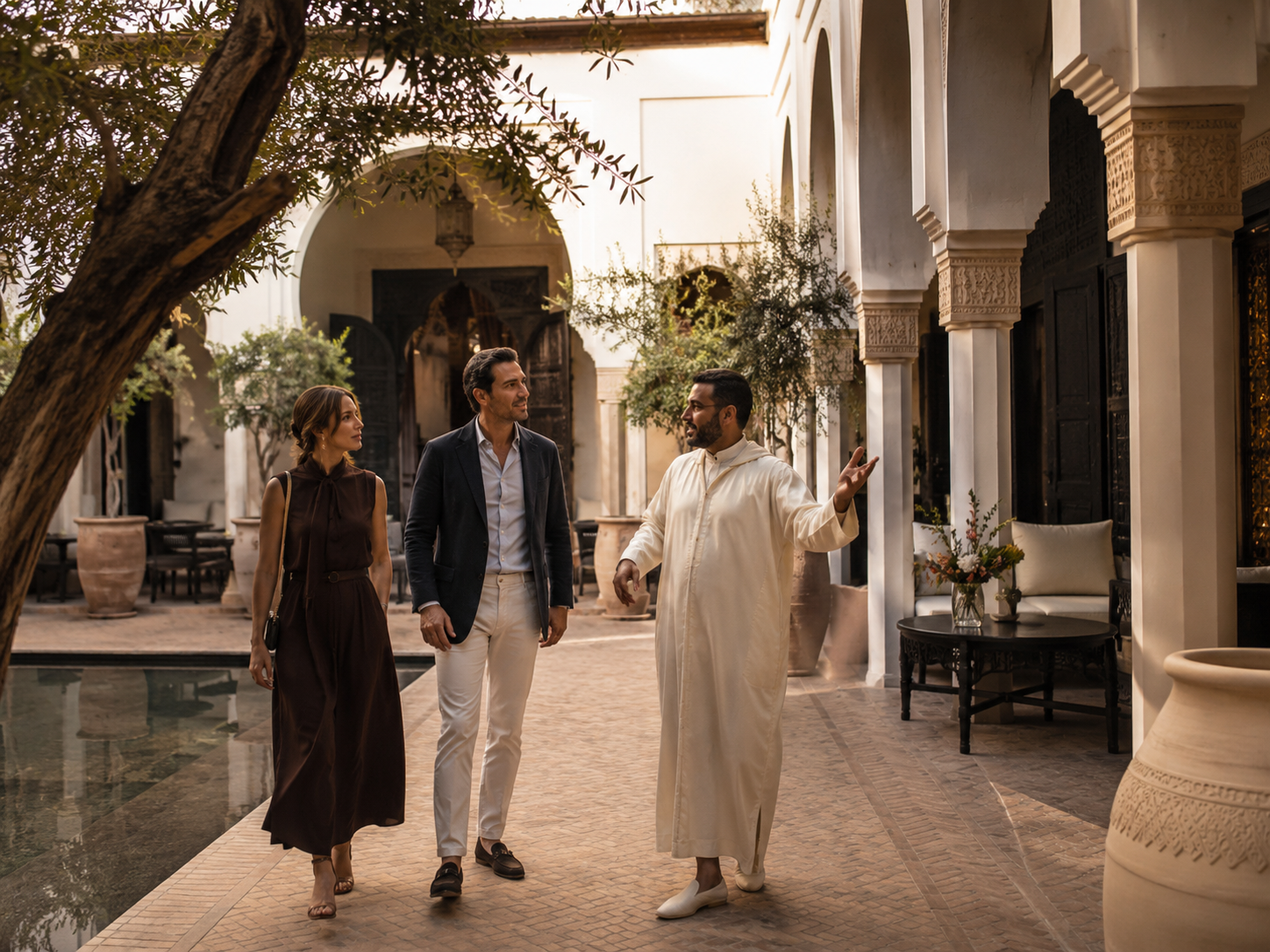
The 2026 report says Marrakech recorded 82% wealth growth over the past decade, making it one of Africa’s fastest-growing wealth hotspots.
The precise wording matters.
New World Wealth describes this as growth in the city’s wealth under its methodology. It should not be rewritten as an 82% increase in property prices, population, GDP or household income. Nor should it automatically be presented as an 82% rise in the number of millionaires.
The report identifies Marrakech as an increasingly popular retirement destination for high-net-worth residents from Europe and the Middle East. It also points to the city’s architecture and its established position as an international luxury-tourism centre.
Hospitality investment, premium residential demand, air connectivity and Morocco’s proximity to Europe may all help explain the city’s appeal to internationally mobile residents.
Those factors provide context, not proof of a single cause. The 82% remains a model-based measure of private wealth growth.
WHY TANGIER COULD BE ONE OF THE NEXT HOTSPOTS
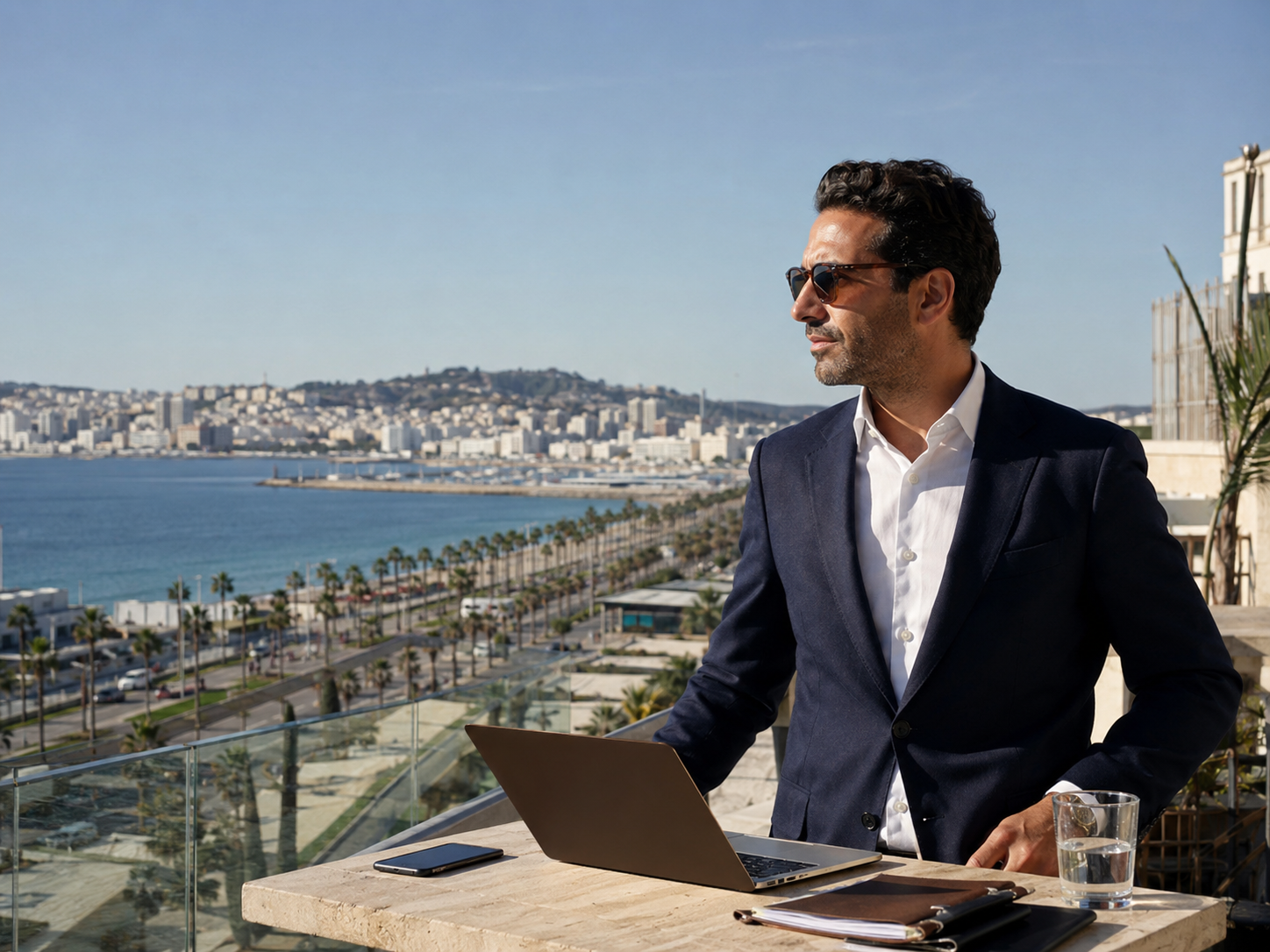
Tangier appears in New World Wealth’s list of lifestyle destinations where strong future millionaire growth is expected.
Its case combines lifestyle with economic infrastructure.
Tangier sits at the meeting point of Europe and Africa, with maritime connections across the Strait of Gibraltar, improving air access and a growing modern urban landscape.
The wider region is also connected to Tanger Med’s port, logistics and industrial platforms. Tanger Med says its economic activity zones host more than 1,500 companies across industries including automotive manufacturing, aeronautics, textiles, agribusiness and logistics.
That combination can appeal to founders, senior executives, investors and internationally mobile families who want access to business activity alongside a coastal lifestyle.
But this is a forecast, not a promise. Investment conditions, infrastructure, housing, services and international mobility will all influence what happens next.
The main 2026 online report does not publish a separate current millionaire total for Tangier, so no city count should be invented.
WHAT MORE PRIVATE WEALTH COULD MEAN FOR MOROCCO

A larger population of wealthy residents may support more than expensive hotels and premium property.
It can expand demand for private banking, legal services, accounting, investment management and other professional expertise. International residents may also introduce business relationships, capital and market access that benefit Moroccan companies.
Some could invest in local enterprises, support cultural projects, buy Moroccan art, fund charitable work or create new hospitality and property demand.
The important word is “could”.
The report does not show how every wealthy resident uses their money. It cannot prove that all 8,300 invest locally, create jobs, support entrepreneurs or make the same contribution to tax revenues.
The economic value depends on what the capital does after it arrives or is created.
WEALTH GROWTH IS NOT THE SAME AS SHARED PROSPERITY
A rising millionaire population does not mean every Moroccan household has become wealthier.
Private wealth can grow at the top while other families continue facing pressure from housing costs, food prices or limited access to secure, well-paid work.
Employment, median income, poverty, productivity and GDP per person answer different questions about Morocco’s development. A millionaire estimate cannot replace them.
Yet the growth of investable private wealth still matters.
Capital can finance companies, encourage entrepreneurship and connect Morocco more deeply to international markets. The wider challenge is turning more of that capital into productive investment and opportunities that reach beyond the wealthiest residents.
Attracting wealth is one achievement. Making it work for a broader economy is the greater prize.
THE NUMBER MATTERS, BUT THE DEFINITION MATTERS MORE
Morocco’s estimated 8,300 resident millionaires show that the country has become one of Africa’s largest centres of liquid private wealth.
They also highlight the growing international appeal of places such as Marrakech and Tangier.
But 8,300 is a rounded model, not an official register. It counts residents rather than citizens and liquid financial assets rather than everything people own.
The number tells us that serious private wealth is present in Morocco.
What happens to that wealth next will tell us far more.