

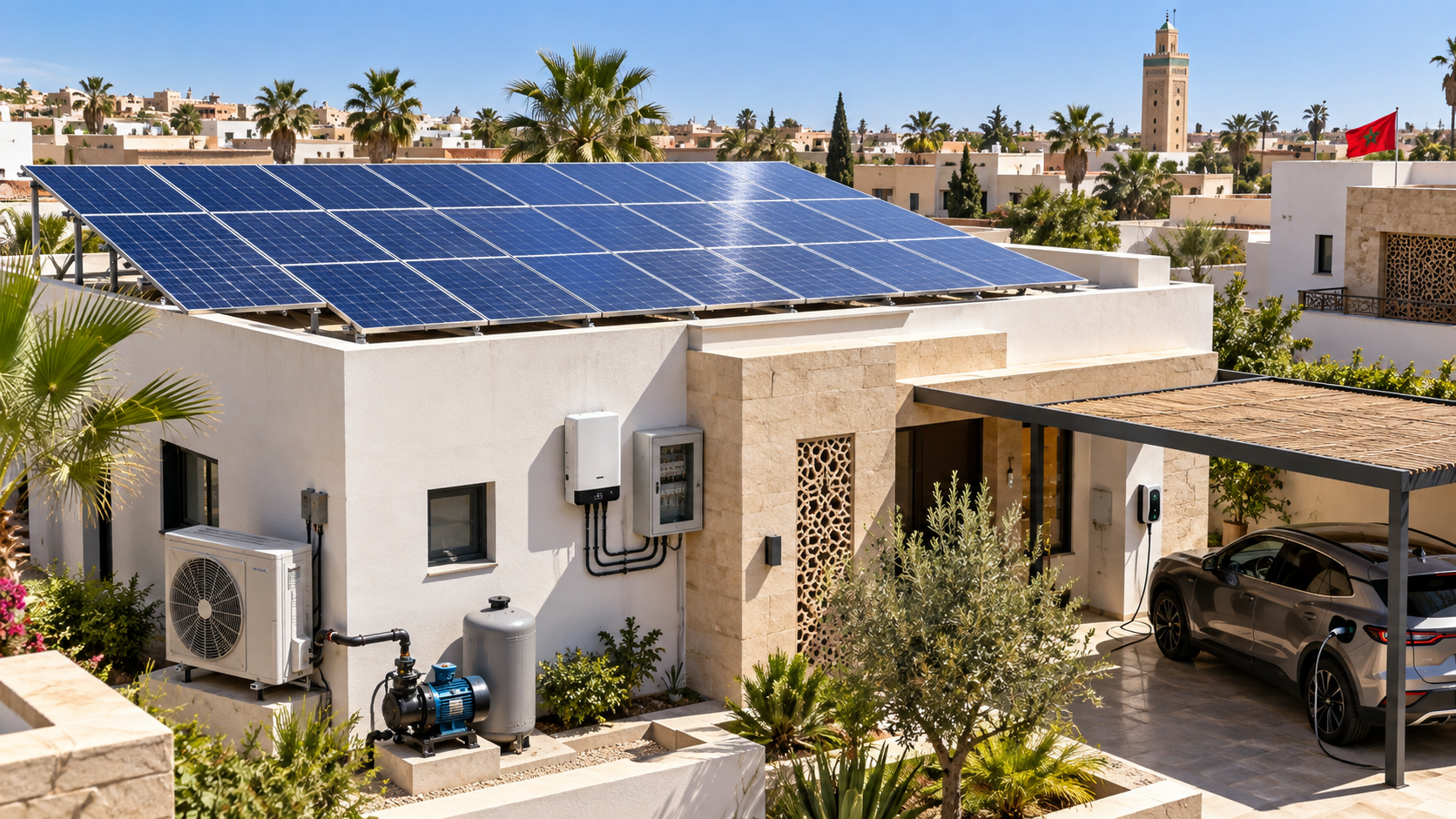
Solar panels can reduce electricity bills in Morocco. But an MTD price check found that equipment packages can already cost tens of thousands of dirhams — before every household has established how much it could actually save.
Morocco has no shortage of sunshine.
That does not mean every rooftop-solar installation will produce a fast financial return.
The decisive question is not simply how much electricity the panels can generate. It is how much of that electricity the household can use while it is being generated.
A family that runs air conditioning, appliances, pumps or an electric-vehicle charger during daylight hours may use a substantial share of its solar power immediately.
A home that remains empty until the evening may use far less.
That difference can add years to the time needed to recover the cost.
WHAT MTD FOUND FOR SALE
MTD checked publicly advertised prices from Moroccan solar-equipment sellers on September 14, 2026.
The listings included:
An autonomous 5kW package with 12kWh of advertised storage priced at 36,000 dirhams
A complete single-phase 5kW hybrid package priced at 58,800 dirhams
A 6.5kW hybrid package advertised at a promotional price of 40,350 dirhams, reduced from 58,000 dirhams
Individual lithium batteries of approximately 5.1kWh advertised at around 13,000 to 13,900 dirhams
Larger lithium batteries advertised at more than 30,000 dirhams
These online prices are snapshots and can change.
More importantly, they are not direct like-for-like quotations. The packages have different panel capacities, inverters, storage levels and included components.
An advertised kit price may also exclude installation, roof preparation, transport, administrative work, monitoring, maintenance or upgrades to the property’s electrical system.
The price that matters is the complete amount required to produce a safe, connected and operational installation.
THE REAL SOLAR TEST
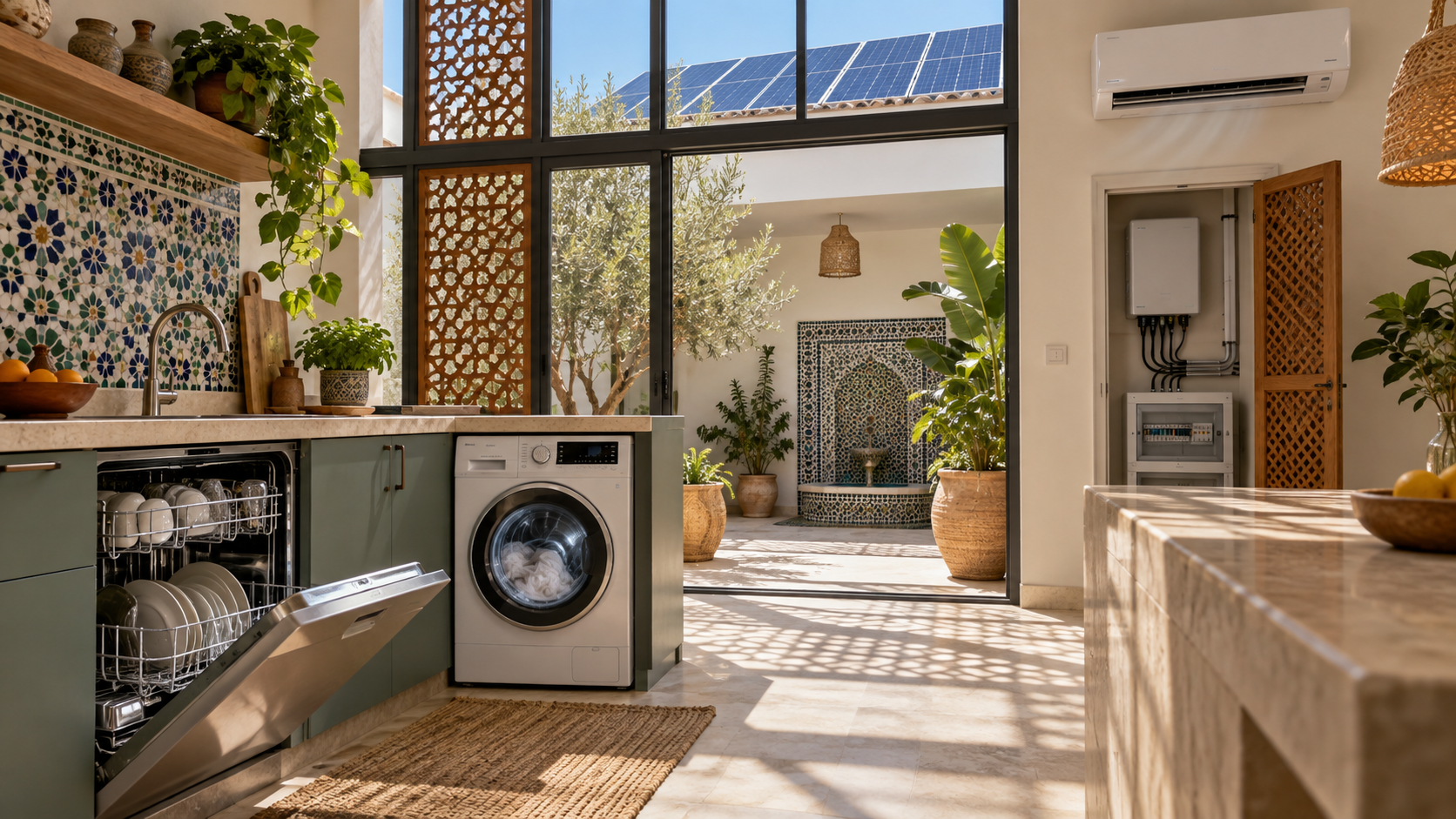
Before requesting quotations, households should collect their last 12 electricity bills.
They then need to establish how much electricity is consumed during daylight hours and how much is used after sunset.
This matters because power consumed directly from the panels can replace electricity that would otherwise have been purchased from the network.
Electricity generated when the household does not need it may have less immediate value, particularly if the installation has no battery.
An installer should therefore provide three separate figures:
The system’s estimated annual production
The amount the household is expected to consume directly
The annual saving calculated using the household’s applicable electricity tariff
A production forecast alone is not a savings forecast.
HOW TO CALCULATE THE PAYBACK PERIOD
The basic calculation is straightforward:
Total installed cost divided by expected annual net savings equals the estimated payback period.
Consider a purely illustrative system costing 45,000 dirhams.
If it produces net savings of 4,500 dirhams a year, the simple payback period would be ten years.
If the same investment saves only 2,500 dirhams a year, recovering the cost would take approximately 18 years.
Those examples are not predictions for a particular home. They show why the annual savings figure matters as much as the purchase price.
The calculation should also account for maintenance, financing costs and any components that may need replacement during the life of the system.
If a seller promises a four or five-year return, the customer should ask to see every assumption behind that claim in writing.
A BATTERY CAN HELP — BUT IT IS NOT FREE POWER
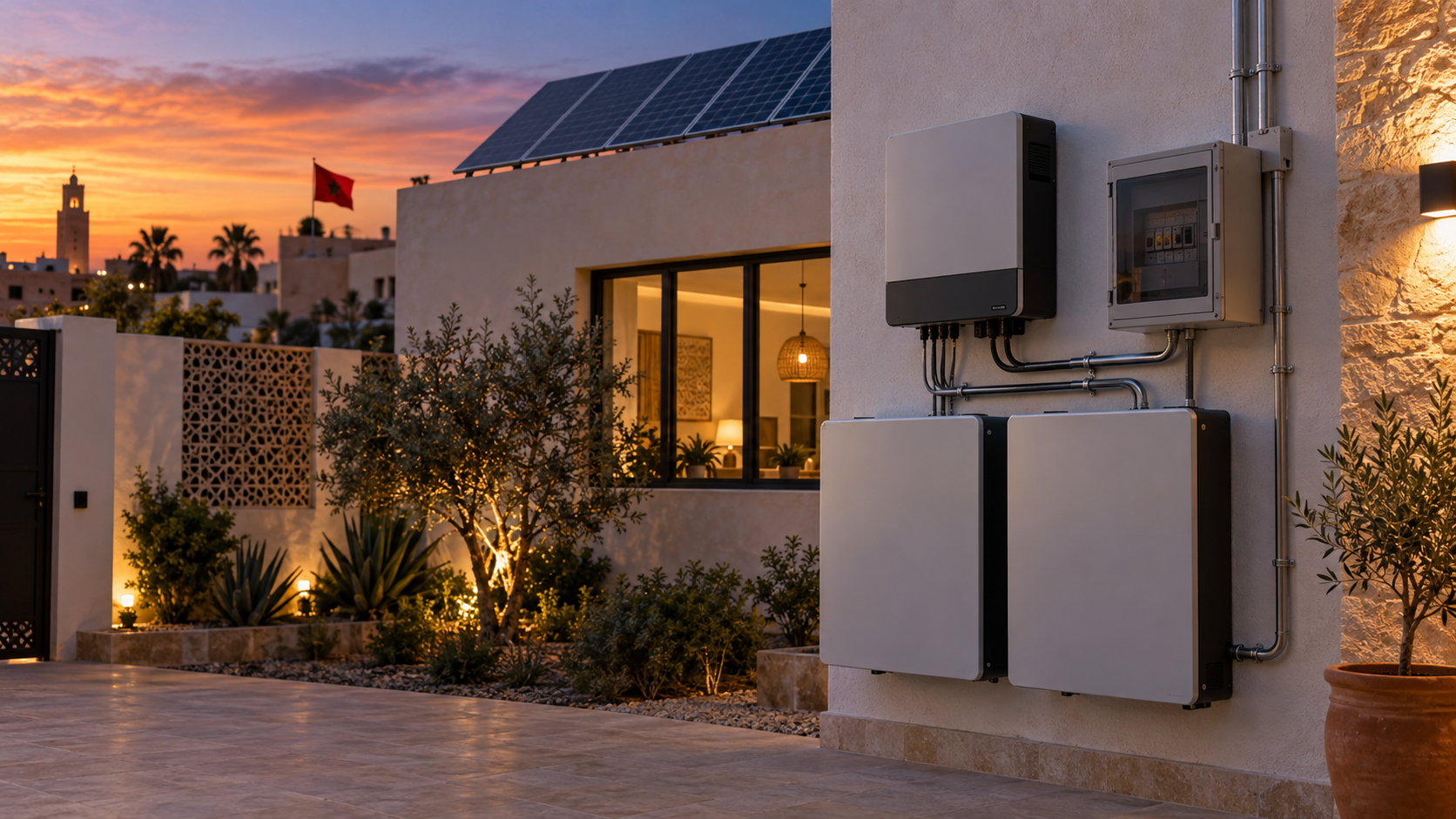
A battery stores solar electricity for later use.
It can be useful for households with high evening consumption, properties affected by interruptions or businesses that require backup power.
But storage substantially changes the economics.
The additional cost can improve how much solar energy the owner uses while simultaneously extending the time required to recover the investment.
Battery capacity also needs to be understood properly.
A buyer should ask:
How much energy can the battery actually make available?
How many charging cycles is it designed to deliver?
What happens to its capacity over time?
How long is the warranty?
How much could replacement cost?
A battery should solve a genuine consumption or reliability problem. It should not be added simply because it makes the system sound more advanced.
DO NOT COMPARE PACKAGES BY “KW” ALONE
Two systems carrying a similar power label can be very different.
The advertised figure may describe the inverter’s maximum output rather than the total capacity of the installed panels. Storage capacity is measured separately, while the number, quality and positioning of panels will affect production.
Shade, roof direction, dust, temperature and cabling losses can also influence real performance.
Customers comparing quotations should request a complete equipment list covering:
The number and rated capacity of the panels
The inverter brand and capacity
Battery capacity, where included
Electrical-protection equipment
Mounting structures and cabling
Installation and commissioning
Monitoring and after-sales support
Product and workmanship warranties
Only then can two prices be compared properly.
MOROCCO’S NEW RULES MUST BE FOLLOWED
Morocco’s implementing framework for electricity self-production became operational in June 2026 under Law 82-21.
Installations below 11kW that are connected, or intended to be connected, to the low-voltage public network fall under a prior-declaration regime.
The declaration must be submitted to the relevant distribution-network operator. The required connection agreement and technical procedures must be completed before a system is connected to the public network.
Owners of earlier installations should also determine whether transitional regularisation requirements apply to them.
A qualified installer should explain who is responsible for each administrative and technical step.
These procedures are not merely paperwork. Proper protections are essential to safeguard the property, the equipment and the electricity network.
EIGHT QUESTIONS TO ASK BEFORE PAYING
Before signing a contract or paying a deposit, ask:
Is this the complete installed price?
Which costs are excluded?
How much electricity will the system produce annually?
How much will I use directly?
What annual saving is expected and how was it calculated?
Who handles the declaration and connection procedure?
What is covered by each warranty?
When might the inverter or battery need replacing?
The answers should appear in the written quotation or contract.
A verbal promise is difficult to verify later.
SO, IS ROOFTOP SOLAR WORTH IT?
For the right property, it can be.
A properly designed system may reduce electricity bills for many years. Morocco’s solar conditions and clearer regulatory framework make the option increasingly attractive.
But the best installation is not necessarily the largest or most expensive one.
It is the system that matches the property’s real consumption, comes with clear protections and warranties, and produces savings that can be demonstrated before the customer pays.
Morocco has the sunshine.
Households still need to do the maths.