

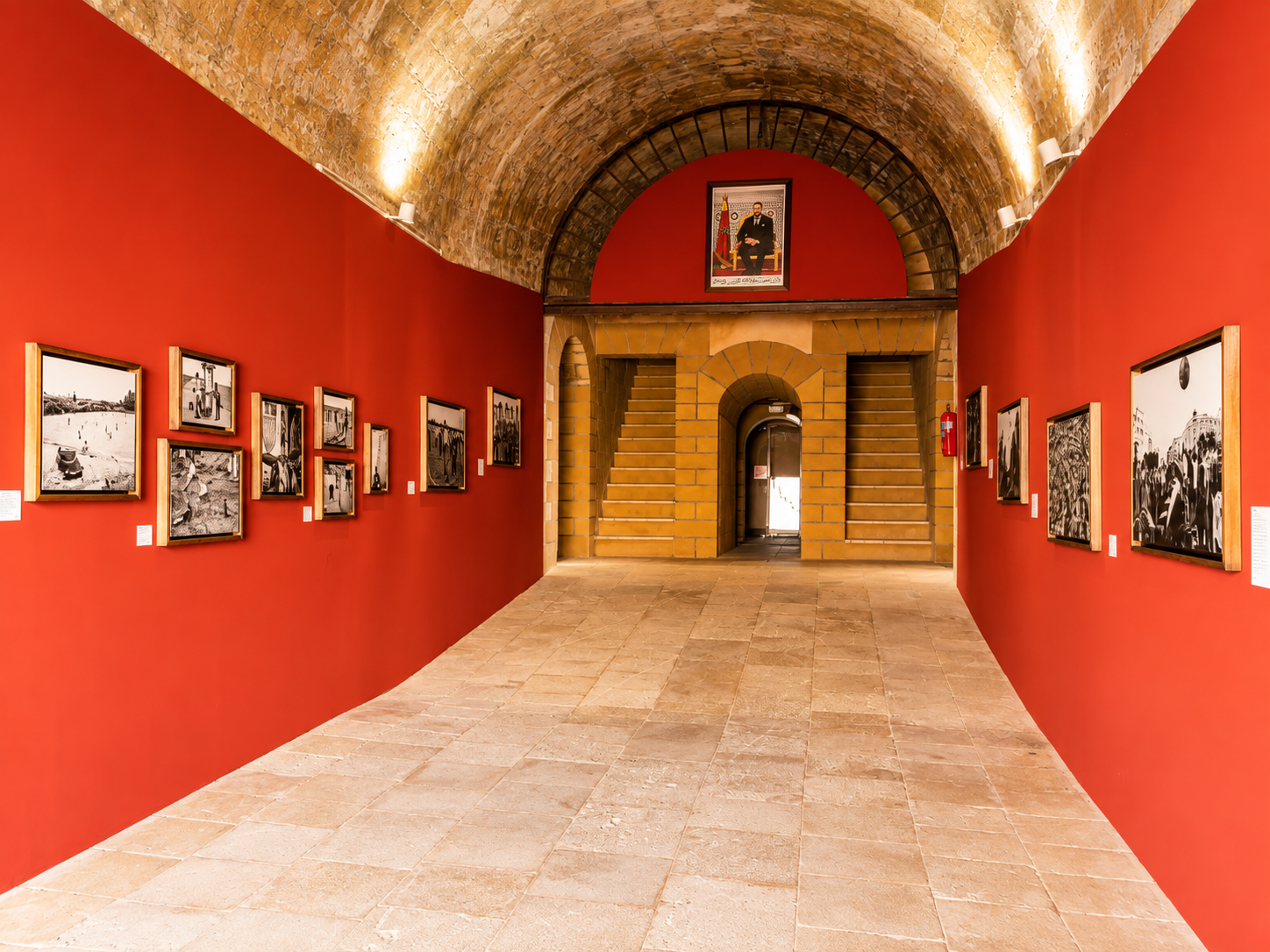
A photography museum in a former fort, art workshops and an Atlantic promenade help explain the appeal of a residential district whose cultural life extends well beyond its new international ranking.
Rabat’s L’Océan placed second in Time Out’s 2026 list of the world’s coolest neighbourhoods, announced on 15 September. Jongno 3-ga in Seoul took first place.
Time Out highlighted the relationship between the district’s residential streets and its Atlantic waterfront: independent cafés and cultural spaces among homes, with a promenade and sports pitches along the coast. Its assessment also singled out street art and the pedestrianised Rue de Bruxelles.
The list is an editorial selection. Time Out’s local editors and experts nominated neighbourhoods, then an editorial panel assessed them for food and drink, nightlife, culture, distinctive businesses, liveability and community.
Between the medina and the sea
L’Océan lies west of Rabat’s medina, outside the old city’s walls, with the Atlantic along its coastal edge. The medina is a neighbouring district; the wider seafront continues beyond L’Océan.
Its urban history reaches back more than a century. The Rabat-Salé Urban Agency traces the development of L’Océan and neighbouring Akkari to the major planning initiatives of the 1920s.
Time Out describes the promenade as a local meeting place, with low-rise apartment buildings and small businesses shaping life in the streets behind it. The coast is part of the district’s everyday public space.
Rue de Bruxelles offers a pedestrian setting for cafés and cultural venues. The waterfront is still changing, however: Time Out’s September account describes renovation work underway along the coastal strip.
Moroccan photography inside a coastal fort
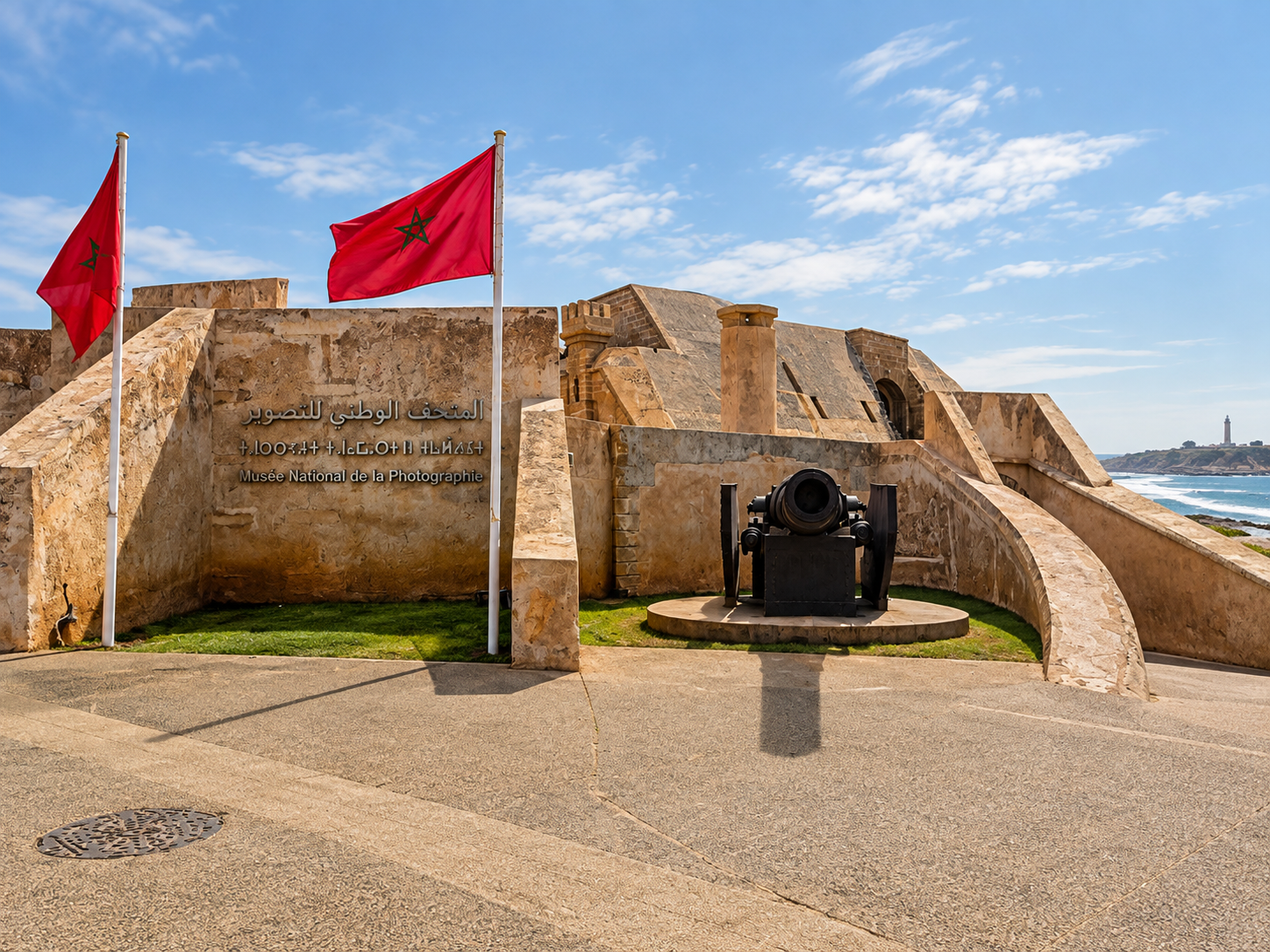
The National Museum of Photography stands on L’Océan’s seafront in Fort Rottembourg, also known as Borj El Kebir, between Rabat’s lighthouse and the former military hospital.
Construction began in 1888. The building’s original purpose was coastal defence, but its architecture rewards a closer look: the regional heritage body describes a plan influenced by German fortifications and a façade whose arches draw on Moroccan medieval architecture.
Following restoration, the fort became a museum dedicated to photography, inaugurated on 14 January 2020. Its opening exhibition, Sourtna, presented emerging photographers selected by Yassine Alaoui Ismaili, known as Yoriyas.
The Fondation Nationale des Musées identifies support for young Moroccan photographers as a central mission, alongside widening access to art and culture, particularly in surrounding neighbourhoods.
For visitors, the museum brings two aspects of Rabat together in one building: the history of its Atlantic defences and the work of contemporary Moroccan image-makers.
Books and workshops beyond the museum
Agha Space, on Avenue Abdelkrim Al Khattabi, organises art workshops. Its visitors this year have included participants in the Université Internationale de Rabat’s Sahel Summer School. The venue advertises individual sessions through its own channels.
On Avenue de la Résistance, Le 17 Océan combines books and gifts. Rabat-based Éditions Le Sélénite lists the shop at number 17 among its stockists, linking the neighbourhood to a publishing project that supports writers outside traditional publishing channels.
The publisher established itself in Rabat in 2020 and expanded into new languages and voices, publishing early work by Safaa Amrani and Ahmed El Falah in 2023.
Artist Cherine Amar also lists Le 17 Océan as a stockist for Résistances, her collection combining poetry and photography. The 36-page volume is printed on recycled paper: a small example of the overlap between books and visual art that can extend a museum visit.
How to explore L’Océan
For a first visit, pair the photography museum with the streets around Rue de Bruxelles and Avenue de la Résistance. This brings the coastal setting and the neighbourhood’s smaller cultural addresses into the same outing.
The museum’s official address is Fort Rottembourg, 61 Avenue Mokhtar Jazoulite. The foundation currently lists opening hours of 10am to 6pm, with closure on Tuesdays, and standard adult admission at MAD 20.
Check the current exhibition programme before travelling, and confirm workshop availability or a particular book directly with the venue.
At the museum, allow time for the building itself. Its arched façade is part of the encounter: nineteenth-century coastal architecture now housing a space for Moroccan photography.