


Thailand’s revised entry rules remove Morocco from every new general exemption category. Ordinary Moroccan passport holders entering from September 15 must obtain the appropriate visa before travelling.
Already booked Thailand for later this month? Check your arrival date and passport now.
Ordinary Moroccan passport holders entering Thailand from 15 September 2026 will need a visa after Morocco was left off the country’s revised visa-exemption lists.
Thailand’s previous 60-day visa-free arrangement ends on that date. Morocco is absent from the new 30-day exemption list, the separate 15-day category and the revised Visa on Arrival list.
A ticket or hotel booked before 15 September does not preserve the previous entry rules. Travellers should begin with official Thai government websites and complete both the visa and digital arrival procedures required for their journey.
THAILAND VISA CHANGE FOR MOROCCAN TRAVELLERS
Previous rule: Ordinary Moroccan passport holders qualified for visa-free entry for eligible stays of up to 60 days under the arrangement introduced on 15 July 2024.
New rule: Morocco is absent from Thailand’s new 30-day and 15-day exemption lists and its revised Visa on Arrival category. Ordinary Moroccan passport holders must obtain the appropriate visa before travelling.
Royal Gazette publication date: 31 August 2026
Effective date: 15 September 2026
Who is affected: Travellers using ordinary Moroccan passports. Diplomatic and official passports may be covered by separate arrangements.
Which date travellers must check: The date on which they enter or re-enter Thailand.
Official e-Visa website: thaievisa.go.th
Official TDAC website: tdac.immigration.go.th
Official embassy: Royal Thai Embassy in Rabat
Information last checked: 3 September 2026, 8.11pm Morocco time
THE RULE CHANGES ON SEPTEMBER 15
Thailand’s Ministry of Interior published the revised entry arrangements in the Royal Gazette on 31 August 2026.
The Tourism Authority of Thailand subsequently confirmed that the new framework will take effect on 15 September. Thailand’s special 60-day exemption will end on the same date.
Under the replacement system, passport and travel-document holders from 60 countries and territories will qualify for visa-free tourist stays of up to 30 days.
Morocco is not included.
A second exemption allowing stays of up to 15 days covers only Mauritius and Seychelles. The revised Visa on Arrival category applies to Azerbaijan, Belarus and Serbia.
Morocco is absent from all three lists. No separate general exemption for ordinary Moroccan passports appears in the new framework.
The result is clear: travellers using ordinary Moroccan passports must obtain the appropriate visa before seeking entry from 15 September.
This is not a restriction on Moroccan visitors as people. Thailand remains open to travellers who meet its visa and entry conditions.
The final decision on admission always rests with Thai immigration officers at the border.
MOROCCO IS NOT ON THE NEW EXEMPTION LIST
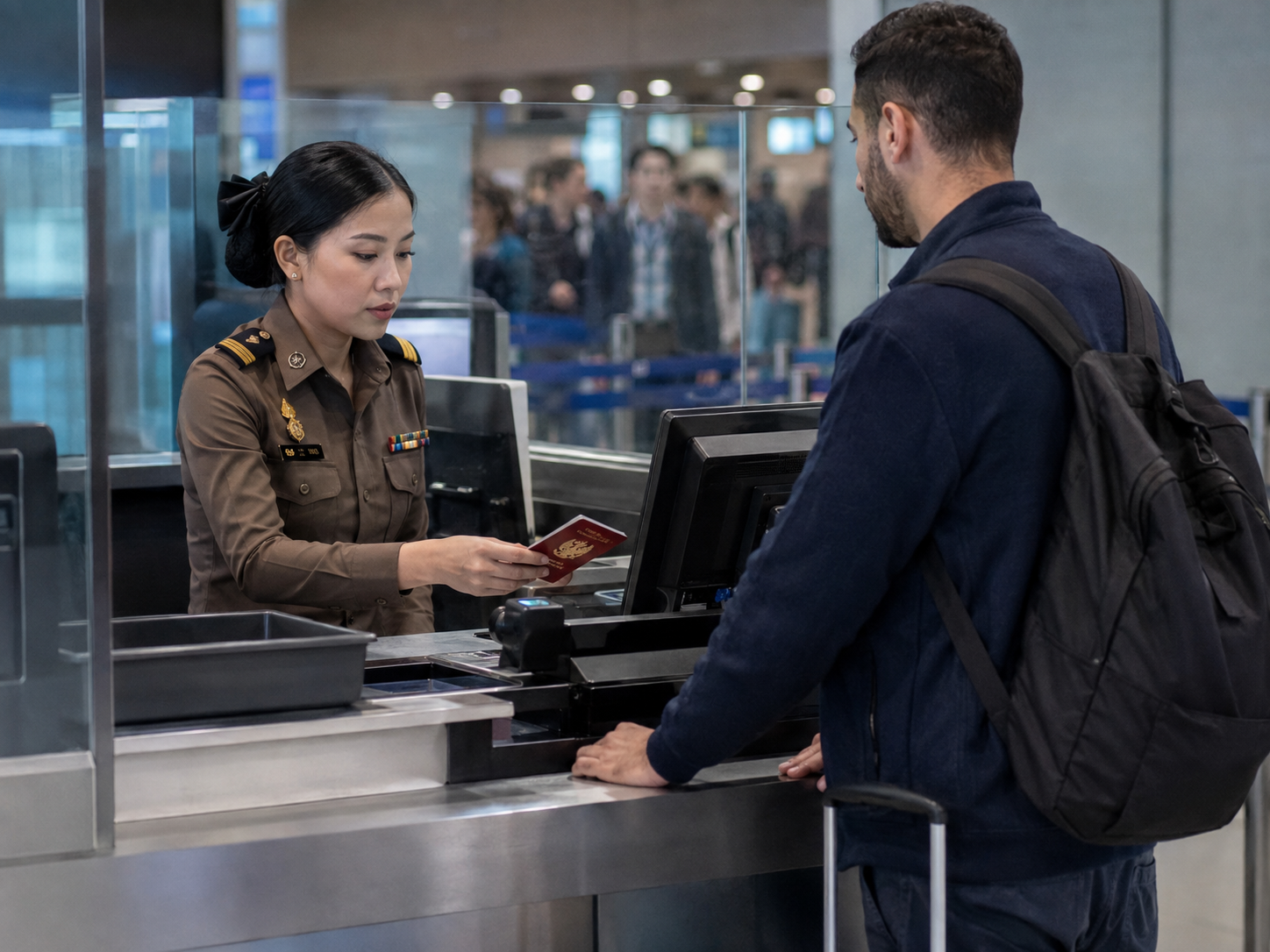
Thailand introduced a broad exemption on 15 July 2024 covering 93 countries and territories. It allowed eligible visitors to stay for up to 60 days for tourism, business engagements and certain urgent or ad hoc work.
The Royal Thai Embassy in Rabat specifically confirmed Morocco’s inclusion in that arrangement.
However, when Morocco Times Daily checked the embassy website on 3 September 2026, the page was still displaying the 2024 announcement. It did not reflect the new Royal Gazette measures taking effect on 15 September.
Travellers must not treat that older page as confirmation that the Moroccan exemption will continue.
The newer Royal Gazette measures and the Tourism Authority’s complete official summary supersede the general 60-day framework described in the embassy’s 2024 article.
The rule follows the passport presented for travel, not simply a person’s residence, birthplace or connection with Morocco.
A Moroccan citizen travelling on another valid passport must check the rules for that passport. Dual nationals should use the same passport consistently for the flight booking, visa application, Thailand Digital Arrival Card and immigration inspection.
Separate rules may apply to diplomatic and official passports. Their holders should seek instructions through the appropriate official channels.
ALREADY BOOKED? YOUR ARRIVAL DATE MATTERS

The crucial question is not when the journey was booked or paid for. It is when the passenger enters Thailand.
A traveller who booked in August but arrives on 15 September must meet the rules in force on 15 September.
The same applies to someone departing Morocco on 14 September but landing in Thailand the following day. Leaving before the change does not create an exemption from requirements applying at the time of entry.
Passengers scheduled to enter by 14 September remain within the period of the existing 60-day arrangement. Because flights can be delayed or rescheduled, anyone arriving close to the changeover should confirm the position with the airline and the Royal Thai Embassy before departure.
The official materials reviewed by MTD do not provide detailed public guidance on every transitional case involving travellers admitted before 15 September.
Anyone already legally in Thailand should follow the authorised departure date recorded by Thai immigration and seek official advice before assuming that the change alters, extends or shortens an existing permission to stay.
Travellers leaving Thailand for Cambodia, Malaysia, Vietnam or another destination must also consider the date of their return. Re-entering Thailand is a new border crossing, so the rules in force on the re-entry date apply.
A purchased ticket does not guarantee boarding or admission. Airlines can refuse to carry passengers who cannot present the documents required for their destination.
Nor does the rule change automatically create a right to a refund. Changes, cancellations and refunds depend on the airline, fare type, hotel, booking platform and travel-insurance conditions.
ALREADY BOOKED? DO THESE FIVE THINGS TODAY
Check the date and local time you land in Thailand.
Confirm the rule for the passport you will present.
Start the appropriate visa application without delay.
Ask your airline whether it requires a pre-departure document check.
Review ticket, hotel and insurance conditions before cancelling anything.
HOW TO USE THE OFFICIAL THAI E-VISA SYSTEM
The Royal Thai Embassy in Rabat directs applicants to Thailand’s official electronic visa platform at www.thaievisa.go.th.
The application route depends on information including nationality, passport type, present location and reason for travel. Applicants must enter those details accurately and select the visa category matching the real purpose of the journey.
For an ordinary holiday:
Check the rule for the passport you will use.
Go directly to thaievisa.go.th.
Create an account and select the correct current location.
Choose the appropriate tourist-visa category.
Upload the documents requested by the official system.
Pay only through the authorised application process.
Monitor the application through your official account.
Save the approval and follow the instructions about carrying a digital or printed copy.
The embassy’s current public visa page lists passport information, photographs, flight reservations, accommodation evidence and financial evidence among the documents used for tourist applications. Applicants should nevertheless follow the checklist generated for their specific online application because requirements can change or vary by category.
MTD is not stating a guaranteed processing period. Submission does not guarantee approval by a particular date, and a visa does not guarantee admission at the border.
Be careful with websites that imitate government services or promise unusually fast approval. The official e-Visa address ends exactly in thaievisa.go.th.
A THAI VISA AND THE TDAC ARE DIFFERENT
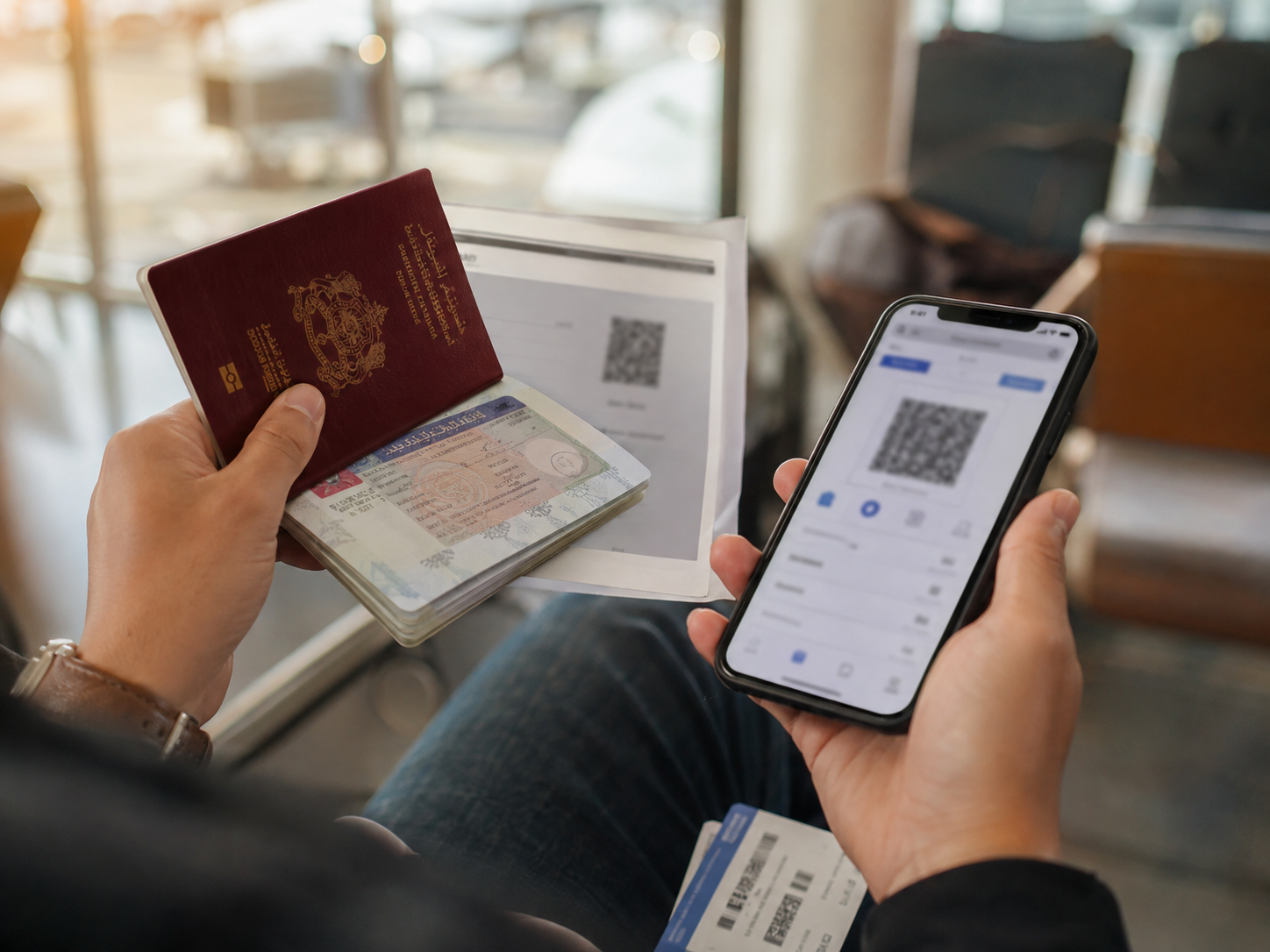
A Thai visa and the Thailand Digital Arrival Card serve separate purposes.
A visa is advance permission that allows a traveller to make the journey and request entry for an approved purpose.
The TDAC is an electronic arrival form. It replaces Thailand’s former paper arrival card and records passport, journey, accommodation and relevant health-declaration information.
According to the Thai Immigration Bureau’s official TDAC guide, non-Thai nationals entering by air, land or sea must generally complete the form online before entry.
It can be submitted within the three-day period that includes the arrival date. For example, someone arriving on 15 September can submit from 13 September.
The official TDAC is free. After submission, travellers can download the card and retain it digitally or print it.
Passengers transiting or transferring without passing through Thai immigration, and travellers entering with a Border Pass, are listed as exceptions.
A TDAC is not a visa. It does not replace a required visa, approve a visa application or guarantee entry.
An ordinary Moroccan passport holder arriving under the new rules may therefore need to complete two separate procedures: obtain the correct visa and submit the TDAC.
Use only tdac.immigration.go.th.
WHAT ABOUT TRANSIT AND SECOND PASSPORTS?
Transit requirements depend on the complete itinerary, airport arrangements, baggage and whether the passenger must pass through immigration.
Someone remaining within an international transit zone may face different requirements from a passenger who must collect luggage, change airports or check in again.
Separate tickets can create additional complications. Baggage may not be transferred automatically, forcing a passenger to clear immigration before reaching the next flight.
Travellers should ask their airlines two precise questions:
Will my baggage be checked through to my final destination?
Must I pass through Thai immigration during the connection?
Do not assume that a short stop means no visa is required.
Dual nationals must check the rule for the passport they intend to use. The name and passport details on the booking, visa and TDAC must correspond correctly.
Anyone with separate tickets, an overnight connection, an airport change or two passports should confirm the procedure with the airlines and the Royal Thai Embassy before travelling.
FIVE CHECKS BEFORE YOU GO TO THE AIRPORT
Check your Thailand arrival or re-entry date.
Confirm the rule for the passport you will present.
Obtain the appropriate visa before travelling.
Complete the TDAC separately when required.
Recheck embassy, airline and immigration information.
USE ONLY THESE OFFICIAL WEBSITES
Royal Thai Embassy in Rabat
Royal Thai Embassy visa information
Thailand Electronic Visa
Thailand Digital Arrival Card
Thai Immigration Bureau
Thailand Ministry of Foreign Affairs
Tourism Authority of Thailand Newsroom
THAILAND REMAINS OPEN, BUT THE PAPERWORK IS CHANGING
Thailand is not closing its doors to Moroccan visitors.
The practical change is that ordinary Moroccan passport holders entering from 15 September must complete the appropriate visa process before travelling.
For people who have already booked, the best response is action rather than alarm. Check the arrival date, begin the official application early, complete the TDAC separately and ask for official guidance when an itinerary involves transit, separate tickets or a second passport.
The paperwork is changing. The destination remains open.