


The Netherlands presents itself as a country governed by equality, proportionality and the rule of law.
Its courts are independent. Its Constitution prohibits discrimination. Its institutions are sophisticated. Its banks operate within one of Europe’s most advanced financial systems. Its public authorities are expected to justify decisions that intrude into the lives of citizens.
This reputation is not entirely undeserved. But beneath that institutional architecture lies a widening gap between equality as a legal promise and equality as it is experienced in daily life.
In 2023, approximately one in ten Dutch residents aged 15 and over said they had experienced discrimination during the previous twelve months. Among people of Dutch origin, the figure was approximately 7%. Among people born in the Netherlands whose parents were born outside Europe, it rose to 25%. For the Dutch-Moroccan second generation, it reached 37%. Around one-third of second-generation Dutch residents of Surinamese origin also reported discrimination, while rates of approximately 30% were recorded among several Turkish, Caribbean, African and Asian-origin groups.
These figures do not establish that every reported experience met the legal definition of discrimination. A survey response is not a court judgment. A person who feels unfairly treated may not know every fact that informed an institutional decision. A bank may have identified a legitimate financial risk. A police officer may have responded to observable conduct. An employer may have selected a more qualified candidate. Responsible journalism must leave room for those explanations.
But responsible journalism must also recognise patterns. When some communities report discriminatory treatment at four or five times the rate recorded among people of Dutch origin, the difference can no longer be dismissed as a collection of misunderstandings. It becomes a question of national importance.
A Gap Too Large to Explain Away
Discrimination is difficult to measure precisely because institutional decisions are often opaque. Citizens rarely know why an algorithm selected their file, why their bank classified a transaction as suspicious, why an officer chose to stop them or why an employer rejected their application. Institutions, in turn, may not know which part of a complex system created the unequal outcome.
Modern discrimination does not always arrive as an openly prejudiced instruction. It can emerge from formally neutral rules. It can be produced by historical datasets, proxy variables, standardised procedures, excessive caution or organisational cultures in which certain profiles become associated with risk. That is why intent cannot be the only test. An institution may not intend to discriminate and still impose systematically unequal burdens.
The CBS figures show that the experience of discrimination is not distributed evenly across Dutch society. People of Moroccan, Surinamese, Turkish, Caribbean, African and Asian origin report it far more frequently than people of Dutch origin. This is therefore not exclusively a Moroccan problem. It is a Dutch equality problem.
The central question is not whether every dissatisfied citizen was unlawfully mistreated. It is whether multiple systems repeatedly produce heavier scrutiny, weaker trust and poorer treatment for the same parts of society.
The Police Trust Gap
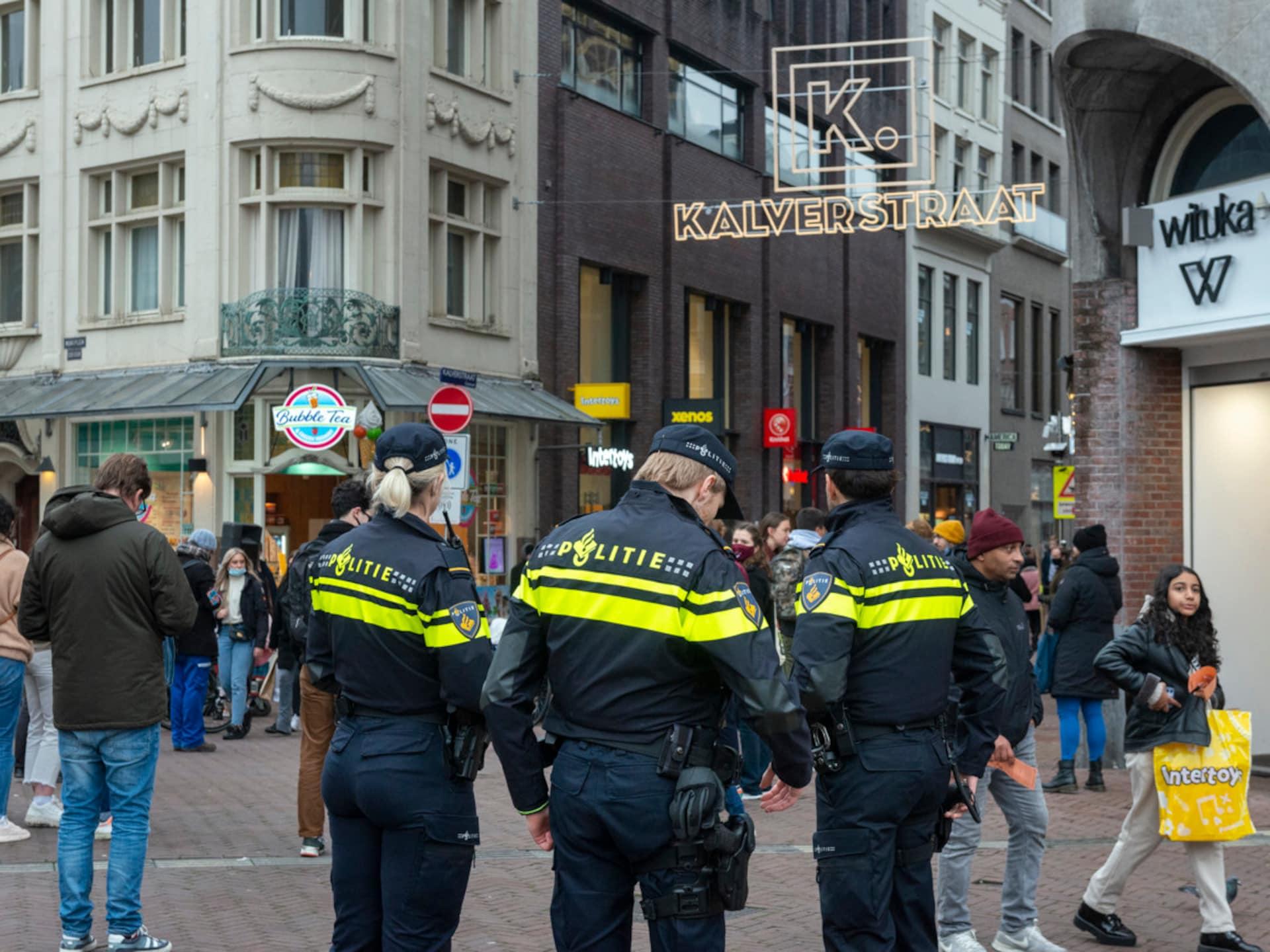
The difference becomes especially visible in citizens’ encounters with police. According to the 2023 Safety Monitor, 7.5% of people of Dutch origin said they had been stopped or checked by police during the previous year. That rose to 10.8% among people born in the Netherlands whose parent or parents were born abroad. Among the Dutch-Moroccan second generation, the rate was 18.5%. It was 15.3% among the Dutch-Surinamese second generation and 14.3% among the Dutch-Turkish second generation.
Those raw differences do not prove ethnic profiling. Age, gender, location, exposure to public spaces and other demographic factors can affect the probability of police contact. Young men are stopped more frequently across almost every population group. The police are also required to intervene in circumstances that citizens do not always fully understand. Intelligence, recent incidents, witness descriptions and observed behaviour can all provide legitimate reasons for a control.
But the trust gap extends beyond the number of stops. Among people of Dutch origin who had been checked, only around 4% believed that their background, skin colour or appearance had influenced the decision. Among controlled members of the Dutch-Moroccan second generation, that figure was approximately 35%. It was 31% among the Dutch-Turkish and Dutch-Surinamese second generations.
Perception is not automatic proof. But a democratic police service cannot dismiss a difference of this size merely because each individual officer believes a control was justified. Public authority depends on more than legality. It depends on legitimacy. When one part of society encounters an institution as broadly neutral while another repeatedly experiences it as suspicious, selective or dismissive, the institution has a problem even before a court determines that unlawful discrimination occurred. The proper response is not to accuse every officer. It is to measure why the difference exists.
Banking While Classified as a Risk

The financial sector presents another test. Dutch banks are legally required to identify customers, monitor transactions and prevent money laundering and terrorist financing. These obligations are real and necessary. Criminal organisations exploit cash-intensive businesses, international transfers, complex ownership structures and apparently legitimate companies. Banks cannot simply ignore unusual activity. They must sometimes ask intrusive questions. They may need evidence concerning the origin of funds, the purpose of a payment, the identity of business partners or the nature of international relationships.
But anti-money-laundering law does not authorise unlimited questioning, permanent suspicion or the substitution of background for evidence. Research commissioned by the Dutch Ministry of Finance found that one in ten citizens experienced discrimination in their interactions with banks and payment institutions. Among people with a migration background, the figure rose to one in three. The application of anti-money-laundering legislation was frequently identified as a contributing factor.
Banks argue, with justification, that they operate under intense regulatory pressure. Failing to investigate suspicious activity can produce major penalties, reputational damage and opportunities for organised crime. From the perspective of a compliance department, requesting one document too many may appear safer than requesting one too few. That explanation matters. But it does not resolve the issue.
The Dutch central bank, De Nederlandsche Bank, examined the measures used by 25 banks serving 98% of Dutch private and small-business customers. DNB found that the concreteness and focus of the banks’ antidiscrimination safeguards varied considerably. Some institutions had developed targeted measures, while others relied more heavily on broad codes of conduct and general training. Subsequent supervision found progress, including improved risk analyses, broader definitions of discrimination and additional training. Yet DNB continued to identify indirect discrimination as an important area of concern.
That is precisely where the modern equality debate becomes difficult. A system does not need a field labelled ethnicity to produce unequal outcomes. Nationality, postcode, surname, business sector, destination country, international family connections and payment routes can operate as proxy indicators. Each variable may appear neutral in isolation. Together, they may repeatedly classify the same communities as higher risk. The intention may be financial security. The outcome may still be unequal scrutiny.
When Historical Inequality Enters an Algorithm
The same risk extends far beyond banking. In May 2026, the Dutch State Commission against Discrimination and Racism warned that data-driven profiling by public authorities can conflict with fundamental principles of good governance. It identified inadequate legal boundaries, insufficient democratic legitimacy and weak legal protection for citizens. The commission also warned that profiling systems can reinforce existing inequalities because they are frequently based on historical data in which earlier discriminatory patterns may already be embedded.
Consider how such a cycle can develop. If authorities historically focused more heavily on certain neighbourhoods, they will naturally record more incidents in those locations. A risk model trained on those records may then identify the same neighbourhoods as statistically more dangerous. That classification produces additional controls. Those controls generate additional recorded incidents. The system then interprets the new data as confirmation that its original assessment was correct.
Nobody needs to issue a discriminatory instruction. The unequal pattern reproduces itself. Technology does not erase institutional history. It can automate it.
The Childcare Benefits Scandal Was the Warning

The Netherlands does not need to imagine what happens when fraud prevention, group-based suspicion and institutional certainty overwhelm proportionality. It has already experienced it. The childcare benefits scandal, the toeslagenaffaire, became one of the most serious institutional failures in modern Dutch history. Thousands of parents were wrongly or disproportionately treated as fraudsters. Benefits were stopped. Families faced enormous repayment demands, debt, unemployment, psychological damage and family breakdown.
The parliamentary committee investigating the affair concluded that fundamental principles of the rule of law had been violated. The criticism did not fall on one agency alone. It extended to the executive authorities, the legislature and the administrative courts. The committee found that political pressure to combat fraud produced legislation and administrative practices that left little room to assess individual circumstances. Minor errors could be interpreted as fraud. The system used a group-based approach and an all-or-nothing method. Parents were wrongly branded as intentional fraudsters, while the principle of proportionality received far too little attention.
The scandal matters to the present investigation for a precise reason. It does not prove that every current risk system is discriminatory. It does not prove that banks, police forces or other government agencies are repeating the same failure. But it destroys the argument that advanced Dutch institutions are inherently self-correcting. They are not.
The benefits scandal demonstrated that officials can believe they are lawfully applying rules while collectively producing profound injustice. It showed that courts can uphold a harsh system. It showed that political pressure can transform caution into institutional rigidity. It showed that information can remain fragmented, delayed or inaccessible while citizens stand almost powerless against the state. Most importantly, it showed that an institution’s confidence in its own procedures is not proof that those procedures are fair.
The lesson is not that every official is malicious. The lesson is that systems can become cruel without requiring every person inside them to be cruel. That is why scrutiny is not hostility toward the Netherlands. It is loyalty to the principles the Netherlands claims to uphold.
Dutch Until Defeat
Football recently exposed another form of conditional belonging. On 29 June 2026, the Netherlands was eliminated from the World Cup by Morocco after a penalty shootout. Dutch internationals Justin Kluivert, Quinten Timber and Crysencio Summerville missed penalties and were subsequently subjected to racist and hateful online abuse. The KNVB condemned the comments and announced that it would refer them to the relevant reporting body for legal assessment.
The episode exposed a brutal contradiction. When Black players succeed, they are presented as symbols of the Netherlands. When they fail, some people suddenly reduce them to their skin colour. That is not an abstract discussion about statistical inequality. It is the public withdrawal of belonging. A player can wear the national shirt, sing the anthem and represent millions of people, yet one missed penalty can be enough for others to tell him that he was never fully accepted. Sport did not create that attitude. It revealed it.
Political Language Has Consequences
Public language shapes the environment in which institutions operate. In 2014, Geert Wilders asked supporters whether they wanted more or fewer Moroccans. After the crowd answered fewer, he said that this would be arranged. In July 2021, the Dutch Supreme Court allowed his conviction for group insult to stand. No sentence was imposed, but the conviction remained legally valid.
For lawyers, the case concerned the boundary between political expression and criminal group insult. For a Dutch child with Moroccan parents, the message may have been far simpler. A national politician asked a cheering audience whether the country should contain fewer people like their family. Children do not process political theatre through legal doctrine. They hear their surname. They see their parents. They wonder whether the country in which they were born regards their presence as temporary, conditional or undesirable.
Political words do not remain inside campaign halls. They travel into classrooms, workplaces, bank offices, police stations and newsrooms. They influence which groups are approached primarily as individuals and which remain associated with a collective problem.
The Media Question Must Be Investigated, Not Assumed
Many Dutch citizens believe that newspapers and broadcasters disproportionately associate crime, unrest and social disorder with Moroccan, Turkish, Muslim or migrant identities. That perception deserves serious investigation. But MMO will not claim, without evidence, that a newspaper such as De Telegraaf deliberately uses minority communities to manipulate public opinion. Intent cannot be established through suspicion.
The appropriate method is measurable. How often is the origin of a suspect mentioned in a headline? Was that origin relevant to understanding the event? Is ethnic background mentioned more frequently in negative reporting than in positive reporting? How do headlines differ across De Telegraaf, AD, NOS, NRC and de Volkskrant? Are offenders of Dutch origin generally described as individuals while offenders with minority backgrounds are more often framed as representatives of a community? Do articles place collective terms such as Moroccans, migrants or asylum seekers in headlines when the underlying conduct involved only a small number of individuals?
These questions require a dataset, transparent coding rules and comparison across publications. MTD will treat the media question as an investigation, not as a predetermined accusation, because media influence is too important to assess through anecdote alone.
What Institutions Are Entitled to Say

Fair journalism must acknowledge the strongest counterarguments. Police forces are entitled to say that controls may reflect age profiles, locations, criminal intelligence and observable conduct rather than ethnicity. Banks are entitled to say that anti-money-laundering obligations require extensive customer investigation and that failure to act can help criminal organisations. Public authorities are entitled to use data to allocate limited enforcement resources efficiently. Media organisations are entitled to report a suspect’s background when it is directly relevant to the event. Politicians are entitled to discuss integration, crime and social cohesion, including uncomfortable evidence.
None of those arguments is illegitimate. But none provides automatic immunity from scrutiny. The issue is not whether an institution can offer a rational explanation for one decision. The issue is whether thousands of individually rational decisions combine into a structurally unequal result. A risk indicator may be defensible on its own. A police stop may be lawful on its own. A headline may be editorially justifiable on its own. But when the cumulative burden repeatedly falls on the same communities, democracy requires more than individual explanations. It requires institutions to measure the aggregate outcome.
The Weak Do Not Need Exaggeration
There is a temptation, when confronting injustice, to overstate the case. That would be a mistake. Citizens facing unequal treatment do not need invented numbers, simplified villains or journalism that automatically accepts every allegation. They need something stronger.
They need banks to disclose how enhanced investigations are triggered. They need police forces to publish detailed outcomes, stop data and complaint results. They need public authorities to reveal which variables their profiling systems use. They need media organisations to examine whether recurring language transforms individual misconduct into collective suspicion. They need politicians to recognise that words used to win votes may affect how millions of citizens are regarded. And they need journalists prepared to distinguish legitimate enforcement from disproportionality, security from profiling, and individual responsibility from collective blame.
Defending the less powerful does not require abandoning objectivity. It requires applying objectivity equally to the powerful.
The Question the Netherlands Must Answer
The Netherlands does not need to choose between equality and security. It can prosecute offenders without criminalising communities. It can investigate suspicious money without treating international heritage as evidence. It can prevent fraud without destroying citizens over administrative mistakes. It can use data without concealing human judgment behind an algorithm. It can debate integration without teaching children that their presence is negotiable. It can report crime without turning the background of an offender into the identity of an entire population.
The available evidence does not prove that every Dutch institution systematically discriminates. It proves something that should be equally difficult to ignore: large groups of Dutch citizens experience the same country very differently. Approximately 7% of people of Dutch origin reporting discrimination. Around one-quarter of the non-European second generation. Approximately 37% of the Dutch-Moroccan second generation. A banking system in which one in three people with a migration background reported discriminatory experiences. A police trust gap in which roughly one-third of controlled Dutch-Moroccan, Dutch-Turkish and Dutch-Surinamese second-generation citizens believed that background, skin colour or appearance played a role. Black Dutch footballers celebrated as national representatives until missed penalties exposed how quickly acceptance could be withdrawn. And a childcare benefits scandal that already demonstrated what can happen when institutional certainty becomes stronger than individual justice.
These are not verdicts. They are warning signals. The task of serious journalism is now to follow them. Not to declare the Netherlands guilty. Not to declare every institution innocent. But to establish, case by case and system by system, whether the promise of equal treatment survives contact with reality.
Equality is not demonstrated by constitutional language alone. It is demonstrated by outcomes. When entire communities repeatedly report fundamentally different experiences of the same institutions, the burden cannot remain solely on individual citizens to prove that the pattern exists. The burden shifts to the institutions. They must measure it. They must explain it. And where the evidence demands it, they must correct it. Because the strength of a constitutional state is not measured by how confidently it describes itself. It is measured by how it treats the citizen with the least power to challenge it.
This is Part One of MTD’s Equal Treatment? investigation.
Executive Engagement
Morocco Times Daily is collecting documented experiences involving banking controls, police encounters, public-sector profiling, employment discrimination and media framing in the Netherlands. Submission does not guarantee publication or imply that MTD accepts an allegation as fact. Cases will be independently assessed. Supporting documentation may be requested. Relevant legal and statistical context will be examined, and every institution or individual facing a substantive allegation will be offered a full right of reply.