

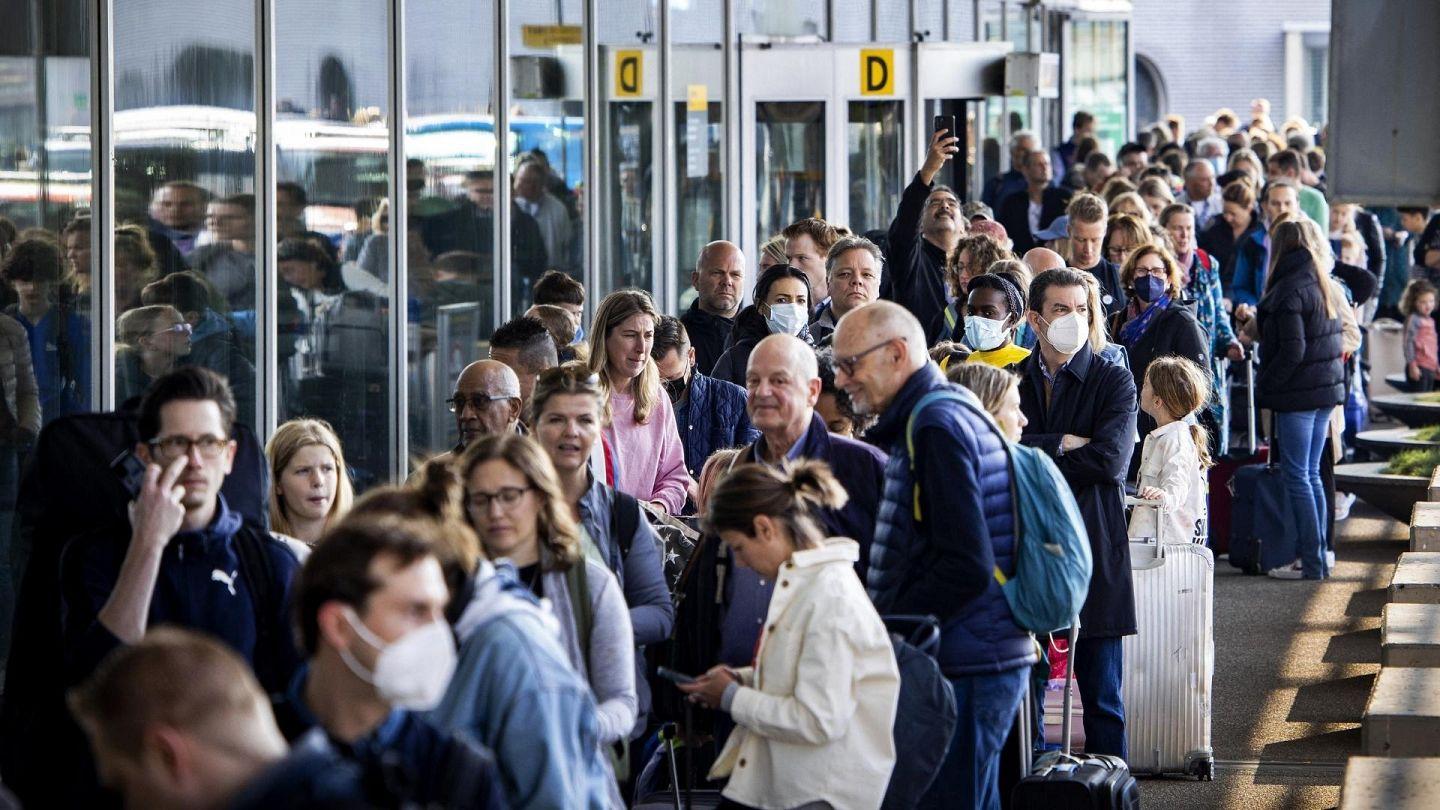
The Airport Queue Economy is becoming one of the clearest symbols of modern summer travel: more people want to move, but the systems built to move them are increasingly judged by waiting time.
The old travel promise was speed. Book online, check in digitally, pass through security, board the aircraft and arrive somewhere warmer, richer or more exciting. That promise still exists, but the experience around it is changing. Airports, borders, airlines and passengers now live inside a more fragile operating model where one staffing gap, one biometric delay, one security bottleneck or one overloaded hub can turn a holiday into a patience test.
This is not only a travel inconvenience.
It is a new economy of friction.
Airport Queue Economy Is The New Travel Reality
The Airport Queue Economy matters because waiting is no longer a side effect of travel. It is becoming part of the product.
A traveller may judge an airline by price, a hotel by design and a destination by beauty. But the real memory of a trip can be shaped by the two hours before departure, the border line after arrival, the baggage belt that does not move, or the transfer queue that turns a simple connection into stress.
That makes queues commercially important.
When passengers wait too long, airports lose trust, airlines lose reliability and destinations lose part of their appeal before the traveller even reaches the city.
Border Checks Are Becoming A Bottleneck
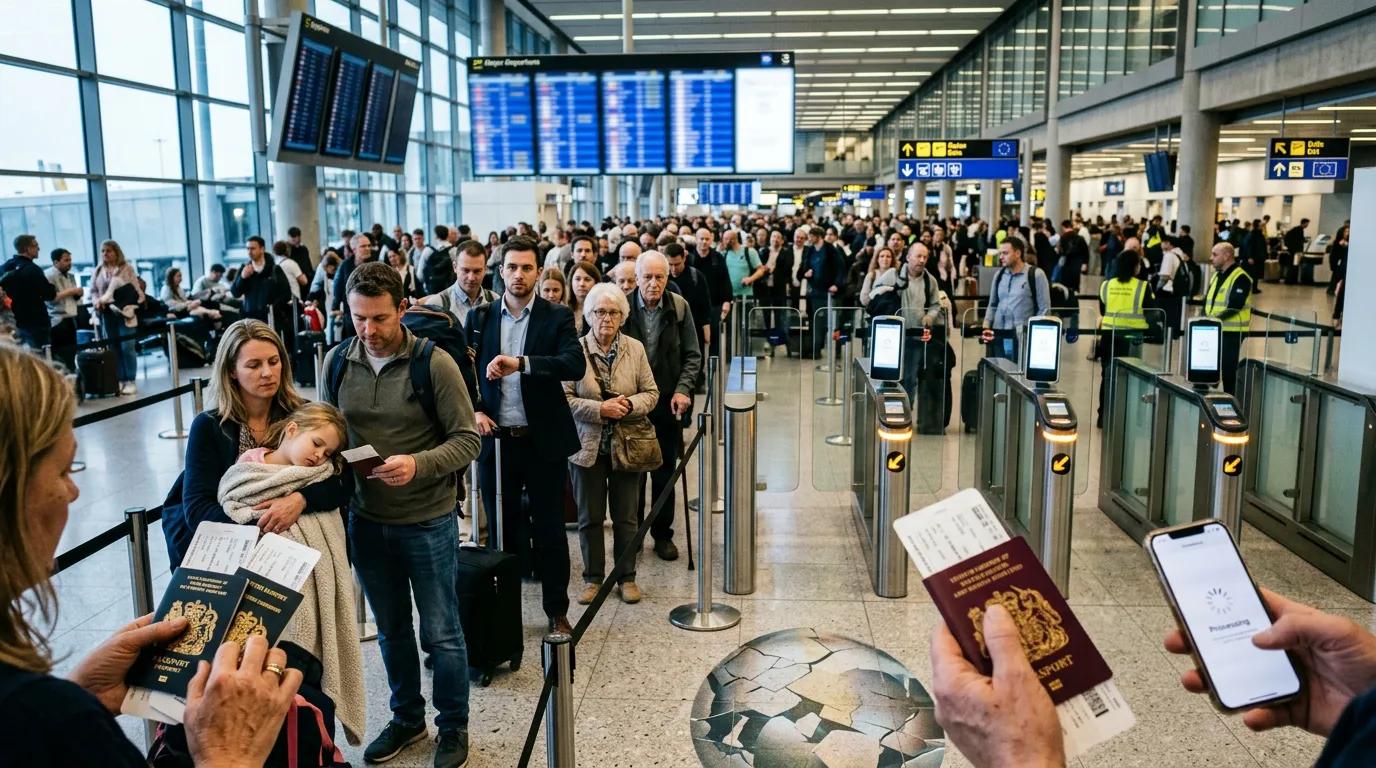
The first stress point is the border.
The UK and France have increased staffing at key border-control points to avoid travel chaos linked to new European biometric checks. The concern is practical: biometric systems can strengthen security, but they also add processing time when technology is not smooth or passenger volumes rise sharply.
This is especially visible around Channel crossings.
The Port of Dover has been preparing for heavy summer traffic, with reports of up to 12,000 vehicles per day at the start of the holiday period. When that volume meets extra registration steps, the border becomes more than an administrative checkpoint. It becomes a travel-risk zone.
For passengers, the frustration is simple.
They do not care whether the delay is caused by policy, software, staffing or infrastructure. They only experience the queue.
Airports Are Hitting Capacity Limits
The second stress point is capacity.
Airports are physical systems. They have runways, gates, terminals, security lanes, baggage halls and staffing limits. Demand can grow faster than those systems can expand.
That is why the FAA’s decision to extend flight cuts at Chicago O’Hare is significant. The agency prolonged a 10% reduction in daily flight operations through October 2027 to manage congestion and improve reliability at one of the United States’ busiest airports.
This shows a wider truth.
Growth is not always the same as efficiency. More flights can create more choice, but if the airport cannot process them smoothly, the result is delay, missed connections and lower passenger confidence.
At some point, fewer operations may become better business than too many poorly managed ones.
Technology Can Create New Delays
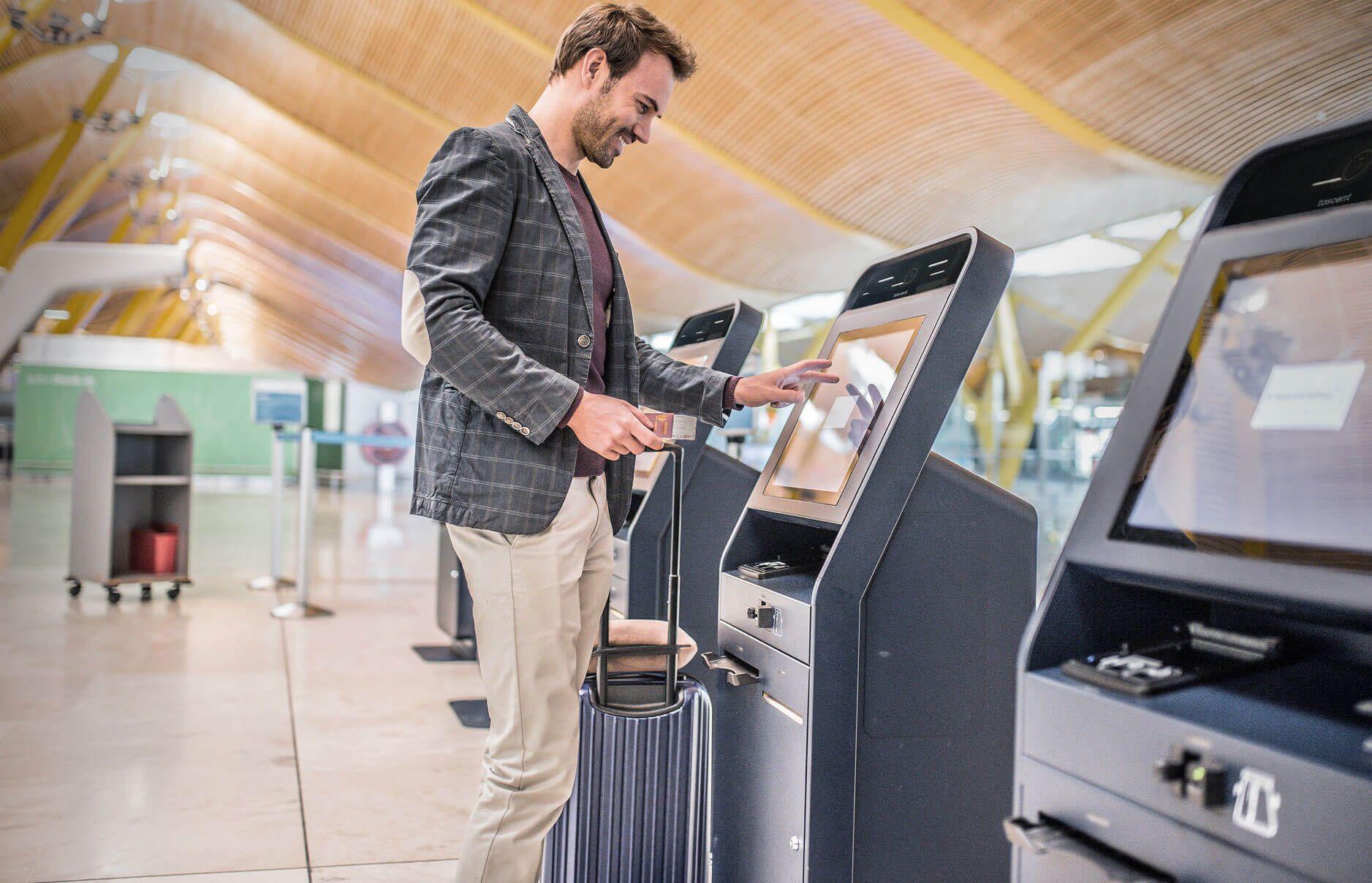
Travel technology is meant to reduce friction.
Sometimes it creates a new kind of friction.
Digital check-in, biometric gates, automated passport control, baggage tracking and app-based boarding all promise efficiency. But when systems fail, when passengers do not understand them, or when manual backup is still required, technology can slow down the very process it was designed to improve.
This is the hidden problem of automation.
A human queue is visible. A digital queue can be harder to understand because the passenger may not know whether the delay is caused by a scanner, a database, a network problem or a policy rule.
For airports, the lesson is clear.
Technology only improves travel when it is paired with enough staff, clear instructions and reliable contingency plans.
Passengers Are Part Of The System
The fourth stress point is passenger behaviour.
Airports do not control only aircraft. They manage millions of individual decisions. Some passengers arrive too early and crowd terminals. Others arrive too late and create urgency at security. Families need more time. Business travellers move faster. Some people follow digital instructions; others ignore them.
Recent academic research on airport queue forecasting highlights how difficult this becomes. Passenger flows change across check-in, security and departure gates, and airports increasingly need real-time forecasting to manage waiting times and allocate staff before bottlenecks become visible.
This is why summer travel is so hard to manage.
The problem is not only volume. It is volume plus unpredictability.
Time Is Becoming A Hidden Travel Cost
The fifth stress point is value.
A cheap ticket can become expensive if it requires hours of waiting, anxiety and uncertainty. A premium trip can feel ordinary if the airport experience is chaotic. A family holiday can begin with stress before the destination has any chance to impress.
Time is therefore a hidden travel cost.
Passengers may not always pay it in money, but they pay it in fatigue, frustration, missed connections and reduced enjoyment. For business travellers, time lost in queues can become lost productivity. For leisure travellers, it can damage the emotional start of the trip.
This is why airports and destinations should treat waiting time as an economic metric, not only an operational detail.
Summer Travel Is A Stress Test For The Whole Chain
The modern travel chain is only as strong as its weakest point.
A flight may be on time, but the border may be slow. Security may run well, but baggage may fail. The airport may process passengers quickly, but road access may be blocked. A destination may market itself beautifully, but arrival friction can weaken the first impression.
This matters because tourism is increasingly competitive.
Travellers compare not only cities and hotels, but the ease of reaching them. A destination that is harder to enter, harder to connect through or harder to leave may lose some of its appeal even if the attraction itself remains strong.
Convenience is now part of destination branding.
Morocco Should Read The Airport Signal
For Morocco, the Airport Queue Economy is highly relevant before 2030.
The country is investing heavily in tourism capacity, air connectivity and World Cup preparation. But the visitor experience will depend not only on new terminals and expanded routes. It will depend on how smoothly passengers move through the system.
Passport control, baggage delivery, taxi access, digital payment, signage, airport transfers and multilingual information all matter.
A visitor who arrives in Morocco and moves quickly into the city receives one message: the country is ready. A visitor who waits too long receives another.
Infrastructure is not only what is built.
It is how it works under pressure.
The Best Airports Sell Calm
The future airport is not only a transport building.
It is a stress-management platform.
The best airports will sell calm through better queue design, clearer communication, smarter staffing, real-time passenger flow data, comfortable waiting areas and systems that reduce uncertainty. Passengers can tolerate waiting better when they understand what is happening and trust that the process is moving.
The worst experience is not always the longest queue.
It is the queue with no explanation.
For airports, communication can be as important as capacity.
Airlines Cannot Escape The Queue Problem
Airlines often suffer from queues they do not fully control.
Security delays, border checks, baggage staffing and airport congestion can all damage an airline’s reputation even when the carrier is not the only responsible party. Passengers usually remember the brand on the ticket, not the operational division that caused the delay.
That means airlines have an interest in stronger coordination with airports and governments.
They need better information-sharing, realistic schedules, improved disruption planning and passenger communication that begins before the traveller reaches the airport.
In summer travel, silence becomes expensive.
The Queue Economy Creates New Winners
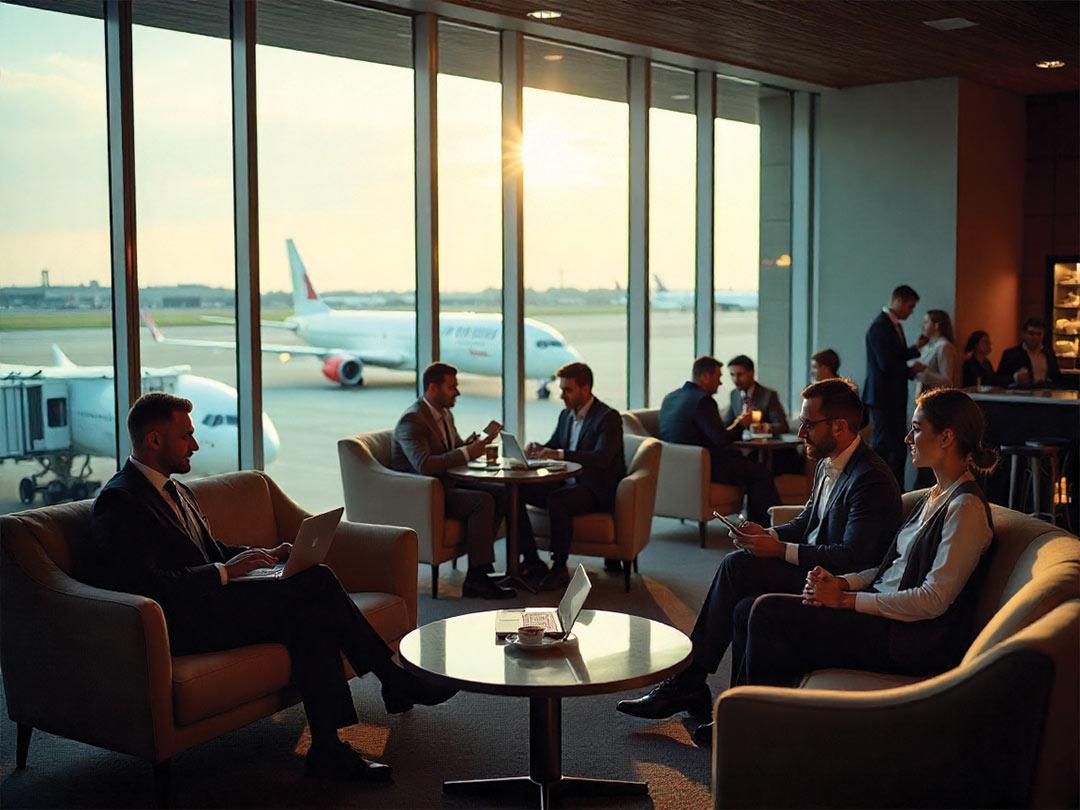
The friction problem also creates business opportunities.
Fast-track services, premium lounges, biometric identity firms, queue forecasting software, travel insurance, airport hospitality, baggage services and concierge products all gain value when travellers fear delay.
This is the commercial side of the Airport Queue Economy.
When systems become stressful, consumers pay for certainty. The risk is that travel becomes more unequal, with smoother journeys reserved for those who can afford premium channels while ordinary passengers remain exposed to the longest waits.
That creates a policy question.
Efficiency should not become a luxury product only.
The Bottom Line
The Airport Queue Economy is turning summer travel into a patience test.
Border checks, airport capacity limits, technology failures, passenger behaviour and hidden time costs are now central to the travel experience. The UK-France effort to add border staff, Dover’s expected summer vehicle pressure and Chicago O’Hare’s extended flight cap all point to the same reality: travel demand can grow faster than the systems designed to process it.
For Morocco, the lesson before 2030 is direct.
Airports, borders and transfers must be treated as part of the national tourism product. A country can build hotels, stadiums and rail links, but if arrival feels chaotic, the visitor experience weakens before it begins.
The next travel advantage will not only be the destination.
It will be the ability to move people through it without making them feel trapped in a queue.