

MTD Investigates | The Alps Murders — Part II
The first shot was not fired in the forest.
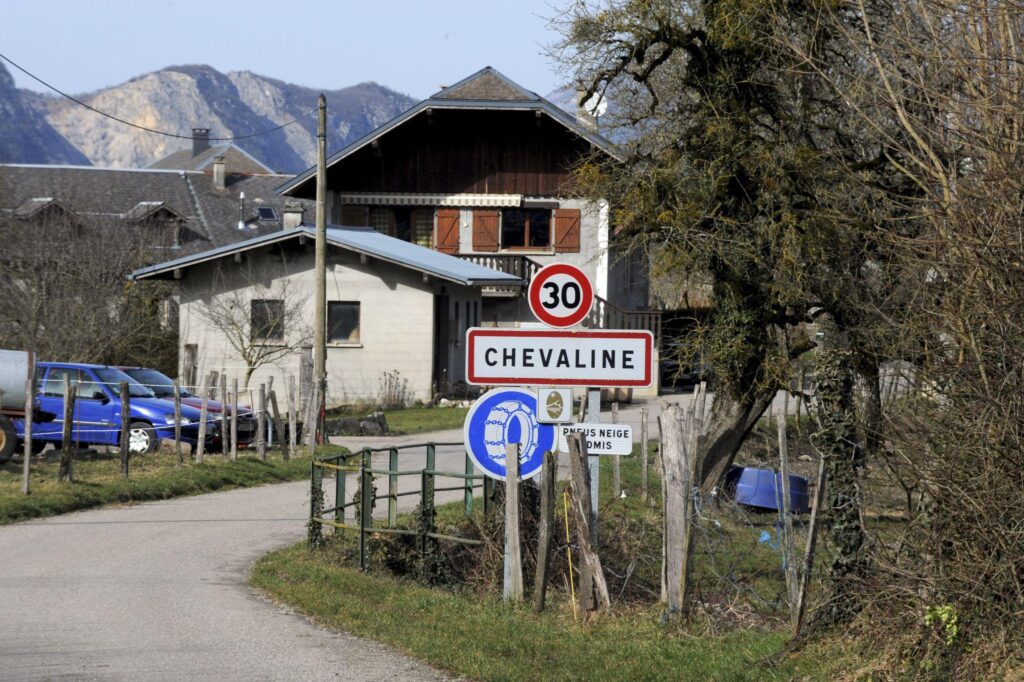
The story began earlier, when Saad al-Hilli left the family’s campsite near Lake Annecy and drove beyond the village of Chevaline.
The houses gradually disappeared.
The road narrowed.
The forest closed around the burgundy BMW carrying Saad, his wife Iqbal, their two daughters and Iqbal’s 74-year-old mother, Suhaila al-Allaf.
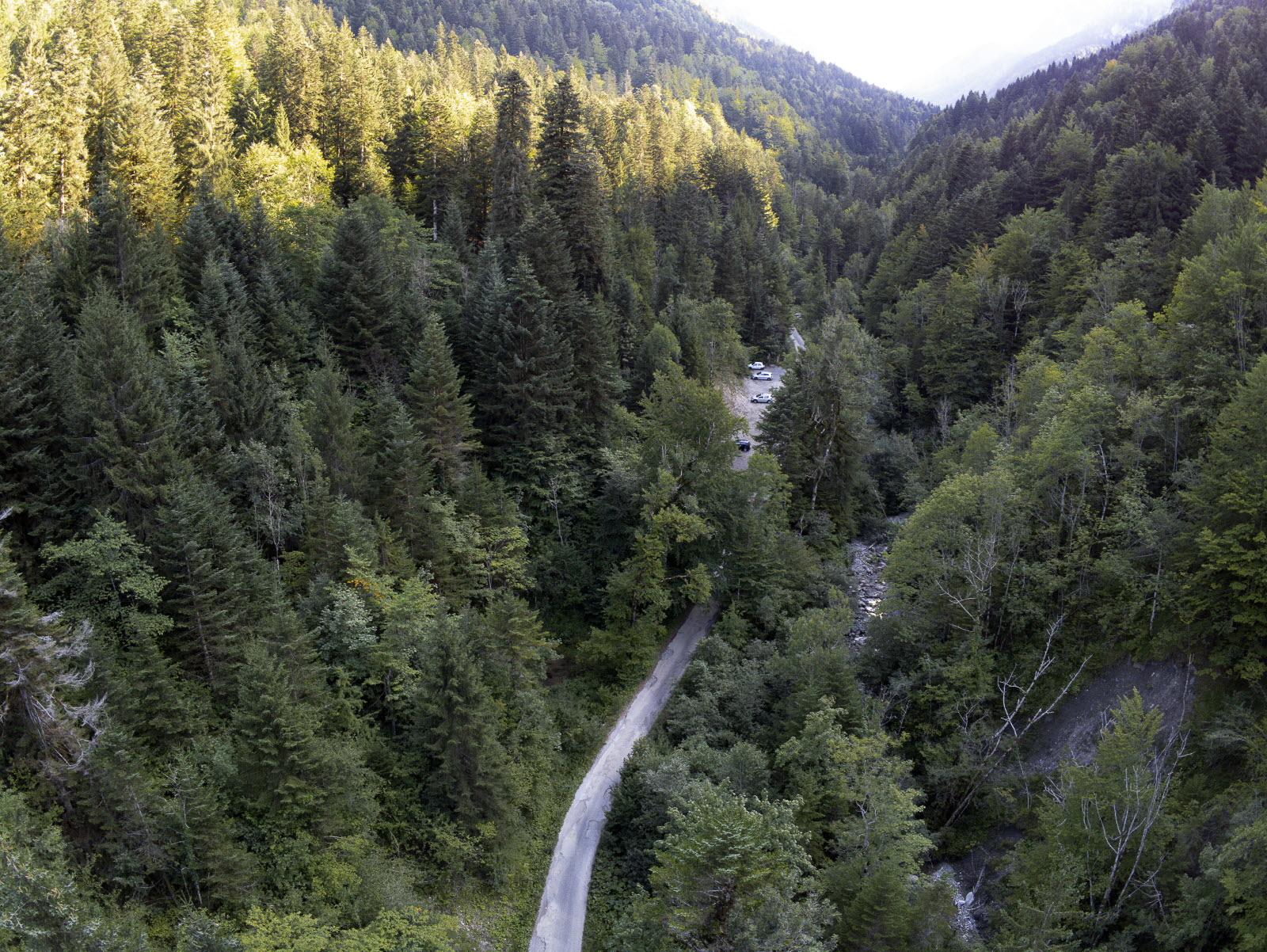
The family eventually reached a remote parking area at the end of the Route Forestière de la Combe d’Ire.
There, Saad, Iqbal, Suhaila and local cyclist Sylvain Mollier would be killed.
Almost fourteen years later, the most basic question about that journey remains unresolved:
Why was Saad on that road?
Was he searching for somewhere his daughter could walk?
Had he misunderstood directions and continued because the narrow road offered few convenient places to turn?
Or was he travelling towards a brief appointment he believed was harmless enough to combine with an ordinary family outing?
Was Saad driving to a place?
Or to a person?
The Family Left the Campsite Together
The al-Hillis had travelled to France with a caravan and were staying at Le Solitaire du Lac, near the southern end of Lake Annecy.
According to an account later given by former Annecy prosecutor Éric Maillaud, Saad asked his eldest daughter what she wanted to do that afternoon. She reportedly chose a walk in the woods rather than shopping in Annecy.
Saad was then said to have asked someone at the campsite where the family could go walking.
That produces a simple and credible explanation.
A child wanted to explore the forest.
Her father requested directions.
The family entered the BMW and drove into the mountains.
Maillaud later argued that reaching the upper Combe d’Ire had probably not been Saad’s intended destination. In his reconstruction, Saad may have missed a turning or misunderstood the route, then continued because turning a large estate car on a narrow mountain road was difficult.
That explanation deserves serious weight.
But Maillaud was not a neutral observer looking at the case from outside. He led the early French investigation and publicly defended an approach that treated Saad and his family as the most likely centre of the motive.
His account is therefore essential, but it must also be tested against competing interpretations—including the British view that Mollier may have received too little attention as a possible target.
The walking explanation may be correct.
It should not automatically end the inquiry into why the BMW continued all the way to the final parking area.
This Was More Than a Father-Daughter Walk
Saad was not travelling alone with his eldest daughter.
His wife was in the car.
His four-year-old daughter was there.
So was his 74-year-old mother-in-law.
That does not make the journey suspicious by itself. Families on holiday often remain together. Suhaila may have expected only a scenic drive, a gentle path or a brief stop rather than a demanding hike.
But the composition of the group matters.
This appears to have been a family outing, not simply a father taking one child for a quick walk.
That leaves room for a second possibility:
Saad may have planned to fit a brief appointment into an otherwise ordinary afternoon.
He would not have needed to leave his family behind. He could drive to a quiet location, speak to someone for several minutes and then continue the outing.
Such a scenario would not mean Saad knowingly placed his family in danger.
It would suggest the opposite.
He believed there was no danger at all.
There is no public evidence proving that such an appointment existed.
But the presence of the full family does not disprove it.
The Road Gradually Lost Its Ordinary Character
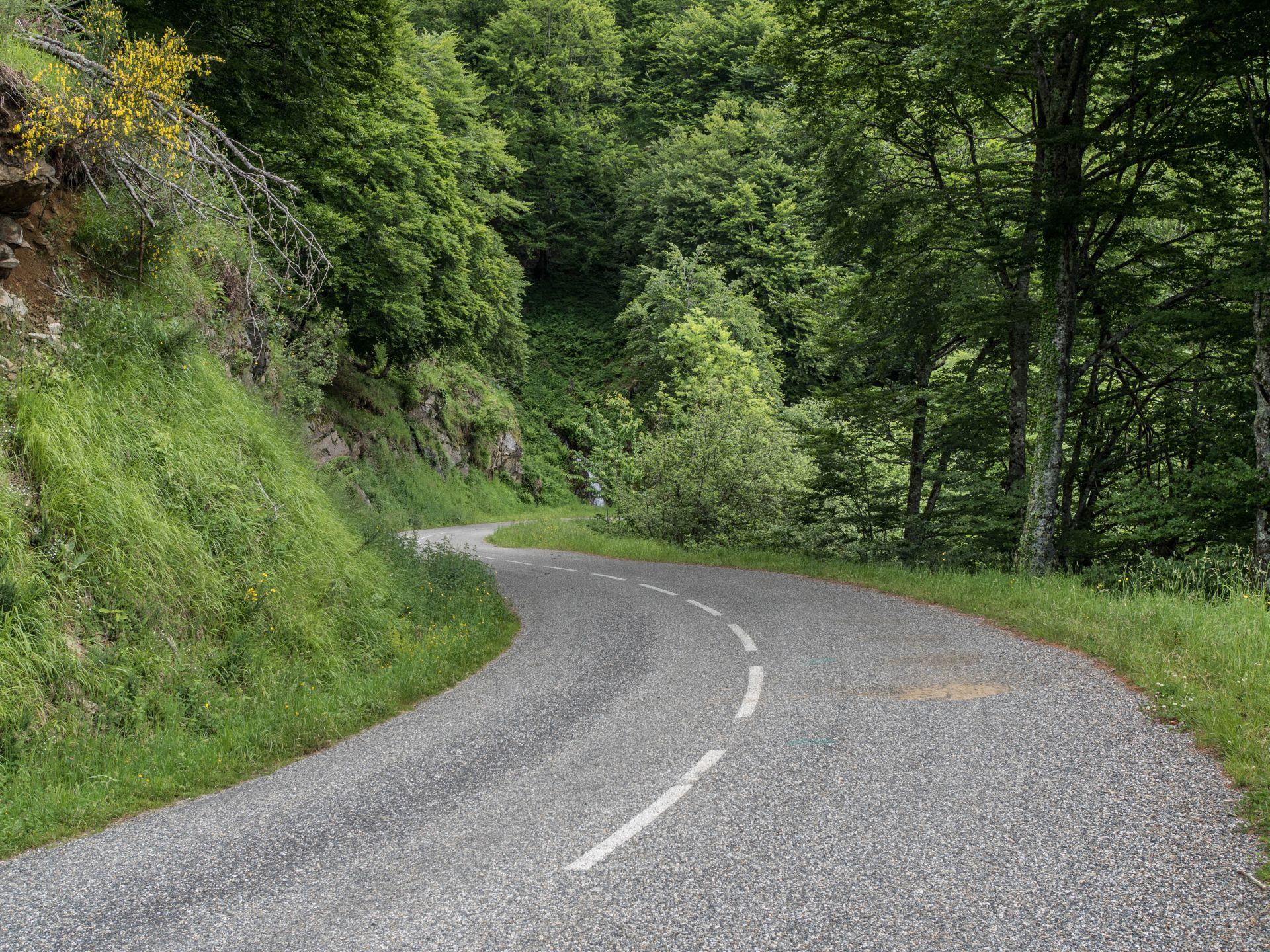
The route towards the Combe d’Ire does not begin as an obviously alarming road.
A driver leaving the Lake Annecy area would initially pass homes, junctions and familiar Alpine scenery.
Beyond Chevaline, however, the surroundings change.
Buildings become scarce.
Traffic thins.
The road climbs through dense forest towards a small clearing commonly identified as Le Martinet.
Beyond that point, vehicles can go no farther. Only forest paths continue into the mountains.
A wrong turn can explain why a driver enters such a road.
It does not automatically explain why he reaches its end.
Saad may have expected a marked walking area to appear farther ahead.
He may have believed the directions remained correct.
He may have decided that continuing towards a wider turning point was safer than attempting a manoeuvre on a confined stretch of road.
All are plausible.
But each kilometre also offered new information.
The absence of other families.
The lack of a visible tourist destination.
The increasing isolation.
At some stage, the BMW’s occupants must have realised they were travelling into a place very different from the busy lakeside environment they had left behind.
What was said inside the car at that moment is unknown.
The adults who could explain it were killed shortly afterwards.
Could Saad Have Turned Back?
It is easy, looking at a map, to say that Saad should simply have turned around.
The reality of a narrow forest road may have made that less straightforward.
A large right-hand-drive BMW estate would require space to turn safely. Continuing towards the expected parking area may have seemed easier than reversing for a long distance or attempting a difficult manoeuvre near a drop, ditch or trees.
That supports Maillaud’s wrong-turn reconstruction.
But an inability to turn immediately is not the same as an inability to reconsider the journey.
Saad could have slowed, stopped or waited for another road user.
Perhaps he did.
The public record does not provide a complete account of his speed, stops or conversations during the climb.
What it provides is the end result:
The family continued until the road opened into the same isolated space where Mollier would also arrive—and where an armed attacker was either waiting, following or approaching.
What the Family Photographs Show
Investigators recovered photographs taken by the al-Hilli family before the murders.
The images reportedly showed them behaving like ordinary tourists.
That matters because it weakens any theory in which the entire family understood that they were heading towards a dangerous or clandestine encounter.
There was apparently no visible panic.
No obvious preparation for danger.
No public indication that Iqbal, Suhaila or the children knew anything unusual was about to happen.
But photographs can show only a moment.
A person can spend an afternoon sightseeing and still intend to make a short stop later.
A discreet appointment need not involve espionage, secret documents or dramatic behaviour.
It might concern work, money, a personal matter or information that appeared routine to one participant.
The photographs support the family-outing explanation.
They do not establish everything Saad intended to do that afternoon.
The Meeting That May Never Have Happened
MTD Investigates considers one scenario worthy of continued examination:
Saad may have combined a normal family excursion with a brief meeting he believed to be safe.
This remains a working hypothesis.
No disclosed telephone call, email or message proves that an appointment had been arranged.
No public witness has said Saad announced that he was meeting someone at the Combe d’Ire.
No recovered document has established a destination or contact person.
Those are serious weaknesses.
But the scenario would explain why Saad brought his family, why their behaviour remained ordinary and why he might accept a quiet location without feeling threatened.
It could also help explain why another adult man entered the same remote area during the same narrow period.
That man was Sylvain Mollier.
Mollier on the Same Road
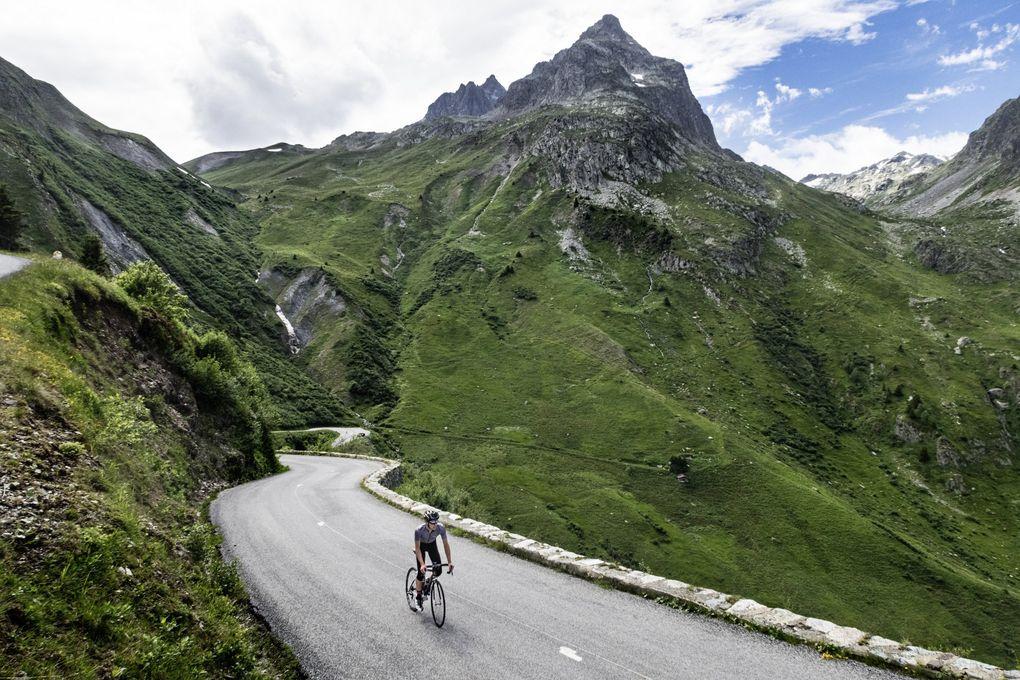
Mollier was cycling in the mountains that afternoon.
He was local and familiar with the broader region, although some accounts suggest he too may have taken an unintended route or continued beyond the turning he originally wanted.
The cyclist who later discovered the crime scene, Brett Martin, reportedly encountered Mollier on the climb.
The al-Hilli BMW travelled along the same road and is believed to have passed the French cyclist.
A short time later, the car and bicycle were together in the final clearing.
The conventional explanation may be entirely correct:
The family was looking for somewhere to walk.
Mollier was taking a bicycle ride.
Both independently continued along the same quiet road.
They arrived at the same parking area by chance.
An armed stranger then attacked them.
None of those individual events is impossible.
The difficulty lies in their convergence.
Two unrelated journeys.
One isolated endpoint.
One prepared gunman.
Four adults killed.
A child shot and beaten.
A second child concealed inside the BMW.
The absence of a discovered connection does not turn coincidence into certainty.
Did Saad and Mollier Know One Another?
No public evidence establishes that Saad and Mollier knew each other.
Investigators reportedly found no ordinary call, text message or email linking them.
Their known lives appeared separate.
Saad was an Iraqi-born British engineer whose professional background included satellite technology.
Mollier worked in France within an industrial environment connected to the nuclear group then known as Areva.
Those descriptions may sound suggestive, but they are not evidence of a shared project or relationship.
Before a professional connection could be treated seriously, there would need to be a bridge:
A company.
A colleague.
An intermediary.
A transaction.
A document.
A previously undisclosed meeting.
No such bridge has been publicly demonstrated.
That significantly weakens the theory that the men had arranged to meet.
It does not conclusively prove they had never communicated.
People can speak in person, use intermediaries or communicate through channels that are never identified.
But MTD must not substitute possibility for evidence.
At present, a direct relationship between Saad and Mollier remains unproven.
Could a Third Person Have Directed Them Separately?
There is another possible version of the meeting theory.
The two men may not have known one another well—or at all.
A third person could theoretically have given each of them a separate reason to reach the same location.
Saad might have expected a conversation about a professional, financial or personal matter.
Mollier might have believed he was meeting someone else.
Such a scenario would require planning and information about both men’s movements.
It might also require surveillance, trusted communication or several participants coordinating the operation.
There is no public proof that this occurred.
But it would explain how two apparently unrelated men arrived within the same confined window and why the attacker may have been prepared to kill more than one adult.
It also challenges one of the most persistent divisions in the investigation:
Either Saad was the target.
Or Mollier was.
What if the attacker expected both?
Was the Family Followed?
Investigators examined camera footage and travel records from the family’s journey through France.
They looked for a vehicle that repeatedly appeared near the BMW at ferries, roads, toll points or fuel stops.
According to Maillaud, no consistent tail was identified.
That weakens the theory that the family was followed continuously from Britain or across France.
It does not resolve whether they were monitored locally.
Someone could have known where the family was camping.
A vehicle could have watched the site shortly before their departure.
A message or intermediary could have provided their approximate arrival time.
Or no active surveillance would have been required if Saad had already agreed to be somewhere at a particular hour.
The absence of a long-distance tail is important.
It is not proof that nobody knew where the family was going.
Why the Location Matters
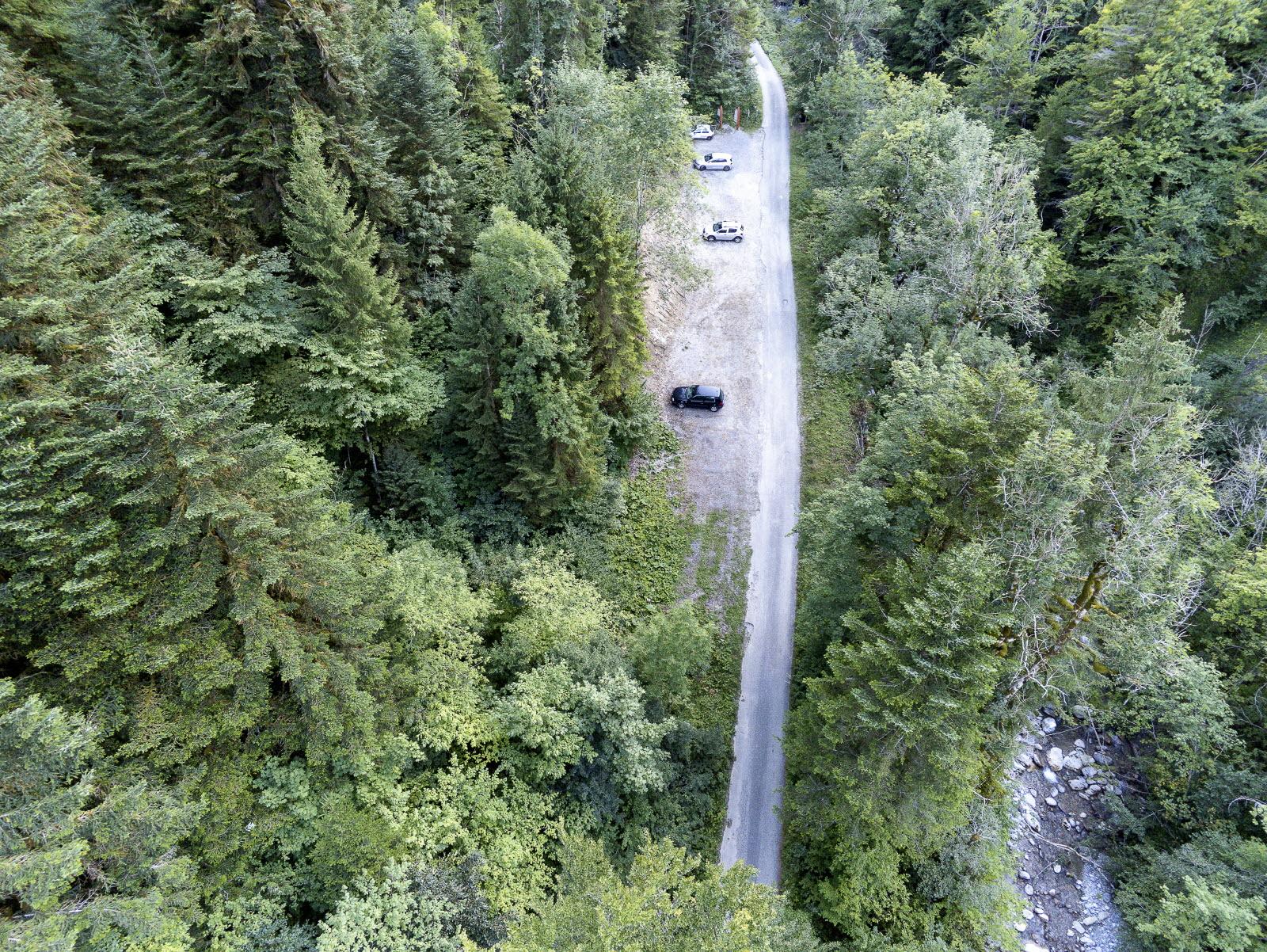
The Combe d’Ire offered several advantages to anyone seeking privacy.
It was isolated.
Traffic was limited.
The road had one principal vehicular route in and out.
The surrounding forest provided concealment.
Gunfire might not immediately be identified or located.
Emergency services would require time to reach the clearing.
Those qualities make the location suitable for a discreet conversation.
They also make it suitable for an ambush.
The central question is therefore not merely why the victims reached the clearing.
It is who selected it.
Did Saad continue until the road ended?
Did Mollier independently make the same decision?
Was the gunman already concealed nearby?
Did he follow one of them into the mountains?
Or had somebody chosen the location in advance because it allowed several people to meet without being observed?
The route alone cannot answer that.
But it tells us that the killings did not occur in a random busy place.
They occurred at a location where witnesses, escape routes and response times could all be anticipated.
What the Route Proves—and What It Does Not
The available information supports several limited conclusions.
The family appears to have planned some form of woodland outing.
A navigation mistake or missed turning remains credible.
The road may have been difficult to leave once Saad had committed to the climb.
The family photographs support the appearance of a normal holiday afternoon.
None of that proves a secret appointment.
But none of it explains why a heavily armed attacker was present at the same endpoint—or why Mollier arrived within the fatal time window.
The route may explain how the family entered the forest.
It does not explain the gunman.
That distinction is essential.
A wrong turn and a planned attack are not mutually exclusive.
Saad could have entered the road by mistake and encountered a killer targeting somebody else.
He could have been followed only after leaving the campsite.
He could have been directed towards a meeting while believing he was following walking instructions.
Or the entire convergence could have been accidental.
At this stage, each explanation remains possible.
They are not equally supported.
MTD Assessment
MTD does not consider the phrase “they were simply lost” a complete explanation of the journey.
It may explain why Saad entered the wrong road.
It may explain why he continued towards a wider turning area.
It may even explain why the entire family was in the car.
But it does not resolve the timing of Mollier’s arrival or the presence of a gunman equipped for sustained violence.
The appointment theory remains unsupported by direct public evidence.
It must therefore remain a hypothesis, not a conclusion.
But the route deserves far more scrutiny than a minor detail in the background of the shooting.
The investigation should ask not only whether Saad knew where he was going, but whether someone else knew where he would end up.
That is the narrower and more defensible MTD position:
Saad may have believed he was taking his family on an ordinary outing. Someone else may have understood the journey very differently.
To test that possibility, the next stage must move away from broad theories and into the final timeline.
Who entered the road first?
When did the BMW pass Mollier?
How much time separated them?
Was the attacker already in the clearing?
What do the positions of the victims, the BMW and the cartridge cases reveal?
And did the shooting begin before Saad attempted to reverse—or because he realised who was waiting?
The Point Beyond Which Nothing Was Ordinary
Somewhere above Chevaline, the family passed the final houses.
The noise of the lakeside communities faded.
The forest replaced the villages.
Perhaps the family still expected to find a marked walking path.
Perhaps Saad believed he had made a navigational mistake and was searching for somewhere to turn.
Perhaps he knew exactly where the road ended.
Inside the BMW sat a father, a mother, two children and a 74-year-old grandmother.
Ahead was a small clearing.
Behind them was the only main road back.
Within minutes, Mollier and the al-Hilli family would occupy the same confined space.
The gunman would fire repeatedly.
The BMW would move violently in reverse.
One child would be left gravely injured.
Another would remain hidden inside the vehicle.
The road tells us how the family reached Chevaline.
The final minutes may reveal whether anyone was waiting for them.
Next in MTD Investigates
Part III — The Last Fifteen Minutes
Who arrived first, where was the gunman, and what do the BMW, the bicycle and the cartridge cases reveal about how the attack began?
MTD Case Status
Why did the family enter the forest? A woodland outing was reportedly planned.
Did Saad miss a turning? Plausible and supported by the former prosecutor’s reconstruction, but not conclusively demonstrated through publicly available evidence.
Was Maillaud’s account neutral? No. It remains an important source, but it reflects the perspective of the French investigation he led.
Was the entire family on an ordinary outing? Plausible and supported by their apparent behaviour before the attack.
Did Saad have a pre-arranged meeting? No public proof. Remains an MTD working hypothesis.
Did Saad and Mollier know one another? No publicly established connection.
Could a third person have directed them separately? Possible in theory. No public evidence currently supports it.
Was the family followed across France? Investigators reported finding no recurring vehicle in the available camera material.
Could the family have been monitored locally? Open question.
Reader Information
MTD Investigates respects the privacy of the surviving victims. Their current locations, personal relationships and private lives will not be pursued or published.
Readers with first-hand, verifiable information concerning the campsite, the family’s route, the Combe d’Ire, vehicles seen in the area or the movements of any person on 5 September 2012 may contact MTD confidentially.
Unsupported accusations and rumours will not be published. Any information that may constitute new criminal evidence should also be provided to the competent French or British authorities.
Sources and Methodology
This article was reconstructed from contemporary reporting, later interviews with former prosecutor Éric Maillaud, witness accounts, geographical descriptions of the Combe d’Ire and established reporting concerning the al-Hilli family’s final afternoon.
Maillaud’s account is treated as an important official perspective rather than an uncontested version of events. MTD also considers public criticism that the early French investigation may have concentrated too heavily on Saad al-Hilli and his family while giving insufficient weight to the possibility that Sylvain Mollier was a central target.
Public accounts remain incomplete or inconsistent regarding the directions given at the campsite, Saad’s intended route, the precise point at which he may have missed a turning and why both he and Mollier continued towards the final parking area.
Where definitive evidence is unavailable, MTD presents competing explanations and clearly distinguishes confirmed information from analysis and working hypotheses.