

What Happened Before the Chevaline Killer Vanished?
MTD Investigates | The Alps Murders — Part III
The BMW was still in reverse, its engine running as the rear wheels spun helplessly against the loose ground at the edge of the forest.
Inside the vehicle, three adults were dead.
Nearby, French cyclist Sylvain Mollier lay beside his bicycle. Seven-year-old Zainab al-Hilli had been shot and struck so violently around the head that her attacker apparently believed she would not survive.
Her four-year-old sister, Zeena, remained alive somewhere inside the car.
The gunman was already gone.
For almost fourteen years, investigators have tried to understand what happened during the brief interval between the al-Hilli family’s arrival at Le Martinet and British cyclist Brett Martin entering the clearing.
The broad outline is known.
The precise sequence is not.
There were no surveillance cameras recording the parking area. No surviving adult could explain what the victims had been doing immediately before the first shot. No publicly disclosed message, call or document has established why Saad al-Hilli and Sylvain Mollier reached the same remote location.
What remained was physical evidence:
A trapped BMW.
Bodies inside and outside the vehicle.
Cartridge cases scattered across the ground.
Bullet trajectories.
Tyre marks.
A damaged firearm component.
And two children who survived an experience no child could be expected to reconstruct completely.
The sequence below is an evidence-based reconstruction drawn from the physical scene, witness accounts and publicly reported forensic findings. It is not a confirmed official minute-by-minute chronology. Where the evidence permits more than one interpretation, MTD identifies the uncertainty rather than presenting hypothesis as fact.
Two Journeys Ended in the Same Clearing

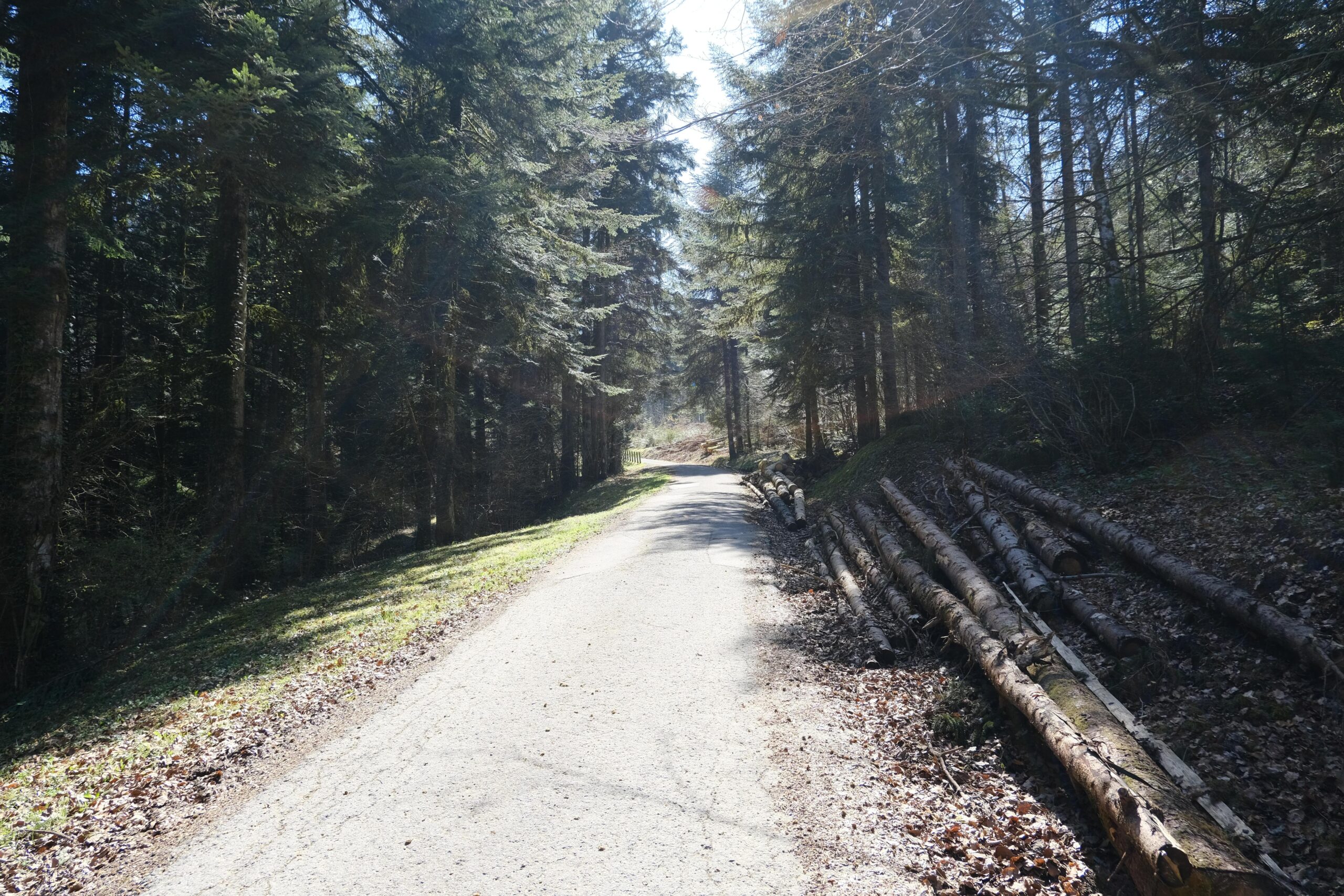
On the afternoon of 5 September 2012, Saad al-Hilli’s burgundy BMW travelled beyond the village of Chevaline and continued along the Route Forestière de la Combe d’Ire.
Inside were Saad, his wife Iqbal, her mother Suhaila al-Allaf, and the couple’s daughters Zainab and Zeena.
Mollier approached separately by bicycle.
Brett Martin, cycling farther behind, later recalled being passed by another cyclist during the ascent. Martin would subsequently become the first known person to reach the murder scene after the killer had left.
The conventional interpretation treats the two journeys as unrelated.
The al-Hillis were a family on holiday.
Mollier was a local man taking an afternoon ride.
Their arrival at Le Martinet was therefore understood as an extraordinary chance convergence.
That may be correct.
But an apparently accidental convergence is not the same as a demonstrated one.
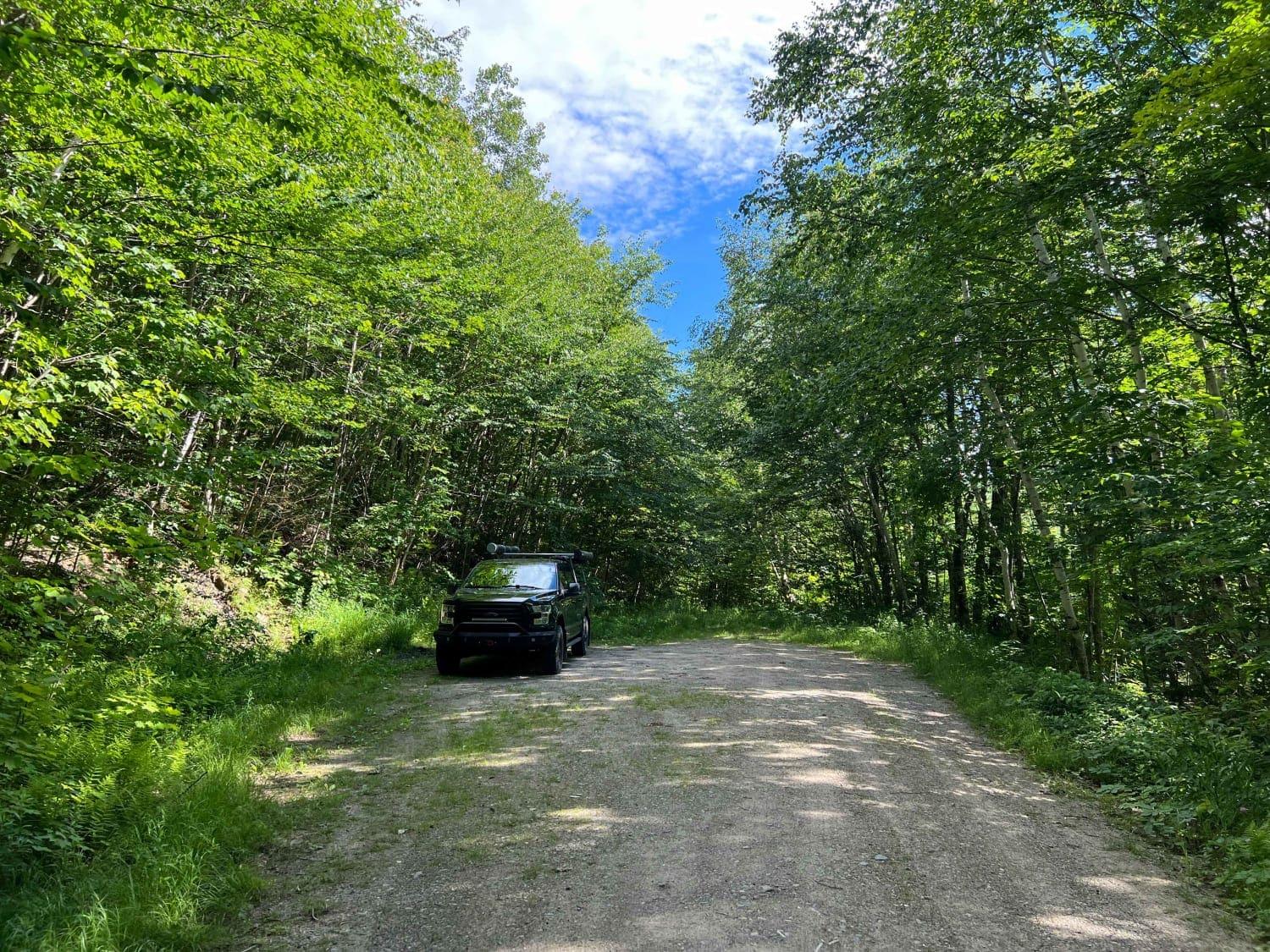
The forest road did not continue towards another village. The surface became progressively less suited to a lightweight road bicycle. Mollier knew the wider region, yet continued towards a secluded clearing on a route with limited onward purpose.
The BMW had also travelled beyond the most obvious tourist stops around Lake Annecy.
Two technically trained men, travelling separately and for reasons never publicly established, ended up within metres of each other at the end of a remote forest road.
That fact does not prove they planned to meet.
It does mean that the possibility cannot be dismissed merely because no public record of an appointment has been found.
Were Saad and Mollier Standing Near the BMW?
One possible reconstruction begins with both men outside or immediately beside the vehicle.
It is not a confirmed sequence.
But it offers a plausible explanation for what followed.
If Saad had stopped for a brief conversation, he may have left the driver’s seat while his family remained inside. Mollier, arriving by bicycle, could have approached him near the car.
The encounter may have lasted several minutes.
It may have lasted only seconds.
Then the gunman opened fire.
In this reconstruction, Mollier became the first person attacked.
Why him?
He may simply have been closest to the shooter.
He may have been the most exposed.
He was also the only adult who could immediately escape without first entering or manoeuvring a vehicle. He had a bicycle, knew the terrain and could potentially disappear down the forest road before the gunman completed the attack.
There is another, more consequential possibility.
If Saad and Mollier were both intended targets, the killer may have concealed himself until he had confirmed that the two men were together.
That would transform the timing of the first shot.
The attack would not have begun because an unfortunate cyclist unexpectedly entered an unfolding crime scene.
It would have begun because the condition for the attack had finally been satisfied.
Both men were present.
There is no public evidence proving this.
But the question remains unavoidable:
Did the gunman fire because Mollier unexpectedly arrived—or because Mollier was the person he had been waiting to see?
Saad’s Only Realistic Escape
Once the shooting began, Saad faced a decision that may have lasted no more than a few seconds.
Running into the forest was not a realistic way to save his family.
Inside or around the BMW were a four-year-old child, a seven-year-old child and a 74-year-old woman. They could not rapidly scatter through rough woodland while an armed attacker pursued them.
The BMW was therefore more than transportation.
It was the only available means of moving the entire family away from the threat at once.
If Saad had been outside the car when Mollier was attacked, his immediate instinct may have been to return to the driver’s seat.
Not to confront the shooter.
Not to calculate the ideal escape direction.
To reach his family.
If he was already seated, his response may have been even faster.
Either way, the physical scene showed that the BMW attempted to move.
Saad selected reverse.
From the safety of hindsight, that decision can appear mistaken. The clearing offered limited space behind the vehicle, and the BMW ultimately became trapped.
But people under gunfire do not calmly assess gradients, traction, steering angles and turning circles.
They react to whatever danger they can see.
If the gunman stood ahead of the BMW—or was moving towards its front—reversing may have felt like the only immediate way to create distance.
Driving forward would have meant accelerating directly towards the man who had just demonstrated that he could hit a human target.
Saad was not responding as a trained combatant.
He was responding as a father whose wife, daughters and elderly mother-in-law were inside the vehicle.
His instinct was likely simple:
Get them away.
The Gunfire Reached the BMW
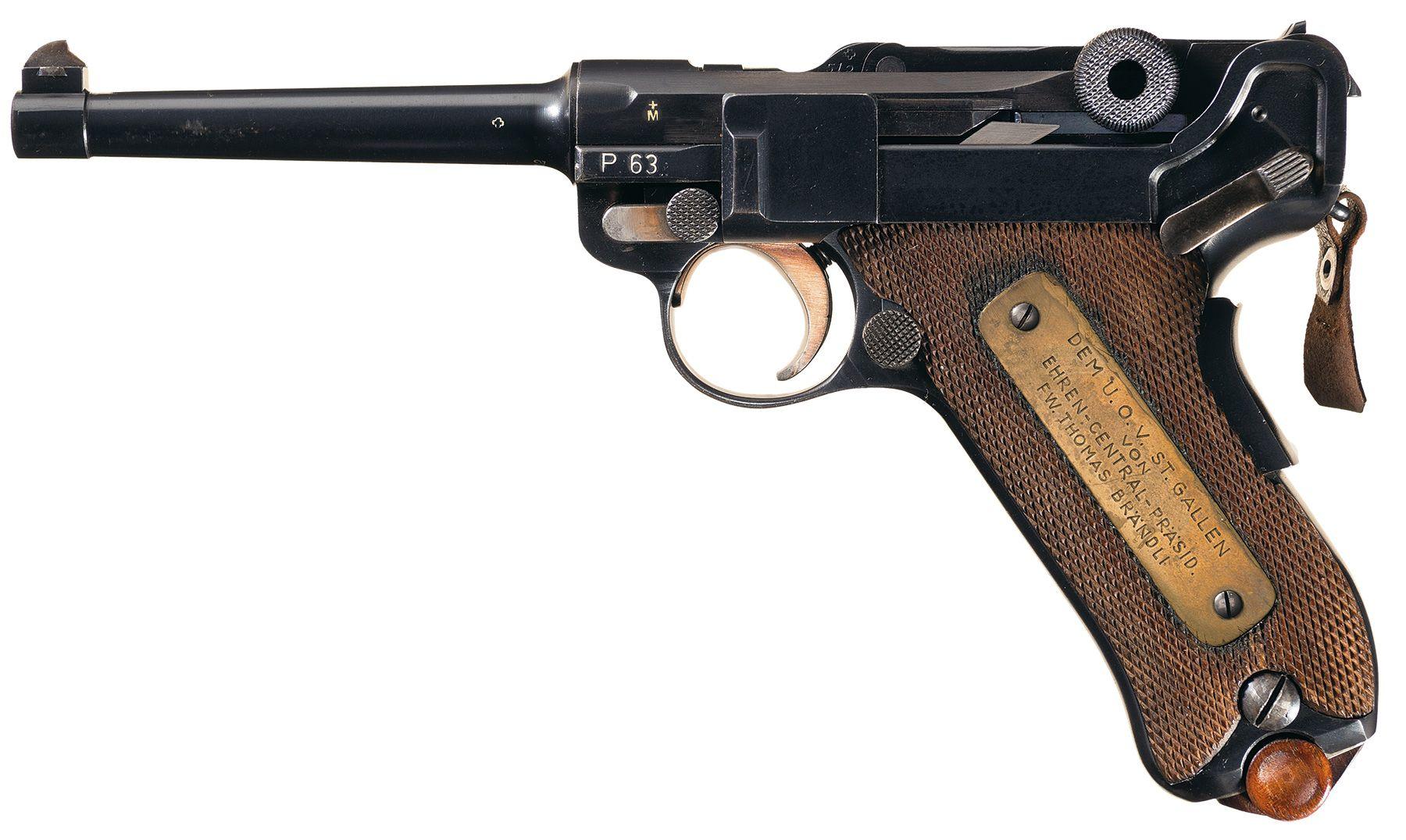
Public reconstructions have consistently described a prolonged volley from a single 7.65mm Swiss Luger-type pistol, although published accounts have not always agreed on every numerical detail concerning the total number of rounds.
What is not seriously disputed is the concentration of successful hits.
The adults inside the BMW were struck repeatedly, including by shots to the head. Mollier was hit several times outside the vehicle. Zainab suffered a gunshot wound and catastrophic head injuries.
That effectiveness becomes more significant if at least part of the shooting occurred while the BMW was moving.
A vehicle in motion complicates a shooting.
Glass can affect bullet paths.
The driver changes position.
Passengers instinctively duck, turn or try to shield one another.
The gunman must manage recoil, movement and a rapidly changing angle while remaining aware of every person in the clearing.
Yet the killer continued to place rounds into human targets.
The publicly available evidence does not reveal the exact order in which each victim was struck.
But one possibility fits the final position of the BMW.
Saad was hit while trying to reverse.
A fatal or incapacitating wound may have prevented him from steering or controlling the accelerator. The BMW continued backwards until it reached loose ground or the edge of the clearing and could go no farther.
By the time the vehicle became trapped, Saad may already have been dead or mortally wounded.
The transmission remained in reverse.
The engine continued running.
The rear wheels kept spinning after the car itself had stopped moving—an image Brett Martin would encounter when he arrived shortly afterwards.
Was the Escape Route an Illusion?
The clearing offered only limited room for manoeuvre.
If the attacker had studied Le Martinet beforehand, he may have understood something Saad had no time to remember:
Reversing offered only a few metres of apparent escape.
Beyond those metres were loose ground, the forest edge and terrain capable of immobilising a heavy estate car.
Once trapped, the BMW became a stationary enclosure containing almost every remaining victim.
That does not prove the killer chose the location.
It does not prove he predicted Saad’s exact reaction.
But it raises a significant question.
Was the BMW’s final position merely the accidental consequence of panic—or an outcome anticipated by someone who had already studied the clearing?
A shooter familiar with the terrain would not need to chase the vehicle far.
He could continue advancing while knowing that the geography itself restricted Saad’s options.
The location would be doing part of the work for him.
The Attack Continued After the BMW Stopped
The gunfire did not end when the BMW became trapped.
The killer remained.
He continued attacking the adults inside the car. The repeated head wounds indicate that his objective was not merely to disable the vehicle or prevent escape.
He wanted to ensure that the victims could not survive.
The gunman also had to manage the limitations of an old semiautomatic pistol.
Later ballistic reporting identified the weapon as a Swiss Luger P06/29-type pistol chambered in 7.65mm, a model normally associated with an eight-round magazine. The number of shots reported in public accounts means the shooter had to reload during the attack. The murder weapon has never been recovered.
Reloading creates vulnerability.
It occupies both hands.
It interrupts the shooter’s concentration.
It creates a moment in which a victim might flee, resist or reach help.
The killer could not know with absolute certainty that another cyclist, vehicle or forest worker would not appear.
Yet he remained functional through several separate phases:
Mollier was attacked.
Saad attempted to move the BMW.
The car became trapped.
The adults inside were shot repeatedly.
Zainab was attacked outside.
The weapon was reloaded or otherwise manipulated.
Only after those stages did the killer leave.
That behaviour does not resemble someone who fired impulsively and fled in panic.
It suggests preparation, firearms familiarity and an unusual ability to continue acting amid noise, movement, blood and human distress.
Whether that ability came from professional training, military experience, criminal experience or intense private preparation remains unknown.
Why Was Zainab Outside?
Zainab was found outside the BMW.
Exactly how she came to be there has never been publicly settled.
She may already have been outside when the attack began.
She may have left the car shortly before the first shot.
Saad may have called for her to return.
Or she may have escaped after the vehicle became trapped.
What is established is that she was shot and suffered devastating injuries caused by blows to the head.
The attacker used the firearm itself as a blunt weapon.
One possibility is that the pistol had jammed or run empty.
Another is that the killer did not want to produce another gunshot.
A third is simply that he was close enough to believe physical force would be sufficient.
Whatever the reason, the attack on Zainab required the gunman to approach a wounded child.
This was not distant, anonymous gunfire.
It was intimate violence.
The shooter had already seen what his bullets had done to the adults. He then confronted a seven-year-old girl at close range and continued attacking her.
No theory concerning his nationality, employer or political allegiance changes the meaning of that decision.
He was willing to kill a child to complete whatever he believed he had come to do.
Did the Killer Believe Zainab Was Dead?
Zainab survived.
The severity of her injuries strongly suggests the attacker did not intend to leave a conscious witness capable of describing him.
She may have seen his face.
She may have observed his clothing, build or movement.
She may have heard his voice or noticed how he carried the weapon.
Even a fragmentary childhood memory could create investigative danger.
The gunman apparently left believing she would not survive.
That became his most consequential failure.
Not because her account immediately revealed his identity.
It did not.
But because the attempted killing of a child ensured that Chevaline would never be remembered as an obscure dispute between adults.
Zainab’s survival gave the case a human centre that investigators, journalists and the public could not easily abandon.
The killer escaped the forest.
He did not escape the consequences of what he had done there.
The Four-Year-Old Inside the BMW
Zeena, aged four, was discovered alive inside the rear of the BMW hours after the first emergency responders arrived.
She had been concealed beneath or between the bodies, legs and clothing of the adults in the back seat.
The simplest explanation is that the gunman never discovered her.
A four-year-old exposed to overwhelming trauma can freeze, become silent and remain motionless. Bodies, clothing and the confined interior of the BMW may have hidden her completely.
But the public reconstruction does not establish exactly when or how she became concealed.
Did an adult push or pull her down when the shooting began?
Did she instinctively crawl beneath her mother?
Did she slide into that position amid the movement inside the vehicle?
Or did she move only after the gunman had left?
Those questions matter because they affect what the shooter could reasonably have seen or heard.
An alternative possibility therefore remains.
The gunman may have detected Zeena but decided that a four-year-old child could not provide a reliable description.
There is no public evidence proving she was consciously spared.
MTD does not present that as fact.
The available evidence does not allow MTD to determine whether Zeena survived through concealment, miscalculation, interruption or a deliberate decision.
But the uncertainty itself changes how the attacker’s final moments around the BMW must be understood.
If he failed to discover her, the operation was less complete than it appeared.
If he knew she was present and left her alive, then even within an act of extraordinary brutality, he was still making calculated distinctions between witnesses.
Why Did Nobody Hear the Gunfire?
Brett Martin did not report hearing the attack despite approaching the area by bicycle.
The surrounding terrain and the sound of moving water may have prevented the shots from being immediately recognisable from farther down the route.
That detail benefited the gunman.
Le Martinet was isolated, but it was not inaccessible.
Cyclists, forest workers, walkers and motorists could still appear.
Natural sound, vegetation and changes in elevation may have reduced the distance over which gunfire could be clearly identified.
If the location was selected in advance, those acoustic conditions may have been accidental.
Or they may have been understood by someone familiar with the area.
The location repeatedly appears to favour the killer:
Limited visibility.
Restricted vehicle movement.
No surveillance cameras.
Sparse traffic.
Natural sound masking.
Forest cover.
A narrow approach route.
Several possible ways to disappear from view.
Le Martinet was not merely where the murders happened.
It was a place in which multiple people could be attacked before the outside world understood that anything unusual had occurred.
How Did the Killer Leave?
The gunman departed before Brett Martin entered the clearing.
How he escaped remains unresolved.
A motorcyclist seen in the broader area became a major focus of the investigation and was eventually identified. Investigators said they did not believe that person was responsible.
That still does not establish how the actual killer arrived or left.
He may have used another motorcycle hidden out of sight.
He may have left a vehicle farther down the road.
He may have escaped through the forest on foot.
Someone may have been waiting for him.
Or he may have departed in a way so ordinary that witnesses failed to recognise its significance.
The escape method matters when attempting to identify him.
It matters less when evaluating the attack itself.
Whether he arrived by motorcycle, car or on foot, one point remains constant:
He was present at the decisive moment and gone before the first witness understood that a massacre had occurred.
Brett Martin Entered the Clearing

Martin approached by bicycle shortly afterwards.
He did not experience the scene as investigators and journalists later would—from aerial photographs, diagrams or a complete list of victims.
He encountered it progressively.
First, a bicycle on the ground.
Then a wounded child moving unsteadily.
Then a BMW positioned unnaturally near the edge of the clearing, its engine still running.
His first interpretation was reportedly that a serious traffic accident had occurred.
That reaction can seem strange only when viewed with knowledge he did not yet possess.
His attention immediately went to the living child.
Martin placed Zainab in the recovery position and attempted to understand what had happened. He approached the BMW, saw the occupants and broke a window so he could switch off the engine.
Mobile reception was unreliable.
He had to seek assistance.
By then, the killer had already disappeared.
The clearing no longer belonged to the attacker.
It belonged to witnesses, emergency responders and investigators.
But the most important moments had passed.
What the Attack Reveals
The final sequence does not prove that the gunman belonged to a military unit, an intelligence service or a professional assassination network.
It does reveal observable characteristics.
He was prepared to confront several adults.
He brought enough ammunition for sustained violence.
He remained functional when the BMW attempted to escape.
He reloaded.
He achieved a high proportion of successful hits.
He continued attacking at close range.
He left before help arrived.
Those actions are consistent with significant firearms familiarity and extraordinary emotional control.
They are difficult to reconcile with an ordinary disagreement that unexpectedly escalated into uncontrolled panic.
The attack also appears to contain some form of prior knowledge.
At minimum, the gunman understood how to exploit the location once the victims were there.
The larger question is how much more he knew.
Did he expect only one target?
Did he expect Saad?
Did he expect Mollier?
Did he know that the family would be present?
Was he already concealed before either man arrived?
Or did he follow one of them to Le Martinet and adapt after discovering the other?
The Reconstruction MTD Cannot Yet Prove
MTD’s working reconstruction is this:
Saad al-Hilli and Sylvain Mollier may have been together outside or immediately beside the BMW.
The attacker may already have been concealed nearby.
Mollier may have been shot first.
Saad then attempted to reach the vehicle and move his family away.
The gunman redirected his fire towards the BMW.
Saad selected reverse because the threat appeared ahead of him or because backing away was his immediate survival reflex.
He was fatally wounded while the car was still moving.
The BMW became trapped.
The attacker approached and completed the assault against the adults.
Zainab was shot and struck outside.
Zeena remained unseen—or was consciously left alive.
The killer may then have recovered something he considered important, if any such object existed, before escaping.
Several parts of that sequence are compatible with the physical scene and human behaviour.
None proves that Saad and Mollier had arranged an appointment.
None proves that information, money or a physical object was exchanged.
None proves that the killer belonged to a particular organisation.
The reconstruction must therefore remain what it is:
A hypothesis built from physical evidence, human instinct and questions the public record has never fully answered.
The Question Left in the Forest
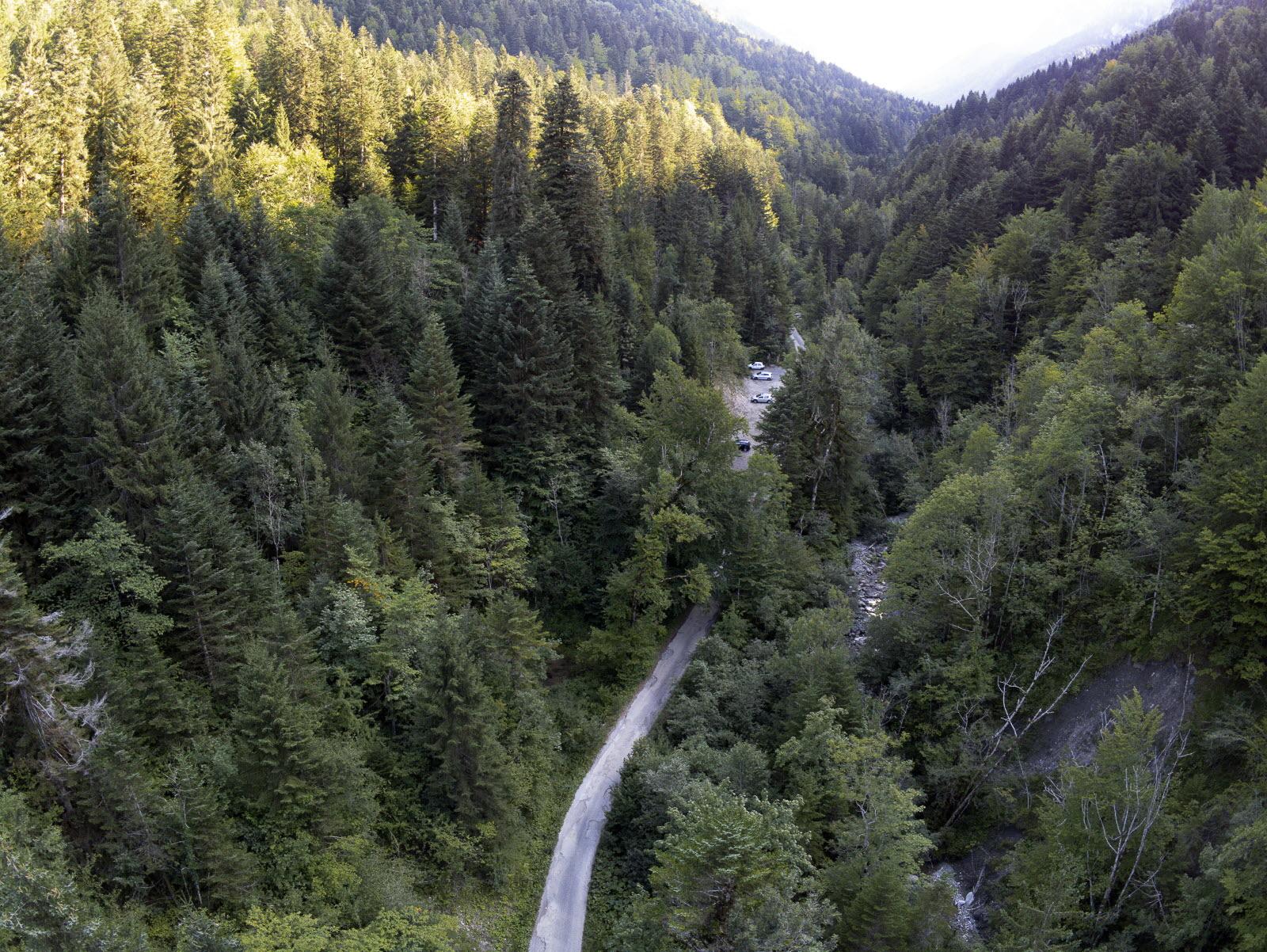
For years, the Chevaline investigation has asked which victim attracted the killer.
Saad?
Mollier?
The family?
A random person in the wrong place?
But the final moments suggest that the more important question may be different.
The gunman did not arrive, fire blindly and flee.
He remained through movement, resistance, reloading and close-range violence.
He behaved as though he believed he had enough time.
He appeared prepared for more than one victim.
And he disappeared before anyone understood what had happened.
Perhaps the killer was extraordinarily lucky.
Perhaps he possessed exceptional local knowledge.
Perhaps he followed one victim and encountered the others unexpectedly.
Or perhaps Le Martinet was never merely the place where he found them.
Perhaps it was the place where he knew they would come.
Next in MTD Investigates
PART IV — WHO WAS SYLVAIN MOLLIER?
For years, he has been described as the cyclist who arrived at the wrong moment.
But what was his exact role inside a company serving France’s nuclear industry?
Why did he ride towards a dead-end forest clearing?
What did his partner, colleagues and employer know about his final journey?
What was he carrying that afternoon?
And was Sylvain Mollier truly the accidental witness the investigation assumed him to be?
Sources & Methodology
This article is based on publicly reported forensic findings, contemporary accounts of Brett Martin’s evidence, later reporting on the Swiss Luger-type murder weapon, and updates concerning the French cold-case investigation. Where published accounts conflict—particularly concerning the exact ammunition count, firing sequence and movement of individual victims—MTD has avoided presenting disputed details as established fact.