

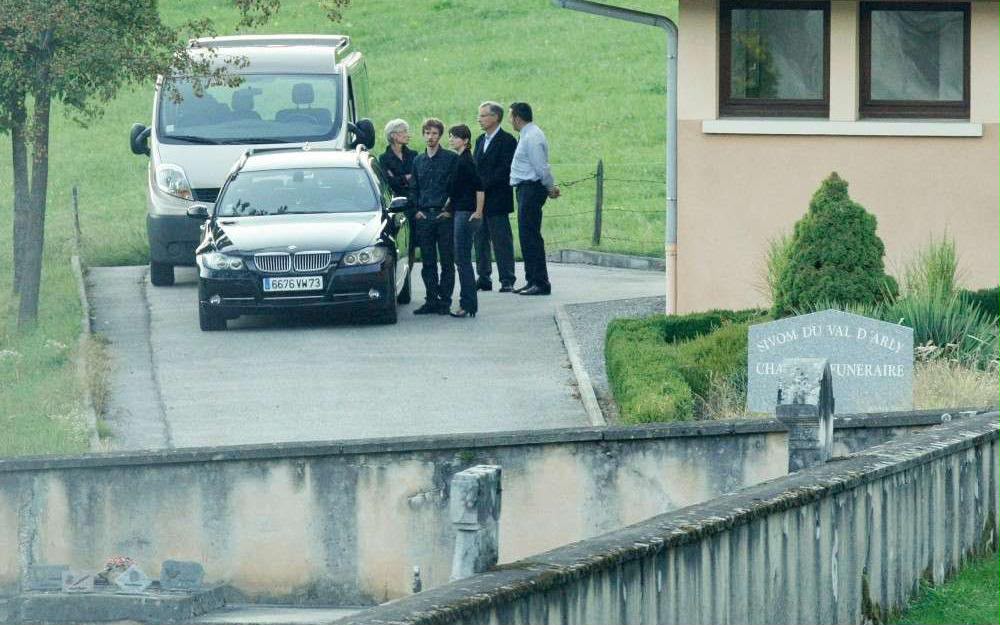
For more than thirteen years, the French cyclist found beside the al-Hilli family’s BMW has been described as a man who arrived at the wrong place at the worst possible moment. But what if that description became accepted before it was ever proved?
For more than a decade, Sylvain Mollier has been remembered primarily through two words:
The cyclist.
A local father. An experienced rider. A man on leave following the birth of his youngest child. Someone who apparently entered the Combe d’Ire forest for an afternoon ride and reached Le Martinet just as another family was being murdered.
It is an explanation that appears natural because it is simple.
Saad al-Hilli drove into the forest with his wife, Iqbal, his mother-in-law, Suhaila al-Allaf, and his two daughters. Mollier arrived independently on his bicycle. One party was targeted, while the other became trapped in the violence.
That sequence may be correct.
It has never been established beyond doubt.
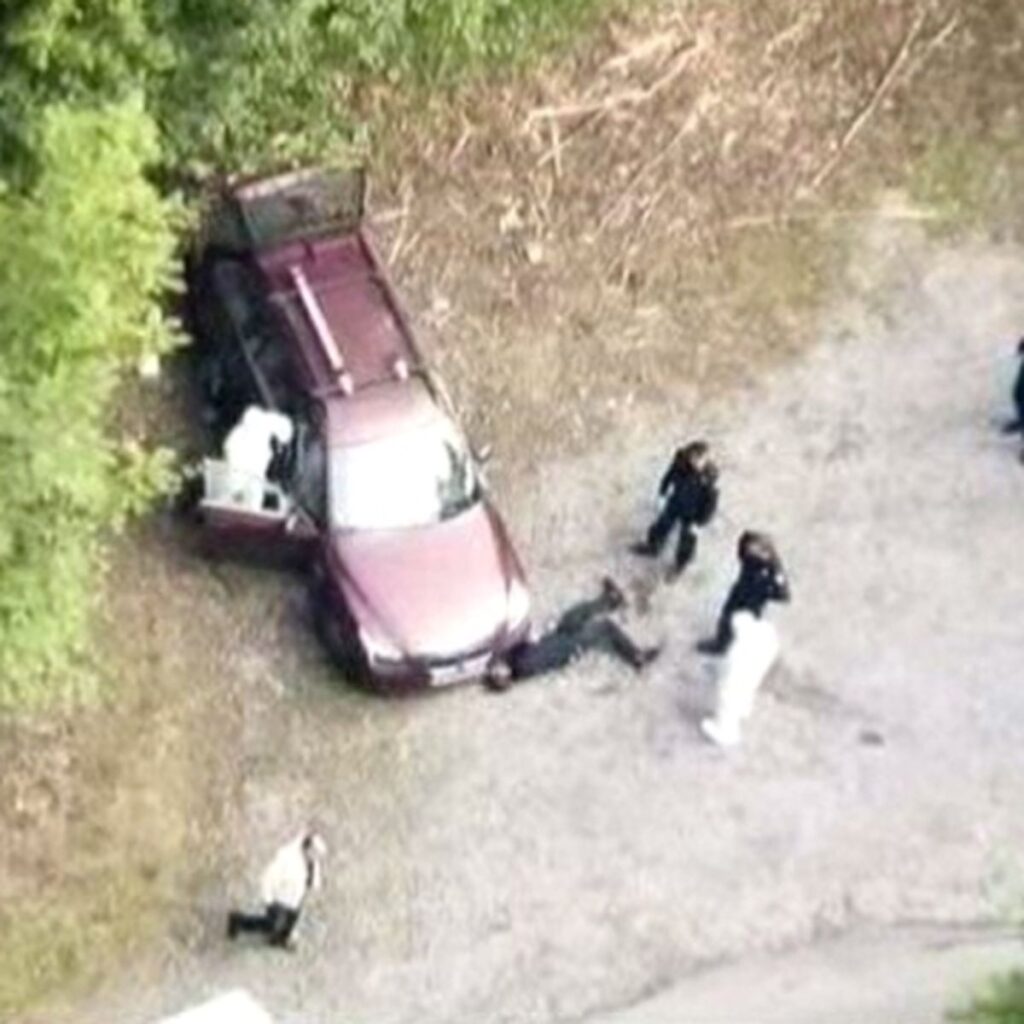
On 5 September 2012, Mollier was found dead close to the burgundy BMW in which Saad, Iqbal and Suhaila had been shot. Seven-year-old Zainab survived a gunshot wound and a severe blow to the head. Her four-year-old sister, Zeena, remained concealed inside the vehicle and was discovered alive hours later.
Mollier had reportedly been struck by seven bullets, more than any other victim.
The accepted interpretation has usually placed him at the edge of the crime: an unfortunate witness who arrived at precisely the wrong moment.
But what changes when Sylvain Mollier is placed at the centre of the crime rather than at its edge?
This investigation does not claim to prove that Mollier was the principal target. It does not claim that he knew Saad al-Hilli or that a secret exchange took place in the forest.
It asks whether the accidental-cyclist narrative has been subjected to the same scrutiny as every theory built around the al-Hilli family.
Because before investigators can determine who killed Sylvain Mollier, they may first need to reconsider what brought him to Le Martinet.
The Man Reduced to a Description

The public record of Sylvain Mollier’s life is surprisingly limited.
He was 45 years old, lived in the Haute-Savoie region and was the father of children from an earlier relationship. He had recently become a father again with his partner, Claire Schutz.
He was also an experienced cyclist.
On the day of his death, he was away from work following the birth of his youngest child. He rode towards the forested slopes above Chevaline, following a route that would eventually take him to the isolated clearing at Le Martinet.
Professionally, Mollier worked at the Cezus industrial facility in Ugine, then connected to the French nuclear group Areva. He was widely described as a welder or workshop employee involved in industrial production.
That distinction is important.
Mollier was not publicly identified as a nuclear scientist, senior engineer or intelligence figure. His family strongly resisted suggestions that he occupied a secret or highly classified role, and investigators did not publicly establish that he had access to nuclear secrets.
MTD has no basis to transform an industrial employee into a covert operative simply because he worked within a strategically important sector.
But there is an equal danger in dismissing his professional relevance too quickly.
Modern industries do not depend only upon scientists and executives. They depend on production workers, specialist welders, technicians, maintenance personnel, quality controllers and workshop operators who understand how systems function in practice.
An employee may know:
how a component is manufactured;
where a production process repeatedly fails;
which technical specifications cannot be achieved consistently;
which safety concerns are discussed informally but not publicly;
which materials or procedures are commercially valuable;
or which internal claims do not correspond with operational reality.
None of this proves Mollier possessed sensitive information.
It establishes only that a job title cannot tell us everything a person knows.
The relevant question is therefore not whether Mollier was a nuclear scientist.
It is more precise:
What did he actually do, what could he observe, and did anyone believe that knowledge had value?
What Is Established
Several elements of Mollier’s final journey are broadly known.
He left on his bicycle while on leave from work. He was familiar with cycling and capable of riding the difficult roads around the forest. His partner reportedly spoke to him by telephone during the ride. He sounded out of breath and indicated that he intended to continue towards the top.
Later that afternoon, his body was discovered near the al-Hilli family’s vehicle.
He had been shot repeatedly.
No publicly proven personal or professional relationship between Mollier and Saad has emerged. Investigators examined Mollier’s work, family and local environment but did not publicly establish a motive connected to him.
Those facts support the conventional explanation.
A cyclist undertaking a demanding local ride may have arrived at a public forest clearing by chance. The telephone conversation with his partner appears compatible with an ordinary outing. The absence of any documented link between the two men weighs heavily against the proposition that they arranged to meet.
MTD does not dismiss those points.
But established facts must be separated from conclusions placed upon them.
It is established that Mollier was cycling.
It is not established that cycling was his only purpose.
It is established that no connection with Saad has been publicly demonstrated.
It is not established that no connection ever existed.
It is established that his partner spoke to him during the ride.
It is not established that their conversation revealed everything he intended to do.
The distinction is critical.
An assumption can become so familiar that it begins to sound like evidence.
A Ride Can Be Real and Still Lead to a Meeting
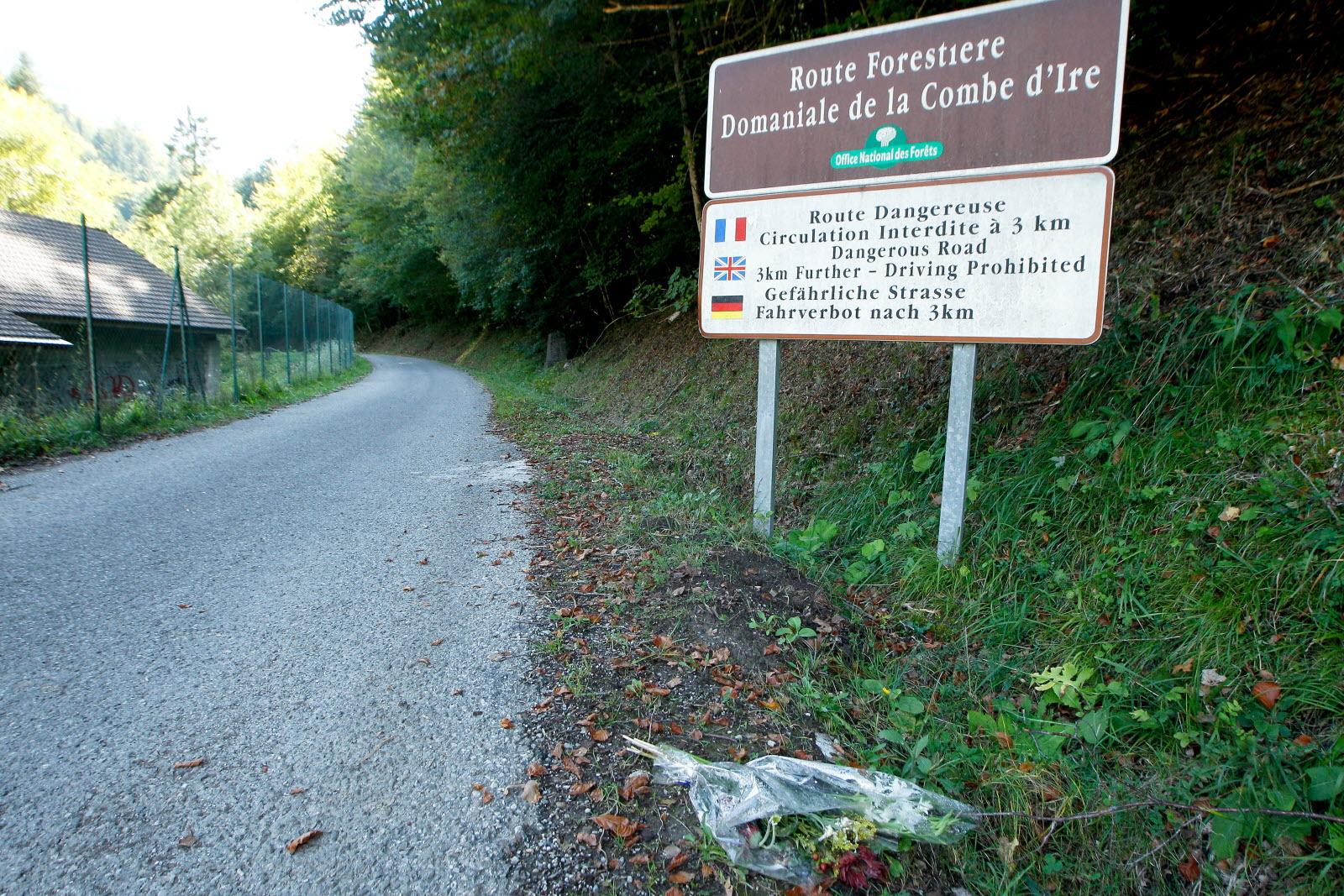
One of the strongest arguments against a planned encounter is the apparent normality of Mollier’s journey.
He was wearing cycling clothing. He was physically exerting himself. He spoke to his partner while climbing. Nothing publicly reported from that conversation suggested he was secretly travelling to meet a British engineer.
That may be because no meeting existed.
But a genuine bicycle ride and a planned encounter are not mutually exclusive.
Mollier could have intended to ride to the location and briefly meet someone there. The bicycle could have been the purpose of the journey, the method of reaching the clearing, or both.
A meeting does not need to replace the ride in order to be possible.
The more important question concerns timing.
How predictable was Mollier’s arrival at Le Martinet?
A cyclist following a general route is difficult to intercept at an exact place unless someone follows him or understands his habits.
A person travelling to a prearranged meeting is different.
A fixed location and approximate time would allow someone else to reach the clearing first, prepare a position and wait.
That possibility would explain something that has remained difficult to understand: how the killer could appear in a remote forest, encounter the relevant victims within a narrow period, fire 21 shots and disappear before the first known witness reached the scene.
Under such a scenario, the killer would not need sophisticated live surveillance.
He would need only two pieces of information:
Where.
And when.
The Seven Bullets
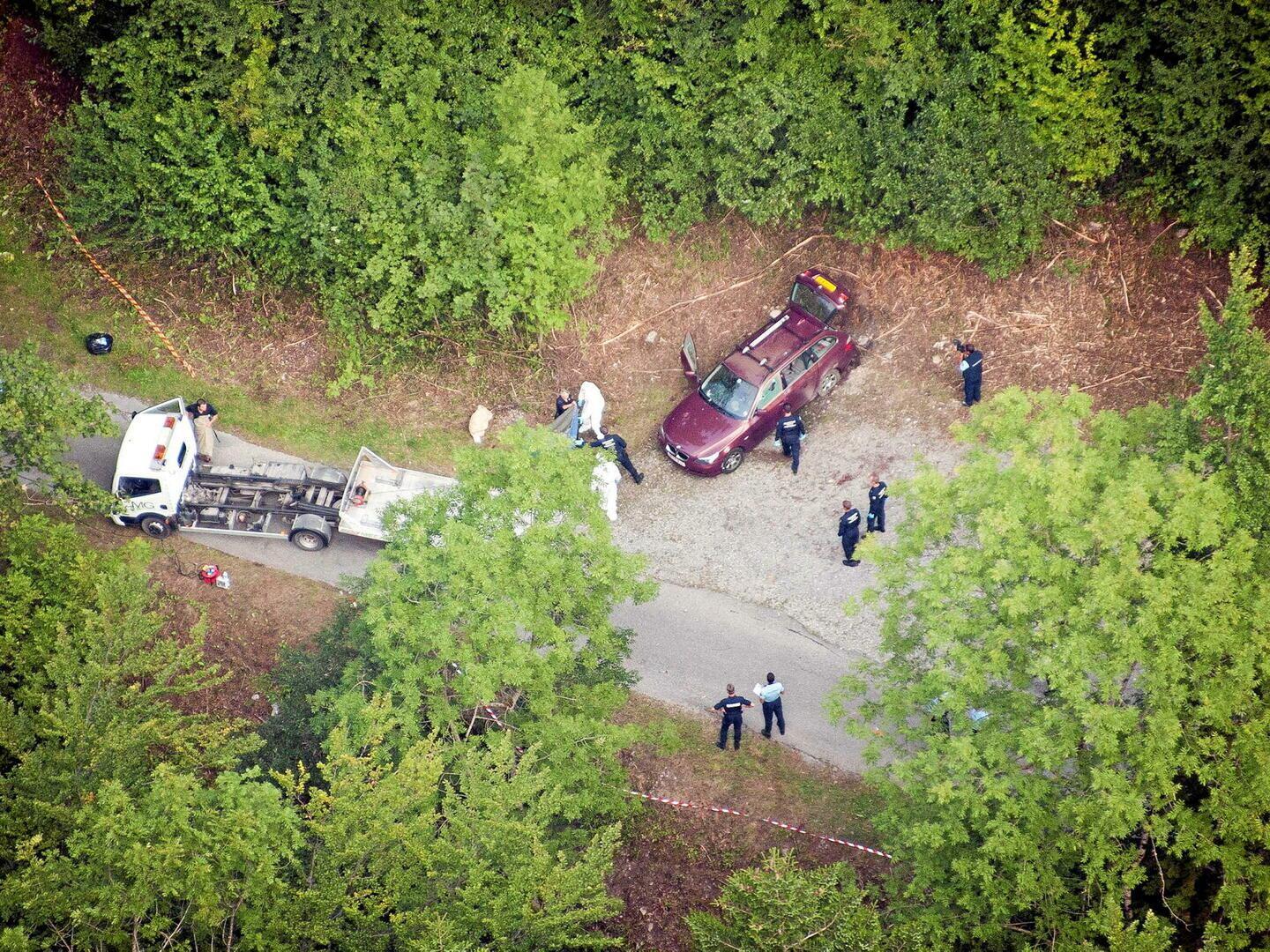
Mollier was reportedly struck by seven bullets.
The number has remained one of the most disturbing details in the case.
It does not automatically make him the primary target.
A gunman could fire repeatedly at an unexpected witness because that witness remained standing, attempted to escape or presented an immediate threat. Mollier was outside the car and exposed, unlike the adults enclosed by the BMW. The attacker may simply have had a clearer line of fire.
But seven shots cannot be treated as insignificant.
They raise questions about urgency and priority.
Was Mollier attacked first because the killer had been waiting for him?
Did he arrive unexpectedly and force the gunman to change course?
Was he shot during more than one stage of the attack?
Did he remain alive after the first volley, prompting the attacker to fire again?
Or did someone need to be certain that Mollier would never leave the clearing?
Public reporting has produced competing interpretations of the shooting sequence. Some accounts suggested that forensic traces could indicate Mollier was bleeding before Saad entered or moved within the BMW. Former prosecutor Éric Maillaud later stressed that investigators had not established a definitive order in which the victims were shot.
That uncertainty matters.
MTD cannot state that Mollier was shot first.
But uncertainty does not justify automatically placing him last.
The shooting order remains an unresolved foundation of the case. Until that order is known, claims about who was the target remain interpretive rather than factual.
The Power of the First Narrative
Why has the description of Mollier as an accidental witness endured for so long?
Partly because it requires the fewest additional assumptions.
Saad was a foreign visitor with an Iraqi background, a professional life connected to engineering and satellite-related environments, financial interests and reported family tensions. His biography produced several visible investigative directions.
Mollier appeared simpler.
He was local. He had gone cycling. He had no publicly known link to the family. Treating him as an accidental victim allowed investigators and the media to focus on the al-Hillis without first explaining why two unrelated parties appeared in the same isolated clearing at almost the same moment.
This does not mean investigators ignored him.
His background, relationships and workplace were examined. Possible local motives were explored. People around him were interviewed.
But early narratives exert influence.
Once a victim is classified as incidental, subsequent information may be interpreted through that classification. His employment becomes ordinary because he was supposedly a witness. His route becomes recreational because he was supposedly a witness. His presence becomes coincidence because he was supposedly a witness.
The reasoning can become circular:
Mollier was accidental because no link was found.
No deeper link is expected because Mollier was accidental.
The danger is not conspiracy.
It is cognitive convenience.
An investigation faced with thousands of possible connections must organise the evidence somehow. Early working models are unavoidable. The question is whether those models remain open to revision when a case stays unresolved.
More than thirteen years later, the accidental-cyclist explanation should not be immune from re-examination simply because it was the first explanation that made sense.
What If Neither Man Was There by Chance?
The conventional reconstruction requires an extraordinary convergence.
A British engineer travelling with his family entered a remote forest clearing.
A French industrial worker arrived at virtually the same place by bicycle.
An armed individual appeared during the same narrow period.
Within minutes, four people were dead, one child was critically injured and another was hidden inside the vehicle.
Coincidences happen.
A remote location is not necessarily deserted. Walkers, cyclists, motorists and forestry workers may use the road. The simultaneous presence of Saad and Mollier does not prove that they knew each other.
But it raises a legitimate question:
Were the two journeys genuinely independent?
MTD’s analytical reconstruction considers the possibility that Saad and Mollier had arranged a brief encounter.
There is no public evidence proving such an arrangement.
No surviving message has been produced. No known witness has confirmed an introduction. No documented personal relationship has been established.
Those absences are significant evidence against the scenario.
They are not necessarily conclusive.
A sensitive first meeting might leave little conventional history. Communication could pass through an intermediary. The participants might use temporary devices, indirect messages or a non-digital method. One person could have been introduced to the other shortly before the encounter.
The more sensitive the purpose, the fewer traces the participants might intentionally create.
This creates the central contradiction of the proposed scenario.
By trying to leave no trace, the men may also have left investigators with no visible proof that the meeting existed.
Who Needed Whom?
If Saad and Mollier planned to meet, who initiated the contact?
MTD’s working model places Saad as the party who may have needed something.
He had travelled from Britain and was staying with his family near Lake Annecy. Mollier was local and familiar with the area.
In ordinary commercial and human behaviour, the person seeking knowledge, access or material often travels to the person capable of providing it.
That reasoning is not proof. Saad was already in France on holiday, and his presence near Chevaline could have had no connection to Mollier at all.
But if an encounter existed, the distance between the two men’s normal environments may indicate direction:
Saad came towards Mollier.
Mollier did not travel to Britain.
What could Saad have needed?
The possibilities cannot responsibly be narrowed without evidence. They could have included:
technical information;
specialised production knowledge;
documentation;
a physical data carrier;
evidence of a defect or safety issue;
proprietary designs or research;
information relating to energy, defence, satellites or another strategic field;
or a technological concept with commercial value.
It could have involved several of these categories.
It could have involved only one.
It could have involved none of them.
MTD is not claiming that the men jointly developed an invention or that Mollier possessed nuclear secrets. There is no public evidence supporting such a conclusion.
The analytical point is different.
If information was important enough to justify a concealed physical meeting, its value may have rested not in what the two men personally owned, but in what they knew.
Why Meet in a Forest?
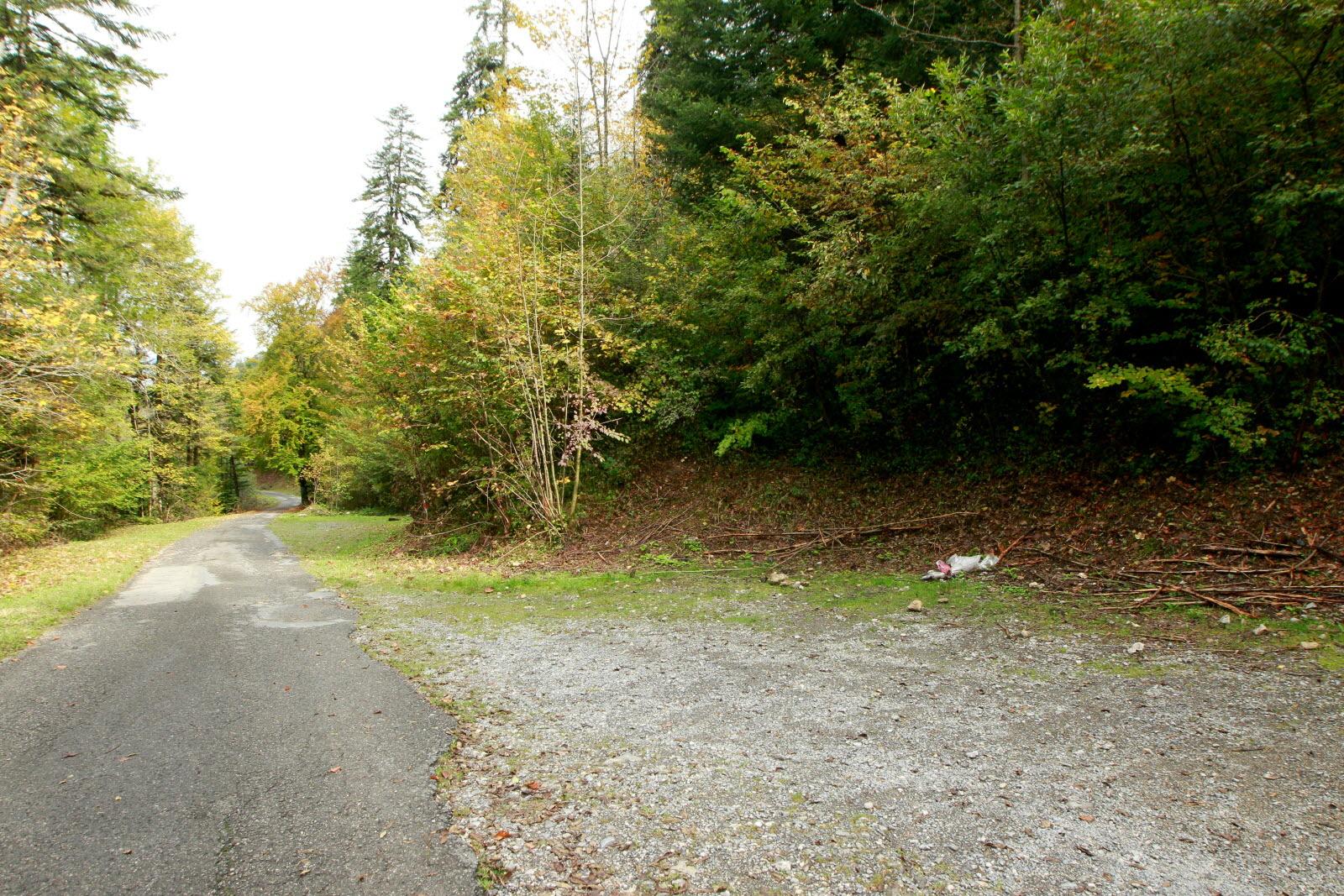
Sensitive information can be transferred digitally.
Documents can be emailed. Files can be encrypted. Messages can be sent through intermediaries. Meetings can take place in hotels, cafés or offices.
Why would two intelligent men choose an isolated forest clearing?
The first possible answer is trace avoidance.
A face-to-face conversation creates no email record. A physical document or storage device does not need to pass through an identifiable server. A brief encounter outside a formal business environment may be harder to reconstruct than an appointment at a hotel or corporate office.
The second answer concerns discretion.
Le Martinet offered distance from colleagues, cameras, reception desks and predictable public surveillance. It was accessible by road and bicycle but isolated enough for a brief private exchange.
The third answer may involve false security.
Both men could have understood that the subject was sensitive while still believing they were taking sufficient precautions. Awareness of danger does not always produce an accurate assessment of that danger.
People can recognise risk in the abstract while believing themselves too careful, too unimportant or too well protected for the worst outcome to occur.
Saad may have believed the presence of his family made an attack unthinkable.
Mollier may have believed an isolated outdoor meeting was safer than using a monitored digital channel.
They may have viewed Le Martinet as protection from observation.
Under MTD’s reconstruction, the location instead became a trap.
Their precautions would not have failed because they were naïve about the existence of danger.
They would have failed because they underestimated how much someone else already knew.
The Family as Cover
Why would Saad bring his wife, mother-in-law and children anywhere near a sensitive encounter?
This is one of the strongest objections to the meeting scenario.
A responsible father aware of an immediate threat would not deliberately expose his family to lethal risk.
But that may not have been how Saad understood the situation.
The meeting may have been expected to last only a few minutes during an otherwise genuine family outing. The holiday created a natural explanation for his travel. The presence of his wife, children and mother-in-law could make him appear less suspicious and reduce the appearance of a deliberate business meeting.
The family may also have provided psychological reassurance.
A person who fears surveillance or professional consequences may still believe that violence is unlikely in daylight, in France, beside a family car and within reach of tourist areas.
He may think:
No one will attack while my children are here.
The presence of loved ones can feel like a shield because most people retain moral limits.
The killer at Le Martinet did not.
Under the proposed reconstruction, Saad may have understood that the information was dangerous without imagining that those seeking to suppress it would kill his family.
That distinction would make his decision tragic, but not irrational.
Why Were All the Adults Killed?
If Mollier possessed information and Saad intended to receive it, both men could have been central targets.
That would explain why Saad was not merely an unfortunate witness to an attack on Mollier. He would have known why the meeting took place, what was expected and what the information meant.
Iqbal and Suhaila present a different question.
Neither woman has been publicly connected to Mollier or to any industrial exchange. Why kill them?
The simplest explanation is that they witnessed the attack.
But the gunman could not know how much Saad had shared with them.
People frequently tell their spouses about concerns, appointments, unusual contacts or plans, even when they withhold details from colleagues and friends. Iqbal may have known nothing. She may have known only that Saad intended to meet someone. She may have known more.
The killer could not safely assume ignorance.
Suhaila was another adult capable of remembering the route, the conversation inside the car, the reason for stopping and anything said before the shooting began.
If the objective was not merely to kill two men but to prevent the purpose of the encounter from being reconstructed, every surviving adult would represent uncertainty.
Under that scenario, the attack becomes more than murder.
It becomes information suppression.
No loose ends.
No adult survivor able to explain why the BMW and the bicycle reached the same clearing.
No one able to identify what was discussed, handed over or expected.
This remains an analytical interpretation. No public evidence proves that the gunman followed such an instruction.
But it provides a coherent explanation for why an attack potentially centred on two men expanded immediately to the women accompanying Saad.
Zainab, Zeena and the Limits of Interpretation
The children complicate every attempt to construct a precise motive.
Zainab was outside the vehicle during part of the attack. She was shot and suffered a severe injury to the head. The level of violence directed at a seven-year-old suggests that the killer considered her presence consequential.
She may have seen him.
She may have been able to describe his face, clothing, weapon, movements or direction of escape.
Some reporting has suggested that she was struck with the firearm after the ammunition was exhausted. The exact sequence and intention remain disputed, and MTD will not present that interpretation as settled fact.
Zeena survived inside the BMW, concealed beneath or between the bodies in the rear of the vehicle.
The most straightforward explanation is that the gunman did not see her.
Another possibility is more disturbing: that he saw or suspected a very young child remained inside but judged her incapable of providing a reliable description.
There is no public evidence that allows either possibility to be confirmed.
MTD should therefore resist constructing a definitive psychological profile from the sisters’ different outcomes.
The contrast could reflect calculation.
It could reflect concealment.
It could reflect urgency, darkness inside the vehicle, confusion or chance.
What can be said is that the killer pursued Zainab with extraordinary violence while Zeena remained alive inside the car.
That distinction matters, even when its precise meaning cannot yet be determined.
The Leak

If an encounter was planned and the killer arrived first, someone else must have known.
The shooter would need information about the location and approximate time. That knowledge could come from several directions.
Mollier may have told someone he trusted.
He may have discussed concerns within his professional environment.
An intermediary may have arranged the contact and then betrayed it.
A communication may have been accessed, intercepted or recovered.
Saad may have been monitored independently.
None of these possibilities has been publicly demonstrated.
But every concealed meeting contains a weakness: the number of people required to make it happen.
If Mollier was preparing to disclose sensitive information, his greatest vulnerability may not have been physical surveillance.
It may have been conversation.
He may have trusted someone who did not share his interests.
He may have revealed the meeting without understanding that the person listening would pass it onward.
His words may have reached someone with the motive and capacity to stop the exchange.
Under this model, the killer did not need to follow either victim through the mountains.
He could simply wait.
Preparation would explain the speed of the attack, the apparent control over the location and the ability to leave before Brett Martin reached the clearing.
The operation would begin not with the first shot, but with the leak that made the ambush possible.
What Could Be Worth Four Lives?
The scale of the violence suggests that, under any targeted scenario, the perceived stakes were extreme.
What information could justify such an act in the mind of an organiser?
One possibility is technological disruption.
A new method, process or invention can threaten an established product, a protected market or a company valued in the billions. A development does not need to be complete to become dangerous. Proof that an existing technology can be replaced may be enough to influence investors, contracts and strategic planning.
Another possibility is exposure.
Information revealing a serious technical defect, concealed safety risk or compromised industrial process could trigger recalls, legal liability, regulatory intervention and reputational collapse.
A third possibility involves intellectual property.
Designs, production data, specialist research or proprietary knowledge can carry enormous commercial and strategic value, particularly where only a small number of companies or states possess the capability involved.
A fourth possibility is national security.
Information connected to nuclear materials, defence systems, satellite technology, advanced engineering or strategically controlled production could attract state attention even if neither participant formally worked for an intelligence service.
These categories are not mutually exclusive.
A technical defect may also be a commercial secret.
An invention may also have military applications.
Industrial data may also carry national-security implications.
But they should not be converted into allegations.
MTD has found no public evidence identifying a government, corporation or individual as the organiser of the Chevaline murders.
The purpose of examining these categories is not to accuse.
It is to recognise that the absence of an obvious personal motive does not mean the crime lacked a rational motive.
The value may have been attached to information rather than to the victims themselves.
Who Could Have Ordered It?
The apparent planning has repeatedly encouraged speculation about professional involvement.
A state service could theoretically possess both the motive and operational capacity to prevent a sensitive transfer.
An industrial party could face devastating financial consequences if certain information became public, reached a competitor or disrupted a strategic programme.
A powerful individual could act from personal, professional or financial interest without representing an entire institution.
These categories do not need to overlap.
The organiser could have belonged to only one of them.
Imagine a company worth billions receiving credible information that two people were preparing to exchange material capable of destroying its principal source of value.
Perhaps it exposes a defect.
Perhaps it invalidates a product.
Perhaps it reveals an alternative technology.
Perhaps it threatens contracts, patents or legal protection.
The potential financial motive would be enormous.
But motive is not evidence.
Even an existential corporate threat does not establish that a company commissioned violence. No organisation should be connected to these murders without direct supporting material.
The same restriction applies to intelligence services and powerful individuals.
MTD’s conclusion is deliberately limited:
A commercially or strategically valuable transfer could provide a motive proportionate to the risk and brutality of the attack, even where no conventional personal conflict has been found.
Whether such a transfer existed remains unproved.
The Weapon Problem
The proposed reconstruction faces a major difficulty.
The killer used a Swiss-made 7.65mm Luger P06/29, an old and distinctive firearm. Twenty-one cartridge cases were recovered. The weapon’s age, recognisable ammunition and apparent exhaustion during the attack do not fit the popular image of a modern professional assassination.
A highly organised service or commercial operator might be expected to use an untraceable contemporary weapon, control ammunition more carefully and avoid leaving a large ballistic signature.
That argument weighs against a sophisticated institutional operation.
But the weapon can be interpreted in more than one way.
An older firearm may be difficult to trace through modern ownership databases. It may have entered private circulation decades earlier. Its use could deliberately suggest a local collector, unstable gun owner or historically minded individual.
Alternatively, there was no deception at all.
The killer may simply have used the weapon available to him.
The same ambiguity surrounds the shooting itself. The attack was fast and lethal, with a high proportion of shots reportedly striking victims. Yet the BMW’s attempted movement, Zainab’s survival and the exhausted ammunition suggest a scene that may have become less controlled than intended.
A planned ambush does not require flawless execution.
It requires sufficient control to complete the main objective and escape.
The killer succeeded in leaving four adults dead and vanishing without identification.
Whether that success reflected professional training, local knowledge, preparation or extraordinary luck remains unresolved.
The Case Against MTD’s Reconstruction
A serious investigation must test its own theory rather than collect only facts that appear to support it.
The proposed Saad-Mollier meeting contains substantial weaknesses.
First, no documented relationship between the men has been publicly established.
Investigators reportedly explored whether they knew each other and found no demonstrable connection. More than a decade of reporting has not produced a verified intermediary, message, shared project or witness who placed them together before the murders.
Second, Mollier’s behaviour appears consistent with an ordinary bicycle ride.
He was dressed for cycling. He followed a challenging route. He spoke naturally to his partner while exerting himself. Nothing publicly known from that conversation suggests urgency, secrecy or a planned meeting.
Third, claims about his access to highly sensitive nuclear material were challenged by his family and were not substantiated by the investigation.
He was an industrial employee, not a publicly identified senior nuclear specialist.
Fourth, the crime may have originated entirely with the al-Hilli family.
Saad’s professional history, finances, family dispute and international background generated multiple potential motives. Mollier could have entered the clearing during an attack already underway.
Fifth, a local or psychologically disturbed killer remains possible.
The old weapon, remote location and absence of a clear link between the victims may indicate a random encounter rather than an information-suppression operation.
Sixth, a planned meeting would normally generate some trace.
Travel decisions, timing, phone records, indirect contacts or unusual behaviour might be expected. The fact that none has become publicly visible is not trivial.
These objections prevent MTD from presenting its reconstruction as a conclusion.
They may ultimately prove it wrong.
But the same scrutiny must be applied to the accidental-witness theory.
That theory also requires assumptions:
that two unrelated men arrived almost simultaneously;
that the killer’s presence coincided with both;
that the most heavily shot victim was incidental;
and that no undiscovered connection explains the convergence.
One scenario is not factual merely because it is more familiar.
What Must Be Re-examined
The passage of time does not make these questions less important.
It makes precision more urgent.
A renewed examination of Mollier’s role should ask:
What exactly were his duties inside the Cezus facility?
Which production processes, materials or internal problems could he observe?
Did he raise concerns, report irregularities or experience workplace conflict?
Did his financial circumstances change before his death?
Had he discussed selling, transferring or revealing technical information?
Were all professional contacts and intermediaries fully reconstructed?
Did he communicate through devices or accounts not initially identified?
Who knew his cycling route that afternoon?
Was his arrival time fixed or predictable?
Did he carry anything that was never recovered?
Was anything removed from his clothing, bicycle, home or workplace?
Did Saad possess a corresponding document, device, note or contact?
Could either man have communicated through a third party?
Was the family’s journey into the forest examined as a possible detour for a brief appointment rather than only as tourism?
A negative answer to every question would strengthen the accidental-cyclist theory.
That is precisely why they should be answered.
An investigative hypothesis earns credibility not by avoiding disproof, but by inviting it.
MTD’s Working Assessment
MTD does not claim that Sylvain Mollier was a spy.
It does not claim that he was a nuclear scientist or proven whistleblower.
It does not claim that he and Saad al-Hilli jointly developed a technology.
It does not claim that a document or storage device changed hands at Le Martinet.
It does not accuse a company, government, intelligence service or individual of ordering the murders.
The public evidence does not support such definitive statements.
MTD’s assessment is narrower:
The possibility that Sylvain Mollier and Saad al-Hilli were both intended targets deserves more serious examination than it has received publicly.
A prearranged encounter involving sensitive technical or industrial information offers one coherent explanation for several unresolved features of the case:
the near-simultaneous presence of the two men;
the remoteness of the location;
the possibility that the killer was already waiting;
the number of shots directed at Mollier;
the killing of every visible adult;
and the attacker’s ability to leave before the first known witness arrived.
Coherence is not proof.
A theory can explain several facts and still be wrong.
But for thirteen years, one assumption has shaped almost every discussion of the Chevaline murders: that Sylvain Mollier arrived by chance.
MTD cannot prove that assumption is false.
After examining the available evidence, however, we believe it is no longer sufficient to accept it without asking harder questions.
Because before investigators can identify who killed Sylvain Mollier, they may first need to answer something more fundamental.
Was he ever an accidental victim at all?
Sources & Methodology
This investigation was developed from publicly available case reporting, contemporary witness accounts, prosecutorial statements and later long-form examinations of the Chevaline murders. Sources consulted include reporting by The Guardian, The Daily Telegraph, GQ, The Times, ITV News, Sky News and other established British and French news organisations, alongside publicly reported statements attributed to former Annecy prosecutor Éric Maillaud. Recent reporting has also confirmed that the case remains active within France’s cold-case system and that additional forensic testing has been pursued. (The Guardian)
MTD distinguishes between established facts, disputed reporting and editorial analysis. No public evidence currently proves that Saad al-Hilli and Sylvain Mollier knew one another, planned a meeting, exchanged technical information or were targeted because of their professional activities. References to possible industrial, commercial, intelligence or individual interests are analytical categories intended to test motive; they are not allegations against any identified organisation or person.
NEXT: PART V — WHAT THE WITNESSES SAW
Brett Martin reached Le Martinet moments after the killer disappeared. A motorcyclist had been seen on the forest road. A construction worker remembered the BMW. Other witnesses recalled vehicles, movements and sounds that would later become part of the investigation.
In Part V, MTD Investigates examines one of the most extraordinary and least explored aspects of the Chevaline murders. Years before the killings, Iqbal al-Hilli shared a little-known chapter of her life with a man in the United States. On the very same day she was murdered alongside her family in the French Alps, that man also died—thousands of kilometres away. Mere coincidence, or one of the most overlooked leads in the public record of the case? MTD makes no allegation of any connection. Instead, we reconstruct the timeline, distinguish verified fact from speculation, and examine why this remarkable same-day coincidence has remained largely absent from public scrutiny for more than a decade.