

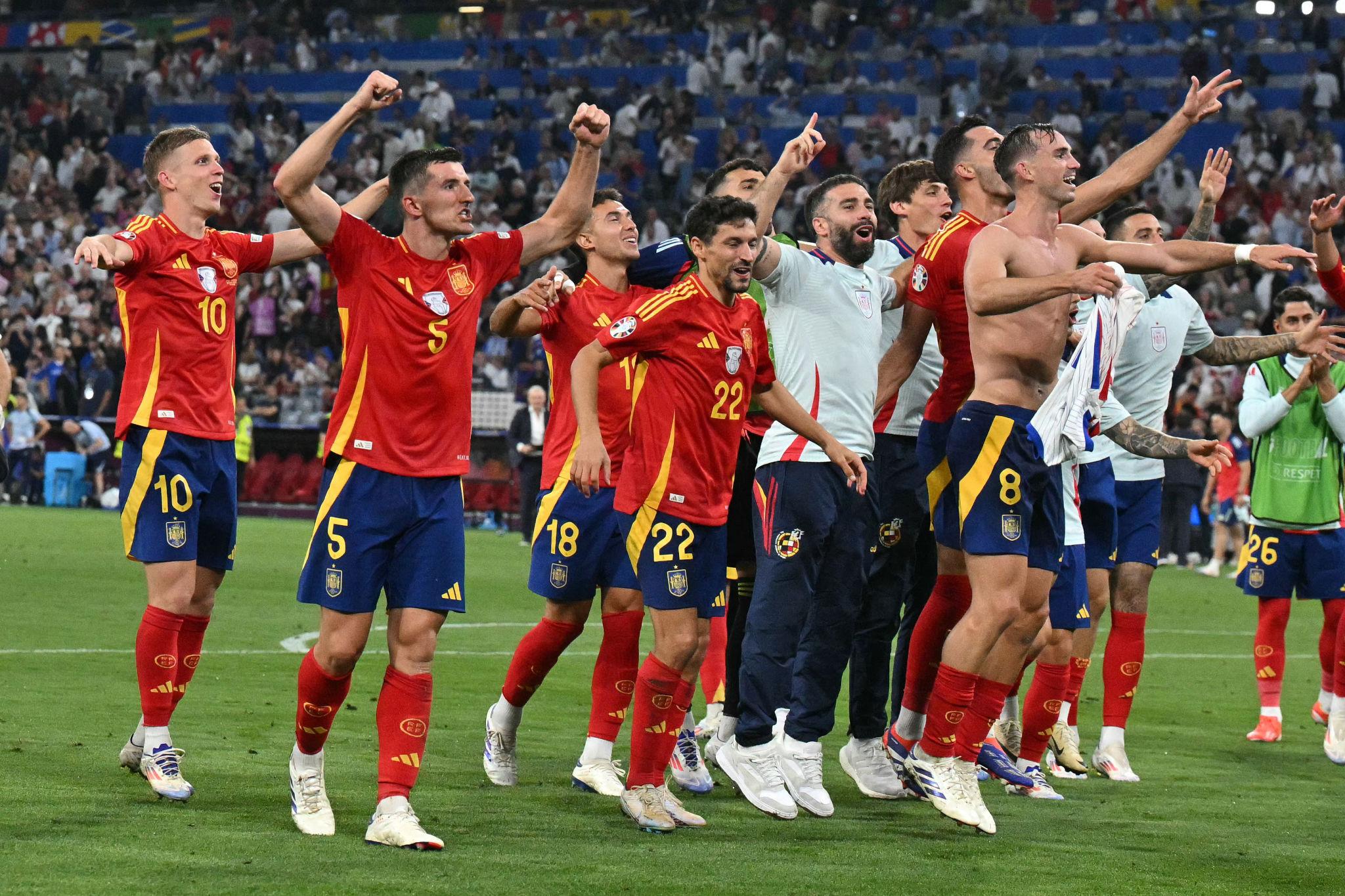
Spain did not reach the World Cup final by surviving France.
They reached it by controlling France.
The 2-0 semifinal win in Arlington was not built on chaos, emotion or one lucky break. It was built on defensive authority, collective timing and a tactical maturity that made one of the most dangerous attacks in the tournament look strangely contained.
France had Kylian Mbappé, Ousmane Dembélé, Michael Olise and the memory of recent World Cup dominance.
Spain had the wall.
And on the night that mattered, the wall held.
Spain Turned Defence Into Control
The most impressive part of Spain’s performance was not only that they kept France out.
It was how they did it.
This was not a desperate low block, with defenders throwing themselves at shots for 90 minutes. Spain defended through possession, pressing, positioning and the refusal to let France turn the match into a sprint.
That distinction matters.
France are at their most dangerous when the game becomes stretched. Give Mbappé space, give Dembélé broken defensive lines, give Olise room between midfield and defence, and the match can change in seconds.
Spain understood the risk.
They did not simply defend their penalty area. They defended the rhythm of the match.
Mbappé Was Present, But Not Free
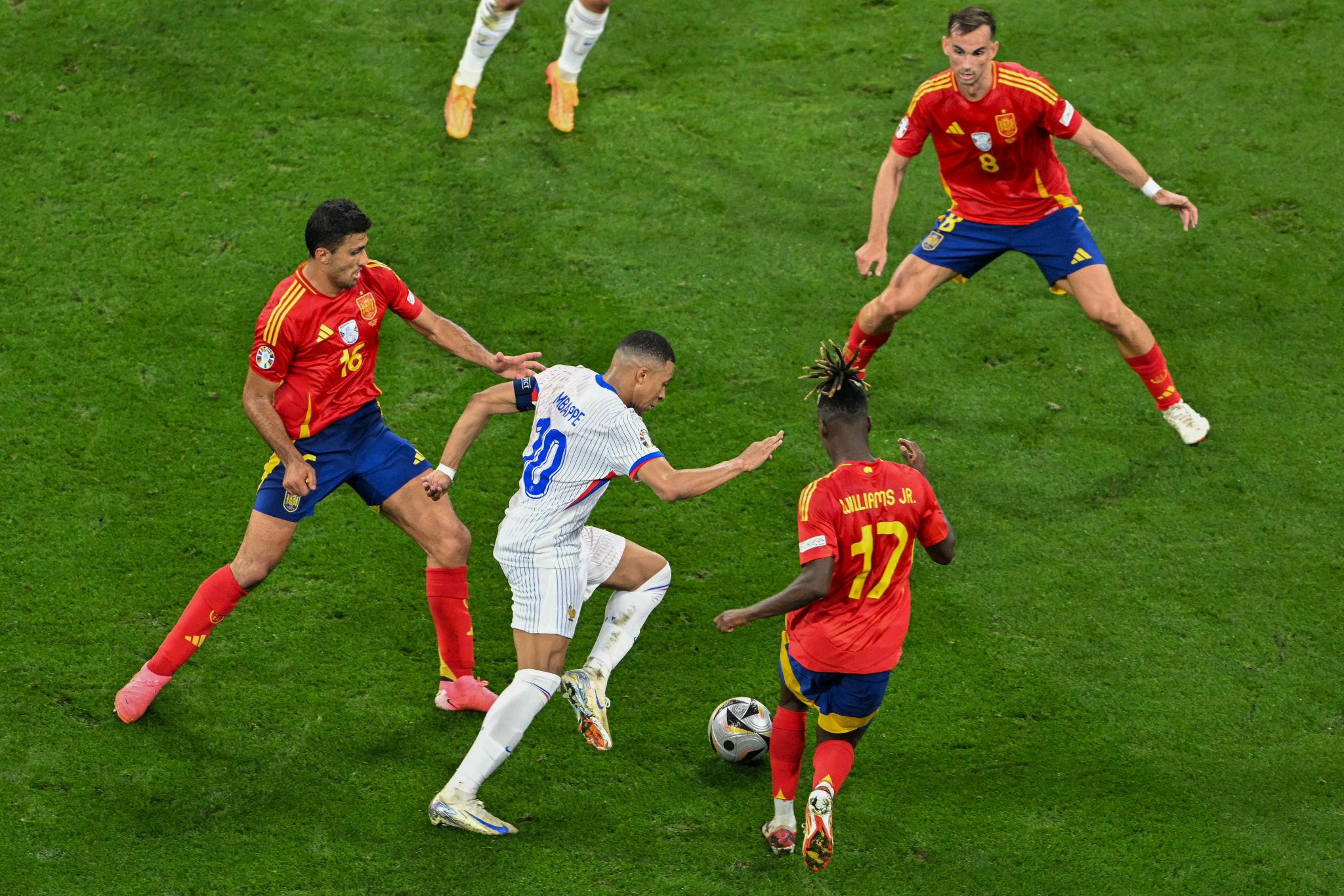
The biggest tactical victory was the management of Mbappé.
He was on the pitch. He was always a threat. Every Spain defender knew that one loose moment could still become a goal. But Mbappé was not allowed to dominate the emotional temperature of the match.
Spain compressed the spaces around him.
They denied him repeated clean runs.
They forced France into slower construction.
They made him receive the ball in areas where the next action was harder, not easier.
This is how elite teams defend superstars. They do not pretend the threat can be erased. They reduce the number of times the threat becomes decisive.
Mbappé was not invisible.
He was contained.
The First Goal Changed France’s Problem
Mikel Oyarzabal’s penalty in the first half gave Spain something priceless: scoreboard control.
France could no longer wait for the perfect transition. They had to take more responsibility with the ball, push higher and search for a response against a Spain team already comfortable controlling tempo.
That changed the psychology of the game.
Spain are built to protect a lead differently from many teams. They do not only drop deeper and invite pressure. They can hold the ball, move the opponent, slow emotional momentum and make the chasing side feel impatient.
France began needing the match to open.
Spain kept closing it.
Pedro Porro Finished The Argument

The second goal from Pedro Porro did not only extend the lead.
It confirmed the direction of the night.
At 2-0, France were no longer just chasing a goal. They were chasing an entire tactical reality that had turned against them. Spain had the lead, the structure, the confidence and the defensive discipline to manage the final phase without losing their identity.
That is what separates serious finalists from talented teams.
Spain did not become wild after scoring. They did not try to perform victory before securing it. They stayed inside the plan.
The result looked controlled because the performance was controlled.
France Were Technically Second Best
France did not lose because they lacked stars.
They lost because Spain made their stars work from uncomfortable positions.
Reuters reported that France coach Didier Deschamps admitted his team were technically second best, pointing to poor energy and execution after Spain’s controlled display. That admission matters because it avoids the easy excuse that France simply had an off night.
Spain forced the off night.
The midfield pressure, the defensive distances and the circulation of the ball all reduced France’s ability to create the kind of high-speed situations that usually decide their biggest matches.
This was not a random failure.
It was a tactical defeat.
Spain’s Defence Has Become Its New Luxury
Spain have long been associated with the ball.
Possession.
Short passing.
Technical midfielders.
Control through rhythm.
But this World Cup run has added another layer: defensive seriousness. AP reported that Spain had produced its sixth shutout in seven matches, allowing only one goal across the tournament.
That is the real evolution.
Spain are no longer only beautiful in possession. They are difficult to damage without it. Their defensive structure has become the foundation that allows the attacking quality to matter.
A team that can dominate the ball and defend the space behind it becomes extremely hard to beat.
France discovered that in Arlington.
Lamine Yamal Changed The Match Without Scoring
Lamine Yamal did not need to score to influence the semifinal.
His movement and danger helped create the penalty situation that opened the match, and his presence forced France to respect the width and unpredictability of Spain’s attack. AP reported that Yamal drew the foul that led to Oyarzabal’s penalty and also had a goal ruled out for offside.
That is the sign of a player who affects the game beyond the final statistics.
France had to account for him.
That created more space elsewhere.
Spain’s attack is dangerous because it does not rely on one obvious route. If one side is crowded, they move the game. If one player is watched, another finds the gap.
That balance made France’s defending harder than Spain’s.
France’s Final Streak Ends
France entered the semifinal with history close enough to touch.
They had reached recent finals, built a squad full of elite attackers and carried the aura of a nation that knows how to survive deep tournament pressure. Before the match, Reuters noted that France could reach a fifth World Cup final in eight tournaments if they beat Spain.
That possibility is now gone.
The loss ends France’s push for another final and sends them into the third-place playoff instead. For a country of France’s level, that is not a disaster, but it is a disappointment.
France are too strong to call this collapse.
But Spain showed that even France can be made ordinary when the game is controlled against them.
Spain’s 2010 Memory Returns
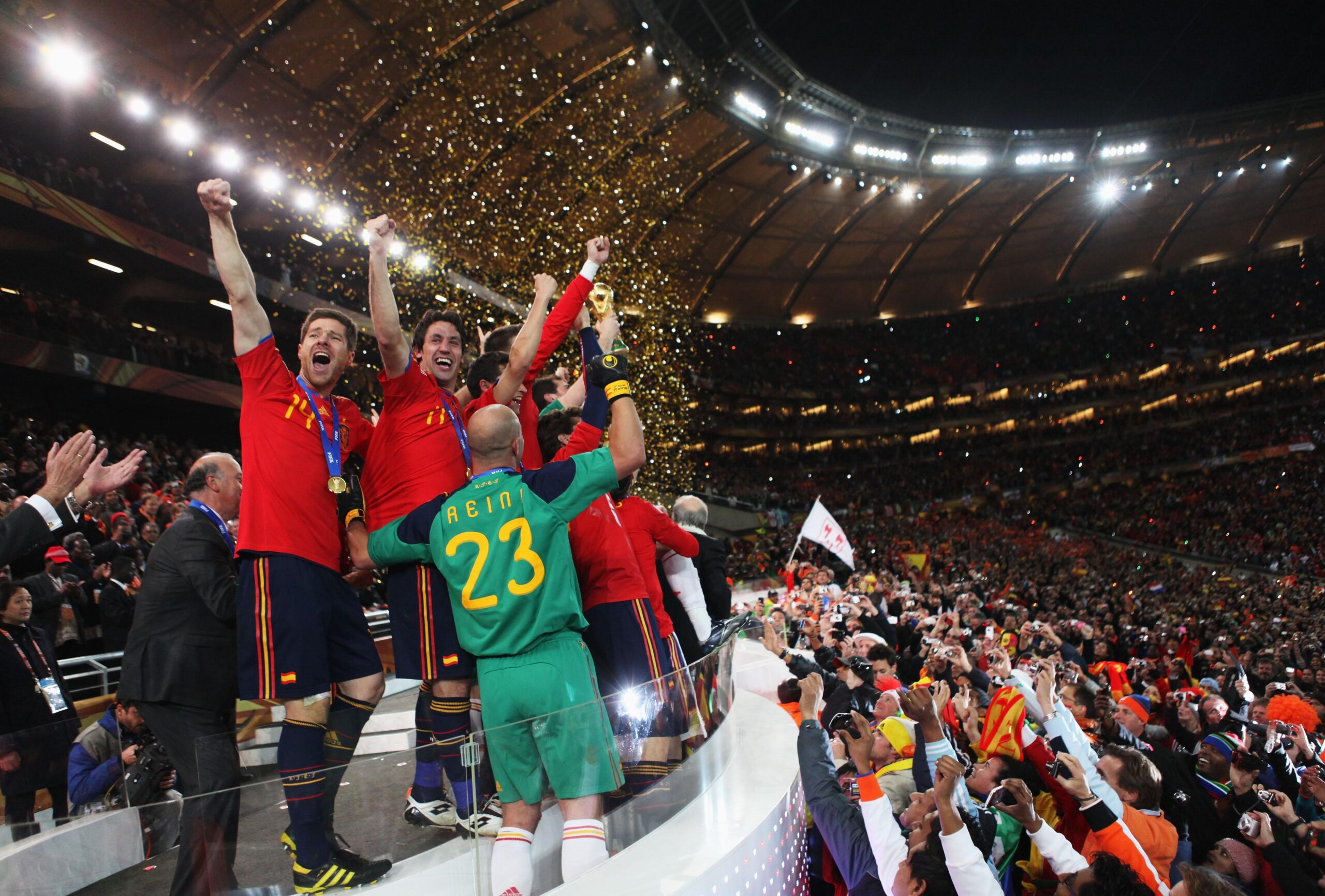
Spain’s return to the World Cup final carries historical weight.
The country has not played a men’s World Cup final since winning the tournament in 2010, and this team now has a chance to connect a new generation to that old golden memory. AP described the result as Spain advancing to its first World Cup final since that 2010 triumph.
But this is not simply nostalgia.
The current Spain are not a copy of 2010. They are faster, wider and more direct in certain phases. They still value the ball, but they also show the defensive compactness and physical awareness required in modern knockout football.
The shirt remembers 2010.
The team is building something new.
The Final Will Test Spain Differently
Reaching the final is not the same as winning it.
Spain will now face the winner of England vs Argentina, and either opponent will bring a different kind of pressure. England would bring physicality, media noise and a hunger to end decades of frustration. Argentina would bring champion memory, emotional intensity and the Messi-era gravity that still shapes every major match.
Spain cannot assume that the France plan will be enough.
But the semifinal proved something important.
This team can control elite opposition without losing its nerve. That is the strongest argument Spain will take into the final.
Not the score.
The method.
The World Cup Needed A Tactical Statement
The 2026 World Cup has delivered drama, expanded-format debate, underdog runs and major commercial scale.
Spain’s semifinal win delivered something else: a tactical statement.
It reminded the tournament that football is not only about star power. France had enough individual talent to beat anyone. Spain beat them by reducing the match to structure, timing and control.
That is why this result will travel beyond Spain.
Coaches will study it.
Analysts will discuss it.
Opponents will understand that Spain are not simply a team to press, chase or counter. They are a team that can suffocate the match until the opponent’s strengths become smaller.
Reuters called it an “anaconda grip” performance, and that image fits the night. Spain did not explode France. They squeezed the life out of them.
The Bottom Line
Spain’s 2-0 win over France was more than a semifinal result.
It was a defensive and tactical statement from a team that has learned how to turn control into punishment. Mikel Oyarzabal opened the scoring from the penalty spot, Pedro Porro finished the argument, and Spain’s structure kept Kylian Mbappé and France’s attacking power under control.
France leave with disappointment.
Spain move to the final with authority.
The World Cup now has a finalist that does not only play with style.
It defends like a wall.