

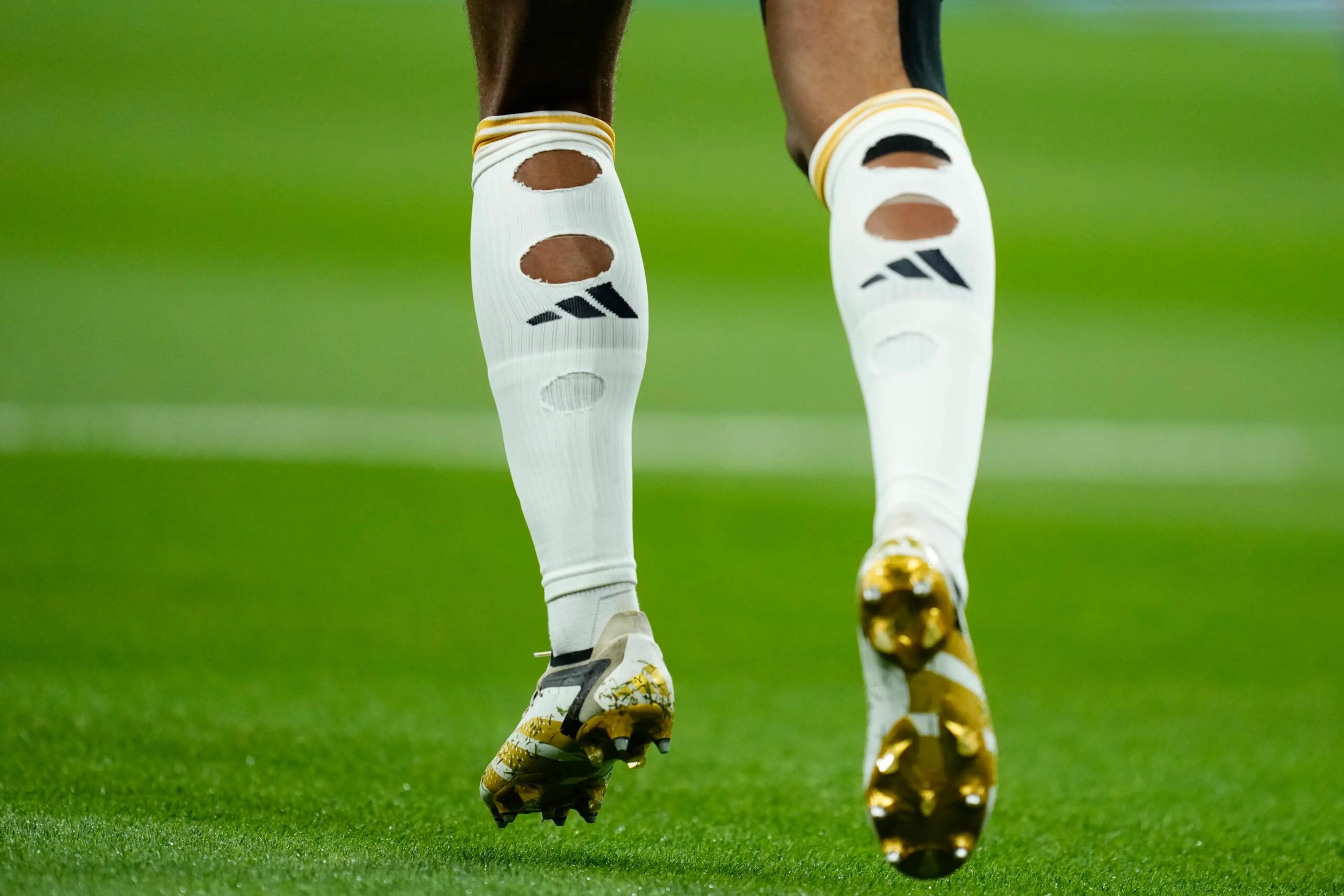
The Sock Game has become football’s most unexpected fashion battleground, turning one of the most regulated parts of the kit into a small but powerful space for identity, comfort and performance.
For decades, socks were treated as background equipment. Shirts carried the sponsors, boots carried the colour, and hairstyles often carried the personality. Socks were supposed to be simple, functional and uniform.
That is no longer the full story.
At the 2026 World Cup, the area below the knee has become one of the clearest signs of how modern footballers express themselves inside a sport that still controls almost everything they wear.
Sock Game Is Changing Football’s Visual Language
The Sock Game matters because football is now consumed as much through images as through tactics.
A player’s look travels instantly through broadcast close-ups, fan edits, TikTok clips, Instagram posts and brand campaigns. Even small details become part of the visual identity. The way a player wears socks can now feel as recognisable as a celebration, haircut or boot colour.
Reuters reported that players across the World Cup have been wearing their socks in dramatically different ways, from high above the knee to low near the ankle, while others cut the foot section off official socks and layer them over separate grip socks.
This is not random.
It is football fashion adapting inside the rules.
The Kit Is No Longer Fully Uniform
The first shift is the decline of the fully uniform look.
Football kits are still regulated. Teams must wear approved colours. Players must respect match rules. Sponsors, manufacturers and federations still control most of the visual package.
But within that structure, players are finding space.
One player pulls socks high.
Another rolls them down.
Another wears visible white grip socks under the official team colours.
Another cuts holes around the calf.
The team may still look unified from a distance, but close up, individuality is everywhere.
That is the new kit reality: official from the camera angle, personal in the details.
Performance Is Part Of The Style
The second shift is that sock fashion is not only about appearance.
Many players adapt socks because of comfort and performance. Tight socks can feel restrictive around the calf. Grip socks may offer better traction inside the boot. Some players prefer less fabric around the leg. Others want more compression or a cleaner fit.
That is why the trend is interesting.
It is not pure vanity.
A footballer’s body is their workplace, and small details can affect how they feel during a match. If a player believes a cut sock, low sock or grip layer improves comfort, the look becomes part of performance culture.
Fashion and function are now mixed together below the knee.
Grip Socks Changed The Rules Of The Look
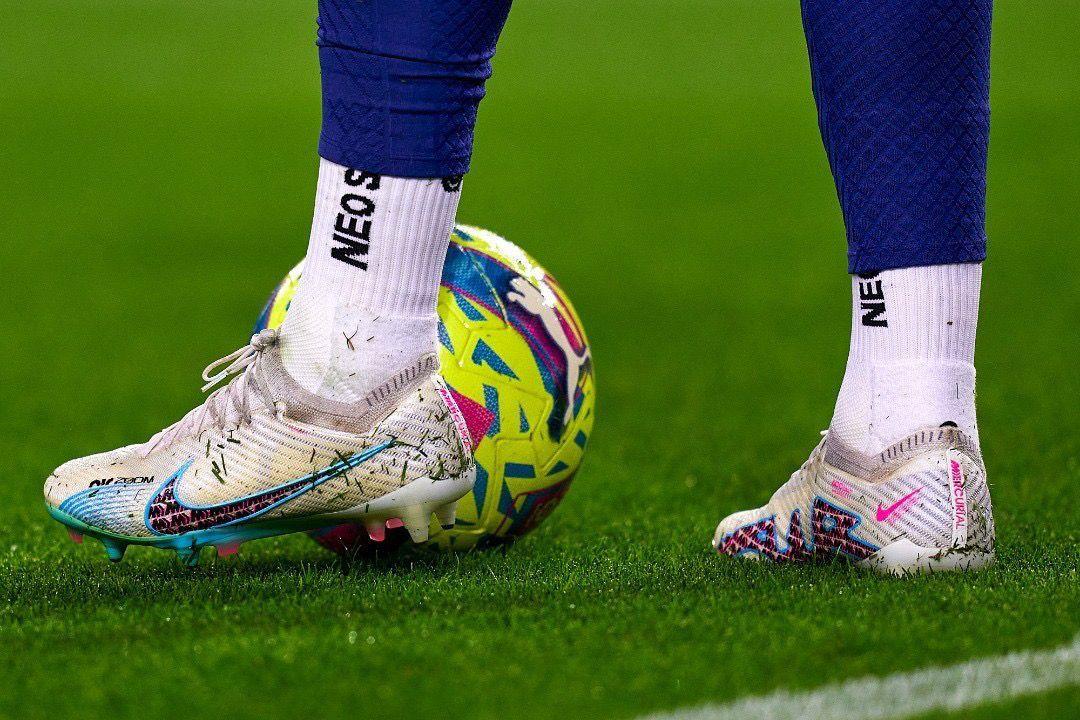
Grip socks are one of the main reasons the visual language has changed.
Many players do not want to wear the full official sock as designed. Instead, they cut the foot section off and use the remaining official sock as a sleeve over a separate performance sock.
This creates a layered look.
The official colour remains visible, but another sock appears underneath. Sometimes it matches. Sometimes it clashes. Sometimes the result looks precise and planned. Sometimes it looks improvised.
Either way, the message is clear.
Players are no longer treating kit equipment as fixed. They are customising it to fit their own routine.
The Calf-Hole Trend Is Now Part Of Football Culture
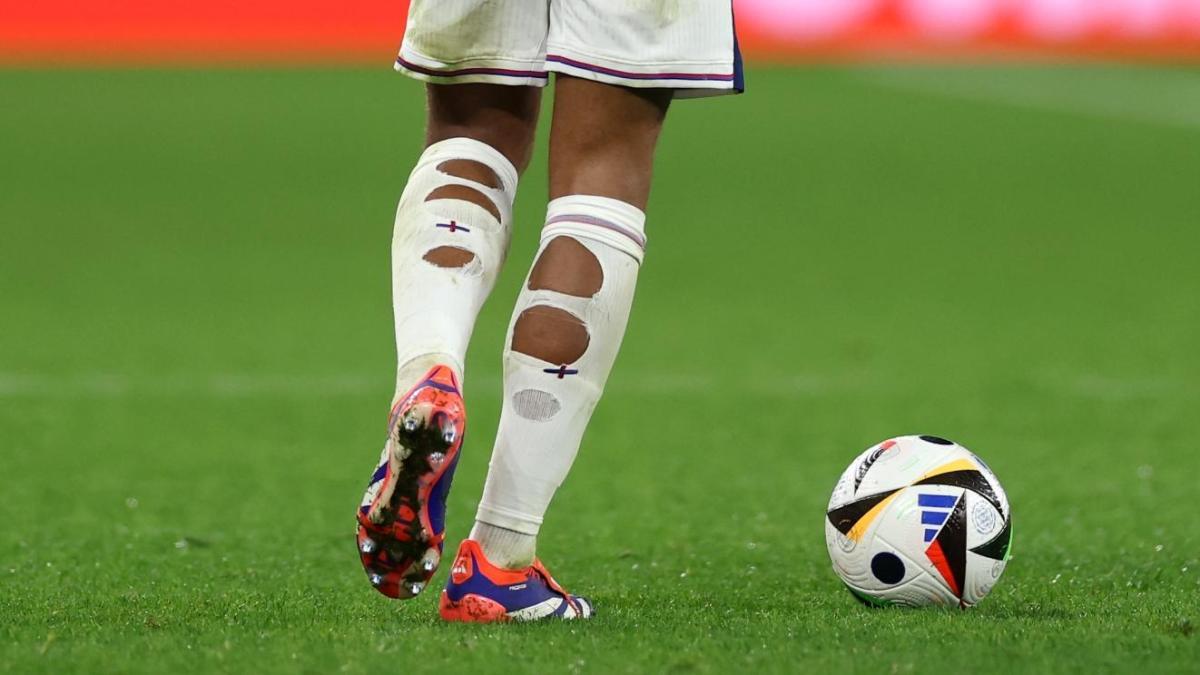
The fourth shift is the rise of holes cut into the back of the sock.
This look has become increasingly visible in recent years. Players cut openings around the calf area, often to reduce pressure or create more comfort during matches. The result can look strange to casual viewers, but it has become part of the modern football aesthetic.
It also shows how much player preference now matters.
A kit supplier may design a sock one way. A footballer may decide their body needs something different.
That tension between official design and personal adaptation is where the Sock Game becomes more than a style joke.
It becomes a symbol of player control.
Small Shin Guards Complete The New Silhouette
The fifth shift is the size of shin guards.
Players are still required to wear shin guards, but the size and shape vary widely. Many modern players choose smaller pads that fit discreetly under lower socks. Others still use larger protection, especially if they prefer a more traditional look.
This changes the shape of the footballer’s leg on camera.
The old image was long socks, large guards and a more standard silhouette. The new image is more varied: low socks, visible ankles, tight sleeves, cut fabric, small guards and grip layers.
The result is a game that looks more personalised, even when the basic kit remains controlled.
Football Fashion Has Moved Into Micro-Details
The Sock Game shows how football fashion now operates through micro-details.
Not every player needs a dramatic outfit to create a signature. Sometimes the signature is a sock height, a boot colour, a tape pattern, a sleeve choice or a repeated match-day ritual.
This matters because modern footballers are also personal brands.
A player’s image does not exist only during 90 minutes. It appears in training photos, sponsorship shoots, tunnel cameras, video games, social media edits and fan accounts. The smallest visual habit can become recognisable.
The sock is now part of that branding system.
The Old Dress Code Is Being Negotiated
Football still values uniformity.
That is part of the sport’s identity. A team must look like a team. The kit connects players to the badge, federation, sponsor and supporter base.
But modern players also want control over their own bodies and appearance. They want comfort. They want routine. They want a look that feels like theirs.
The result is negotiation.
The shirt stays controlled.
The shorts stay controlled.
The colour rules stay controlled.
But below the knee, the player has more room to adjust.
That is why the sock area has become so expressive. It is one of the few visible spaces left where personal preference can survive the official kit.
Brands Should Pay Attention
Kit manufacturers should not ignore the trend.
When players repeatedly cut holes, remove foot sections or layer different socks, they are giving manufacturers market feedback in public. The product is not fully meeting every player’s needs.
That creates an opportunity.
Future football socks may be designed with more flexible calf zones, better compression options, integrated grip technology or approved layering systems that give players comfort without forcing them to cut the kit themselves.
The professional game often pushes consumer trends.
If the stars change the look, amateur players eventually copy it.
Fans Copy What Players Make Visible
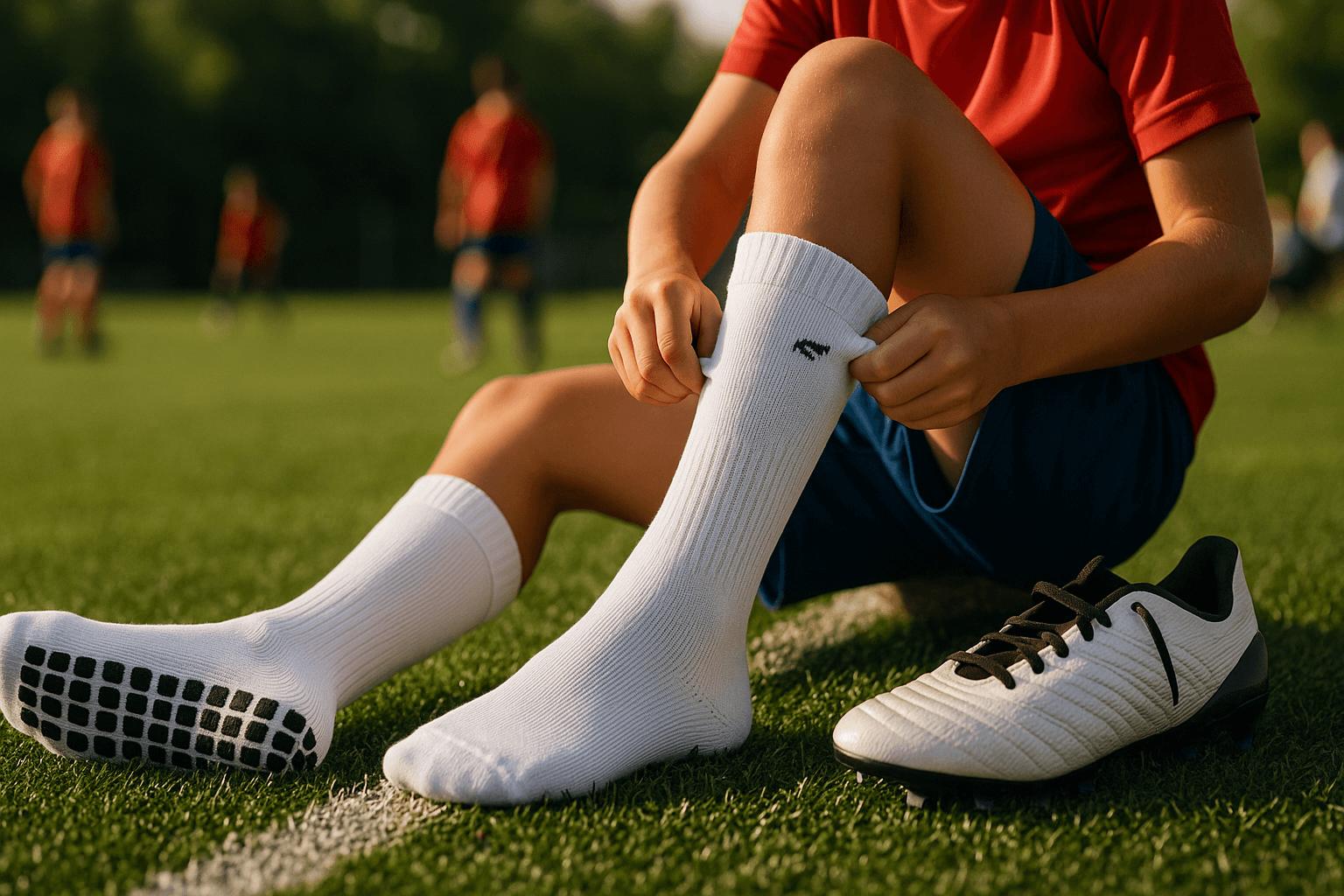
Football fashion rarely stays on the pitch.
Fans copy boots, hairstyles, celebrations, training wear and even warm-up routines. Sock styling can move the same way, especially among young players who want to look like professionals.
A child watching the World Cup may not understand the performance reason behind cut socks or low socks.
They only see the look.
That is how trends spread.
The same detail that begins as a comfort choice for a professional can become a style choice for a teenager on a local pitch.
The Sock Game Is Also A Social Media Story
This trend works because it is visual.
A tactical adjustment needs explanation. A sock change is instantly visible. It can be photographed, compared, joked about, copied and debated. That makes it perfect for social media.
Football’s culture economy is built on these small details.
Fans notice what players wear. Accounts create edits. Brands study reactions. Commentators mention it. The visual detail becomes content.
This is why the Sock Game is bigger than fabric.
It is part of football’s content machine.
Morocco And African Football Can Use The Detail
For Morocco and African football, the trend also has a branding lesson.
Modern football identity is built through detail. The kit, the colours, the training wear, the fan visuals, the tunnel shots and the player styling all help shape how a team is perceived globally.
A national team can look disciplined, stylish, modern or chaotic through small visual signals.
Morocco already has strong visual power through red, green, flags, diaspora crowds and emotional fan imagery. The next layer is consistency in every branded detail, from official kit presentation to player styling and digital content.
The world notices more than the score.
It notices the look.
The Bottom Line
The Sock Game has turned football’s most ordinary piece of equipment into a fashion, comfort and performance statement.
At the 2026 World Cup, players are wearing socks higher, lower, cut, layered and modified, creating a new visual language below the knee while still operating inside official kit rules.
The trend says something important about modern football.
Even in a sport controlled by federations, sponsors and manufacturers, players still find small ways to express identity and improve comfort.
The biggest fashion statement in football is no longer always the boot, the haircut or the celebration.
Sometimes, it starts with the sock.