

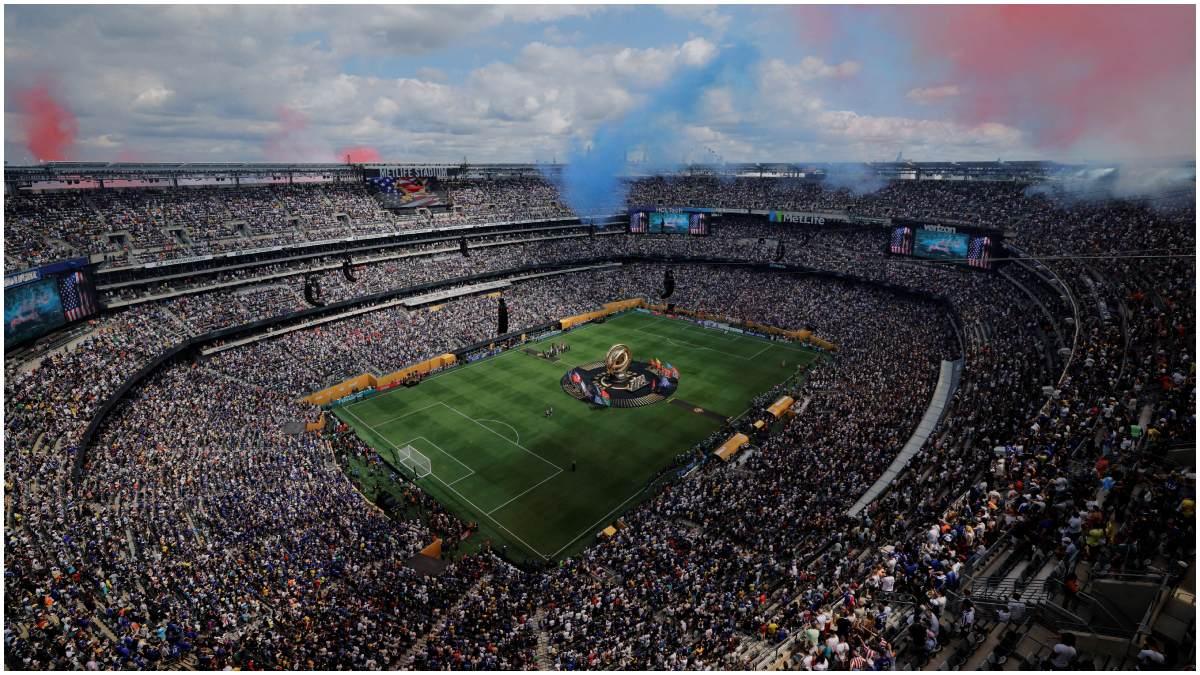
The Trophy Weekend Rush has arrived, and New York is no longer preparing only for a football match.
It is preparing for a global arrival.
Argentina and Spain will meet at MetLife Stadium on Sunday, but the final is already spreading through the city before the first whistle. The trophy, the fans, the celebrities, the luxury brands, the security planning, the flights, the hotels and the political attention are turning the New York-New Jersey region into the centre of the sporting world.
This is what happens when the World Cup final lands in America’s biggest media market.
The match is in New Jersey.
The pressure is everywhere.
Trophy Weekend Rush Turns A Final Into A City Event
The Trophy Weekend Rush matters because a World Cup final is not a one-day event anymore.
It is a weekend of movement.
Fans arrive. Sponsors activate. Hotels fill. Restaurants tighten access. Security expands. Broadcasters build sets. Celebrities appear. Politicians enter the frame. Brands compete for images that can travel worldwide.
FIFA says the final will close a tournament involving 48 teams across 16 host cities in the United States, Canada and Mexico. That gives the final a symbolic weight beyond the two teams on the pitch. It is the final chapter of the largest World Cup ever staged.
New York is not just hosting the ending.
It is being asked to absorb the full scale of the tournament’s global machine.
The Trophy Is Now A Luxury Object
The World Cup trophy has always carried prestige.
But this year, the presentation around it is being elevated into luxury theatre.
FIFA announced that Louis Vuitton will present the official bespoke trophy trunk for the 2026 final, extending the fashion house’s role as Official Supplier and Branded Licensee for the tournament.
That detail matters because it shows how modern sport sells symbolism.
The trophy is already priceless in football terms.
The Louis Vuitton trunk adds another layer: luxury, heritage, craftsmanship, photography, celebrity and brand power. It turns the object into a visual moment before it is even lifted by the winning captain.
Football provides the emotion.
Luxury packages the image.
New York Becomes The Global Stage
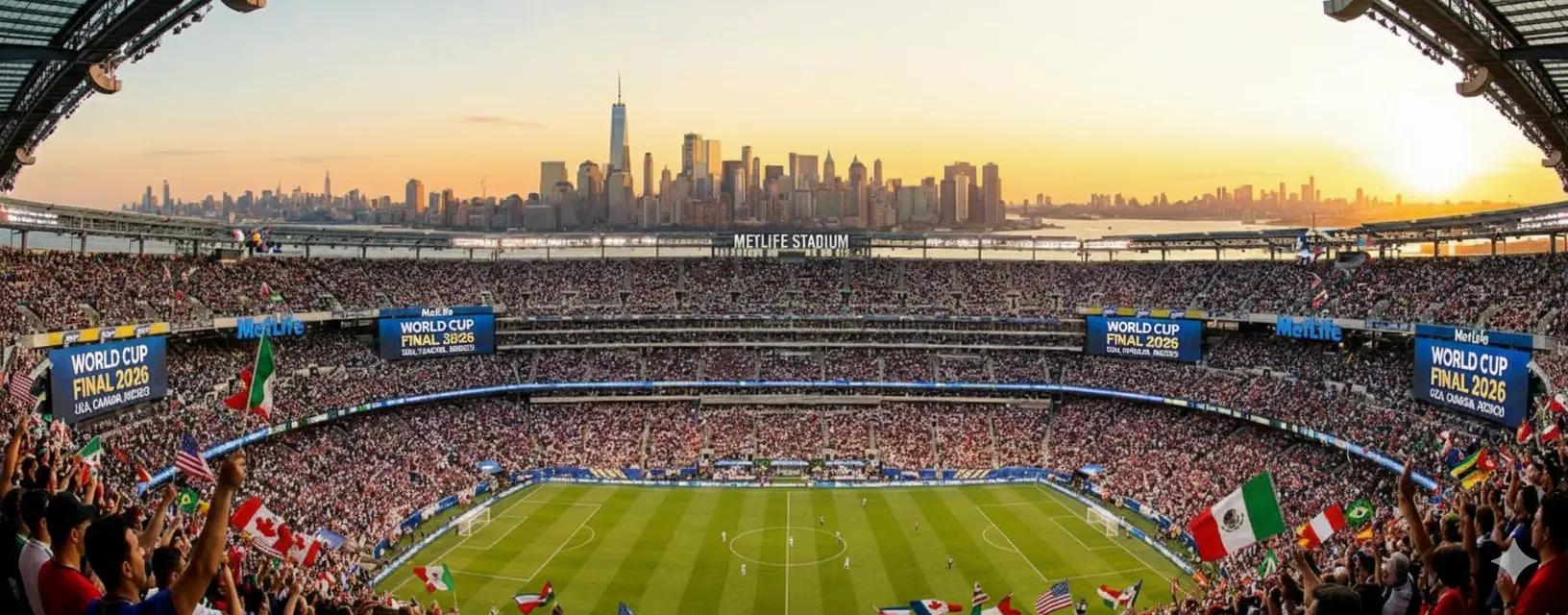
New York is built for this kind of weekend.
It has the hotels, airports, restaurants, luxury stores, media companies, financial power, celebrity circuits and international communities needed to turn a sporting final into a full-city spectacle.
But that strength also creates pressure.
A World Cup final does not enter the city quietly. It competes with ordinary business, tourism, security needs, airport flows, traffic, nightlife and residents who still need to move through the region.
The result is a layered event.
There is the match inside MetLife Stadium.
There is the fan movement across the city.
There is the sponsor world around Manhattan.
There is the security world around political guests.
There is the luxury world around the trophy.
All of it happens at once.
MetLife Hosts, New York Sells
The final will be played at New York New Jersey Stadium, commonly known as MetLife Stadium, in East Rutherford. FIFA confirms that Spain and Argentina will meet there on 19 July.
That geography is important.
The global image is New York.
The stadium reality is New Jersey.
For travellers, that difference matters. Staying in Manhattan gives access to the glamour, restaurants and city atmosphere. Staying closer to New Jersey may make match-day movement easier. But neither option is perfect when hundreds of thousands of people are trying to position themselves around one event.
This is the hidden complexity of the final.
The brand is simple.
The logistics are not.
Fans Are Arriving For More Than A Match
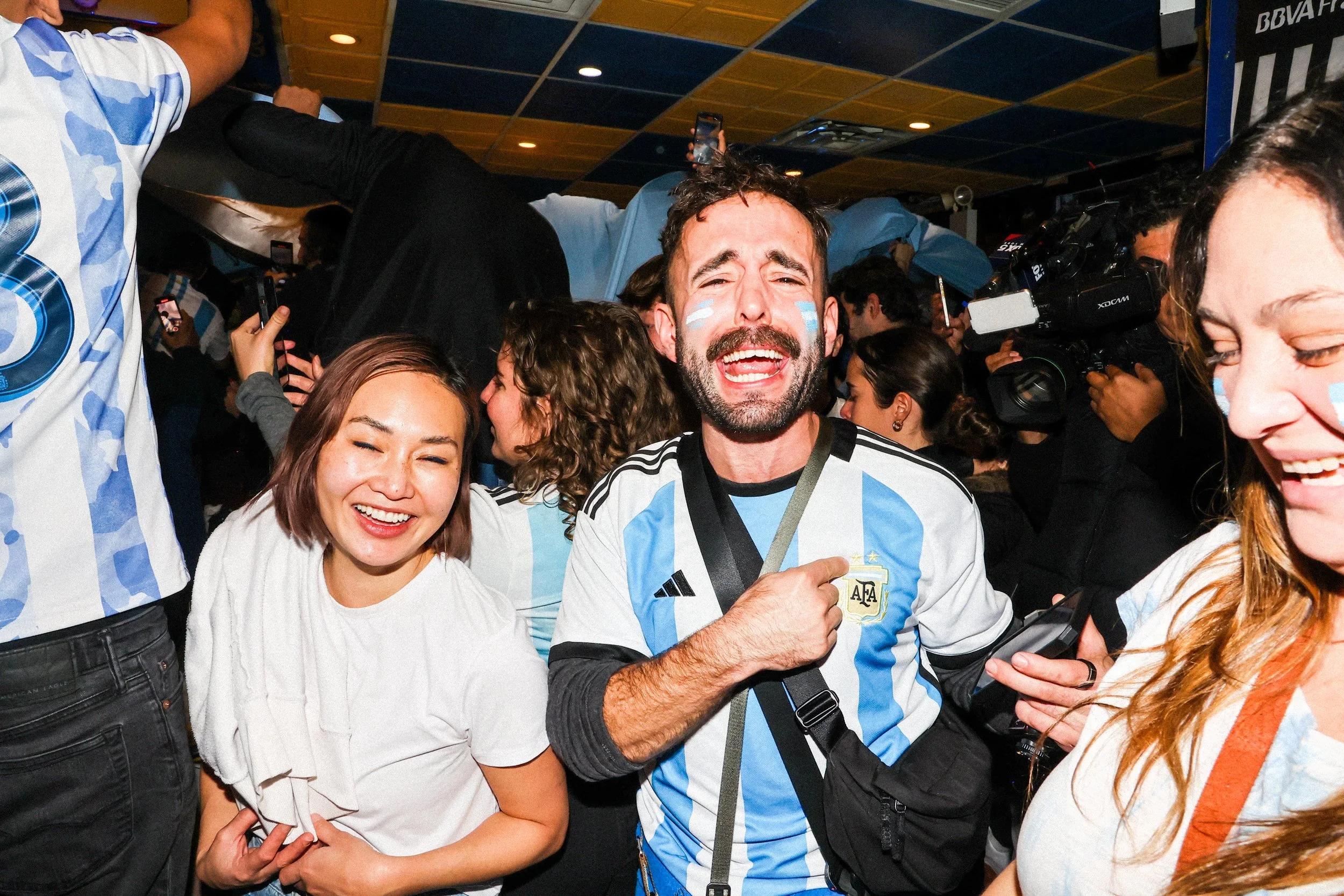
Argentina and Spain bring two of the strongest football cultures in the world.
For Argentina supporters, this is a chance to see a defending champion chase another title and extend the Messi-era mythology. For Spain supporters, it is a chance to return to the top of the world and stop Argentina from building a dynasty.
That emotional weight drives travel behaviour.
Fans will pay more, fly farther and accept worse routes because finals are not rational products. They are once-in-a-lifetime opportunities dressed as football matches.
Some fans will have tickets.
Some will not.
Many will still want to be near the city, near the fan zones, near the national colours, near the songs and near the feeling that history is happening within reach.
The stadium has a capacity limit.
The event does not.
Security Becomes Part Of The Weekend
The presence of political figures adds another layer.
Reuters reports that Donald Trump will attend the final, with FIFA President Gianni Infantino saying Trump will sit with him and be present to help present the trophy to the winners.
That changes the security atmosphere.
A World Cup final already requires heavy planning. Add heads of state, global celebrities, elite sponsors and tens of thousands of supporters from multiple countries, and the operation becomes more complex.
Security is not only about the stadium gate.
It involves motorcades, airspace, hotels, streets, VIP movements, protest risk, crowd control, emergency access and post-match dispersal.
For visitors, that means delays.
For organisers, it means pressure.
For the city, it means the final is also a security exam.
The Closing Ceremony Adds More Heat
The final will not begin only with football.
FIFA says the closing ceremony will celebrate the journey of the tournament before the final match, after a World Cup staged across three countries and sixteen host cities.
That ceremony turns the match into a broadcast event before the ball moves.
It creates another arrival window, another crowd-management challenge and another reason for fans to enter early. It also gives sponsors, artists, broadcasters and global audiences an additional layer of content before the trophy is decided.
For traditional fans, the football remains everything.
For FIFA, the ceremony is part of the product.
The final is no longer only played.
It is staged.
The Trophy Presentation Is Politically Sensitive
Trophy presentations are usually remembered for players.
This one may also be remembered for optics.
Reuters notes that Trump’s role in football ceremonies has already drawn attention after his visible presence during Chelsea’s Club World Cup trophy celebration last year.
That creates risk.
The winning team’s trophy lift is supposed to be a pure football image. If political figures occupy too much of the frame, the conversation can shift from the captain, players and supporters to who was standing beside them.
FIFA must manage that carefully.
The trophy belongs to the winning team.
The ceremony must not feel bigger than the football achievement.
Luxury, Sport And Politics Are Colliding
This weekend shows what the World Cup has become.
The trophy sits inside a Louis Vuitton trunk.
The final sits inside a New York-New Jersey media market.
The ceremony sits inside a global entertainment package.
The political leadership sits inside the stadium moment.
The fans sit inside a complicated travel and security system.
This is not only sport.
It is sport as a global power platform.
That does not reduce the emotional value of the match. For supporters, the game still means everything. But around the game sits an entire economy of image, access, influence and attention.
Football remains the centre.
Everything else now fights to stand close to it.
Restaurants And Hotels Feel The Surge
The final weekend puts immediate pressure on hospitality.
Hotels become bases for fans, sponsors, media and VIP guests. Restaurants become meeting points, private-event spaces and national gathering places. Bars become emotional stadiums for people without tickets. Luxury venues become part of the event’s unofficial map.
This is where the final becomes a local business story.
A successful weekend can produce major revenue.
But it can also overwhelm staff, transport, reservations, security and supply planning.
New York knows how to handle big events.
But a World Cup final is different because it brings simultaneous waves of international fans, celebrity traffic, political security and global broadcasters.
The city is not just busy.
It is strategically crowded.
Airports Become The First Gate
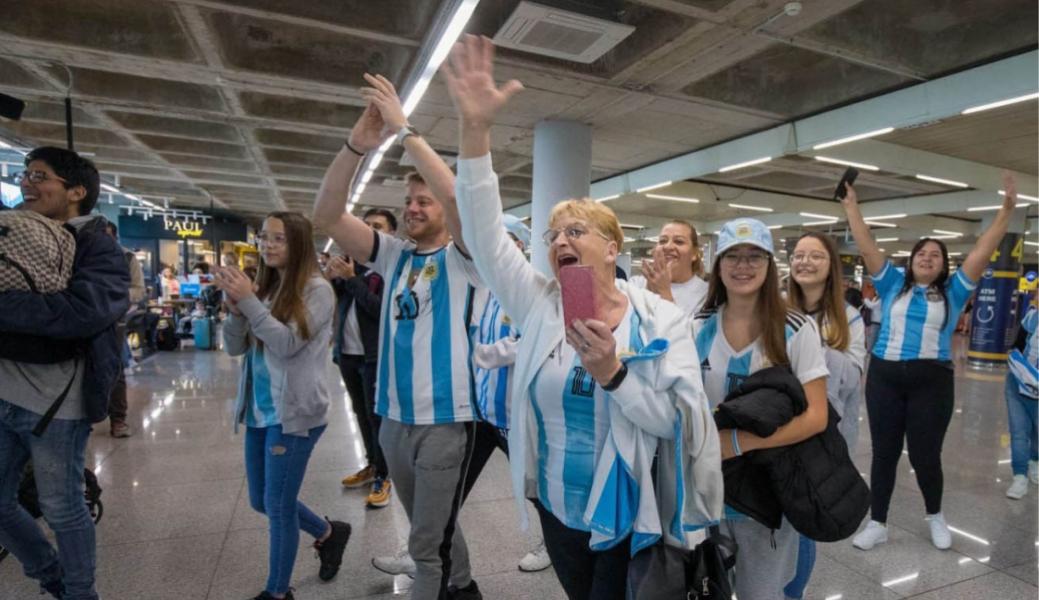
For many supporters, the final begins at the airport.
JFK, Newark and LaGuardia become the first point of contact with the event. Delays, queues, immigration, luggage, rideshares and hotel transfers shape the emotional start of the weekend.
This matters because football fans arrive with urgency.
They are not casual tourists. They are on tight timelines, often with expensive tickets, limited sleep and high emotional pressure. A missed connection or long transfer can feel catastrophic.
The match may be on Sunday.
But for international fans, the final begins with the journey.
The first battle is not tactical.
It is logistical.
The City Must Protect The Fan Experience
A World Cup final can look perfect on television while feeling difficult on the ground.
That is the risk for New York and New Jersey.
If fans face confusing transport, long delays, poor communication or chaotic post-match movement, the host-region image suffers. Mega-events are judged by what spectators remember after the final whistle: the songs, the result, the celebration, but also the exit, the train, the queue and the price.
Good hosting is invisible when it works.
It becomes the headline when it fails.
The region therefore needs more than security and glamour.
It needs clarity.
The Final Is A Test For Future Mega-Events
This weekend will be studied beyond football.
The United States is increasingly part of the global mega-event economy, hosting major tournaments, club competitions, Olympic-linked events and international spectacles. A smooth final strengthens the case that American cities can manage the world’s biggest football stages.
A chaotic final would create doubts.
Not about America’s ability to sell sport.
That is unquestioned.
The question is whether the country can move international football crowds with the same fluency that it markets the event.
The World Cup final is therefore both a conclusion and an audition.
The Emotional Centre Still Belongs To The Teams
For all the luxury packaging, politics and city pressure, the emotional centre remains simple.
Argentina or Spain will lift the trophy.
One group of players will become immortal.
Another will live with the pain of being one win short.
Fans will cry, sing, collapse, celebrate, argue and remember exactly where they were.
That is the part no brand can manufacture.
Louis Vuitton can carry the trophy.
FIFA can stage the ceremony.
New York can host the weekend.
But only the match can create the memory.
The Bottom Line
The Trophy Weekend Rush shows how large the World Cup final has become.
Argentina and Spain will decide the title at MetLife Stadium, but the event already extends across New York, New Jersey, airports, hotels, luxury branding, security planning, political optics and global entertainment. FIFA’s Louis Vuitton trophy trunk adds luxury theatre, while the closing ceremony and high-profile guests turn the final into a citywide spectacle.
But the biggest truth remains unchanged.
The trophy can arrive in luxury.
The city can prepare for spectacle.
The world can watch every detail.
In the end, only one captain will lift it.