
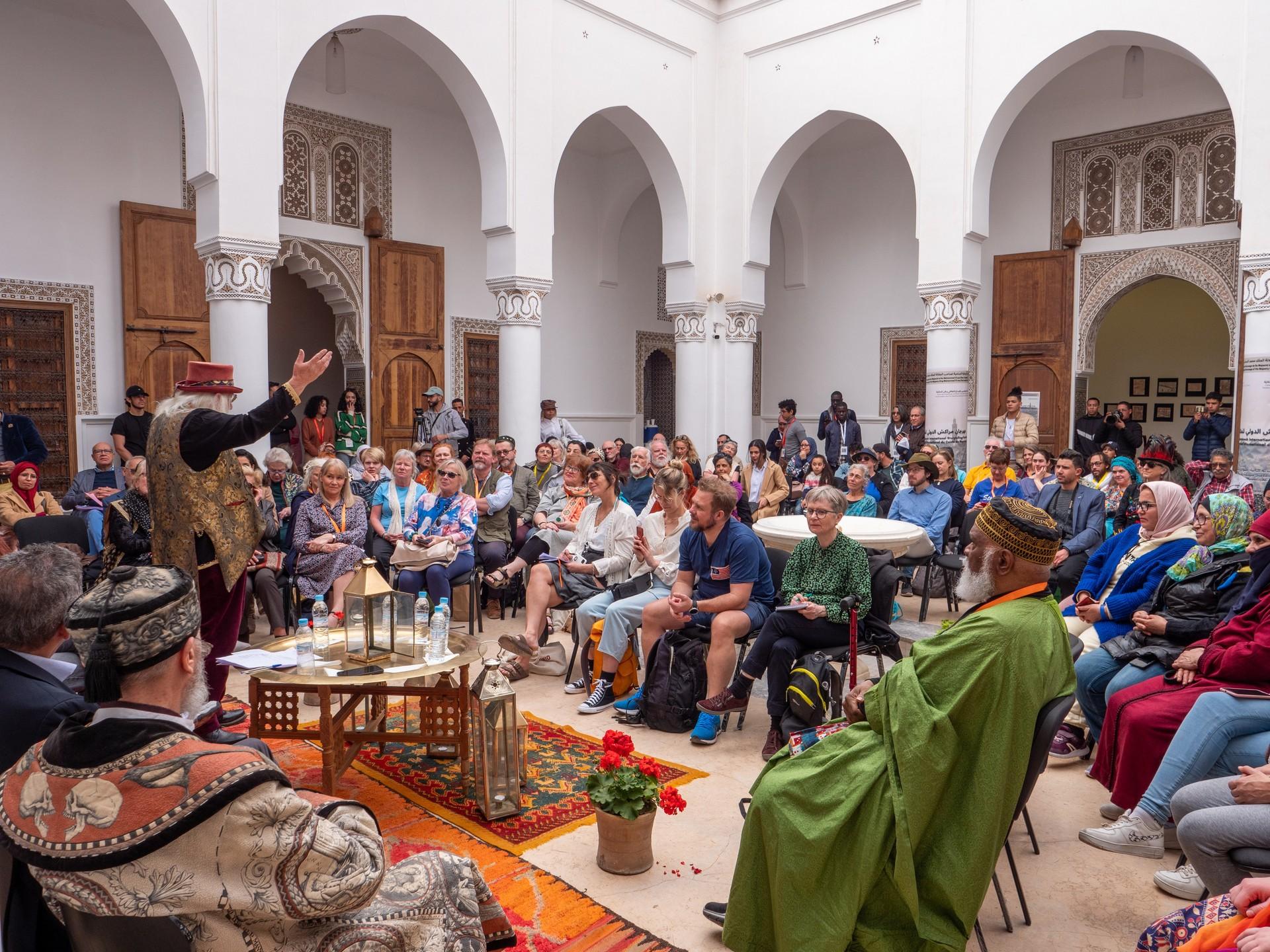
Long before cinema, streaming platforms and social media, stories were Morocco’s most powerful form of entertainment.
They travelled through markets, family gatherings and public squares. They preserved history, transmitted values and connected generations without requiring a screen.
That tradition returned to the centre of cultural life in Rabat through the 23rd International Morocco Storytelling Festival, which brought together performances, workshops and exhibitions devoted to oral heritage and contemporary storytelling. The 2026 edition opened in the capital in mid-July and continued until July 20.
At first sight, a storytelling festival may appear smaller than a major concert, film production or celebrity event.
Its strategic value, however, may be greater than its scale suggests.
In an entertainment economy dominated by global platforms, Morocco possesses something that cannot be imported or easily replicated: centuries of stories, languages, characters and oral traditions.
The opportunity is no longer only to preserve that heritage.
It is to transform it into books, films, animation, theatre, tourism experiences and digital content capable of reaching modern audiences.
Entertainment Before The Screen
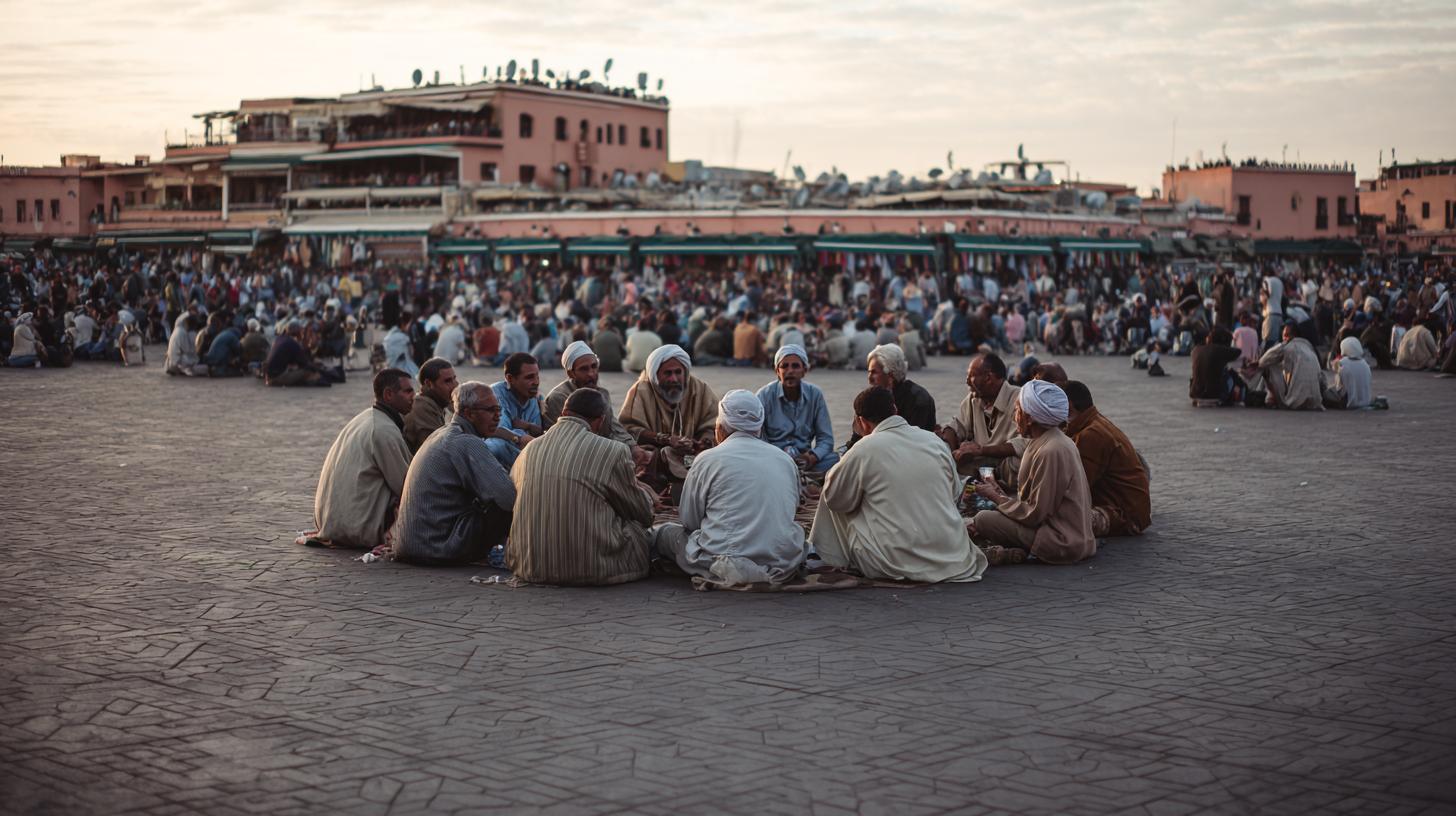
Oral storytelling has long occupied an important place in Moroccan public culture.
The traditional storyteller did more than entertain.
Stories carried social memory, humour, moral lessons and local identity. They allowed communities to understand their past while adapting familiar narratives to new audiences.
That flexibility is one reason oral culture survived.
A story could change according to the city, the storyteller or the people listening. It remained recognisable while never becoming completely fixed.
Modern entertainment operates differently.
Films, television programmes and online videos are recorded, distributed and repeated in identical form. Their reach is enormous, but the relationship with the audience is less direct.
Live storytelling restores that human exchange.
The audience is not simply consuming content. It is sharing a physical space with the person creating the experience.
The Rabat festival therefore represents more than nostalgia.
It demonstrates that one of humanity’s oldest entertainment formats can still attract attention in a highly digital age.
Rabat As A Cultural Platform
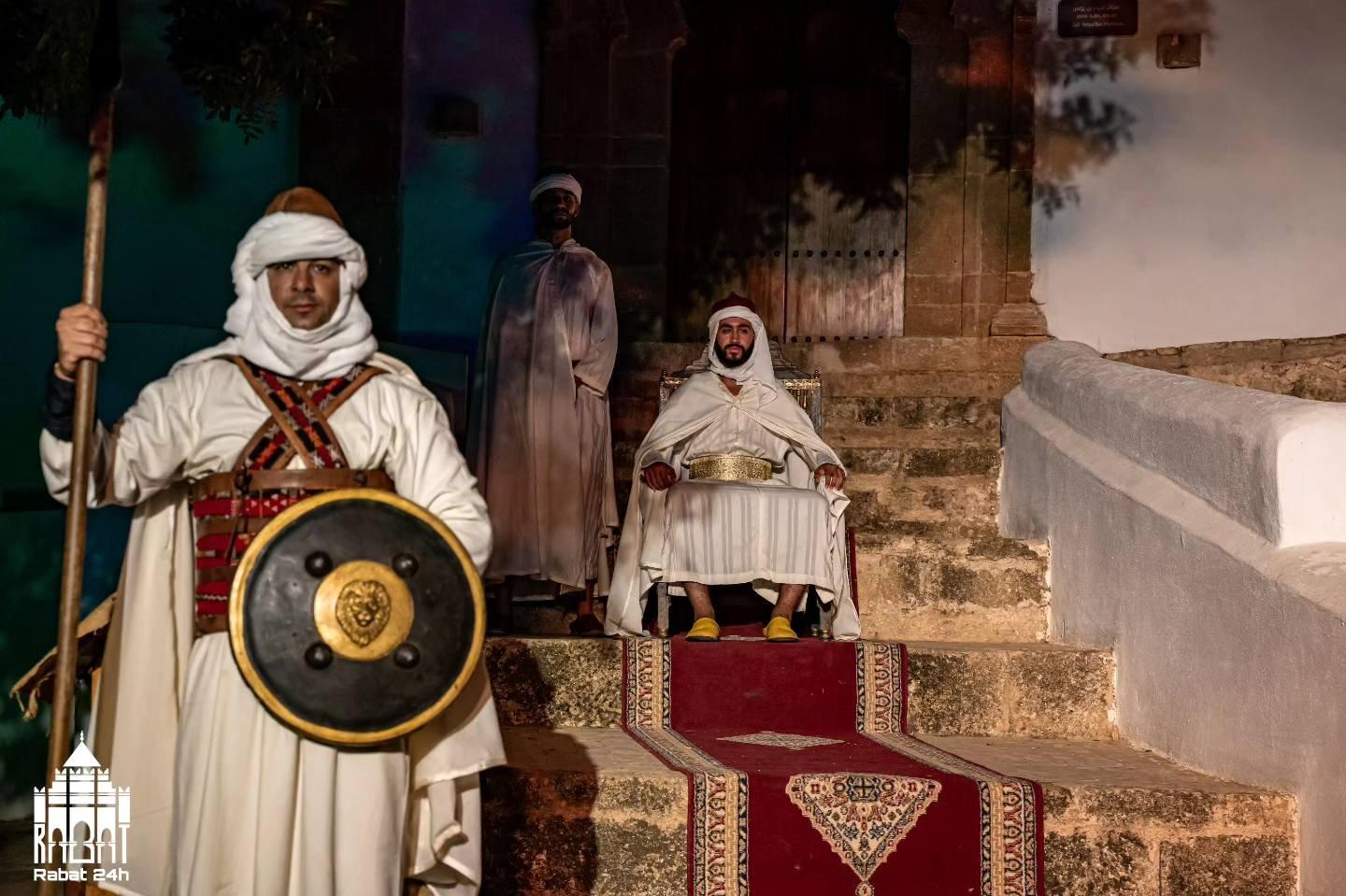
The festival included public performances and activities at cultural locations in Rabat, including an opening event at the Jardin d’Essais Botaniques.
This use of the capital matters.
Rabat is often associated internationally with government, diplomacy and administration. But its cultural identity has become increasingly important through museums, theatres, music events and heritage spaces.
Hosting an international storytelling festival strengthens that positioning.
It presents the city not only as Morocco’s political capital, but as a place where local tradition can meet global cultural exchange.
That distinction is important for tourism as well.
Visitors increasingly seek experiences that offer meaning and participation rather than only monuments and photographs.
A storytelling performance can provide access to Moroccan culture in a way that is immediate, emotional and memorable.
It can also activate public gardens, theatres and historic spaces without requiring the scale or infrastructure of a major stadium concert.
For Rabat, this creates an opportunity to build a cultural calendar that extends beyond a small number of headline events.
Tradition Needs A Modern Business Model
Cultural preservation requires more than admiration.
Storytellers need audiences, training, venues and income. Festivals need sponsors, organisers and long-term institutional support.
Without a viable economic model, oral heritage risks becoming dependent on occasional public events.
The stronger opportunity is to connect storytelling with Morocco’s wider creative economy.
Traditional narratives can inspire children’s books, podcasts, documentaries, animation and theatre productions.
Stories connected to particular cities or regions can become part of cultural-tourism experiences.
Schools can use professional storytellers to support language, reading and historical education.
Digital platforms can distribute performances to Moroccan communities abroad and to international audiences interested in North African culture.
This does not mean converting every tradition into a commercial product.
It means recognising that cultural survival is easier when artists can build sustainable careers around their work.
Entertainment industries grow when creativity, financing, production and distribution are connected.
Storytelling should not remain outside that system.
Morocco Owns Valuable Intellectual Capital
The global entertainment market is constantly searching for stories.
Streaming services need characters, settings and narratives capable of attracting audiences across borders.
Yet much of the content consumed in Morocco still originates from entertainment industries elsewhere.
Morocco possesses its own deep reservoir of narrative material.
Amazigh legends, Saharan traditions, urban histories, family memories and regional folklore provide material that could support original productions.
The challenge is not a lack of stories.
It is the absence of a sufficiently strong system for identifying, adapting, protecting and financing them.
Oral narratives may not have one clearly defined author. Versions can belong to communities and may have been transmitted across generations.
That creates questions around intellectual property, attribution and commercial use.
Any attempt to adapt traditional stories must therefore be respectful and transparent.
But complexity should not become an excuse for inaction.
Other countries have successfully transformed mythology and folklore into globally recognised films, books and entertainment brands.
Morocco can do the same without reducing its heritage to stereotypes.
Language Can Expand The Audience
Moroccan storytelling exists across Arabic, Darija, Amazigh languages, Hassaniya and other linguistic traditions.
This diversity is a cultural strength, but it can also limit distribution when stories remain accessible only to audiences who understand the original language.
Translation and subtitling are therefore essential.
A story performed in Darija can preserve its original rhythm while reaching wider audiences through French, English, Spanish or Arabic subtitles.
Digital distribution makes that easier than before.
A recorded performance can reach Moroccan families abroad, schools, researchers and international viewers without replacing the importance of the live event.
English is particularly relevant for international expansion.
Morocco increasingly communicates with global investors, tourists and cultural partners through English. The same shift can support entertainment exports.
The goal should not be to replace local languages.
It should be to allow local stories to travel further.
Young Audiences Are The Continuity Test
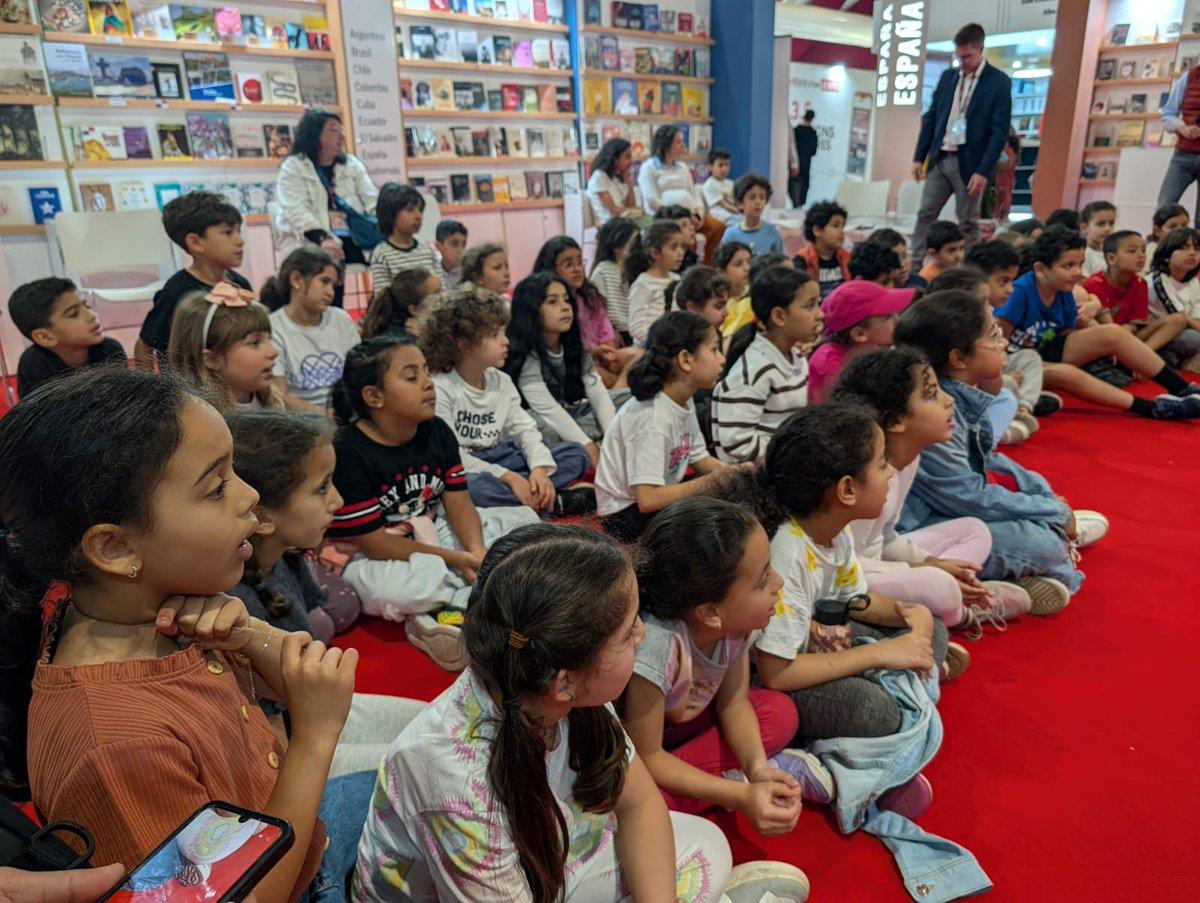
A cultural tradition survives only when the next generation sees value in it.
Young audiences are surrounded by short-form video, gaming, global music and on-demand entertainment.
They will not engage with oral heritage simply because institutions tell them it is important.
The format must compete for their attention.
That requires strong performers, contemporary presentation and opportunities for participation.
Workshops can help children and young creators understand storytelling as a practical skill rather than a museum object.
The same skills are relevant to filmmaking, journalism, advertising, social media and entrepreneurship.
A person who can build a compelling narrative can communicate an idea, sell a product or lead an audience.
Storytelling education therefore has value beyond heritage preservation.
It develops confidence, language and creative thinking.
The strongest festivals will not only present established storytellers.
They will create pathways for new ones.
Cultural Power Is Built Through Repetition
One festival cannot transform Morocco’s international cultural position on its own.
Soft power is built when cultural experiences become recognisable, consistent and accessible over time.
The 23rd edition gives the Rabat festival an important advantage: continuity.
An event that returns year after year can develop an identity, attract stronger participants and build audience trust.
But longevity alone is not enough.
The festival must also improve its visibility, documentation and international distribution.
Performances should be professionally recorded where appropriate. Artists should receive profiles and promotional support. Partnerships with publishers, broadcasters and digital platforms could extend the life of the event beyond its closing day.
A festival creates the greatest value when its content continues circulating after the physical audience has gone home.
From Heritage To Creative Industry
Morocco’s entertainment economy is often discussed through cinema, music festivals and foreign productions.
Storytelling belongs inside that conversation.
It is the foundation from which almost every other entertainment form begins.
A film needs a story. A song often tells one. A documentary organises facts into one. Even a successful social-media video depends on narrative structure.
The Rabat festival therefore highlights an asset that is both ancient and highly modern.
Morocco does not need to choose between protecting traditional culture and building a contemporary entertainment industry.
The two can strengthen each other.
Traditional stories can provide original material.
Modern production can give those stories new audiences.
Tourism can create commercial demand.
Education can develop new storytellers.
Digital platforms can carry their voices across borders.
The Story After The Festival
When the performances end, the most important question remains.
What happens to the storytellers, recordings, workshops and ideas created during the event?
If they disappear until the next edition, the cultural impact remains limited.
If they become part of a wider system connecting heritage, education, tourism and media production, the festival can generate value throughout the year.
Rabat has shown that oral tradition can still occupy a place in modern public culture.
The next step is to ensure that the stories do not remain confined to one festival or one audience.
Morocco’s cultural power will not come only from hosting international entertainment.
It will also come from recognising, developing and exporting the stories it already owns.