
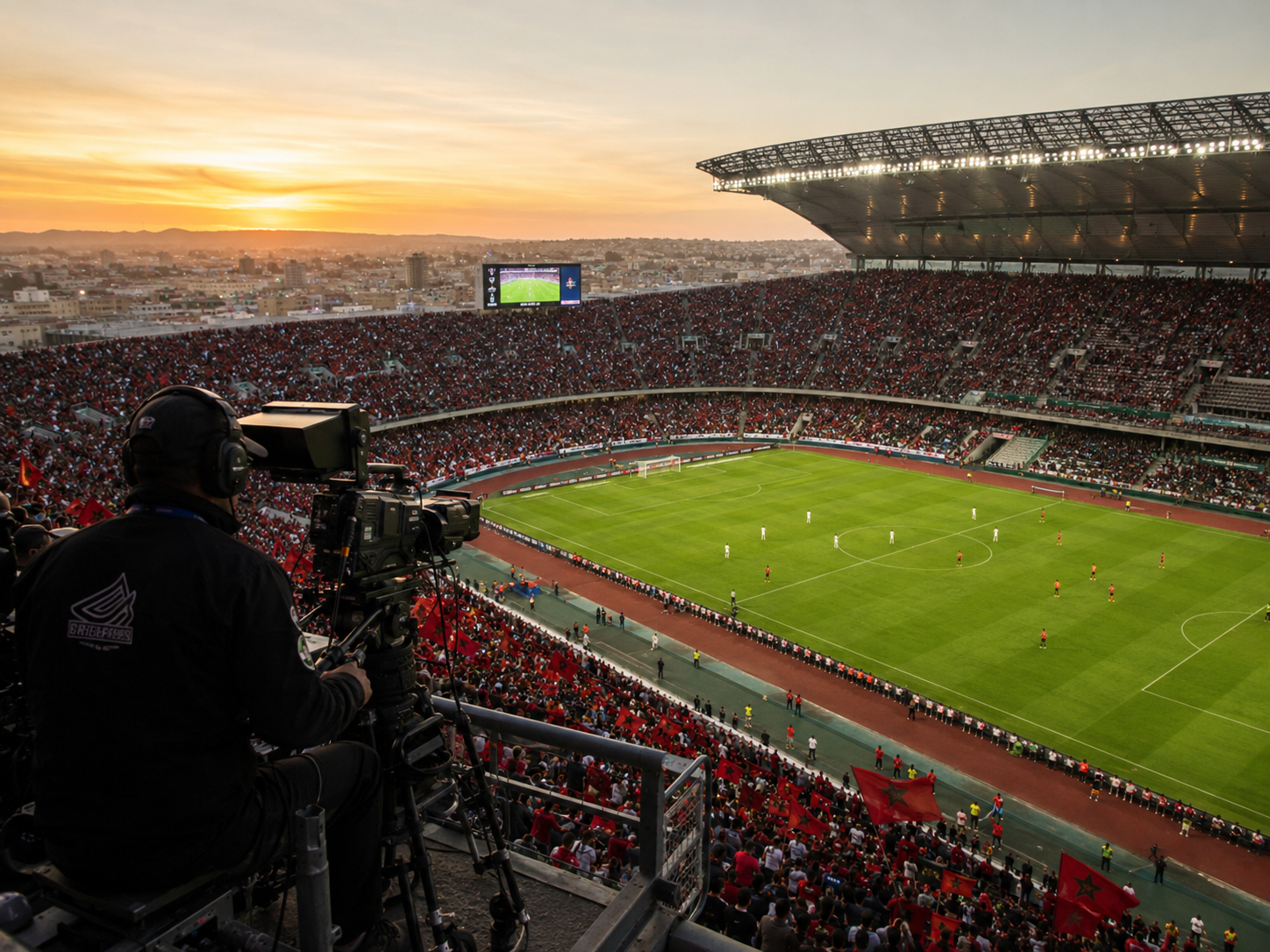
Morocco is preparing to host the world’s biggest football event in 2030.
But one of the most valuable industries surrounding that tournament will not be built inside a stadium.
It will be built around content.
Video.
Documentaries.
Podcasts.
Social media.
Behind-the-scenes access.
Player stories.
Match analysis.
Short-form clips.
Data visualisation.
Multilingual broadcasts.
Football has become one of the world’s most powerful content businesses, and recent debate around FIFA’s proposed commercial structure shows just how valuable that audience has become.
FIFA explored creating a commercial subsidiary valued at roughly $20 billion, with minority investors potentially contributing up to $4.2 billion.
That figure is not only about broadcast rights.
It is a reminder that football attention itself has become an asset.
Morocco will receive an extraordinary amount of that attention before and during 2030.
The real opportunity is making sure Moroccan companies know how to keep monetising it after the tournament ends.
Football Is Already A Media Business
A major match lasts ninety minutes.
The content economy surrounding it can operate for days.
Before the game:
Training.
Press conferences.
Predictions.
Player interviews.
Tactical analysis.
Supporter stories.
During the game:
Live broadcasting.
Commentary.
Statistics.
Highlights.
Reaction.
Afterwards:
Analysis.
Documentaries.
Short-form clips.
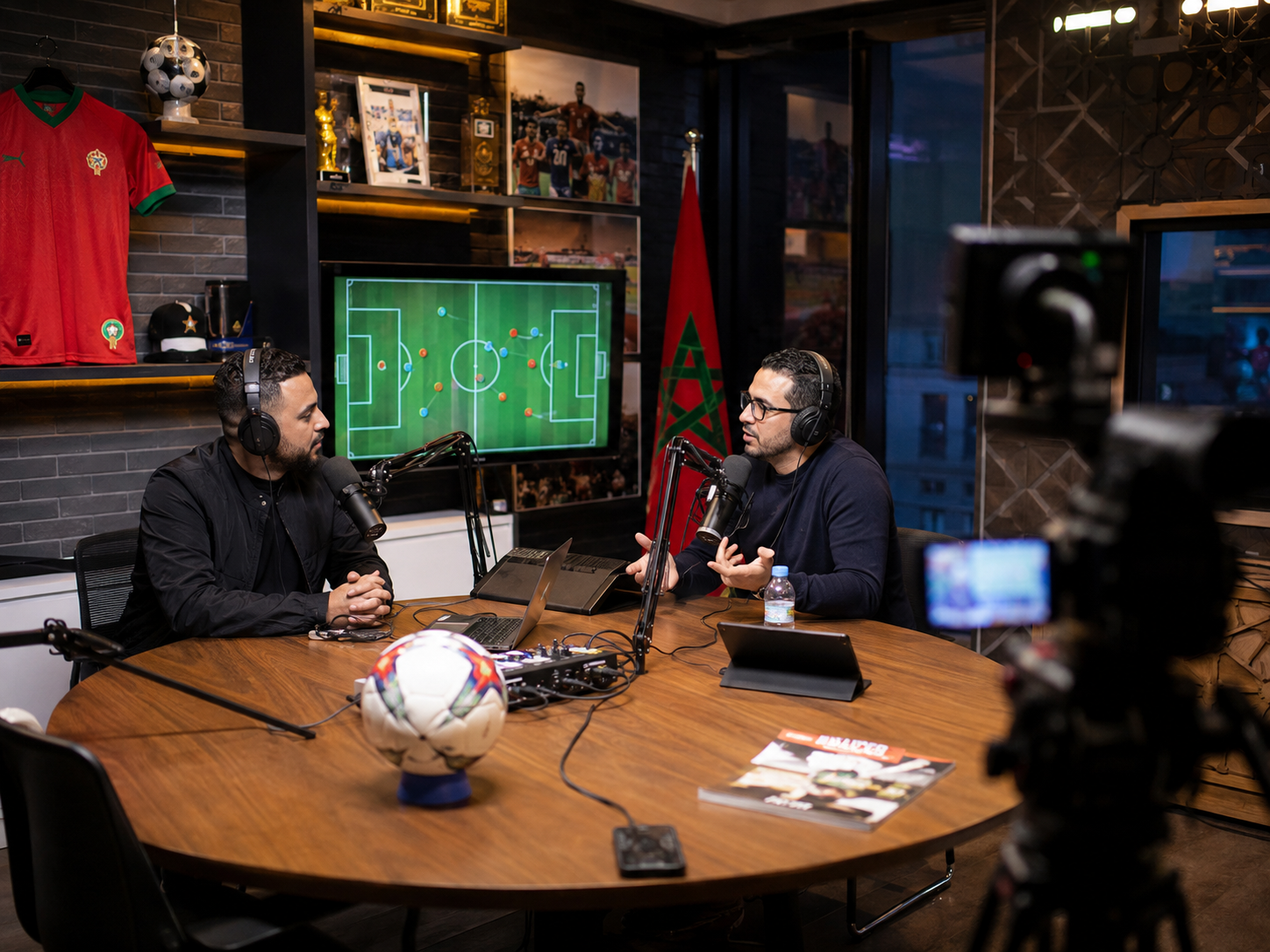
Podcasts.
Memes.
Player content.
One football match can therefore generate hundreds of separate pieces of media.
The company capable of producing and distributing that content does not need to own the football club.
It needs access, production capability and an audience.
That is where Morocco can build an entirely new creative economy.
2030 Will Create A Global Content Explosion
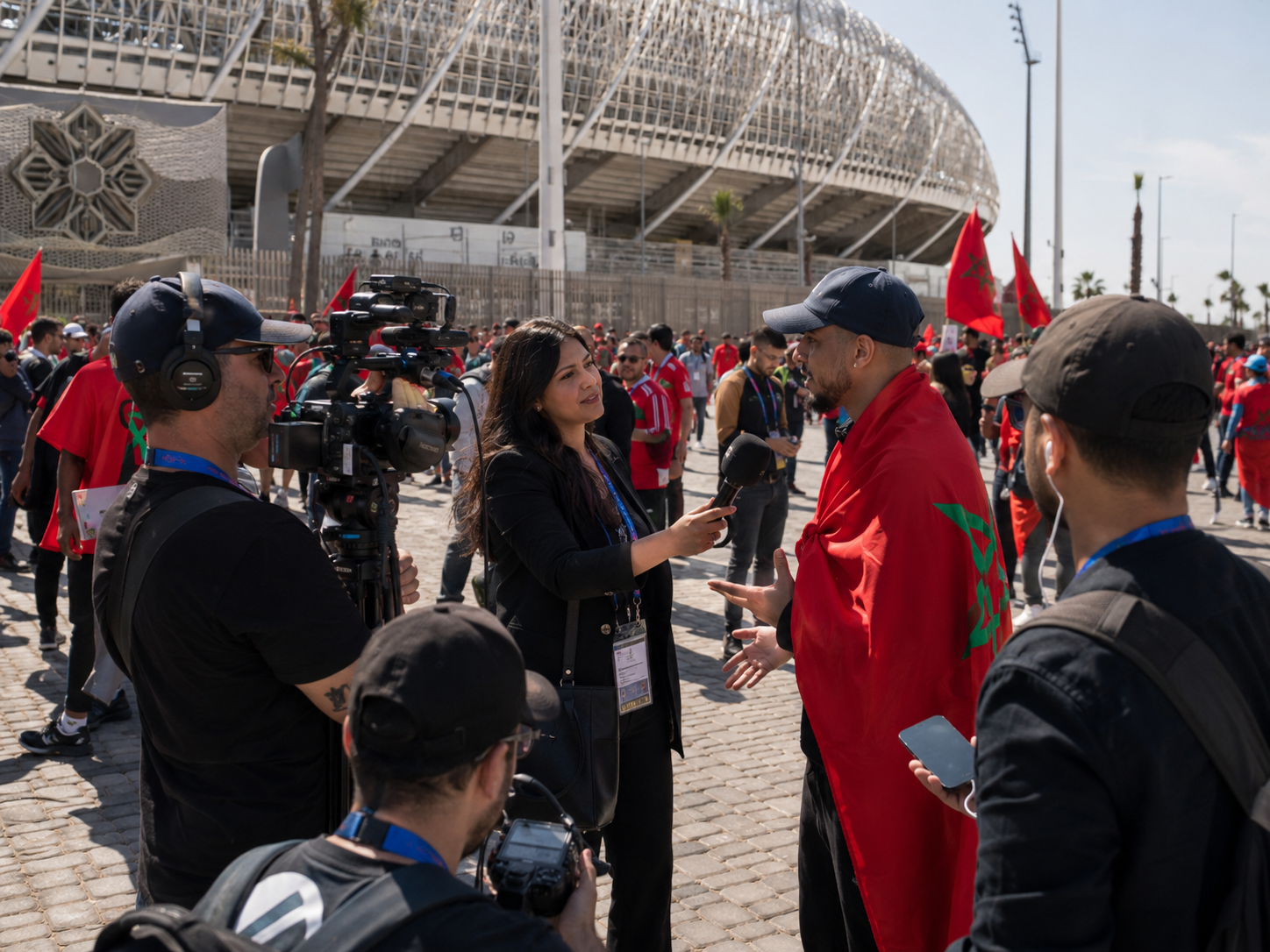
The World Cup will bring thousands of journalists, creators and media companies into Morocco.
International broadcasters will establish temporary studios.
Digital platforms will deploy production teams.
Sponsors will commission content.
Football creators will travel between host cities.
Supporters will publish millions of videos themselves.
Morocco should not treat this simply as temporary foreign media activity.
Local production companies should be integrated into it.
Camera operators.
Editors.
Sound engineers.
Producers.
Fixers.
Translators.
Drone operators.
Graphic designers.
Animators.
Data specialists.
Social-media teams.
The tournament can function as one enormous training and commercial opportunity for Morocco’s creative sector.
Moroccan Companies Need To Win Contracts Before 2030
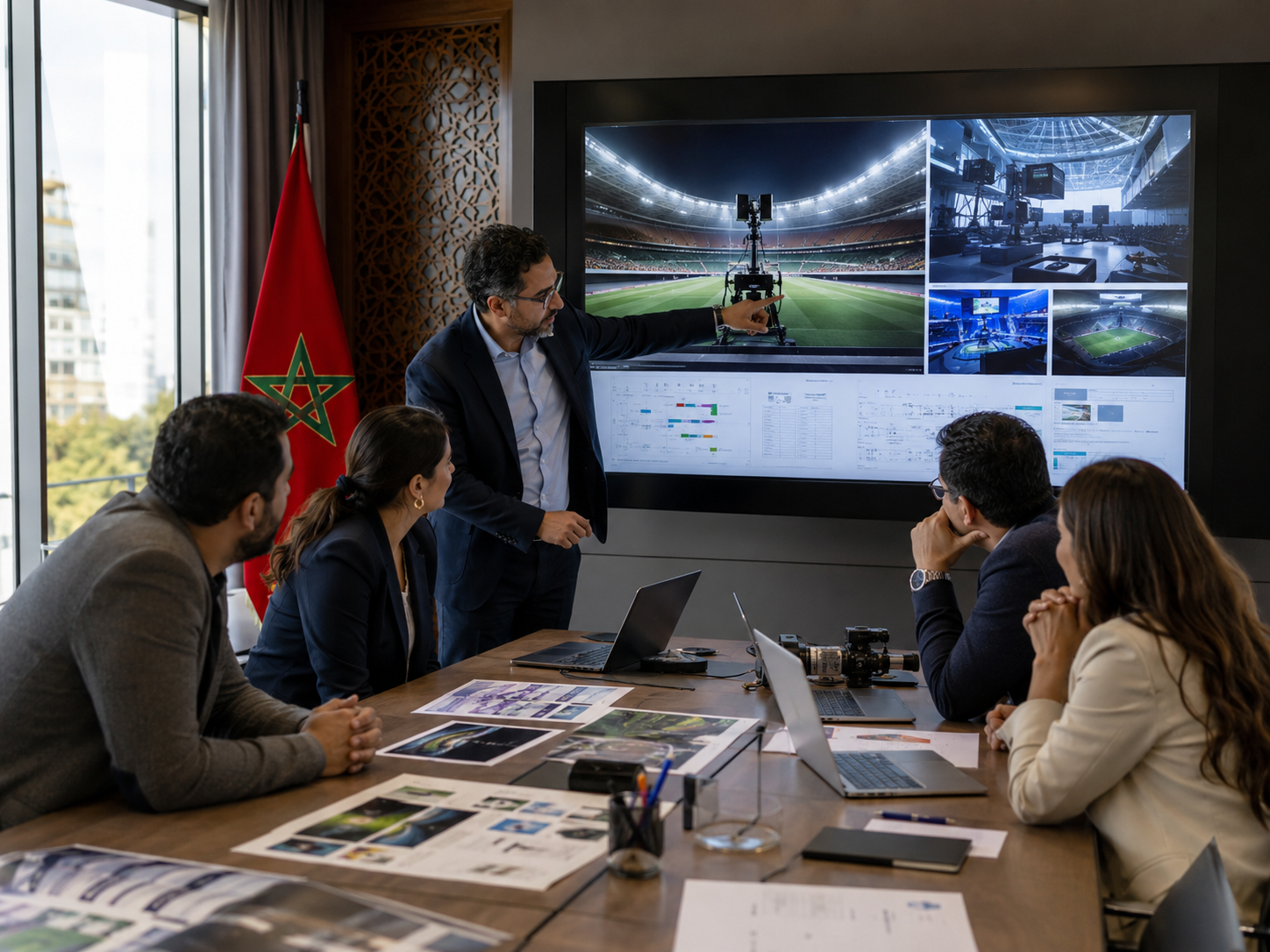
If Moroccan media businesses wait until 2030 to prepare, much of the opportunity will already be gone.
International rights holders plan years in advance.
Sponsors appoint agencies early.
Broadcasters choose suppliers early.
Production companies build local partnerships before major events begin.
Moroccan firms therefore need to position themselves now.
Professional portfolios.
International production standards.
English-language capability.
Fast editing.
Rights management.
Event experience.
Reliable technical equipment.
Cybersecurity.
Insurance.
Legal contracts.
The strongest local companies should aim to become approved suppliers to global broadcasters and sports organisations before the first World Cup match begins.
Short-Form Video Changes Who Can Compete
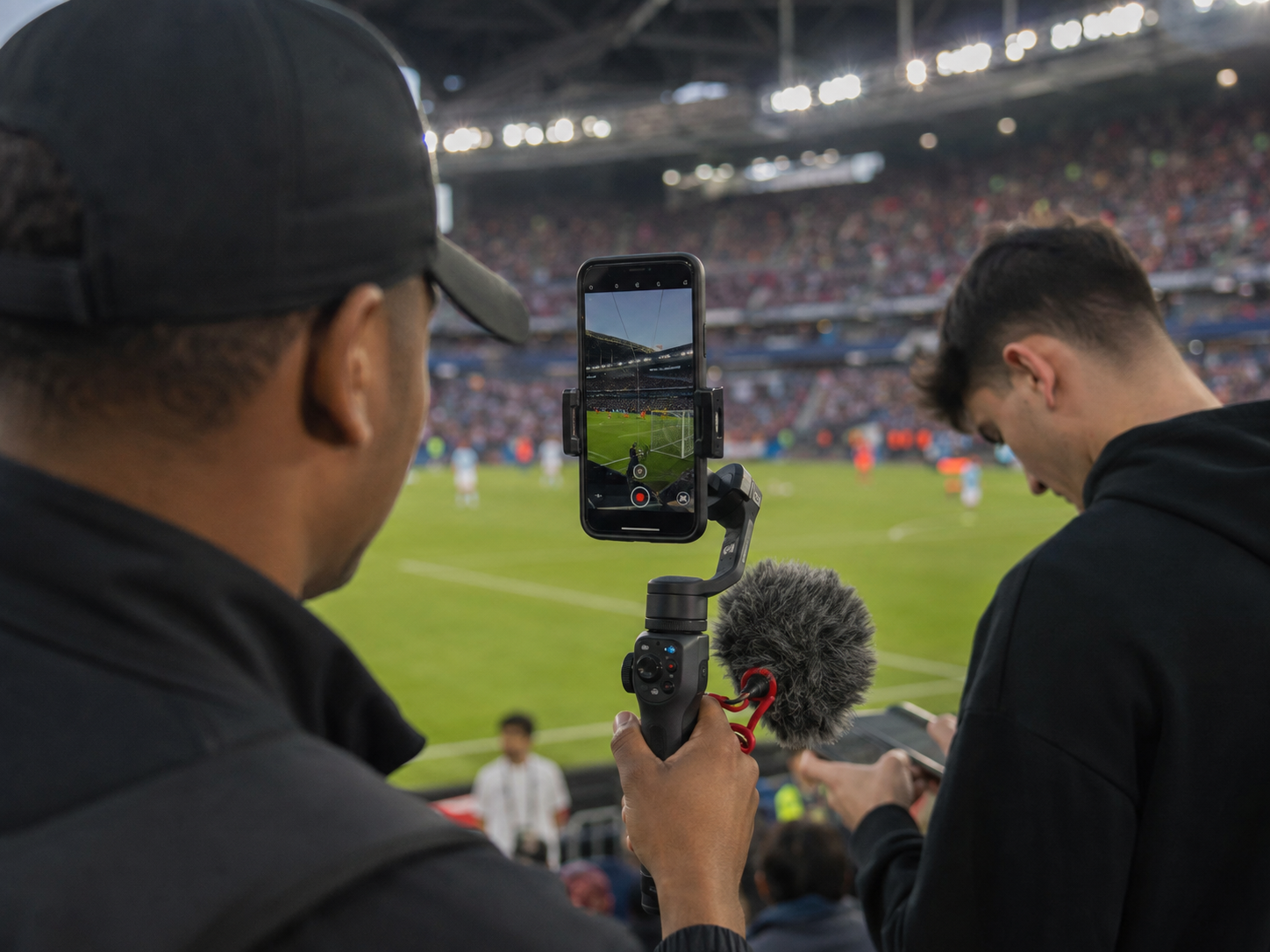
Sports media used to require television networks.
That barrier has fallen dramatically.
A small production team can create content for TikTok, YouTube, Instagram and other platforms with relatively modest infrastructure.
This allows Moroccan creators and studios to compete much earlier.
One strong football interview can reach millions.
One documentary episode can travel internationally.
One tactical-analysis channel can build a large audience without owning traditional broadcasting rights.
Short-form content lowers the entry barrier.
But it also increases competition.
Thousands of creators can publish.
Quality and speed become decisive.
The Moroccan opportunity is therefore not simply producing more content.
It is producing content good enough to travel.
Arabic, French And English Create A Major Advantage
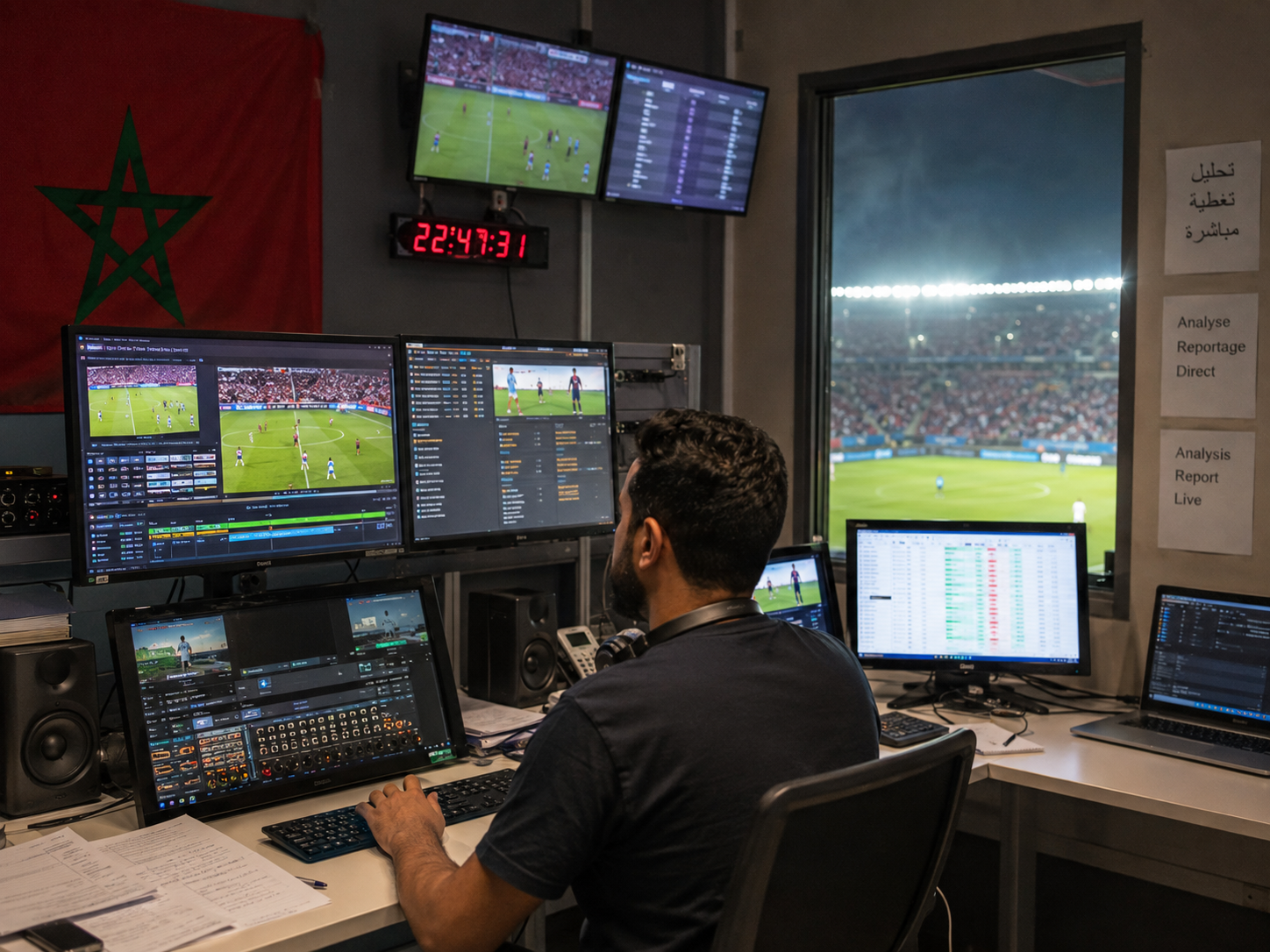
Morocco occupies an unusually strong linguistic position for sports media.
Arabic connects North Africa and the Middle East.
French connects Francophone Africa and Europe.
English opens the global football market.
Spanish can add another audience given Morocco’s proximity to Spain and the 2030 hosting partnership.
This multilingual capability is economically valuable.
One interview can be subtitled into several languages.
One documentary can be adapted for different markets.
One social-media team can serve sponsors targeting Africa, Europe and the Middle East.
Moroccan production companies should build multilingual workflows from the beginning.
Content becomes more valuable when it can cross borders without being recreated.
The Diaspora Is Already A Ready-Made Audience
Moroccan football content does not need to depend only on viewers inside Morocco.
The diaspora provides a large international market.
France.
Belgium.
The Netherlands.
Spain.
Germany.
Canada.
The Gulf.
Millions of people remain emotionally connected to Moroccan football.
That means Moroccan studios can develop content aimed specifically at supporters abroad.
Player interviews.
Club documentaries.
National-team stories.
Historic matches.
Diaspora football journeys.
Moroccan players abroad.
Behind-the-scenes material.
The diaspora already understands the cultural context.
That makes audience acquisition easier.
The challenge is producing consistently enough to turn emotional connection into recurring media consumption.
Clubs Should Become Content Studios
Moroccan clubs still have enormous untapped media potential.
Wydad.
Raja.
AS FAR.
MAS.
Renaissance Berkane.
Other leading clubs.
Every one of them generates daily stories.
Training.
Academy players.
Transfers.
Injuries.
History.
Supporters.
Coaches.
Travel.
Continental competitions.
Yet clubs often publish only small fragments of what happens internally.
A professional club media department can create much more.
Weekly shows.
Documentaries.
Player profiles.
Youth-academy series.
Supporter stories.
Historical archives.
Sponsor content.
The objective is not simply follower growth.
Media can support sponsorship, merchandising and fan loyalty.
A football club with strong content becomes more valuable commercially.
Access Is The Most Valuable Content Asset
Anyone can comment on football.
Very few people can show what happens inside the dressing room, training ground or club offices.
Access creates differentiation.
Moroccan clubs therefore need to understand that controlled media access can become a commercial asset.
A sponsor-backed documentary series.
An official training show.
A behind-the-scenes CAF campaign.
A youth-academy series.
These products can create engagement that match highlights alone cannot.
The strongest sports-media businesses often succeed because they provide something fans cannot obtain elsewhere.
Morocco has the stories.
The missing ingredient is often professional packaging.
Documentaries Can Travel Far Beyond Football Fans
Sports documentaries have become one of the strongest formats in streaming.
They work because they combine sport with human stories.
Pressure.
Family.
Failure.
Recovery.
Identity.
Ambition.
Morocco has extraordinary material.
The 2022 World Cup run.
The development of women’s football.
Academy journeys.
Players moving from Moroccan neighbourhoods to European leagues.
Historic clubs.
African competition.
2030 preparation.
The rise of modern stadium infrastructure.
These stories can appeal to people who do not watch every match.
A well-made documentary can also become tourism marketing without looking like advertising.
Viewers discover cities, landscapes and Moroccan culture through the football story.
Morocco Needs A Stronger Sports-Documentary Pipeline
The biggest obstacle is often financing.
Documentaries require time.
Research.
Travel.
Editing.
Rights clearance.
Archival footage.
Music.
Distribution.
Moroccan producers may therefore hesitate to invest without guaranteed buyers.
This is where broadcasters, sponsors and streaming platforms can play a role.
Co-financing.
Pre-sales.
Brand partnerships.
International distribution deals.
A stronger documentary ecosystem would allow producers to work on larger projects without carrying all the risk themselves.
By 2030, Morocco should have several production companies capable of delivering international-standard sports documentaries.
Podcasts Are A Low-Cost Entry Point
Not every sports-media company needs a huge production budget.
Podcasts offer a much cheaper route.
Football analysis.
Interviews.
Business of sport.
Club history.
African football.
Women’s football.
Youth development.
Moroccan players abroad.
Podcasts can build loyal niche audiences.
They can also support sponsorship.
The strongest podcast brands can later expand into video, events and documentaries.
This makes them useful incubators for sports-media talent.
A producer can test whether an audience exists before committing to a much more expensive television project.
Data Can Make Moroccan Sports Content Smarter
Modern football audiences increasingly expect more than opinion.
Statistics matter.
Expected goals.
Possession maps.
Passing networks.
Player movement.
Pressing.
Speed.
Heat maps.
Historical comparisons.
Moroccan media companies can partner with data providers or build their own capabilities.
This can improve analysis.
It also creates new sponsor inventory.
A bank could sponsor match statistics.
A telecom operator could sponsor player-speed data.
A technology company could sponsor tactical analysis.
Data gives media companies additional products to sell.
The football match remains the same.
The number of commercial layers around it grows.
AI Will Lower Production Costs
Artificial intelligence is already changing media workflows.
Transcription.
Translation.
Subtitling.
Clipping.
Search.
Graphic generation.
Archive tagging.
Content recommendations.
A Moroccan production company serving several languages can use AI to reduce the cost of localisation dramatically.
One interview can be transcribed automatically.
Subtitles can be produced quickly.
Clips can be identified faster.
Editors still need human judgment.
But production becomes more scalable.
This matters because global sports media requires volume.
The companies that can produce high-quality content quickly will win more contracts.
Rights Management Will Become Critical
Sports content is commercially valuable because access is controlled.
That makes rights management essential.
Who owns the match footage?
Who can publish highlights?
For how long?
In which countries?
On which platforms?
Can the sponsor reuse the content?
Can the player publish it independently?
A small Moroccan studio may create excellent content and still lose value through weak contracts.
Sports media therefore requires legal sophistication alongside creativity.
Production companies should understand licensing before investing heavily.
Owning the camera does not automatically mean owning the footage.
Sponsors Need More Than Logos
Brands increasingly want content.
A sponsor can appear on a shirt.
It can also finance a documentary.
Support a podcast.
Sponsor player interviews.
Create fan competitions.
Fund behind-the-scenes content.
This produces more engagement than static visibility alone.
Moroccan sports-media companies can become the bridge between sponsors and football properties.
The club provides access.
The brand provides money.
The production company creates the content.
Supporters receive entertainment.
When executed well, every participant benefits.
This could become one of the strongest commercial models around Moroccan football.
Creators Should Be Treated As Media Businesses
Influencers and creators are often discussed as individuals.
The strongest ones increasingly operate like small media companies.
Editors.
Managers.
Sales teams.
Graphic designers.
Researchers.
Commercial partnerships.
Morocco’s football creators can professionalise in the same direction.
A creator with a million followers should not depend only on occasional brand deals.
They can build recurring formats.
Memberships.
Events.
Merchandise.
Production services.
Podcast networks.
Documentary projects.
The creator economy becomes more sustainable when it moves from personality to company.
2030 Can Create A New Generation Of Sports Creators
The World Cup will produce thousands of story opportunities.
Training camps.
Fan zones.
Host cities.
International supporters.
Players.
Infrastructure.
Travel.
Food.
Culture.
Moroccan creators who prepare early can build large audiences before 2030 rather than trying to appear during the tournament.
This matters because algorithms reward existing communities.
A creator with a strong football audience in 2029 will be much better positioned when global interest explodes in 2030.
The next four years should therefore be treated as an audience-building period.
Foreign Broadcasters Need Local Knowledge
International media arriving in Morocco will need help.
Locations.
Permissions.
Transport.
Translation.
Local contacts.
Cultural context.
Production crews.
This creates opportunities for Moroccan companies acting as local production partners.
A British broadcaster may not need to build a complete Moroccan operation.
It may prefer partnering with a local company that understands the country.
The same applies to American, Asian and African networks.
Local knowledge becomes commercially valuable when foreign media demand suddenly increases.
Moroccan firms should package these services professionally.
Not informal assistance.
Proper production support.
Casablanca And Rabat Can Become Production Hubs
Morocco already has cities capable of supporting larger media operations.
Casablanca has agencies, corporate headquarters and commercial talent.
Rabat has institutions, broadcasters and growing creative infrastructure.
Tangier offers an increasingly international environment.
Marrakech already hosts large-scale entertainment and hospitality events.
2030 can connect these centres into a wider production network.
The opportunity is not necessarily building one giant “sports media city.”
It is developing specialised capabilities across several cities.
Studios.
Editing.
Broadcast.
Digital.
Events.
Creator management.
The ecosystem becomes stronger through diversity.
Football Media Can Strengthen African Ambitions
Morocco should not build this industry only for domestic football.
Africa is the larger market.
CAF competitions.
African national teams.
Club football.
Youth tournaments.
Women’s football.
Esports.
Many African competitions still have room for stronger production, distribution and digital storytelling.
Moroccan companies that develop world-class capabilities around 2030 can later sell those services across the continent.
This is where the legacy becomes economically meaningful.
A temporary World Cup supplier becomes a permanent African media business.
Morocco Can Become A Francophone Sports-Media Hub
Francophone Africa is particularly interesting.
French remains an important media language across a large part of the continent.
Morocco already has cultural and commercial links with several Francophone African markets.
That creates a natural expansion path.
A Moroccan production company could create French-language football content for audiences in Morocco, Senegal, Côte d’Ivoire, Cameroon and elsewhere.
Arabic content can target North Africa.
English can serve international audiences.
This multilingual positioning is difficult for many competitors to replicate.
Women’s Football Creates Another Content Market
Women’s football is growing rapidly.
Morocco has invested significantly in the sector and hosted major African women’s competitions.
That creates new storytelling opportunities.
Players.
Academies.
National-team journeys.
Club development.
Young girls entering football.
Commercial growth.
International transfers.
Women’s football can attract different sponsors and audiences from the men’s game.
Sports-media companies that develop expertise early can establish strong positions before the market becomes crowded.
Growth categories often create the best opportunities for new entrants.
Content Can Support Tourism
Football content can also become tourism infrastructure.
A documentary about Tangier.
A player profile filmed in Marrakech.
A supporters’ journey through Fez.
A stadium series in Casablanca.
International viewers discover Morocco through the story.
That creates destination awareness without traditional advertising.
Sports tourism and sports media therefore reinforce each other.
A fan may first see Morocco through football content and later decide to visit.
By 2030, Moroccan tourism organisations should work with creators and studios strategically.
Not simply sponsor promotional videos.
Support stories people actually want to watch.
Archive Footage Is An Underused Asset
Moroccan football has decades of history.
Historic national-team performances.
Legendary club matches.
Players.
Supporters.
Stadiums.
Old television footage.
Photographs.
Much of this archive potentially has commercial and cultural value.
It can support documentaries.
Anniversary content.
Streaming libraries.
Educational projects.
Club museums.
Digital subscriptions.
Preservation itself is important.
Old footage deteriorates.
Digitisation can protect history while creating a new commercial asset.
Morocco should treat sports archives as intellectual property.
A Sports Streaming Platform Is Not Automatically The Answer
It may be tempting to argue that Morocco simply needs its own dedicated sports streaming service.
That should not be assumed.
Streaming businesses are expensive.
Content rights cost money.
Technology costs money.
Customer acquisition costs money.
Subscriber churn can be high.
The better opportunity may initially be creating strong content and distributing it through existing platforms.
YouTube.
Broadcasters.
Global streaming services.
Social networks.
Licensing.
Owning content can be more important than owning the platform through which every viewer watches it.
Infrastructure should follow business demand, not ambition alone.
2030 Must Leave Intellectual Property Behind
This is perhaps the most important objective.
A stadium remains after the World Cup.
A railway remains.
An airport remains.
The creative sector should also leave assets behind.
Documentary libraries.
Sports brands.
Production companies.
Creator networks.
Technology platforms.
Archives.
Audience databases.
Formats.
Intellectual property.
These assets can continue generating revenue without another construction project.
That is one of the great advantages of media.
The same documentary can be sold repeatedly.
The same content format can be exported.
The same production company can serve several countries.
The legacy is scalable.
World Cup Attention Will Be Temporary
Morocco will receive extraordinary global attention in 2030.
But attention moves quickly.
The day after the final, the football world begins focusing on the next tournament.
This is exactly why Morocco needs to prepare now.
The objective is not preserving the World Cup spotlight forever.
That is impossible.
The objective is using temporary attention to create permanent capability.
Production companies.
Creators.
Journalists.
Data businesses.
Documentary studios.
Sports-marketing agencies.
Rights specialists.
Those companies can continue operating after global attention moves elsewhere.
Morocco Should Measure Media Legacy Differently
Success should not be measured only by television audience during 2030.
A stronger question is what exists in 2031.
How many Moroccan sports-production companies won international contracts?
How many creators built sustainable businesses?
How many documentaries were exported?
How many African federations use Moroccan media services?
How many sports-data startups survived?
How much sports-media revenue is generated locally?
Those indicators would show whether the tournament created an industry.
Views disappear quickly.
Companies remain.
Football Attention Has Become A Financial Asset
FIFA’s recent commercial debate highlighted a striking figure.
Up to $4.2 billion of minority capital was contemplated for a commercial operation carrying an implied valuation near $20 billion.
Whatever eventually happens to that specific proposal, the message is unmistakable.
Football audiences are extraordinarily valuable.
Morocco will stand at the centre of that audience in 2030.
The country is already investing billions into the physical infrastructure necessary to host it.
The creative infrastructure now deserves similar strategic thinking.
Cameras.
Studios.
Editors.
Creators.
Data.
Rights.
Languages.
Stories.
The opportunity is not to compete with FIFA for global rights.
It is to build Moroccan companies capable of earning money from the enormous media economy that forms around global football.
2030 will give Morocco attention that no marketing campaign could buy.
The most successful legacy will be reached when, years after the final whistle, Moroccan companies are still selling football stories to audiences around the world.