

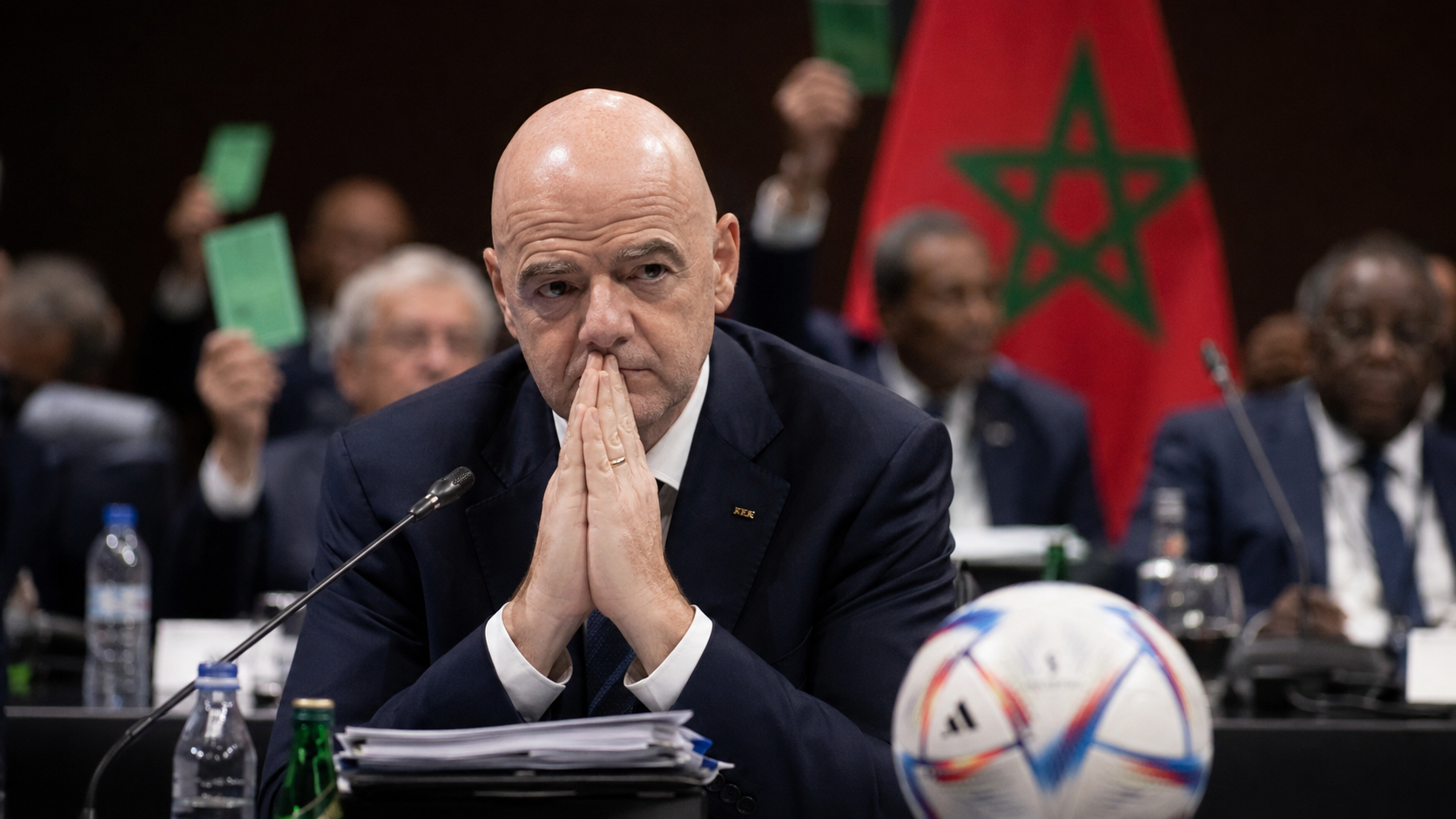
Gianni Infantino is facing the most serious challenge to his FIFA presidency yet, with major football confederations discussing an unprecedented vote of no confidence. Morocco, meanwhile, has made its position clear: it is standing behind him.
A power struggle is building at the top of world football.
FIFA President Gianni Infantino is facing mounting pressure from some of the game’s most powerful regional organisations after a controversial plan involving private investment in FIFA’s commercial business triggered a revolt.
Now the dispute has reached a new level.
Reuters reported on August 20 that officials from major confederations are considering whether to push for an extraordinary FIFA Congress and attempt something the organisation has never seen in its 122-year history:
a formal vote of no confidence in its president.
But Infantino is far from isolated.
Africa remains one of his strongest bases of support.
And Morocco is firmly on that side of the battle.
THE CRISIS STARTED WITH A WORLD CUP MONEY PLAN
The confrontation began with Infantino’s proposed FIFA Forward Enterprise project.
The plan would have created a new commercial structure and brought private investors into some of FIFA’s most valuable assets, including commercial rights linked to the World Cup.
The proposal immediately created alarm among major football organisations.
UEFA, the Asian Football Confederation and Concacaf were among those opposing the plan, raising concerns about governance, transparency and the long-term control of FIFA’s commercial rights.
The project was eventually abandoned.
But the political damage did not disappear with it.
Instead, the argument moved from the proposal itself to Infantino’s leadership.
NOW HIS OPPONENTS ARE DISCUSSING SOMETHING FIFA HAS NEVER DONE
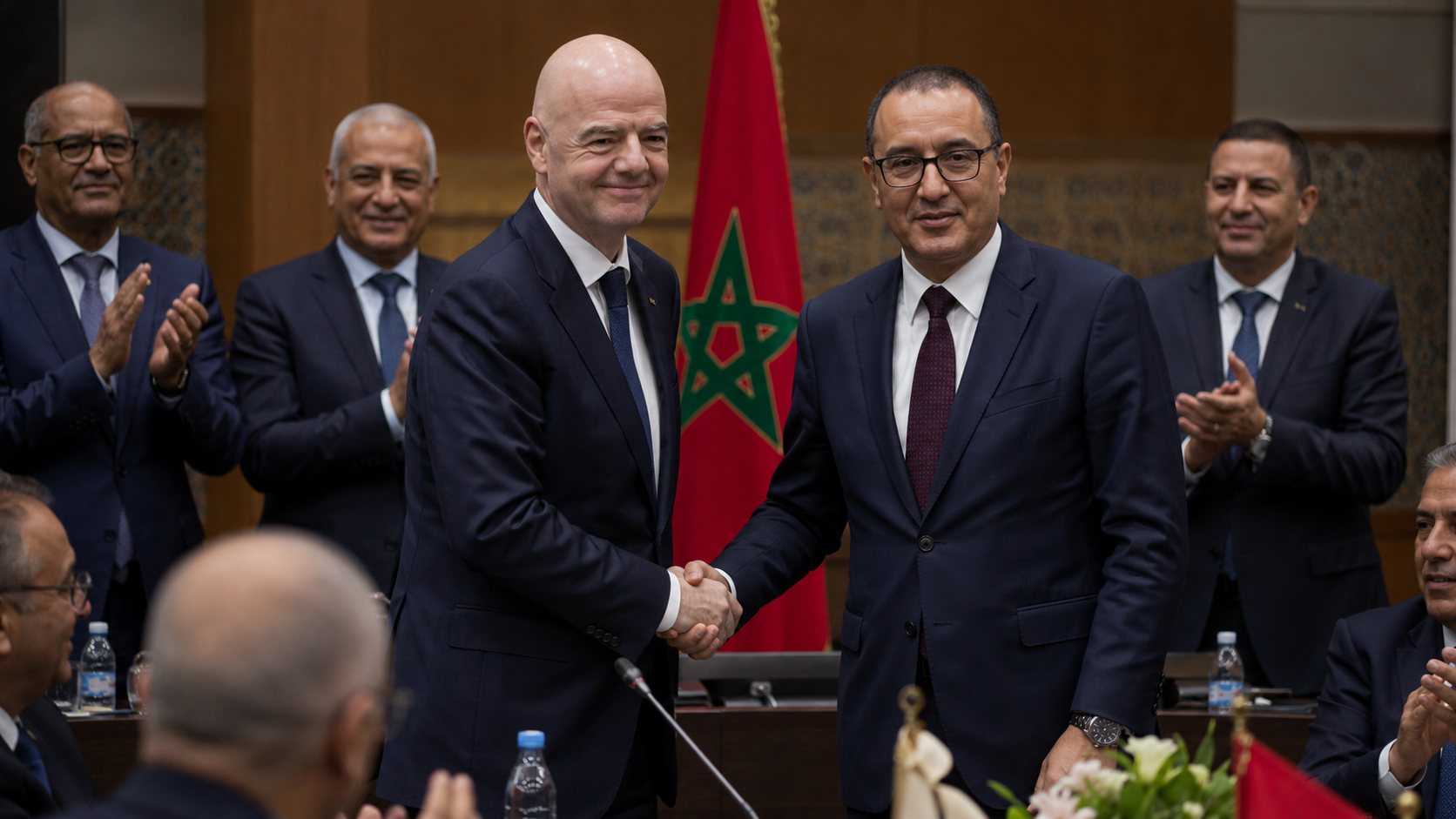
According to Reuters, regional football powerhouses are now examining whether FIFA’s statutes could be used to force an extraordinary Congress and hold a no-confidence vote against Infantino.
The process would be extraordinary.
FIFA has 211 member associations, each with one vote.
At least 20% of those associations, or 43 countries, would need to request an extraordinary Congress.
Once triggered, the Congress would have to be held within three months.
There is no specific no-confidence procedure written into FIFA’s statutes.
But Reuters notes that ordinary Congress decisions generally require a simple majority of valid votes cast.
No FIFA president has ever been removed this way.
That is what makes the current confrontation potentially historic.
MOROCCO HAS ALREADY PICKED ITS SIDE
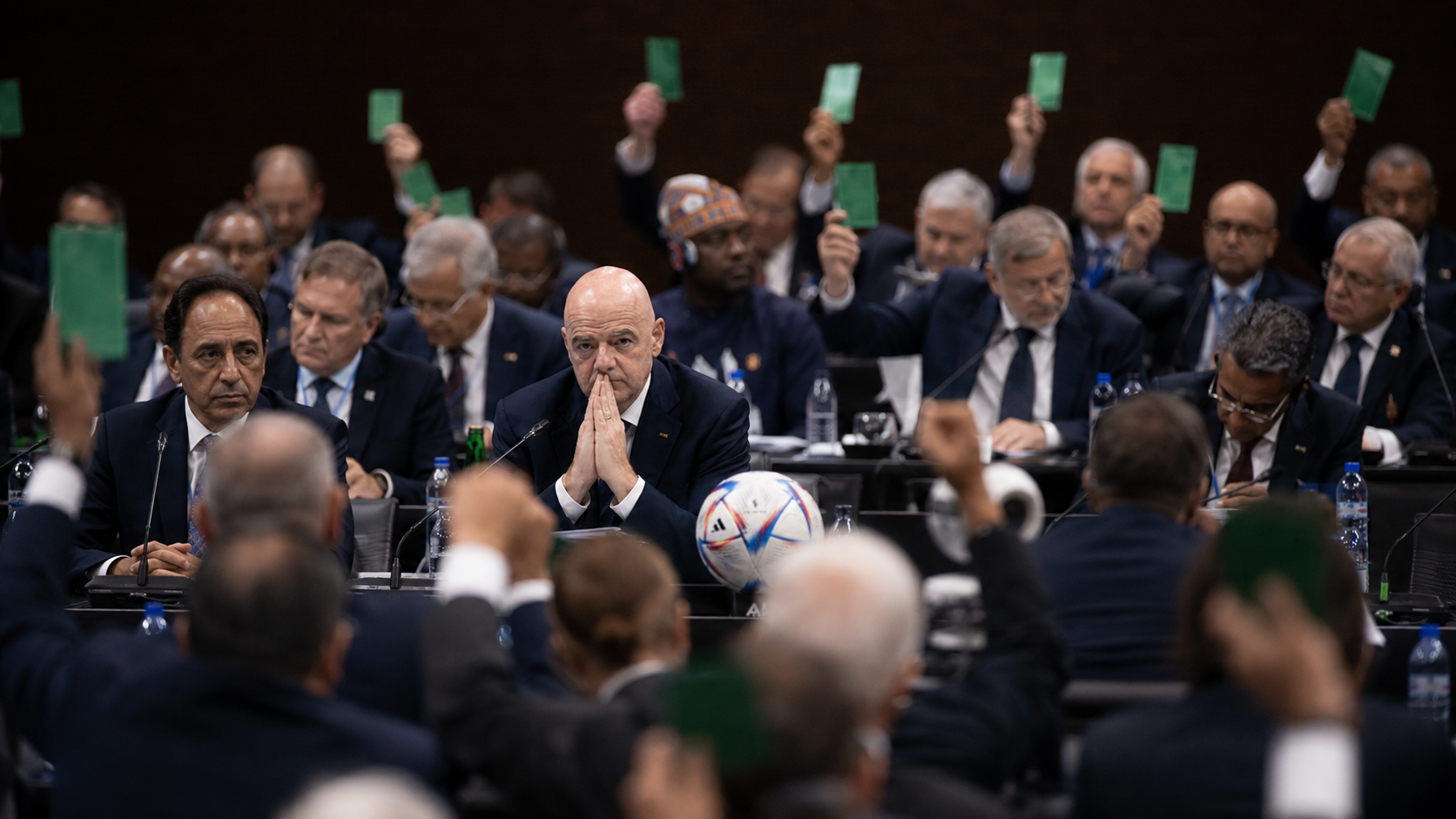
Morocco is not sitting on the fence.
The Royal Moroccan Football Federation joined Qatar, Egypt, Lebanon, Sudan and Mauritania in issuing a public statement supporting Infantino.
The six Arab federations expressed their full support and confidence in the FIFA president and backed his continued leadership.
Morocco is particularly significant.
The country will co-host the 2030 FIFA World Cup with Spain and Portugal.
Its football influence has also grown sharply across Africa, both through sporting performance and through the role of federation president Fouzi Lekjaa in continental and international football structures.
That makes Morocco’s support more than symbolic.
AFRICA COULD BE DECISIVE
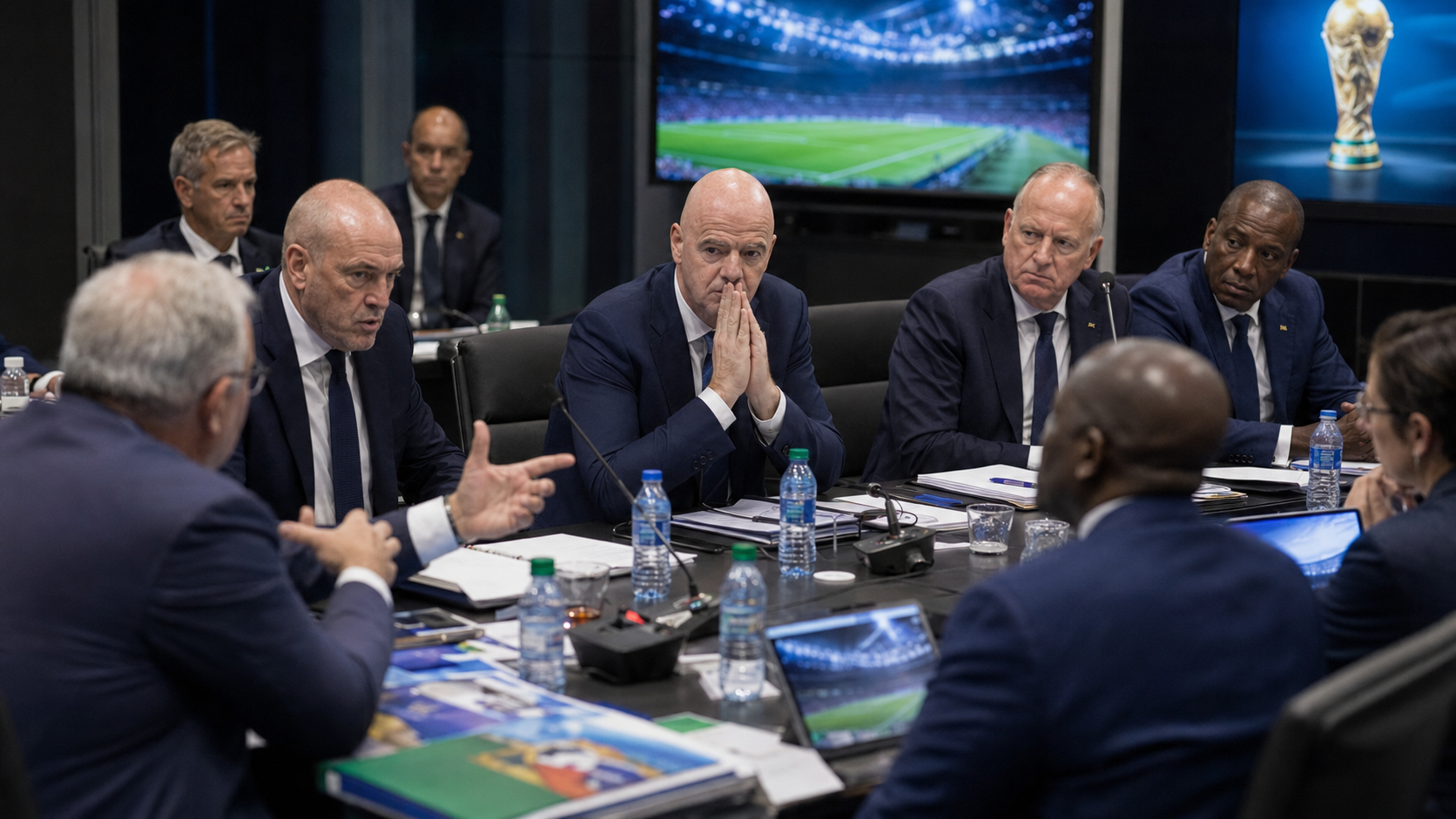
Infantino still enjoys substantial backing across African football.
The Confederation of African Football has publicly reconfirmed its support for him, and Africa’s 54 FIFA member associations represent a major voting bloc.
That could become crucial if the confrontation reaches a Congress vote.
Infantino’s opponents may have powerful confederations behind them.
But FIFA elections are not decided by the size of a country’s football economy.
Brazil gets one vote.
Germany gets one vote.
Morocco gets one vote.
So does every other member association.
That gives Africa enormous collective influence.
THE BATTLE LINES ARE GLOBAL
Infantino’s opposition is not coming from one corner of football.
UEFA represents Europe.
The AFC represents Asia.
Concacaf covers North America, Central America and the Caribbean.
Reuters reports that all three have been involved in the growing backlash over Infantino’s leadership.
Some national associations have also withdrawn their support for his reelection.
But Africa and parts of the Arab football world remain much more supportive.
That creates something FIFA has not seen for years:
a genuinely global political contest over who should control the organisation.
RABAT HAS ALREADY BEEN PART OF THE CRISIS
Morocco was already at the centre of the story earlier this month.
On August 5, FIFA’s senior leadership met in Rabat after the collapse of the private-investment proposal.
At that meeting, FIFA Secretary General Mattias Grafström and members of the Management Board publicly reaffirmed their support for Infantino.
The meeting also acknowledged that FIFA’s internal processes and communication around the failed project needed improvement.
That gathering gave Infantino breathing room.
But it did not end the rebellion.
Two weeks later, his opponents are discussing an even more serious step.
THE DISMISSAL THAT MADE THINGS WORSE
The crisis deepened after FIFA dismissed Chief Operating Officer Kevin Lamour, one of the senior figures who had criticised the private-investment plan.
FIFA Vice-President Sandor Csanyi later described Lamour’s dismissal as the “final straw”, according to Reuters.
The departure reinforced concerns among Infantino’s critics that internal dissent was being pushed aside rather than addressed.
At the same time, more football officials began distancing themselves from his reelection campaign.
The argument was no longer about one commercial project.
It had become a referendum on how FIFA itself was being governed.
INFANTINO IS NOT WALKING AWAY
Despite the pressure, Infantino has shown no sign that he intends to resign.
He is expected to seek another term when FIFA holds its presidential election in March 2027.
That means his opponents now face a strategic choice.
Wait for the election.
Pressure him to step aside.
Or attempt the extraordinary route of forcing a Congress vote before then.
Each option carries risk.
And each requires enough national associations to move together.
MOROCCO’S SUPPORT COULD MATTER MORE THAN IT LOOKS
This is where Morocco becomes particularly interesting.
Its support gives Infantino an influential ally inside African and Arab football.
Morocco also has a direct stake in FIFA’s future because of the 2030 World Cup.
The country has invested heavily in stadiums, transport, training centres and football infrastructure.
Its relationship with FIFA is therefore not abstract.
It is tied to one of the largest sporting events Morocco has ever hosted.
That makes Rabat’s position in the current crisis worth watching closely.
FIFA IS HEADING TOWARD A SHOWDOWN
For now, there is no confirmed no-confidence vote.
There is no extraordinary Congress scheduled.
And Infantino remains FIFA president.
But the political landscape around him has changed dramatically.
Major confederations are discussing unprecedented action.
Senior officials have broken ranks.
National associations are choosing sides.
And Morocco has already made its choice.
If the confrontation reaches a vote, football’s biggest political battle will not be decided in Zurich alone.
It will be decided by 211 national federations around the world.
And Morocco intends to be one of the voices standing behind the man at the centre of the storm.