
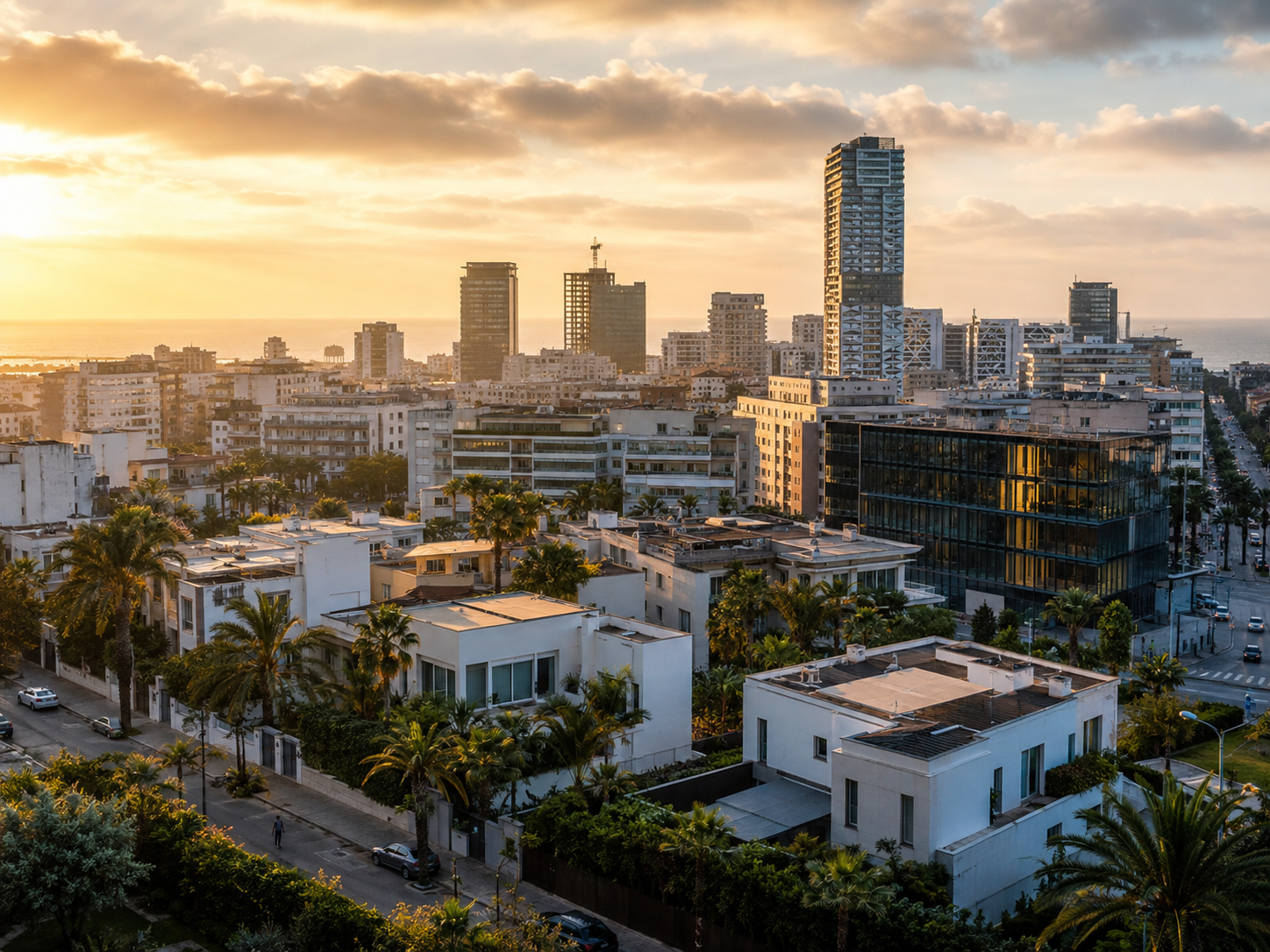
Official second-quarter figures show higher prices and more transactions, but the national recovery looks very different across apartments, houses, villas, land and commercial property.
More properties changed hands in Morocco during the second quarter of 2026. That does not mean every home became more valuable.
The national property price index rose by a modest 0.7% compared with the first quarter, while registered transactions increased by a much stronger 11%, according to the joint Bank Al-Maghrib and ANCFCC bulletin.
Compared with Q2 2025, prices were also 0.7% higher and transactions rose 6.3%.
But apartments, houses, villas, land and offices did not move together. City figures were equally divided. Anyone buying or selling property in Morocco must therefore look beyond the national headline.
MOROCCO’S PROPERTY MARKET BECAME BUSIER IN Q2
The official index is built from property-registration data held by the National Agency for Land Conservation, Cadastre and Cartography, ANCFCC.
That makes it more useful for tracking completed activity than online advertisements, which show what sellers are asking rather than what buyers ultimately pay.
But the index is not a real-time valuation of every property.
It uses a repeat-sales method covering properties involved in at least two transactions. Historical figures can be revised because of delays between transactions and their registration.
The bulletin does not describe the data as seasonally adjusted. A strong quarterly increase may therefore partly reflect a quieter previous quarter and should not automatically be treated as a long-term trend.
MOROCCO PROPERTY MARKET Q2 2026 AT A GLANCE
| Property type | Price change QoQ | Price change YoY | Transaction change QoQ | Transaction change YoY |
|---|---|---|---|---|
| Overall market | +0.7% | +0.7% | +11.0% | +6.3% |
| Residential | +1.0% | +1.0% | +6.3% | +3.9% |
| Apartments | +1.0% | +1.1% | +5.2% | +4.6% |
| Houses | +0.3% | -0.7% | +25.4% | -5.6% |
| Villas | +3.3% | -0.3% | +34.0% | -7.1% |
| Land | +0.6% | +0.3% | +21.8% | +4.1% |
| Professional property | +0.4% | +0.6% | +23.5% | +31.9% |
Official bulletin updated: 27 August 2026
Source: Bank Al-Maghrib property index
QoQ means compared with Q1 2026. YoY means compared with Q2 2025.
APARTMENTS SHOW THE CLEAREST RESIDENTIAL GROWTH
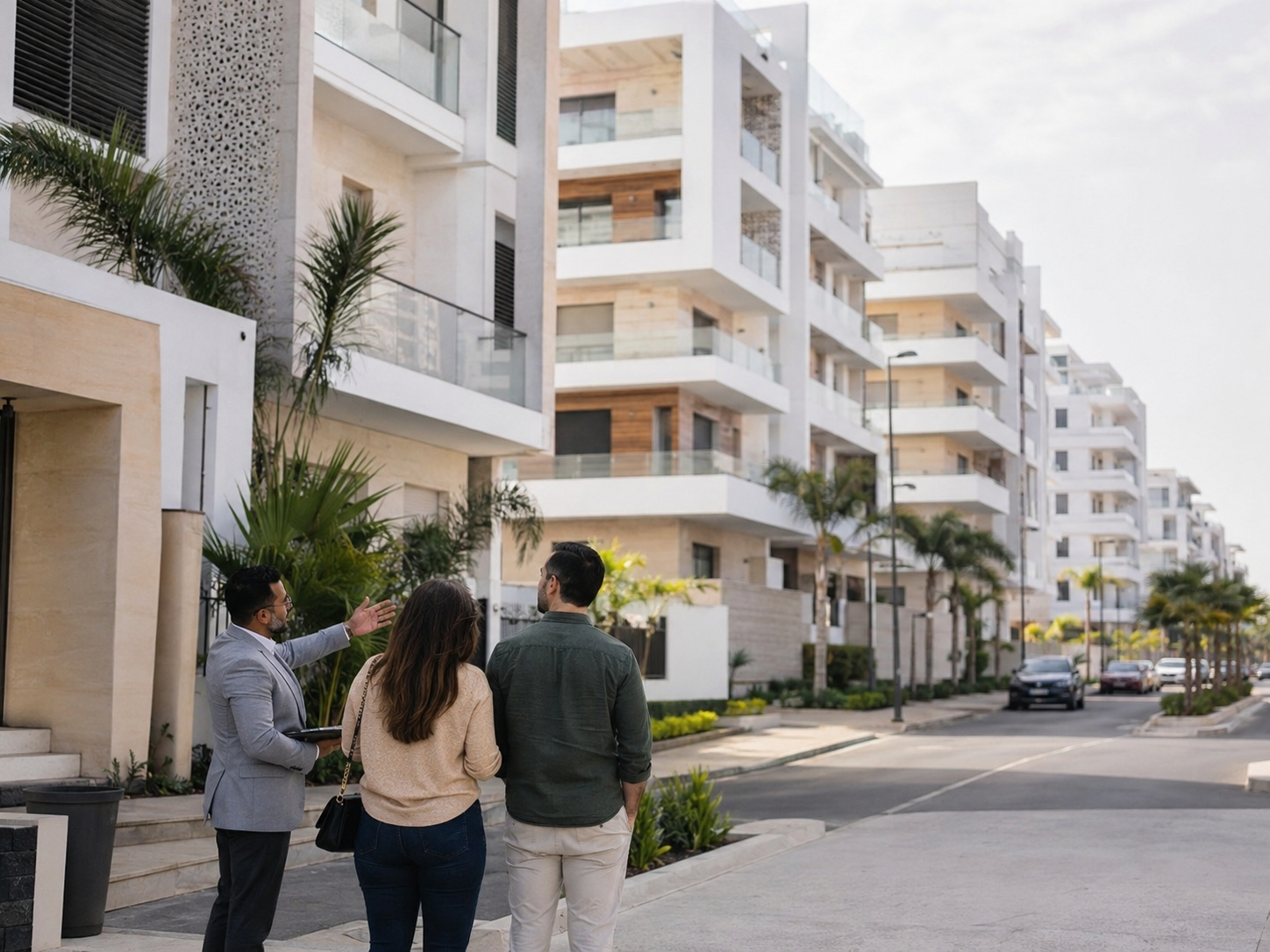
Apartments produced the most consistent residential results.
Prices increased by 1% from Q1 and by 1.1% from a year earlier. Transactions rose by 5.2% quarterly and 4.6% annually.
That makes apartments especially relevant to people following Morocco real estate prices in major cities.
However, a national apartment index can hide substantial differences between neighbourhoods, property sizes, building ages and construction quality.
An increase in the index does not mean every apartment is worth 1.1% more. Nor does it guarantee that a seller will receive the advertised price.
Houses presented a more complicated picture. Transactions jumped 25.4% from the previous quarter but remained 5.6% below their Q2 2025 level. Prices rose 0.3% quarterly but were still 0.7% lower annually.
VILLAS DELIVER THE QUARTER’S MOST MISLEADING HEADLINE
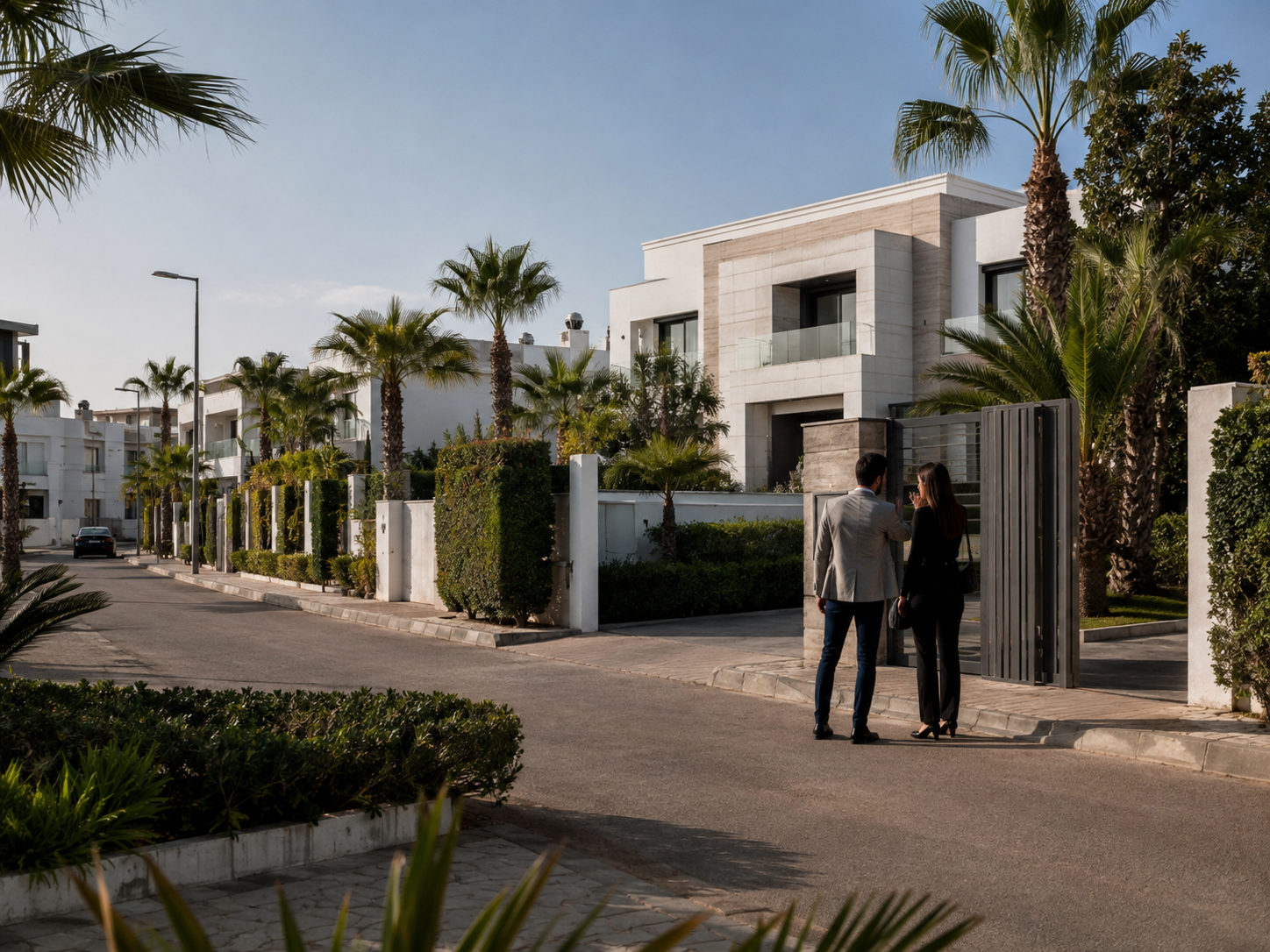
No category demonstrates the danger of reading one percentage in isolation better than villas.
Villa prices increased by 3.3% compared with Q1. Villa transactions rose by 34%.
But the 34% figure refers to the number of registered sales, not prices.
Compared with Q2 2025, villa prices were still 0.3% lower and transactions were down 7.1%.
The market was therefore much busier than in the previous quarter, but it had not returned to the activity recorded one year earlier.
A quarterly increase can look dramatic when the comparison begins from a weaker period. Villa sales may also be less numerous than apartment sales, allowing relatively small changes in transaction numbers to produce larger percentage movements.
The figures show that villa activity improved during Q2. They do not establish a sustained villa boom.
LAND AND COMMERCIAL TRANSACTIONS ACCELERATE
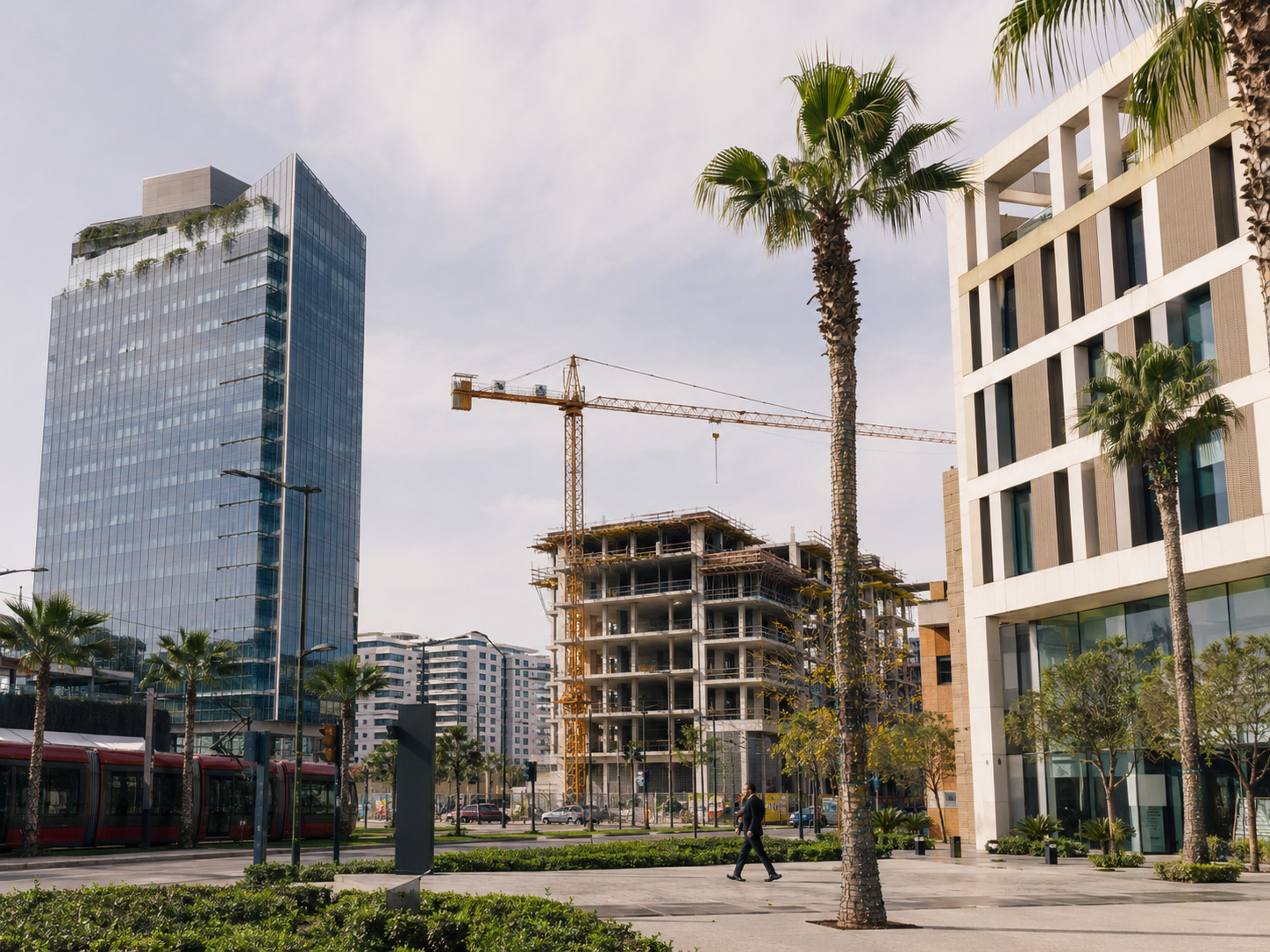
Urban land prices increased by 0.6% quarterly and 0.3% annually. Transactions rose by 21.8% from Q1 and by 4.1% from Q2 2025.
Professional-property prices increased by 0.4% quarterly and 0.6% annually. Transactions rose by 23.5% and 31.9% respectively.
Commercial-premises prices were unchanged from Q1, even as transactions jumped 24.3%. Compared with a year earlier, prices rose 0.4% and transactions increased 30.8%.
Offices recorded the strongest quarterly price increase among the national categories, at 5.3%. Office transactions rose 20.5%.
Annually, office prices were 2.9% higher and transactions were up 36.7%.
This increased activity is commercially significant. But more land, shops and offices changing hands does not prove that a wider construction or property-investment boom has begun.
WHAT IS HAPPENING IN MOROCCO’S MAJOR CITIES?
The Q2 bulletin provides quarterly figures for ten major cities. It does not publish equivalent year-on-year city comparisons, so none should be inferred.
| City | Price change QoQ | Transaction change QoQ |
|---|---|---|
| Agadir | -0.1% | +30.1% |
| Casablanca | +0.5% | +4.4% |
| El Jadida | 0.0% | +5.2% |
| Fes | +1.7% | +16.5% |
| Kenitra | +0.7% | +5.7% |
| Marrakech | +0.5% | +18.3% |
| Meknes | -0.9% | -4.0% |
| Oujda | -0.9% | +15.0% |
| Rabat | +1.9% | +61.2% |
| Tangier | +2.3% | +11.5% |
Tangier recorded the strongest overall quarterly price increase, at 2.3%. Rabat followed at 1.9% and registered the largest rise in transactions, at 61.2%.
Meknes and Oujda both recorded price declines of 0.9%. Meknes was the only city where overall transactions also fell.
Agadir demonstrates why prices and activity must be separated. Transactions increased by 30.1%, yet the city’s overall price index declined by 0.1%.
Differences also exist within cities. Tangier’s result included a 7.3% increase in urban land prices, while Casablanca’s professional-property prices fell 1.2% despite a 0.5% rise in its overall index.
Casablanca, Rabat, Tangier and Marrakech are not one market. Even a city average combines neighbourhoods and property types moving at different speeds.
WHAT BUYERS AND SELLERS SHOULD TAKE FROM THE DATA
For buyers, the national increase is context, not a reason to accept a particular asking price.
Compare similar properties in the same neighbourhood. Examine recent local transactions where reliable information is available, obtain an independent valuation and calculate financing, taxes and additional costs before committing.
Ownership, title and registered charges should be checked through appropriately qualified professionals.
For sellers, the national 0.7% increase is not an automatic reason to raise an asking price by the same percentage.
The likely sale price will depend on the location, property type, size, condition, legal position and the amount buyers have recently agreed to pay for comparable properties.
A busier market does not mean every home will sell quickly or at its advertised price.
ASKING PRICE, REGISTERED PRICE AND VALUATION
Asking price: The amount requested by a seller in an advertisement or negotiation.
Registered transaction price: The price officially recorded when a property transaction is completed.
Independent valuation: A professional estimate based on the property and relevant comparable evidence.
These measures serve different purposes. Registered transactions provide stronger evidence of completed activity than online asking prices, but one registered price does not determine the value of another property.
WHAT MOROCCANS LIVING ABROAD SHOULD CHECK
Moroccans living abroad may have fewer opportunities to inspect a property or follow each stage of the purchase in person.
Online advertisements and family recommendations can identify possibilities, but they should not replace professional checks.
Confirm ownership and the legal status of the property. Visit it where possible and compare the proposed price with recent local evidence.
Use a notary and, where appropriate, separately appointed qualified professionals such as a valuer. Any power of attorney should be carefully reviewed so that its scope and authorised actions are clear.
Taxes, registration charges, professional fees, financing conditions and contractual obligations should be confirmed through official or qualified sources before signing.
FIVE CHECKS BEFORE BUYING PROPERTY IN MOROCCO
Verify legal ownership: Confirm the owner, title and any registered charges.
Compare recent local transactions: Focus on similar properties in the same neighbourhood.
Arrange an independent valuation: Do not rely solely on the seller’s or agent’s estimate.
Calculate taxes and additional costs: Include registration, professional and financing charges.
Check financing and contract conditions: Understand payment dates, loan terms and contractual obligations.
A BUSIER MARKET, NOT A UNIFORM BOOM
Morocco’s second-quarter figures point to a more active property market, not a nationwide boom in which every asset is rising equally.
Apartments delivered the most consistent residential growth. Villas recorded striking quarterly increases but remained weaker than a year earlier. Land and professional-property transactions accelerated, while major cities produced sharply different results.
The Bank Al-Maghrib property index gives buyers, sellers and investors valuable market context. It does not provide a valuation for an individual property.
That still depends on the details no national headline can capture: the city, neighbourhood, property type, size, condition, legal position and the price ultimately agreed between buyer and seller.