

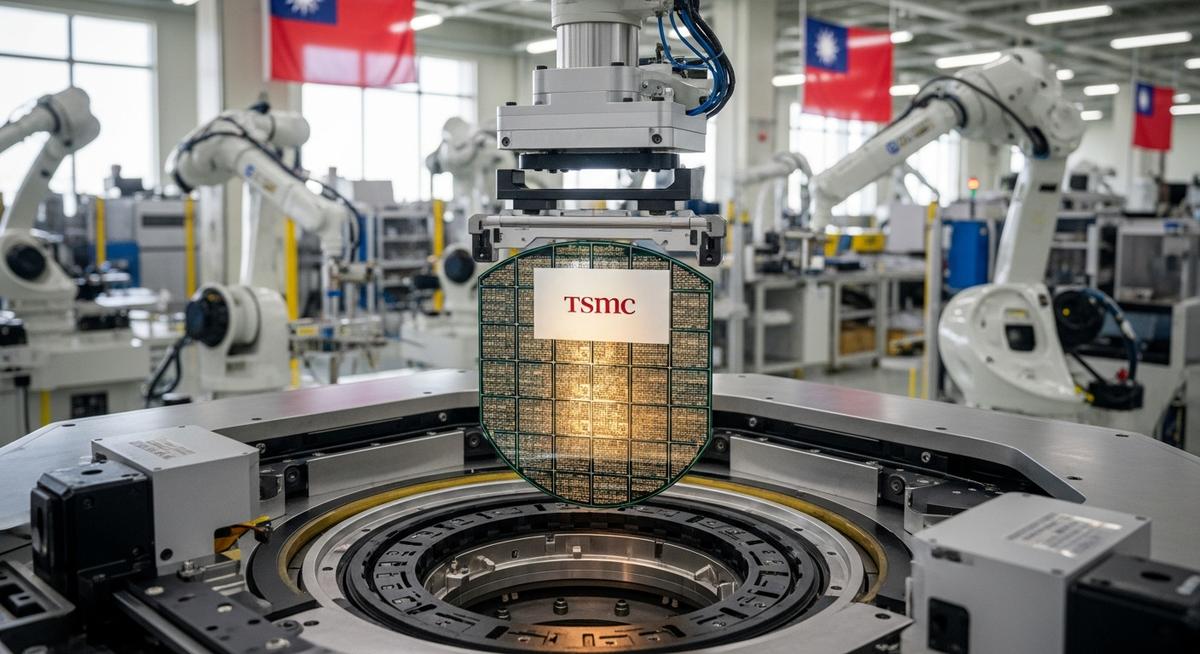
The AI Chip Cash Machine is no longer a metaphor. It is increasingly the financial reality behind the artificial intelligence boom, and TSMC is showing who captures the deepest value when the world races to build more computing power.
Artificial intelligence may be sold through chatbots, cloud platforms, apps, models and productivity promises. But underneath every major AI push sits a physical foundation: advanced chips, foundry capacity, packaging technology, power-hungry data centres and a supply chain that only a small number of companies can truly control.
That is why TSMC’s expected record profit matters.
It shows that the biggest winners of the AI era may not be the companies with the loudest consumer brands, but the companies that manufacture the silicon everyone else needs.
AI Chip Cash Machine Defines The Real AI Economy
The AI Chip Cash Machine matters because artificial intelligence is often discussed as software.
In public, the story is usually about models, assistants, search, automation and the apps people use every day. But in financial markets, the real bottleneck is increasingly hardware.
AI models need huge computing capacity.
That capacity needs advanced semiconductors.
Those semiconductors need leading-edge manufacturing.
And leading-edge manufacturing is where TSMC dominates.
Reuters reports that TSMC is expected to post its fifth consecutive quarter of record profit, with analysts forecasting a 59% year-on-year rise in second-quarter net profit to around T$632.6 billion, or about $19.65 billion.
That is not only strong earnings.
It is a signal of where the AI value chain is concentrating.
The Foundry Is Becoming The Power Centre
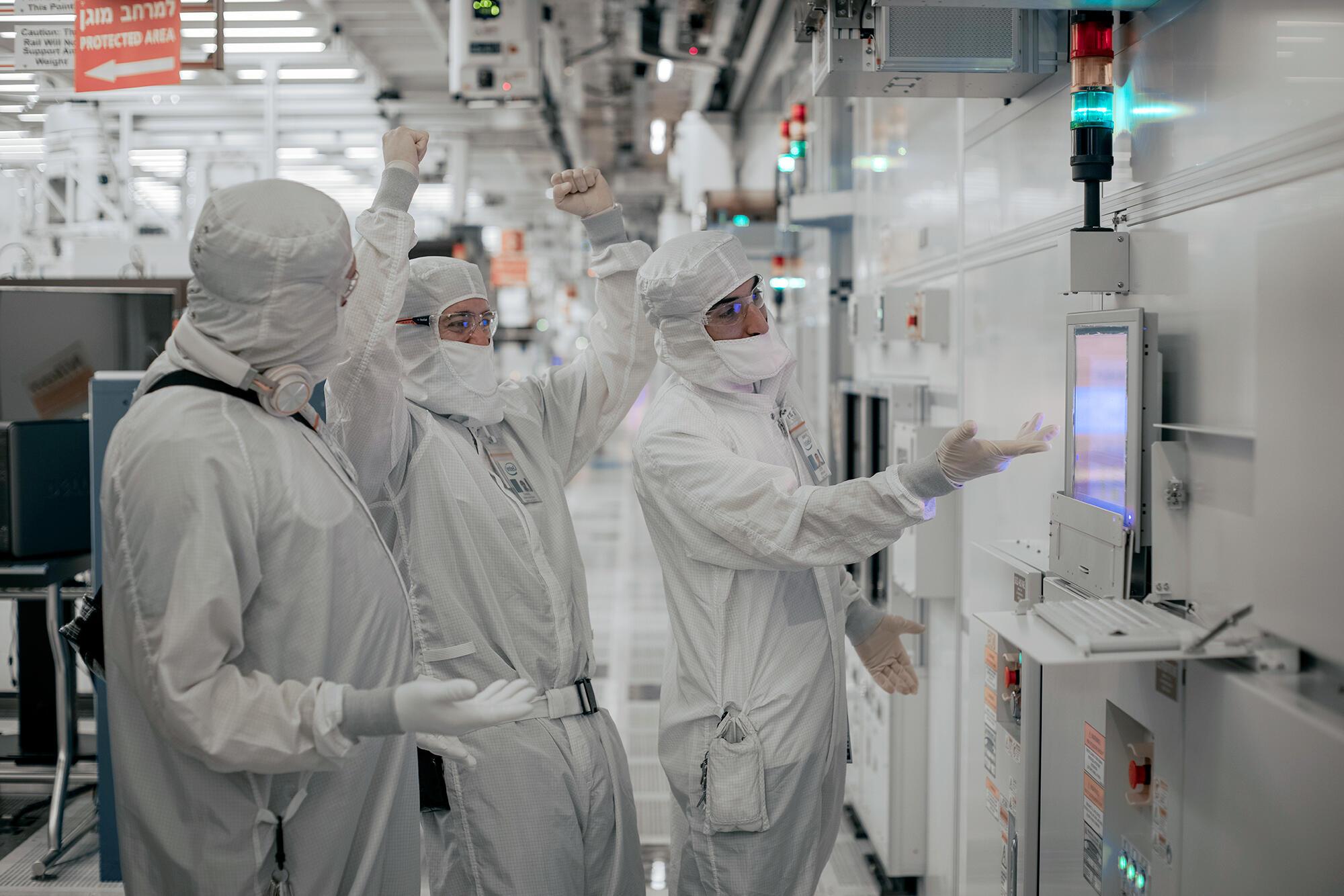
TSMC is not a household entertainment brand like Apple, Netflix or Google.
It does not sell a social app.
It does not dominate headlines with consumer devices.
But it manufactures the advanced chips that power many of the world’s most important technology products. In the AI cycle, that position gives it enormous leverage.
A company can build the best AI product in the world, but it still needs computing infrastructure. Cloud providers, chip designers and device companies depend on foundry capacity. If the most advanced capacity is scarce, the company that controls it becomes more powerful.
This is the quiet force behind TSMC’s numbers.
It sits behind the brands.
It powers the boom.
Nvidia Gets The Spotlight, TSMC Gets The Factory Economics
The public AI conversation often focuses on Nvidia because its graphics processors have become central to AI training and inference.
That attention is justified.
But Nvidia does not manufacture its most advanced chips alone. It relies heavily on TSMC’s manufacturing capacity and advanced packaging to turn designs into physical products that customers can deploy.
This is why the AI economy cannot be understood only through the company names consumers recognise.
The chip designer may win attention.
The cloud platform may win customer relationships.
The AI model may win public fascination.
But the foundry wins from the physical necessity of production.
In the AI boom, manufacturing is not background work. It is strategic control.
Advanced Nodes Are Where The Money Sits
Reuters notes that TSMC is benefiting from demand for cutting-edge 3-nanometer and 2-nanometer chip technologies.
These advanced nodes matter because they offer better performance and efficiency for demanding workloads. AI chips need speed, density and energy efficiency, especially as data centres scale and power constraints become more serious.
The more demanding AI becomes, the more valuable the most advanced manufacturing becomes.
This creates a barrier to entry.
Not every company can produce at the leading edge. Not every country can build that ecosystem quickly. Not every competitor can match the combination of engineering skill, yield control, customer trust and capital investment required.
That is why TSMC’s position is so difficult to replicate.
CoWoS Shows The Packaging Bottleneck
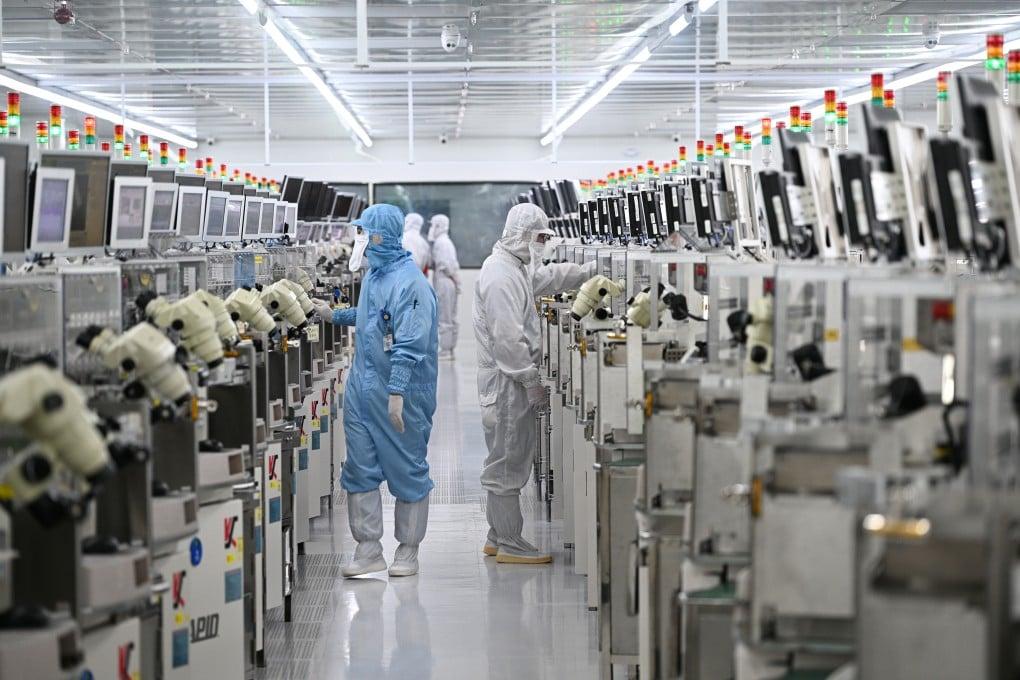
The AI chip story is not only about the chip itself.
It is also about packaging.
Reuters highlighted TSMC’s advanced CoWoS packaging as one of the technologies benefiting from AI infrastructure demand. CoWoS is important because advanced AI systems often require multiple components to work closely together, including processors and high-bandwidth memory.
Packaging helps turn powerful components into usable computing systems.
This is a crucial but less glamorous part of the AI boom. Many investors focus on the model or the chip brand, but the performance of AI infrastructure depends on how efficiently components are integrated.
When packaging capacity is constrained, the entire AI supply chain can feel pressure.
That gives TSMC another layer of power.
Big Tech’s Spending Becomes TSMC’s Revenue
The AI arms race is being financed by Big Tech.
Cloud providers, social media giants, enterprise software companies and AI labs are spending aggressively on data centres, chips and infrastructure. Each company wants enough capacity to train larger models, serve more users and avoid falling behind competitors.
That spending flows through the hardware chain.
Some of it reaches Nvidia and other chip designers.
Some of it reaches memory suppliers.
Some of it reaches equipment makers.
But a large strategic share reaches TSMC because advanced chip production remains one of the most difficult pieces of the puzzle.
This is why the AI boom looks different from previous internet cycles.
The winners are not only app companies. They are infrastructure companies.
The Market Is Pricing Scarcity
TSMC’s market valuation has climbed close to $1.97 trillion, according to Reuters, reflecting investor belief that the company sits at the centre of a scarce and essential part of the AI economy.
That valuation is not only about current profit.
It is about scarcity.
There are many companies that want to build AI products. There are far fewer companies capable of manufacturing the most advanced chips at the scale required.
Markets pay for scarcity when demand is exploding.
TSMC’s challenge is that expectations become harder to satisfy when investors already assume near-perfect execution. A record quarter can become normal. A small capacity concern can move sentiment. A delayed expansion can become a market event.
Success raises the bar.
The AI Boom Is Also A Capital-Expenditure Boom
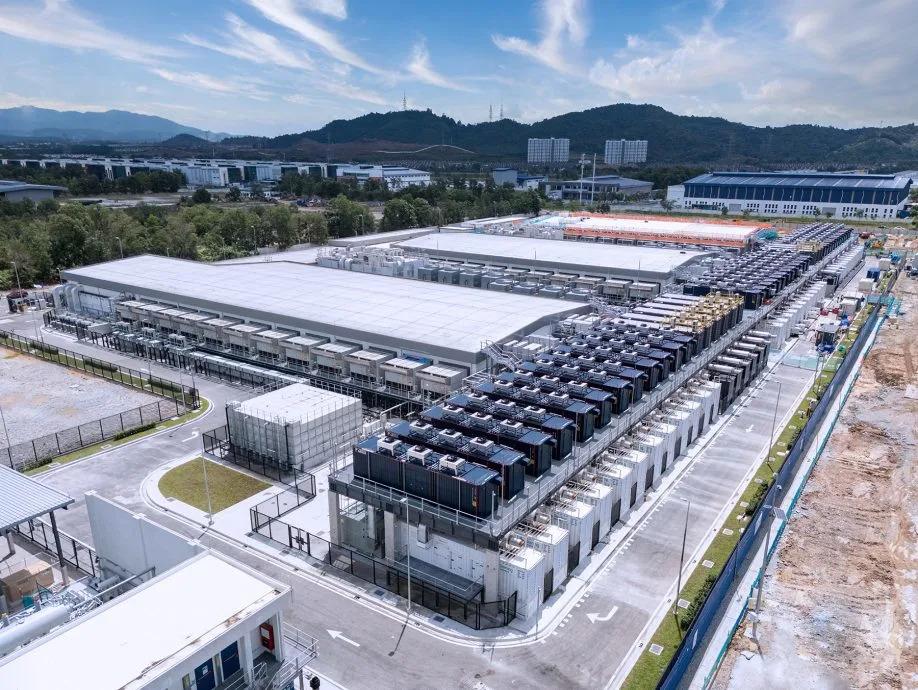
TSMC’s expected profit strength sits alongside an enormous investment cycle.
Reuters reports that the company may raise its capital expenditure outlook, after already guiding for a range of $52 billion to $56 billion, and that it is investing $165 billion in new U.S. chip fabs in Arizona.
That shows the scale of the race.
AI demand is not satisfied by software updates alone. It requires factories, clean rooms, equipment, engineers, energy, water, logistics and years of planning. Every new wave of AI demand can force the physical supply chain to expand.
This is why the AI economy has become industrial.
The cloud may look invisible to users, but its foundations are heavy, expensive and geographically sensitive.
Geopolitics Makes The Foundry Even More Important
TSMC’s position also carries geopolitical weight.
Taiwan sits at the centre of the advanced semiconductor world, and that makes TSMC strategically important not only to investors, but to governments. The company’s expansion in the United States reflects a broader push to diversify critical chip manufacturing and reduce dependence on one geography.
This is not only a business decision.
It is a national-security issue.
Advanced chips are essential for AI, defence, cloud computing, smartphones, vehicles and industrial systems. Countries want access. Companies want supply security. Investors want capacity growth.
TSMC is therefore not just a technology company.
It is part of the global power map.
The Risk Is Overheating Expectations
The AI boom has lifted semiconductor stocks sharply, but it has also created a danger: expectations may become too high.
Reuters has reported that market expectations for AI chips are so elevated that they may be difficult to satisfy, even if the underlying demand remains strong.
That is the tension.
The AI infrastructure cycle is real, but stock markets often move faster than factories. If investors price endless acceleration, then even strong growth can disappoint. Capacity constraints, margin pressure, customer concentration or geopolitical risk can all create volatility.
The AI chip boom may be powerful.
It is not risk-free.
The Consumer Does Not See The Real Cost
Most consumers experience AI as a feature.
A smarter search result.
A faster assistant.
A better image tool.
A more personalised app.
But every AI interaction carries infrastructure cost behind it. Data centres must be built. Chips must be manufactured. Energy must be consumed. Cooling must be managed. Companies must pay for capacity before they know exactly how profitable every AI service will become.
That creates a major question for the next phase.
Can the companies buying AI infrastructure turn that spending into sustainable revenue?
TSMC may profit from the buildout, but its customers still need to prove that AI can produce returns large enough to justify the capital race.
The Bottom Line
The AI Chip Cash Machine shows who really wins when artificial intelligence moves from hype to infrastructure.
TSMC is expected to deliver a fifth straight quarter of record profit, with analysts forecasting a 59% rise in net profit to nearly $19.65 billion, driven by demand for advanced AI chips, leading-edge manufacturing and high-value packaging.
The lesson is clear.
AI may look like software to the public, but the money is also flowing into factories, silicon and scarce production capacity.
The companies that control the physical backbone of AI are no longer behind the scenes.
They are becoming the centre of the story.