
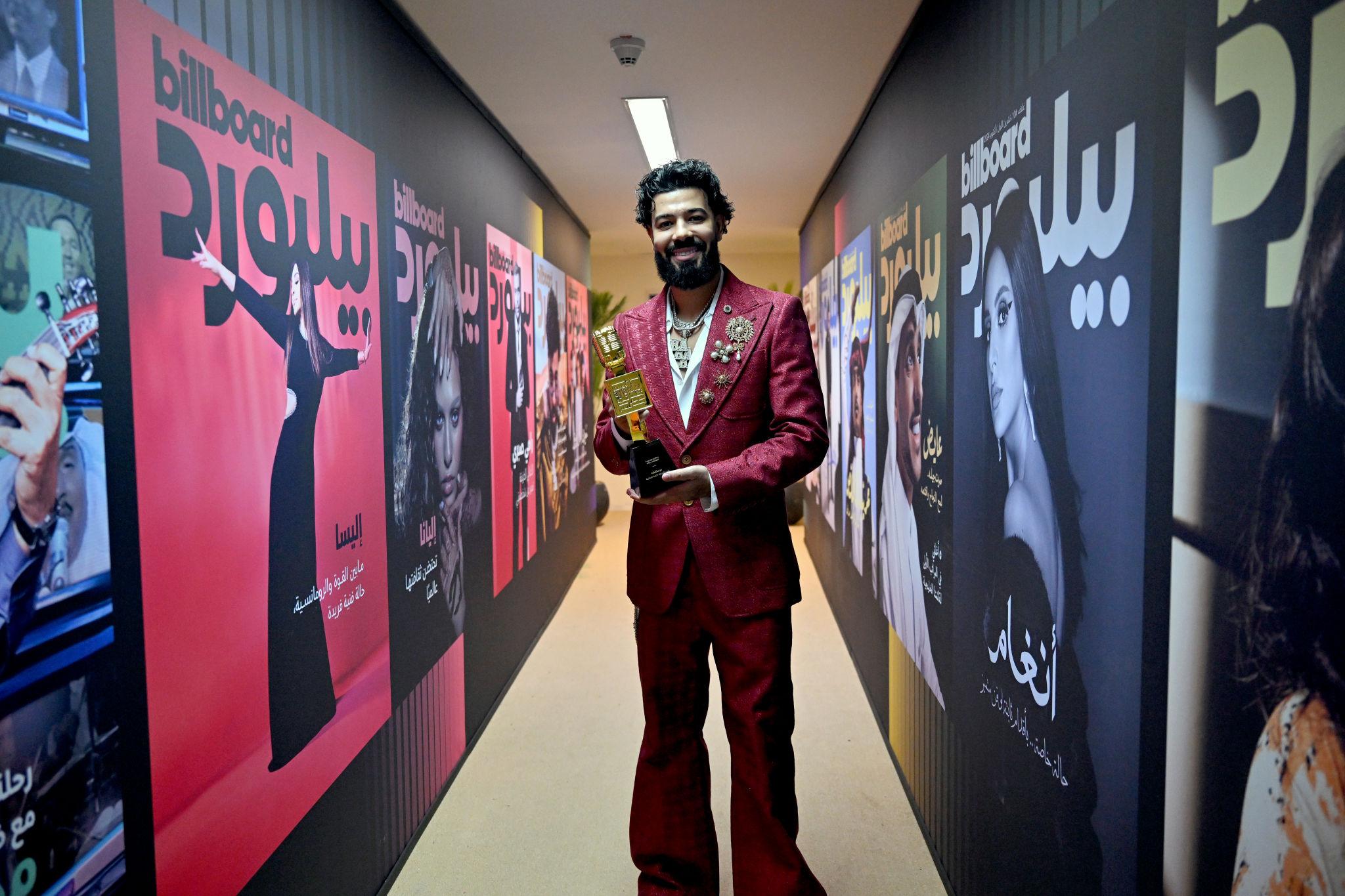
DYSTINCT was told Arabic music would not sell enough tickets for a serious tour. So the Moroccan-Belgian artist and his team did it themselves. The shows sold out, the doubters changed their minds, and now he wants something even bigger: the whole world singing in Arabic.
DYSTINCT remembers what the music industry told him at the beginning.
Arabic music would not sell tickets.
Agencies were reluctant to work with him.
The sound was considered too unfamiliar for the international audience he wanted to reach.
So he stopped waiting for permission.
DYSTINCT and his team organised the tour themselves.
And the seats sold.
In an interview with Cosmopolitan Middle East, the Moroccan-Belgian singer said those early sold-out shows became proof that the audience existed long before much of the industry believed it did.
Now his ambition is much larger.
He wants the world singing in Arabic.
THE INDUSTRY DIDN’T BELIEVE AT FIRST
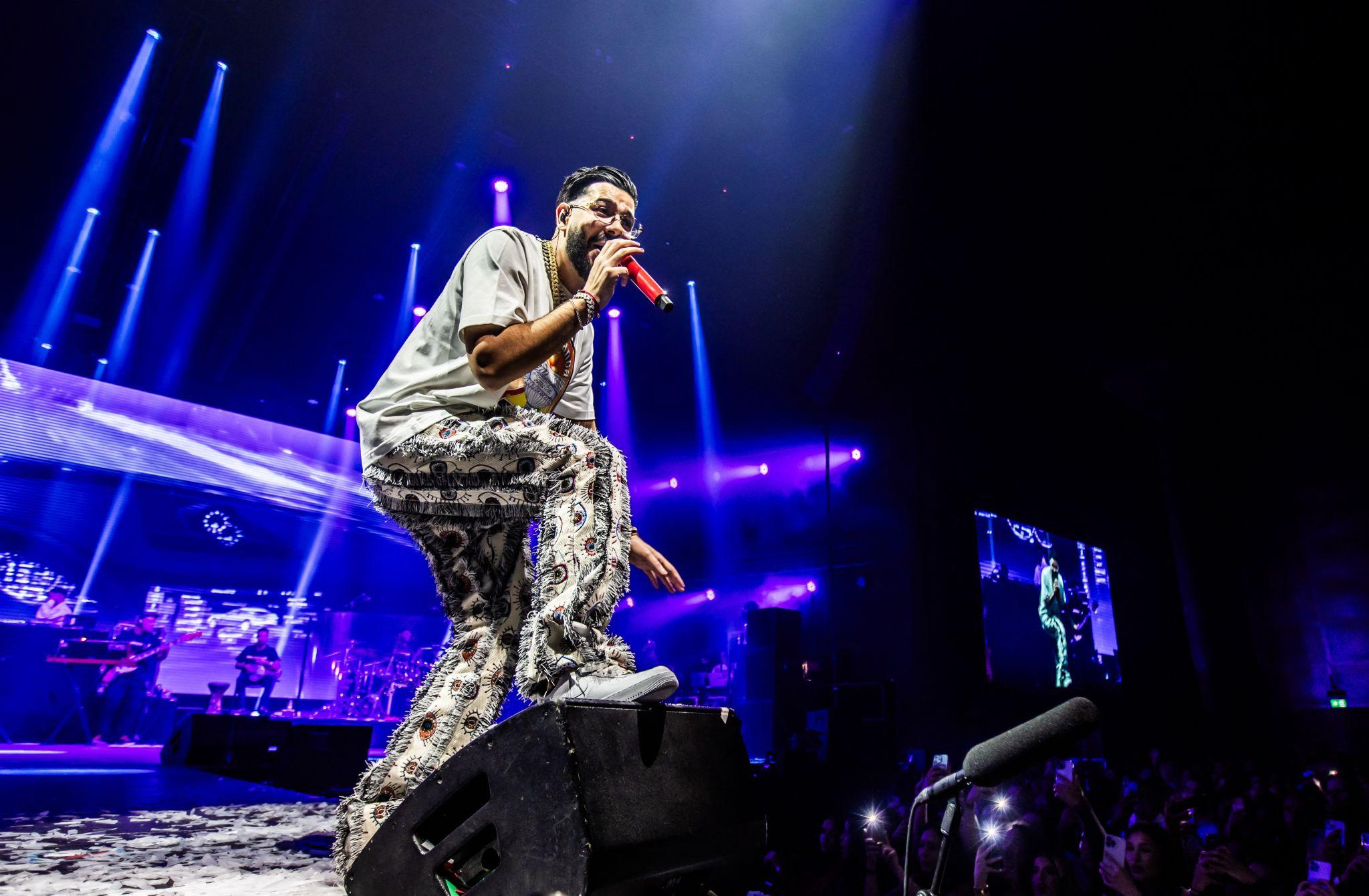
DYSTINCT, whose real name is Iliass Mansouri, was born in Belgium to Moroccan parents.
His music moves between Darija, Arabic, Dutch and other international influences, blending pop, rap, reggae and North African sounds.
That combination has become increasingly familiar today.
It was much harder to sell when he was starting.
DYSTINCT told Cosmopolitan Middle East that agencies initially refused to work with his first tour because they did not believe Arabic-language music could sell enough tickets.
His team decided to take the risk themselves.
The result was exactly what the gatekeepers had doubted.
The shows sold out.
That changed the conversation.
HE WASN’T TRYING TO MAKE ARABIC MUSIC ONLY FOR ARABS
This is probably the most important part of DYSTINCT’s strategy.
He has never treated Arabic as a limitation.
He treats it as the centre of the music.
But the audience does not have to understand every word.
That is how global pop increasingly works.
Listeners sing songs in Spanish without speaking Spanish.
Korean-language music fills stadiums outside Korea.
Afrobeats has become global without abandoning African languages and accents.
DYSTINCT wants Arabic music to occupy the same space.
He told Cosmopolitan that he makes Arabic music for Arabic speakers and for people who do not speak the language.
The language stays.
The audience expands.
MOROCCO IS BUILT INTO THE SOUND
DYSTINCT’s relationship with Morocco is central to his identity.
Although he grew up in Belgium, he says the Moroccan community around him meant the country never felt distant.
Moroccan culture followed him into Europe through family, language, food and community.
That influence later became part of his music.
His use of Darija has been particularly important.
Instead of smoothing away his Moroccan identity to sound more international, DYSTINCT has increasingly placed it at the centre of his global appeal.
His 2022 track “Ghazali” became closely associated with Morocco’s historic run to the World Cup semi-finals in Qatar, giving the song an even larger cultural moment.
THE NUMBERS ARE NOW MUCH HARDER TO IGNORE
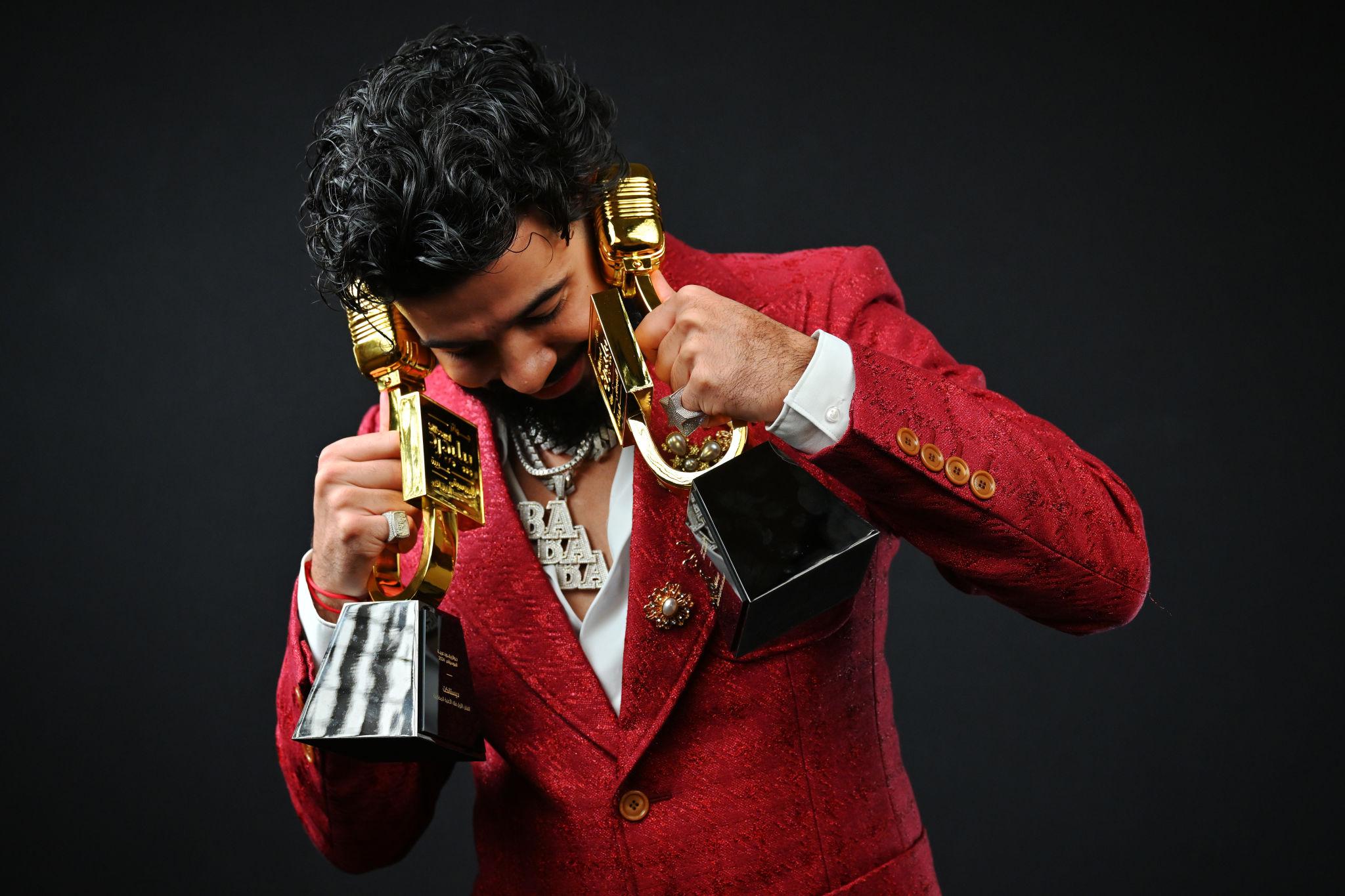
The industry skepticism looks very different today.
Spotify currently lists DYSTINCT with more than 11 million monthly listeners and describes him as an artist with more than 2 billion streams and sold-out international tours.
His reach has expanded well beyond Morocco, Belgium and the Arab world.
His collaboration “Spider” with GIMS reached No. 1 in France and entered Spotify’s global Top 50, according to his Spotify artist profile.
He has also worked with artists including J Balvin, French Montana, Davido, Mohamed Ramadan and MHD.
The bigger point is not any single chart position.
It is that an artist once told Arabic music would struggle to sell tickets is now operating inside the global streaming economy.
HE EVEN HAS A GUINNESS RECORD
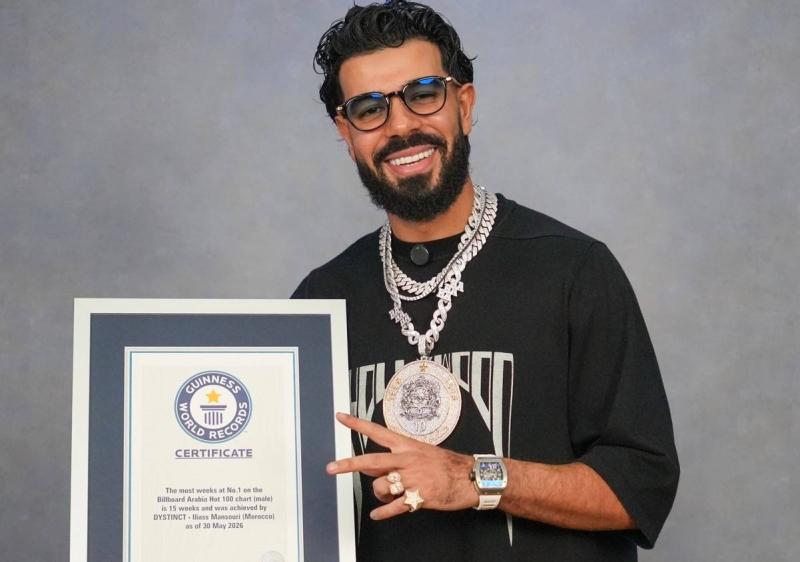
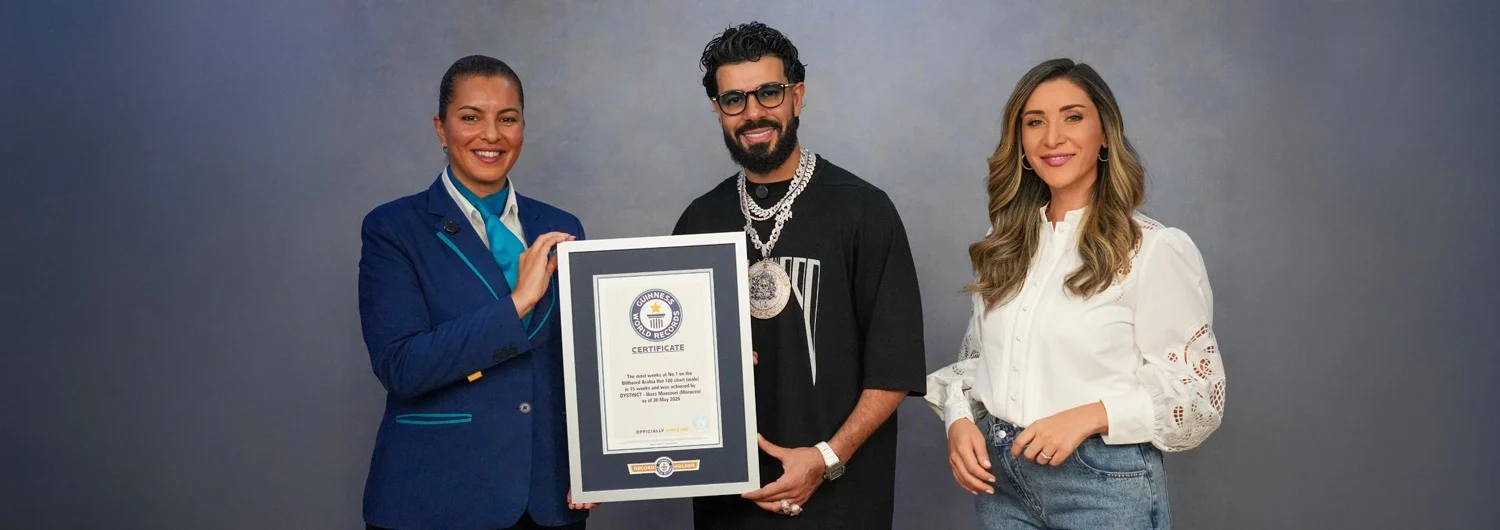
The trajectory became even more striking in 2026.
Billboard Arabia reported that DYSTINCT earned a Guinness World Records title after his songs “La” and “Yama” collectively spent 15 weeks at No. 1 on the Billboard Arabia Hot 100.
“La” had also remained on the chart for 128 consecutive weeks at the time of the announcement.
For an artist whose early challenge was convincing the industry there was a market for his sound, that is significant.
The question is no longer whether Arabic music can attract an audience.
The question is how large that audience can become.
DRAKE IS THE DREAM COLLAB
DYSTINCT is not thinking small about what comes next.
Asked by Cosmopolitan Middle East for his dream collaboration, he named Drake.
His reasoning fits the larger strategy.
Drake has enormous global reach.
DYSTINCT wants the same international audience to hear Arabic music without requiring the language to be changed first.
A collaboration may or may not ever happen.
But the ambition says something about where DYSTINCT now sees himself.
Not only inside the Arab music market.
Inside global pop.
THIS IS PART OF A MUCH BIGGER SHIFT
DYSTINCT’s rise is not happening in isolation.
Arabic music is increasingly moving across borders through streaming platforms, festivals and collaborations.
Artists no longer need radio stations in every country before audiences can discover them.
A song can move from Casablanca to Paris, Dubai, Amsterdam, Toronto and New York through the same phone screen.
That has weakened one of the old assumptions of the music industry:
that international success requires singing primarily in English.
DYSTINCT’s career is another challenge to that idea.
His goal is not to abandon Arabic to become global.
It is to become global with Arabic.
THE DOUBTERS NOW WANT IN
There is a satisfying reversal in the story.
At the beginning, DYSTINCT says agencies wanted proof.
They did not believe the audience was there.
So he and his team created the proof themselves.
They financed the risk.
They organised the shows.
They sold the tickets.
And only afterwards did the wider industry begin to take the idea seriously.
That sequence matters.
Success did not come because somebody inside the industry decided Arabic music was suddenly fashionable.
The audience arrived first.
The industry followed.
HIS NEXT TARGET IS MUCH BIGGER THAN A SOLD-OUT TOUR
DYSTINCT has already achieved something that once looked uncertain.
He has shown that audiences outside the Arab world will stream, attend and sing along to music built around Arabic and Moroccan identity.
Now he wants to take that much further.
When Cosmopolitan asked what comes next, his answer was simple.
He wants to finish what he started.
To make the world sing Arabic.
A few years ago, agencies told him Arabic music would not sell tickets.
Today, millions listen every month.
The language did not have to disappear.
The audience simply had to catch up.