

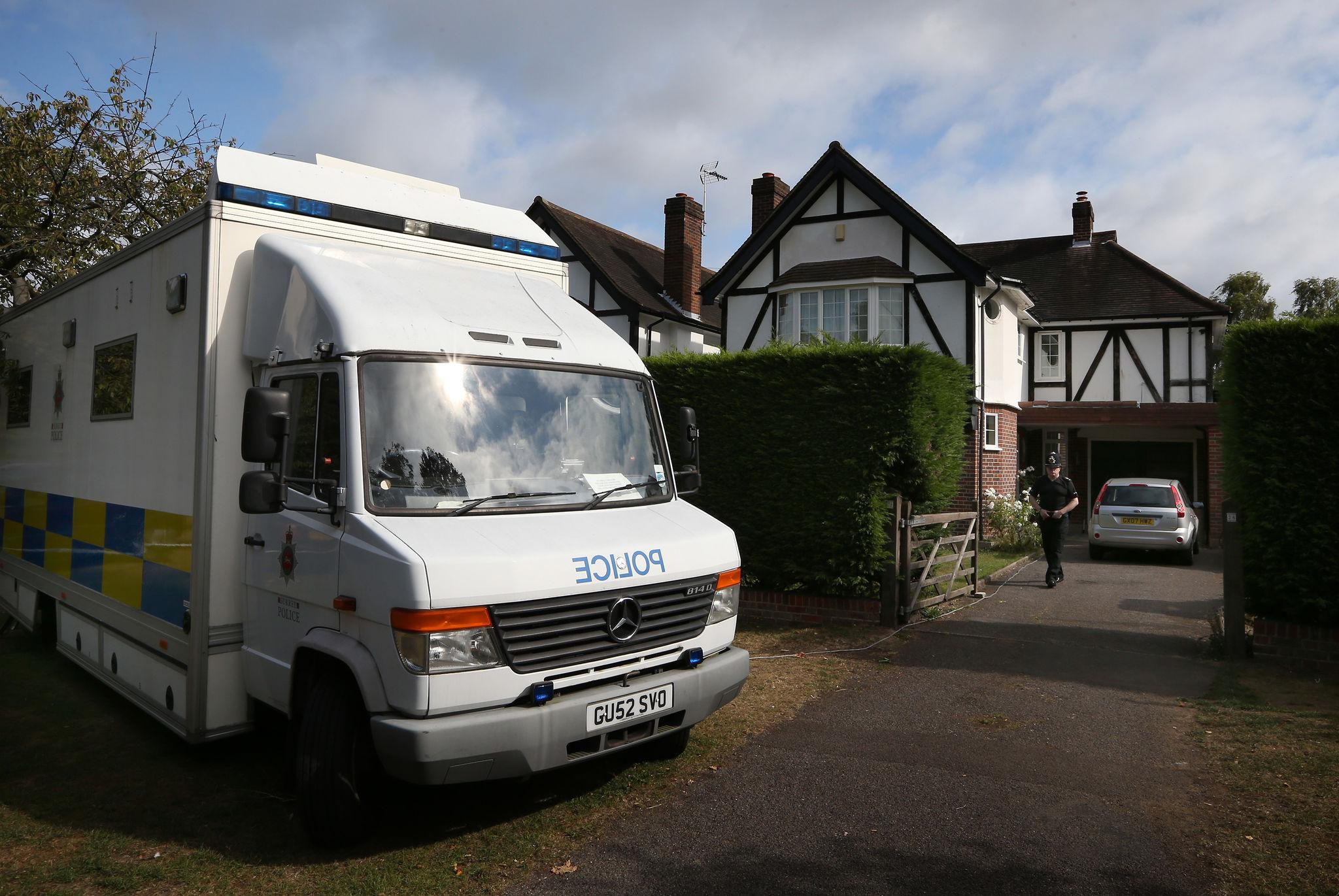
For almost fourteen years, the Chevaline investigation has largely revolved around the men.
Was Saad al-Hilli targeted because of his work, his finances or a family dispute? Was French cyclist Sylvain Mollier the true objective?
Those questions remain legitimate.
But they may begin with the wrong person.
At the centre of the BMW was a woman whose life remains remarkably difficult to reconstruct: Iqbal al-Hilli.
On 5 September 2012, Iqbal was murdered at Le Martinet alongside her husband, Saad, and her mother, Suhaila al-Allaf. Her seven-year-old daughter, Zainab, was shot and violently struck on the head. Her four-year-old daughter, Zeena, survived only because she remained concealed inside the vehicle.
Thousands of kilometres away, in Mississippi, another man directly connected to Iqbal died that same day.
His name was James Dudley Thompson.
He was not a distant acquaintance.
He was Iqbal’s former husband.
The known pattern can therefore be stated plainly:
Every adult member of Iqbal al-Hilli’s immediate family who was present at Le Martinet was killed, while her former husband in America died on the same date.
That does not establish that the events were connected.
But it creates an unavoidable investigative question:
Was Iqbal, rather than Saad or Mollier, the missing focal point of the Chevaline murders?
The Woman Inside the BMW
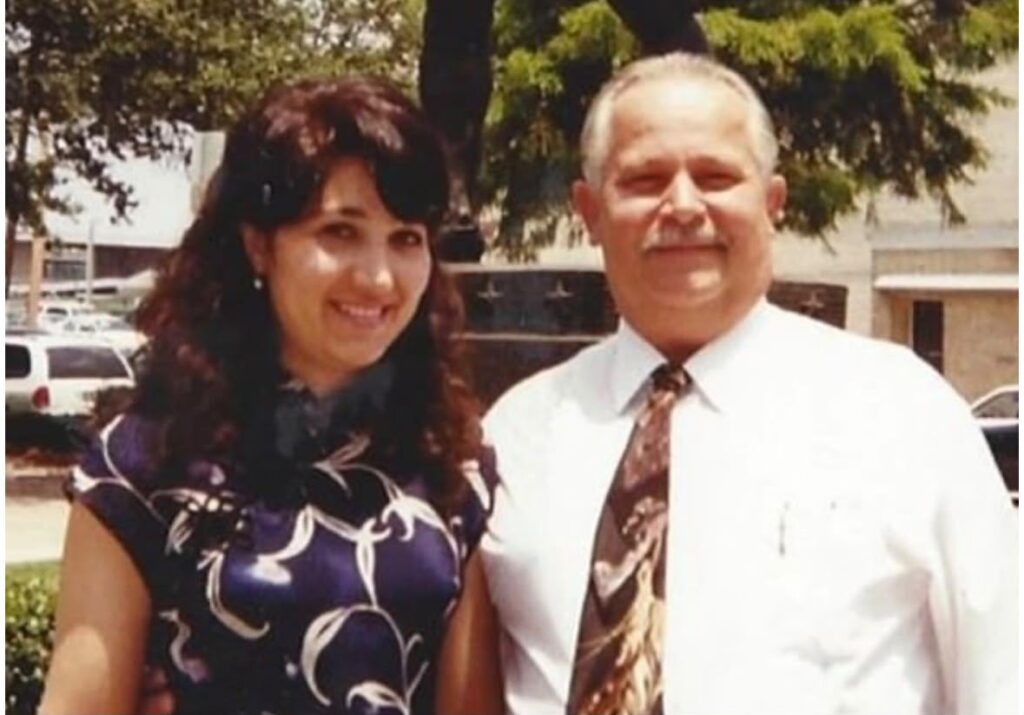
Iqbal al-Hilli was 47 years old when she died.
She was born into an Iraqi family and later lived in Sweden and Britain. Public reporting generally describes her through her relationships: Saad’s wife, Suhaila’s daughter, Zainab and Zeena’s mother.
Far less is known about her as an independent person.
Her education, professional life, friendships, movements and wider network have received comparatively little sustained scrutiny. Even basic descriptions of her background have sometimes varied.
The limited public record becomes particularly striking when investigators reach the period she spent in the United States.
Around the beginning of the century, Iqbal reportedly lived in America for approximately eighteen months. There, she was known as Kelly and married James Dudley Thompson, a contractor from Mississippi.
The marriage later ended.
Iqbal subsequently married Saad, settled in Surrey and built a new family life. Yet the earlier American marriage remained so obscure that even some members of Saad’s family reportedly did not know of its existence until it emerged after the murders.
Changing or adopting a Western first name while living in America is not inherently suspicious. “Kelly” may have been a social nickname, a practical choice or part of adapting to a different environment.
Nor is taking a husband’s surname unusual.
The real question is not why an Arab woman might use a Western name.
It is why so little has been established publicly about this entire chapter of her life.
What brought Iqbal to the United States? Where precisely did she live? What work did she perform? How did she meet Thompson? Who knew them as a couple? Why did the marriage end? Did they remain in contact?
These are no longer peripheral biographical details.
They may be among the most important unanswered questions in the case.
Two Husbands, One Date
On 5 September 2012, James Dudley Thompson was in Natchez, Mississippi.
Public accounts state that he was driving his white pickup truck when he became unwell. Earlier that day, someone who saw him during lunch reportedly recalled that Thompson had complained of discomfort around his chest or shoulder. His vehicle later moved into the street, drifted to the side and stopped. He was found slumped over the steering wheel.
His death was attributed to a heart attack.
He was reportedly overweight, smoked cigars and suffered from high blood pressure. He had recently turned 60. On those facts alone, a sudden fatal coronary event would not have been medically extraordinary.
The timing was.
On the same calendar date, his former wife was shot dead in France.
Iqbal’s current husband was also killed.
So was her mother.
Thompson’s death was treated as natural. No full forensic autopsy was performed, according to widely published accounts, and his body was buried in Mississippi.
The absence of an autopsy does not turn a natural death into a murder.
It means something narrower but still important: later investigators lacked the complete forensic evidence that could have confirmed or challenged the original conclusion with greater certainty.
When French investigators discovered Iqbal’s former marriage, they wanted to speak to Thompson.
They could not.
He was already dead.
French authorities reportedly issued an international judicial request as they sought information from the United States. Prosecutors later explored whether Thompson’s body could be examined after relatives raised questions about whether poisoning had been adequately excluded.
No publicly established evidence has shown that Thompson was poisoned.
No publicly established evidence has demonstrated that his death was linked to the shootings.
But the investigative opportunity had disappeared.
The one surviving adult who might have explained Iqbal’s American life could never answer a single question.
What Could Thompson Have Known?
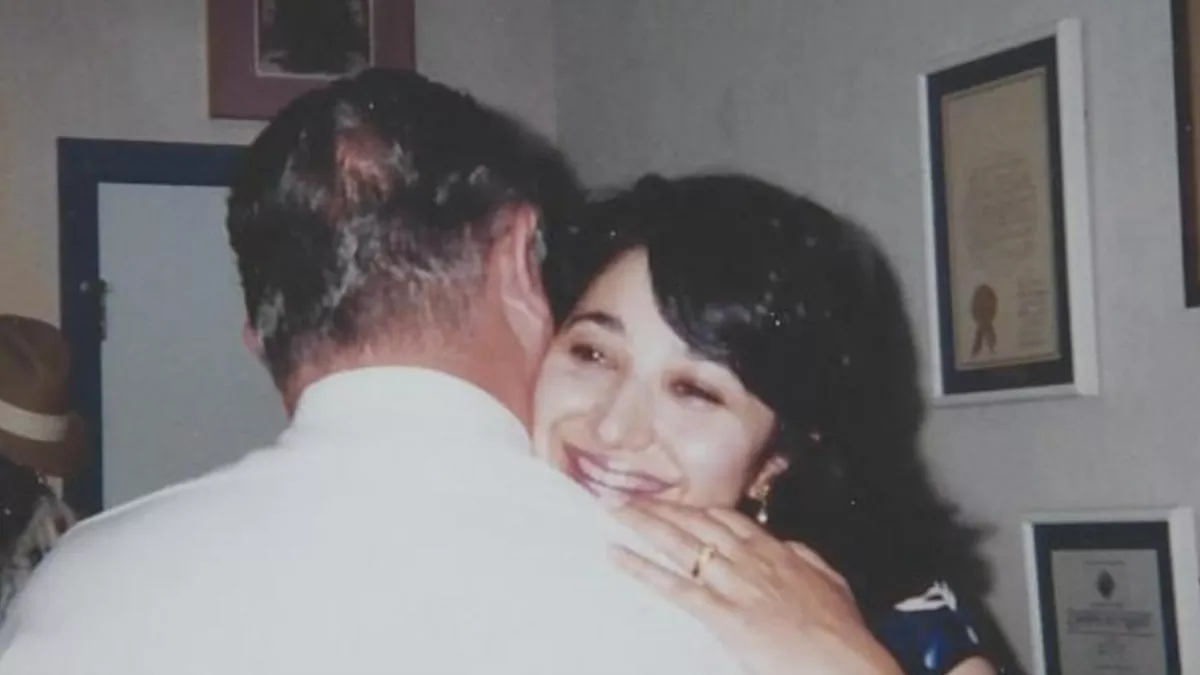
The most important question is not simply whether Thompson’s death was natural.
It is what he knew while he was alive.
A former spouse may know details unavailable to almost anyone else: old friendships, family tensions, financial arrangements, work contacts, private fears, immigration circumstances and events a person later chooses not to discuss.
Iqbal may have told Thompson things during their marriage that she never told Saad.
Thompson may have known why she came to America, why she used the name Kelly and why she eventually left.
He may also have known nothing consequential at all.
The problem is that the public record remains empty where his answers should have been.
MTD Investigates has found no reliable public evidence proving that Iqbal and Thompson remained in contact after their separation. No verified emails, telephone records, later meetings or personal correspondence have entered the public domain.
But absence from public reporting is not proof that no contact existed.
This is where the inquiry must move beyond inherited theories and reconstruct the relationship from the beginning.
Who introduced Iqbal and Thompson?
Where did they marry?
Who attended or knew about the marriage?
Where did they live together?
Did Iqbal work or study in Mississippi?
When did they last communicate?
Did Thompson know that she had married Saad?
Had he discussed Iqbal with anyone shortly before his death?
Did anyone contact him from Britain, France, Sweden or elsewhere during the days preceding 5 September 2012?
And what precisely led French investigators to seek an interview and later consider an examination of his body?
Until those questions are answered, the American link remains less a solved theory than a missing file.
Her Mother Knew the Beginning
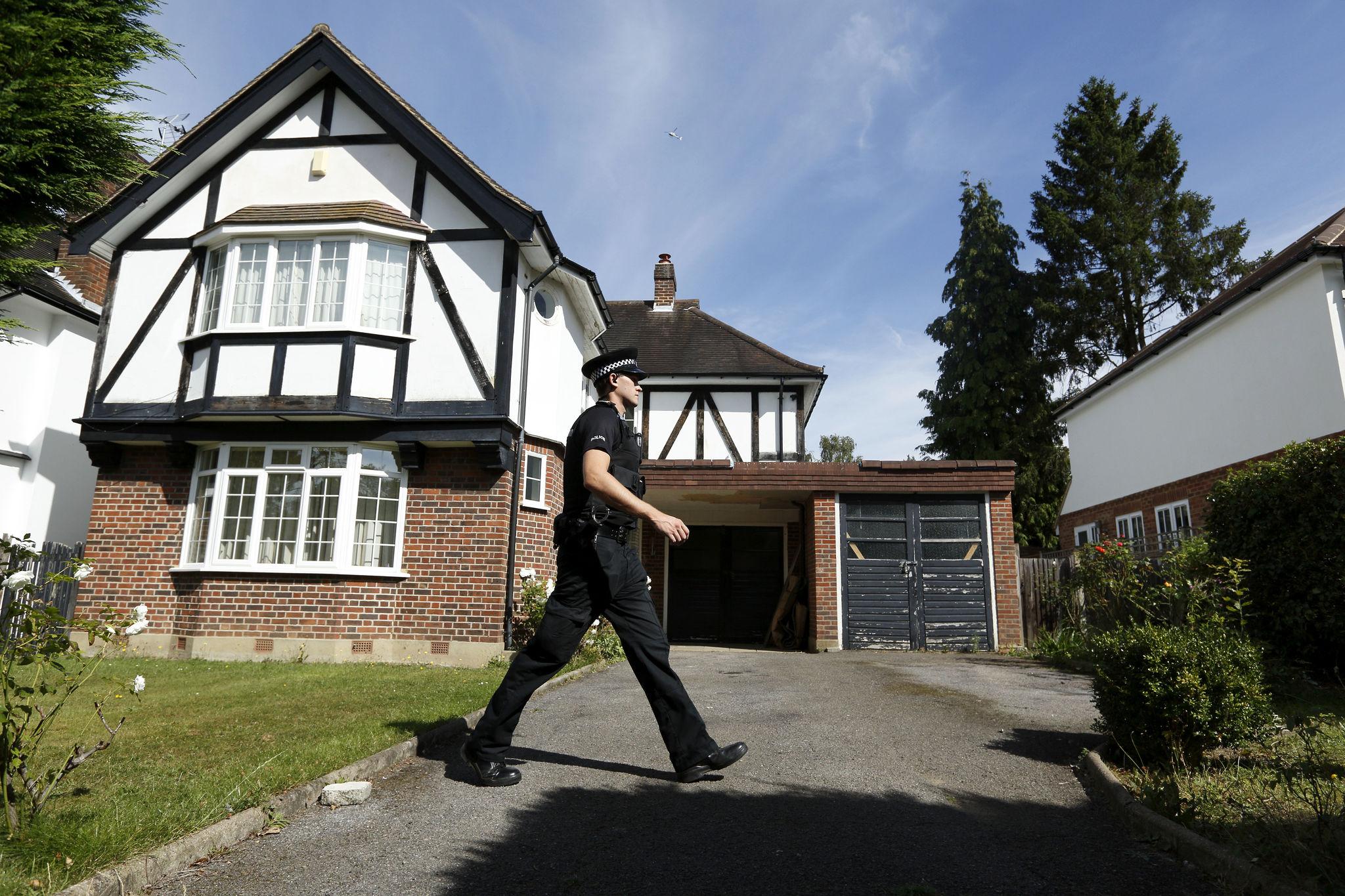
Suhaila al-Allaf was not simply another passenger.
She was Iqbal’s mother.
She had known her before America, before Saad and before the life she built in Surrey.
She was travelling with the family in France when she was shot dead inside the BMW alongside her daughter and son-in-law.
If Iqbal carried important information from an earlier period of her life, Suhaila may have known its origin.
That does not establish why she was killed.
But from an investigative perspective, the combination matters.
On one day:
Iqbal was murdered.
Her current husband was murdered.
Her mother was murdered.
Her elder daughter was shot and beaten.
Her younger daughter escaped detection.
Her former husband died in Mississippi.
Those facts place Iqbal at the intersection of almost every adult death connected to the family that day.
They also challenge the long-standing tendency to treat her as a secondary victim in a crime directed at a man.
What the Attack on the Children Reveals
The attack on Zainab may be one of the most revealing details in the entire case.
She was seven years old.
After leaving the car, she was shot in the shoulder and struck so violently on the head that she suffered serious injuries and was placed in a medically induced coma. Accounts of the crime state that she was hit with the firearm itself.
This was not the behaviour of a gunman indifferent to witnesses.
Someone appears to have tried to silence a child.
Zeena, then four, remained hidden inside the BMW for approximately eight hours, concealed near or beneath her dead mother. She survived because she was apparently not discovered.
That distinction matters.
One child was seen and attacked.
The other remained unseen and survived.
If the objective was to eliminate witnesses, the attack on Zainab and the failure to find Zeena fit within the same brutal sequence.
The distinction between the two children, one attacked and the other undiscovered, may offer the clearest indication of the killer’s intentions.
It raises the possibility that whoever carried out the assault intended that no member of the immediate family capable of identifying the attacker would leave Le Martinet alive.
Was Saad the Target, or Part of Iqbal’s Circle?
Saad remains an obvious potential target.
Investigators examined his work in engineering, his experience involving satellite technology, his finances and a family inheritance dispute. French authorities initially expressed confidence that the motive may have originated in Britain.
None of those lines produced a publicly proven explanation for the massacre.
The American connection creates another possibility.
Perhaps Saad was not the central figure.
Perhaps he was one of the people closest to Iqbal who had to be removed, or one of the people who happened to be beside her when she was targeted.
This interpretation does not answer every question.
It does not explain why the family travelled to Le Martinet.
It does not establish whether they were followed.
It does not clarify the presence of Mollier.
And it does not prove that Thompson’s death was anything other than a sudden medical event.
But it changes the investigative map.
Instead of asking only what Saad knew, the inquiry must ask what Iqbal knew, and who else knew it with her.
And What About Sylvain Mollier?
Mollier may still have been the primary target.
He was shot repeatedly and worked at a facility connected to specialised materials used in the nuclear industry. Alternatively, he may have arrived at the worst possible moment and witnessed an attack already underway.
Neither possibility has been publicly excluded.
If Iqbal was the focal point, however, Mollier’s presence may be exactly what it has often appeared to be: an encounter the killer had not anticipated.
A cyclist approaching an isolated lay-by could have seen the attacker, the attacker’s vehicle or the beginning of the shooting. That would have made him a witness who had to be killed.
The number of wounds alone cannot identify the original target.
The sequence matters more.
And that sequence remains unresolved.
Whether Mollier was a target or an unexpected witness remains unknown. But if Iqbal was the focal point of the attack, his presence may ultimately prove to be part of the sequence rather than its explanation.
Was Iqbal Living a Hidden Life?
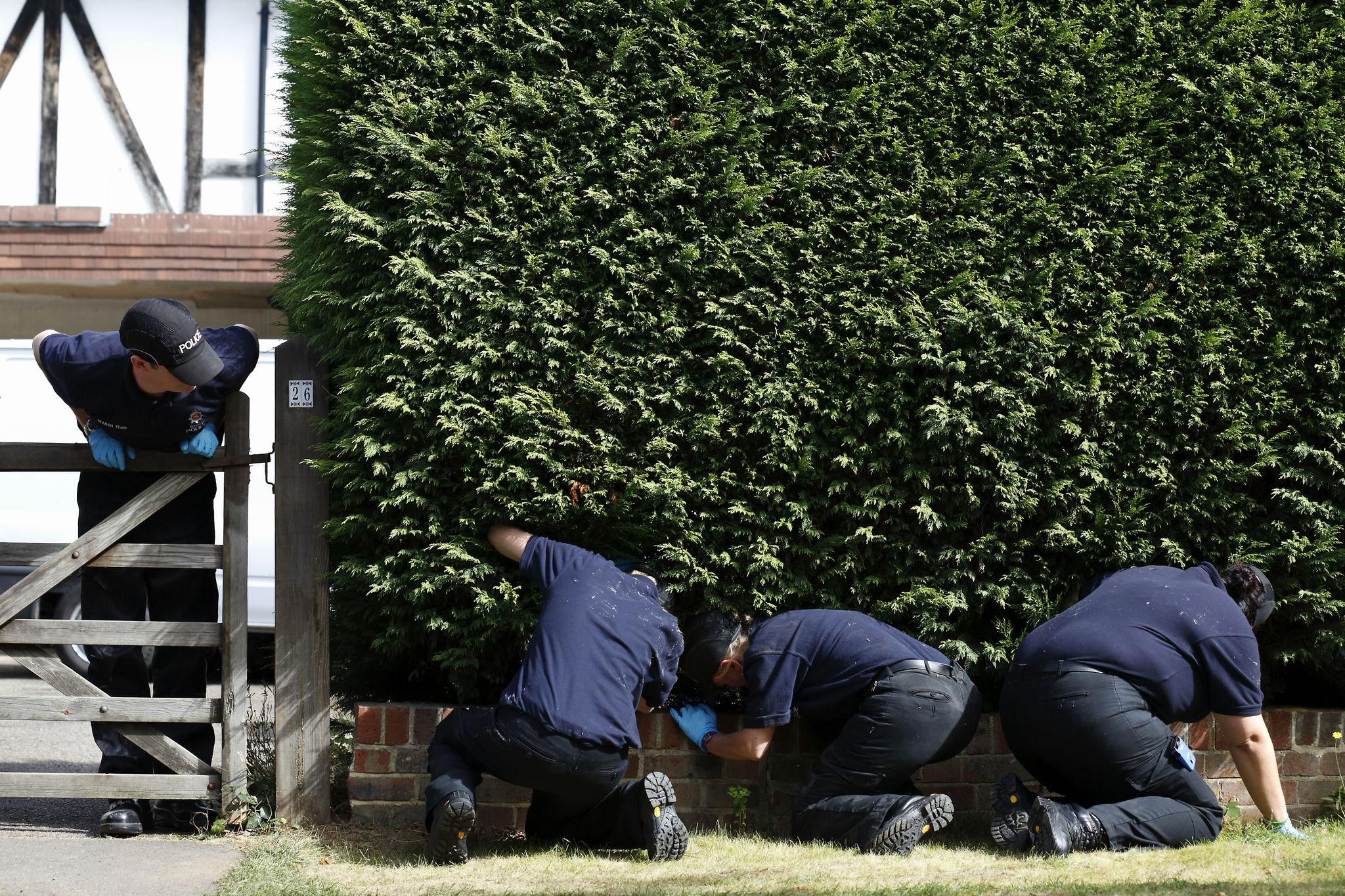
The lack of information about Iqbal has inevitably encouraged speculation, including theories that she may have had links to intelligence work.
MTD Investigates has found no public evidence establishing that she was an intelligence officer, informant or covert operative.
A limited digital footprint is not evidence of espionage. Iqbal lived much of her adult life before social media became universal, and many private individuals leave little publicly searchable history.
Yet the gaps remain legitimate subjects for investigation.
A woman known by another first and last name in America, an obscure previous marriage, a poorly documented period abroad and a former husband who died on the day she was murdered together form an unusual biographical void.
The responsible question is therefore not:
Was Iqbal a spy?
It is:
What did Iqbal do during the least understood period of her life, who knew about it and why has that history remained so difficult to reconstruct?
Only evidence can move the inquiry beyond that point.
The Investigation May Have Started With the Wrong Person
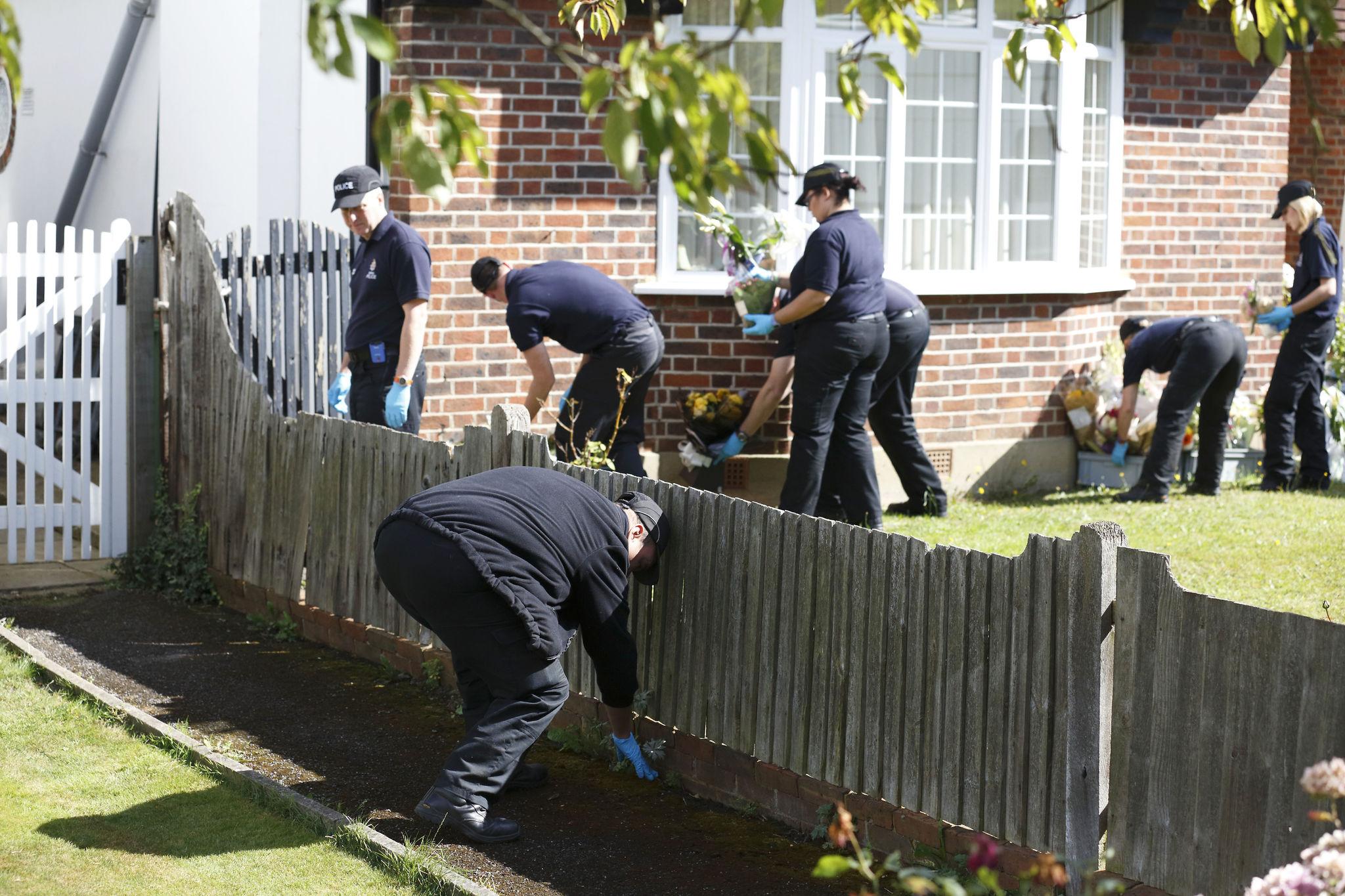
The Chevaline case has generated an extraordinary number of theories.
Saad’s brother.
Saad’s profession.
Mollier’s employment.
A lone local gunman.
A contract killing.
An intelligence operation.
A family dispute.
A chance encounter.
Almost every theory has been tested against the men.
Iqbal has remained largely in the background.
But the known facts justify reversing that approach.
She connects the murdered family in France to the lost investigative opportunity in Mississippi.
Her mother knew her earliest life.
Thompson knew her American life.
Saad knew her later life.
All three were dead before the end of the same calendar date.
Zainab, old enough to have seen and remembered parts of the attack, was nearly killed.
Zeena survived only because she remained unseen.
That does not reveal who pulled the trigger.
It does not prove why Thompson died.
But it gives the investigation a new point of focus.
The inquiry may have spent years asking what the men knew, while overlooking the woman who connected almost every death.
To understand what happened at Le Martinet, it may first be necessary to understand who Iqbal al-Hilli was before she became Saad al-Hilli’s wife.
And that story may still exist in the memories, records and private archives of people who knew her as Kelly Thompson.
A Final Note From MTD Investigates
This article concludes The Alps Murders, a five-part MTD Investigates series examining the killings at Le Martinet.
Across the series, we reconstructed the crime scene, examined the final journey to Chevaline, analysed the movements and possible roles of the victims, tested the leading theories and identified the gaps that remain after almost fourteen years.
We do not claim to have solved the murders.
Our purpose has been to separate evidence from assumption, reconsider questions that may have been framed too narrowly and preserve a public record of the details that still demand answers.
The formal series ends here.
The investigation does not.
Should credible new evidence emerge, MTD Investigates will examine it.
Call for Evidence
MTD Investigates is seeking first-hand information concerning:
Iqbal al-Hilli’s life in the United States;
her use of the name Kelly;
her marriage to James Dudley Thompson;
any contact between Iqbal and Thompson after their separation;
her employment, education, residences or associates in America;
Thompson’s movements, communications and health during the days before 5 September 2012;
contact between French or American authorities and Thompson’s relatives;
previously unpublished photographs, letters, emails, records or other documents.
Former relatives, friends, neighbours, colleagues, investigators and anyone with direct knowledge are invited to contact MTD Investigates.
Email: contact@moroccotimesdaily.com Web: https://moroccotimesdaily.com/ Phone: +212 7 51 13 77 31 WhatsApp: +212 6 60 02 29 16 Confidential tip line: +212 7 51 13 77 31
Sources may request confidentiality. Please distinguish clearly between what you personally witnessed, what you were told by another person and what represents your own interpretation.
Documents and identities will be independently assessed before publication.
Do not send illegally obtained material or place yourself or another person in danger.
Sources & Methodology
This article draws on contemporary and subsequent reporting concerning the Chevaline murders, the life of Iqbal al-Hilli, her marriage to James Dudley Thompson, the circumstances of Thompson’s death and efforts by French investigators to obtain information from the United States.
Sources reviewed include reporting by GQ, The Guardian, The Independent, The Times, Sky News and other established outlets that have followed the case over multiple years.
MTD Investigates distinguished throughout between:
established facts;
information attributed to named or reported sources;
unresolved questions;
analytical hypotheses arising from the known chronology.
No allegation is made that James Dudley Thompson was murdered or that Iqbal al-Hilli participated in intelligence activity.
This investigation examines unresolved factual gaps and seeks evidence capable of confirming or disproving competing explanations.