

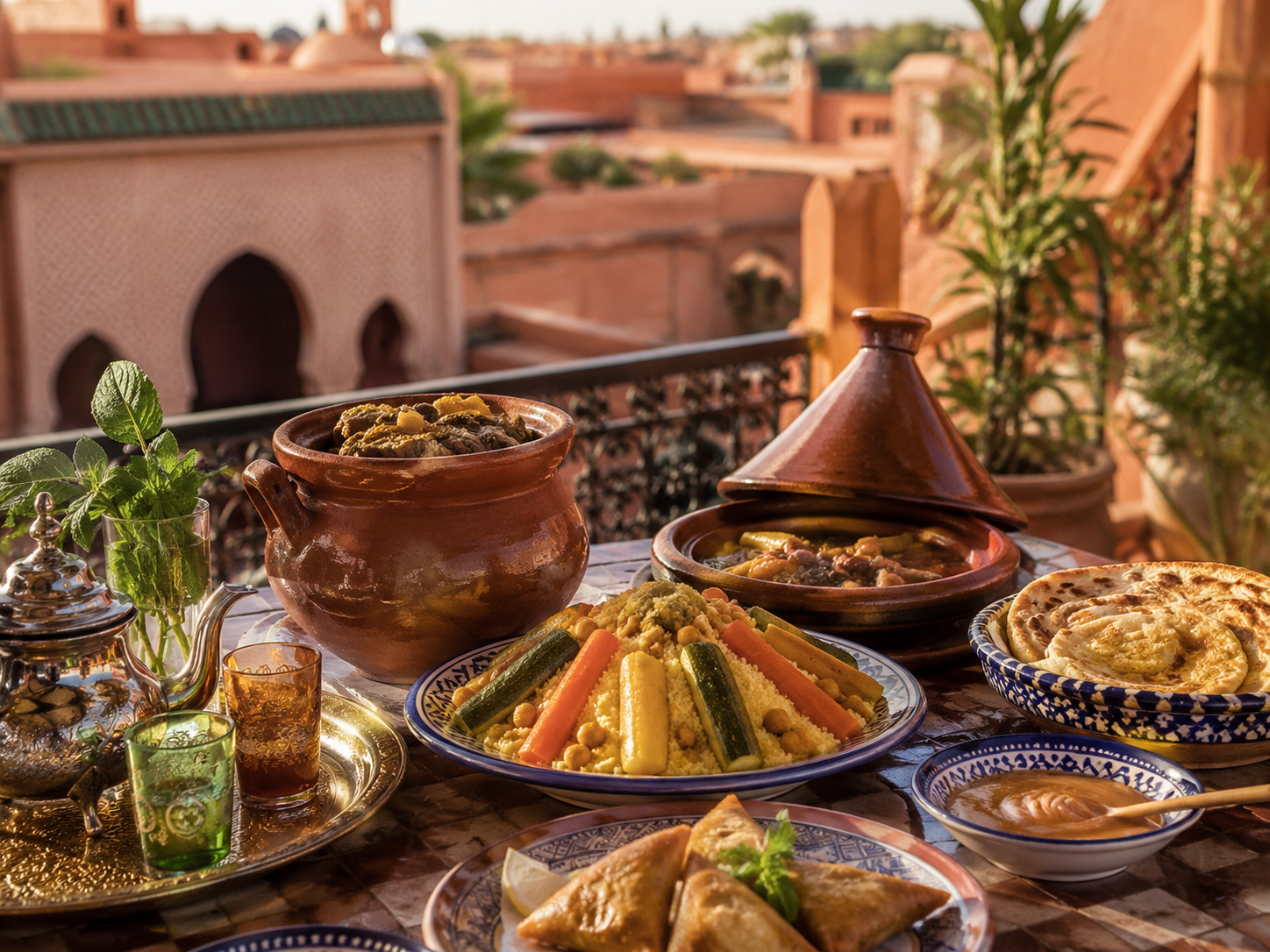
Marrakech is famous for its riads, rooftops and red walls, but some of the best memories here arrive on a plate. From slow-cooked lamb to steaming couscous and street-side snacks, these are the dishes worth making room for.
Marrakech is not a city where you should eat the same thing twice.
The food scene stretches from tiny neighbourhood grills to palace restaurants, rooftop dining rooms and stalls around Jemaa el-Fnaa.
Some dishes are deeply traditional.
Others are modern takes on Moroccan classics.
But if you want to understand the city through food, these seven are a very good place to start.
1. TANJIA MARRAKCHIA
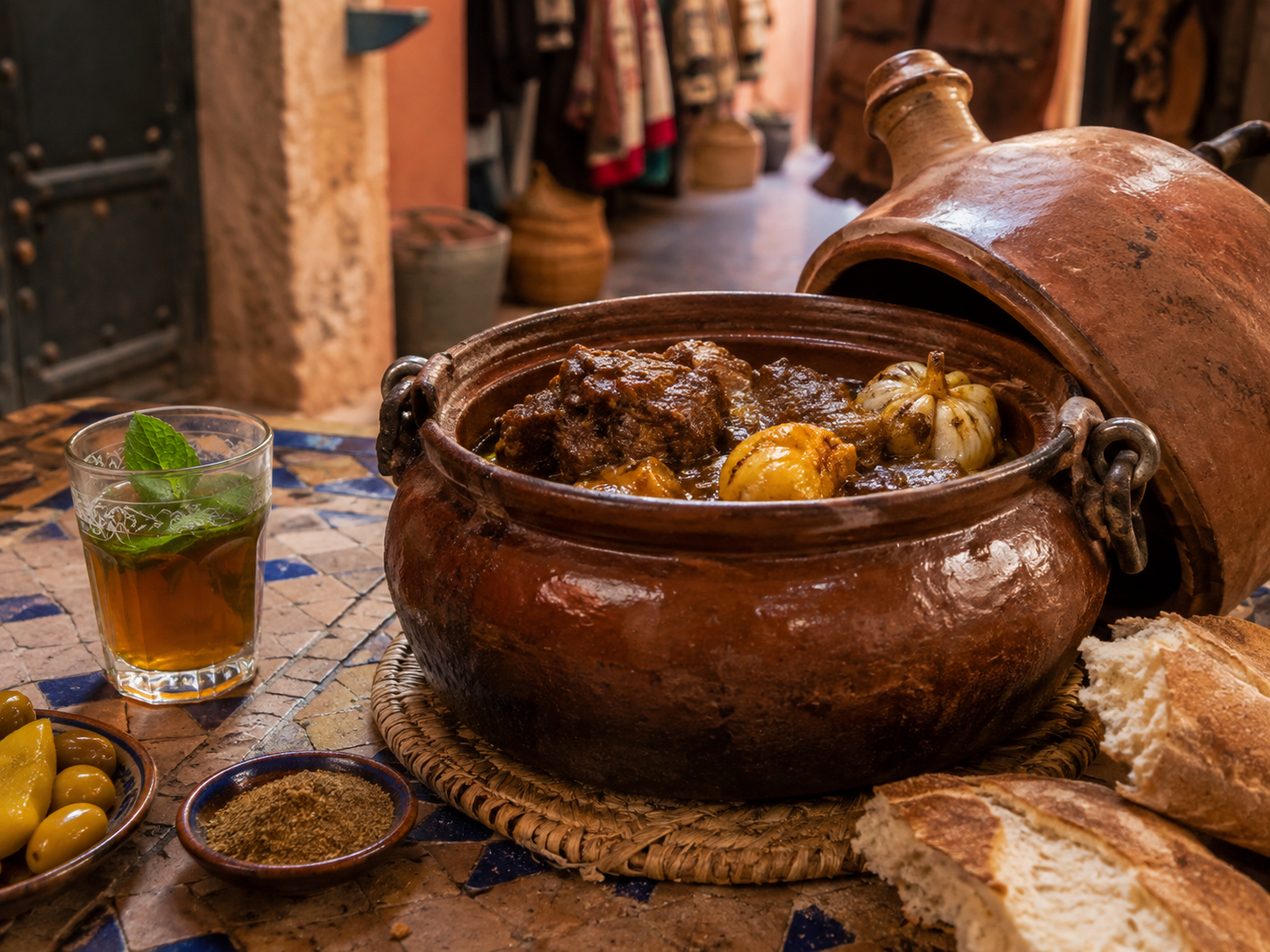
If there is one dish that belongs to Marrakech more than almost any other, it is tanjia.
Traditionally, the dish is made with beef or lamb, preserved lemon, garlic, spices and smen, all packed into a clay pot and cooked slowly for hours.
The result is intensely tender meat and a rich sauce that tastes like it has been cooking all day.
Because it usually has.
Tanjia is not a quick lunch.
It is a Marrakech institution.
And the city is one of the best places in Morocco to try it properly.
2. MECHOUI
Marrakech takes lamb seriously.
Mechoui is one of the clearest examples.
The meat is cooked slowly until it becomes soft enough to pull apart almost without effort.
The outside develops colour and depth.
The inside stays rich and tender.
Around Marrakech, you will find mechoui in both casual spots and long-established places specialising almost entirely in roast lamb.
The best versions need very little decoration.
Bread.
Salt.
Cumin.
And good meat.
That is enough.
3. COUSCOUS
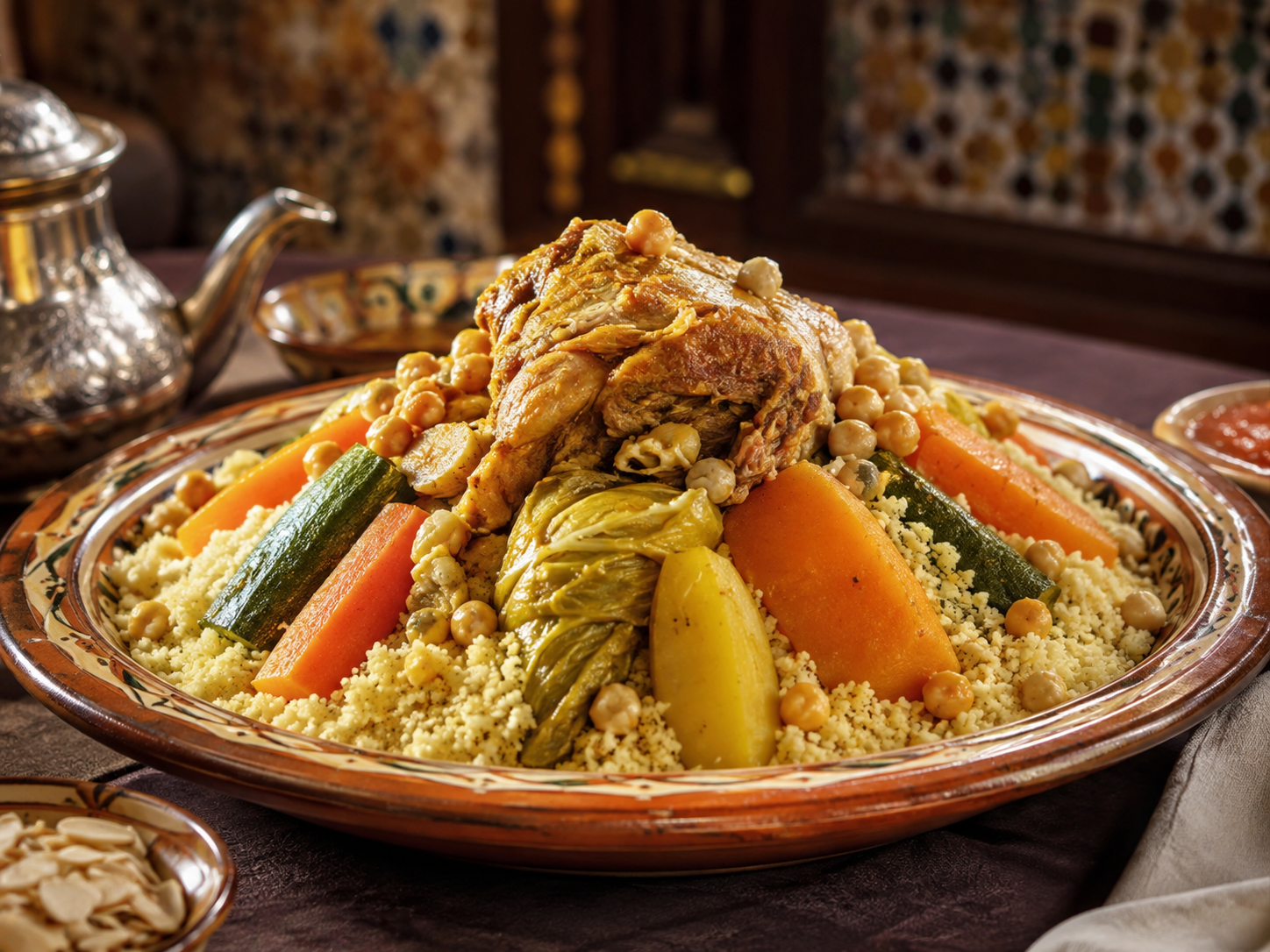
Couscous is not unique to Marrakech, but leaving Morocco without eating it would be a mistake.
The classic version combines steamed semolina with vegetables, chickpeas and meat, often lamb or chicken.
Friday remains the traditional day for couscous in many Moroccan homes.
Restaurants serve it throughout the week, but the best plates still feel less like restaurant food and more like something designed for a table full of people.
It is filling.
Comforting.
And completely central to Moroccan food culture.
4. LAMB OR BEEF TAGINE
You can find tagine across the country, but Marrakech gives you endless variations.
Lamb with prunes.
Beef with vegetables.
Chicken with preserved lemon and olives.
Kefta with tomato and eggs.
The clay pot gives the dish its name, but the real point is slow cooking.
Spices have time to settle into the meat.
Vegetables soften.
Sauces become richer.
And when the lid finally comes off, the smell arrives before the plate does.
If you only order one proper sit-down Moroccan meal in Marrakech, make it a tagine.
5. HARIRA
Not every memorable dish in Marrakech has to be elaborate.
Harira proves that.
The soup usually combines tomatoes, lentils, chickpeas, herbs and spices, sometimes with meat.
It is deeply associated with Ramadan, when it is traditionally served to break the fast.
But you will find it throughout the year.
A good bowl is warming, filling and surprisingly complex.
It is also one of the easiest ways to eat something authentically Moroccan without spending much money.
6. BRIWAT
Briwat are small pastries that can go sweet or savoury.
Savory versions may be filled with meat, chicken, cheese or seafood.
Sweet versions can contain almonds and honey.
The pastry is thin and crisp.
The filling is rich.
And they disappear very quickly once they hit the table.
They are perfect as a starter, snack or part of a larger Moroccan spread.
If you see a mixed plate, order it.
It is one of the easiest ways to try several flavours at once.
7. MSEMEN WITH HONEY OR AMLou
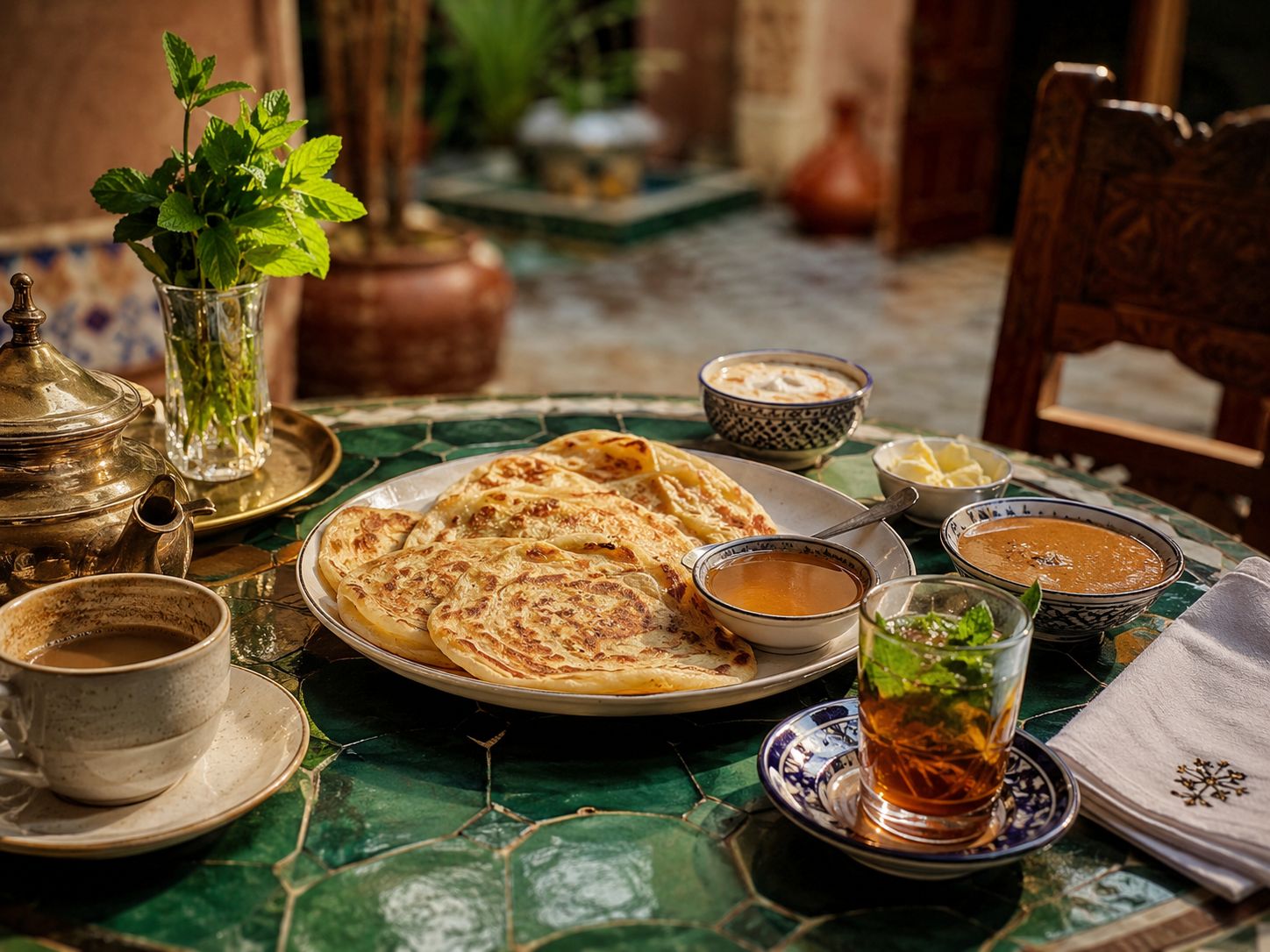
Breakfast in Marrakech deserves more attention.
Msemen is a layered Moroccan flatbread cooked on a griddle until crisp outside and soft inside.
It can be eaten plain, with butter and honey, or with amlou, the Moroccan spread made from almonds, argan oil and honey.
Pair it with mint tea or coffee and you have one of the simplest, best breakfasts in the city.
It is not glamorous.
It does not need to be.
Sometimes the food you remember most is the thing you ate early in the morning on a plastic chair outside a small café.
MARRAKECH IS BEST EATEN SLOWLY
The biggest mistake visitors make is treating Marrakech food like a checklist.
Tagine.
Done.
Couscous.
Done.
Mint tea.
Done.
The city is better than that.
Eat in different places.
Try one traditional restaurant.
Try one neighbourhood grill.
Try a market snack.
Have breakfast in a local café.
Sit somewhere slow enough that you can watch the city move around you.
The guide from Will Fly for Food is useful precisely because it reflects a longer stay in Marrakech and a wide range of restaurants, from casual to more refined spots. It shows how broad the city’s food scene has become.
But the real lesson is simpler.
Marrakech does not have one food experience.
It has dozens.
And the best trip is the one where you leave room for more than one.