
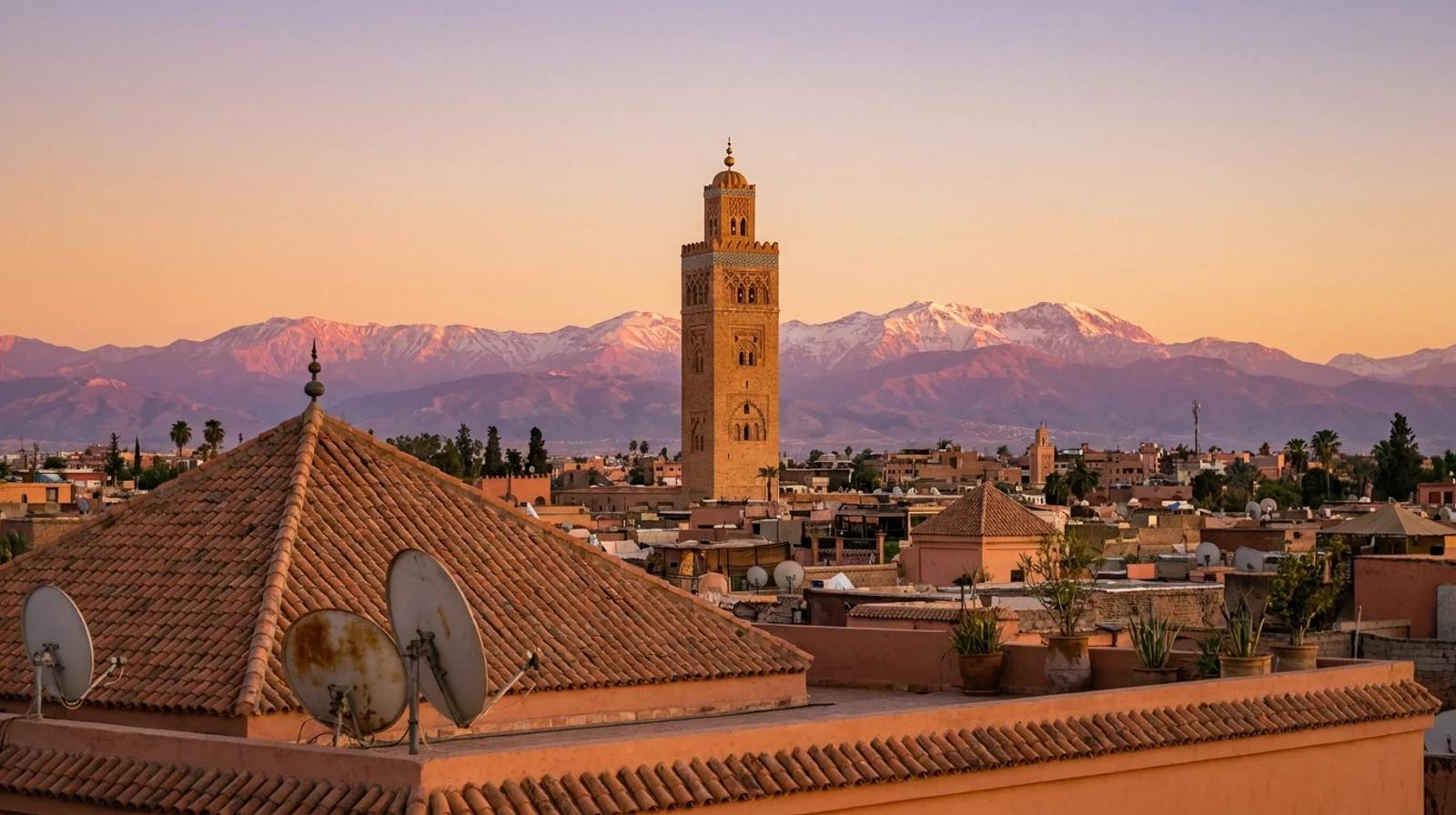
Marrakech has become one of Morocco’s strongest global brands.
Its medina, hotels, restaurants, architecture, climate and cultural identity attract visitors from across Europe, North America, the Gulf, Africa and Asia.
New international routes continue to improve access.
Hospitality investment is expanding.
Global events, luxury brands and international personalities reinforce the city’s visibility.
For Morocco, this success creates employment, foreign-currency revenue and international influence.
But the next stage will be more demanding than the first.
A destination cannot remain globally attractive if daily life becomes increasingly difficult for the people who live and work there.
Congestion affects residents and visitors.
Housing pressure affects employees and businesses.
Public-space quality influences neighbourhoods and tourism reputation simultaneously.
Water, transport, waste collection and urban services must support both a growing population and millions of annual guests.
Marrakech’s next tourism advantage will therefore not come only from attracting more visitors.
It will come from remaining a city in which residents can live, workers can build careers and visitors can experience something authentic.
Tourism Success Changes The City Itself
Tourism does not simply bring people into an existing city.
At sufficient scale, it changes how the city functions.
Homes become guest accommodation.
Traditional shops adapt to visitor demand.
Restaurants replace some everyday services.
Transport patterns shift around hotels, attractions and entertainment districts.
Land values rise in areas considered attractive to international buyers.
Employment moves towards hospitality, food, retail and property management.
These changes can create substantial opportunity.
A resident may earn income by renting part of a property.
A young professional may build a career in hospitality.
An artisan may gain access to customers from around the world.
A neighbourhood may receive new investment because of visitor demand.
But the same transformation can produce pressure when tourism expands faster than urban systems.
The issue is not whether Marrakech should welcome growth.
Its tourism success is a major national asset.
The question is how that success can strengthen the city without gradually weakening the conditions that made it desirable.
The Resident Experience Is Part Of The Tourism Product
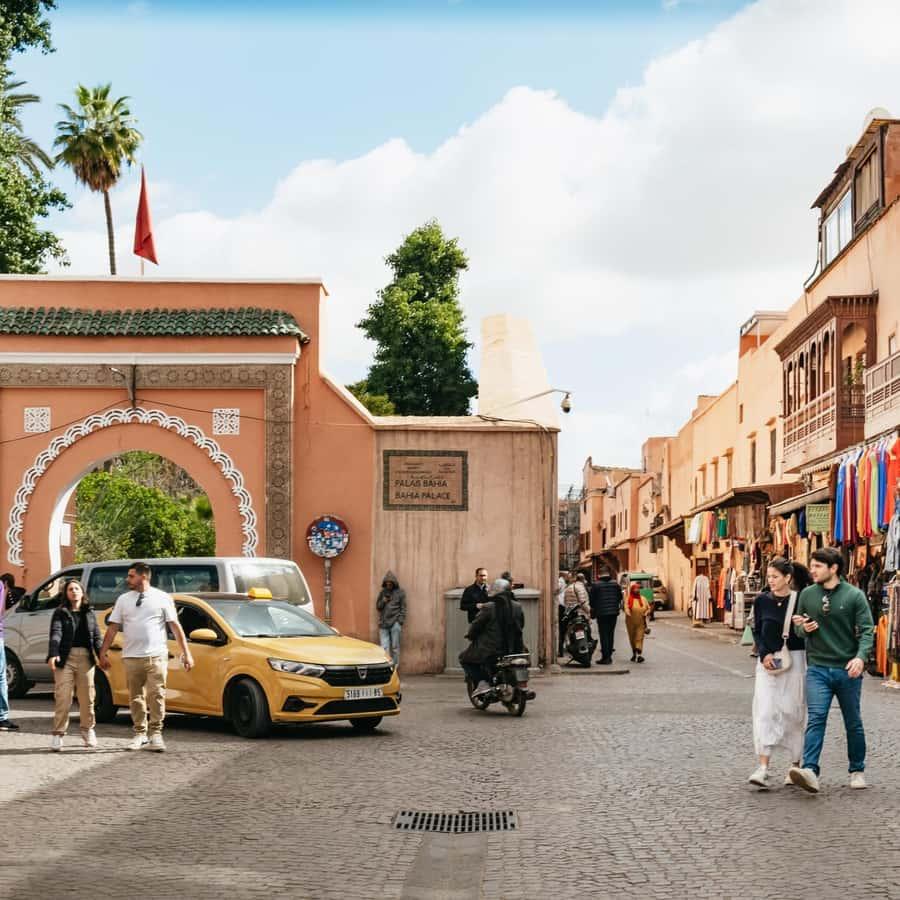
Visitors do not encounter Marrakech as an isolated collection of hotels and monuments.
They experience a living city.
They walk through neighbourhoods.
They interact with residents.
They use roads, taxis, cafés, markets and public spaces.
They depend on the same infrastructure as the local population.
When residents experience a functional and well-managed city, visitors usually benefit from the same conditions.
Transport is more predictable.
Public areas are better maintained.
Local businesses remain diverse.
Services operate more efficiently.
The atmosphere feels natural rather than staged.
When everyday urban life becomes difficult, tourism eventually notices.
Congestion creates longer transfers.
Housing pressure makes it harder for hotels and restaurants to recruit nearby workers.
Over-commercialisation can reduce the authenticity visitors came to experience.
Waste, noise and overcrowding weaken public confidence.
Protecting residents is therefore not separate from protecting tourism.
The two objectives are increasingly connected.
Mobility Is Becoming A Competitiveness Issue
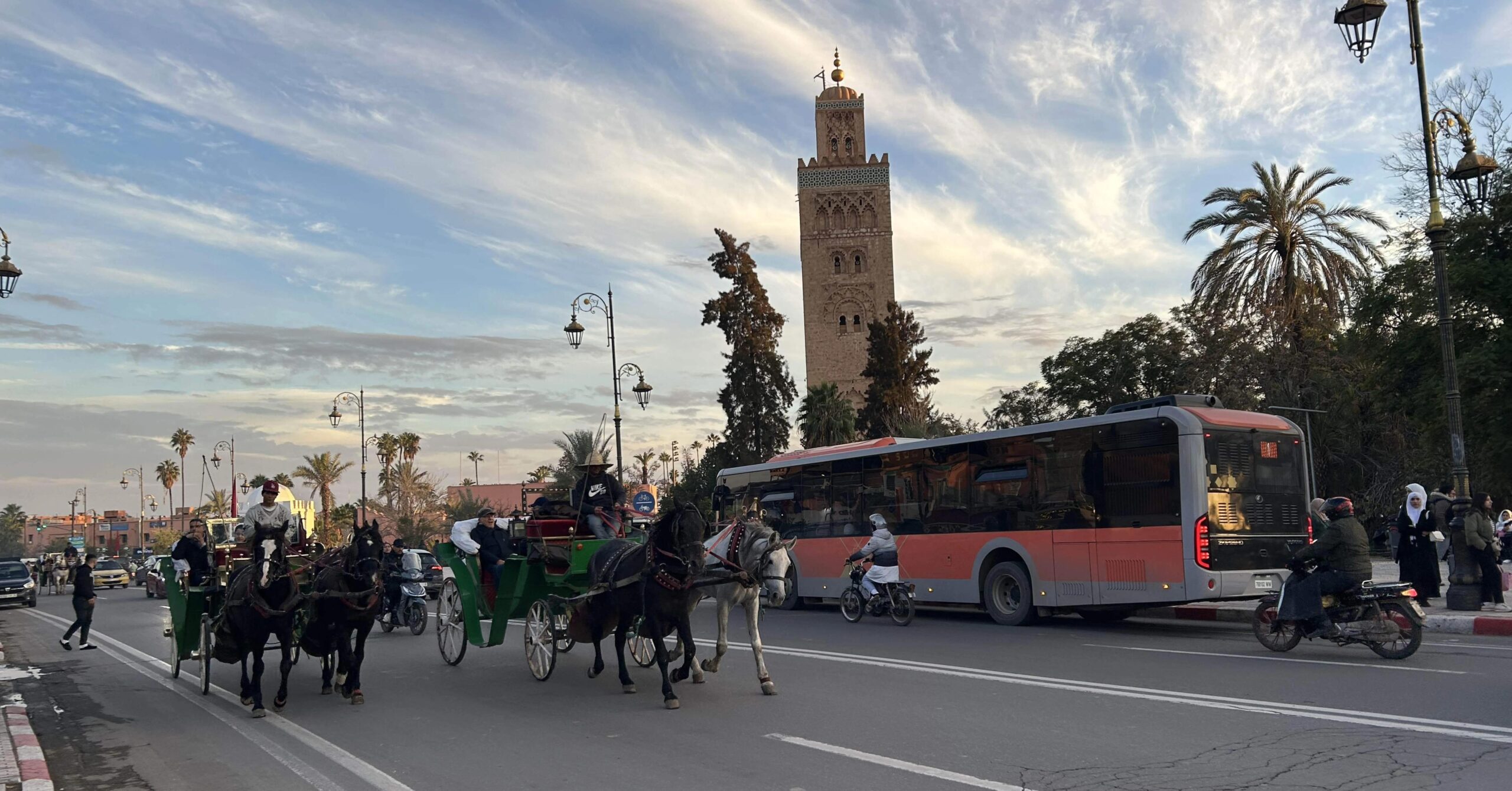
Marrakech’s tourism economy depends on movement.
Visitors travel between the airport, hotels, the medina, restaurants, golf courses, event venues and surrounding attractions.
Workers travel from residential districts to hospitality and commercial areas.
Residents need access to schools, healthcare, shops and workplaces.
When these flows overlap without sufficient coordination, congestion becomes structural.
The cost is measured in more than time.
Hotels face delayed arrivals.
Employees struggle with unpredictable journeys.
Delivery vehicles lose productivity.
Air pollution and noise increase.
Visitors may avoid certain districts because access feels difficult.
Road expansion alone cannot solve every mobility problem.
Additional capacity can quickly attract more traffic.
Marrakech requires a more integrated system combining buses, taxis, pedestrian routes, cycling where practical, organised pick-up areas and better traffic management.
The objective is not to remove cars from the city.
It is to ensure that every journey does not depend on one.
Public Transport Must Serve Tourism Workers Too
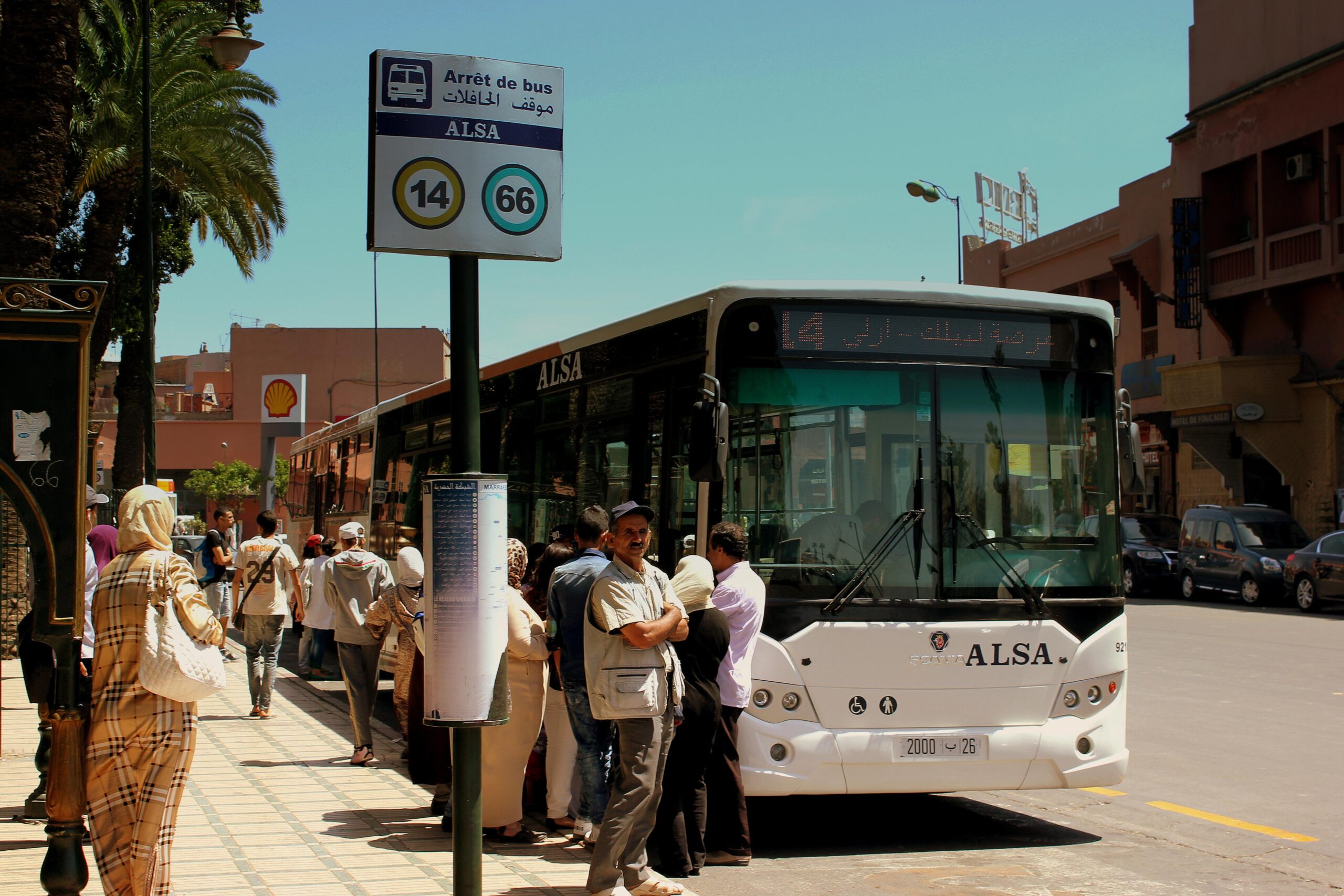
Tourism discussions often focus on how visitors move.
The workforce receives less attention.
Hotel employees, restaurant staff, cleaners, security workers, guides and retail teams frequently begin or finish work outside conventional office hours.
Their transport options may be limited during early mornings and late evenings.
This can create significant hidden costs.
Employees may spend a large share of their income on taxis or private transport.
Businesses may struggle to recruit workers living farther from tourism districts.
Late shifts can become difficult, particularly for women and younger employees.
A stronger public-transport system should therefore reflect the real operating hours of the tourism economy.
Routes connecting major employment zones with residential districts need sufficient frequency.
Schedules should correspond with shift changes.
Information should be clear and accessible.
Safe waiting areas also matter.
A tourism destination cannot promise premium service while making it unnecessarily difficult for workers to reach the places where that service is delivered.
Housing Is Becoming An Economic Question
Tourism increases demand for accommodation in several forms.
Hotels need land.
Visitors seek short-term rentals.
Foreign residents purchase second homes.
Investors acquire properties for furnished rental.
Workers and local families continue to need long-term housing.
When these markets compete for the same supply, prices can rise faster than local incomes.
The result affects more than households.
A hotel may invest millions in a property but struggle to recruit staff because workers cannot live nearby.
Restaurants may experience high turnover because employees face long and expensive commutes.
Teachers, healthcare workers and other essential professionals may move farther from central areas.
Neighbourhoods can lose long-term residents and become increasingly dependent on temporary occupancy.
Marrakech needs tourism investment and private property activity.
But the city also needs sufficient housing for the people who keep its economy functioning.
Housing affordability should therefore be treated as part of destination competitiveness.
Short-Term Rentals Need Professional Integration
Short-term rentals have expanded Marrakech’s accommodation offer.
They allow local property owners to participate directly in tourism revenue.
They give families and groups alternatives to conventional hotels.
They distribute visitor spending across more neighbourhoods.
This flexibility has contributed to the city’s success.
But rapid growth can create challenges.
Residential apartments may operate like hotels without equivalent standards.
Neighbours can face noise, security or access problems.
Guests may receive inconsistent service.
Long-term rental supply can decline in areas where short stays become more profitable.
The answer is not to eliminate short-term rentals.
They are now a permanent part of global tourism.
The stronger approach is professional integration.
Clear registration.
Basic safety standards.
Transparent guest identification.
Fair taxation.
Reliable complaint procedures.
Respect for building and neighbourhood rules.
Professionalisation protects residents, visitors and responsible property owners.
It also allows authorities to understand how much accommodation actually exists and where pressure is becoming concentrated.
The Medina Must Remain A Living Place
Marrakech’s medina is not only a tourist attraction.
It is a residential, commercial, religious and cultural environment.
Families live there.
Artisans work there.
Children attend school.
Goods must be delivered.
Historic buildings require maintenance.
Visitors are attracted precisely because the area remains connected to real urban life.
But success can gradually change that balance.
Traditional homes may become guesthouses.
Everyday shops may be replaced by businesses focused entirely on tourism.
Local services may move elsewhere.
Crowded routes can make ordinary movement difficult.
The medina risks becoming economically active while becoming less liveable for permanent residents.
Heritage preservation should therefore include social continuity.
Restoring buildings is essential.
Maintaining a resident population is equally important.
A historic district without residents can remain visually impressive but lose part of its identity.
Marrakech’s strongest tourism asset is not a frozen past.
It is a living heritage.
Authenticity Depends On Economic Diversity
A successful tourism city needs more than businesses serving visitors.
Residents require pharmacies, schools, groceries, workshops, repair services and affordable restaurants.
When every commercial space is converted into a tourist-focused concept, the city becomes less useful to local people.
It may also become less interesting to visitors.
Travellers increasingly seek places with a genuine local rhythm.
They want to observe normal life, not only a commercial performance designed for outsiders.
Economic diversity protects that experience.
Traditional trades should remain commercially viable.
Everyday markets should continue serving residents.
New restaurants and boutiques can coexist with local services.
Artisans should capture greater value from tourism rather than being displaced by it.
The most attractive city is not the one where every square metre has been optimised for visitor spending.
It is the one where tourism exists inside a functioning local economy.
Water Must Shape The Growth Model
Marrakech’s tourism expansion occurs within a region where water remains a strategic resource.
Hotels, swimming pools, gardens, restaurants, golf facilities and new residential developments all create demand.
The city also faces high temperatures and seasonal pressure.
Stronger national water reserves can improve the immediate outlook, but long-term planning cannot depend on one favourable year.
New investment must therefore include water efficiency from the beginning.
Low-consumption fixtures.
Leak detection.
Efficient laundry systems.
Treated wastewater for landscaping where appropriate.
Climate-suitable gardens.
Clear measurement of large-user consumption.
Hotels can reduce water use without reducing guest comfort.
Modern systems often improve efficiency while also lowering operating costs.
The strongest hospitality groups already understand that resource management is part of commercial discipline.
Marrakech should make this expectation consistent across future development.
A globally successful destination must also be a water-responsible one.
Green Space Is Economic Infrastructure
Trees, parks, shaded streets and planted public areas are sometimes treated as decorative urban features.
In Marrakech, they are functional infrastructure.
Shade improves pedestrian comfort.
Vegetation can reduce local heat.
Public gardens provide residents with spaces that do not require commercial spending.
Green areas strengthen the visual identity of neighbourhoods.
They also make walking more attractive for visitors.
But green space must be designed around local water reality.
Large lawns and unsuitable plants can create excessive consumption.
Climate-adapted landscaping can provide shade and beauty with lower demand.
Maintenance is equally important.
A new park creates limited long-term value when irrigation, cleaning and security are not sustained.
Urban greening should therefore be planned as a permanent service rather than a one-time project.
The return appears in public health, tourism appeal, heat resilience and property value.
Heat Changes How The City Operates
Higher temperatures alter daily behaviour.
Residents avoid movement during the hottest hours.
Visitors shift activities towards mornings and evenings.
Restaurants and public spaces become busier after sunset.
Workers face more difficult outdoor conditions.
Energy demand rises as cooling systems operate for longer periods.
Marrakech can adapt by changing both design and timing.
Shaded pedestrian routes can make short journeys more comfortable.
Public transport stops need protection from direct sun.
Outdoor workers require appropriate schedules and rest.
Cultural sites can offer extended evening access where operationally possible.
Night-time transport and public services should reflect later activity.
Climate adaptation is not only about constructing new infrastructure.
It is also about organising the city according to the conditions people actually experience.
A destination that understands heat can preserve comfort while extending economic activity into more suitable hours.
Waste Management Must Follow Visitor Volume
Tourism increases consumption.
Hotels, restaurants, events and short-term rentals generate large amounts of waste.
Peak periods create additional pressure on collection and public-space cleaning.
When systems do not adjust quickly enough, the problem becomes visible.
Overflowing bins weaken neighbourhood quality.
Plastic and food waste affect streets and landscapes.
Historic areas can become particularly difficult to service because access is limited.
Waste management must therefore respond to real visitor flows.
Collection schedules should increase during peak periods.
Hotels and restaurants should separate materials where recycling systems exist.
Food-waste reduction can lower costs and environmental pressure.
Large events should include clear cleaning responsibilities.
Short-term rentals must be integrated into local collection rules.
A clean city is not only an aesthetic objective.
It affects public health, resident confidence and the destination’s global reputation.
Noise Is A Quality-Of-Life Indicator
Marrakech’s entertainment economy is part of its attraction.
Restaurants, rooftops, events and nightlife create jobs and visitor spending.
But commercial activity can create conflict when it extends directly into residential areas.
Residents need predictable periods of rest.
Hotels need to protect guest comfort.
Businesses need clear operating rules.
Noise regulation should therefore be consistent and practical.
The objective is not to silence the city.
It is to manage competing uses professionally.
Zoning can direct larger entertainment venues towards appropriate locations.
Building standards can improve sound insulation.
Delivery hours can reduce disruption.
Complaint procedures should work without creating unnecessary hostility between businesses and residents.
Predictability benefits everyone.
A restaurant investing in the city needs to understand the standards before opening.
A resident needs confidence that repeated disturbance can be addressed fairly.
Major Events Must Leave Urban Value
Marrakech’s ability to host conferences, festivals, sporting events and international gatherings strengthens its global profile.
These events support hotels, restaurants, transport and local services.
They can also justify improvements in infrastructure and public space.
But their value should extend beyond the event itself.
Temporary transport measures can become permanent improvements.
Public-area upgrades can benefit neighbourhoods afterwards.
Training provided for event staff can strengthen the wider workforce.
Digital visitor systems can support ordinary tourism once the event ends.
The city should evaluate major events partly through what remains.
How many local businesses participated?
What skills were created?
Which public improvements continued to function?
Did the event attract repeat visitors or future investment?
A successful calendar should build cumulative urban capability rather than create isolated moments of activity.
Tourism Revenue Must Reach More Residents
Tourism statistics demonstrate sector performance at the national level.
Residents experience tourism through income and opportunity.
The connection between the two should become more visible.
Local suppliers should access hotel procurement.
Farmers and food producers can serve restaurants.
Artisans should obtain fairer routes to premium customers.
Guides and cultural professionals need clear career pathways.
Small transport, maintenance and technology companies can participate in the visitor economy.
When tourism spending circulates locally, public support becomes stronger.
When most value remains concentrated among a limited number of major operators, residents may experience congestion and higher prices without feeling an equivalent economic benefit.
The objective is not to weaken large investors.
They provide capital, standards and international reach.
It is to ensure that their presence creates a wider network of Moroccan opportunity.
Tourism becomes more resilient when many businesses benefit from it.
Workers Determine The Reputation
A destination’s reputation is ultimately delivered by people.
Receptionists.
Housekeepers.
Drivers.
Chefs.
Waiters.
Guides.
Security staff.
Maintenance teams.
Retail employees.
Their professionalism shapes the visitor experience.
Their living and working conditions shape their ability to perform.
Long journeys, unstable schedules, limited progression and housing pressure can increase turnover.
High turnover weakens service consistency.
Businesses then recruit and train repeatedly without building experienced teams.
Marrakech needs tourism careers, not only tourism jobs.
Workers should see a pathway from entry-level employment to supervision, management and entrepreneurship.
Language training, digital skills and leadership development can help create that progression.
A premium destination requires a workforce that feels part of the success rather than permanently operating at its margins.
Resident Sentiment Should Be Measured
Cities measure arrivals, hotel nights, revenues and investment.
They rarely measure how residents experience tourism growth.
That information is increasingly important.
Do residents believe tourism improves employment?
Are they concerned about housing?
Which districts experience the greatest congestion?
Do people feel public spaces are improving?
Are noise and waste problems concentrated in specific areas?
Do residents still visit central tourism zones themselves?
Regular surveys can identify pressure before it becomes visible through conflict or declining support.
Resident sentiment should not be treated as a referendum on whether tourism should exist.
It is a management tool.
People living in the city see problems that annual economic statistics may not reveal.
Their experience can help authorities adjust transport, regulation and public services more effectively.
A destination supported by its residents is stronger than one that depends only on visitor satisfaction.
Growth Should Be Measured Through Value
More arrivals remain positive.
But volume alone cannot define the next stage of Marrakech’s tourism development.
The city should also measure:
Average visitor spending.
Length of stay.
Employment quality.
Repeat visits.
Local supplier participation.
Water use per guest.
Resident satisfaction.
Public-transport performance.
Housing pressure.
Distribution of activity across the year.
These indicators create a more complete picture.
A visitor staying longer and spending across local businesses may generate more value than several short, highly concentrated visits.
A hotel operating efficiently may contribute more sustainably than a larger property with excessive resource use.
A neighbourhood benefiting from tourism while retaining local life represents a stronger outcome than one converted entirely into short-term accommodation.
The next growth model should prioritise value, quality and resilience.
Marrakech Must Avoid Becoming A Victim Of Its Brand
Strong destinations can become trapped by their own popularity.
Success attracts investment.
Investment increases capacity.
Greater capacity requires more visitors.
More visitors place additional pressure on the city.
The destination then attempts to solve that pressure through further expansion.
Without careful management, the cycle can weaken the qualities that originally created demand.
Marrakech still possesses major advantages.
Its identity is globally distinctive.
Its hospitality sector includes internationally recognised operators.
Its airport connects it directly with major markets.
Its cultural and architectural assets are difficult to reproduce elsewhere.
The city is not facing a lack of attractiveness.
It is facing the responsibility that comes with attractiveness.
The objective should not be limiting ambition.
It should be ensuring that ambition remains compatible with urban life.
A Liveable City Is A More Valuable Destination
Marrakech’s tourism success is a national achievement.
It has created jobs, attracted investment and strengthened Morocco’s position on the global travel map.
The next stage requires a broader definition of competitiveness.
A competitive destination is not only easy to market.
It is easy to move through.
Its workers can live within reasonable reach of their jobs.
Its public spaces function for residents and visitors.
Its water and waste systems support growth.
Its heritage remains alive.
Its neighbourhoods retain economic diversity.
Its success produces opportunity beyond the largest operators.
Protecting the resident experience does not require choosing residents over tourists.
It means recognising that the same city must serve both.
Marrakech’s global brand has already proved its power.
Its future value will depend on whether the city behind that brand remains liveable.