

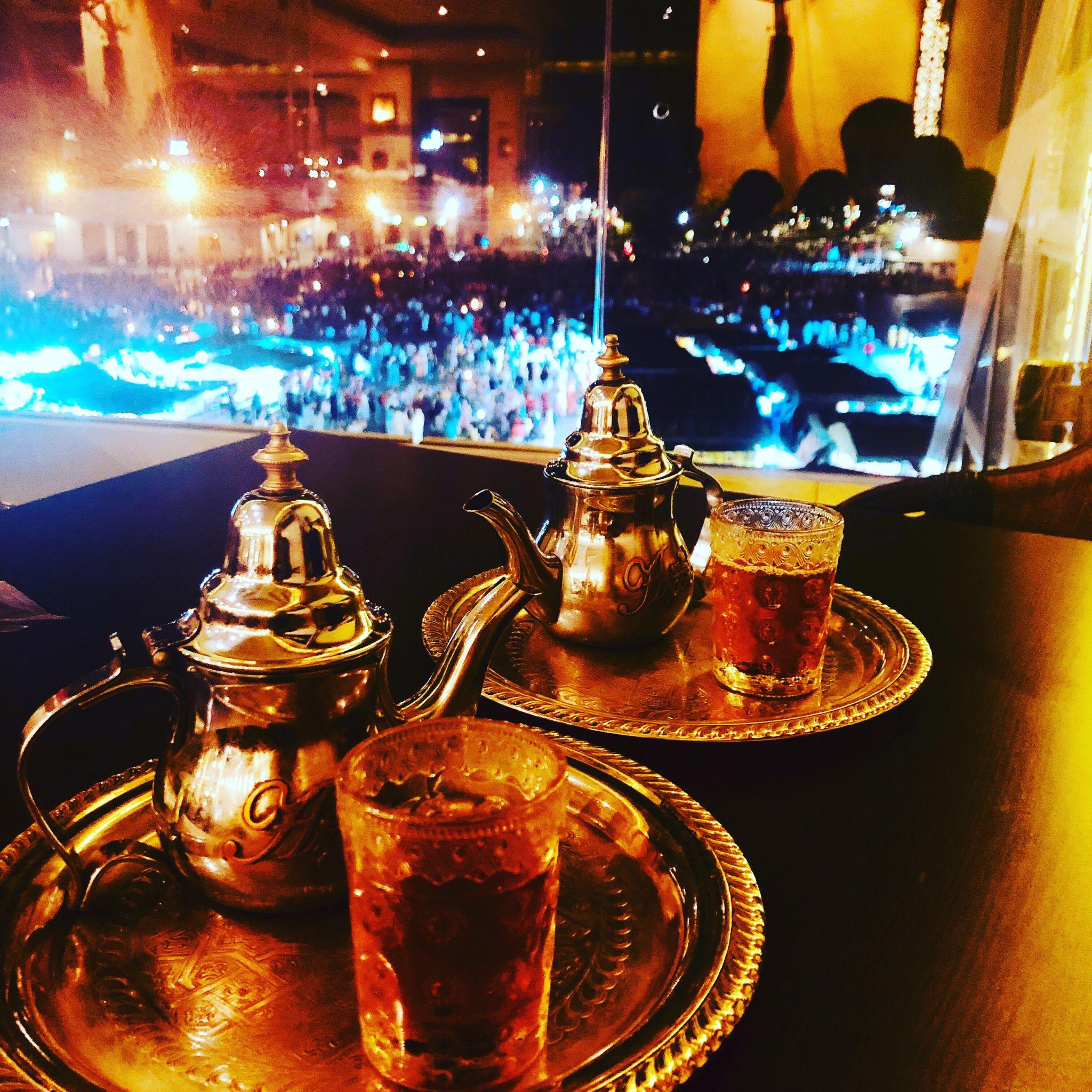
Morocco’s summer evenings have their own economy, rhythm and smell.
When the heat drops, cafés fill. Families leave home. Children run through squares. Street-food carts become busy. Mint tea lands on small metal tables. Msemen, grilled corn, sandwiches, juices and pastries turn the night into a second day.
In winter, the city often slows after sunset.
In summer, Morocco wakes up again.
That is why mint tea nights remain one of the country’s most recognisable food rituals: part drink, part social habit, part family outing and part informal evening economy.
The Evening Shift
The Moroccan summer day is often divided in two.
The first half belongs to work, errands, heat and traffic.
The second half begins after sunset.
That is when people walk, eat, meet friends, take children out and sit in cafés for long conversations. In coastal cities, families move toward the sea. In inland cities, they look for shaded squares, terraces and cooler streets.
This evening shift is not only about leisure.
It shapes how food is consumed, how cafés earn money and how neighbourhoods come alive.
Mint Tea As Social Infrastructure
Mint tea is more than a beverage in Morocco.
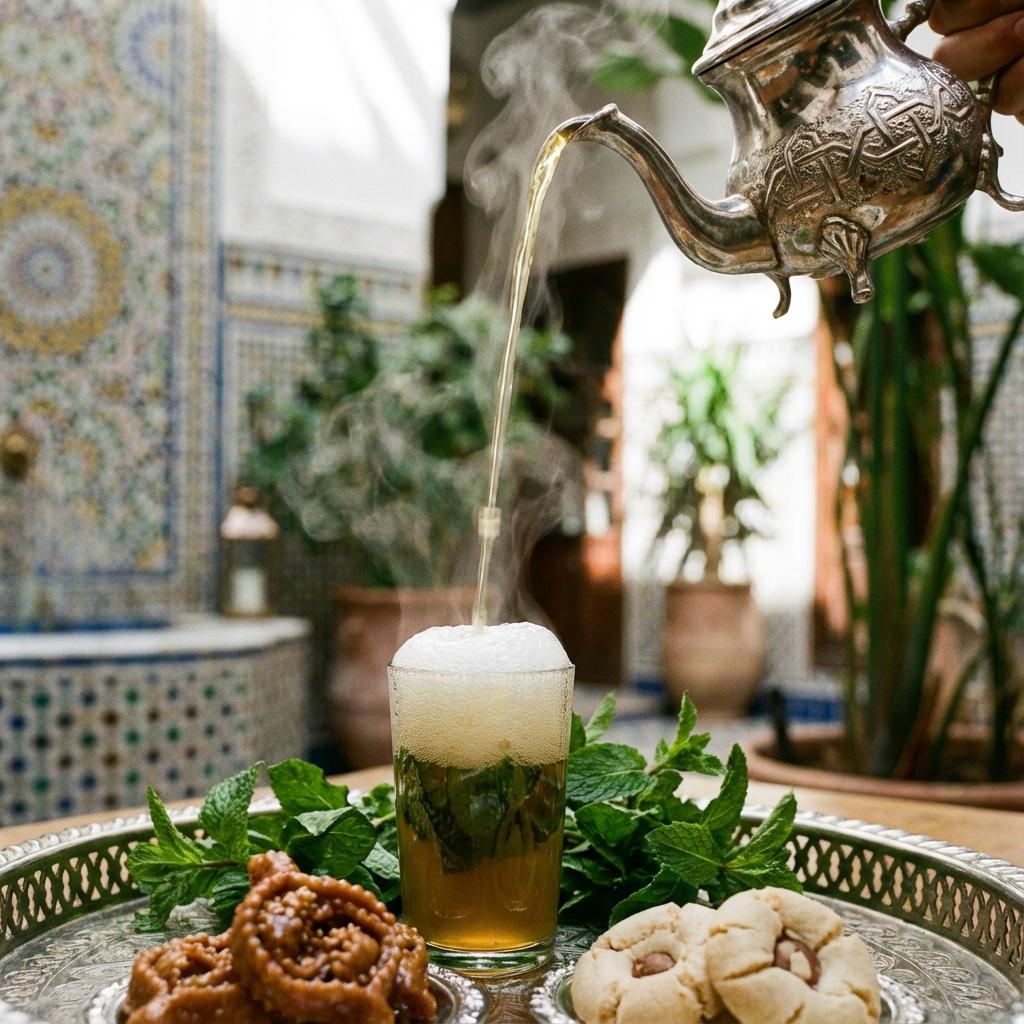
Visit Morocco, the country’s official tourism platform, describes green mint tea as a ceremonial drink deeply rooted in Moroccan traditions, often used to welcome guests in a friendly atmosphere.
That explains why it works so well in summer evenings.
Tea gives people a reason to sit.
It slows the pace.
It turns a café table into a meeting point.
It is affordable, familiar and deeply Moroccan.
In many places, a glass of mint tea is less about thirst and more about belonging.
Cafés Are The Real Night Venues
Morocco’s cafés are not just places to drink.
They are social venues.
Men meet friends. Families stop after a walk. Young people watch football. Older residents follow the street. Tourists observe the rhythm of the city. Workers decompress after long days.
In summer, cafés become even more important because home can feel too warm and the street feels alive.
A terrace with tea, coffee, water or juice becomes a small public living room.
That is why café culture is one of Morocco’s strongest lifestyle-food stories.
Street Snacks Fill The Gap
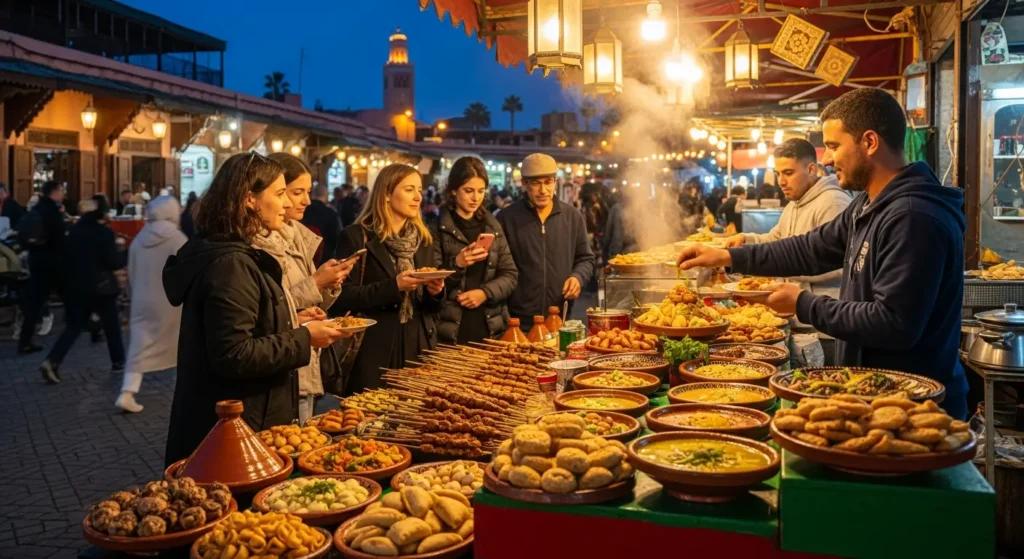
Summer evenings are rarely built around one big formal meal.
They are built around small stops.
Msemen.
Harcha.
Grilled corn.
Bocadillos.
Fresh juice.
Ice cream.
Pastries.
Roasted nuts.
Snails in broth in some cities.
A quick sandwich after a walk.
These foods match the rhythm of the night. They are casual, affordable and easy to share.
The snack economy matters because it keeps money moving in small amounts across thousands of vendors, bakeries, kiosks and cafés.
Families Drive The Demand
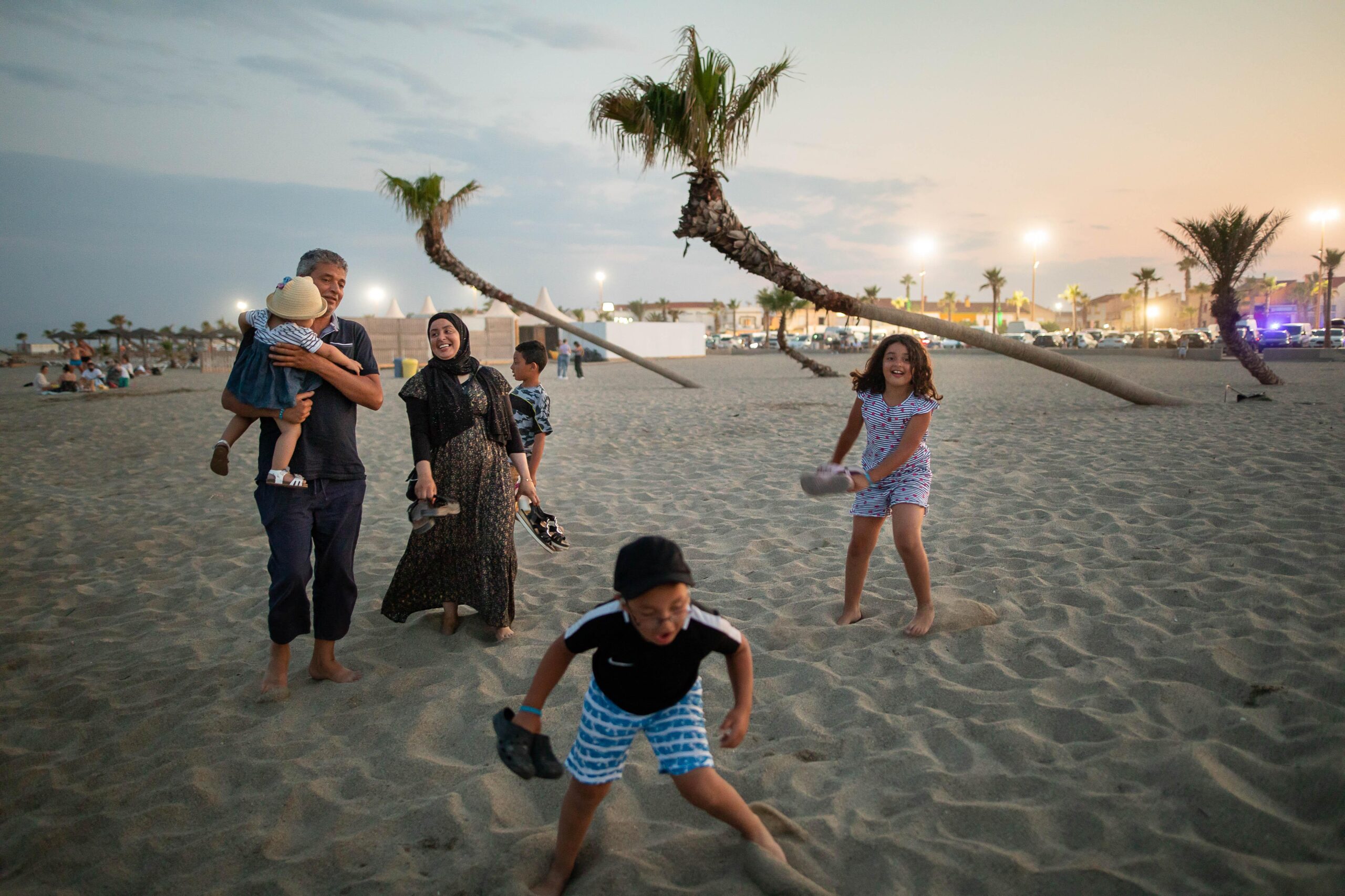
The most important customer group is not always the tourist.
It is the Moroccan family.
Parents take children out after sunset because the temperature is easier. Grandparents join walks. Cousins meet near cafés. Teenagers gather around juice shops or snack counters.
Food becomes part of the outing.
A family may not plan a restaurant dinner, but it may still spend on tea, water, ice cream, popcorn, sandwiches or sweets.
That is how summer evenings create a broad food economy.
Small purchases, repeated every night, can matter.
The Heat Makes Nights More Valuable
Morocco’s summer heat gives evenings extra value.
During the hottest hours, people reduce movement. After sunset, the city becomes more usable.
This is especially clear in cities such as Marrakech, Fes, Meknes and inland neighbourhoods of Casablanca, where afternoon heat can feel heavy. Coastal places such as Essaouira, Tangier and Agadir benefit from cooler air, but the night rhythm still matters.
Heat changes behaviour.
People delay activity, delay food and delay social life until the evening.
That makes night-time food consumption an important seasonal pattern.
Tourism Adds A Second Layer
Tourists also join the evening food rhythm.
They may spend the day visiting monuments, beaches or markets, then look for a softer evening experience: mint tea on a terrace, street snacks in the medina, dinner near a square or a walk after sunset.
For visitors, the experience feels authentic because it is not staged only for them.
Moroccans are already there.
That is the advantage.
A tourist drinking mint tea on a terrace is not only buying a drink. They are entering a daily Moroccan scene.
Why Mint Tea Still Wins
New drinks are everywhere.
Iced coffee.
Smoothies.
Energy drinks.
Bubble tea.
Milkshakes.
Mocktails.
Fresh juices.
But mint tea keeps its position because it carries cultural weight.
It is simple, recognisable and emotional. It connects the café to the home. It connects the tourist experience to Moroccan hospitality. It works in a family house, a roadside stop, a medina terrace or a hotel courtyard.
Modern drinks may trend.
Mint tea remains the anchor.
The Pour Is Part Of The Performance
Mint tea is also visual.
The teapot.
The small glass.
The foam.
The high pour.
The green leaves.
The silver tray.
Visit Morocco notes that mint tea is traditionally poured from a height, a gesture that is part of the ceremony.
That matters in the social-media age.
A food or drink ritual that looks good can travel online. Tea pouring is not just service. It is content, memory and identity.
In a tourism market driven by images, Morocco’s tea ritual remains naturally photogenic.
The Informal Economy Behind The Night
Not every summer food business is formal.
Street vendors, small kiosks and informal snack sellers are part of the evening landscape in many Moroccan cities.
They meet demand quickly.
They offer low prices.
They serve neighbourhoods where formal restaurants may be too expensive or too far.
That informal layer is part of the reality of Moroccan food culture.
It creates income for small sellers and convenience for families, but it also raises questions around hygiene, regulation, waste and public-space management.
The night economy is vibrant, but it needs organisation.
Cafés Benefit From Football
Football can turn cafés into packed venues.
During major matches, especially Morocco World Cup games, cafés become viewing rooms. Tea, coffee, water and snacks keep moving as fans gather around screens.
That makes the World Cup a direct boost for café traffic.
A Morocco match can change the whole evening economy in a neighbourhood.
Tables fill earlier.
Groups stay longer.
Food orders rise.
The match becomes entertainment, but the café captures the spending.
The Coast Has Its Own Version
In coastal cities, mint tea nights look different.
There is more walking near the sea, more seafood snacks, more ice cream, more juice, more families moving between beach areas and cafés.
Agadir, Essaouira, Tangier, Al Hoceima and Saidia each have their own summer food rhythm.
The ocean air changes the mood.
But the pattern is the same: after sunset, people come out, food spending rises and social life moves into public space.
Why This Matters For Food Businesses
For cafés and snack sellers, summer evenings are a key window.
The day may be slow because of heat.
The evening can recover the revenue.
Success depends on location, service speed, cleanliness, prices and the ability to handle family groups.
Businesses that understand the night rhythm can win.
More seating outside.
Quick service.
Cold water.
Simple snacks.
Clean tables.
Football screens when needed.
Good lighting.
In summer, the best food businesses do not only sell taste. They sell comfort.
A Ritual That Feels Modern And Old
Mint tea nights work because they combine old and new.
The tea ritual is traditional.
The cafés may show football on big screens.
Families walk with smartphones.
Teenagers film snacks for social media.
Tourists post terrace views.
Vendors use mobile payments or delivery apps in some areas.
That mix is very Moroccan.
The culture remains familiar, but the setting keeps adapting.
This is why the ritual survives.
It does not freeze in the past.
The Health And Sugar Question
There is also a modern debate around sugar.
Moroccan mint tea is often sweet, and many street snacks are rich, fried or sugary.
For families trying to eat more carefully, summer nights can become a temptation zone.
That does not weaken the culture, but it does change how some people participate.
Less sugar in tea.
More water.
More fruit.
Shared snacks instead of heavy meals.
The tradition can adapt without disappearing.
The Bottom Line
Morocco’s summer evenings still belong to cafés, snacks and family walks because the night is when the country becomes social again.
Mint tea sits at the centre of that rhythm. It is a drink, a welcome gesture, a café ritual and a symbol of Moroccan hospitality.
Around it, the evening food economy moves: msemen, juices, grilled corn, sandwiches, pastries, ice cream and small purchases that turn warm nights into busy business hours.
This is not only food culture.
It is how Moroccan cities breathe after sunset.
Category: Food