

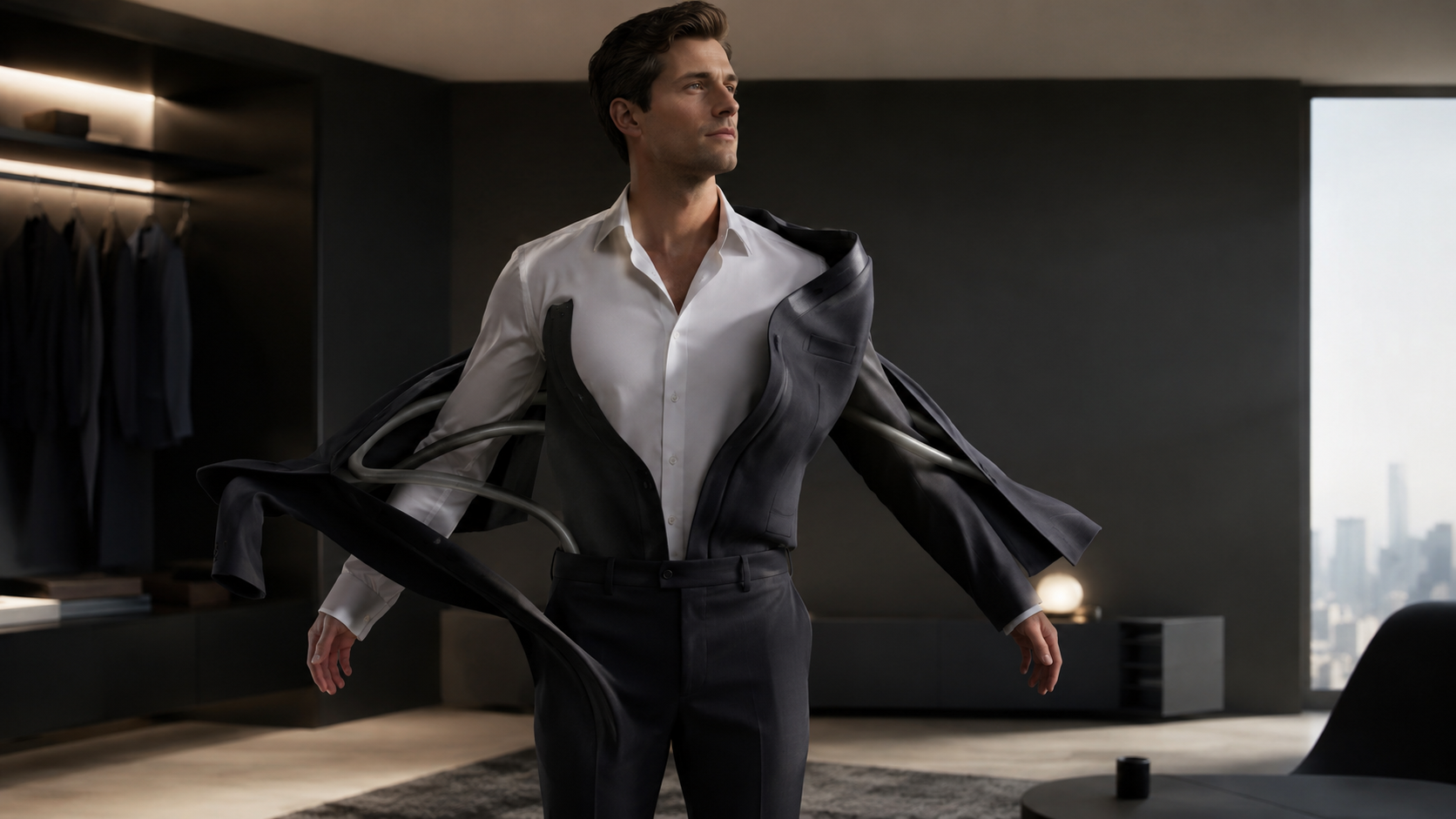
The Self-Dressing Robot sounds like science fiction until the fabric starts moving.
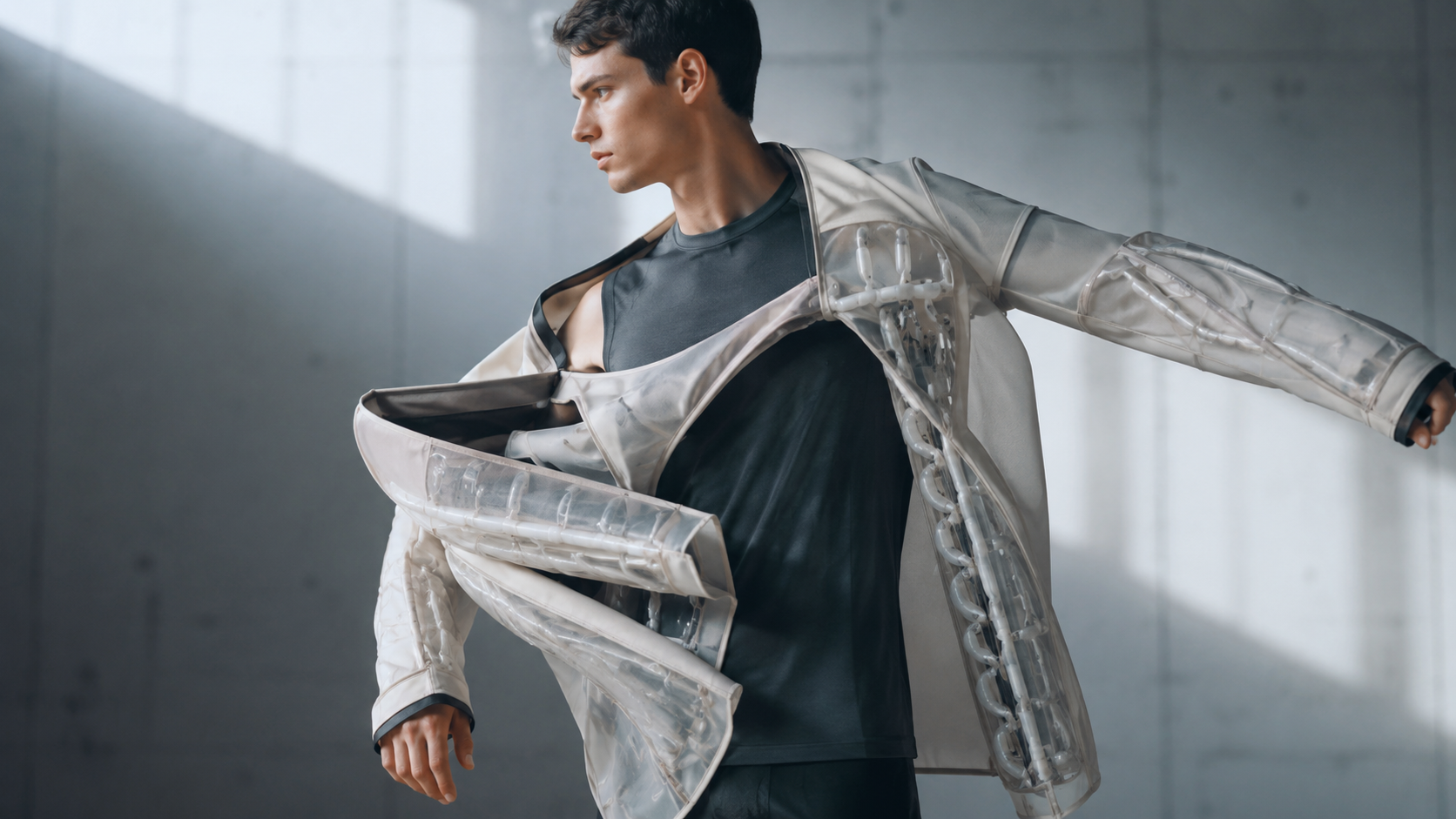
A team from KAIST in South Korea and Stanford University has developed a robotic clothing technology that can dress a person automatically, without hands and without help from another human being. The system uses soft, flexible “vines” powered by air pressure, embedded inside the garment. When activated, the clothing unfurls and climbs along the body.
In the demonstration described by Reuters, the technology can put on a full suit in about 10 seconds.
That is not only a robotics story.
It is a daily-life story.
Because if clothing can begin to move by itself, then fashion, healthcare, emergency response, disability support and industrial safety may all be entering a new design era.
Self-Dressing Robot Moves Robotics Into Clothing
The Self-Dressing Robot matters because it changes where people expect robots to appear.
Most people still imagine robots as machines outside the body: humanoids, arms, drones, hospital assistants, warehouse machines or factory systems. This technology moves the robot into the garment itself.
That shift is important.
Instead of a robot helping someone put on clothing, the clothing becomes the robot.
The suit does not need to look like a metal exoskeleton. It does not need a humanoid assistant standing nearby. It uses soft robotic structures inside the fabric to help the garment move around the wearer.
That makes the idea less intimidating.
It is not a robot replacing a person.
It is clothing becoming active.
The 10-Second Suit Is A Powerful Image
The most viral part of the story is the speed.
A full suit in about 10 seconds is easy to understand. It creates a simple image: clothing that dresses you almost instantly. That is why the story travels beyond engineering circles.
Reuters reports that the system works by turning the clothing inside out as it moves, allowing the vine-like structures to climb along the body, even when the person is not standing perfectly still.
That detail matters because real life is messy.
People move.
They lose balance.
They rush.
They stand awkwardly.
They may be injured, elderly, disabled, tired, wet or under pressure.
A dressing technology that works only in perfect laboratory stillness would have limited value. A system that can adapt to movement begins to feel more realistic.
Disability Support Could Be The Biggest Human Use
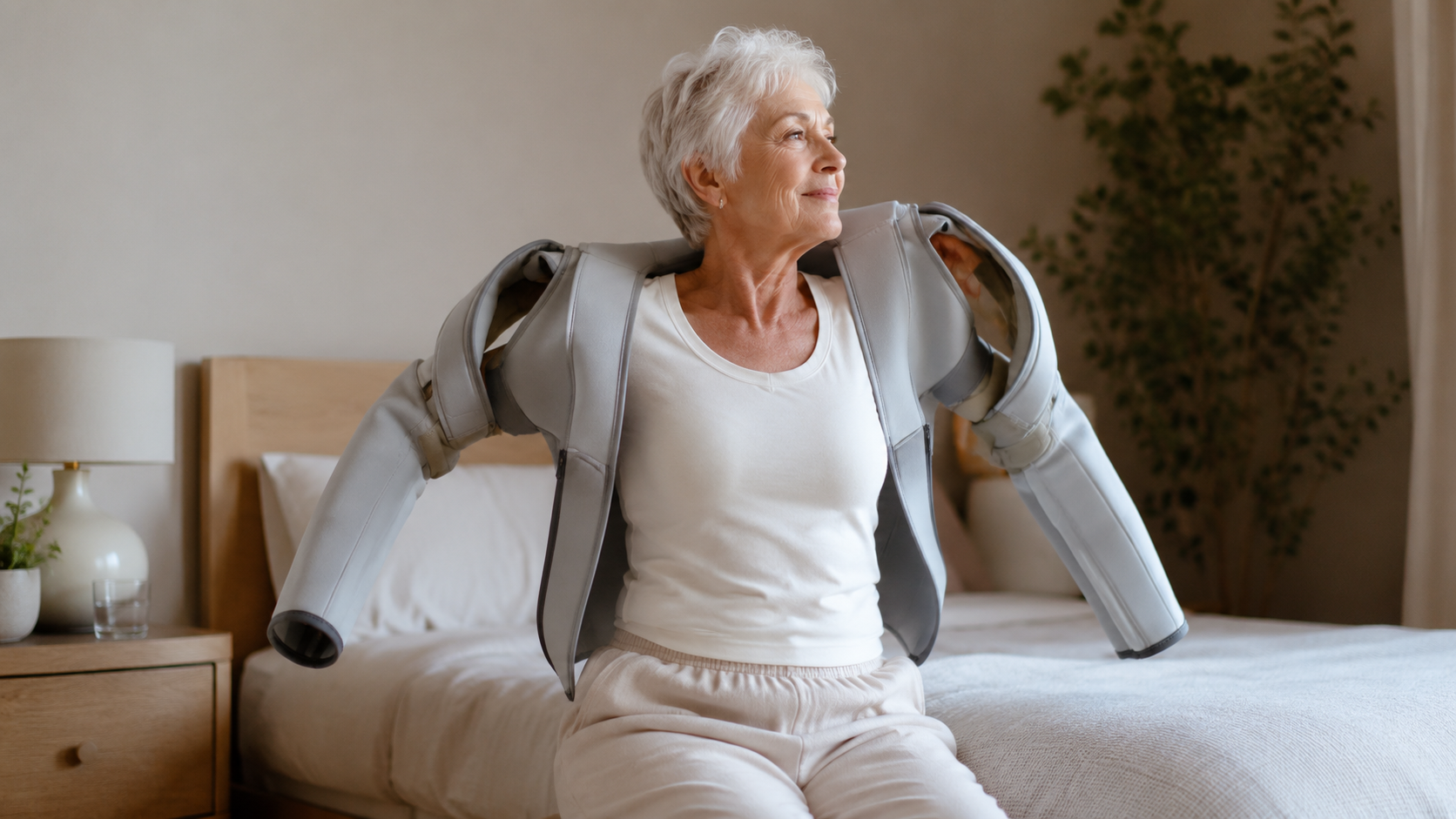
The most important application may be assistance for people who struggle to dress independently.
For many disabled people, older adults, patients recovering from surgery or people with limited mobility, dressing is not a small task. It can require help from a caregiver, take time, create discomfort and reduce personal independence.
A self-dressing garment could change that.
It could give someone the ability to put on clothing without waiting for assistance. It could reduce physical strain for caregivers. It could protect privacy. It could make daily routines less dependent on another person’s availability.
That is where the technology becomes emotional.
The issue is not only convenience.
It is dignity.
Emergency Services Could Use It Fast
The technology also has emergency-service potential.
Firefighters, medics, hazardous-material workers and disaster-response teams often need protective clothing quickly. In dangerous environments, seconds matter. A suit that can help put itself on could reduce preparation time and make protective gear easier to wear under stress.
Imagine a responder who needs to enter a contaminated zone.
Imagine a medical worker needing protective equipment during an outbreak.
Imagine industrial teams responding to a chemical leak.
The value is obvious: faster dressing, fewer errors and less need for another person to help adjust the suit.
In emergency work, equipment is not just clothing.
It is survival infrastructure.
Chip Cleanrooms Are A Serious Market
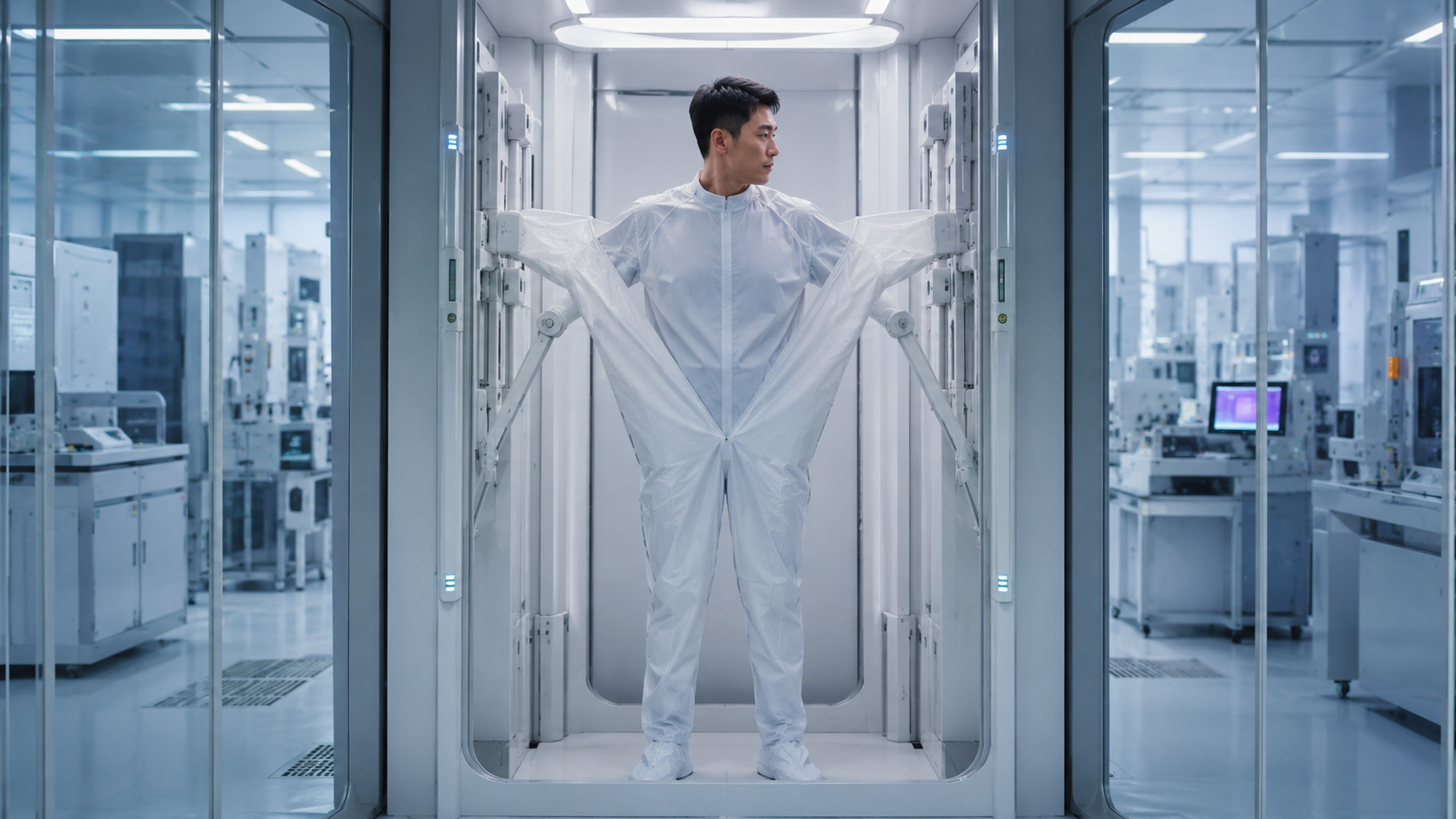
Reuters specifically notes potential applications in chip cleanrooms.
That detail is important because semiconductor manufacturing depends on extreme cleanliness. Workers entering cleanrooms need protective suits that reduce contamination. Dressing procedures can be time-consuming, repetitive and precise.
A self-dressing system could help standardise that process.
It could reduce contact with garments.
It could speed up entry.
It could limit mistakes.
It could support facilities where small particles can create huge production losses.
This makes the technology commercially interesting beyond healthcare or lifestyle. It could become useful in high-value industrial environments where time, cleanliness and precision all matter.
Mechanical Engineering Pushes Back Against AI Hype
The story also carries a wider technology message.
In recent years, artificial intelligence has dominated attention. Every company wants to say it has an AI strategy. Every investor wants to know which software model wins. Every headline seems to point toward chips, data centres and algorithms.
But the Self-Dressing Robot is a reminder that the physical world still matters.
Reuters quoted KAIST professor Ryu Jee-Hwan saying that the technology shows how mechanical engineering can complement software in an era where AI gets most of the attention.
That is the right framing.
AI may decide what a system should do.
But hardware decides whether it can actually touch the world safely.
A robot that interacts with clothing, skin, pressure and movement cannot rely on software alone. It needs soft materials, clever mechanics and real physical design.
Soft Robotics Feels More Human
Soft robotics is powerful because it is less rigid.
Traditional machines can be strong, precise and fast, but they can also feel dangerous near the human body. Clothing is different. It must bend, fold, stretch, slide and move around complex shapes without hurting the wearer.
That is why soft robotic vines are interesting.
They can move through fabric in a way that feels closer to natural movement than a metal arm pulling a sleeve. The system can remain close to the body and distribute motion through the garment rather than forcing the body into the machine’s path.
For personal robotics, softness is not a design detail.
It is the condition for trust.
People may accept a robot in their clothes only if it feels safe, gentle and predictable.
Fashion Could Eventually Change
The first use cases may be practical, but fashion will watch closely.
If garments can move by themselves, designers may eventually create clothing that changes shape, adjusts fit, unfolds automatically, reacts to weather, supports posture or assists movement. The line between fashion, robotics and wearable technology could become thinner.
This does not mean every jacket will become a robot.
Most people still want clothes that are comfortable, washable, affordable and simple. But high-end fashion, performance wear, medical garments and protective suits could experiment first.
Luxury fashion loves spectacle.
Sportswear loves function.
Healthcare loves assistance.
Industrial clothing loves protection.
A self-dressing garment sits at the intersection of all four.
The Raincoat Idea Shows The Everyday Potential
The origin story is almost ordinary.
Reuters reports that KAIST researcher Kim Nam Gyun said the idea came when he was riding a bicycle in the rain and thought it would be helpful if a raincoat could put itself on automatically while he continued riding.
That is what makes the technology appealing.
It does not begin with a futuristic battlefield or luxury runway.
It begins with a daily annoyance: rain starts, hands are busy, clothing is difficult to put on while moving.
The best technologies often begin this way.
A small inconvenience reveals a larger design problem.
If a raincoat can dress a cyclist, maybe protective gear can dress a worker. Maybe a medical garment can dress a patient. Maybe adaptive clothing can support someone living alone.
The ordinary problem becomes a bigger invention.
The Technology Still Has Limits
The excitement should not hide the limits.
A laboratory demonstration is not the same as a mass-market product. A self-dressing suit must prove durability, safety, comfort, cost efficiency, cleaning compatibility, battery or pressure-system practicality, size flexibility and reliability across different body types.
Clothing is difficult because bodies are different.
People have different heights, weights, mobility patterns, shoulder widths, arm lengths and sensitivities. A garment that works beautifully on one test subject may need significant adjustment for another.
There is also the question of failure.
What happens if the system jams?
What happens if pressure is too strong?
What happens if the garment catches on hair, jewellery, medical equipment or another layer of clothing?
These details matter before daily use becomes realistic.
Privacy And Dependency Questions Will Follow
Assistive technology always carries a social question.
Does it increase independence, or does it create dependency on expensive systems?
A self-dressing garment could be liberating for someone who struggles with mobility. But if it is costly, hard to repair or controlled by a narrow supplier ecosystem, access may be limited to hospitals, wealthy consumers or specialised workplaces.
That would create a familiar technology problem.
The people who need the product most may not be the first who can afford it.
For this innovation to matter socially, it must eventually become practical, reliable and accessible.
A 10-second suit is impressive.
A 10-second suit that ordinary people can use safely and affordably would be transformative.
The Care Economy Needs This Kind Of Innovation
Ageing societies will need more assistive technology.
As populations grow older, more people will need help with daily tasks, while care workers face increasing pressure. Dressing, bathing, mobility and basic household routines take time and labour.
Technology cannot replace human care.
But it can reduce some physical burdens.
If garments, beds, wheelchairs, home devices and personal tools become more adaptive, caregivers may spend less time on repetitive tasks and more time on human support.
That is the serious future behind the viral image.
The self-dressing suit is not only a cool robot.
It may be part of the next care infrastructure.
Industrial Safety Could Adopt It First
The first major buyers may not be ordinary households.
They may be industries.
Chip cleanrooms, laboratories, emergency services, military support units, chemical plants, hospitals and hazardous-material teams all have reasons to invest in advanced protective garments. These settings can justify higher costs if the technology saves time, improves safety or reduces contamination.
Consumer fashion may come later.
Industrial use may come first because the problem is clearer and the budget is easier to defend.
That is often how technology spreads.
First, a high-value professional need.
Then, refinement.
Then, cheaper versions.
Then, daily life.
The Future Of Clothing May Be Active
For thousands of years, clothing has mostly been passive.
It covers.
It protects.
It signals status.
It expresses identity.
But the next stage may be active clothing.
Clothes that assist movement.
Clothes that react to temperature.
Clothes that help dress the wearer.
Clothes that monitor health.
Clothes that reduce strain.
Clothes that protect workers automatically.
The Self-Dressing Robot is part of that shift. It suggests that garments may no longer be objects humans manipulate. They may become systems that cooperate with the body.
That is a major design change.
The wardrobe could become a machine.
The Bottom Line
The Self-Dressing Robot is one of the most striking lifestyle technologies of 2026 because it turns clothing into an active assistant.
Developed by researchers from KAIST and Stanford University, the system uses soft, air-powered robotic vines embedded in garments to help a person dress without hands or outside assistance. Reuters reports that the technology can put on a full suit in about 10 seconds, with potential applications in chip cleanrooms, emergency services and assistive care.
The viral image is simple: a suit that dresses you.
The deeper meaning is larger.
This technology could change how people think about independence, protective clothing, ageing, disability support, industrial safety and the future of wearable robotics.
Fashion once asked how clothing should look.
The next question may be how clothing should move.