

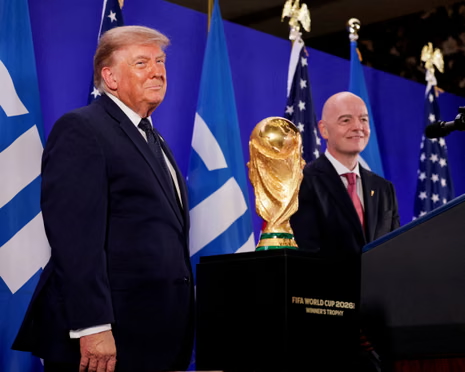
The World Cup final is supposed to belong to the players.
Today, it also belongs to politics.
As Argentina and Spain prepare to decide the 2026 world champion at MetLife Stadium, Donald Trump is stepping directly into the final image of the tournament. He is expected to present the trophy to the winning team, turning football’s most emotional ceremony into a political moment watched by the entire world.
That changes the atmosphere.
The final is no longer only about Messi, Yamal, Argentina, Spain and the trophy.
It is also about power, optics, diplomacy and who stands closest to the most valuable image in sport.
Trophy Politics Enters The Final
The Trophy Politics of this World Cup final are impossible to ignore.
AP reports that Trump is set to present the World Cup trophy to the winner of Sunday’s final between Argentina and Spain. That means the final act of the tournament will place the U.S. president beside FIFA, the winning team and the trophy itself.
That is not a small visual detail.
The trophy presentation is football’s sacred image.
It is the moment when years of work, national emotion, player sacrifice and fan obsession are concentrated into one lift. Whoever stands in that frame becomes part of the memory.
Trump understands the power of images.
FIFA understands the power of images.
That is why this moment matters.
The Host Country Wants Ownership
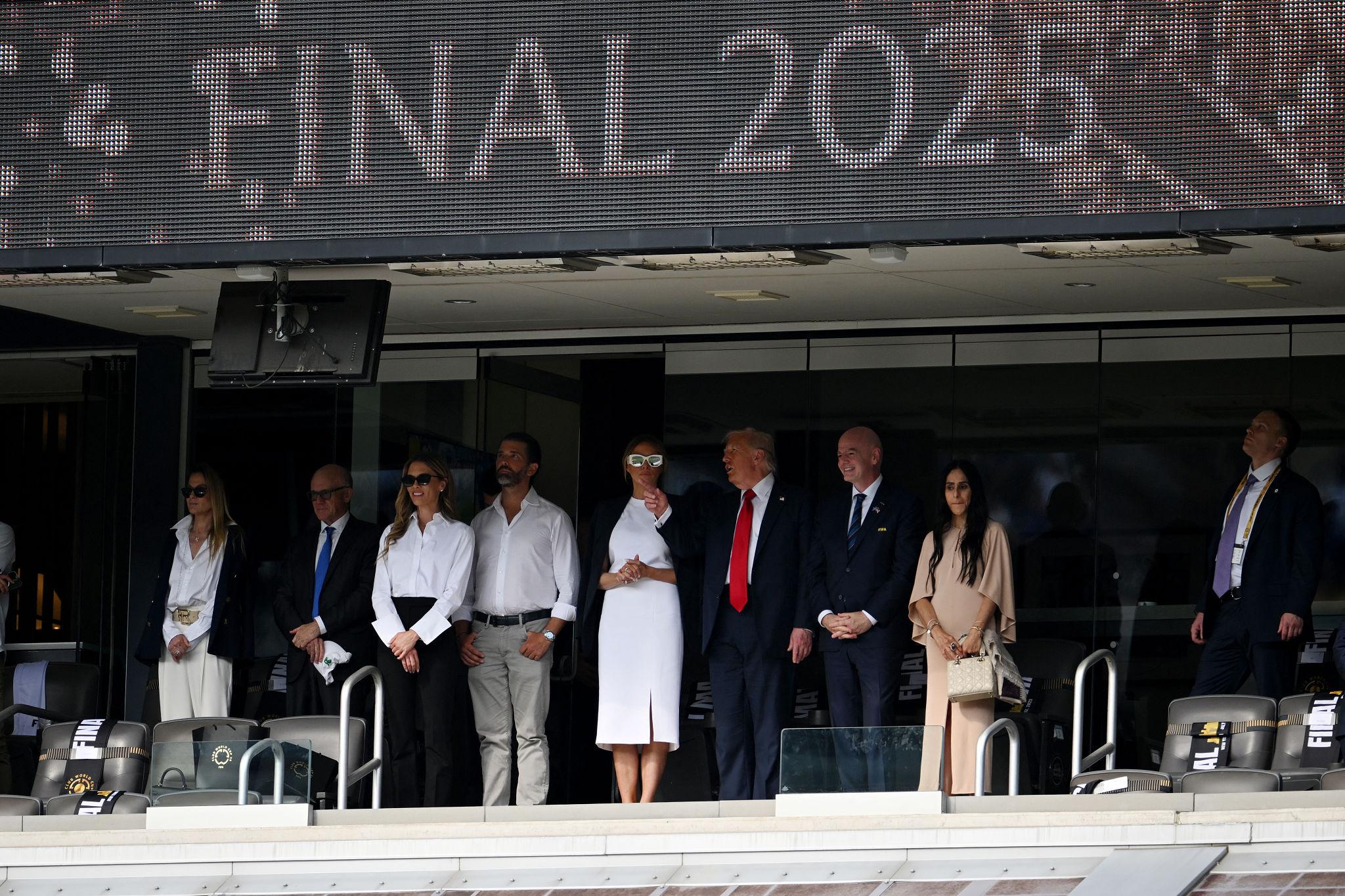
The United States is not just hosting a match.
It is trying to claim the World Cup as a national success story.
AP described Trump celebrating the tournament as a U.S. victory ahead of the final, with the president preparing to take a highly visible role in the closing act.
That tells us something about the politics of mega-events.
When a country hosts the World Cup, it does not only provide stadiums and security. It wants prestige. It wants proof of organisational power. It wants economic impact, soft power, tourism visibility and the feeling that the world has gathered on its soil.
For the United States, the 2026 World Cup has been a chance to show that American event infrastructure can absorb global football at maximum scale.
Trump’s presence turns that claim into a political performance.
FIFA Gets Access To Power
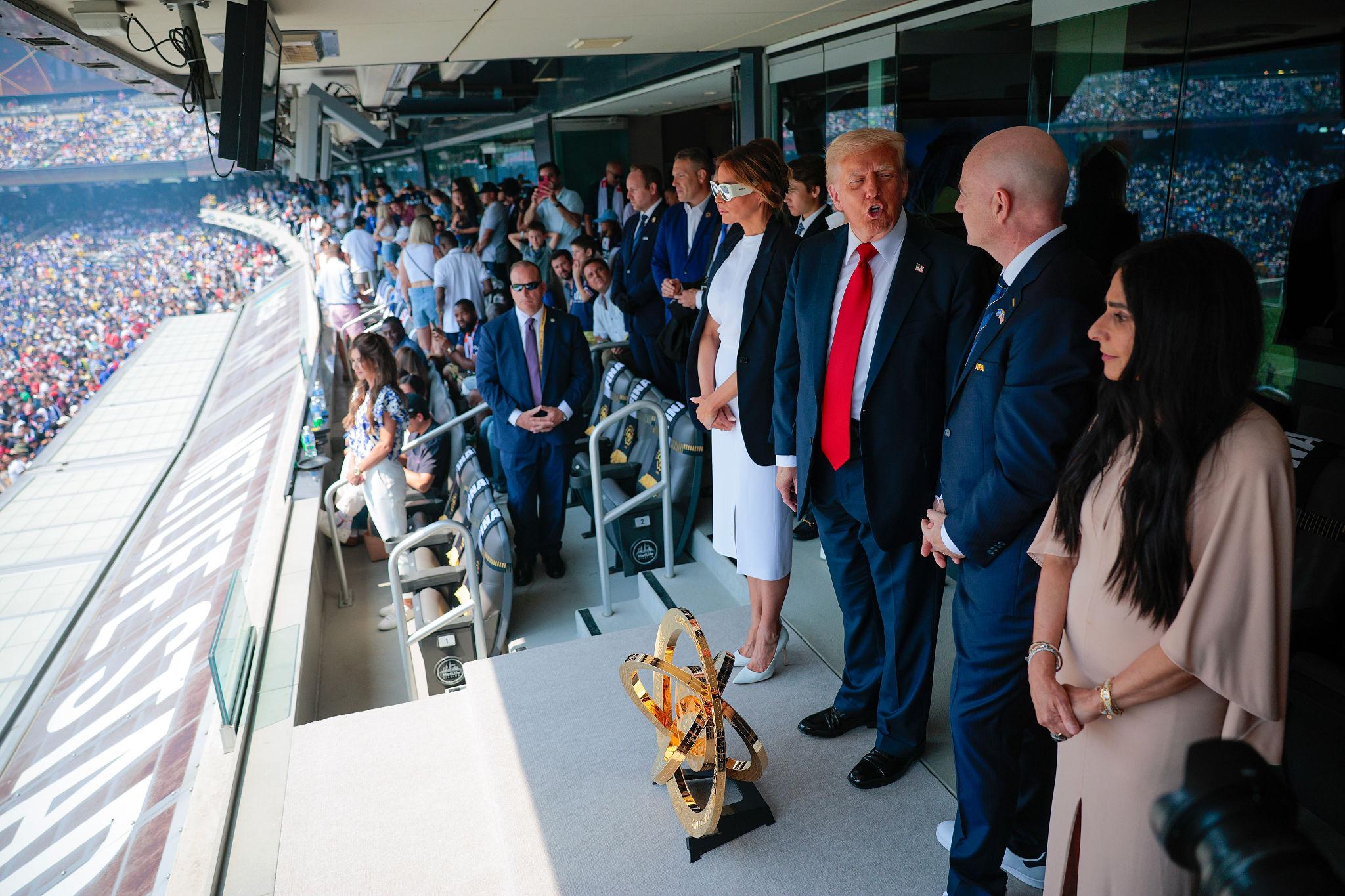
FIFA also benefits from proximity to political authority.
A World Cup cannot function without governments. It needs visas, security, policing, transport, airports, taxation agreements, stadium coordination, diplomatic clearance and public support. In a tournament spread across the United States, Canada and Mexico, political cooperation is not decorative.
It is operational.
FIFA President Gianni Infantino has built a highly visible relationship with Trump throughout the tournament cycle. The Guardian reported that Infantino has worked closely to maintain access to the American administration, including around tournament organisation and high-profile appearances.
That is the modern FIFA model.
Football may sell emotion.
Mega-events require state power.
Sheinbaum’s Attendance Adds A Diplomatic Layer
The final is also becoming a North American diplomatic scene.
Reuters reports that Mexico’s president, Claudia Sheinbaum, will attend the World Cup final after receiving a direct invitation from Trump.
That matters because Mexico was one of the three host countries of the 2026 tournament, alongside the United States and Canada. The final is in New Jersey, but the tournament began in Mexico City and belongs symbolically to all three hosts.
Sheinbaum’s attendance places the final inside a broader regional frame.
Football becomes a meeting point.
The trophy ceremony becomes a diplomatic backdrop.
The cameras may focus on the pitch, but world leaders understand that visibility around a global final has political value.
The Trophy Image Is Politically Valuable
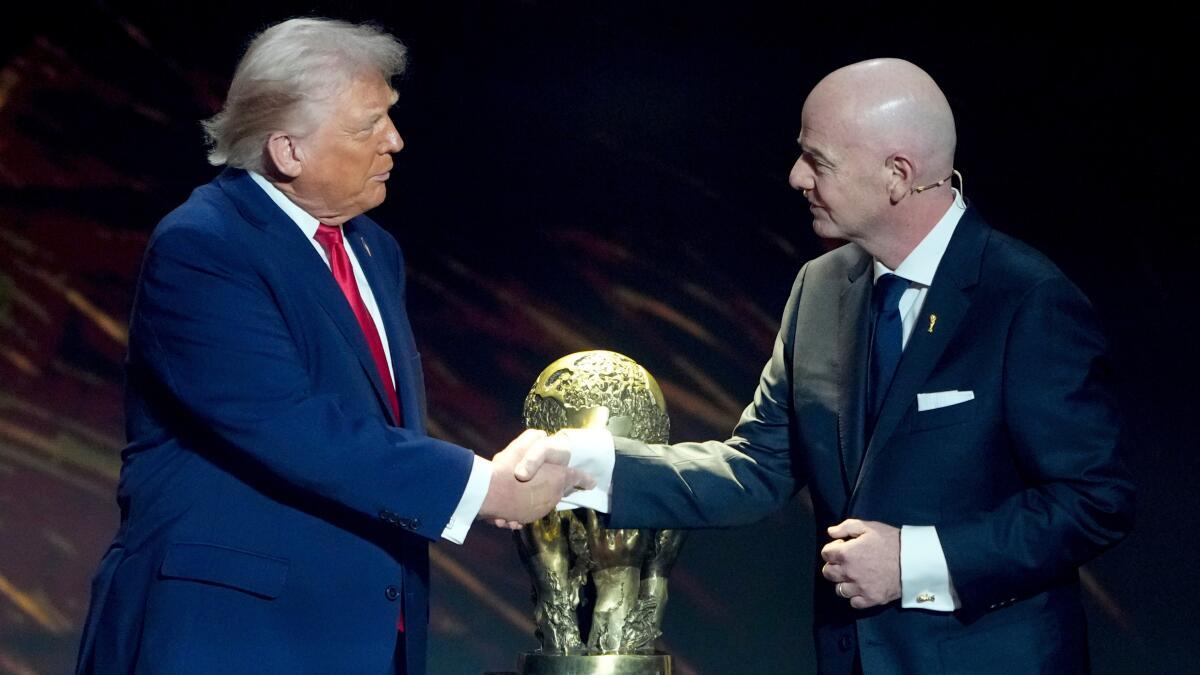
The World Cup trophy is one of the most powerful objects in global culture.
It is recognised across languages, borders and political systems. It represents victory, prestige, excellence and international attention. Standing next to it is not the same as standing next to an ordinary sports cup.
That is why trophy presentations matter.
Politicians want to be close to winning images because winning images transfer meaning. They suggest strength, celebration, relevance and national centrality. Even when the politician did not play, coach or score, proximity to the trophy creates association.
This is the risk for football.
A trophy lift should belong to the team.
If the political presence becomes too dominant, the image can feel shared with someone who did not earn it on the pitch.
Players Must Remain The Centre
The most important question is whether the players keep ownership of the moment.
Argentina or Spain will win the final.
One captain will lift the trophy.
One squad will become immortal.
The ceremony must protect that reality.
There is nothing unusual about heads of state attending major finals. Political leaders often appear at World Cups, Olympic ceremonies and national sporting moments. But there is a difference between attendance and visual control.
If Trump’s role is brief, respectful and secondary, the moment may pass as part of the hosting protocol.
If he becomes too prominent, the reaction could shift from football celebration to political debate.
That is the line FIFA must manage.
The Club World Cup Memory Still Matters
This is not the first time Trump has been close to a FIFA trophy ceremony.
Reuters Connect footage from earlier tournament activity showed Trump and Infantino in a trophy-related setting, reinforcing how visible the relationship between the U.S. president and FIFA has become.
The wider public memory also matters because football fans are sensitive to trophy-stage optics.
Supporters want the winning team to own the photograph. They want the captain, the coach, the players and the fans to dominate the moment. A political figure lingering too long can become a distraction, especially in a sport where symbolism is watched intensely.
Football does not forgive awkward trophy images.
They become memes.
They become arguments.
They become part of the event’s afterlife.
Argentina And Spain Bring Different Political Meanings
The final itself carries geopolitical softness even before Trump enters the frame.
Argentina and Spain share language, history, migration and cultural links. Their meeting is a football story, but also a Spanish-speaking world story. Add a U.S. president presenting the trophy in New Jersey, and the symbolism becomes layered.
A South American champion could receive the trophy from Trump on U.S. soil.
A European champion could do the same.
Either image will travel differently across the world.
For Argentina, it could become a scene of Messi’s team receiving glory in America.
For Spain, it could become Europe lifting football’s greatest prize in the United States.
In both cases, the host country sits inside the image.
Football Is Now A Diplomatic Platform
The World Cup is one of the few events that can bring presidents, monarchs, celebrities, billionaires, athletes, sponsors, fans and global media into the same symbolic space.
That makes it a diplomatic platform.
Not diplomacy in the formal treaty-signing sense.
Diplomacy in the image sense.
Who attends.
Who sits where.
Who shakes hands.
Who is invited.
Who is photographed.
Who is absent.
Who is close to the trophy.
All of these details can carry meaning. In a normal sports event, they may be background. In a World Cup final, they become part of the global broadcast.
The U.S. Wants To Prove It Can Host Football’s Biggest Day
America has mastered many sports spectacles.
The Super Bowl.
The NBA Finals.
The Olympics.
Major boxing and MMA events.
College football mega-stages.
But the World Cup final is different because it belongs to global football culture, not American sporting tradition. The United States has had to prove that it can host a final that feels authentic to the world, not only spectacular by U.S. standards.
Trump’s presence adds pressure.
A smooth final strengthens the image of the United States as a global sports host.
A politicised or awkward final could reinforce the concern that American showmanship sometimes overwhelms the game itself.
The balance is delicate.
The final must feel American in scale, but football in soul.
FIFA Walks A Fine Line
FIFA is comfortable with power.
The organisation has always worked with governments, negotiated with heads of state and staged tournaments inside political realities. But the 2026 final shows how visible that relationship has become.
There is a fine line between protocol and politicisation.
A host-country president attending the final is normal.
A host-country president becoming a central part of the trophy moment is more sensitive.
FIFA must make the ceremony look dignified, not captured.
The winning players must not look like guests inside someone else’s political image.
Fans Will React Through Their Own Politics
The global reaction will not be uniform.
Some fans will see Trump’s role as normal host-country participation.
Others will see it as unnecessary politicisation.
Some will welcome the American presidential presence as part of the spectacle.
Others will argue that no political leader should be placed too close to the trophy lift.
That division is inevitable because Trump is a highly polarising figure. His presence guarantees that part of the post-final conversation will move beyond football.
This is the cost of political symbolism.
It brings visibility.
It also brings conflict.
The Winning Captain Needs The Cleanest Image
For whoever wins, the trophy lift is the image of a lifetime.
If Argentina win, the world may see Messi or an Argentine captain complete one of football’s most emotional chapters. If Spain win, a new generation will announce itself on the biggest stage.
Either way, the photograph must be clean.
The captain.
The team.
The trophy.
The crowd.
That is the image football wants.
If political figures crowd the frame, the image becomes less pure. The focus shifts from achievement to staging. That is not what players dream of when they imagine lifting the World Cup.
The ceremony should serve the champions.
It should not compete with them.
The North American World Cup Ends With Power In The Frame
The 2026 World Cup was always going to be different.
It was bigger, spread across three countries, designed around 48 teams and staged inside a commercial and political environment unlike previous tournaments. The final now ends with the U.S. president at the centre of the closing ceremony and Mexico’s president also attending after a direct invitation.
That is a fitting ending to this tournament.
Global football has become too large to remain separate from power.
The question is no longer whether politics enters the World Cup.
It always does.
The question is how visibly it stands beside the trophy.
The Bottom Line
The Trophy Politics of today’s World Cup final are clear.
Argentina and Spain will decide the champion at MetLife Stadium, but Donald Trump’s expected role in presenting the trophy turns the final into a diplomatic and political stage. AP reports that Trump is set to hand the trophy to the winner, while Reuters reports that Mexico’s Claudia Sheinbaum will also attend after Trump’s invitation.
That makes the final bigger than football in one sense.
But in the only sense that should matter, it must remain simple.
The players decide the match.
The captain lifts the trophy.
The world remembers the champions.
Politics may stand beside the stage.
Football must still own it.