
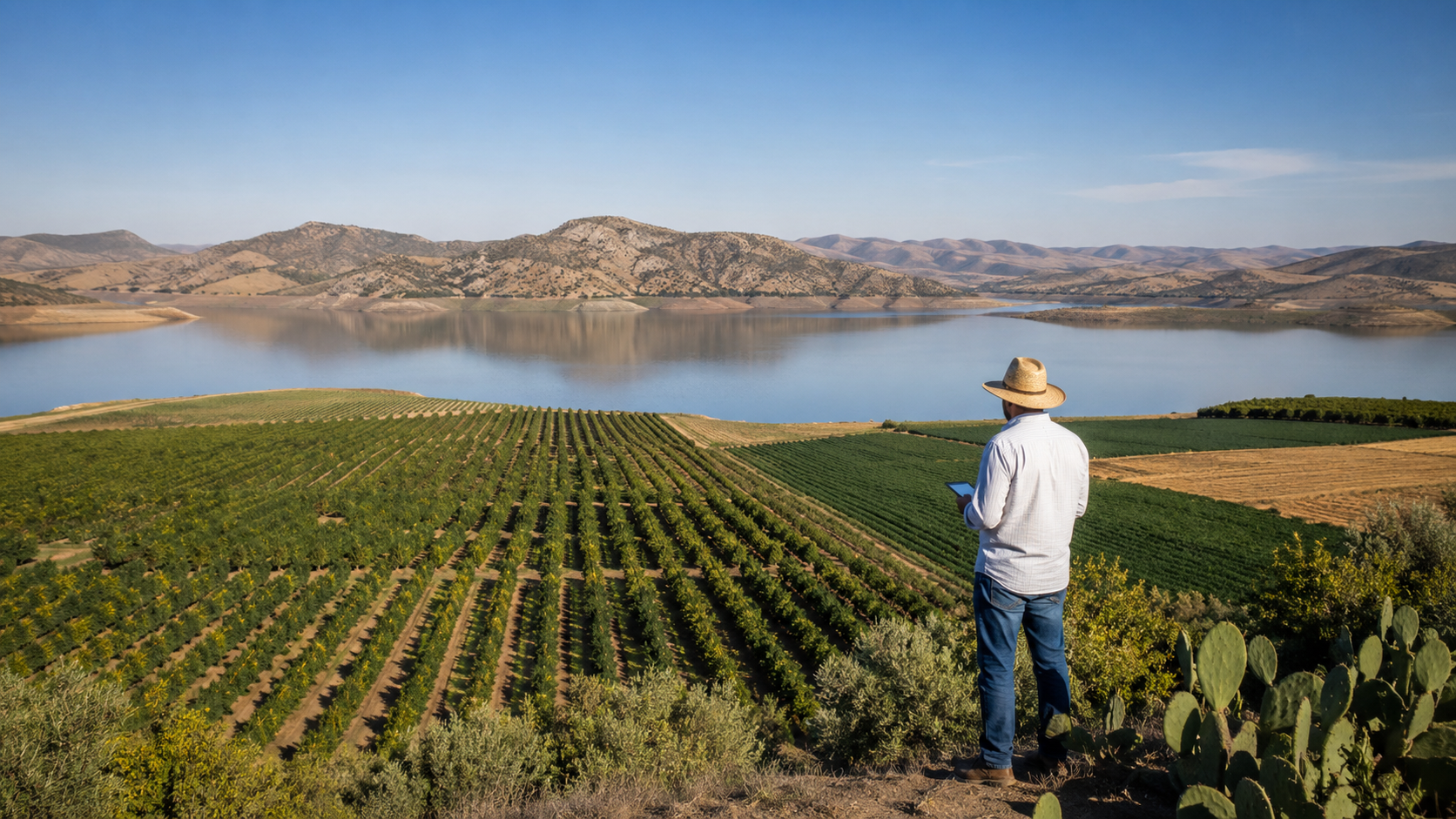
Morocco’s reservoirs have recovered dramatically after years of drought.
At the end of July 2026, the national filling rate exceeded 70%, with stored reserves almost double their level one year earlier.
For agriculture, the improvement provides immediate relief.
Farmers gain greater visibility over irrigation.
Food processors face a more secure supply outlook.
Rural communities can plan with less fear of another emergency season.
But abundant water creates its own policy risk.
When reservoirs recover, pressure for reform weakens. Difficult decisions are postponed. Water-intensive crops become easier to defend. Expansion resumes under the assumption that the crisis has ended.
The current recovery should produce the opposite response.
Morocco now has a rare opportunity to reconsider which food products generate the greatest economic and social value from each cubic metre of water.
The central question is no longer simply how much agriculture Morocco can produce.
It is what Morocco should produce with the water it has.
A Wet Year Does Not Change The Climate
Reservoir recovery can transform one agricultural season.
It cannot transform Morocco’s long-term climate.
The country remains exposed to irregular rainfall, high temperatures, evaporation and prolonged drought cycles.
Water availability may improve rapidly after strong rainfall and decline just as rapidly during several dry years.
Agricultural decisions must therefore be based on structural availability rather than the most recent season.
A crop planted today can influence investment and water consumption for years.
Farmers may purchase equipment, build irrigation systems, enter supply contracts and borrow money around that production model.
Once these commitments are made, changing direction becomes expensive.
This is why a temporary water recovery should not automatically justify permanent agricultural expansion.
The correct policy question is not whether reservoirs are currently fuller.
It is whether the same production model would remain viable if another multiyear drought began.
Every Cubic Metre Has A Different Economic Return
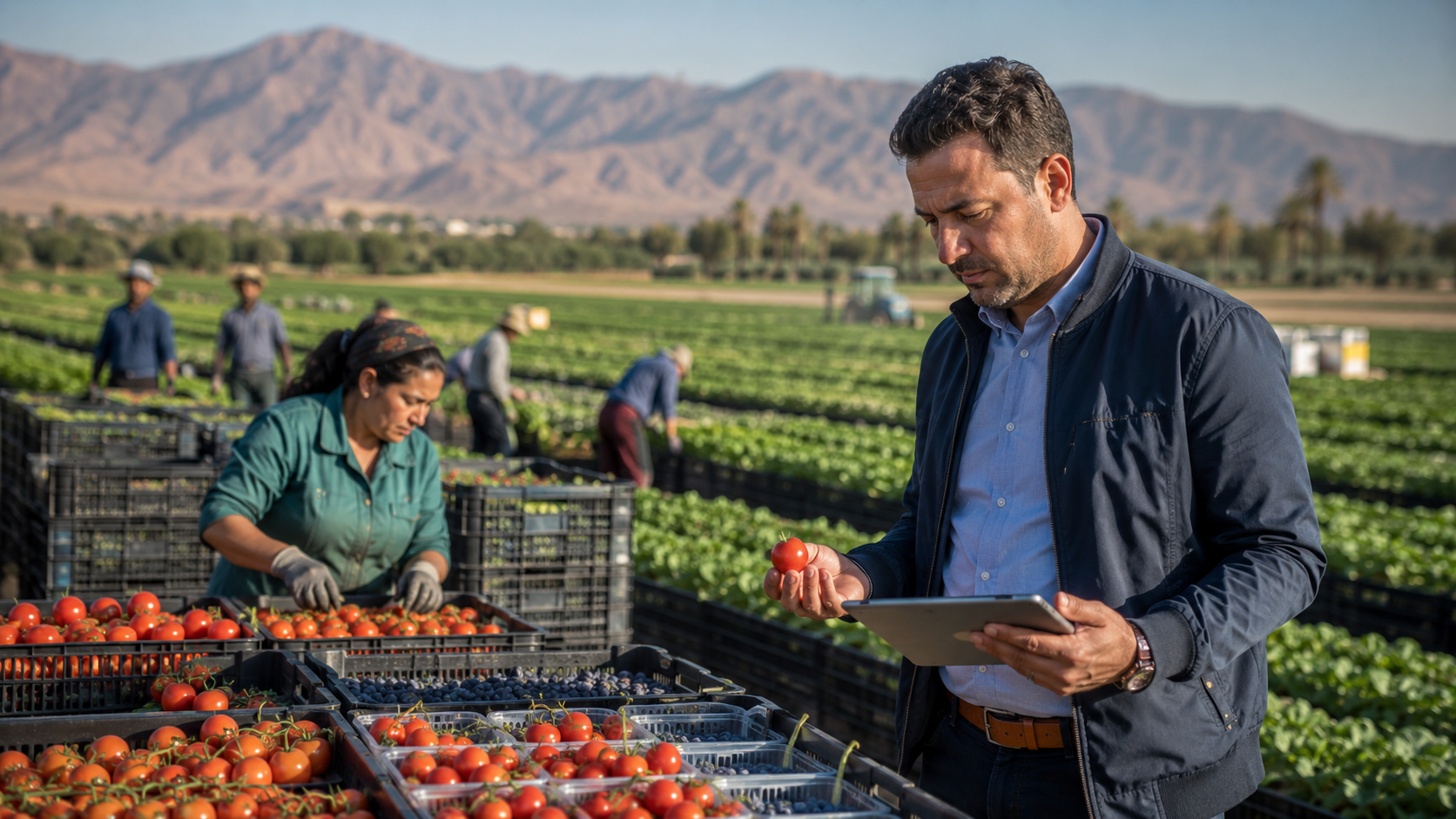
Agricultural water is often measured only by volume.
But one cubic metre can create very different outcomes depending on how it is used.
It may produce a basic food consumed by Moroccan households.
It may support a high-value export crop.
It may create employment across farming, packaging and processing.
It may sustain a rural community with few alternative sources of income.
It may also produce a low-margin crop in a region where water is already structurally scarce.
These uses should not be treated as economically identical.
Morocco needs a clearer method for measuring the value created by agricultural water.
That assessment should include more than the final selling price.
Export revenue matters.
Employment matters.
Food security matters.
Rural stability matters.
Processing potential matters.
The cost of replacing depleted groundwater also matters.
A product generating strong export revenue may appear highly valuable until its full water, energy and environmental costs are considered.
Another product may generate lower revenue but play an essential role in domestic food supply.
Water policy must recognise both commercial value and strategic value.
Export Revenue Is Not The Only Measure
Morocco has built a successful agricultural export sector.
Fresh produce reaches European and other international markets, creating foreign-currency earnings, employment and business opportunities.
This achievement should be protected.
But export performance should not prevent a more difficult discussion about water allocation.
A product can be profitable for the exporter while placing a larger cost on the region that supplies the water.
Groundwater depletion may affect households, small farmers and future investors.
Public infrastructure may be required to replace the water through desalination or transfers.
Energy may be needed to pump it over longer distances.
The economic return must therefore be assessed across the entire system.
Who receives the revenue?
Who carries the water risk?
Who finances the replacement infrastructure?
Who absorbs the loss when wells become deeper or reservoirs decline?
The objective is not to argue that Morocco should stop exporting food.
It is to ensure that exported agricultural value exceeds the full national cost of producing it.
Food Security Requires Strategic Priorities
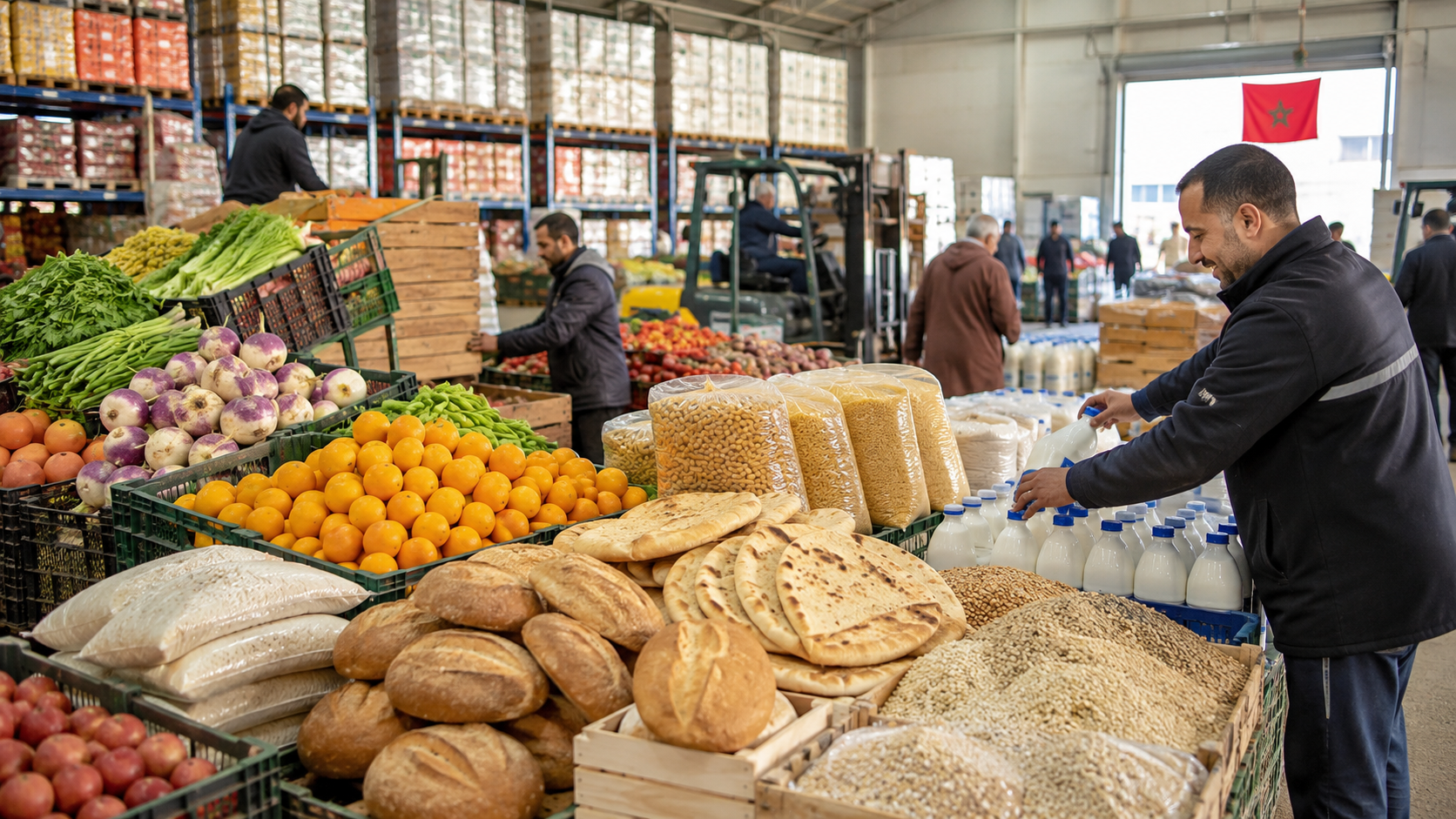
Water allocation cannot be based only on the highest immediate market price.
Morocco also needs reliable domestic food supplies.
Cereals, vegetables, dairy, meat, fruit and cooking essentials all contribute differently to household security.
Some products can be imported relatively easily when domestic production declines.
Others are more vulnerable to global prices, trade restrictions or transport disruption.
The country must therefore identify which agricultural activities are strategically important to maintain domestically.
This does not mean attempting complete food self-sufficiency.
Producing every food locally would be economically unrealistic and potentially wasteful.
It means understanding where dependence becomes dangerous.
Water should support domestic production where it provides meaningful protection against international volatility.
At the same time, imports can preserve scarce water when foreign production is more efficient and supply relationships are reliable.
Food security is not achieved by producing everything.
It is achieved by managing production, imports, storage and distribution as one system.
Regional Water Reality Must Shape Crop Policy
Morocco’s national reservoir figure hides major regional differences.
Northern and western basins currently have far stronger reserves than parts of the south and southeast.
Agricultural policy should reflect those differences.
A crop that is sustainable in a relatively water-secure basin may be inappropriate in a region dependent on overused groundwater.
National rules can provide broad standards.
But allocation decisions must respond to local conditions.
How quickly is the aquifer declining?
How much water is naturally renewed?
What other users depend on the same source?
Can desalination or transferred water realistically support the region?
What employment alternatives exist if agricultural production changes?
A single national crop policy risks ignoring these realities.
Morocco needs basin-level agricultural strategies connecting water availability with crop choice, local employment and food-processing capacity.
The goal should not be to impose identical farming across the country.
It should be to match each region’s agricultural ambition with its real water balance.
Groundwater Should Carry A Real Economic Price
Surface water is visible.
Groundwater is easier to treat as unlimited because the decline occurs below the surface.
Farmers may continue pumping until wells become deeper, electricity costs rise or the aquifer deteriorates.
By then, much of the reserve may already have been lost.
Cheap or uncontrolled extraction creates a distorted price.
A crop can appear profitable because the producer is not paying the full replacement cost of the water.
Future communities, taxpayers and public infrastructure eventually carry that cost.
Groundwater therefore needs stronger measurement and governance.
Extraction should be monitored.
New wells should reflect basin capacity.
Illegal pumping should face credible enforcement.
Large users should know how much they consume.
But pricing reform must be introduced carefully.
Small farmers cannot absorb abrupt cost increases without alternatives.
Support should include efficient irrigation, crop-transition finance, technical advice and access to stronger markets.
The objective is not to punish agricultural producers.
It is to prevent a resource shared by entire regions from becoming economically invisible.
Drip Irrigation Is Necessary But Not Sufficient
Morocco has invested heavily in modern irrigation.
Drip systems can deliver water closer to plant roots and reduce losses compared with less controlled methods.
This is valuable.
But technical efficiency does not automatically reduce total consumption.
A farmer who uses less water per hectare may expand the number of irrigated hectares.
A higher-value crop may encourage more intensive production.
Water saved at field level can therefore be consumed elsewhere within the same operation.
This is sometimes described as a rebound effect.
The lesson is not that efficient irrigation has failed.
It is that efficiency must be connected to clear allocation limits.
Morocco should measure both water used per hectare and total water extracted from the basin.
The first indicator shows technical performance.
The second shows whether the resource is actually being protected.
Agricultural modernisation should aim to produce more value within a fixed water budget, not merely allow unlimited expansion with more efficient equipment.
The Food-Processing Sector Changes The Equation
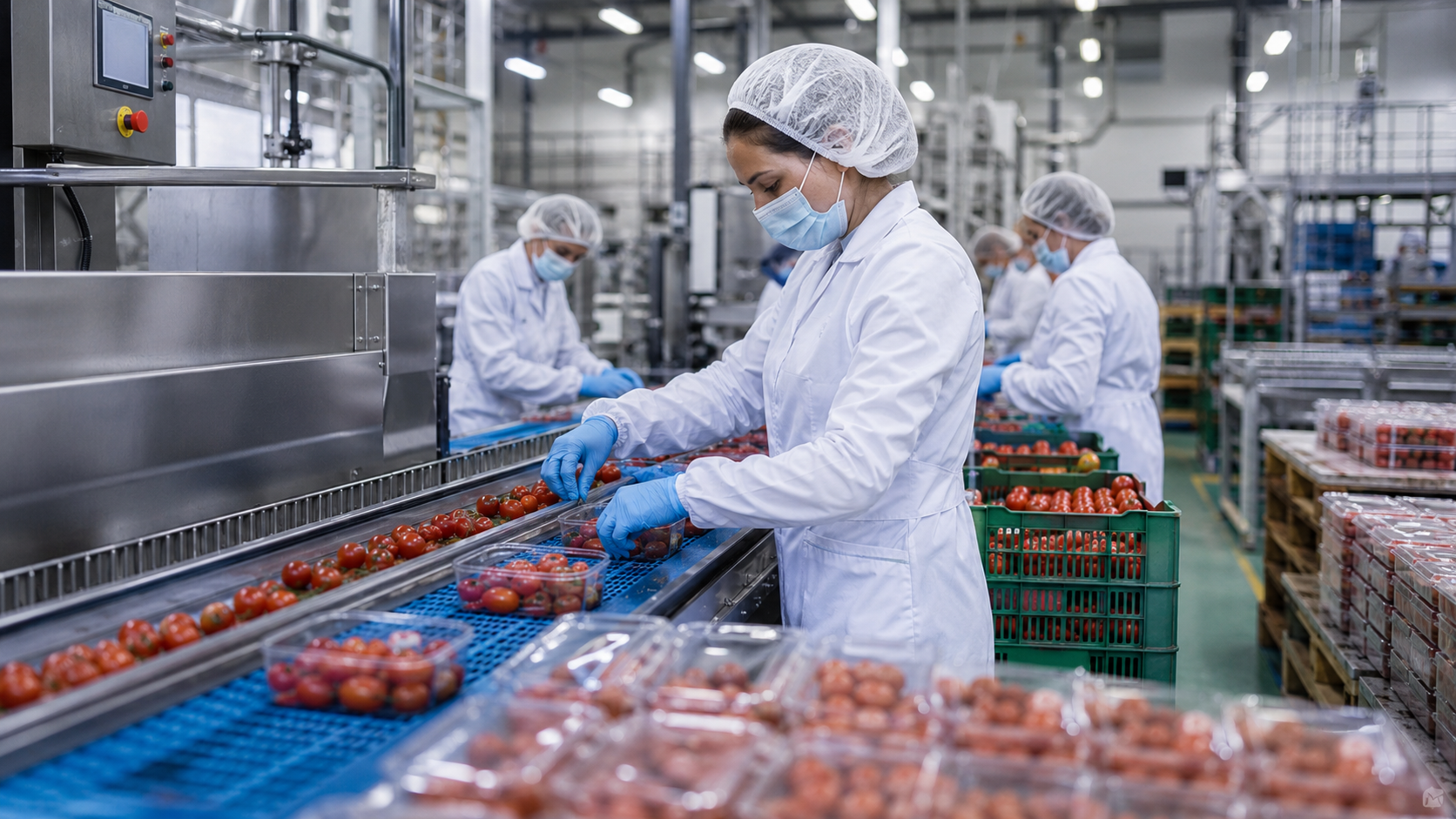
Raw agricultural production is only one part of the economic value chain.
Processing can create greater revenue without requiring an equivalent increase in farming volume.
Tomatoes can become sauces and prepared products.
Fruit can become juice, preserves or specialised ingredients.
Milk can become cheese and other higher-value dairy products.
Agricultural by-products can become animal feed, energy or industrial inputs.
Processing creates jobs in packaging, quality control, logistics, marketing and distribution.
It can also reduce waste and extend shelf life.
This matters for water economics.
When Morocco exports a raw product, much of the potential downstream value may be created elsewhere.
When the product is processed domestically, more value is retained from the same agricultural water.
The next phase of food strategy should therefore focus not only on increasing production.
It should focus on increasing the value captured from existing production.
Every cubic metre becomes more productive when the final product includes Moroccan processing, branding and distribution.
Post-Harvest Loss Weakens Water Productivity
Food that is produced but never consumed represents wasted water.
The loss includes irrigation, energy, labour, fertiliser and transport.
Weak cold storage, poor packaging, delayed logistics and inefficient wholesale markets can destroy value after the most water-intensive stage has already occurred.
Reducing post-harvest loss may therefore produce better returns than expanding cultivated area.
A tonne of fruit preserved through better logistics creates additional marketable supply without using additional farmland or irrigation.
This is one of the clearest opportunities in Morocco’s food system.
Cold rooms.
Refrigerated transport.
Modern packing stations.
Digital coordination.
Improved wholesale markets.
Better demand forecasting.
These investments protect the water already embedded in food.
Agricultural productivity should not be measured only at the farm gate.
It should be measured by how much saleable food reaches the final consumer.
Farmers Need A Profitable Transition
Crop reform cannot succeed if it requires farmers to absorb all the risk.
A producer does not choose a crop based only on water consumption.
The decision depends on price, buyer demand, available knowledge, equipment, labour and access to finance.
A lower-water crop may be environmentally attractive but commercially uncertain.
Farmers may not know who will purchase it.
Processing facilities may not exist.
Export standards may be unclear.
Banks may hesitate to finance the transition.
Public policy must therefore create a complete commercial pathway.
Research institutions can identify suitable crops.
Training programmes can support production.
Buyers can provide offtake agreements.
Banks can finance equipment.
Insurers can reduce climate risk.
Food processors can create stable demand.
The transition must lead towards better income, not simply lower consumption.
Water reform becomes politically sustainable when farmers can see a credible future inside it.
Agricultural Subsidies Should Reward Outcomes
Public support influences what farmers produce and how they invest.
Subsidies can encourage irrigation equipment, machinery, planting and regional expansion.
The next generation of support should place greater emphasis on measurable outcomes.
How much water is saved across the basin?
How much employment is created?
How much processing occurs locally?
Does the crop support domestic food security?
Are groundwater levels stabilising?
Are small farmers benefiting?
Support should not depend only on the purchase of equipment.
A modern irrigation system is useful, but the objective is improved resource performance.
Subsidies can gradually reward producers who demonstrate stronger water productivity, traceability and soil protection.
This must remain administratively realistic.
Small farmers should not face complex reporting requirements designed for large agricultural companies.
Digital tools, cooperatives and local advisory services can help collect information without creating excessive bureaucracy.
Retail Prices Must Reflect The Transition
Changing agricultural production can affect food prices.
This cannot be ignored.
If water restrictions reduce the supply of important domestic products, households may face higher costs.
Imports can fill part of the gap, but international markets are also volatile.
Water reform must therefore be coordinated with consumer policy.
Strategic reserves can reduce sudden shortages.
Import schedules can respond earlier to expected production gaps.
Targeted assistance can protect vulnerable households.
Competition and distribution reform can prevent unnecessary price increases between farm and retail.
Consumers should not carry avoidable costs created by weak logistics or market concentration.
At the same time, extremely cheap food can hide environmental costs that reappear later through taxes, infrastructure spending or scarcity.
The goal is not to make food expensive.
It is to make the system honest about where costs are created and who pays them.
Desalinated Water Changes The Calculation
Morocco is expanding desalination to strengthen water security in coastal cities and agricultural regions.
This will create new possibilities.
Water produced independently from rainfall can protect urban supply and reduce pressure on reservoirs.
In some regions, it may also support high-value agriculture.
But desalinated water is not free.
Plants require capital, electricity, maintenance and distribution infrastructure.
The cost may be commercially viable for products generating substantial value.
It is far more difficult to justify for lower-value crops.
This creates a clearer economic test.
Which agricultural products can support the true cost of reliable water?
Which products require large public subsidies?
Which uses create enough employment, export income or food security to justify that support?
Desalination can increase supply.
It should also encourage more transparent water economics.
The country should avoid replacing invisible groundwater depletion with permanently subsidised high-cost production unless the wider national value is clear.
Contracts Can Improve Water Discipline
Agricultural buyers influence production decisions.
Exporters, supermarkets and food processors can help create a more efficient system through procurement contracts.
A long-term buyer can require traceability and water standards.
It can support farmers with technical assistance.
It can guarantee demand for alternative crops.
It can share the cost of certification and monitoring.
This approach connects sustainability with commercial access.
Farmers are more likely to change production when stronger practices lead to better contracts, stable prices or premium markets.
International buyers are also facing greater pressure to understand environmental risks within their supply chains.
Morocco can use this shift strategically.
Products demonstrating responsible water use may gain stronger market positioning.
Water efficiency can become part of Morocco’s export reputation rather than merely a domestic restriction.
Better Data Can End The False Debate
Discussions about agricultural water often become overly simple.
Exports are blamed.
Farmers defend employment.
Cities demand priority.
Consumers fear higher prices.
Each concern contains part of the truth.
Better data can create a more useful debate.
Morocco needs to know how much water each major crop consumes by region.
It needs to measure revenue, employment and domestic food value.
It needs to track groundwater decline and the cost of replacement supply.
It needs to distinguish between efficient producers and structurally unsustainable production.
This information should guide policy without exposing individual commercial data unnecessarily.
The objective is not to create a public ranking that labels crops as good or bad.
It is to understand trade-offs.
A crop may be highly valuable in one basin and inappropriate in another.
A product may justify its water use when processed domestically but create limited value when exported raw.
Agricultural strategy becomes stronger when decisions reflect this level of detail.
The Recovery Creates Time To Reprice Risk
When reservoirs are near crisis levels, agricultural policy becomes emergency management.
Restrictions must be imposed quickly.
Farmers face uncertainty.
Cities and agriculture compete for supply.
Public debate becomes more confrontational.
The current recovery creates a better environment for reform.
Morocco can introduce changes gradually.
Farmers can adjust before the next shortage.
Investments can be redirected.
Processing and logistics capacity can be expanded.
Regional water budgets can become clearer.
Support programmes can reward transition rather than emergency survival.
This window will not remain open indefinitely.
Summer demand is already reducing reserves.
Future rainfall cannot be guaranteed.
The correct time to reform water-intensive food production is not when the system has reached its limit.
It is when enough water remains to make change manageable.
Morocco Must Produce More Value, Not Simply More Volume
Agricultural success has often been presented through hectares planted, tonnes harvested and export revenue generated.
These indicators remain important.
But water scarcity requires another measure.
Value per cubic metre.
That value should include income, employment, food security, processing and long-term resource protection.
Morocco does not need to abandon agricultural ambition.
It needs to redefine it.
The strongest agricultural economy will not necessarily be the one producing the largest physical volume.
It will be the one generating the greatest national value from a limited and unpredictable resource.
Reservoirs above 70% provide welcome relief.
They do not remove the water question.
They make it possible to answer that question before the next crisis does it for Morocco.