
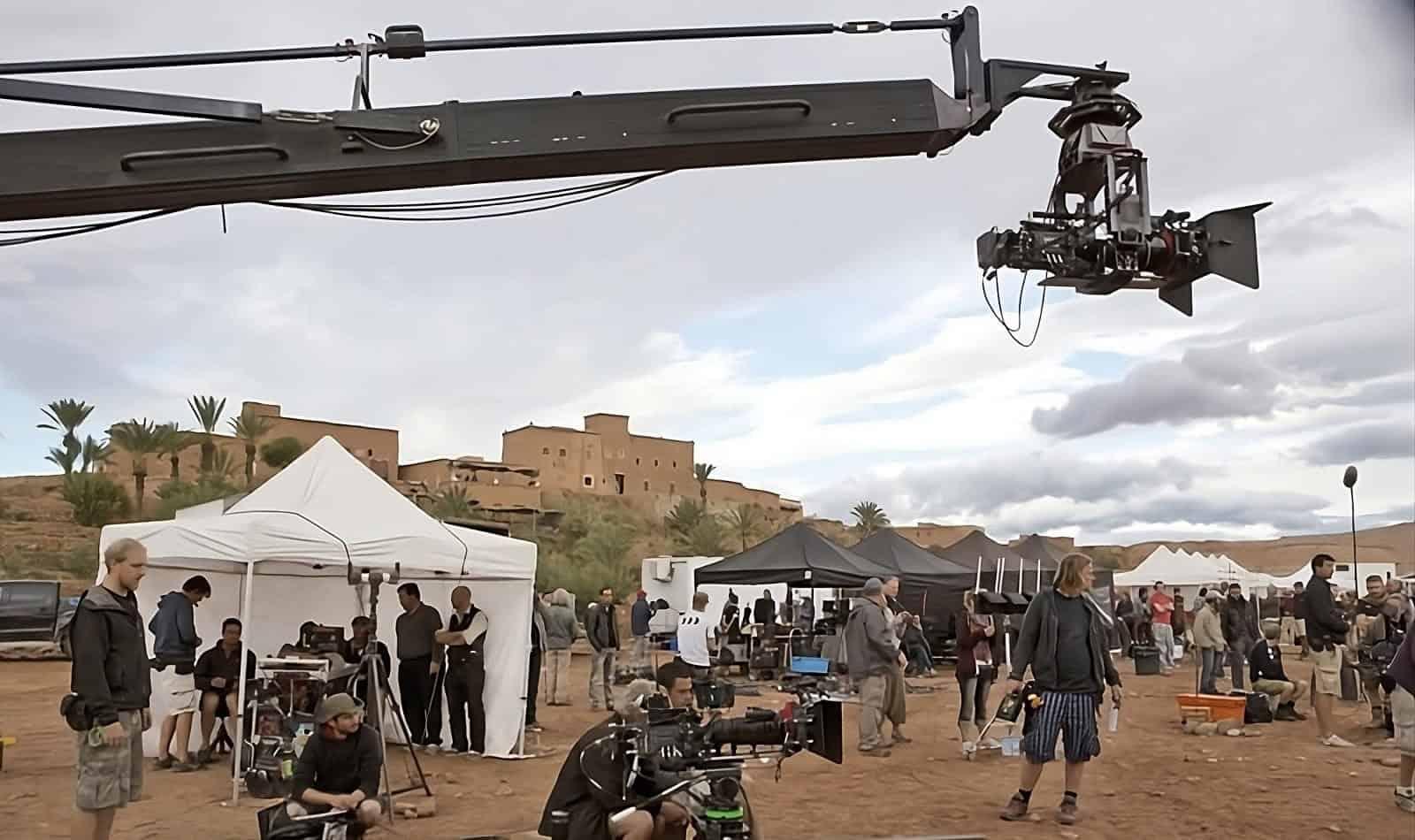
Morocco’s film industry is beginning to look less like a cultural niche and more like a serious investment economy.
Figures released in late July show that cinema-related investment in Morocco reached nearly 1.8 billion dirhams in 2025.
International productions accounted for approximately 1.21 billion dirhams, while Moroccan productions represented close to 596.5 million dirhams.
Domestic cinema also produced 26 fiction feature films, while Moroccan theatres sold roughly 2.19 million tickets and generated close to 130 million dirhams in box-office revenue.
Those numbers matter because they reveal two different businesses developing at the same time.
Morocco is a production destination for international film companies.
It is also building its own domestic cinema market.
The next challenge is connecting both.
Morocco should not only attract films to shoot in the country.
It should use that activity to build studios, technicians, post-production companies, intellectual property and distribution businesses capable of generating value long after an international production leaves.
Foreign Productions Are Already An Export Industry
When an international production films in Morocco, the finished movie may eventually be sold around the world.
But much of the spending occurs locally before audiences see anything.
Hotels.
Transport.
Construction.
Security.
Catering.
Equipment rental.
Local crews.
Extras.
Location services.
Production offices.
That makes filmmaking a form of services export.
The international customer comes to Morocco and purchases Moroccan labour, infrastructure and expertise.
More than 1.2 billion dirhams in foreign-production investment during 2025 demonstrates how significant this activity has become.
The question now is how much more of every production budget Morocco can retain.
Locations Are No Longer Enough
Morocco has long benefited from extraordinary filming locations.
Desert.
Mountains.
Medinas.
Atlantic coastline.
Modern cities.
Architecture capable of representing several countries and historical periods.
That flexibility remains valuable.
But international productions can choose between many filming destinations.
Countries increasingly compete through complete production ecosystems.
Studios.
Tax incentives.
Experienced crews.
Equipment.
Post-production.
Visual effects.
Legal support.
Fast permitting.
Accommodation.
Reliable logistics.
Morocco therefore cannot depend indefinitely on landscapes.
The strongest destination is the one where producers can complete more of the project without leaving the country.
Studios Can Capture More Of The Budget
Purpose-built studio capacity creates a different economic model from location filming.
Sets can remain standing.
Sound stages allow controlled production.
Weather becomes less important.
Equipment can remain onsite.
Several projects can operate through the same infrastructure.
Morocco already has internationally recognised production facilities, particularly around Ouarzazate.
New projects, including the planned Argan Studios near Rabat, show that investors see room for additional high-standard capacity.
The strategic question should be utilisation.
A large studio creates value only when productions use it consistently.
Morocco therefore needs enough international and domestic demand to keep facilities active throughout the year rather than only during occasional major shoots.
Post-Production Is The Missing Value Layer
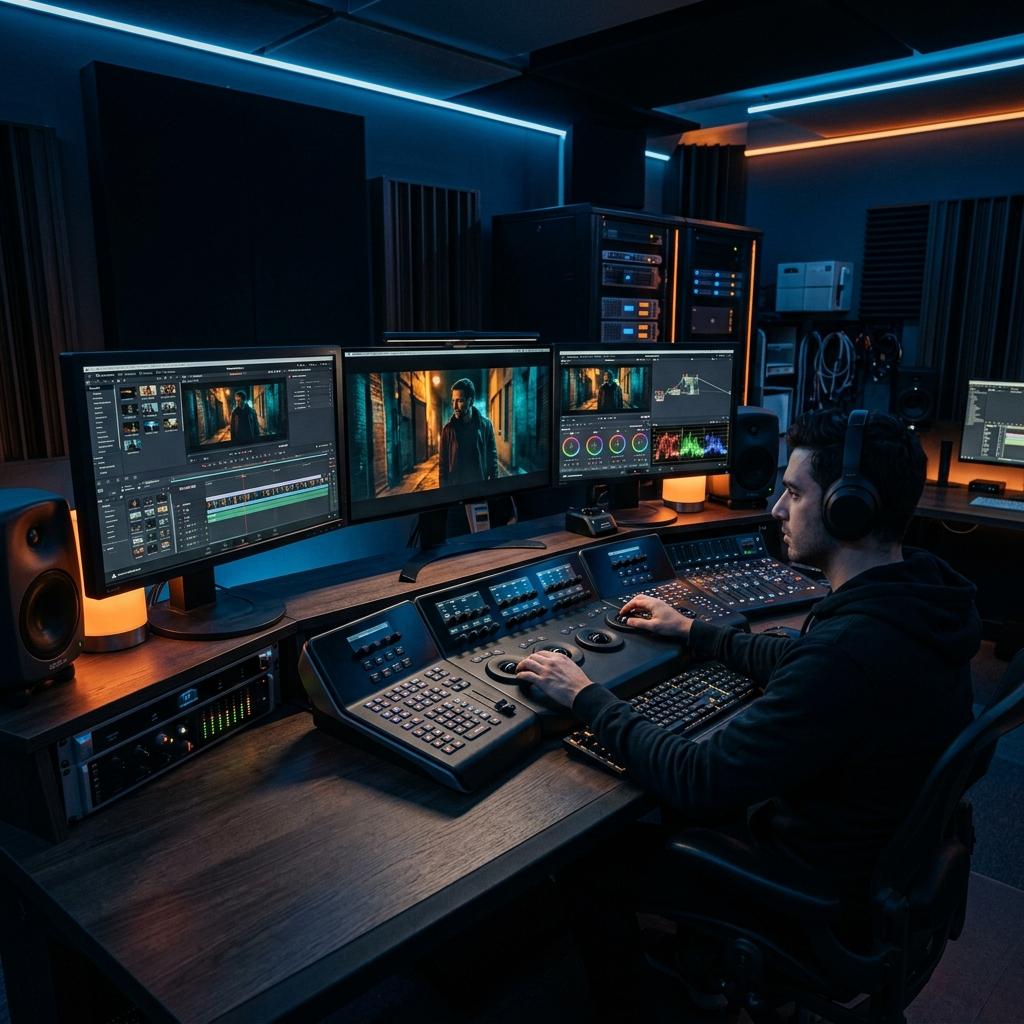
Filming is only one stage of creating a movie or television series.
After production comes editing.
Sound design.
Colour grading.
Visual effects.
Music.
Subtitling.
Dubbing.
Graphics.
Data management.
These activities can represent substantial spending and highly skilled employment.
They also do not require the same physical locations that attract productions initially.
A project filmed in Morocco can still complete much of its post-production in London, Los Angeles, Paris or elsewhere.
That means part of the value chain leaves the country.
Building stronger Moroccan post-production companies would help retain more of it.
This may be one of the most important next steps for the industry.
Technicians Are The Real Competitive Advantage

Studios can be built.
Experienced crews take years.
Production managers.
Camera teams.
Lighting technicians.
Sound specialists.
Set designers.
Costume departments.
Stunt professionals.
Location managers.
Editors.
Morocco already possesses considerable experience because international productions have worked in the country for decades.
The objective should now be to deepen that workforce.
A technician who works repeatedly on large productions develops knowledge that cannot be imported instantly by a competing destination.
This creates a form of industrial protection.
The more skilled the local workforce becomes, the more expensive and difficult it becomes for productions to recreate the same ecosystem elsewhere.
Human capability becomes the destination advantage.
Training Must Follow The Actual Production Pipeline
Film education can become disconnected from commercial demand.
Students may learn theory while production companies struggle to find specific technical skills.
Training should therefore be linked directly with the needs of active sets and studios.
Lighting.
Production accounting.
Grip work.
Digital asset management.
Costume continuity.
Visual effects.
Safety.
Assistant directing.
These professions may receive less public attention than directing or acting.
They are essential to an industry.
Morocco needs not only more filmmakers.
It needs more specialists capable of making other people’s films possible.
Apprenticeship on international productions can be particularly valuable because students learn under real deadlines and global standards.
Domestic Cinema Is Becoming More Commercial
Moroccan productions invested close to 600 million dirhams in 2025.
That is important because a domestic film industry cannot depend entirely on foreign shoots.
International productions may move between countries depending on incentives, exchange rates and creative requirements.
Local production provides another demand base.
Moroccan films also performed strongly at the domestic box office in 2025.
Several local titles ranked among the year’s most watched films.
This suggests audiences are willing to pay for Moroccan stories when the product and distribution are strong enough.
That creates the foundation for a more commercially sustainable national industry.
Box Office Is Still Small Relative To Production Investment

Moroccan cinemas generated nearly 130 million dirhams from approximately 2.19 million ticket sales in 2025.
The number is encouraging.
It also reveals the scale of the opportunity still available.
A country of Morocco’s population can support a much larger theatrical market if cinema access expands.
More screens.
Better geographic distribution.
Stronger programming.
Affordable pricing.
Modern theatres.
Marketing.
Many Moroccans still live far from a contemporary cinema complex.
That limits the market before the film is even released.
Growing the screen network can therefore support producers as much as exhibitors.
A film is easier to finance when the domestic commercial market becomes larger.
Moroccan Films Need Stronger Distribution
Producing a film is not enough.
Audiences need to know it exists.
Marketing budgets matter.
Cinema scheduling matters.
Trailers.
Interviews.
Premieres.
Digital content.
The strongest Moroccan films should receive release campaigns comparable in professionalism to imported productions.
A good film disappearing after one weak opening weekend represents wasted intellectual property.
Distribution companies need better audience data and more sophisticated release strategies.
Some films may perform strongly in Casablanca.
Others may have deeper regional appeal.
Diaspora markets may create additional revenue.
The distribution plan should therefore begin before production is completed.
Streaming Can Extend The Revenue Window
Cinema is only the first commercial window.
A Moroccan production can later move into streaming, television, airlines and international markets.
Each stage can generate additional revenue.
This makes rights ownership extremely important.
Producers need to understand precisely which rights they control.
Domestic theatrical rights.
International sales.
Streaming.
Television.
Remakes.
Music.
Merchandising.
A successful film can become much more valuable than its first box-office result.
Moroccan production companies should therefore think increasingly like intellectual-property businesses rather than temporary project vehicles.
The Diaspora Is A Natural Audience
Moroccan stories have potential audiences far beyond Morocco.
France.
Belgium.
The Netherlands.
Spain.
Canada.
Other diaspora markets.
These viewers may already understand Moroccan language, humour and culture.
Younger generations may also be searching for contemporary content connected with their heritage.
Digital distribution lowers the cost of reaching them.
A Moroccan film can have a domestic theatrical release, followed by selected European screenings and global streaming.
The diaspora can therefore increase the addressable market substantially.
It should be included in the commercial plan from the beginning rather than treated as an afterthought.
Cinema Tourism Can Multiply The Value
International films shot in Morocco create another opportunity.
Audiences may recognise the location later and want to visit it.
Ouarzazate has already benefited from its association with international cinema.
Other regions can build similar experiences.
Studio tours.
Location routes.
Film museums.
Behind-the-scenes exhibitions.
Festival events.
Tourism products linked to famous productions.
This converts a one-time film shoot into continuing visitor demand.
The challenge is presenting the connection professionally.
A location should not depend only on visitors already knowing a film was shot there.
The story needs to be visible and easy to experience.
Morocco Should Produce More Original IP
The largest long-term value will come when Moroccan companies own content capable of travelling internationally.
A production services company earns money while filming.
An IP owner can continue earning from the same story for years.
Streaming rights.
International distribution.
Adaptations.
Sequels.
Licensing.
Morocco therefore needs both industries.
World-class service companies attracting international productions.
Strong local producers developing original Moroccan stories.
The first brings foreign investment and skills.
The second creates assets that remain Moroccan.
Combining both is much more powerful than choosing between them.
Public Support Should Create Commercial Capability
Morocco allocated more than 73 million dirhams through its film-production support mechanisms in 2025.
Public funding can help culturally important projects reach production.
But the wider objective should include industry development.
Did the film build skills?
Did it reach audiences?
Did it travel internationally?
Did the production company become stronger?
Did intellectual property remain exploitable?
Not every film needs to become a blockbuster.
Cinema has cultural value beyond direct financial returns.
But a growing industry also needs companies capable of surviving commercially between individual projects.
Support should help build that capacity.
Morocco Has To Compete For Productions
The 1.8 billion dirham figure is strong.
It is not guaranteed to repeat automatically.
Other countries are expanding film incentives and production infrastructure.
Saudi Arabia.
Spain.
Eastern Europe.
The United Kingdom.
Several Mediterranean markets.
Large productions compare incentives, crews, infrastructure and logistics carefully.
Morocco therefore needs consistent competitiveness.
Permits should remain efficient.
Incentives predictable.
Customs processes practical.
Technical crews available.
Studios reliable.
International producers should leave Morocco believing that the next production will be easier because of the experience gained on the previous one.
Reputation compounds.
So does frustration.
1.8 Billion Dirhams Changes The Conversation
Morocco’s cinema economy is reaching a point where it deserves to be discussed like aerospace, tourism or other export-oriented industries.
Nearly 1.8 billion dirhams of cinema-related investment entered the sector in 2025.
International productions contributed the majority.
Moroccan producers generated almost 600 million dirhams themselves.
Domestic films attracted meaningful audiences.
The country has crews, locations, studios and international recognition.
The next phase must connect these assets more deeply.
More post-production.
More specialised technicians.
More screens.
Better distribution.
Stronger Moroccan intellectual property.
More diaspora reach.
More cinema tourism.
The goal should not simply be that the world continues coming to Morocco to shoot films.
It should be that increasingly, when those productions leave, more of the expertise, companies and long-term value stay behind.