
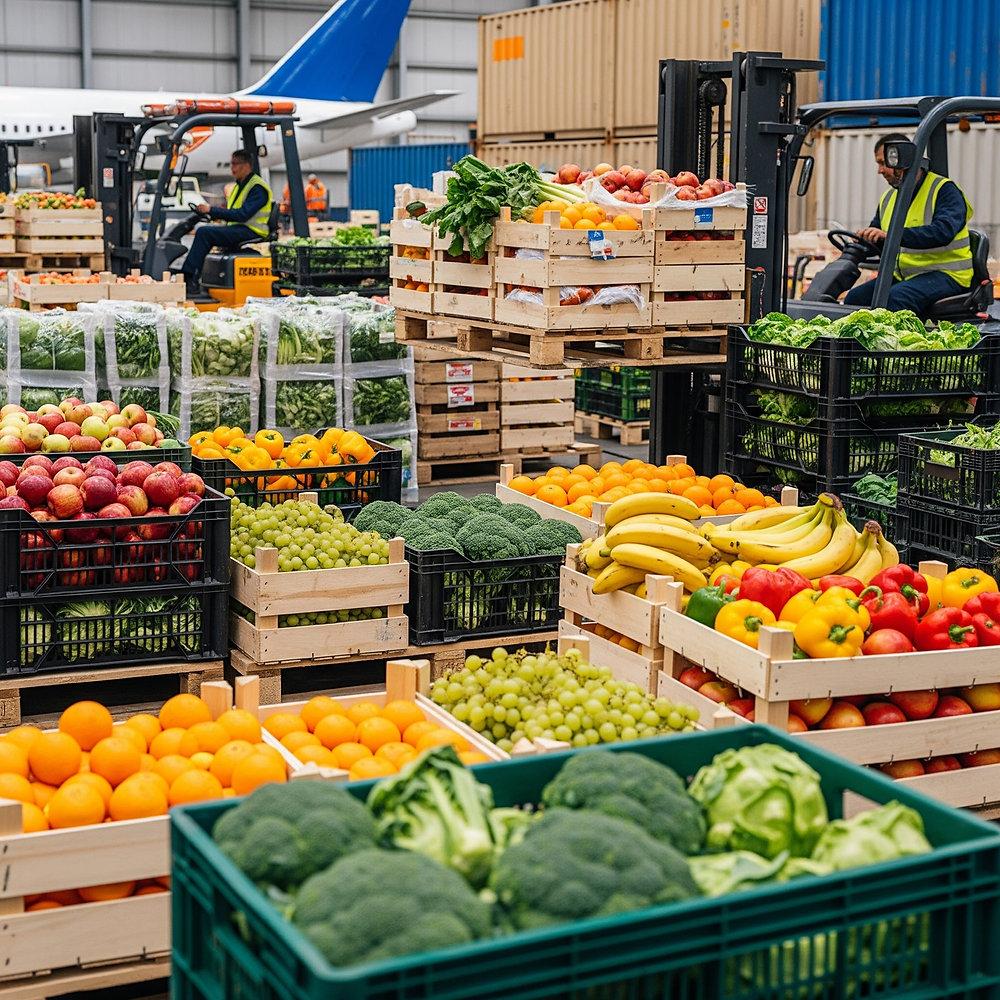
Morocco’s food-export story has reached a different scale.
Agri-food exports generated 86.2 billion dirhams in 2025, up from nearly 62 billion dirhams in 2020.
That represents growth of approximately 38% in five years.
Export volumes reached 4.7 million tonnes, increasing 9% from 2020 and almost 49% compared with 2015. The sector now represents close to 18% of Morocco’s total exports and ranks as the country’s third-largest source of foreign-currency earnings.
Those numbers confirm that Moroccan agriculture and food production have become major export businesses.
But they also create a new question.
Once a country can export 86.2 billion dirhams of food, the next objective should not simply be exporting more tonnes.
It should be capturing more value from every tonne.
Volume Has Already Proven The Model
Morocco no longer needs to prove that international customers will buy its food products.
They already do.
Fresh produce.
Citrus.
Vegetables.
Processed food.
Seafood.
Olive products.
Ingredients.
Packaged products.
The export infrastructure exists.
Producers understand international standards.
Logistics routes connect Morocco with European and increasingly wider international markets.
Morocco Foodex has also developed systems around technical control, market intelligence, regulation and exporter support.
The strategic opportunity now sits further along the value chain.
Processing.
Packaging.
Branding.
Distribution.
Retail access.
These activities determine how much of the final customer price remains with Moroccan companies.
38% Value Growth Is Stronger Than Volume Growth
The difference between export value and export volume is particularly interesting.
Since 2020, agri-food export value increased approximately 38%, while volume increased only about 9%.
That suggests Morocco is already generating considerably more value from its export base.
Part of the difference can naturally come from global prices, product mix and inflation.
But it also demonstrates why tonnage alone is an incomplete measurement of success.
A tonne of raw agricultural produce and a tonne of processed, branded consumer products can generate very different revenue.
The stronger Moroccan agribusiness becomes, the less important simple volume growth should become.
The objective is not to move the maximum amount of food through ports.
It is to maximise the economic value created before that food leaves Morocco.
Processing Is The First Value Upgrade
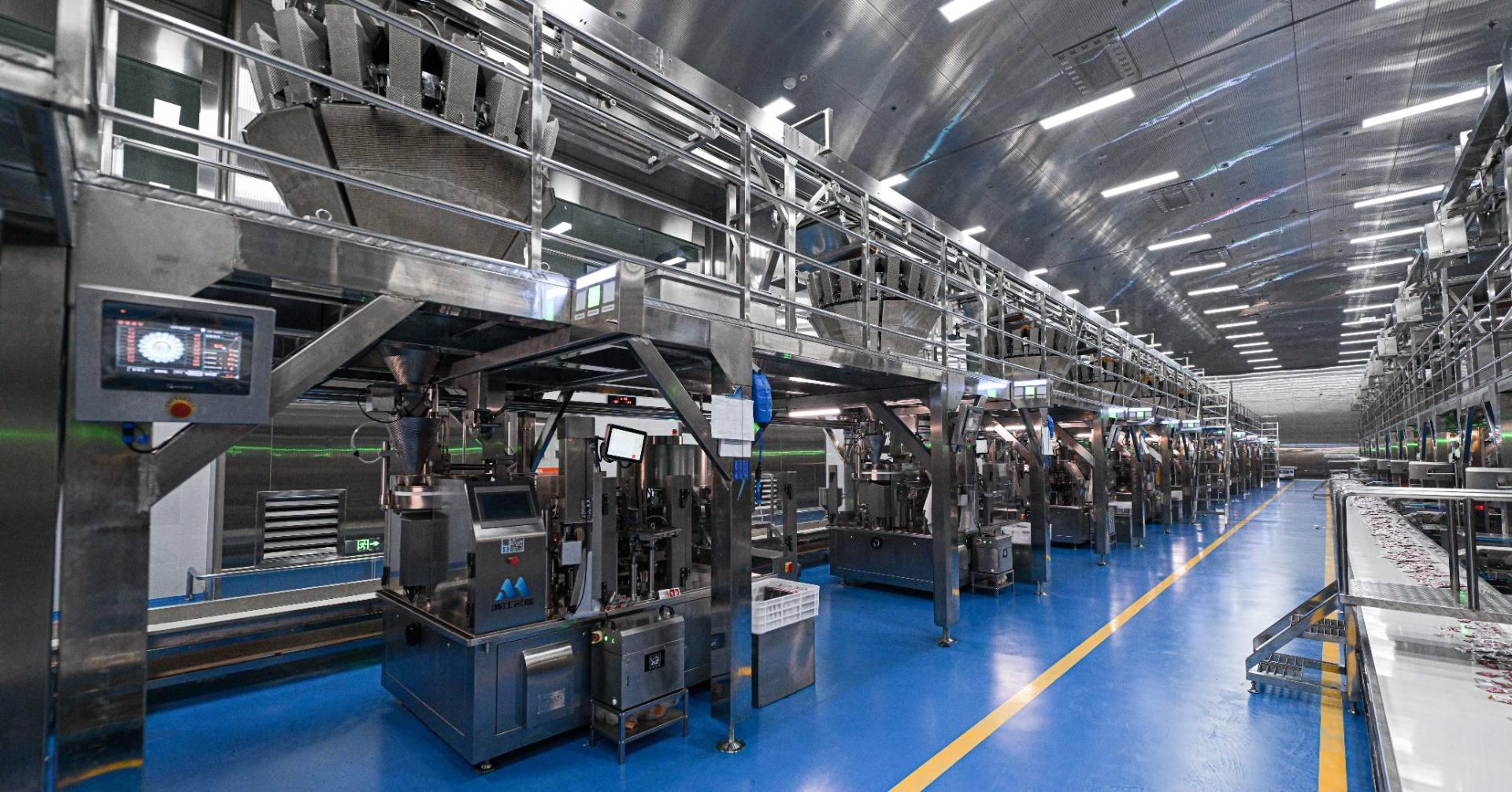
A tomato can be exported fresh.
It can also become sauce.
Paste.
Prepared food.
An ingredient.
A branded retail product.
Each additional transformation stage can create industrial activity.
Factories.
Packaging.
Quality laboratories.
Maintenance.
Engineering.
Logistics.
Marketing.
Morocco already has a substantial agricultural base.
Expanding food processing allows that agricultural advantage to support a much larger industrial economy.
This matters especially for products where fresh exports face seasonal pressure or strict shelf-life constraints.
Processing can extend commercial life and open different markets.
The export conversation therefore needs to connect agriculture more systematically with manufacturing.
Moroccan Brands Need To Travel With The Product
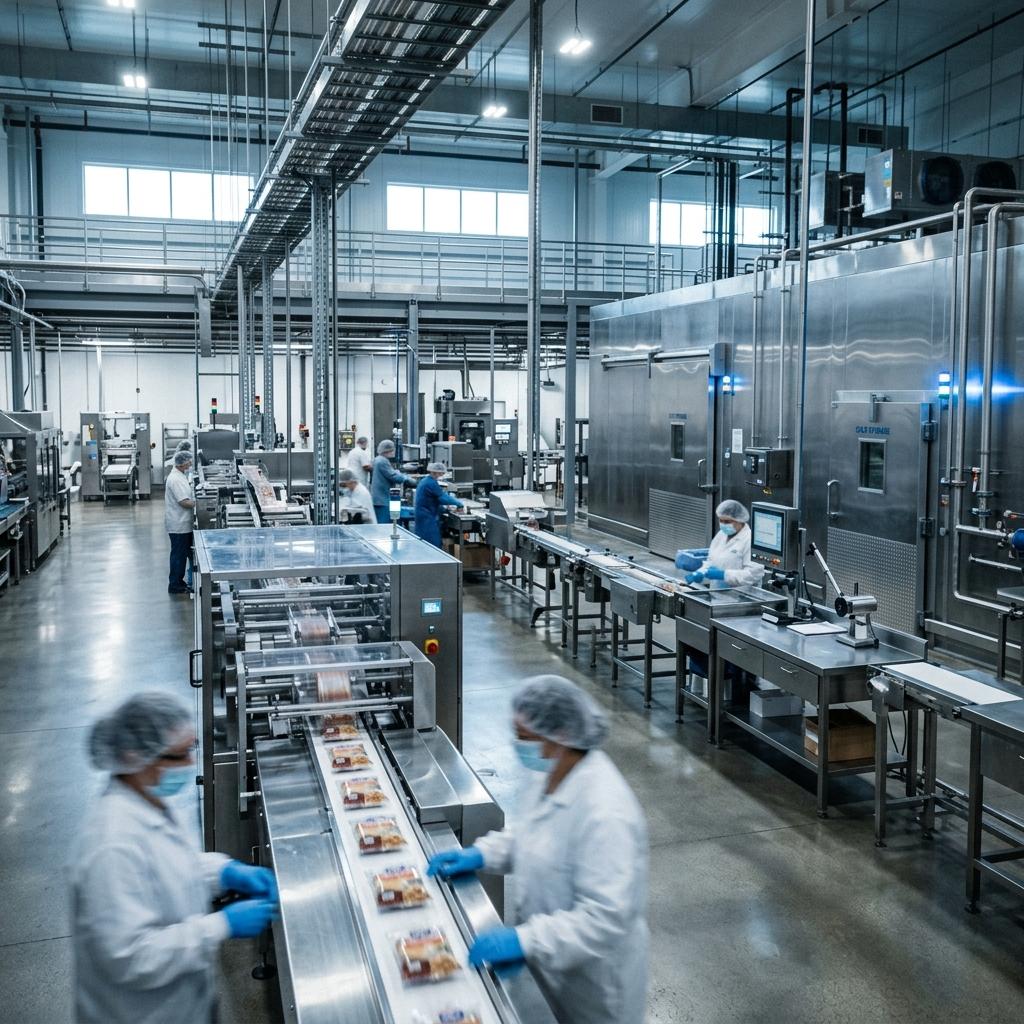
There is a major difference between exporting Moroccan food and exporting a Moroccan brand.
When a product is sold internationally under somebody else’s label, Morocco captures production value.
When the Moroccan company owns the brand, it can potentially capture something more.
Customer loyalty.
Pricing power.
Marketing value.
Retail relationships.
Intellectual property.
That is where companies can become much more valuable.
Morocco already has food businesses with the scale and industrial capability to think beyond manufacturing contracts.
The next generation of exporters should increasingly ask:
Can the customer in Paris, Brussels, London, Dubai or Abidjan recognise the Moroccan brand on the shelf?
Brand ownership is one of the clearest ways to move from exporter to multinational consumer business.
Supermarket Shelves Are The Real Battleground
Producing food is only the beginning.
International retail distribution is difficult.
Shelf space is limited.
Large supermarket groups negotiate aggressively.
Products need reliable supply.
Packaging must comply with regulation.
Promotional budgets matter.
Consumer recognition matters.
A Moroccan company may therefore manufacture an excellent product and still struggle to achieve meaningful international retail penetration.
This is where export support can evolve.
The next stage is not only helping companies cross borders.
It is helping them build durable positions after crossing them.
Retail partnerships.
Distributors.
E-commerce.
Diaspora-focused channels.
Food-service networks.
International exhibitions.
Local commercial teams.
The objective should be repeat sales rather than one-off export transactions.
The Diaspora Is Morocco’s Natural Test Market
Moroccan food companies have an advantage that many new exporters do not possess.
Millions of consumers abroad already know Moroccan flavours and products.
France.
Belgium.
The Netherlands.
Spain.
Germany.
Canada.
These markets provide a natural entry point.
Diaspora customers can create initial demand.
But the opportunity becomes much larger when products move beyond the diaspora aisle.
A Moroccan sauce, olive product, snack or prepared food should eventually compete because international customers like the product, not only because Moroccan customers recognise it.
That is how ethnic food becomes mainstream food.
Other cuisines have followed that path successfully.
Moroccan cuisine has enough international recognition to do the same.
Africa Could Become The Second Growth Engine
Europe remains crucial to Moroccan food exports.
Africa offers a different long-term opportunity.
Urban populations are expanding.
Modern retail is developing.
Food consumption is becoming more formalised and packaged.
Distribution infrastructure is improving.
Moroccan banks, logistics companies and other corporations already operate across several African markets.
Food companies can use part of that commercial ecosystem.
But Africa cannot be treated as a single market.
Consumer purchasing power differs.
Taste differs.
Regulation differs.
Distribution differs.
Local competition differs.
The companies that succeed will adapt formats, pricing and recipes rather than simply exporting the Moroccan domestic product unchanged.
Climate Pressure Makes Value More Important
The 2025 performance was achieved despite difficult agricultural conditions.
During the 2025-2026 citrus campaign, Morocco exported approximately 553,000 tonnes, compared with 626,000 tonnes during the comparable previous period, a decline of around 12% linked to extreme climatic conditions. Vegetable exports, including tomatoes, also faced pressure.
This makes the value strategy even more important.
Water is constrained.
Agricultural output can fluctuate.
Climate volatility will not disappear.
Morocco therefore cannot base its long-term export ambition only on continuously increasing agricultural volume.
Higher value per unit of water, land and product becomes strategically important.
Processing and branding are not merely commercial upgrades.
They can also improve the economics of constrained natural resources.
Export Growth Cannot Weaken The Domestic Market
Morocco Foodex’s 2026 board discussion also stressed the need to maintain a balance between exports and domestic supply.
That balance matters.
Strong foreign demand can raise producer revenues and generate foreign currency.
But Moroccan consumers also need reliable availability and acceptable prices.
Export success becomes politically and economically fragile when households believe domestic products are becoming inaccessible at home.
The strongest model therefore creates enough productivity and supply to serve both.
Better irrigation.
Higher agricultural yields.
Reduced post-harvest losses.
More efficient logistics.
Stronger processing capacity.
The solution should be increasing overall efficiency, not choosing permanently between domestic consumers and export markets.
Smaller Exporters Need A Route Into The Market
Morocco’s export growth should not remain concentrated among the largest companies.
Authorities have highlighted the importance of accompanying new exporters, including young entrepreneurs and start-ups.
That could become significant for specialised food categories.
Premium olive products.
Spices.
Natural ingredients.
Organic products.
Modern Moroccan snacks.
Healthy food.
Regional specialties.
Small companies may never export millions of tonnes.
They do not need to.
A high-margin niche brand can create considerable economic value from relatively small volumes.
Digital commerce also makes international market entry easier than it was twenty years ago.
The Moroccan food-export ecosystem should therefore support both industrial giants and ambitious specialist brands.
Packaging Can Increase Perceived Value
Food value is not determined only by what is inside the package.
Presentation influences price.
Design.
Convenience.
Size.
Materials.
Information.
Storytelling.
A premium product sold in weak packaging can lose value before the customer ever tastes it.
Morocco can therefore build an additional industrial ecosystem around packaging.
Glass.
Cartons.
Labels.
Flexible packaging.
Sustainable materials.
Design agencies.
Printing.
These suppliers benefit as Moroccan food companies become more sophisticated.
Packaging also communicates origin.
“Made in Morocco” should increasingly represent quality rather than simply production location.
Food Safety Is A Commercial Asset
International food markets impose increasingly demanding standards.
Traceability.
Residue limits.
Sanitary controls.
Labelling.
Certifications.
Supply-chain documentation.
These requirements can appear burdensome.
They also create a barrier protecting companies capable of meeting them.
Morocco Foodex’s role in technical control and regulatory monitoring therefore supports more than compliance.
It supports market access.
Once Moroccan exporters develop systems strong enough for demanding markets, that capability becomes part of the country’s competitive advantage.
Food safety is not only a regulatory cost.
It is market infrastructure.
86.2 Billion Dirhams Should Become A Platform
The biggest mistake would be treating the 86.2 billion dirham result as the end of the story.
It should become the base for the next one.
Morocco has demonstrated that its agricultural and food sectors can sell internationally at significant scale.
Exports have risen 38% in value in five years.
Volumes reached 4.7 million tonnes.
Agri-food represents almost one-fifth of national exports.
Now the ambition can move upward.
More processing before export.
More Moroccan-owned brands.
More international retail distribution.
More African expansion.
More specialised SMEs.
More packaging capability.
More value generated from limited natural resources.
Morocco does not need to abandon fresh agricultural exports.
They remain fundamental.
But a stronger agribusiness economy should ensure that an increasing share of what leaves the country has already passed through Moroccan factories, Moroccan brands and Moroccan commercial networks.
86.2 billion dirhams proves Morocco can export food at scale.
The next breakthrough will come when the world increasingly buys not simply food from Morocco, but Moroccan food brands.