
Morocco’s agricultural export economy is developing a new high-value speciality.
Berries.
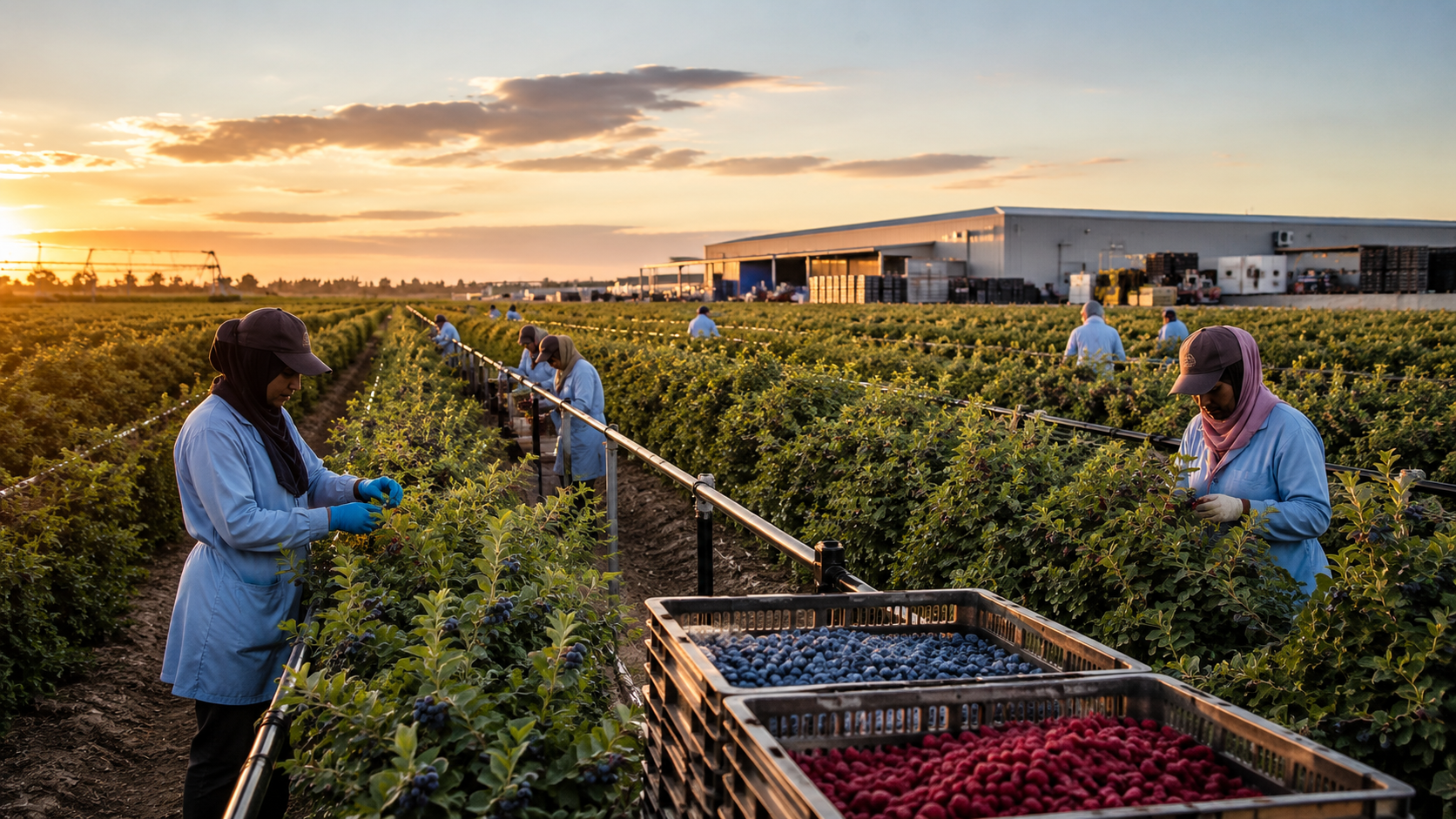
Emirati agribusiness group Elite Agro Holding, through its Moroccan subsidiary Elite Harvest Maroc, has now invested more than 1.3 billion dirhams in the Kingdom and recently inaugurated its seventh Moroccan farm.
The new operation in Kenitra covers approximately 200 hectares and is dedicated to premium blueberries and raspberries.
Elite Agro describes Morocco as its largest berry-production platform, and its Moroccan operations have already contributed to the creation of more than 8,000 jobs.
That combination is significant.
Foreign capital.
High-value agriculture.
Export production.
Modern irrigation.
International certification.
Rural employment.
Morocco is no longer simply exporting traditional agricultural products.
It is increasingly positioning itself inside one of the fastest-growing premium segments of the global fresh-produce market.
Morocco Is Becoming More Than A Growing Location
The easy explanation for Morocco’s berry success would be climate.
That is only part of the story.
International agricultural investors need much more than suitable weather.
They need land capable of commercial-scale production.
Water management.
Cold storage.
Labour.
Packaging.
Quality control.
Road connections.
Ports and airports.
Export certification.
Retail relationships.
Morocco increasingly combines these elements.
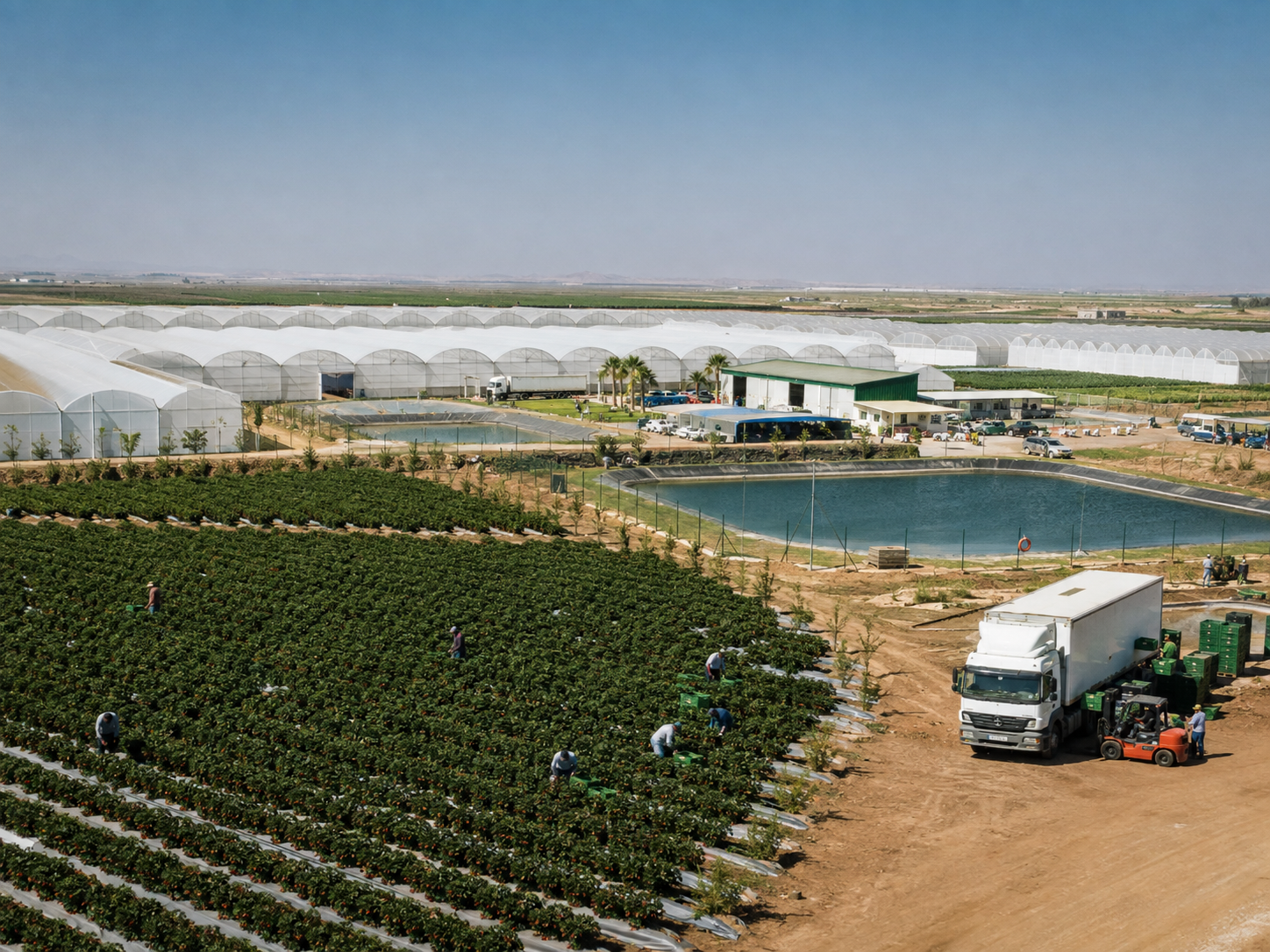
Elite Harvest Maroc now operates production sites across Kenitra, Sidi Yahya, Fez, Beni Mellal, Sefrou, Marrakech and Benslimane, producing not only berries but also pomegranates, pears, apples, peaches, nectarines, grapes, citrus and other fruit for domestic and international markets.
That geographic footprint begins to look less like a collection of farms.
It looks like an agricultural production platform.
Blueberries Have Very Different Economics
Not every agricultural crop creates the same value.
Some products compete heavily on volume and commodity pricing.
Premium berries operate differently.
Quality matters enormously.
Appearance matters.
Shelf life matters.
Timing matters.
Cold-chain management matters.
Retail certification matters.
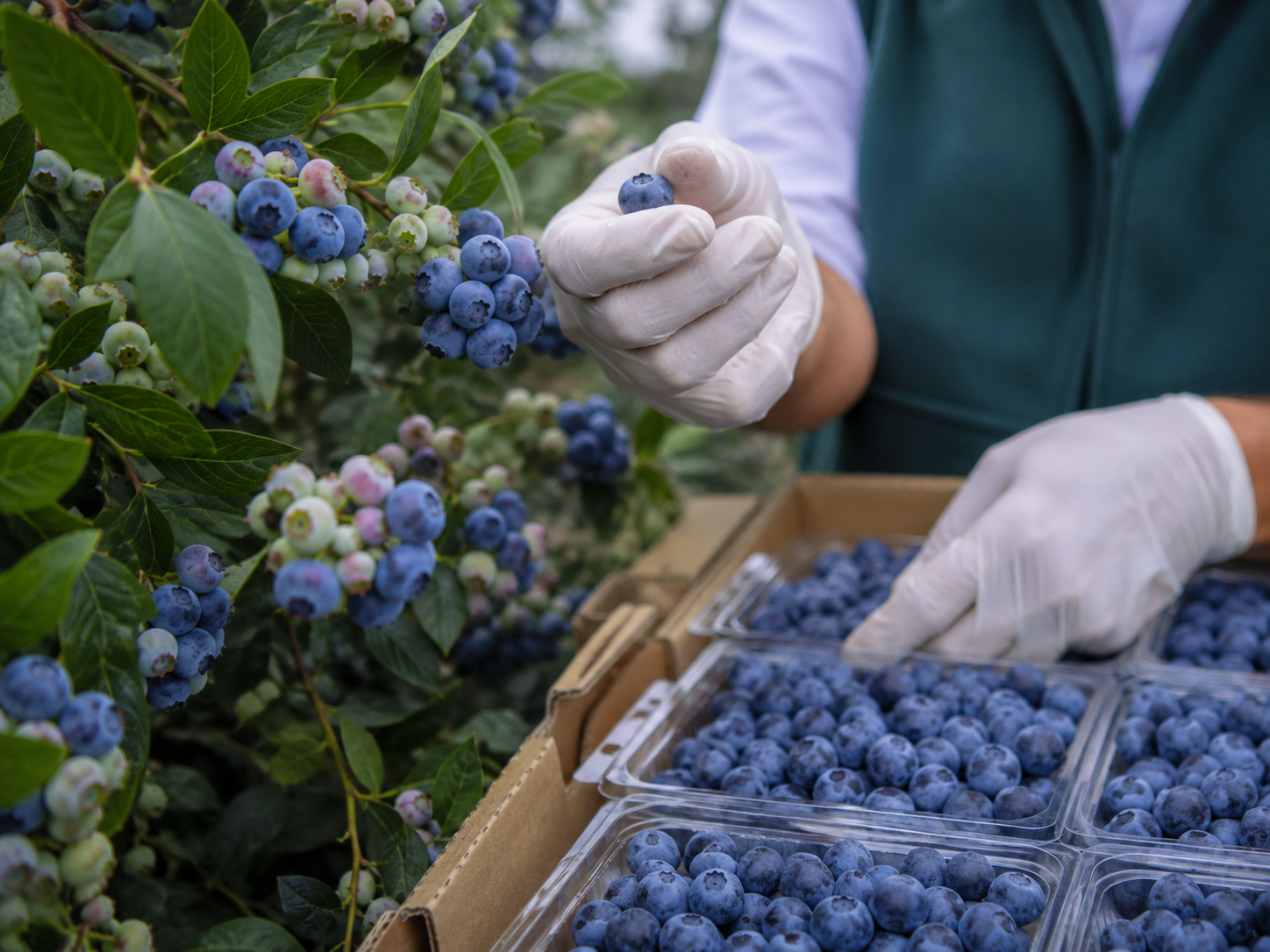
Consumers in Europe, the Gulf and other affluent markets are willing to pay significantly more per kilogram for high-quality berries than for many traditional bulk crops.
This means Morocco can potentially generate more export value from relatively limited agricultural areas.
That is strategically important in a country where water and land productivity increasingly matter.
The objective should not simply be producing more tonnes.
It should be producing more value from each hectare and each cubic metre of water.
200 Hectares Can Support A Much Larger Economy
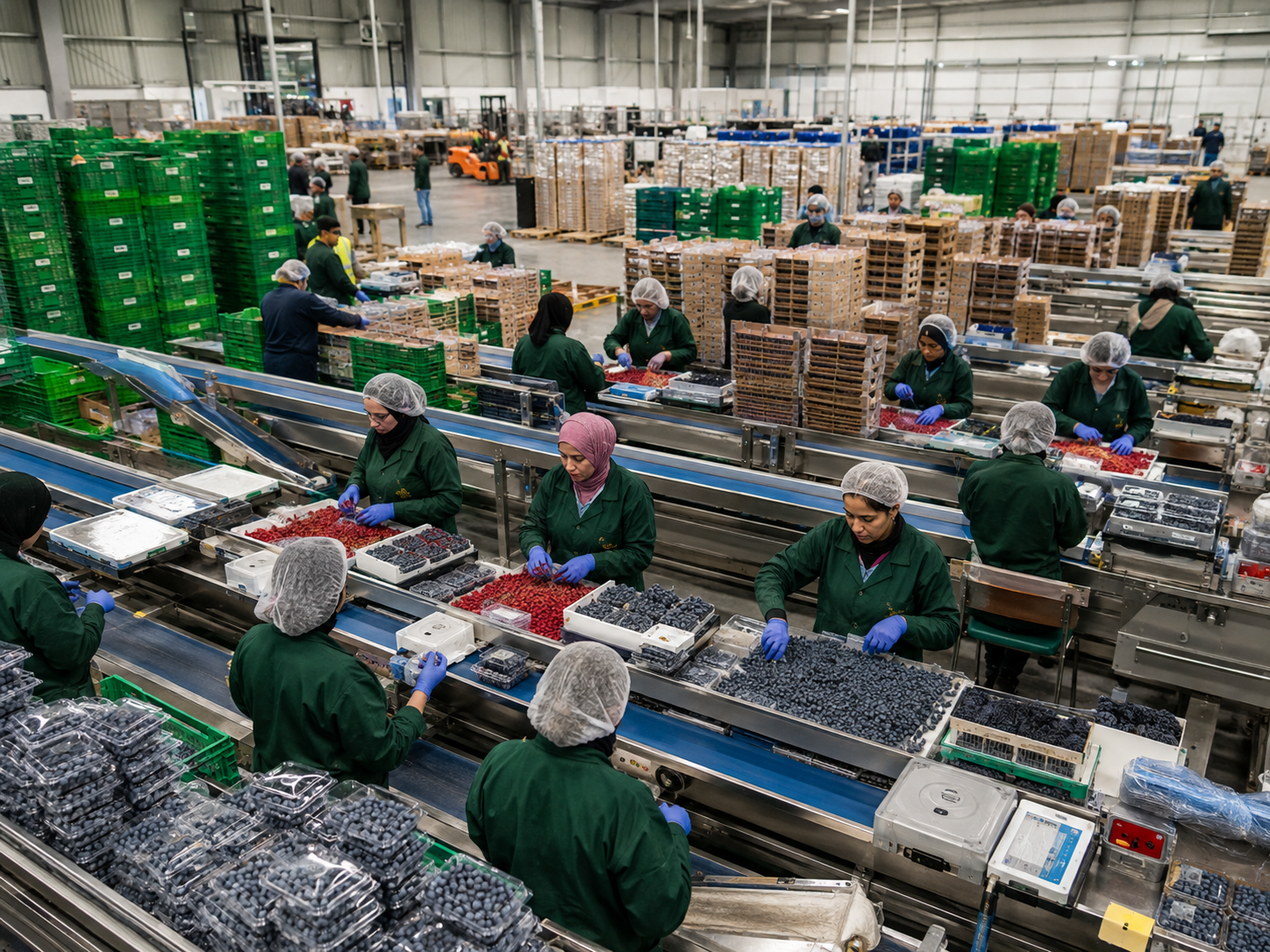
The new Kenitra farm covers 200 hectares.
But the economic activity surrounding those hectares can extend far beyond farming itself.
Seedlings.
Irrigation equipment.
Fertilisers.
Biological crop protection.
Agricultural technology.
Packaging.
Cold storage.
Quality testing.
Transport.
Export logistics.
Sales.
Retail distribution.
A high-value agricultural project creates demand across an entire supply chain.
That is where Morocco can increase the local economic impact.
The fruit itself may be harvested on the farm.
A much larger ecosystem determines whether it reaches a supermarket thousands of kilometres away in premium condition.
Cold Chain Is The Invisible Export Infrastructure
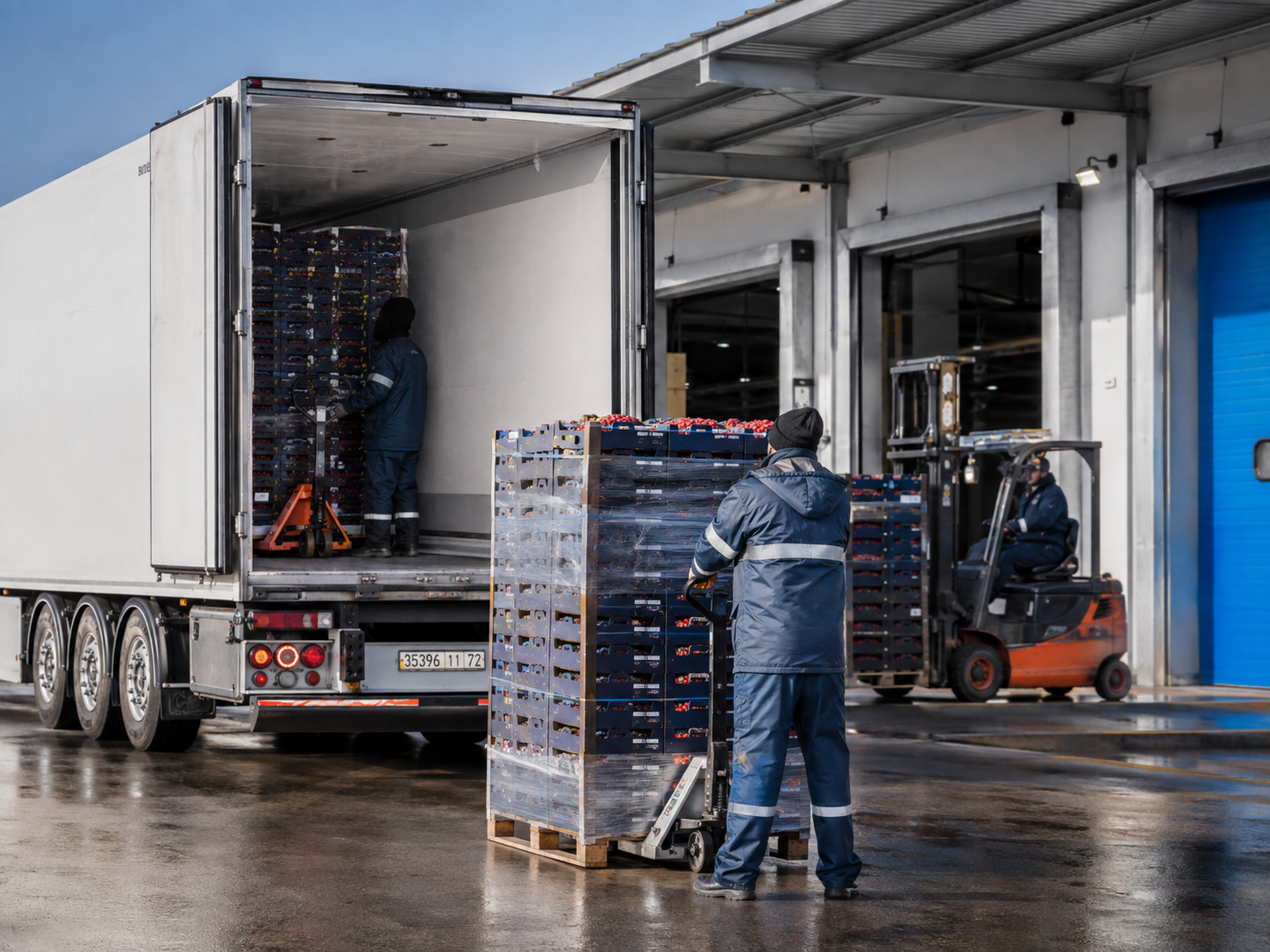
Berries are unforgiving products.
A manufactured automotive component can sit in storage.
Fresh raspberries cannot.
Temperature management begins almost immediately after harvesting.
Cooling.
Sorting.
Packaging.
Storage.
Transport.
Every hour matters.
A sophisticated berry-export industry therefore depends on a sophisticated cold chain.
This is one reason Morocco’s logistics position matters.
European markets are geographically close.
Ports provide regular connections.
Air freight can serve higher-value or more distant markets.
Shorter transport times can improve freshness and reduce waste.
Morocco’s advantage is therefore not only what it can grow.
It is how quickly it can move the product after harvest.
Europe Is A Natural Market
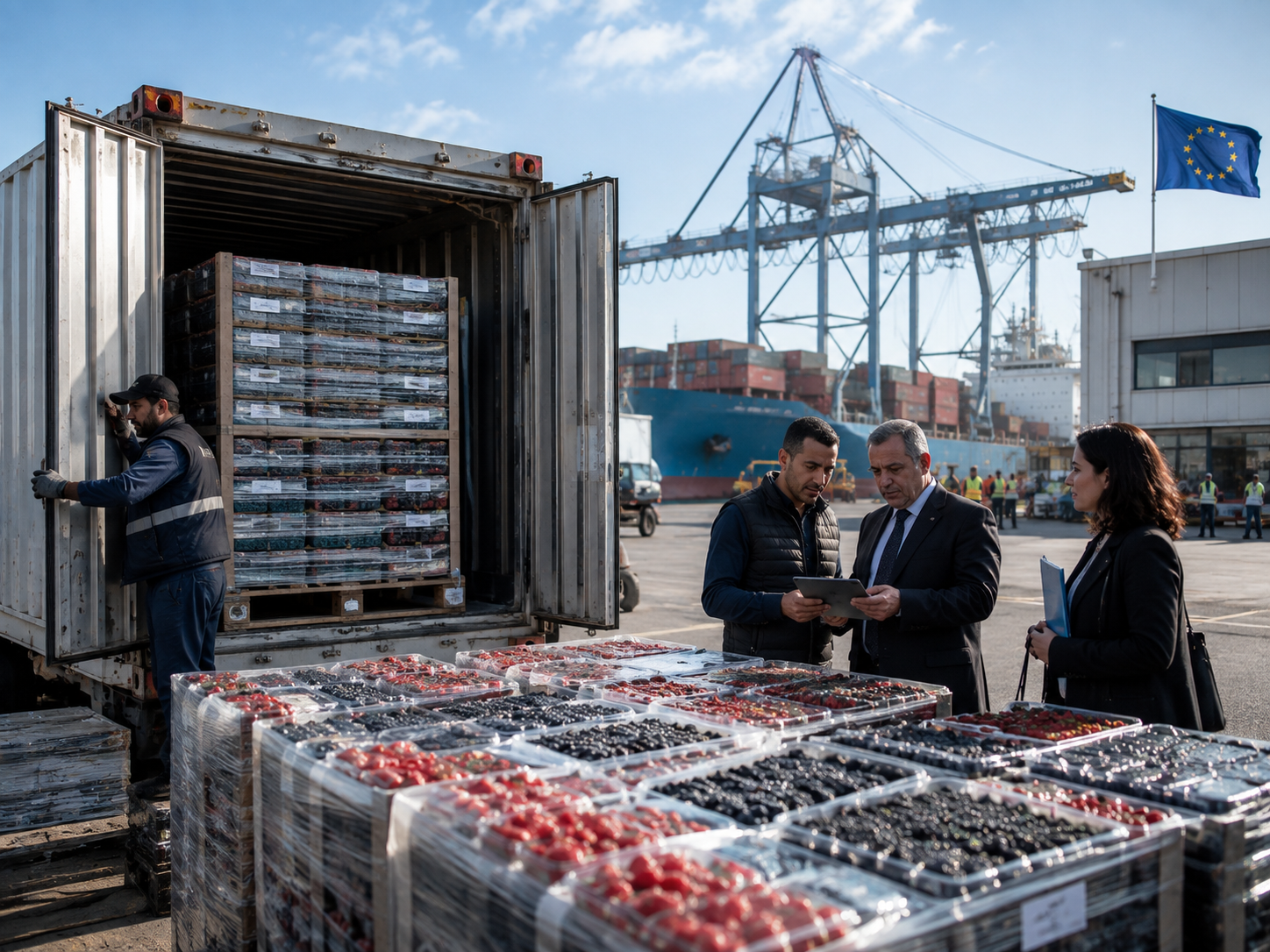
European consumers increasingly buy blueberries, raspberries and other berries throughout much of the year.
Retailers need reliable suppliers across different growing seasons.
Morocco’s location allows it to complement European domestic production during periods when local supply is limited.
That creates a powerful commercial position.
Morocco does not need to replace European growers.
It can fill seasonal gaps.
The closer the production calendar aligns with periods of high European prices and lower domestic supply, the stronger the economics become.
This is agricultural strategy based on timing rather than simply quantity.
Certifications Are A Commercial Passport
Elite Harvest Maroc’s operations hold certifications including GLOBALG.A.P., GRASP, Tesco Nurture, SPRING, Field to Fork and SMETA.
Those labels may look administrative.
Commercially, they are extremely important.
Large international retailers do not simply purchase fruit because it tastes good.
They need evidence.
Food safety.
Traceability.
Labour standards.
Water management.
Environmental practices.
Supply-chain transparency.
A farm that cannot satisfy those requirements may never reach premium supermarket shelves regardless of product quality.
Certification therefore becomes a market-access asset.
Once Moroccan producers master these systems, they can sell into more demanding and often more valuable channels.
Morocco Can Turn Compliance Into Competitive Advantage
International standards are sometimes discussed as barriers.
They can also protect stronger producers.
A company investing heavily in traceability and quality benefits when customers demand those standards from everyone.
Less sophisticated competitors become unable to participate.
Morocco should therefore view agricultural certification as part of industrial competitiveness.
Training smaller growers.
Modern laboratories.
Digital traceability.
Water monitoring.
Residue controls.
Reliable documentation.
The more exporters capable of meeting premium-market requirements, the deeper Morocco’s position becomes.
Agricultural sophistication increasingly resembles industrial sophistication.
Processes matter as much as products.
Water Efficiency Will Decide How Far The Sector Can Grow
Berry production also raises an unavoidable question.
Water.
Elite Agro says the new Kenitra site uses advanced irrigation systems and modern agricultural technologies designed to improve resource efficiency and sustainability.
That needs to remain central.
Morocco faces structural water pressure.
Agricultural expansion cannot be separated from resource productivity.
High-value crops can make economic sense when they generate substantially more value from limited water.
But that advantage depends on disciplined irrigation.
Sensors.
Drip systems.
Weather data.
Soil monitoring.
Precise fertilisation.
Recycling where technically possible.
Future agricultural competitiveness may increasingly be measured in dirhams earned per cubic metre of water rather than tonnes produced per hectare.
Technology Is Changing What A Farm Looks Like
Modern export agriculture is becoming a technology business.
Farmers increasingly use data to determine:
When to irrigate.
How much water to use.
When disease risk rises.
When fruit reaches optimal maturity.
How labour should be deployed.
When harvesting should begin.
Large professional farms can combine satellite data, sensors, climate forecasting and crop-management software.
This increases consistency.
And consistency is extremely important when supplying international retailers.
A supermarket chain does not only want excellent fruit once.
It wants the same quality week after week.
Technology helps agriculture move from biological uncertainty toward industrial reliability.
8,000 Jobs Shows Labour Still Matters
Elite Agro says its Moroccan investments have contributed to more than 8,000 jobs in rural communities.
That scale demonstrates another important characteristic of berry production.
It remains labour intensive.
Harvesting delicate fruit requires significant human involvement.
Sorting and packing also create employment.
For Morocco, this can support rural economies where industrial investment may otherwise be limited.
But labour intensity also creates responsibility.
Working conditions.
Transport.
Training.
Seasonality.
Health and safety.
Social protection.
As premium agricultural exports expand, employment quality should rise alongside export value.
A high-value supply chain should create higher-value rural employment too.
Training Can Improve Productivity
Berry harvesting is not simply picking fruit.
Workers need to understand quality.
Which berry is ready?
Which should remain?
How should it be handled?
What creates bruising?
Which fruit belongs in which grade?
Small improvements multiplied across thousands of workers can create large economic effects.
Better training reduces waste.
Higher percentages of premium-grade fruit increase revenue.
Fewer damaged berries improve shelf life.
The workforce therefore becomes part of the product.
Morocco’s agricultural competitiveness depends increasingly on trained labour rather than only inexpensive labour.
Packaging Is Part Of The Product
A blueberry sold loose in a wholesale market and the same blueberry sold in a premium European supermarket create different economics.
Packaging helps create that difference.
Protection.
Ventilation.
Presentation.
Traceability.
Branding.
Convenience.
Sustainability.
Retailers increasingly demand recyclable or lower-plastic solutions.
This creates another opportunity for Moroccan industry.
If berries are grown in Morocco but imported packaging captures much of the additional value, the domestic economic effect is smaller.
Local packaging companies can develop specialised solutions for fresh exports.
Agriculture can therefore support manufacturing.
Morocco Should Own More Of The Brand
A recurring challenge in agricultural exports is invisibility.
Consumers may buy Moroccan produce without knowing it is Moroccan.
The supermarket brand or retailer often owns the relationship.
That does not make the export unsuccessful.
But it limits branding value.
As Morocco becomes a larger premium berry producer, there is room to build stronger origin recognition.
Moroccan blueberries should eventually carry a quality reputation in the same way some countries become associated with specific premium foods.
That could support better pricing.
It could also help exporters move from anonymous supply contracts toward branded relationships.
Origin can become an asset.
Elite Agro’s Model Is Also An FDI Story
Elite Agro is headquartered in the United Arab Emirates.
Its more than 1.3 billion dirhams of Moroccan investment demonstrates that agricultural FDI can reach meaningful scale.
Foreign investment in Morocco is often discussed around automotive, aerospace, batteries or renewable energy.
Agriculture deserves a place in that conversation.
Large-scale professional farming brings capital.
Technology.
Export relationships.
Management expertise.
International certifications.
It can also create demand for Moroccan suppliers.
The challenge is ensuring that investment becomes embedded rather than operating as an isolated foreign-owned production island.
Local integration determines the wider benefit.
UAE Capital And Moroccan Agriculture Fit Naturally
The relationship also makes strategic sense.
Gulf countries have strong food-security interests.
They possess capital but face significant constraints around agricultural conditions and water.
Morocco possesses agricultural capability, proximity to Europe and an established export ecosystem.
That creates complementarities.
An Emirati group can invest in Moroccan production.
Morocco gains capital and employment.
The investor gains a diversified production base.
Products can reach both international and Gulf markets.
Food security increasingly creates cross-border investment relationships.
Elite Agro’s expansion is a practical example.
Morocco Can Become A Berry Hub For Several Markets
Europe is important.
It should not be the only destination.
Elite Agro’s global footprint spans multiple countries, while the group says its Moroccan platform serves both domestic and international markets.
Morocco can potentially supply:
Europe.
The Gulf.
North America.
Selected Asian markets.
Africa.
Each market has different economics.
Air freight may work for some.
Sea freight may work for others.
Premium varieties can justify longer transport.
The more diversified the customer base, the more resilient the industry becomes.
Dependence on one market exposes growers to changes in prices, regulation or demand.
Research Can Produce Better Varieties
The next layer of agricultural competitiveness is genetics.
Berry varieties differ dramatically.
Yield.
Taste.
Size.
Shelf life.
Disease resistance.
Water requirements.
Harvest timing.
International breeders increasingly protect premium varieties through licensing.
Morocco should develop deeper research capability around crops suited to its own conditions.
Universities.
Agronomic institutes.
Private companies.
International breeders.
If Moroccan researchers can help develop varieties specifically suited to local climate and export windows, the country captures another layer of intellectual value.
Agriculture then moves beyond production into innovation.
Climate Change Makes Diversification Important
Agriculture will always remain exposed to weather.
Heat waves.
Drought.
Unexpected rainfall.
Disease.
Cold events.
Elite Harvest Maroc’s geographic diversification across several Moroccan regions provides one way of spreading some production risk.
Different regions have different microclimates.
They can also produce at different times.
This can extend the season and reduce dependence on one location.
For exporters serving major retail customers, supply continuity matters.
A supermarket does not want a relationship that works only when weather conditions are perfect.
Resilience becomes a commercial advantage.
Export Logistics Must Preserve Quality, Not Only Move Volume
Morocco has built world-class logistics infrastructure.
Fresh agriculture imposes a different test than industrial goods.
Speed is not enough.
Temperature must remain controlled.
Delays at customs can damage product.
Inspection procedures need efficiency.
Containers need reliability.
Air cargo needs capacity.
The value of the berry can deteriorate while paperwork is still being processed.
Agricultural-export infrastructure therefore needs to operate almost like a continuous cold-production line from farm to retailer.
Every weak link reduces the final value Morocco captures.
Local Farmers Can Benefit From The Knowledge Spillover
Large international farms should also create benefits beyond their own boundaries.
Local growers can learn from:
Irrigation technology.
New varieties.
Certification standards.
Pest management.
Post-harvest practices.
Export procedures.
Contract farming could provide another route.
A large exporter can sometimes aggregate production from smaller farmers that meet its standards.
This allows smaller producers to reach international markets without building the entire export infrastructure themselves.
Done well, one large investor can raise productivity across a wider agricultural region.
Food Processing Could Capture Imperfect Fruit
Not every berry will meet fresh-export standards.
Size may be wrong.
Appearance may be imperfect.
Shelf life may be too short.
That does not make the fruit worthless.
Processing can capture additional value.
Frozen berries.
Purees.
Juices.
Yoghurt ingredients.
Desserts.
Jams.
Bakery ingredients.
Freeze-dried products.
A mature berry industry should minimise waste by building secondary markets for fruit that does not enter premium fresh channels.
This creates another manufacturing opportunity.
Morocco should aim to export the premium berry fresh and process the rest locally rather than discard value.
Morocco’s Berry Story Is Becoming Industrial
Elite Agro’s seventh Moroccan farm is technically an agricultural project.
Economically, it looks increasingly industrial.
More than 1.3 billion dirhams invested.
A 200-hectare new farm in Kenitra.
Seven production sites.
More than 8,000 jobs linked to its Moroccan activities.
International certification.
Modern irrigation.
Export-oriented production.
And Morocco designated by the group as its largest berry-production platform.
Those numbers describe more than agriculture.
They describe a specialised supply chain being built around a premium global product.
Morocco’s opportunity now is to deepen it.
More local technology.
More packaging.
More cold storage.
More research.
More processing.
More Moroccan suppliers.
More branding.
More value from every hectare and every litre of water.
The future of Moroccan agriculture will not be won only by producing more.
It will increasingly be won by producing products the global market is willing to pay much more for.
Berries are beginning to show what that model can look like.