

The Hollywood Deal Test is becoming more than a merger story. It is turning into a global argument about who controls entertainment, who finances media power, and how far regulators should go when Hollywood consolidation meets foreign state-backed capital.
Paramount Skydance’s proposed acquisition of Warner Bros Discovery is already one of the biggest media deals in years. But the story has moved beyond studio logos, streaming libraries and blockbuster franchises.
Europe is asking a harder question.
If foreign sovereign wealth funds help finance a major Hollywood takeover, should regulators treat the deal only as a competition issue, or also as a subsidy and influence issue?
That is where the deal becomes politically sensitive.
Hollywood Deal Test Moves Beyond The Box Office
The Hollywood Deal Test matters because entertainment is no longer just entertainment.
Film studios own intellectual property, streaming platforms, news assets, children’s programming, sports rights, archives, production capacity and cultural influence. A major media merger can therefore affect more than box-office competition.
It can affect what gets produced, who distributes it, which stories reach global audiences, how much consumers pay, and how much power sits inside a smaller number of media groups.
Reuters has reported that the European Commission is reviewing the Paramount-Warner Bros Discovery deal under the EU’s Foreign Subsidies Regulation, because the transaction is backed by sovereign wealth funds from Saudi Arabia, Abu Dhabi and Qatar.
That makes this merger a test case.
Europe is not only asking whether the deal reduces competition. It is asking whether foreign-backed financing gives one buyer an unfair advantage inside a strategic media sector.
The Gulf Money Question Is Central

The Gulf financing angle is what makes the deal different from a normal Hollywood consolidation story.
Reuters reported that Saudi Arabia’s Public Investment Fund, Abu Dhabi-based L’imad Holding Company and the Qatar Investment Authority are backing the transaction, while the European Commission has to decide whether the foreign subsidy concerns justify deeper scrutiny.
This is not automatically suspicious.
Sovereign wealth funds invest globally across technology, real estate, sports, infrastructure, finance and entertainment. Gulf capital has already become a major force in global business, and media is a logical extension of that reach.
But entertainment is politically sensitive because it carries influence.
A film studio is not a factory producing ordinary goods. It shapes culture, news, identity, childhood entertainment, political debate and global perception. That is why regulators may treat financing sources differently when the asset is media.
The question is not only who pays.
It is what that money allows the buyer to control.
Europe Is Using A New Regulatory Lens
The EU’s Foreign Subsidies Regulation gives Brussels a new tool to examine whether foreign state support distorts the internal market.
That matters because older competition reviews often focused mainly on market share, consumer prices, and whether a combined company would reduce choice. The subsidy lens adds another dimension: whether foreign public money gives one company an artificial advantage over rivals.
In media, this becomes especially important.
A buyer backed by state-linked capital may be able to pay more, absorb more risk or offer financing structures that competitors cannot match. If regulators believe that support distorts the market, they can demand remedies, open a deeper investigation or impose conditions.
For Hollywood, this is a new kind of pressure.
The studio system is used to antitrust scrutiny.
It is less used to being examined as a foreign-subsidy case.
The U.S. Battle Is Also Heating Up
The pressure is not only coming from Europe.
Reuters reported that California and 11 other U.S. states have sued to block Paramount’s proposed $110 billion acquisition of Warner Bros Discovery, arguing that the deal could raise consumer prices, reduce wages and create a dominant media entity.
The lawsuit claims the combined company would control about 27% of film distribution, around 30% of blockbusters and a significant share of basic cable programming, potentially affecting theaters, distributors and entertainment workers.
That is a serious challenge.
Even if federal regulators are more comfortable with the transaction, state-level opposition can create delay, legal uncertainty and political risk.
In a deal of this size, delay is not neutral.
Time itself becomes leverage.
Consolidation Promises Strength, But Creates Fear
Paramount argues that the deal can create a stronger media company.
That argument is easy to understand.
Hollywood is under pressure from streaming losses, declining cable television, rising production costs, shifting audience behaviour and competition from technology platforms. A larger group may argue that it can invest more, compete better and protect theatrical releases.
The promise is scale.
The fear is concentration.
When studios merge, the industry may gain a stronger company but lose some diversity of decision-making. Fewer buyers may mean fewer projects, fewer negotiating options for talent, fewer distribution routes and more pressure on smaller producers.
This is why regulators are cautious.
A larger studio may survive better.
But the market around it may become narrower.
The Streaming War Changed The Deal Logic
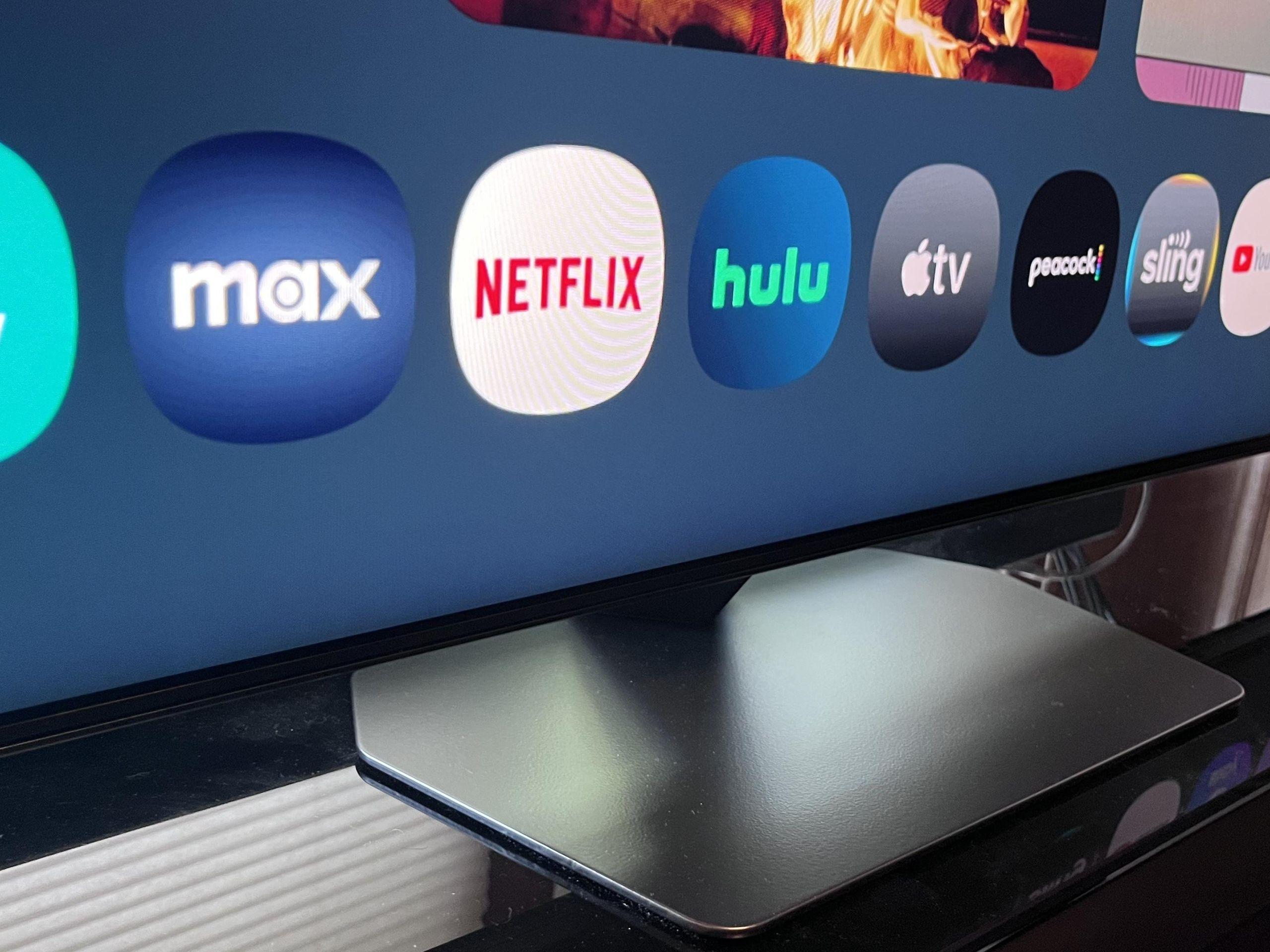
The old Hollywood merger logic was built around film studios, cable channels and television assets.
The new logic is built around streaming.
A combined Paramount-Warner Bros Discovery would bring together deep libraries, franchises, production teams, news operations, sports-linked media assets and global distribution ambitions. The goal would not only be to release movies. It would be to compete for daily attention across screens.
That is where the deal becomes strategically important.
Streaming has made content scale more valuable, but also more expensive. Platforms need enough shows, films, live events, sports, documentaries and archives to keep subscribers engaged. Smaller libraries can struggle unless they have a very clear niche or strong recurring hits.
In this environment, consolidation can look like survival.
But survival for one company can still create problems for the wider market.
Children’s TV Could Become A Remedy Issue
Reuters has reported that possible EU competition remedies could include divesting a children’s television channel to address concerns around the merger.
That detail may sound small compared with a giant Hollywood transaction, but it matters.
Children’s programming is a sensitive area because it shapes early media habits, advertising markets, family viewing and educational content. If a merger gives one group too much power in certain audience segments, regulators may demand targeted solutions rather than blocking the entire transaction.
This is often how large deals survive.
Companies offer concessions.
Regulators accept commitments.
The merger proceeds, but with conditions.
The question is whether those conditions are strong enough to protect competition, or whether they become symbolic adjustments around a deal that still changes the market dramatically.
Europe May Prefer Commitments Over A Veto
Major media deals are rarely simple yes-or-no decisions.
Reuters has reported that Britain’s review of the Paramount-Warner transaction may be aimed more at commitments than a full veto, with possible concerns around news, children’s television and public-interest protections.
That suggests a familiar regulatory pattern.
Authorities may not want to block a deal outright if they believe the market is already changing and the companies need scale to compete. But they may still want guarantees around news independence, local content, children’s programming, employment or market access.
This is where the deal becomes a negotiation.
The buyer wants speed and certainty.
Regulators want enforceable safeguards.
The public wants assurance that media concentration will not reduce choice, quality or independence.
The Political Optics Are Difficult
The politics of the deal are complicated.
A Hollywood merger backed partly by Gulf sovereign wealth funds can trigger questions about foreign influence, cultural power and media independence. At the same time, the U.S. entertainment industry needs capital, and global investors are already deeply embedded in American media, sports and technology.
This creates a difficult balance.
Reject too much foreign capital, and the industry may lose funding in a period of disruption.
Accept it without scrutiny, and regulators may appear careless about influence and market distortion.
Europe’s subsidy review sits directly in that tension.
It does not say foreign investment is automatically bad.
It says foreign state-linked support deserves examination when the asset is strategically important.
Hollywood Is Becoming A Global Capital Market
The Paramount-Warner Bros case shows how Hollywood has changed.
The industry is no longer financed only by American studios, domestic banks and traditional entertainment investors. It is part of a global capital market that includes sovereign wealth funds, private equity, technology companies, streaming platforms and international regulators.
That changes the power map.
A studio deal can now involve Washington, Brussels, London, Riyadh, Abu Dhabi, Doha, Wall Street, Silicon Valley and Hollywood unions at the same time.
This is not the old studio system.
It is a financial and geopolitical network built around content.
The movie business has become a global infrastructure business for attention.
Consumers May Not See The Risk Immediately
For ordinary viewers, the merger may feel distant.
They may only notice later whether subscription prices change, whether fewer films are released, whether favorite channels disappear, whether news operations shrink, or whether certain types of content become harder to find.
That delay is one reason media mergers are difficult to judge.
The consequences are not always immediate.
A deal can close with promises of more investment, more content and better competition. The negative effects, if they come, may appear gradually through fewer choices, more expensive bundles, reduced theatrical variety or lower bargaining power for workers and creators.
Regulators therefore have to act before the full outcome is visible.
That is what makes the decision so difficult.
Workers Are Part Of The Story

The U.S. state lawsuit also raises concerns about wages and employment.
That should not be treated as secondary.
Media consolidation often leads to cost savings, and cost savings can mean layoffs, reduced production spending, merged departments and weaker bargaining conditions for creative workers, journalists, technicians and support staff.
Paramount has argued that the deal can produce major savings and strengthen the combined company. Reuters reported the company has pointed to about $6 billion in cost savings.
For investors, savings can look attractive.
For workers, they can sound like a warning.
This is the human side of consolidation.
The Deadline Creates Pressure
Timing is another important part of the story.
Reuters reported that if the deal is delayed beyond October, Paramount could face quarterly penalty payments of $650 million to Warner Bros shareholders.
That creates pressure on everyone involved.
The companies want approvals quickly. Investors want clarity. Regulators do not want to be rushed but know delay has financial consequences. Opponents may use time as leverage if they believe delay weakens the transaction.
In high-stakes mergers, the calendar can become a weapon.
A decision does not need to kill a deal to damage it.
Sometimes delay is enough.
The Media Power Question Will Not Go Away
Even if this deal survives, the underlying question will remain.
How much media power should sit inside a small number of companies?
How much foreign state-backed money should finance entertainment assets?
How should regulators protect competition without preventing companies from adapting to streaming disruption?
How should news, children’s content and creative labour be protected inside mega-mergers?
These questions will return because the media industry is still under pressure.
More consolidation is likely.
More foreign capital is likely.
More regulatory scrutiny is likely.
The Paramount-Warner Bros case may become a template for the next fight.
The Bottom Line
The Hollywood Deal Test is no longer just about Paramount, Warner Bros Discovery or one large entertainment transaction.
It is about the future structure of global media power.
Europe’s subsidy scrutiny, U.S. state opposition and competition concerns all point to the same issue: Hollywood consolidation now sits at the intersection of streaming economics, sovereign wealth capital, cultural influence and consumer protection.
The deal may still survive with commitments or remedies.
But the debate has already shown that entertainment is no longer treated as a soft industry.
In the streaming era, media assets are strategic assets.
And regulators are starting to act like it.