

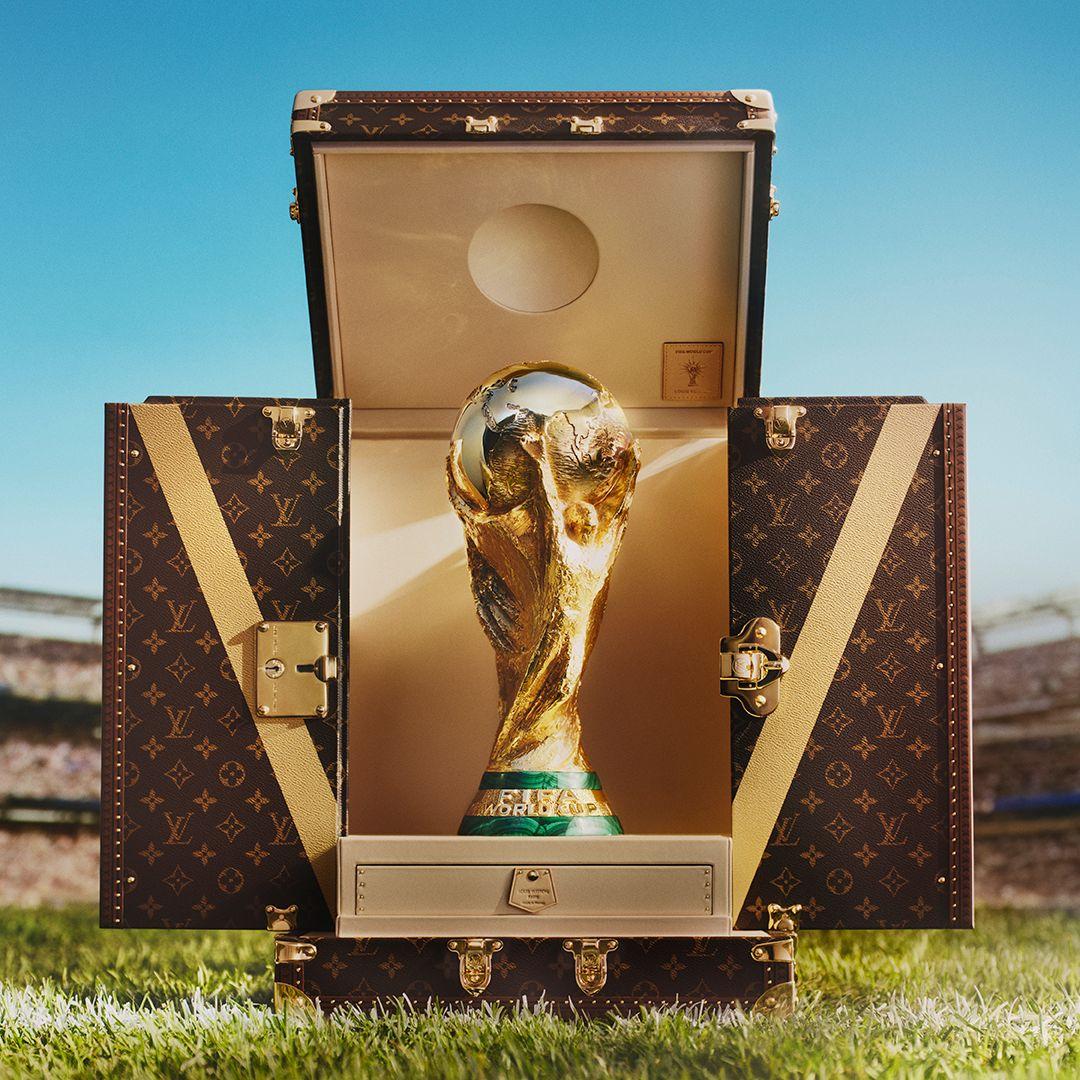
The Louis Vuitton Trophy Walk shows how far the World Cup final has moved beyond football.
Before Argentina or Spain lift the trophy, before the captain’s hands reach the gold, before the world sees the winning team celebrate, the trophy itself will have its own luxury entrance.
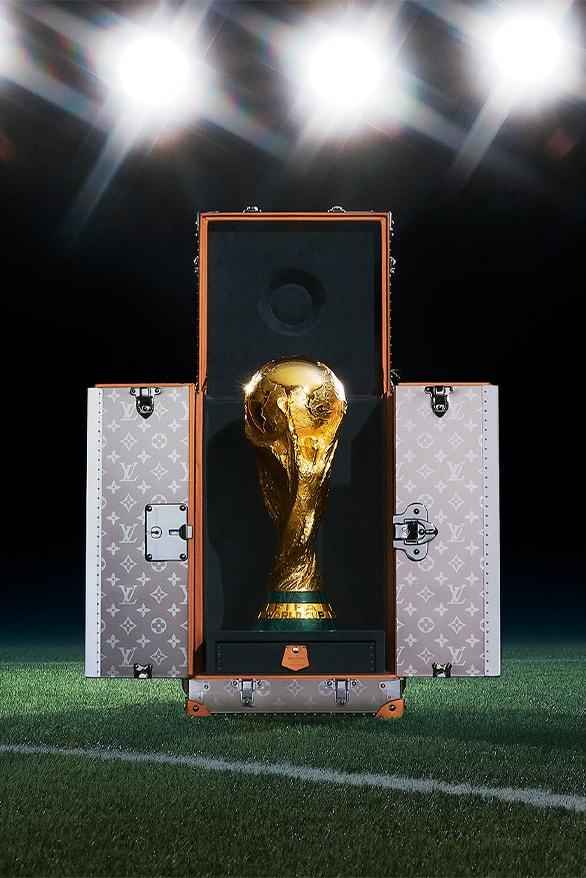
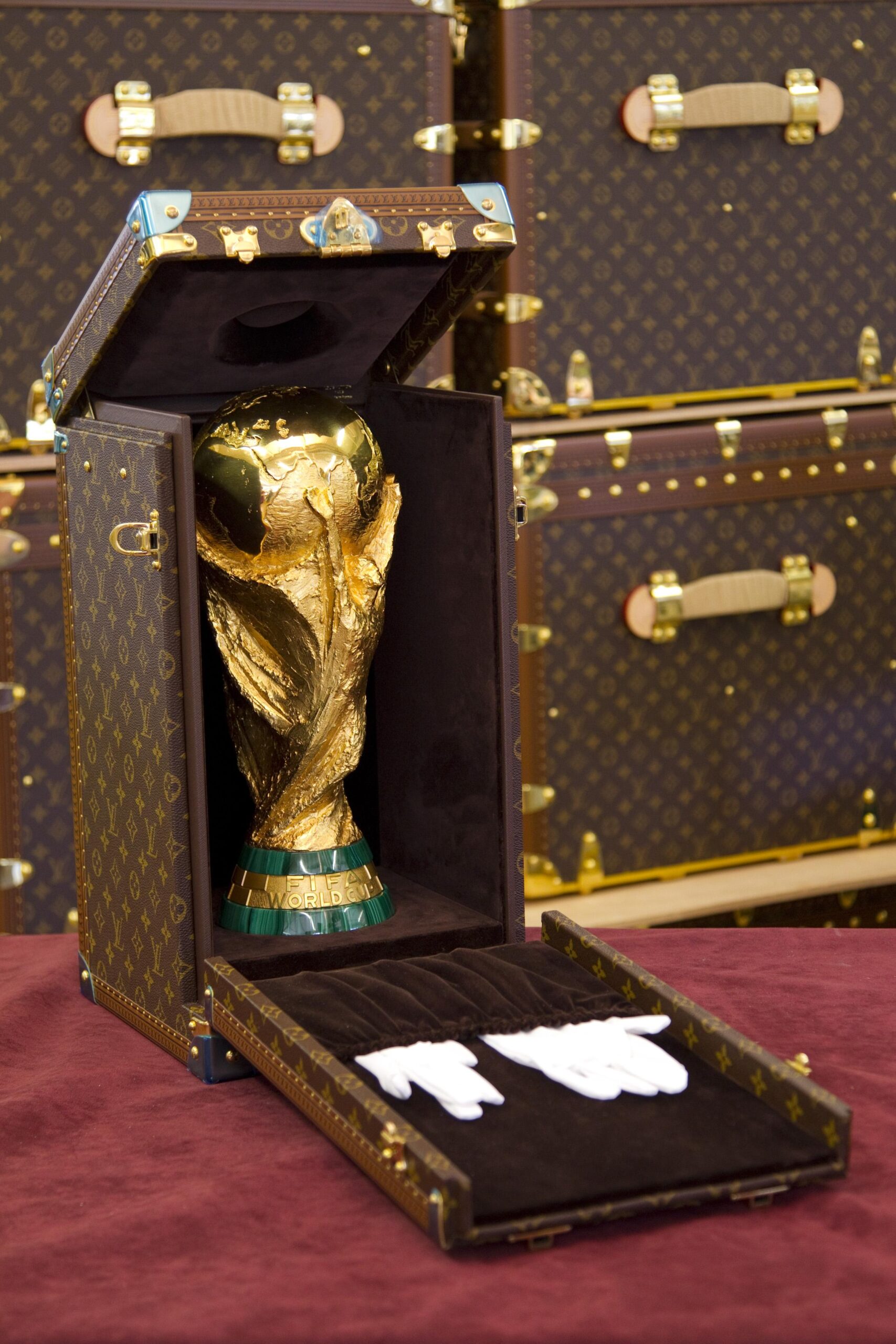
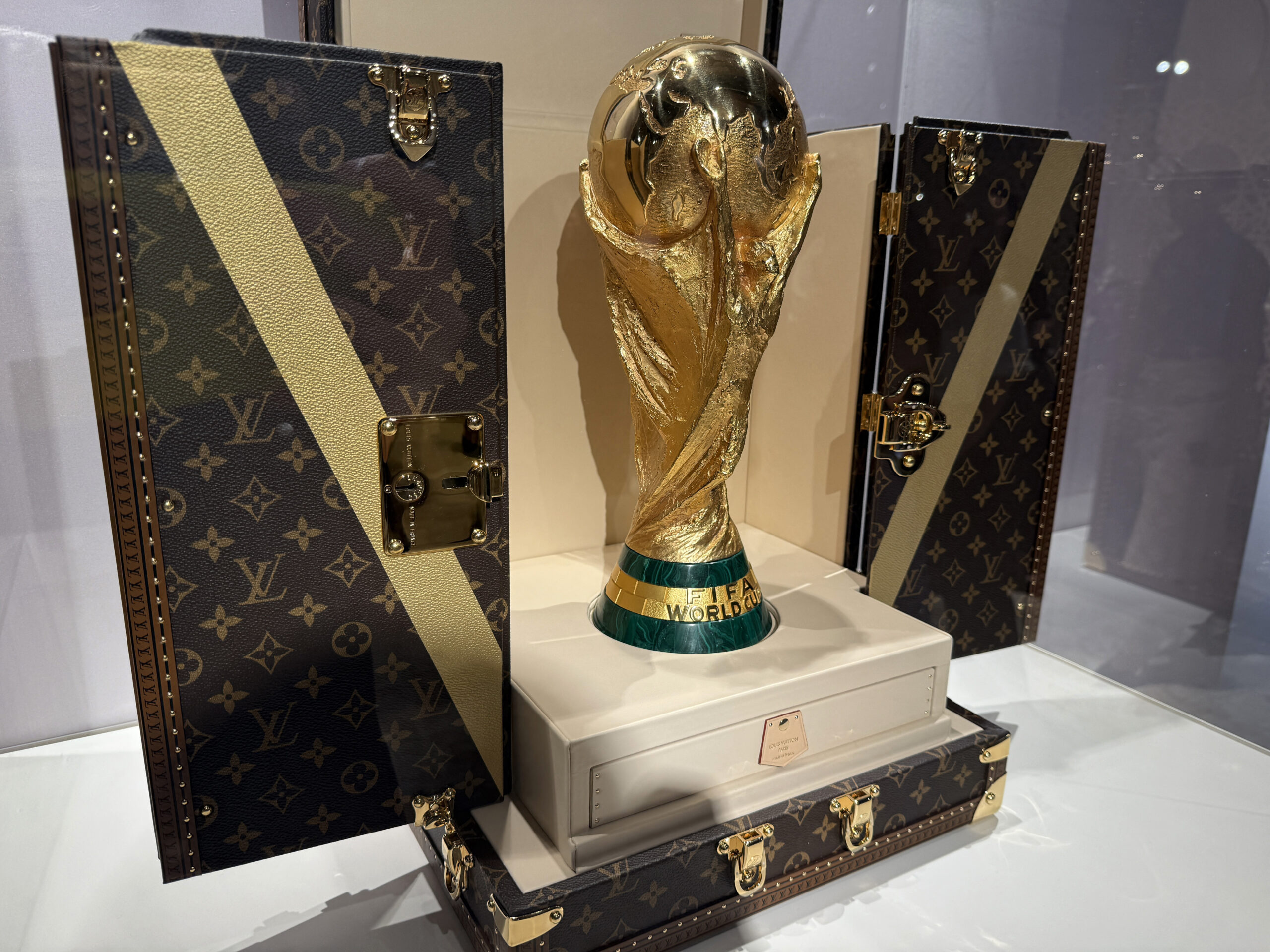
Louis Vuitton will present the official bespoke trophy trunk for the 2026 final, turning the object at the centre of world football into a fashion moment before it becomes a sporting one.
That matters.
Because in 2026, the World Cup final is not only a match.
It is a stage where sport, luxury, celebrity, politics, entertainment and global branding all compete for the same image.
Louis Vuitton Trophy Walk Turns The Trophy Into A Scene
The Louis Vuitton Trophy Walk matters because the trophy is already one of the most powerful symbols in sport.
It does not need decoration.
It does not need branding.
It does not need a luxury house to make it valuable.
Yet the official trunk changes how the moment is presented. FIFA says the bespoke Louis Vuitton trophy trunk will be brought onto the pitch during the final by a Louis Vuitton ambassador and a FIFA legend, continuing a protocol that has been used since 2010.
That is the key point.
The trophy is not simply placed on a table.
It is introduced.
It is carried.
It is framed.
It is turned into a scene.
Football provides the emotion. Louis Vuitton provides the theatre.
Luxury Wants The World Cup Image
Luxury brands understand the power of global sporting images.
A World Cup final does not offer ordinary visibility. It offers billions of impressions across television, social media, news photography, celebrity accounts, brand campaigns and archive footage that may be replayed for decades.
That is why the trophy walk matters commercially.
The moment before the final is not empty space. It is premium attention. Everyone is watching. The players are ready. The stadium is emotional. The cameras are focused. The trophy becomes the centre of gravity.
For Louis Vuitton, being attached to that moment is not only sponsorship.
It is image ownership.
The brand does not need to interrupt the match.
It appears beside the symbol everyone wants.
FIFA Is Selling Ceremony, Not Just Football
FIFA’s 2026 final is being built as a complete entertainment package.
The closing ceremony will celebrate the largest World Cup in history, with 48 teams across three host countries and 16 host cities. FIFA has confirmed performances from global entertainment names and a special appearance by Tom Cruise before the final at New York New Jersey Stadium.
That changes the atmosphere.
The final is no longer treated only as the last match of a tournament. It is treated as a global broadcast event with chapters: arrival, ceremony, music, celebrity, trophy presentation, national anthems, match, celebration.
Every stage becomes content.
Every image becomes a marketable asset.
The football still decides the champion, but the packaging around it has become more sophisticated than ever.
The Trophy Is Football’s Ultimate Luxury Object
Luxury is built around scarcity, desire and symbolic value.
The World Cup trophy already has all three.
Only one team can lift it.
Only a few players in history have touched it as champions.
Nations chase it for decades.
Fans cry over it.
Careers are defined by proximity to it.
That makes the trophy the ultimate luxury object, even before a fashion brand arrives. Louis Vuitton does not create its value. It attaches itself to value that already exists.
This is why the partnership makes sense.
The trunk protects the trophy physically.
But more importantly, it frames the trophy culturally.
It says: this object is not only a prize. It is a jewel of global sport.
Fashion Understands Ritual
Football sometimes underestimates how much of its power comes from ritual.
The walk onto the pitch.
The anthem.
The handshakes.
The tunnel.
The trophy on display.
The captain’s lift.
The medals.
The tears.
Luxury brands understand ritual extremely well. They know how to turn an object into a ceremony, a box into a reveal, a walk into a photograph and a material detail into a story.
That is why the Louis Vuitton trunk fits the final.
The World Cup trophy already has ritual value.
The trunk formalises it.
It creates anticipation before the object is revealed. It turns the trophy’s arrival into a moment with its own choreography.
The Final Becomes A Runway
The World Cup final is starting to look like a runway for global brands.
Not in the literal fashion-week sense, but in the way every visible surface carries meaning. The trophy trunk, the performers, the celebrity seats, the VIP guests, the kits, the players’ tunnel looks, the stadium signage and the broadcast shots all become part of a controlled visual economy.
FIFA knows this.
Brands know this.
Broadcasters know this.
The public may experience it as excitement, but the commercial logic is clear. The final is one of the rare places where fashion, sport and mass culture meet at maximum scale.
Louis Vuitton’s presence is not an accessory.
It is a sign of where sport has gone.
Post Malone Adds The Pop Culture Layer
FIFA has confirmed that Post Malone will headline the 2026 World Cup closing ceremony before the final.
That matters because the ceremony is designed to pull in audiences beyond football purists.
Post Malone brings streaming culture, American pop power and a global fan base. Alongside names such as Tom Cruise, Laura Pausini, Nicole Scherzinger, Robbie Williams and IShowSpeed, the final becomes a media product aimed at several audiences at once.
Football fans watch for Argentina and Spain.
Music fans watch for the performance.
Younger audiences watch the clips.
Luxury audiences watch the trophy moment.
The final becomes many events inside one broadcast.
Tom Cruise Turns Sport Into Cinema
Tom Cruise’s special appearance adds Hollywood scale.
A World Cup final already has drama, but Cruise brings a different visual language: cinema, stunts, spectacle and global star power. FIFA’s decision to include him shows how strongly the final is being positioned as a cultural event, not only a sporting conclusion.
This is important because the tournament is ending in the United States.
American event culture values spectacle. It understands halftime shows, celebrity entrances, scripted moments and broadcast theatre. FIFA is adapting to that environment while keeping the football at the centre.
The risk is that traditional fans see too much show.
The opportunity is that the final becomes impossible to ignore.
IShowSpeed Shows The Creator Economy Has Arrived
The presence of IShowSpeed may say more about the future than any traditional celebrity name.
He represents creator-led football culture: livestream reactions, viral clips, fan emotion, memes and direct connection with younger audiences. FIFA including him in the closing ceremony shows that the organisation understands a new media layer around the sport.
Young fans do not only watch football through television.
They watch it through personalities.
They watch reactions.
They watch short clips.
They watch the emotions around the match as much as the match itself.
The World Cup final now has to exist across all those spaces.
That is why the trophy walk, the ceremony and the celebrity moments matter. They create shareable scenes before the game even begins.
Some Fans Will See It As Too Much
Not everyone will love this direction.
For many supporters, the World Cup final is sacred because it is simple.
Two teams.
One ball.
One trophy.
The more luxury, celebrity and entertainment are added, the more some fans worry that the sport is being turned into a commercial showpiece.
That concern is fair.
Football’s emotional power does not come from branded trunks or celebrity appearances. It comes from players, supporters, national history and the fear of losing everything in one match.
The challenge for FIFA is balance.
The show must elevate the final.
It must not make the football feel like a background event.
The Trophy Must Still Belong To The Players
The most important image of the night should remain the winning captain lifting the trophy.
Not the trunk.
Not the sponsor.
Not the celebrity.
Not the political guest.
Not the ceremony.
Everything around the final should build toward that football moment, not compete with it. A luxury trunk works if it frames the trophy with dignity. It fails if it makes the brand more visible than the achievement.
That is the fine line.
Sport can partner with luxury.
But the trophy cannot become a prop.
The players must own the image at the end.
Luxury Sport Is The New Global Language
The Louis Vuitton trophy walk fits a much wider trend.
Luxury brands are moving deeper into sport because athletes, teams and major tournaments now shape global culture as strongly as film stars and musicians. Footballers attend fashion shows. Brands sponsor competitions. Players become ambassadors. Stadium arrivals become style content.
Sport gives luxury brands emotion.
Luxury gives sport a premium image.
The World Cup final is the highest possible stage for that exchange.
Argentina and Spain will play the match.
But the global luxury industry will also be watching how close it can stand to the trophy.
New York Makes The Mix More Powerful
The final taking place in the New York-New Jersey region makes the luxury layer even stronger.
New York is a fashion capital, media capital, finance capital and celebrity capital. It naturally amplifies the connection between sport and style. A Louis Vuitton trophy moment at this final feels less like an isolated sponsorship and more like part of the city’s own cultural machinery.
The stadium is in New Jersey.
The image belongs to the New York global stage.
That matters because mega-events depend on location as much as content. Put the same trunk and ceremony in another market, and the feeling may be different. In New York, the mix of football, luxury and entertainment feels almost inevitable.
The 2026 World Cup Ends As A Brand Summit
The 2026 tournament was already the largest World Cup in history.
Now its ending is being presented like a brand summit.
FIFA.
Louis Vuitton.
Post Malone.
Tom Cruise.
IShowSpeed.
Argentina.
Spain.
New York-New Jersey.
Each name carries its own audience, market and symbolic value. Together, they create an event that is much bigger than the match schedule.
This is the modern World Cup model.
The tournament is not only organised.
It is packaged.
It is staged.
It is distributed as global culture.
The Bottom Line
The Louis Vuitton Trophy Walk shows how the World Cup final has become luxury theatre as much as sporting drama.
FIFA has confirmed that Louis Vuitton will present the official bespoke trophy trunk for the 2026 final, with the trunk brought onto the pitch during the match ceremony by a Louis Vuitton ambassador and a FIFA legend. The closing ceremony will also bring together music, entertainment and celebrity names before Argentina and Spain decide the title.
The trophy remains the most important object in football.
But the way it is presented now tells a bigger story.
Global sport is no longer only about victory.
It is about image, luxury, entertainment and control of the moment everyone wants to see.
Louis Vuitton will carry the trophy.
Argentina or Spain will carry the meaning.