

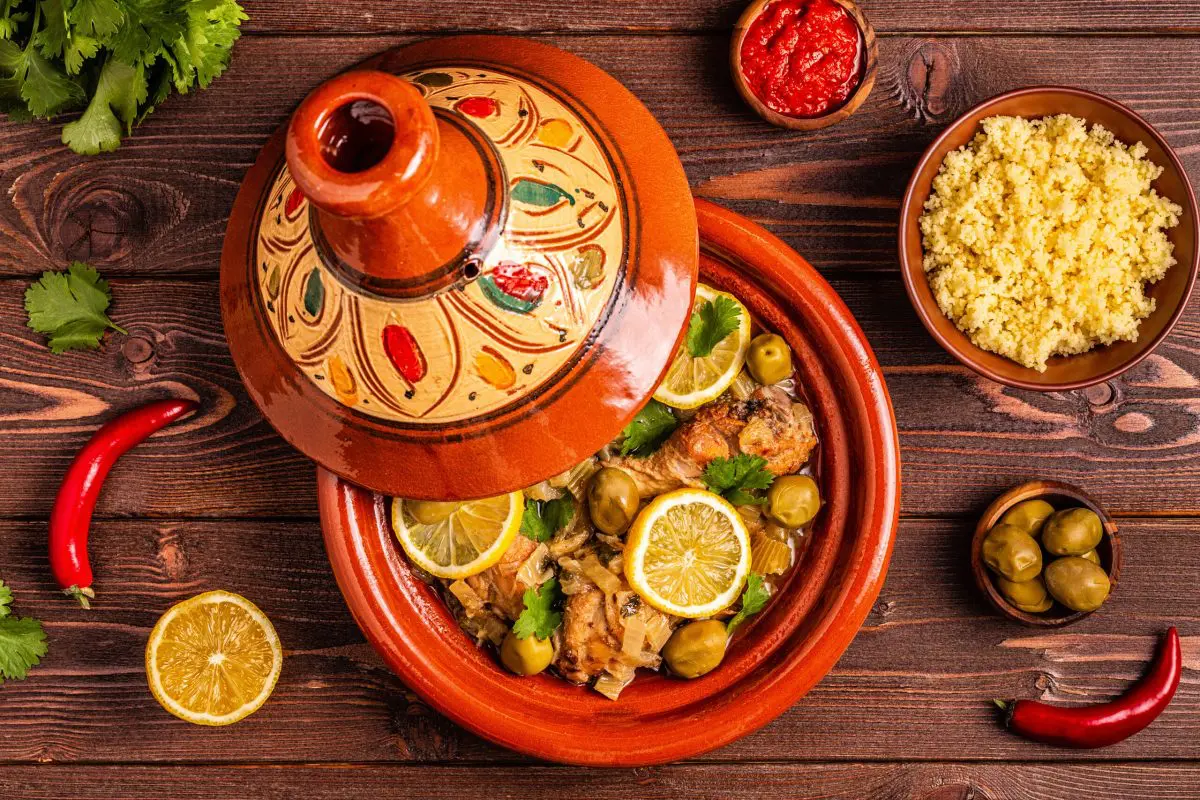
Forget burgers, pasta or hotel buffets. When tourists think of Morocco, one dish usually appears first: tagine. Slow-cooked, colourful, steaming and served in that famous cone-shaped clay pot, Moroccan tagine is more than dinner. It is a travel fantasy. From Marrakech rooftops to Fez medina restaurants, Tangier cafés to family homes in Rabat, tagine is the dish that tells visitors they have arrived.
Marrakech Made Tagine A Travel Icon
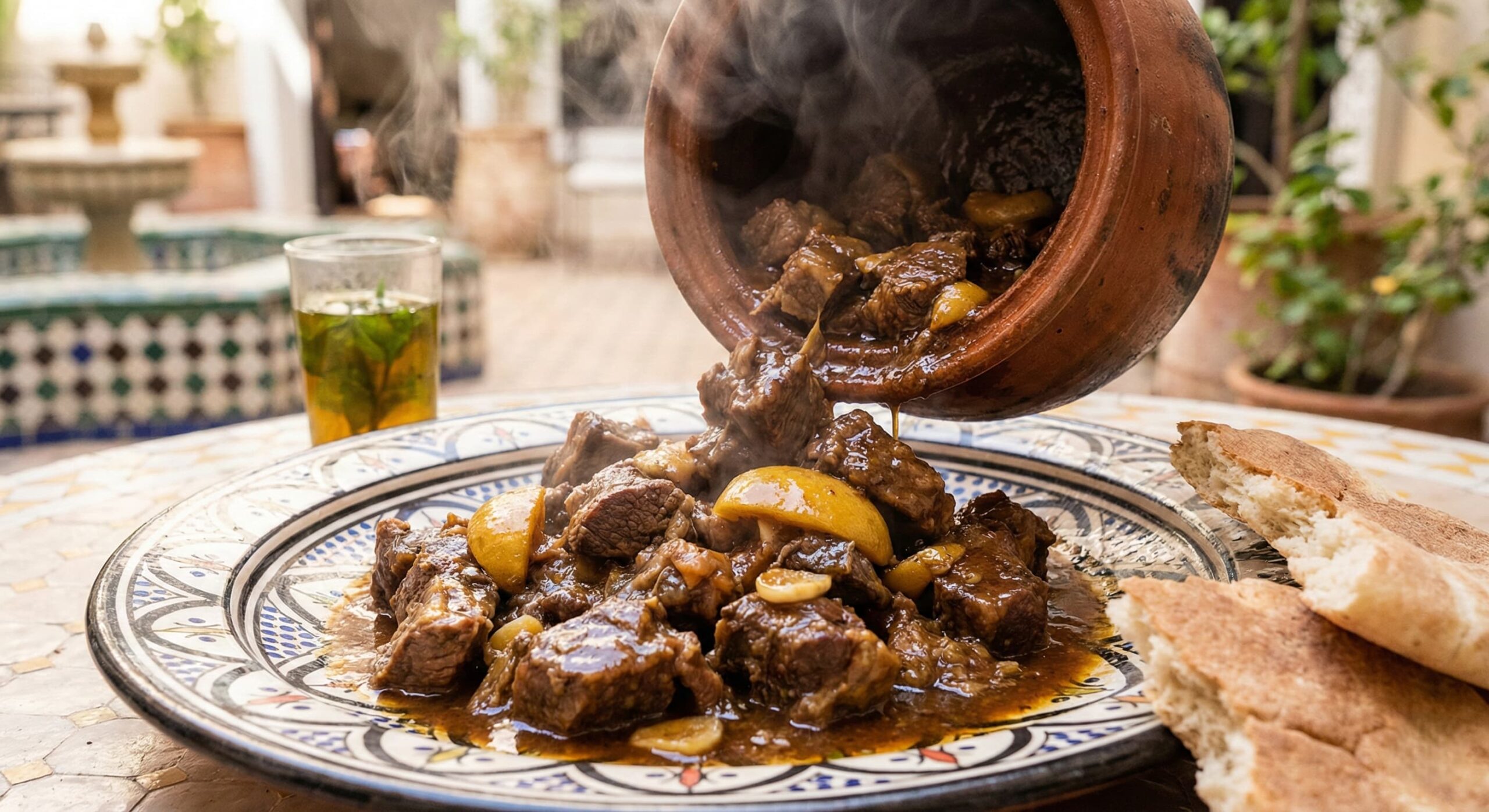
If one city helped turn tagine into a tourist dream, it is Marrakech. In the Red City, tagine appears everywhere: rooftop restaurants, riads, food tours, cooking classes and candlelit courtyards. Chicken with preserved lemon. Lamb with prunes. Beef with vegetables. Kefta with eggs. For first-time visitors, ordering tagine in Marrakech feels almost mandatory — it is part of the Morocco checklist. And unlike many tourist clichés, this one actually delivers.
Tagine works because it is patient food. The ingredients cook slowly, letting meat, vegetables, spices and sauce build flavour together. This is not fast food. The spices are warm, the meat is tender, the sauce is deep, and the bread is ready to scoop everything up. Tourists may come for the photo. They stay for the flavour.
The Spice Story Pulls Tourists In
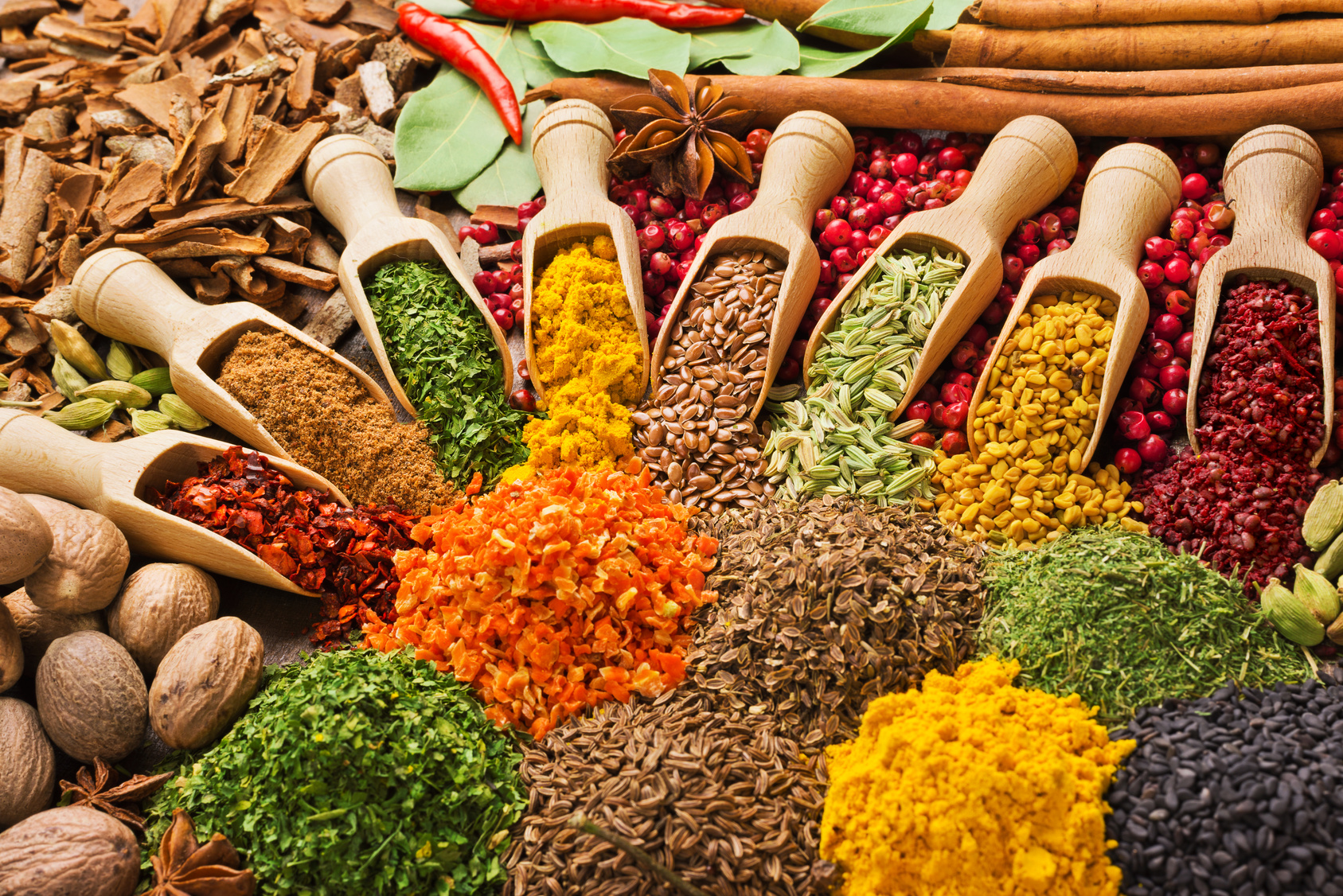
Moroccan food wins because of spices. Cumin. Ginger. Turmeric. Saffron. Cinnamon. Paprika. Ras el hanout. These flavours make tagine feel warm and layered without needing to be complicated. For many tourists from Europe or North America, this is the taste of Morocco in one plate. It smells different. It feels generous. It makes a normal meal feel like a memory.
Every city has its own mood. In Fez, tagine can feel older, more traditional and connected to the city’s deep culinary history. In Tangier, it comes with sea air, café culture and a northern Moroccan mood. In Agadir, tourists may find lighter coastal meals alongside classic tagines after a beach day. That is what makes the dish powerful — it belongs everywhere.
Cooking Classes Turn Tagine Into A Souvenir
One reason tagine is so powerful for tourism is that visitors do not only eat it — they want to learn it. Cooking classes in cities like Marrakech, Fez and Essaouira turn tagine into an experience tourists can take home. They visit markets, choose spices, prepare vegetables, wait for the pot to cook, then sit down and eat what they made. That kind of experience is stronger than buying a souvenir. It gives travellers a story. The clay pot, the colours, the steam, the first reveal when the lid comes off — a good tagine video can make people hungry in seconds. It is traditional enough to feel authentic, but visual enough to go viral.
Moroccan tagine is one of the country’s strongest food symbols for a reason. It looks beautiful, tastes rich, carries family memory and works in restaurants, homes, riads, cooking classes and travel videos. From Marrakech to Fez, Tangier to Agadir, the dish gives tourists exactly what they came for — a taste of Morocco they can see, smell, share and remember.